Moonshine
-
Posts
2094 -
Joined
-
Last visited
-
Days Won
6
Everything posted by Moonshine
-
i agree, though it really depends how close the receptors are and the background noise levels.
-
This is where it gets interesting, for permitted development you have to get it installed by a certified person, where as if you get general planning then i presume that you don't. https://www.planningportal.co.uk/info/200130/common_projects/27/heat_pumps/3 In regards to general planning permission, the only things that i could see being a big issue is potential visual impact and noise. If you did it through general planning, i don't think that you could used the MCS 020 noise calculation / assessment method (you could try), and it would have to be assessed to BS 4142:2014, which if there local authority where really wanted to go by the book may involve noise surveys to determine background noise levels at the nearest receivers (unless they accepted an assumed value).
-
Fair point on the MCS 020 , and if i end up having to put a revised planning permission in, i may put in a ASHP in the drawings / noise assessment to get round the issue and make it a DIY install as from this thread the cost savings seem significant!
-
My understanding was that for a residential dwelling a single ASHP that provided heating only, installed to MCS20, and at least 1m from boundary was permitted development (other conditions may apply) https://www.planningportal.co.uk/info/200130/common_projects/27/heat_pumps/2
-

How do i determine the height of new walls?
Moonshine replied to carlosdeanos's topic in Brick & Block
Room heights are typically 2.4m, and a flat roof probably allow for 0.5m, so you are looking at circa 2.9m to the top of the roof, also account that the roof has to have a 1:40 slope. -
Got that covered with a noise assessment for the site, guy who did the assessment was a dick though ?
-
I don't know, but i want one in there, and haven't added it yes as not sure if i need to up the width of the W/C from 900mm to 1000mm. Building regs (part M) states minimum width of front access W/C like this is 900mm, but 1000mm preferred, and basins should not project into a 750mm area in front toilet in such a way to impede access. narrowest basin i can find is 180mm, so i think that this W/C is going to have to go up to 1000mm wide, as its not long enough to get a basin outside of the 750mm zone.
-
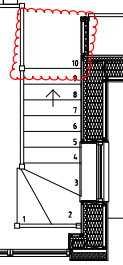
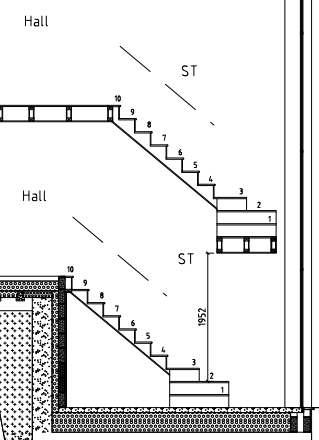
Thanks and some good points Nice idea on the quarter landings and don't think that i will be able to fit it in on the basement floor, but should be able to get it on the ground /first floor as there is some space for the stairs to move into, I don't think that its possible on the basement as there is clearance issues between the two stairs (below right). This is because as i see it being constructed the ground / first floor stairs have to be supported over the atrium by a 'joist bridge' for the full width, which causes the head clearance issue. showers are small as it is tight, the one in the en-suite is like that as i am planning a fitted wardrobe in the alcove space below the shower, making the tray wider (its currently 800mm) will mean there is potential issues with the fitted wardrobe and location of window, window could be moved 100-200mm if it goes back into planning. I will see if i can get a larger tray in the main bathroom but its already tight, A/C could be slimmed down with a smaller door, internal width of A/C is now 700mm, could go down to 600mm with the 550mm diameter tank i couldn't find a good detail for the door thresholds, and i put my hands up that mine suck, and pointers? Dont think that i can move the landing staircase, there is a cpd in the kitchen (behind the door) that has the UFH manifold in it, which could be a general plant cupboard, also there is space under the stairs in the basement area for it. I haven't considered MVHR, but it could potentially go in the loft area with a riser down the corner of the master suite.
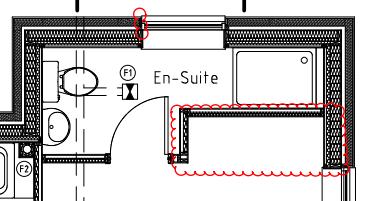
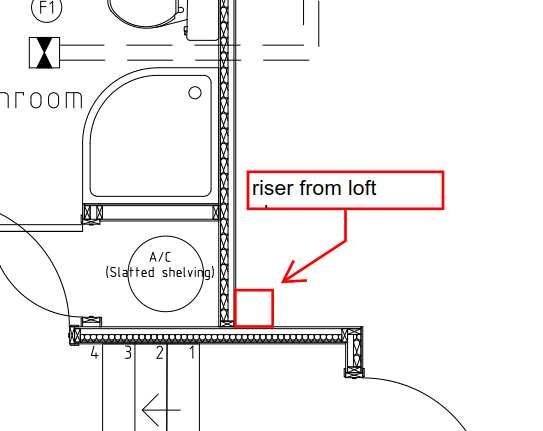
-
Thanks, it grew and grew, and tbh i got a bit too involved. However if there is going to be an element to self build to this project really want to know how its going to work and fit together. Now i need to take a step back from the detail and see the wood for the trees.
-
I would be interested to know other than basing to on the m2 rules of thumb.
-
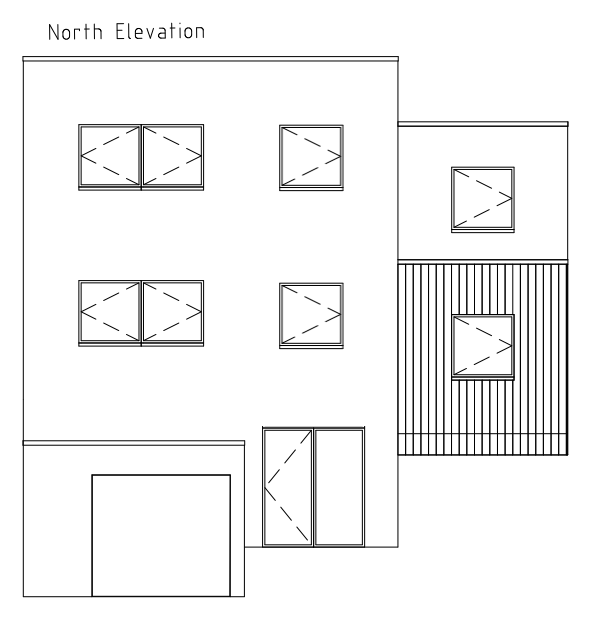
After i got planning for my potential build, i have been thinking a lot about how to actually build it, and also the costing for it. This got me drafting certain areas in CAD, which grew and grew in to a detailed set of drawings with plans, sections, and elevations, and tbh has taken a heck of a lot of time. However, i now have a clear idea how the building will fit together and hopefully i can used this as the basis of a building regs submission. Also it gives a lot of detail for people to provide cost estimates. If anyone has the time, and/or the inclination (there are 15 drawings!!), would members cast an eye over the plans and provide any comments on; The layout / design of the house, The construction and detailing, and potential design issues, better ways of doing things. The level of detail in the drawings and how things may need to be changes for BR submission The house is to be built into a slope and there are some changes from planning which may mean it needs to go back in for revision, so if there are changes that need planning permission these could be made. The split level house is a function of planning and roof lines. The south is out of the bi-fold doors at ground floor, which goes onto the garden. There are a few amendments that may be made Living bi-fold maybe change to a sliding door Ground floor W/C changed from 900mm wide to 1000mm to allow for a sink. Hopefully the drawings make the constructions clear, but am happy to clarify anything. Rev_0_complete_set.pdf
-
There are online services (www.estimators-online.com) as well, which i am looking to use, come in a bit cheaper for a house (£180 inc VAT)
-
It's not quite off the shelf but you could use a raspberry pi zero w and follow the guide below this will give you Wi-Fi access to the data remotely. https://pypi.org/project/mh-z19/
-
Interesting, and the use of one of these would negate the need for a penetration through the flat roof. I presume this could be put on top of the SVP stack within the boxed in section, as long as there was a small vent to within the SVP boxing, like below https://www.screwfix.com/p/map-vent-fixed-louvre-vent-with-flyscreen-white-229-x-76mm/5104d
-
I have been drafting up my own detailed drawings in a CAD package as its a bit of a interesting build, so i wanted to know how it will all fit together. I am hoping that with some tweaking these can be used for BC drawings.
-
according to my local authority full plans for a new build is £156 cheap than a building notice, i presume that with full plans building control do less site visits, but a key points.
-
I like this Idea, also thinking about it i could use a second layer of 100mm insulation vertically in the location of the tallest green line. This could be held in place and used as shuttering
-
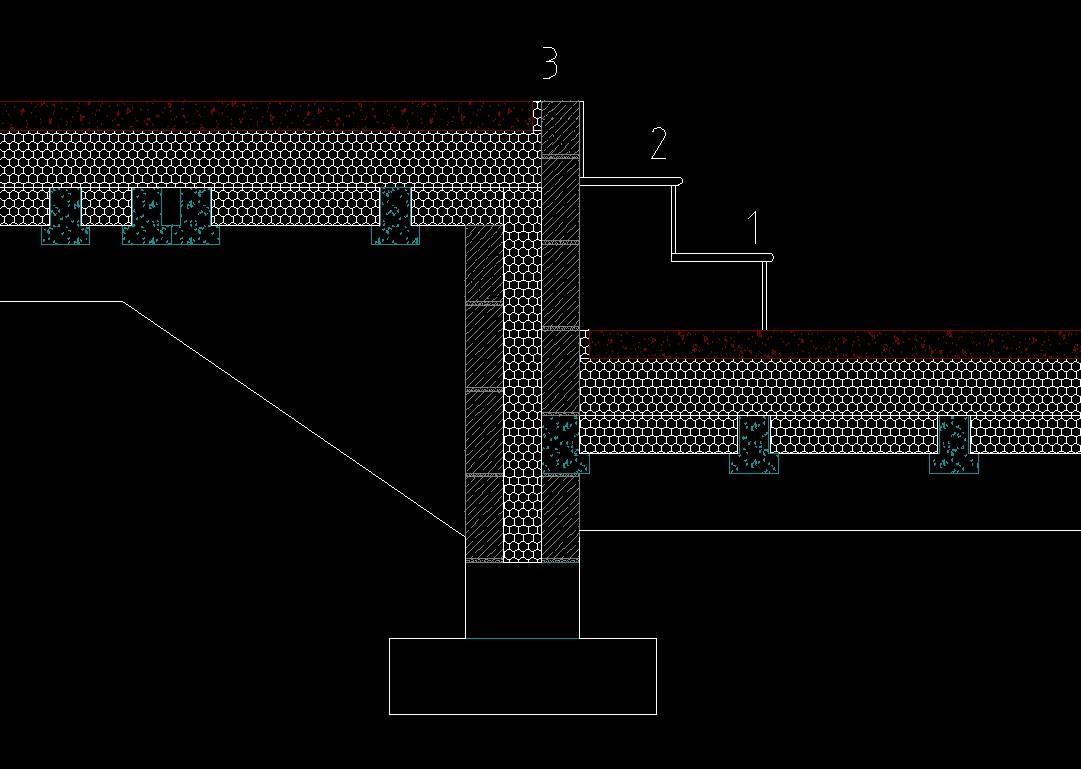
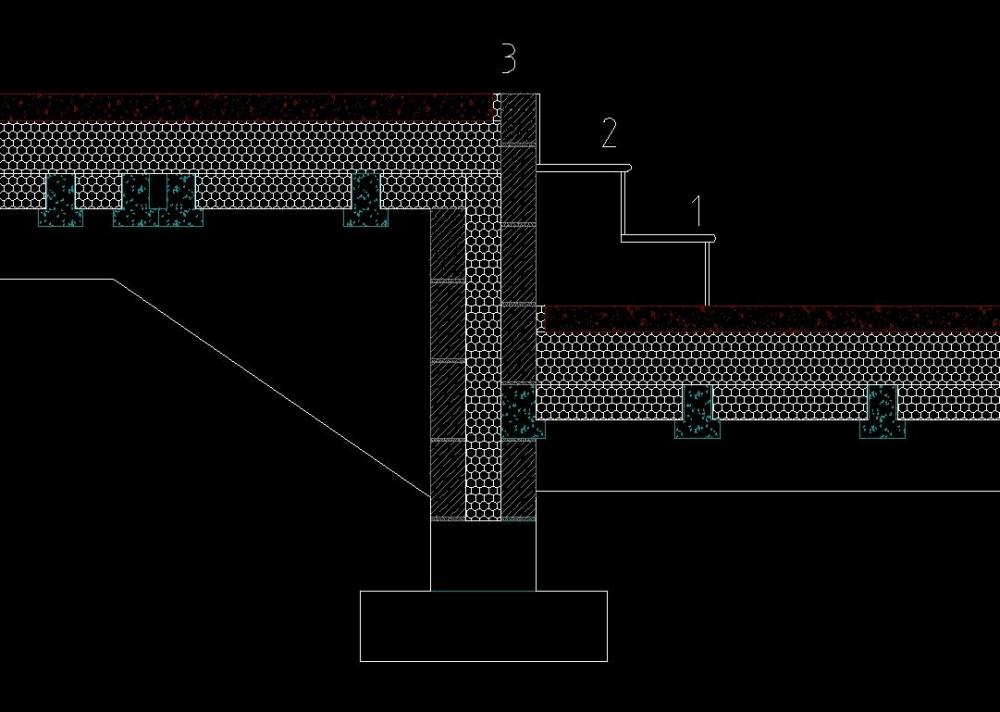
It's the level of the kitchen. The house is split level by 0.6m I will look at thermal break material. Cheers
-
I am laying out the base floor of the house, which has a step in it using a block and beam construction Above is my first stab at it, and i am not happy with the fact that there is a continuous line of bricks from the foundation to the steps. Surely there has to be a better way of breaking this line and creating a thermal bridge. The lower level screed and insulation could go on over the block line to the cavity insulation, and the rest would have to be timber stud up to the upper floor. Though this may need bracing when the upper floor screed is filled.
-
That would be good, though one potential snag is the potential fan noise from the en-suite in the master suite late at night, if the bathroom is used.