Moonshine
-
Posts
2094 -
Joined
-
Last visited
-
Days Won
6
Everything posted by Moonshine
-
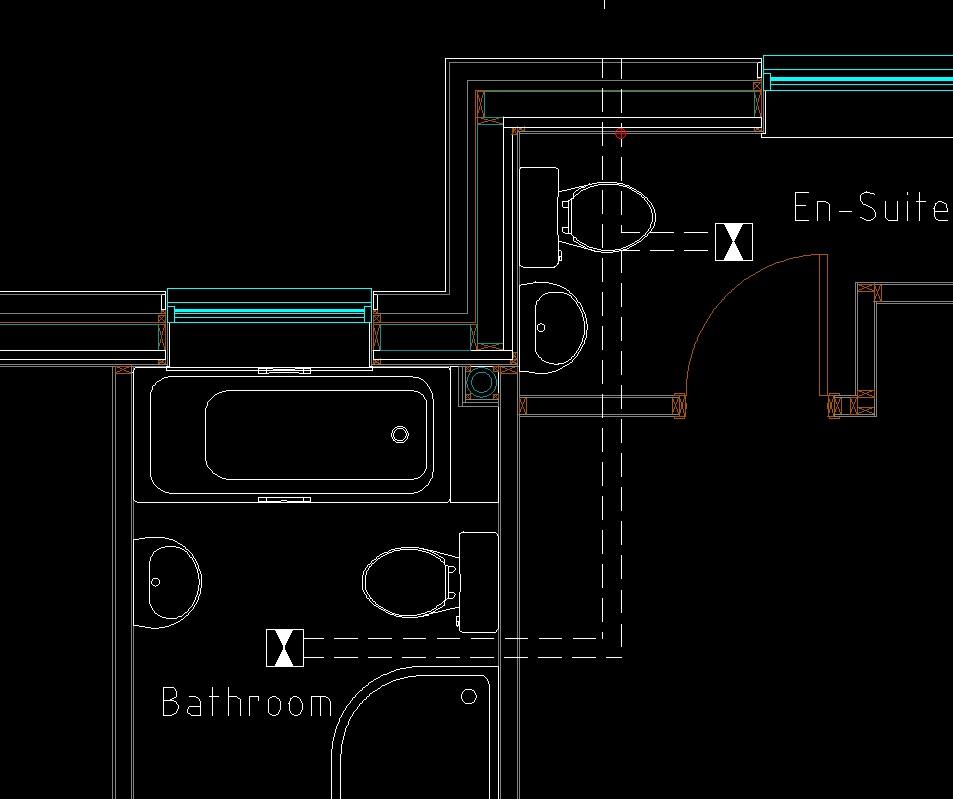
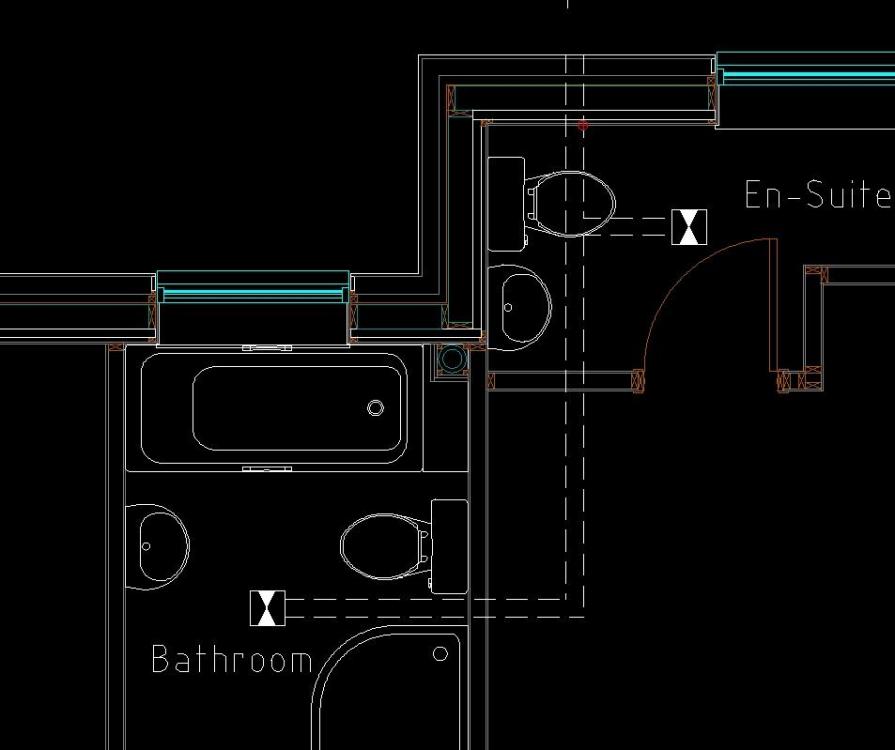
Due to the layout of the house i am designing, as a bathroom and en-suite are close together there is the potential for both to share the same extractor duct work, which means only one external penetration, which is good. However there vents would need to have some sort of check valve in them so that when the duct was pressured by one room, the extract wouldn't be vented into the other space, does such a thing exist. The extract fans would likely be ceiling mounted, does anyone know if these have one way valves in them? While i am looking at this, i have also assumed that both bathroom and en-suite will use a single soil pipe, which is vented through the flat roof
-
I think that you will need to go back to planning, as you don't have any permitted development rights now. You might be able to get the alteration in under an non-material amendment, it will depend on the view of the local authority. The flat room one is probably o.k, but i think that the ridge roof lights won't be able to dealt with as a non-material amendment
-

Windows, acoustic level and recommendation help
Moonshine replied to sw879's topic in Windows & Glazing
Yep, though other uni's do MSc's in acoustics, I got my two degrees from one of those. -
Windows, acoustic level and recommendation help
Moonshine replied to sw879's topic in Windows & Glazing
It's a good topic / profession ? -
Rough cost of a 150m2 dormer bungalow in York
Moonshine replied to Falesh's topic in Costing & Estimating
main contractor, probably edging towards £2k per m2, so rough estimate of £300k -
Basement floor options and integrated garage access
Moonshine replied to Moonshine's topic in New House & Self Build Design
Thanks i hadn't thought of that, but i do think that it takes up too much space, and make make any under stairs storage difficult /awkward to get to There is another factor of having the stairs in the entrance hall which is as this is a basement there is a retaining wall to the rear of the garage and entrance hall. Having the sunken steps here seems to me that it will make for complex (aka expensive) detailing / foundations / slabs. -
Windows, acoustic level and recommendation help
Moonshine replied to sw879's topic in Windows & Glazing
That sentence in bold makes no sense to me, what is the 33.1 figure? if its mm its a hell of a thick piece of glass and will be very heavy. This is where i bow out, as i don't know your plans nor where you are getting back ground ventilation from (rear of the house?), but typically it is from the room that you are in, be that from trickle vents or a mvhr. if you have trickle vents in these rooms then they should be acoustic, otherwise you are circumventing the expensive windows you have just specified/fitted. The drawing they have provided is an over the frame vent, and not typical. 'usually' trickle vents in upvc/alu are 'in frame' as shown below (its the horizontal bar on the top of the frame) If it was an in frame vent, you could buy and fit your own, all the frames need are slots / hole put in them (see below) that the trickle vents go over. -
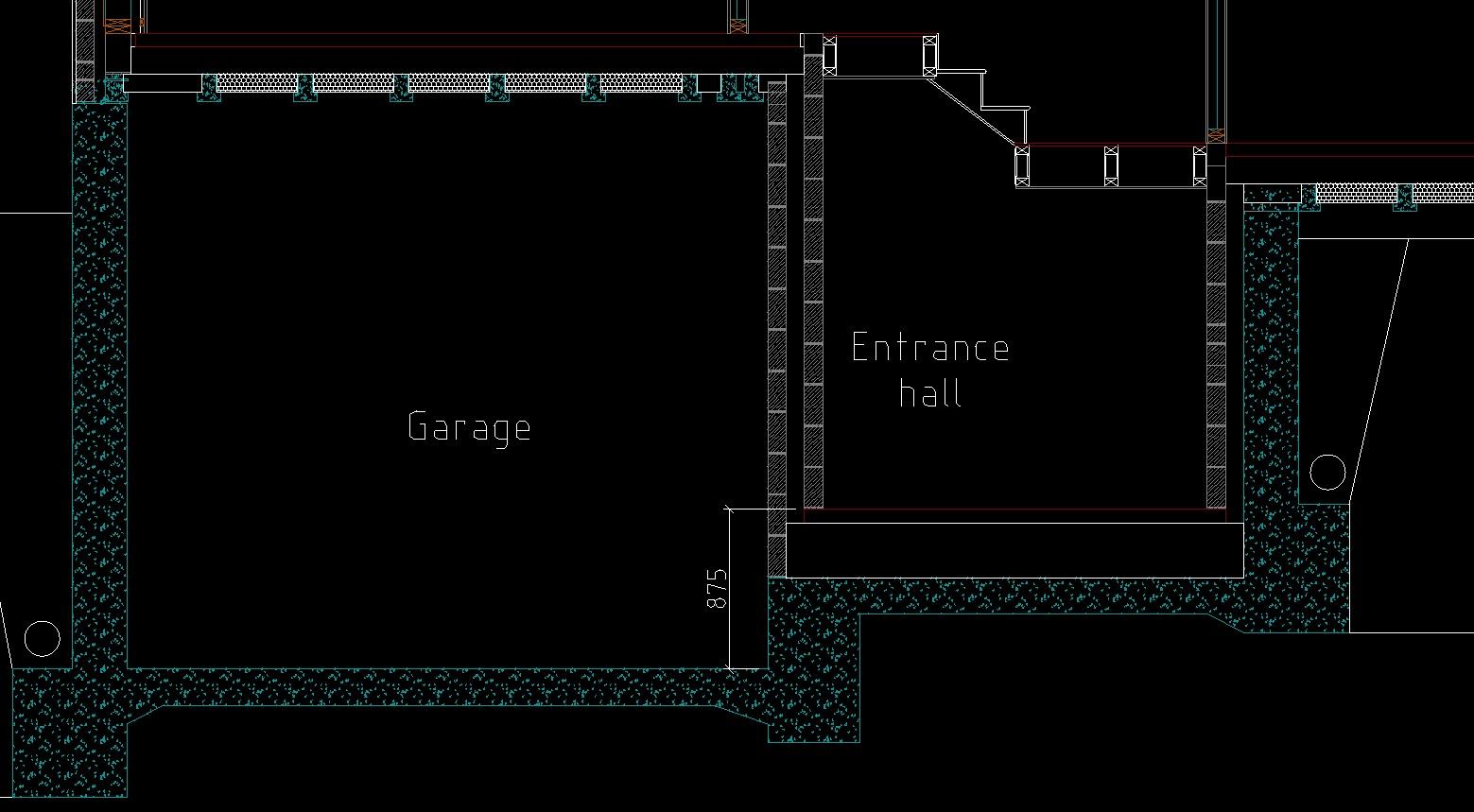
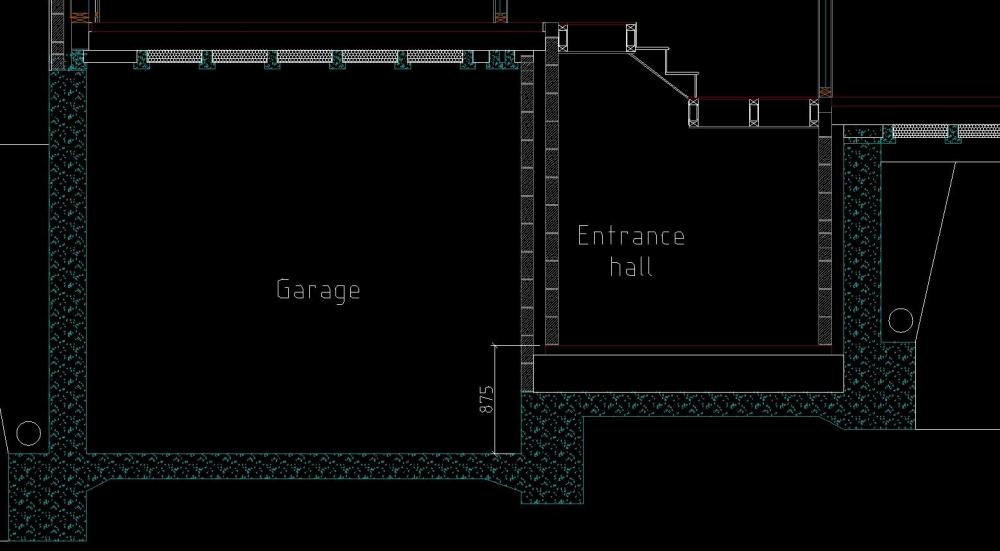
Due to the levels on site, the car access to an integrated garage means it s 875mm below the floor level of the entrance hall of the house i am designing, as the section below shows. I want to get access to the integrated garage from the entrance hall so there will be a door between them. There are two options to make up the level difference, stairs the garage side or curved within the entrance hall. These options are shown in the attached diagram. I think that the easier build is to put the steps in the garage, but want to make sure that it won't cause issues in the space taken up by the steps, though looking at the plans the steps in the garage are mainly within the door arc so that area will need to be kept free anyway. Looking at an estate car these are about 4700mm long, so there should be just enough space. Also while i am on the subject, how do you thermally insulation the door properly between the garage and entrance hall? Basement floor options.pdf
-
Floor Joists: Open Web Engineered VS. I-Joists VS. Traditional Timber
Moonshine replied to Patrick's topic in Timber Frame
I am bring this thread up again as its now relevant to me, so have things changed or I-Joists still the preferred choice? -
Windows, acoustic level and recommendation help
Moonshine replied to sw879's topic in Windows & Glazing
yeah 33 dB isn't great, i think plan in now how and which products you may use for secondary glazing, but stage 1 is just the sash window by itself and see how that performs. You need to consider background ventilation and how you achieve this, as you don't want to have your A/C on all the time for this, you may need to think about acoustic trickle vents on the sash windows (ask Bereco if their frames can accommodate these), though you have to bear in mind that the acoustic rating of these vents need to be matched to the window spec (i,e at or slightly higher than the window), see below for a high rating acoustic trickle vent https://www.greenwood.co.uk/product/95/2500ea-5000ea Also if you end up having trickle vents for background ventilation, and then fit secondary glazing you then have another barrier to get the fresh air through. I don't know if you have an architect, but i would suggest you ask him about how background ventilation will be achieved (i am sure you don't want your A/C running 24/7 for it) -
I ended up cad'ing up the house layouts and the UFH layout to see how it would fit in, any comments on the general layout? I have tried to get the heat to the large sections of glass first and external walls first. The largest circuit (green) is 98.7m The house section on the left is 600mm above the right hand side of the house and my concern is the how to get the pipes up that step in a riser (currently 35mm riser). I suppose at the lower edge of the house the pipes can start their turn in the screed (75mm) but at the top of the 600mm rise some more thought is needed. I don't want the radius to be so tight that they kink. Also my current thoughts are to have the manifold at the back of a kitchen carcass / cupboard. Edit: gah, found out the solution! there are bend supports for the UFH pipes, with a turn radius of 60mm for 16mm pipes. https://www.thermotech.eu/Underfloor-heating/Accessories-underfloor-heating/Pipe-bend-support UFH layout WIP - rise close up.pdf UFH layout WIP.pdf
-
Windows, acoustic level and recommendation help
Moonshine replied to sw879's topic in Windows & Glazing
umm, that is an incredibly high spec of window (assuming they are Rw), and i would be interested what they are saying window build up meets the Rw 51 dB, and you would probably be looking at a thickness over a standard frame here is some sash windows with very good acoustic performance (test data up Rw 42 dB) which can accommodate up to 35mm thick glass. https://www.bereco.co.uk/timber-windows/sliding-sash-windows/ I would suggest that you fit an acoustic sash window as a first stage, and if noise is really still an issue, fit secondary glazing as mentioned by @Dreadnaught in the rooms where it is still an issue. Acoustic-Data-Report.pdf Also are all rooms an issue with noise, do all six face onto the road? What is the noise that disturbs you, general average road traffic or intermittent loud noise's from the road. Edit: btw what sash windows are in there at the moment? if they are old, single pane of glass, with poor seals around the edges that is going to be about Rw 25-29 depending on the seal quality. Also how are you now going to ventilate the space, as the new sash's will have good seals and won't provide air ingress which you may be relying on to background ventilation. -
I have been 2D cad'ing up some drawings and have found LibraCAD pretty good as a basic cad software, though have come a couple of things that i think that it could do better, e.g. editing blocks dynamically in the model, rather than in a separate window, and a 'paper' space for multiple drawing layouts. LibraCAD is fairly limited in its printing output but can do scaled drawings. Overall really not bad for a free piece of software. I am going to download freeCAD and see if that has the features that i would find useful.
-
Structural opening dimensions for window frames
Moonshine replied to Moonshine's topic in Windows & Glazing
Interesting, and it see that it varies at lot, The attached is details from Velfac of the type of construction i am likely to do, with 12mm either side, 12mm at the head plus a settlement allowance, and 30mm at the cill plus a settlement allowance. the settlement figure is on the drawings, and is dependant on if solid timber or engineered I joists are used. For this set of drawings i think that i am going to use this guidance, but with a note that final construction opening tbc Velfac masonry-timber head detail.pdf Velfac masonry-timber jamb detail.pdf Velfac masonry-timber cill detail.pdf -
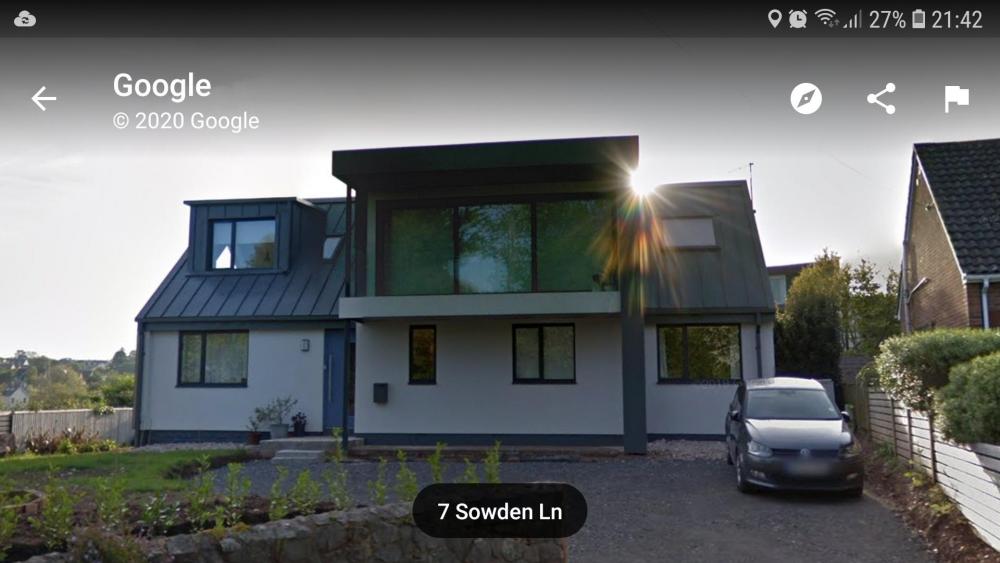
This is one that came to mind
-
I have seen a few different recommended differences between window frame sizes and structural openings, one being 12mm from frame to structure on each side of the frame, and one being 10mm difference for Both sides (i.e. 5mm each side). The build i am looking at is timber inner leaf, masonry external, and metal fixing straps holding the window in place. Does anyone know if there is a more definitive gap size, or what you used?
-
Another Devonian, how's the new build going, have you bought the plot together, to build and sell on at profit?
-
Welcomen fellow Devonian and will be interesting to see what you end up with. And scope to go into the roof, there are some quite stunning conversions down round this way. Depending on where you are I could give advice and examples of bungalows to contemporary done pretty well
-
treatment of existing leaking / cold lintel
Moonshine replied to Moonshine's topic in RSJs, Lintels & Steelwork
Exactly where my reaserch led me to last night, looks like I fix a 25mm batten to the current verge, and screw the dry verge onto that. -
treatment of existing leaking / cold lintel
Moonshine replied to Moonshine's topic in RSJs, Lintels & Steelwork
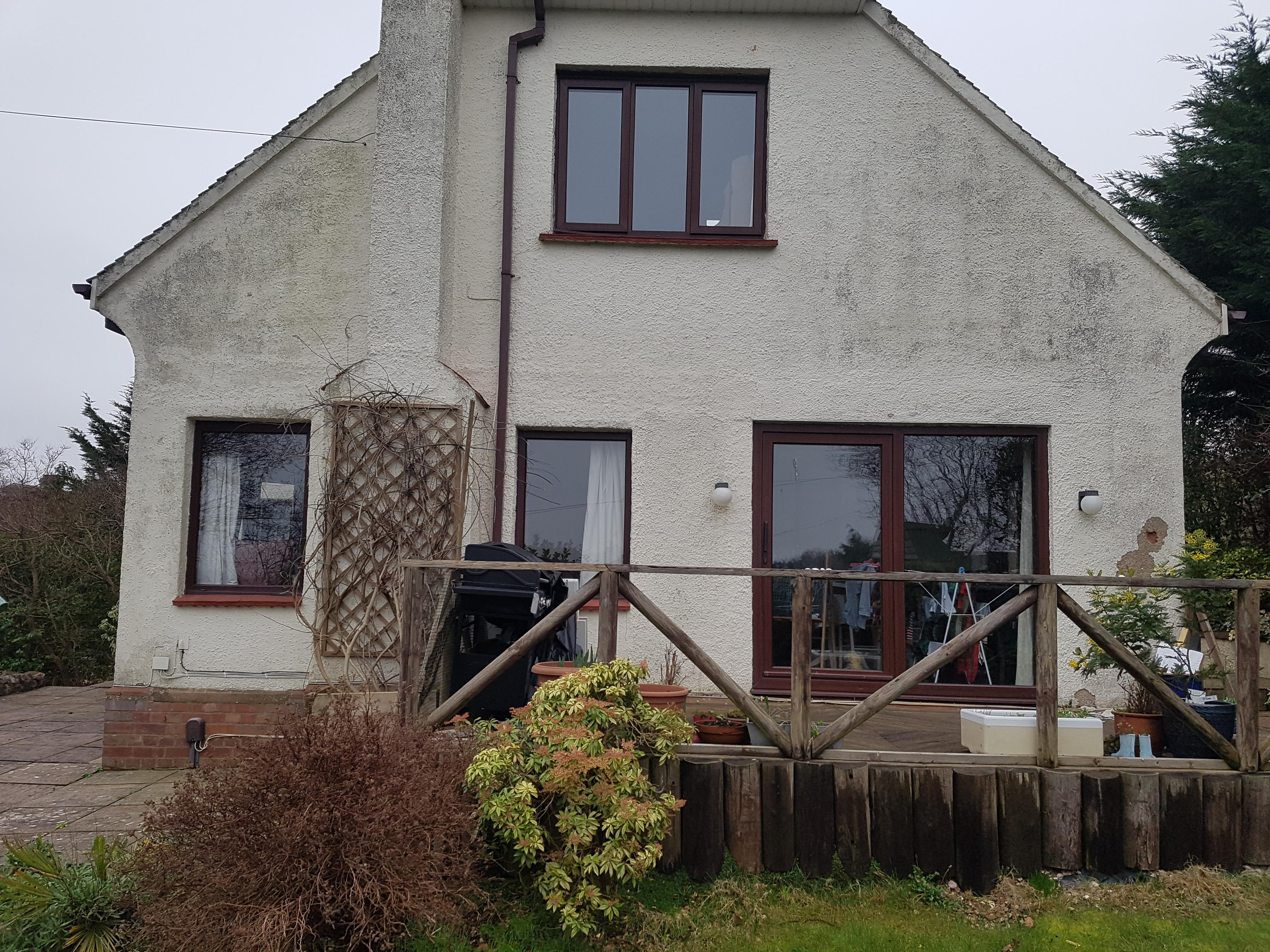
I think the cause of the problem has been found, water getting in below roof tiles and down the cavity. Found thanks to this photo Note the dis-coloured render to the left and right of the facade, directly under the pitched roofs, but not under the half hitch section. It looks like when it's windy rain in blown under the tiles. The solution could be repoint under the tiles, and put a pvc white sheet to cover the side of the tiles, which has a small lip to go over the tiles a bit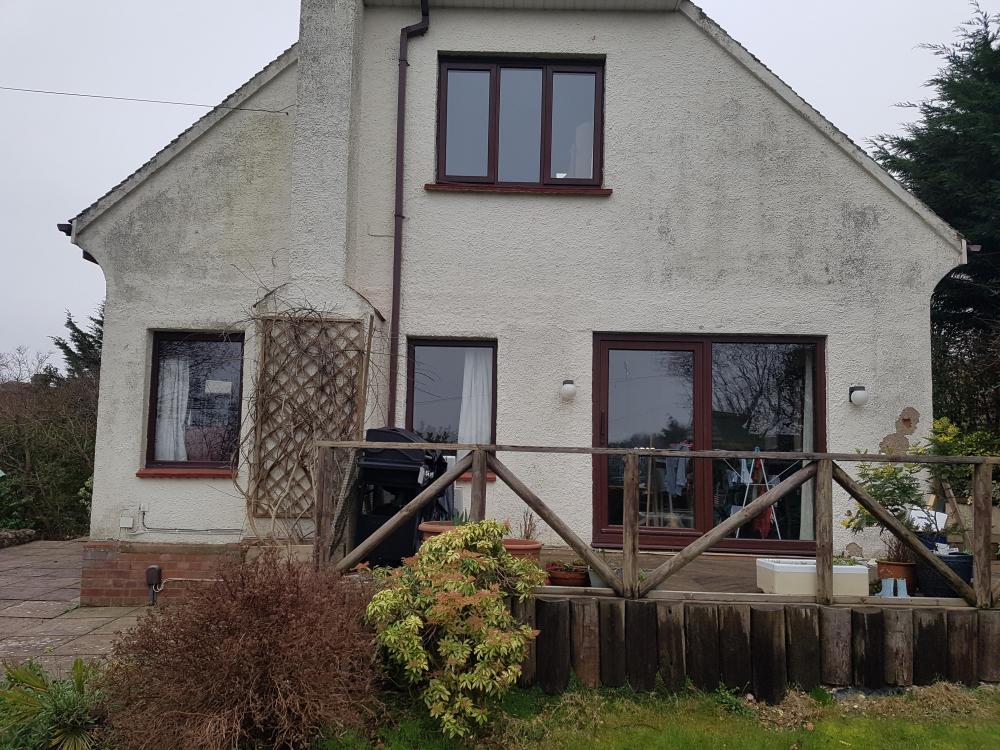
-
Removing old fence post concrete
Moonshine replied to Moonshine's topic in Landscaping, Decking & Patios
Cheers for the advise, I ended up drilling the post out, down as far as I could go, approx. 1 foot. What a pig of a job, 3 hours to put up a single chuffing fence post! I have put an extra layer of post Crete on top of existing concrete. There was damage
-
Removing old fence post concrete
Moonshine replied to Moonshine's topic in Landscaping, Decking & Patios
Alas no JCB ? All when I put the new post in should I wrap in dpm to stop it rotting? -
A fence post has broken off at the base leaving just the concrete foundation. Does anyone have any tips of how to remove the concrete in the ground so that I can put in a new post with associated concrete?
-
@nod, I have had a look / knock at the render at first floor level, and it seems solid, so the water ingress / damp / blown render seems to be limited to the ground floor. So The next question os, how do I stop getting render removing happy, as I will be using a breaker and cheisel, under the render, doing that would just carry on lifting all render. Is it worth running an angle grinder with stone cutter along the boundary area of bad render to segment it, so the good render doesn't get lifted during removal of bad?
-
Its only an area of 4.7m on the floor below (entrance hall) where the boiler and main UFH areas would go, so i don't know if it needs a separate manifold, it could be on a separate circuit from the floors above. My main query is how to get the supply down there, such as conventional HW pipework that could attach directly to 2 port manifold just for that area.