Moonshine
-
Posts
2094 -
Joined
-
Last visited
-
Days Won
6
Everything posted by Moonshine
-

Drawings ready for the pre planning.
Moonshine replied to Mike_scotland's topic in Planning Permission
They are auxiliary spaces, such the stairs / stores / utility / shower room, it just feels to me that the space clouded below (auxiliary spaces) take up quite a lot of space and with a bit of tweaking you could be more efficient with the space That said as @Ferdinand mentioned, if the guest bedroom and snug are slimmed down, then it would make the central 'living' area slightly bigger.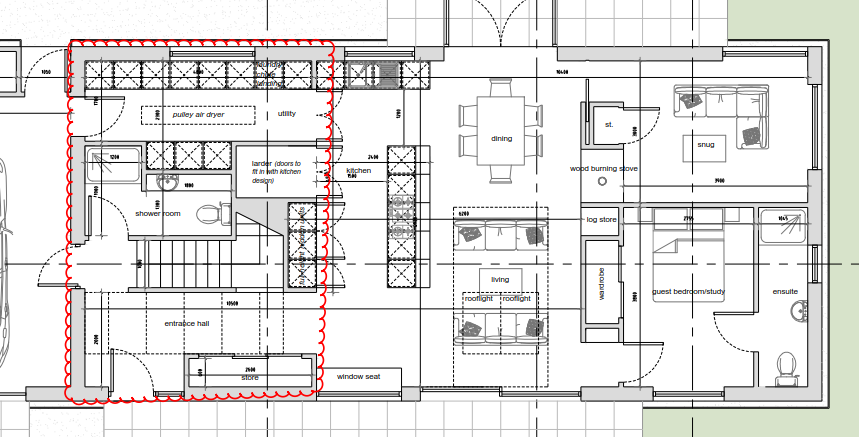
-
Drawings ready for the pre planning.
Moonshine replied to Mike_scotland's topic in Planning Permission
What are you going to do with the integrated garage space once the double garage is built? That guest bedroom en-suite is massive, i would make this smaller and have integrated wardrobe on the exterior wall. you may need to move the window. Ditching the integrated wardrobe on the separating wall would make the living room or guest bedroom bigger. I think that for the house that size the dining room / living room area a is pretty small, and i think that even with modest sized furniture its going to feel cramped. If feels that a lot of the ground floor area is filled with aux areas (stairs / stores / utility / shower room), and not space efficient. I would be trying to condense these down to make the dining room / living room areas bigger. I think that the allowance for the wood burning stove at FF level will need to be a bigger section. I don't like the location of the kitchen sink as the standing location for it is in the walk way between the utility and other ground floor areas (also double doors to the utility, why? -
Very good point, and thanks for raising it.
-
I know that to be CIL except you need to live in a house for 3 years after completion. Is that completion the date of the building control completion certificate? If so whats the minimum stage of build can that completion certificate get issued?
-
One potential issue with timber is comparable to masonry you don't get the low frequency performance you do with masonry as timber doesn't have the mass. You could go for a hybrid construction, 100mm dense block, which you could use a structural wall. The have a independent 100mm stud wall, with 50-100mm gap from the block, fill all the cavity with insulation, and finish with 2 layers of soundbloc. You will also need to think about flanking noise via loft if one of the wall leaves doesn't go up to roof level
-
They should do, if they are built right they should exceed Dntw + ctr 50 dB easily.
-
A wouldn't be that blase about it, there are the small matters of water drainage and tanking that have to be carefully considered. @Red Kite is living the basement dream at the moment and has lots of insightful information here
-
It might be worth a visit to one to see / feel, i have got a quote for a MVHR kit based on the house design (£2k standard / £2.5k premium + VAT) and i need to figure out how the house and my budget could accommodate it.
-
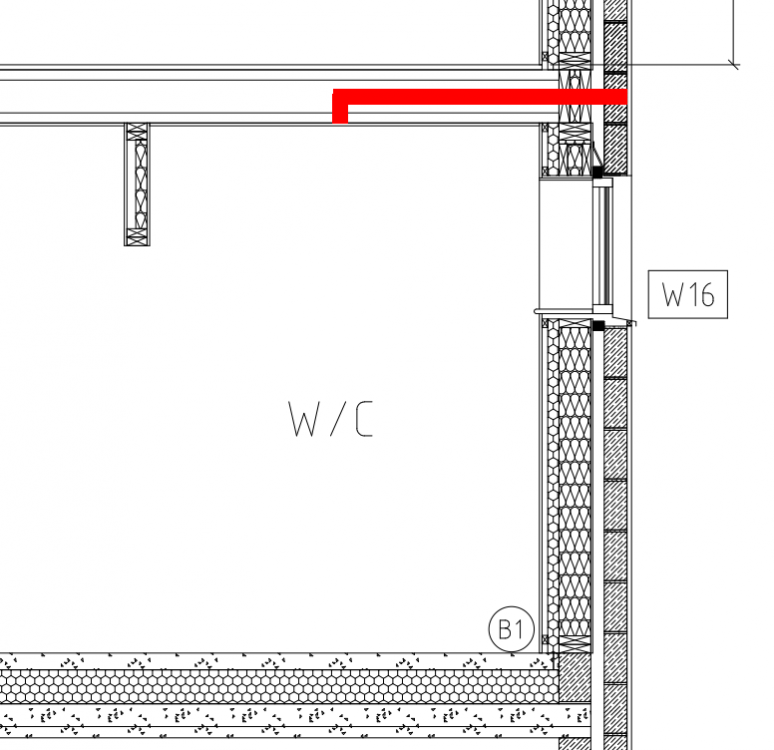
Spoken with them and from a building regs point of view they would be o.k with it, but they did point out that i maybe more of a civil issue later on, and that the area around the vent would have to be kept free. In this case i am the neighbour, so i would be fine with it, but would have to get things in place legally for an subsequent owner of the house(s), same with any foundation footings that were over the boundary line. I it looks like the simplest way to go out of the WC wall can happen but in the joist void.
-
What would you do about this?
Moonshine replied to recoveringbuilder's topic in Building Regulations
But that is purely a exception for loft conversions (which this isn't), so i think that its the full 2m over the whole width of the stair. See page 7 and 8 below https://assets.publishing.service.gov.uk/government/uploads/system/uploads/attachment_data/file/443181/BR_PDF_AD_K_2013.pdf -
What would you do about this?
Moonshine replied to recoveringbuilder's topic in Building Regulations
it would be good to know, but i think that a vaulted ceiling slopes down to that area, and it gets even tighter (ironically i think that the vaulted ceiling where the issue is, is @Christine Walker profile picture during construction), i presume the regs is the 2m height clearance on stairs Ouch, that looks worse from this angle, and i can see that its not going to be a simple solution, are you able to upload plans so the location can be put in context? if you have them, you can message me the PDF's i can cover all the personal information (e.g. site address / architect details) before you post publicly. -
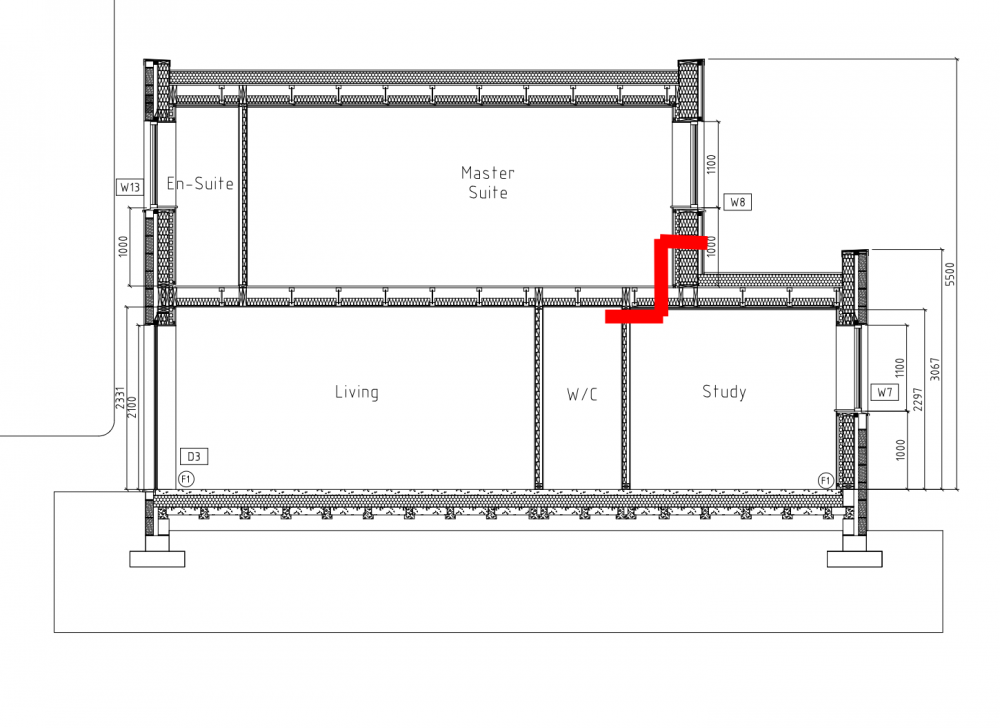
Master suite and flat roof (i want to minimise flat roof penetrations)
-
External electric and gas meter boxes in single skin walls
Moonshine replied to Moonshine's topic in Electrics - Other
They could do, but they will be taking up space under there, which would be better served for general storage. I probably need to have a bit of a think if they could go internally, and maybe better suited internally in the garage at high level, with just the consumer unit under the stairs (or in the garage). -
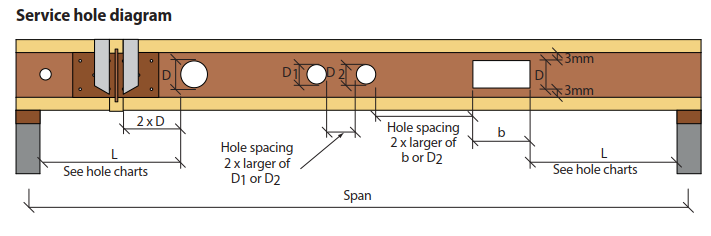
Good shout, the JJI joist technical manual has this (L) at about 1000mm for a 100mm diameter hole (4m span / 325mm joist). Looks like if the vent can go out on to someone else property this will be the simplest solution, to go though the joists and vent offset from the WC wall itself
-
i am or may not do, currently looking at conventional ventilation, and seeing how things work out. i could not find a definitive answer, if it was o.k to do this the exterior wall in the WC is cluttered above window height, so probably can't go through there. An alternative is to take the vent through the internal wall to the study in a boxed in section, and extract to the site through that wall, though you would be left with a ugly boxed in 'square' in the corner of the room. I suppose this could be floor void above and you would only have to take the vent through one or two joists (I-joists) before it exits with the run of the joists.
-
External electric and gas meter boxes in single skin walls
Moonshine replied to Moonshine's topic in Electrics - Other
unfortunately not as that space will have 'stuff' in front of it. -
I never thought that going downwards could be a solution, however does it still have to go to the front? Under the block and beam is a 150mm ventilated void via air bricks on the external sub walls, could it be ventilated just to that void? Again i don't know if that is even allowed!
-
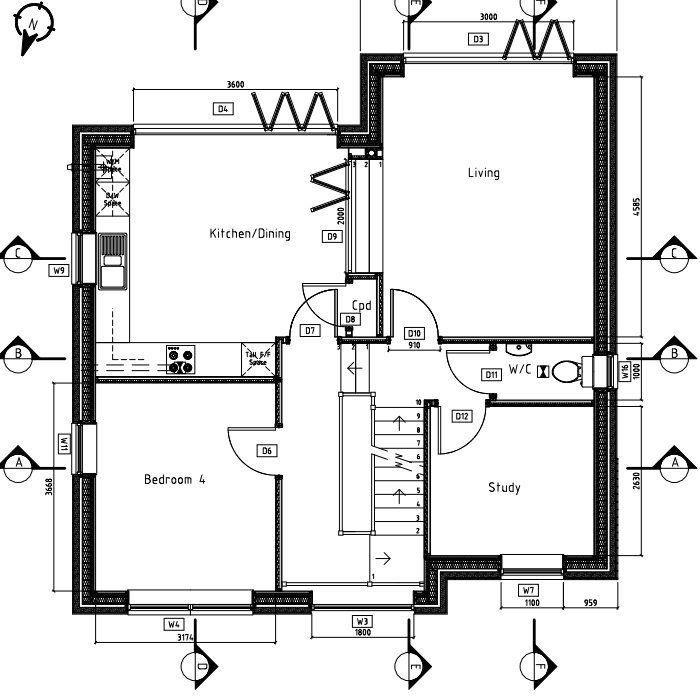
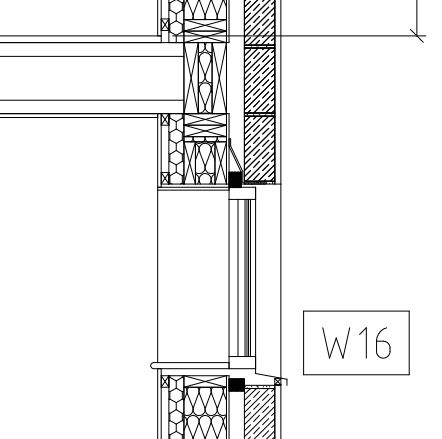
A puzzling conundrum for a Friday morning, how to ventilate a land locked WC as below The issue is that ventilation straight through the external wall is on to someones else's land, as the external wall is the boundary, i guess this is out, also the space above the window is limited (240mm from top of window to ceiling level), as below, and there would be issues with the window lintel / cavity tray. Space to both sides of the window are limited to about 200mm. In these areas and side of the house the joists are going to run along the lines of sections A-A, B-B, and C-C, so if it was going in the floor joists there will be a lot of joists to go through to get it out of either the study or the living, and tbh i don't really want to go through the study as that it to the front of the house. It could go below ceiling level, but would have to go in some horrible boxed in section. I am just wondering if could go through some S bend of vents in smaller boxed in section in the study and master suite above, exiting to the front of the house. but at a low level. It all seems very convoluted and i seem to be missing some simple solution.
-
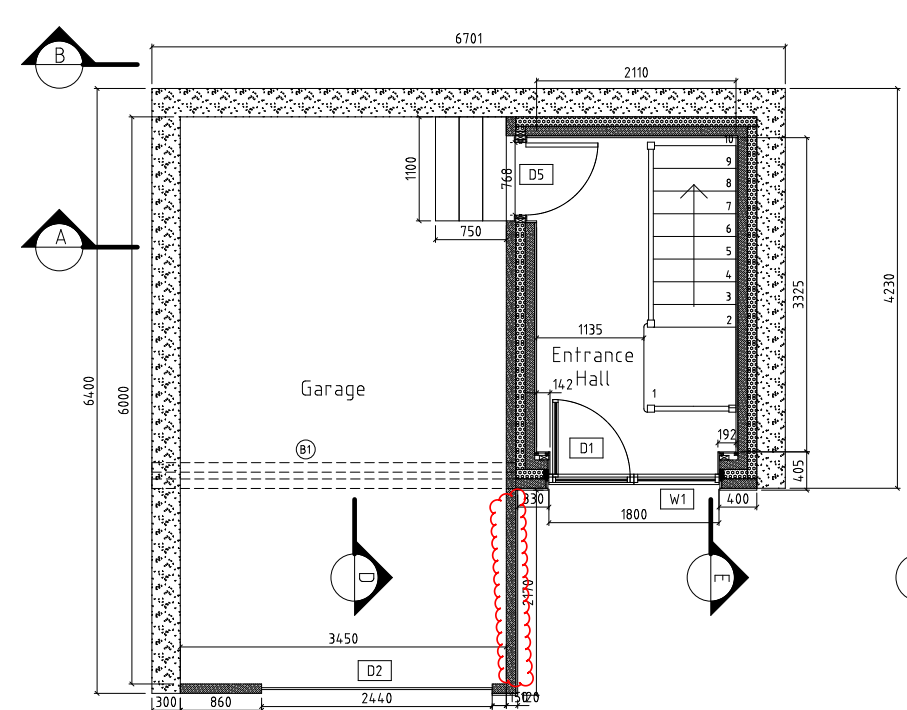
I am looking at potential locations of recessed meter boxes, and the best place for them to be would be in a single skin wall located between external and the garage at entrence level, as per the red cloud below. The problem is that the meter boxes are typically ~210mm deep, (150mm into the wall https://www.tlc-direct.co.uk/Technical/DataSheets/Mitras/MBEB1_Datasheet.pdf) so with 100mm block and 20mm render, these would be sticking out into the garage by 30mm. Would this 30mm overlay be o.k and the back of the box visible, or would it need stud work to cover it in the garage? and also a exit path for the cables to the consumer unit. If so the single skin of block work could move 50mm to the right to allow for a stud batten to be fixed to the block and plasterboard over, thus keeping the same line as the internal wall of the garage. same issue with the gas meter box
-
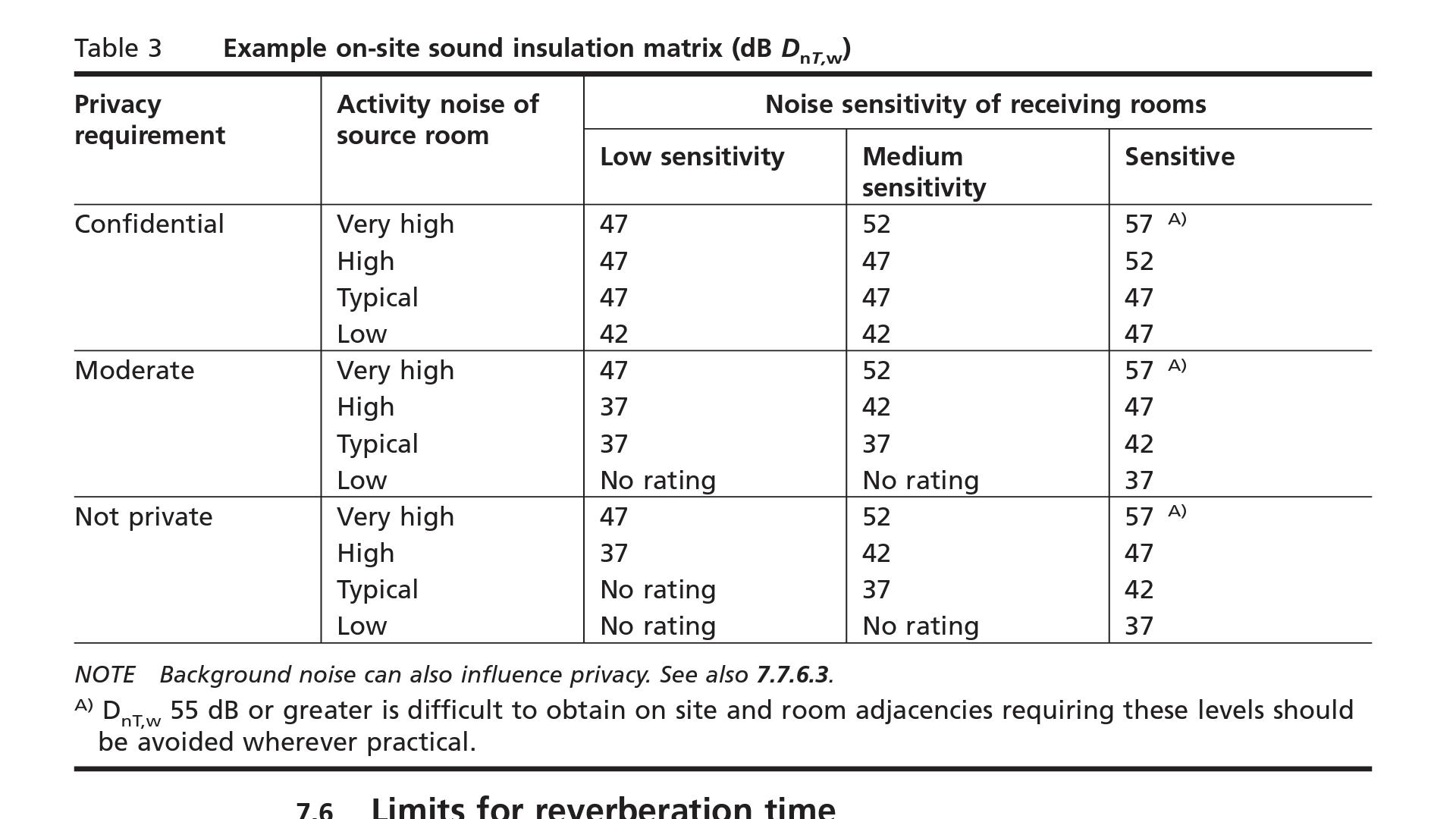
Tbh I don't think that would really be a worth while exercise as you don't know what the objective sound reduction of each wall is unless you test them. Also a masonry wall will sound different to a stud wall. The specification of wall can be derived buy using a matrix as below from BS8233:2014 (note these are DnT,w figures not Rw figures)
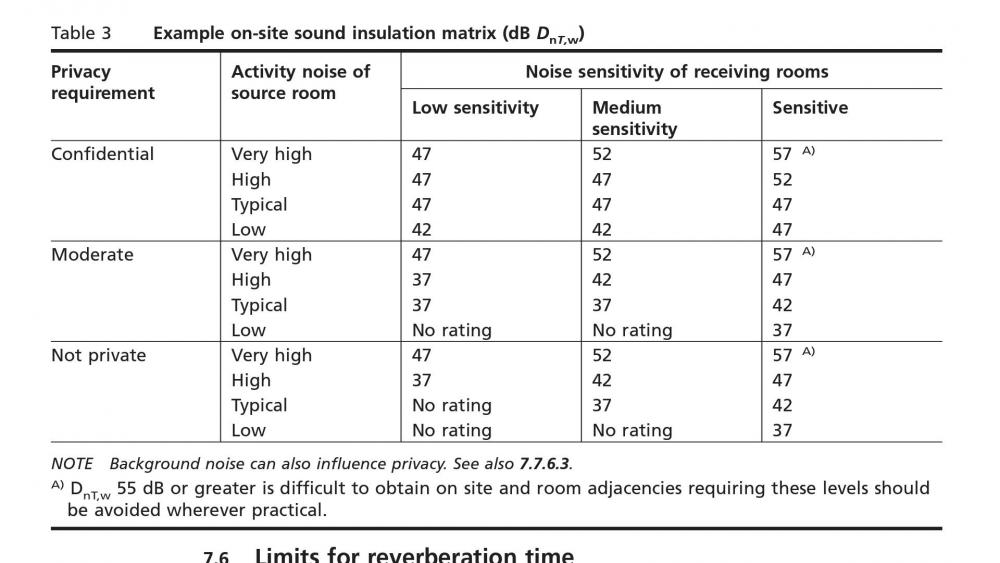
-
What would you do about this?
Moonshine replied to recoveringbuilder's topic in Building Regulations
I have designed the stairs for my proposed house and tbh it took me far too long to figure out the design, that said I am not an architect, and they are only on paper (CAD) so far. Could he have under estimated the roof thickness, and with a thicker roof causing the reduced head room. Have you got the original drawings? From the photo that stairs look very imposing, from your description, it sounds like it has a quarter turn after the first step. -
I have been doing acoustics for 15+ years and the term expert gets banded about a bit (i have been called one, but I really don't like the term). As you are building from the ground up you can do a lot in terms of layout and wall specifications. The lobby is a good idea, but you need to think about the practicalities and access, as getting a good acoustic door needs seals on all perimeters. Have a look here for the type of constructions. https://www.lorientuk.com/resource-centre/acoustic-search Also, are you looking to acoustic up-spec the external window?
-
bang on. I have sound tested E-WS-1 party wall constructions as below https://www.robustdetails.com/patterns/selecting-your-robust-details/steel-frame-walls/e-ws-1/ With the cavity filled with 300mm of insulation getting Dntw + Ctr 58 dB, which is 13 dB over the building reg requirements for party walls between houses. Build something like that (with timber) without the door in it, and that will be fine enough.
-
The doors are indeed the weak point, and you have two doors opposite each other on the 1.95m gap. So sound will go through these, and the sound proofing provided by the 1.95m gap is irrelevant unless the transmission path through the doors is treated / controlled. i can understand your loss of sleep is very important, but the sound insulation can be treated is a lot better way than a gap (derogated by doors), and you would loose all that lovely internal area.
-
A couple of comments That 1.95m gap is very awkward and i think that you should just include that in the envelope of the house. If you have that gap it will make the roof design more complicated. Is there only purpose for that gap for sound? you could get really really good sound insulation from a 300 - 400mm wall width. The lobbies to each of the larger bedrooms are slightly odd, why do they have doors on them? sound reduction from the main area? Generally i think you could be much more efficient with space, and get those two smaller bedrooms a bit larger and better integrated.