
saveasteading
-
Posts
10075 -
Joined
-
Last visited
-
Days Won
82
Everything posted by saveasteading
-
Self build funding - what would you do differently!
saveasteading replied to Harmony's topic in Self Build Mortgages
Welcome. Circumstances you haven't mentioned are your knowkedge and experience in construction and in management. How confident are you in the budget? Planning permission status. The construction process. Consultants/ main contractor / diy? -
Please ask, then tell us, why they are so keen. Also ask the architect for a cost indication and comparison. If they don't know then beware as they are playing with your money.
-
Ooh. Bold. I suppose it occasionally gets so full that it gets over the hump then siphons itself empty. I'd be nervous about a gradual buildup of jetsam in the dip. My instinct says to keep it sloping downhill.
-
And been able to adapt where therd are duscrepancies. I'm thinking of sensitive sites i suppose. Eg if you have to close the road for crane access, make it quick. It is a common fallacy that macdonalds are quick projects. As Conor says, the time is spent elsewhere.
-
OK so the blocks are eps and the topping is said to be structural. In that case we, here, can't dabble. The cracks may be unacceptable, and your Architect or Engineer or the manufacturer must examine and advise.
-
I've never used or considered clt. I can see that it might work for speed on site where that is critical and there are no huge spaces. When the clt sales pitch is entirely about sustainability I immediately assume it is expensive. I will remain dubious about its carbon footprint until proven otherwise. ..which is my field of expertise. I'd hazard it is the latest trend, promoted by architects, until the next one comes along, and is not pitched against other construction methods. I'd say don't design for clt unless costs are readily available from the outset.
-
Over 400m I would put in some rodding points, whether addressed by the regs or not . I haven't looked). In theory the effluent is clean by this stage, and shouldn't ever block, and the rainwater guidelines should suffice.
-
It is claimed that most fires extinguished by sprinklers required only one sprinkler, so not much water is required.
-
Screening design for heat pump - comments invited
saveasteading replied to JamesPa's topic in Air Source Heat Pumps (ASHP)
So design one that allows an ashp to operate fully, and make your fortune. -
Screening design for heat pump - comments invited
saveasteading replied to JamesPa's topic in Air Source Heat Pumps (ASHP)
+1. -
The decent crews I have known don't have a clue on this subject. On our recent installation the excellent jcb driver said he had put in about 30 tanks. He had never seen anyone checking the level so precisely, or using a spirit level, or having anything more than a soakaway as outfall. I assume these installations work but sub-optimally, with potential pollution or blockages. Then these decent gangs disappear and won't hear of any problems. For anchoring weight you can use lean mix or no fines concrete but it's no cheaper unless mixed on site. By calculating the weight required, you can minimise the concrete surround but it needs shuttering or slow work. I would first check if any manufacturers allow the tank to be strapped to the base.
-
As far as i know, this is the case. The residents don't seem to know anything about it really. So i've no idea how it switches over. All they know is that the ashp option takes a long time to heat up....makes sense with the existing rads retained. Cooker is electric. Next time im there i will try to poke around a bit more, if permitted.
-
I have been visiting in-laws. Their 2 bed bungalow has gas CH. The council have been along with money to spend and have fitted an ashp into the existing system. As far as i can see, they can use either the gas or the ashp. They don't really know what they've got or how it works, so neither do I. I created some confusion in suggesting that it may be better value to continue burning gas, and ignore the ashp. They also had insulation placed in the attic which is better value than the ashp. The bungalow is 1960 ish, and is cavity wall with eps pellets. Wondering what you clever lot think. Hunches are acceptable. Gas or ashp?
-
Screening design for heat pump - comments invited
saveasteading replied to JamesPa's topic in Air Source Heat Pumps (ASHP)
It's not like snooker where the bounce is precise and predictable. Sound waves will bounce off the wall in multiple directions, and probably make it between your new screen and the existing wall. There is also a science to the dimensions of the planks you use, hit and miss, but I have long forgotten any details. You clearly know to adopt hit and miss so perhaps have info on plank sizes too? -
Screening design for heat pump - comments invited
saveasteading replied to JamesPa's topic in Air Source Heat Pumps (ASHP)
yes. noise will bounce of the house wall and door and through the gap. -
There are previous discussions on BH on the subject of PIR between studs and rafters. I took it all on board (haha). Well worth a read. It is all true. PIR is hopeless to cut and fit between existing timbers which are at varying centres and inclinations, and still horrible with new timbers.. So 60mm is a good idea, being easier to cut and squeeze in with any accuracy. We ended up using half pir and half mineral wool which fills the whole space, then another pir board as the inner face before void and plasterboard. .
-
When we were seeing potential sparks, one asked about wall construction. When we mentioned the services void, his eyes lit up. I think that this showed not only that he would have that facility, but also that we knew what we were doing. His sensible quote followed and we are all happy.
-
Exterior / Interior Farmhouse Stonewalls - insulation
saveasteading replied to DavidKilburn's topic in Barn Conversions
Absolutely. We were concerned how narrow it might feel, starting at under 5m width in some places, but it is fine. Avoiding corridors helped a lot. The best advice I got early (ie something I hadn't thought about) was from an experienced renovating builder.....it was about the constraints of existing lintels and roof heights, when considered against the footing depths, assuming you want a new, insulated floor.. Sometimes there isn't enough height, if you can't dig without destabilising the walls. And one more fundamental....a services void in all the walls. -
In all the above, I am assuming fully treated waste. i don't think it does.
-
Screening design for heat pump - comments invited
saveasteading replied to JamesPa's topic in Air Source Heat Pumps (ASHP)
The use of alternating planks is crucial to sound reduction, so that is a great start. Is it about 5m high as the elevation suggests? I'd make the panel longer, overlapping the wall position, as noise will bounce through that gap. I'm not confident of that: any gap allows a high proportion of sound through. I wouldn't put any roof or insulation in. You need lots of unobstructed air flow. -
Exterior / Interior Farmhouse Stonewalls - insulation
saveasteading replied to DavidKilburn's topic in Barn Conversions
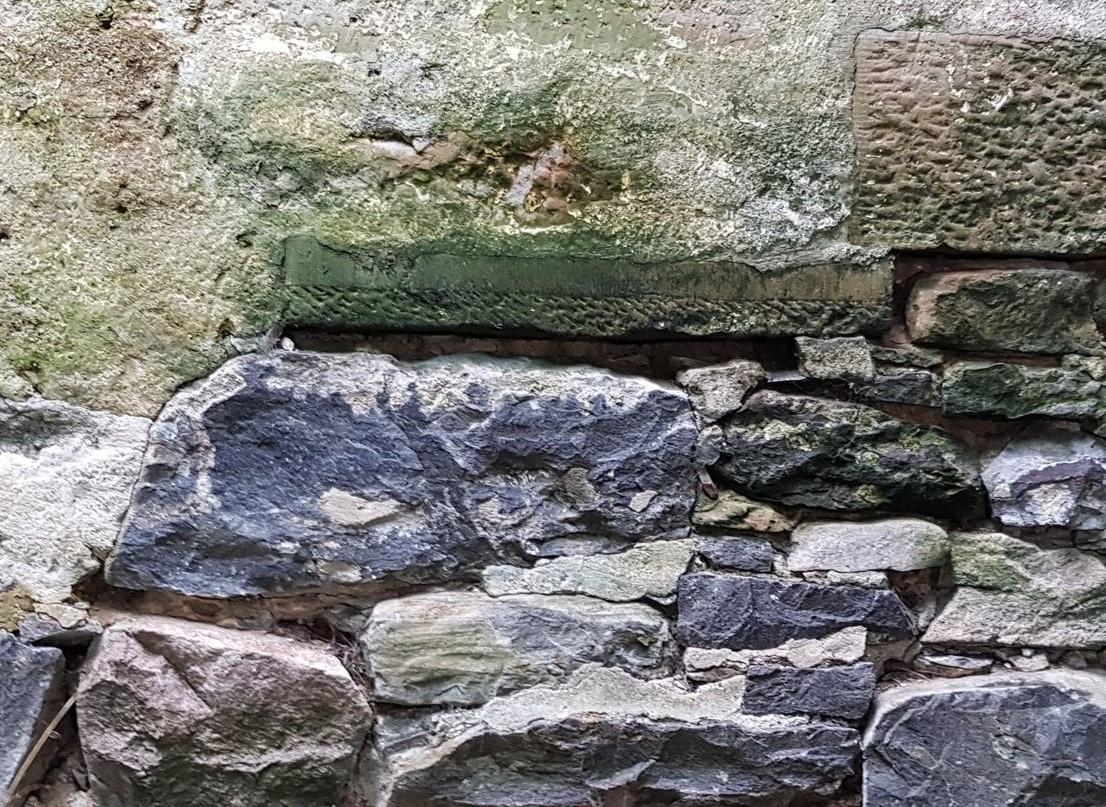
Welcome. Yes knock off the loose stuff. When it gets silly hard work, you can assume that it is well enough stuck for a few decades more. If it was to crumble off, then it would fill your gap inside the masonry and might cause a damp issue so you're right to take this seriously. It takes days per m2 to remove hard and sound render, and then you have exposed soft mortar that may need repair. It seems to me you've got this thought out, but keep asking. What is the wall makeup? what stone, dressed or rough, 600 thick? how deep are your footings? Beware undermining. It surprised me to find that a 3 layer stone wall had a worthwhile u-value. In addition to that, a stone like granite will shed the rain quickly (unlike brick) so the wind isn't sucking the heat out of the walls. The surprise downside we found was just how much internal space is lost due to the roughness of the internal walls. Making a line for your internal box is dependent on the furthest-in stones in both length and height. -
You are right, if the slopes and bearing capacity allows. It may cost more using gravity for such a distance, but the power comes free and is reliable.
-
300m is a lot of drain. As the pump would use a small and flexible pipe (50mm?) , a big hose really, it might be worthwhile though. It could just be inserted into a slice in the ground, which will close up against the pipe. No need for careful ,gradients bedding. or intermediate chambers. Peat won't provide much support, so a gravity pipe might go out of grade easily. Downhill makes it an easy pump so a small unit will suffice. 'Experts' will want to sell you a big chamber with pump fitted, so that it can hold waste in case of power failure. i think you just need a normal outflow chamber with a pump laid in it.
-
Shouldn't that also be over a huge area to satisfy the reg's? But to my eyes (and it seems all bcos) that is enough. We have the same sand by the looks of it, glacial deposits, very hard until disturbed. All sites should be made of it.
-
missed that message and info. But how straight is straight? lead is very bendy and could perhaps follow the line of the mortar if close to horizontal. Maybe i have also missed this, driving 600 miles. from the project to home, but are we looking at soft sandstone or hard granite (or even harder, flint?), as the extremes?

