


saveasteading
-
Posts
11094 -
Joined
-
Last visited
-
Days Won
98
Everything posted by saveasteading
-

Who can dig the trench for my new electrical supply?
saveasteading replied to Bancroft's topic in Electrics - Other
I'd have to check, but there is some distance rule (25m or 40m??) whereby ssen etc have a sudden jump in price for their bit. We put in a duct from the source pole to a new kiosk, and uk power joined them. Thereafter it became all ours, trench and cable. The kiosk is on someone else's land, but all formally agreed. It saved many £k. -
Contesting final invoice - please help!
saveasteading replied to Tom's topic in General Self Build & DIY Discussion
You mean that a standard form of contract was agreed, just never formalised? -
One of these. 12mm dia might do it and they are supposed to grab hold behind, though it works better for the demonstrator than for me.
.thumb.jpg.7fb681fe5beeeae28740690bb881074e.jpg)
-
I've been amazed at how poor some "site managers" are. Management was a mystery to them...they sat in the cabin and passed queries through to head office. Very bad value but every big site needs a babysitter with a first aid cert.
-
Contesting final invoice - please help!
saveasteading replied to Tom's topic in General Self Build & DIY Discussion
Does the contract show a retention? You might be stuck on this one, but hold tight on everything else that isn't done or right, peehaps including some contingency as prev mentioned. -
Contesting final invoice - please help!
saveasteading replied to Tom's topic in General Self Build & DIY Discussion
The project has been payment in arrears throughout hasn't it? Same applies now. Finish thd job and get paid. You know them. Would they return to do the certificate after final payment? Your turn to advise of small claims court looking like the only way? -
I am out of touch but i think the money is very good at the top and you stay in a nice cabin much of the time. But you are right that there is more to it. For the big projects, relocating so often, and at some stage the family says no. I wasn't ever taught management but on big jobs you absorb it. Plus my first important role was character building (sixer). That doesn't help the OP at all, and i don't know what can?
-
I've got some of that mouldable stuff (just in case) but forgog about it anf never tried it. I could maybe model it as as a tube with a groove and a screw hole. First I will see if a masonry fixing will fit. One of these new Fischer ones. That sounds tooeasy.
-
I'm told that Chartered Civil Engineers mostly move into managament outside of the industry. Is that inherent or due to learning how complex civils management is? It probably doesn't apply to Materials Engineers, working indoors. It is just management, but with the weather and new people all the time. Lists of tasks, on a programme. Getting materials on time, Access, health and safety. And mostly: people management. Awkward, know-it-all people. Keep trades in a linear process, not interacting, and all will be well.
-
Are some snots and caps a problem on the inside of a new brick wall?
saveasteading replied to Bounce's topic in Brick & Block
Blocks down, keep the ties in place, break off snots and remove, repoint the brick inner face. Hand the bricky a picture of how it should be. build block with insulation. Does that mean that the insulation is tight to the blockwork and a gap to the brick? -
Can't see it but I may try. May see is the right size of child is prepared to put an arm in there. Otherwise I need to make one. Plasticine for a mould. Anyone know if there is a plastic that will then squeeze in and harden sufficiently?
-
Are some snots and caps a problem on the inside of a new brick wall?
saveasteading replied to Bounce's topic in Brick & Block
It is probably what is happening on lots of newbuild, due to shortages of skills and supervision , but gets covered up and not seen by bco. The big developers ' invite' bco at a stage to suit themselves. So expect resistance from the builder. But it remains unacceptable. That wall will perform about 10% below if it was done right. -
Not quite. The middle man remains. But the point is to take a whole bundle of 1m2 x the length. It needs very little handling so the merchant can look at it as ' a thing' with a single markup. Guessing here.... buys 6m3 of timber for £2,000, add transport £100, adds profit £300. Compare that £300 to handling at the depot then manhandling small quantities. The first time I thought of this. 2 x 2 battens in 6m lengths, the BM manager surprised himself with the price he could offer if worked back to £/m. But do you need that much of a particular section in that length? will 4.5m or 6m be more efficient in waste avoidance? We will overdesign some elements in order that we use it, so that has a cost.
-
Are some snots and caps a problem on the inside of a new brick wall?
saveasteading replied to Bounce's topic in Brick & Block
That is unacceptable. -
My most useful books on building are a set of very old ones, available second hand., with lots of drawings....but the title escapes me. If you are into the Engineering side of things, this comes to mind. The New Science of Strong Materials: Or Why You Don't Fall through the Floor (Princeton Science Library)
-
Well done.
-
Auctions are for risky sites. I'm an expert and I would want 2 weeks research before considering buying or even advising. Are there manholes? Depth, diameters, problems? I suggest walk away unless you love a huge gamble AND the site is very cheap.
-
Are some snots and caps a problem on the inside of a new brick wall?
saveasteading replied to Bounce's topic in Brick & Block
It's not good work but unfortunately normal. The extra snotty snots at the corner will prevent the insulation fitting tidily. They should be knocked off and removed along with the bottom heap. The internal mortar gaps are inexcusable too. They are part of the strength airtightness and rain resistance. Seems to be a bit random. Enough ties? Can we see it from above? -
The good news first. Roca have been very helpful in identifying the replacement part needed. Their film of how to dissemble is slick and quite accurate. Not so good : it needs a new inlet as I have identified that it doesn't close off and apparently it isn't cleanable. And I dropped a bit into the tank. It's a plastic spigot that the front plate screws into. Value about 10p. But the tank is so narrow that I can't get my hand in. If only they made the tank an inch wider or the part floated. And roca have gone quiet on the part number. I might end up bodging a way of fixing the plate on. I've been several hours doing this and now starting again. I wonder if a typical plumber would have known what to do. Moral....beautifully made but impractical. The next house is having exposed cisterns and that is my advice to anyone.
-
Connecting to 110mm soil pipe
saveasteading replied to jpadie's topic in Rainwater, Guttering & SuDS
Correct. And you can get some extreme belches. A grille for leaves is a bonus. -
Remote DNO Kiosk, need cable to consumer unit indoors
saveasteading replied to Post and beam's topic in Power Circuits
You will not pull a 25mm cable through a 32mm conduit unless it is dead straight and a big pit each end to feed it. There are standard details for such supplies. I don't have any to hand but trench depth, bedding, warning tape. -
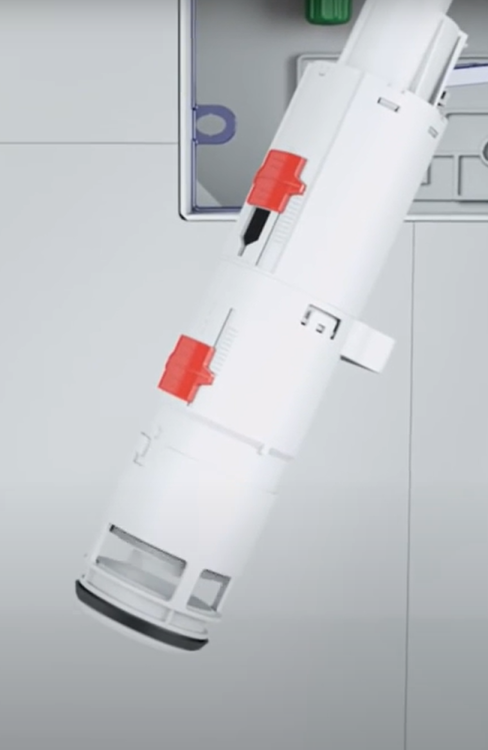
That's the query really. acc to the spec, the thing seemingly does, as suggested above, 3/6litre flushes I assume that means up to 3 and up to 6 litre, so what the scales saying 0-8 and 0-12 means is a mystery. And POM does not appear as plumbing on any searches .
-
Fire resistant party loft wall.
saveasteading replied to Mike DC's topic in Lofts, Dormers & Loft Conversions
For general interest. About 10 years ago the bco said to me for the first time, that a standard detail was essential in all cases. ie a manufacturer's tested assembly or an approved iteration. Prior to that I would sometimes submit a composite design, or a 'common sense' design, plus I had a training certificate to back it. That change was understandable, given the disasters that had occurred, although on the biggest one the test was fiddled. My proposals had been, for example, we don't need that layer of plasterboard because we have a skin of brick. OR this has been proven with meta stud therefore it works at least as well with timber. @Mike DC therefore choose not only one that works but also that you can achieve practically. eg can you get the plasterboard to position and still get your screwdriver in.? The tests are all carried out in the middle of a sample wall, ie no perimeters. That is somewhere that you can use common sense, in covering all trims and filling all gaps. Do NOT use foam unless it is fire rated. Better compress rockwool into any gaps. -
I have successfully removed the bits from the Roca concealed cistern. There was an excellent video, although it was difficult to find. further to an earlier post, I was very pleased to find an additional stopcock inside. the space available is tiny but it all clicks apart. I dread dropping anything. The quality is stunning, although we will see if it goes back together again I was expecting to find lime on the washer, thus being easy to stop the constant running, but there was no buildup. So I have given it a clean anyway and will shortly start the reassembly. But I am concerned that I have moved these red sliders. I had assumed that they adjust the water flush quantity, but I can't see any effect on the mechanism. The top one is labelled 'half, and bottom one labelled 'full', so that is simple enough. On the red sliders the top one is marked >POM<1-2 The bottom one is marked <POM<1-3 I don't know what POM means. and behind the sliders are scales the top one being 0 to 12, the lower one being 0-8 the picture attached is a screenshot from the video apparently set at zero for full flush and 12 for half flush. confusing or what? I will accept any guesses but obv would love any real knowledge. I think I am going to put it back together with both high numbers. Might see if I can reduce the fill level too in case that is the issue.
-
Do you mean that there is a recess in the face of the wall, between the e flanges of the steel? It shouldn't bd a corrosion problem unless very wet for some reason. But it's v easy to paint in bitumen or oxide anway. Then the posh solution is metal angles screwd to the steel to support cement board. The other way is simply tanalised stud instead of metal OR even simply wedged in place...Nice and solid. My choice is bitumen then galvanised angle.

.jpg.6d3fd174c4990478b187f60cedb32a5c.jpg)

