markocosic
-
Posts
979 -
Joined
-
Last visited
-
Days Won
1
Everything posted by markocosic
-
Is it? Any examples? Boggo MCS installs average 2.8 for hot water (usually with new cylinder) AND space heating. I'm not convinced they'll be more like 2.5 when you're having A N Other doing the installs on A N Other cylinder myself.
-
Yep. Say a £1500 uplift (cylinder and gubbins; but not the 3 port valve and pump changes etc that you'd be needing anyway) Repaid on a personal loan over 5 years at 10%; winds up costing £31.55/mo or an extra £393. Say 2 kWh per person per day; 2.4 people; 15 years; 26280 kWh. COP 1.75 vs COP 3.5 at £0.30/kWh? £4500 Vs £2250 over pessimistic 15 year life. More than pays for the cylinder upgrade and the interest. A more realistic life for a decent stainless cylinder will be 30 years or more. But as you say most people are as financially literate as a cabbage and are making these decisions on emotion rather than reason...
-
Disagree here. The efficient cylinder is the CHEAPEST solution. Over the product lifecycle. I think the REAL issue here, base install cost (less cylinder replacement) aside, is people simply not wanting to spend the money upfront on what is overall the best value solution. For some, it's because they're planning to sell within the product lifetime and the new buyers wouldn't value the energy efficiency measures. (I'm in that boat) For others, it's because they're not credit worthy/are already living beyond their means, so can't borrow the money now to save themselves money later. For others, it's simply that they're mean, and have access to the money, but don't want to spend it on heating and hot water. Most owner occupiers are in group 1 or 3. Same issue with insulation etc. Bit they're quite happy to buy anew kitchen or a new car regardless of the economics.
-
You really do have a problem with people charging what the job is worth to clients; don't you? 😉
-
Or, worse still, people diverting PV. If you want to do this today you can do this today. Buy your £3k Vaillant unit. Bash it in. Shove the temperature sensor against your cylinder in the appropriate spot. Enjoy. You don't need to buy the all in one unitower. Or the cylinder. What you won't get with that is any grant funding or any product support of course. It isn't worth the heartache of supporting the nuckfumpties shopping in the speedfit section at Wickes putting together their own designs as a manufacturer. Take the package. Take the bits. Don't expect design support unless you buy the package though. I don't hold it against BG that they won't go unvented cylinder unless flow is adequate. It's probably somebody trying to avoid complaints from those going from vented to unvented on a naff supply; not thinking through that if you're deleting a combi life gets better not worse; and offering in the mixergy instead because their manual says 10L/min is ok therefore customer complaints can point at mixergy.
-
Try again. Coil runs at 52.5 / 46.5 C (mean temp 49.5C) for water at a nominal temp of 45C. 8.8 kW to the water (not 2.4 kW) Call it 5C dT on the coil and 5C to the water for arguments sake. Bump that to your 50C setpoint. Heat pump 57.5/52.5 and 8.8 kW. Drop the coil to 1.5 m2. Now you're 10C above not 5C. Heat pump will be 62.5/57.5 again IF it can maintain a 5C dT on the coil side by dialling up the pump. Drop the coil to 0.75 m2. Now you're 20C above not 5C. Heat pump will be 72.5/67.5 again IF it can maintain a 5C dT on the coil side by dialling up the pump. Picking the right figures to work form I now agree this could work on a high temperature capable unit as a retrofit if you keep to a 50C cylinder temperature and say 6 kW input. Increasingly marginal if you want to store at 60C though. And I still don't see the reduced hot water volume being stored as particularly viable. Or it being economic over 10-20 years to take the COP hit by operating at nasty temperatures. @Dan F has a Mixergy setup IIRC chose coil is too small. COP 2-2.5? 15 years as COP 2 vs 4 costs? Old post above saved for posterity!
-
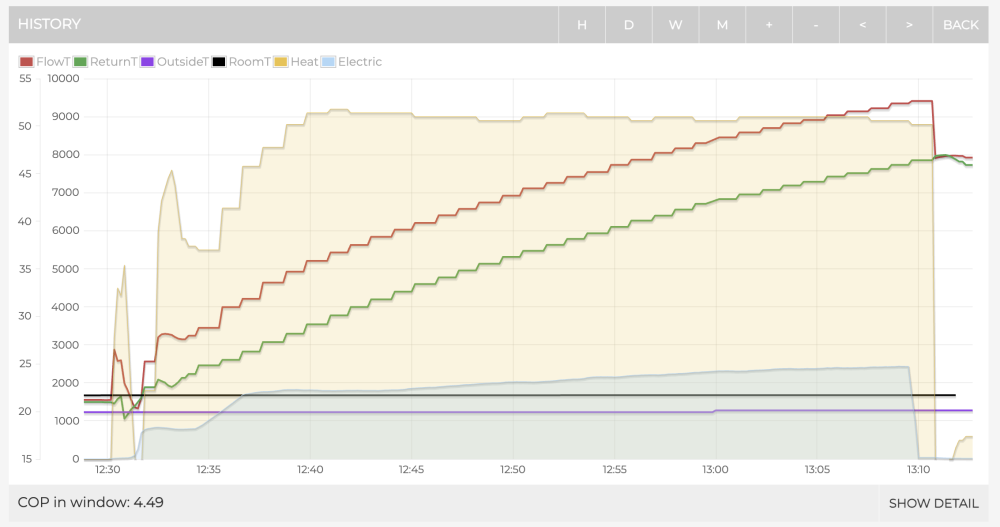
Mean water temperatures on the heat exchange surfaces. You're suggesting: Base case 55:50 (MTD 5) with 3m2 coil High case 70:50 (MTD 20) with 0.75 m2 coil Same power is transferred. That's what I've worked through above. Short of setting up an example lets's start with a best/base case and work backwards using simplified assumptions shall we? [edit: the below is wrong - was looking at electrical input not heat output] Let's look at a modest (7 kW nameplate; 8.6 kW at 45C flow temp at design condition) heat pump with the wick turned down to minimum (2.4 kW at current ambients) delivering DHW to a very modest 45C target in a cylinder with a hulking great big coil. (Vaillant's largest heat pump cylinder IIRC) https://emoncms.org/app/view?name=Primary&readkey=eec7334e58f2a6927a9ff7b27c8c7e63 Coil runs at 52.5 / 46.5 C (mean temp 49.5C) for water at a nominal temp of 45C. 2.4 kW. Call it 5C dT on the coil and 5C to the water for arguments sake. Bump that to your 50C setpoint. Heat pump 57.5/52.5 and 2.4 kW. Bump that to 4.8 kW. That's still lower than the largest of heat pumps but not out the question as a minimum for a 10-12 kW unit. Coil of 3m2 must now be 10C above not 5C. Heat pump will be 62.5/57.5 IF it can maintain a 5C dT on the coil side by dialling up the pump. More if it can't. It probably can. Drop the coil to 1.5 m2. Now you're 20C above not 5C. Heat pump will be 72.5/67.5 again IF it can maintain a 5C dT on the coil side by dialling up the pump. Drop the coil to 0.75 m2. Now you're 40C above not 5C. Heat pump will be 92.5/87.5 again IF it can maintain a 5C dT on the coil side by dialling up the pump. Clearly this isn't realistic. Pretty sure our simplified assumptions are wrong (you're going to get better heat transfer to the water by driving larger convection currents with higher heating powers / the coil to water dT won't be as extreme) but you see how this can escalate quickly / compound quickly if you have (a) large minimum turndown AND (b) small coil area AND the icing on the cake is (c) you need to heat to higher temperatures.
-
Best of luck! I said the same to DECC when they were setting up the RHI and decided to exclude air to air heat pumps (minisplits) for off gas properties from any grant funded promotion. Why? "It's already cheaper than oil or lpg. We see no reason for it needing to be subsided further..."
-
The heat pump has a minimum output It needs to dump that output into a load The upper limit is compressor discharge temperature. The dT on the coil and the dT from coil to water and the temperature of the and water dictate all this. High water temperature (because needing to pasteurise legionella and pish; because stored volume small); high water to coil dT (because minimum output of large heat pump is high AND coil is small); gives high compressor discharge temperatures. If the dT on the coil itself is also high due to lower primary flow than is ideal you further skyball compressor discharge temperatures. If you only heat a small tank to a low temperature (too low to pasteurise the pish, too low to have an adequate stored volume) AND the heat pump happens to be small so you don't get the compounding nasty of a large house minimum turndown to add to the mess then maybe. That's niche though. Small space heat load AND abnormally low DHW demand AND happy not to heat pushy water. Using round numbers: 3kW at 57hp:50water on 2m2 - fine 6kW at 57hp:50water on 4m2 - fine (if we assume scales linearly) 6kW at 64hp:50water on 2m2 - ok if hp happy at 64 mean water temperature) 6kW at 78hp:50water on 1m2 - you start to see how it's a double whammy for small coil and high minimum output) 3kW at 64hp:50water on 1m2 - ok this may fly as badly as 6 kW on 2m2 but the chances of having a small space heat load and a cylinder with a larger than default coil are small 1.5 kW at 64hp:50w on 1m2 - this may fly as badly as 6 kW on 2m2 but the chances of having such a small space heat load are small
-
10L/min at 1 bar (or 15L/min at 1 bar with existing booster pump) is adequate enough for a terraced house - combi is the main restriction and it'd be happy enough on an unvented cylinder. 🙂 Gravity tank and a vented cylinder that then gets pressure boosted is an interesting suggestion. Back to the old school. I think I'd prefer a sealed accumulator on the mains side if the property were large enough to care/water pressure low enough to care. More robust/fewer moving elements etc. More money than the setup than you suggest though so I can see why folks might choose that where water supply is meh.
-
In a house that needed a small heat pump that could modulate down whilst delivering high temperatures that might function. Combis would be in the ones that could tolerate a small heat pump. Remaining cylinders tend to be in older, larger, houses. Those would need a heat pump too large to modulate down far enough to work with a small coil. Also all the previous discussion about cylinders being too small to work at low temperature, too full of open vented legionella and rat pish to work at low temperature, and it not making any commercial sense to do more work and take on more risk for no extra money. BG not being interested unless water supply adequate enough to guarantee no flow rate complaint possibility or consumer prepared to spend extra on an absurd tank will be for similar reasons. 🙂
-
Mixergy; yes. Supporting an internet connected device for the next 30 years isn't happening. Mixergy will withdraw support by then even if they are still about. We didn't get as far as asking which units they propose or diving into the Daikin specs. A minimum coil area of 1.1 m2 is small. It makes sense that both the LT and HT models have the same minimum. "coil needs to be at least thing big to transfer at least this much heat with a deltaT of maximum that across flow/return" I'd be looking for 2-3 m2 in a cylinder before considering using it. And a larger cylinder to allow it to operate at a lower temperature whilst having enough hot water. Can understand why, given they're busy enough already, they're not interested in bespoke setups.
-
For the curious I had BG out to survey for a heat pump install this morning. (If they'll do a - supervised - install for £3k that's eminently reasonable) - The pre-install data gathering is name / address / photo of electricity meter and consumer unit for a load calculation (for looped supplies or over 60A on single phase and they'll refer to DNO before going anywhere - though in my case they've not spotted the looped supply and proceeded regardless) - They're installing Daikin systems - They won't fit the Daikin unvented cylinder setup unless you have 20 litres/minute at 1 bar (as measured at an outside tap) - They will however fit a Mixergy setup Water is 10L/min at 1 bar; or 15L/min at 1 bar with the ahem inline booster on a 1/2" copper main around these parts) Wouldn't touch a hot water tank that runs Linux with a 40' barge pole either. That won't be around in 30 years time. Nor have I seen any decent results with heat pump charging Mxergy cylinders to date. The integration here appears to be lacking. So that pretty much ended the process for me. Sounded tempting at £3k but they won't do the basic unvented unless you have an excellent water supply / suspect they're trying to upsell Mixergy cylinders.
-
Lock it in place at the restriction and take up the expansion elsewhere?
-
https://e-brgroup.eu/lt/kondicionavimas/2772-dezute-potinkine-su-dangteliu.html Bury those in the walls along with the fridge pipe /drain pies and cable conduit and it's as good as a rad swap. Lift. Undo cable. Unbolt two pipes. Remove old bracket. Bolt on new bracket. Flare pipes on new head to suit existing. Connect wires on new head to existing. Divert condensate drain into box. Job good. Nothing need line up particularly. When everything is surface mounted or rigidly fixed to suit a given head is when waps are hard. @Nickfromwales did you build the man cave yet? Want a couple of those "AC back boxes" bringing back? 55 mm depth suits 45 mm battens and a sheet of plasterboard.
-
Link? I'd be tempted to wrap a couple rolls of brake pipe around the hot water tank to see what a 2.5 kW class mini split can do. A better idea might be to keep it all outside. Any idea what this uses as a collector? https://www.heliotherm.com/en/geothermal-heat-pump-direct-expansion.html
-
Propane could go boom. The EU is on track to allow 0.9 kg of propane in resi split systems. The various F-Gas based unions are seeking to delay this. Restrictions on who can buy / use F-Gas splits keeps them in a job. The risk is minor. Most leaks would be small and dissipate. Certainly minor vs the 2x 15 kg propane cylinders in "calor gas heaters" that you're permitted to keep indoors today. If it were a problem you'd vent the installation to atmosphere (fridge lines in ducts; all joints within enclosures; vented to an outdoor space) but they're not even asking that in the proposed regs. It'll be a fun space. Joints won't be pushfit with propane. They'll be flared and screwed. It's under decent pressure in a fridge system. As to spares...what do you do when the £500 fridge breaks? You bin it. Making units that last long enough not to care is a reasonable approach. See also: new cars. Good luck getting spares for a Tesla or an MG for example. In practice they're usually in production for a while and nitshit breakable parts (flap motors etc) are usually common between all vendors that if it were an issue there'd be some person sat at home with an eBay shop full of plastic gearwheels etc. Matey with a Rotex HPSU wound up buying some small plastic gear wheel for a control valve for 50p from such a vendor locally "they always break after about 5 years here's the widget type affair. Wouldn't concern me.
-
There isn't much that needs standardising. They're ALL going to need underfloor, radiators, or fan coils (to suit the use case) They're ALL going to need a cylinder with a top to bottom coil, a thermal store with a freshwater module on it, or a plate loaded cylinder (also to suit the use case) £3000 is a sensible figure for heat pump and appropriate hot water provision for a modest house. I've just purchased one of these for the cabin build. https://airway.lt/preke/midea-xtreme-save-26-293-kw/ €600 inc 21% VAT for the "standard" range https://orostudija.lt/silumos-siurbliai/midea-silumos-siurbliai/oro-kondicionierius-midea-xtreme-save-eco-09 €450 inc 21% VAT for the "false economy" range Monoblocs involve materially more material though. They're larger capacity. They've plate heat exchangers and pumps. They're in need of electric heaters for frost protection. Even just delivering the things is a significant expense as they're not 30 kg lumps in a cardboard box any more. Part of me does wonder if we'll see "plug and play" propane splits with little indoor modules. "MrCool" style precharged linseets etc. Those could easily be 30 kg appliances in cardboard boxes and no harm done if they're propane fill.
-
Yes. "It's about the install detail as much as the heat pump itself" They were all from last week. Can conclude that it's stupid to reheat cylinders first thing in the morning vs middle of the day. Can conclude that it's stupid to heat quickly. Can conclude that it's stupid to heat them too hot etc. By a factor two. Some of that week be down to installer/user error. Some down to control available on the unit. Some down to clagging A N Other cylinder onto the heat pump and having only flat out or nothing control available. What are the options available to those buying end of line Samsung units with the control interface to a third party cylinder? Those buying Samsung units with the Samsung tank? Ditto other models. The point was perhaps don't cost yourself more than you save over the life of the asset. Space heat will follow the listed sCOP if output temperature is vaguely compensated. Hot water sCOP isn't listed and varies significantly between setups.
-
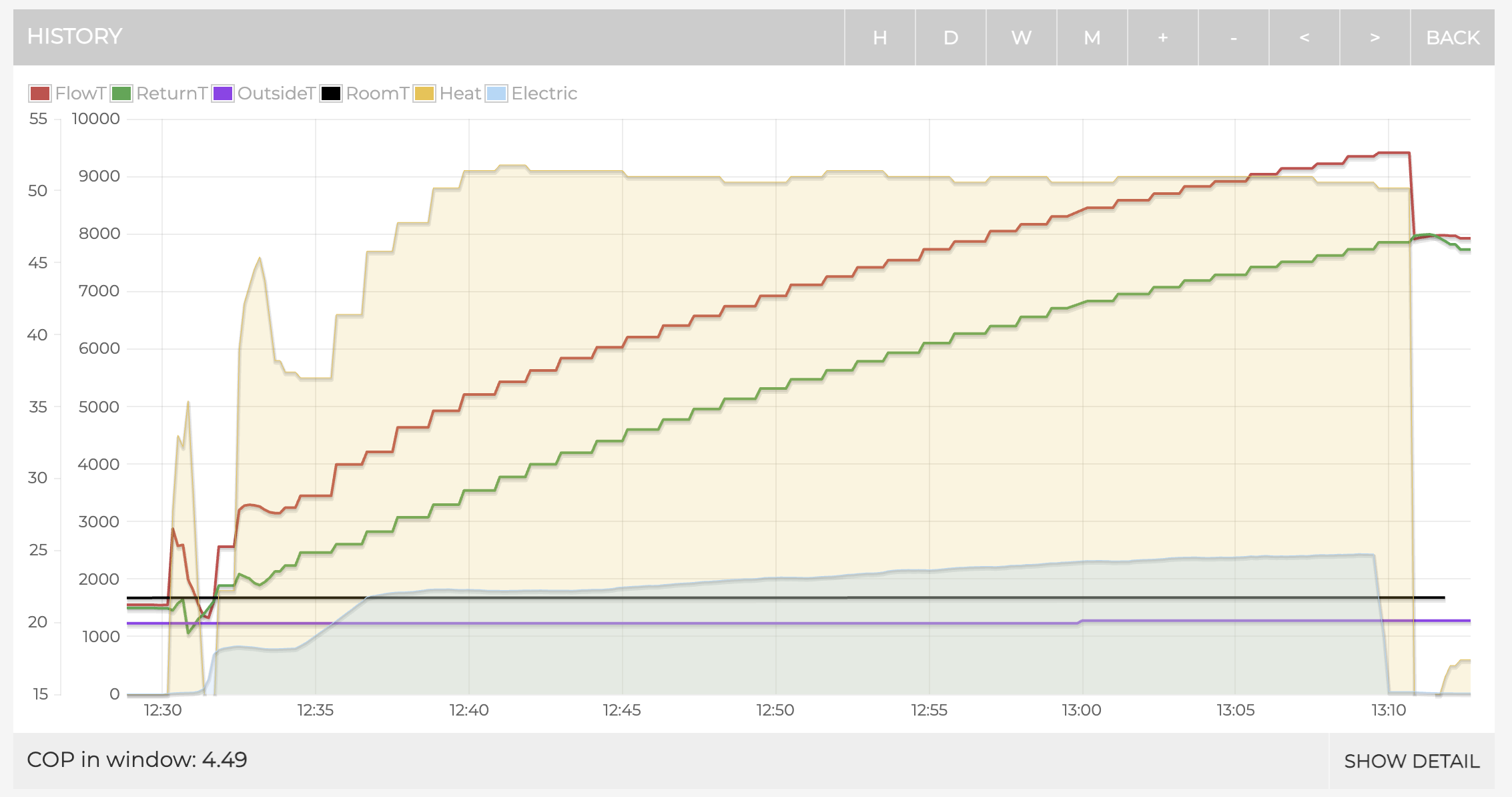
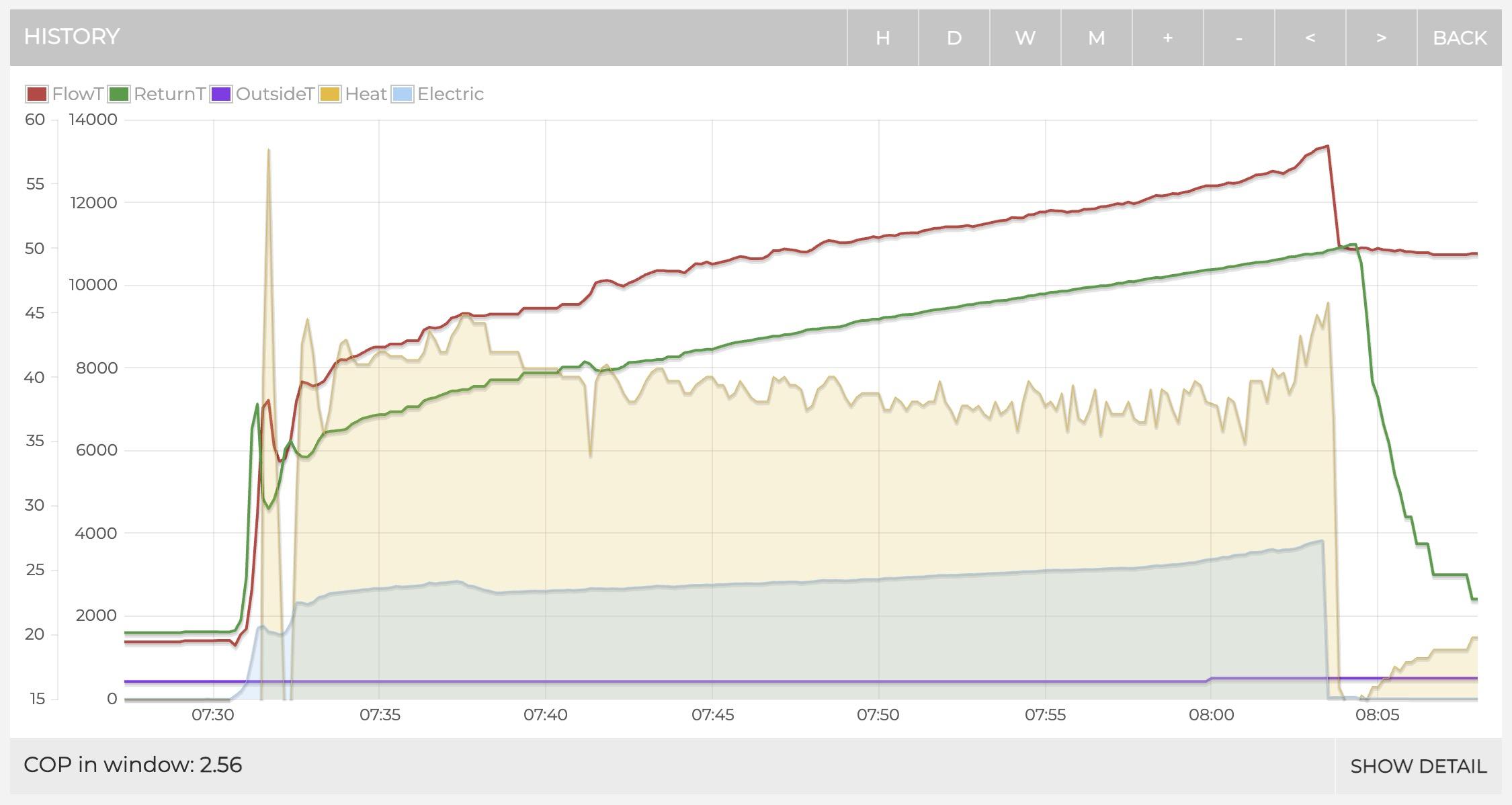
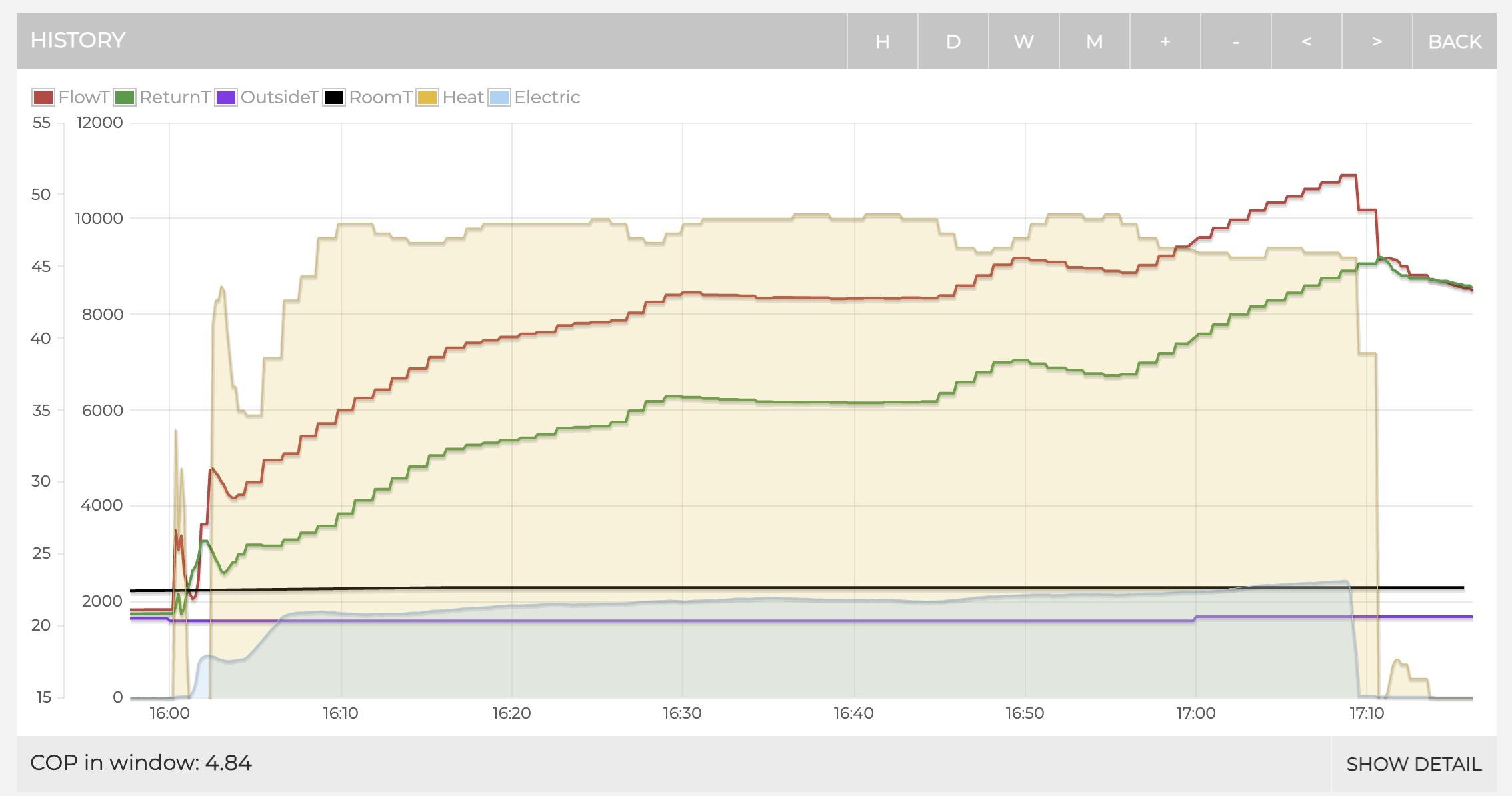
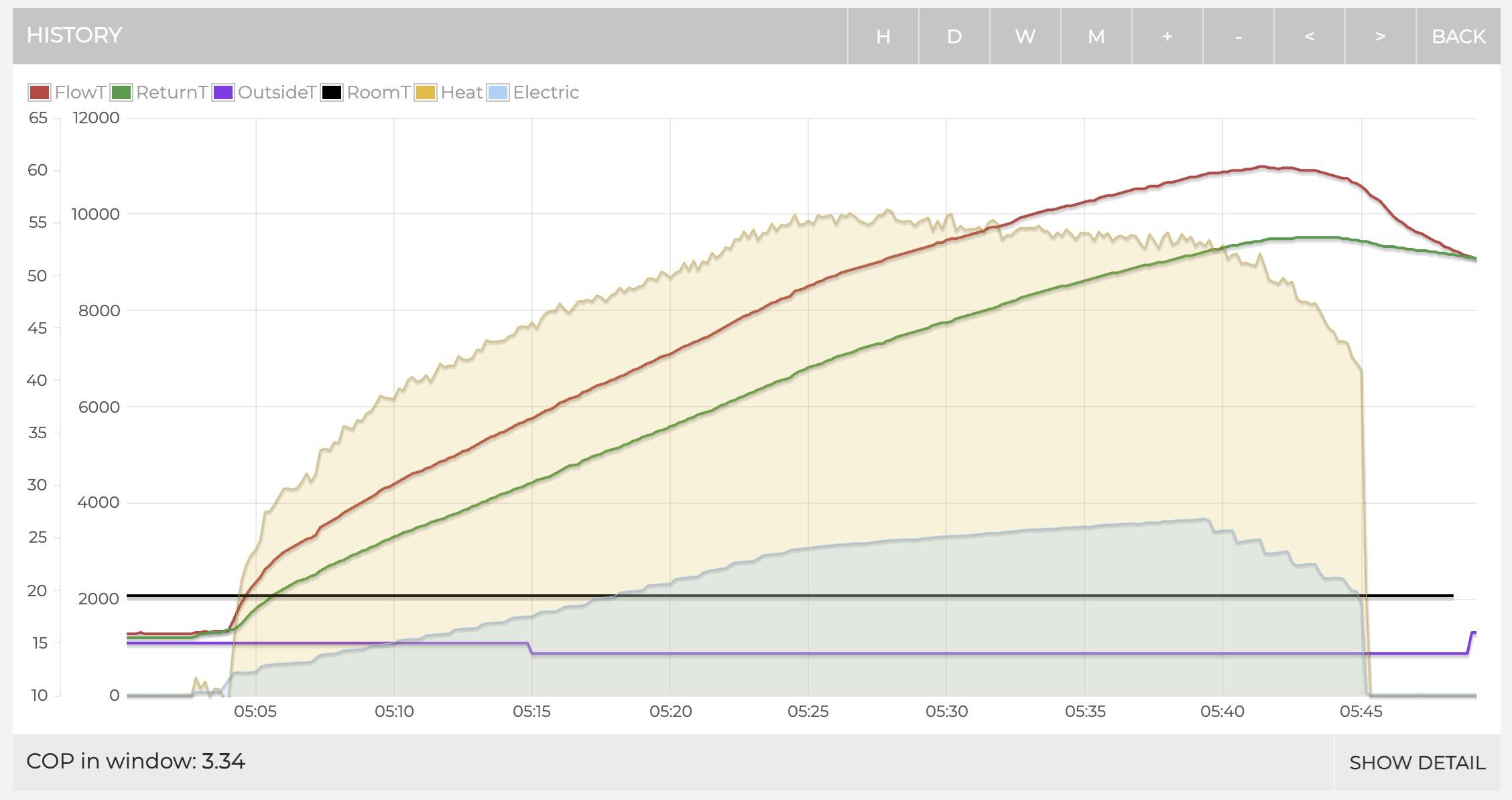
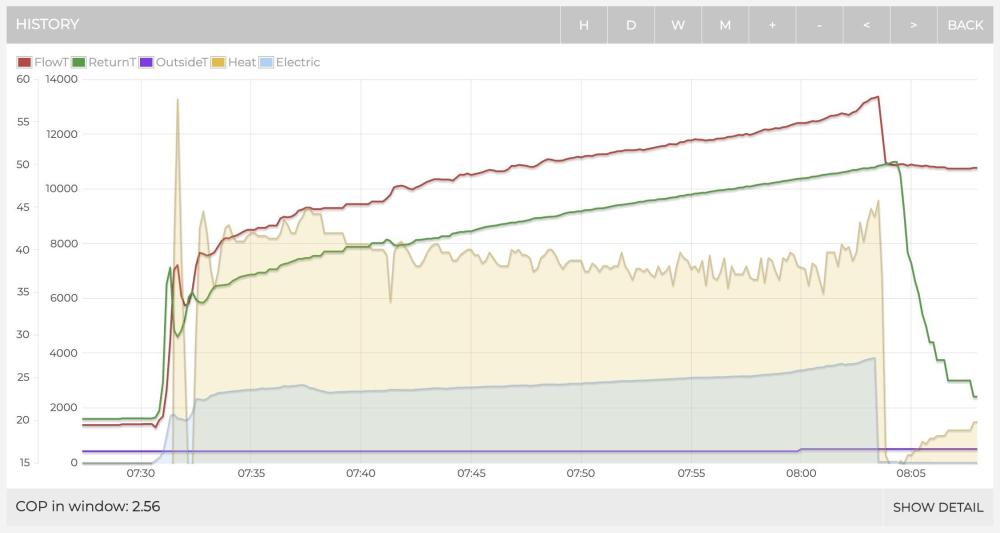
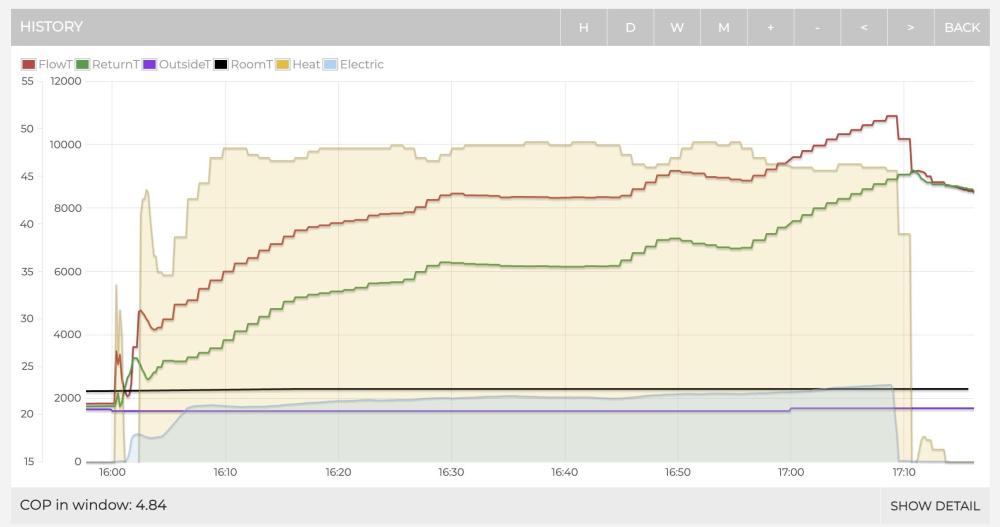
Great explanation @DanDee That keymark page DOES kinda have the information that you're looking for on the 8 kW plated (but in reality more like a unit that would otherwise delivery say 12 kW at certain ambient temperatures but is capped in software to only deliver 8 kW) R32 Samsung EHS Mono HT. I'm led to believe that the minimum turndown is indeed 4 kW on those. Can operate below this but not without an efficiency hit. One of the Samsung tech chaps strongly hinted at the hot gas bypass being required to do that when delivering heat at lower temperatures. If you look at the Vaillants you'll find that the bigger units (with higher compression ratio scroll compressors and higher sCOPs at the higher temperatures) do better than the smaller units (lower compression ratio rotary compressors) but their turndown isn't anywhere close to as good. The Gen6 Samsungs were rotary compressors. What's the lowest listed output on those? "End of line" pricing might look good. Don't forget all the extra control gubbins that you'll need (needs a special box if not using Samsung cylinders) and ask yourself how they they perform over say 10 years. Might not be worth the saving if they use an extra £1k in electricity over their life? e.g. Basic Samsung G6 that looks a bargain immediately becomes £1866+vat once you add the controller: https://www.theheatpumpwarehouse.co.uk/shop/heat-pumps/air-source-heat-pumps/samsung-5kw-r32-monobloc-air-source-heat-pump/ £2124+vat (though check ratings - the nameplate has little to do with the actual capacity on many units) https://www.theheatpumpwarehouse.co.uk/shop/heat-pumps/air-source-heat-pumps/riello-6kw-monobloc-air-source-heat-pump-nxhm-006/ £3000+vat https://www.theheatpumpwarehouse.co.uk/shop/heat-pumps/air-source-heat-pumps/vaillant-arotherm-plus-5kw/ Find some cycles on here and compare sCOPs for the cycles of interest: https://heatpumpmonitor.org/ e.g. Here's one unit last week reheating a hot water tank. COP 2.5 for the cycle. And another. 3.change for the cycle: Another. COP4 And here's another. COP 4.8 for the cycle. @puntloos that's one Samsung, one Mitsibishi one Daikin one Vaillant FWIW. The worst costs less than half what an immersion does. The best costs less than a quarter. Depends as much on the install detail as the heat pump itself. Space heating will more closely follow the "book" sCOP if it's reasonably weather compensated/continuous.
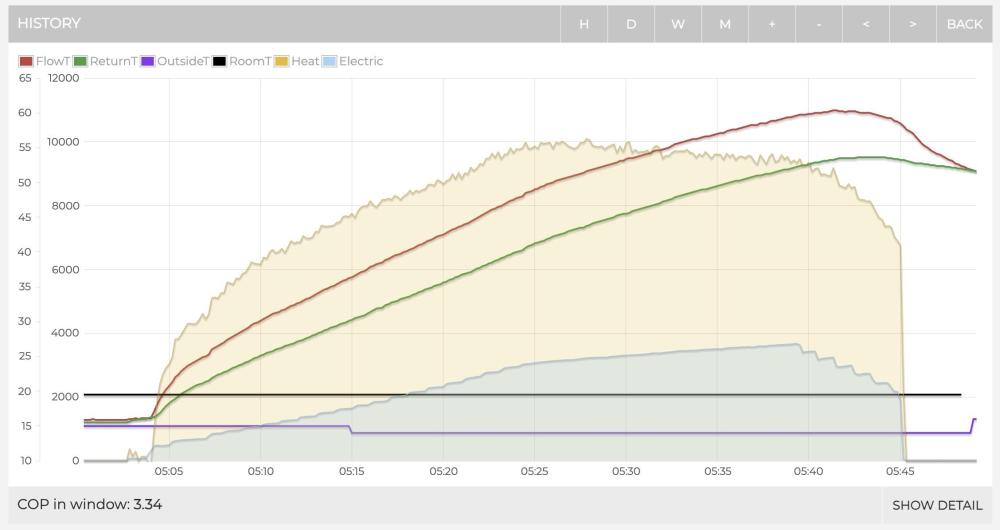
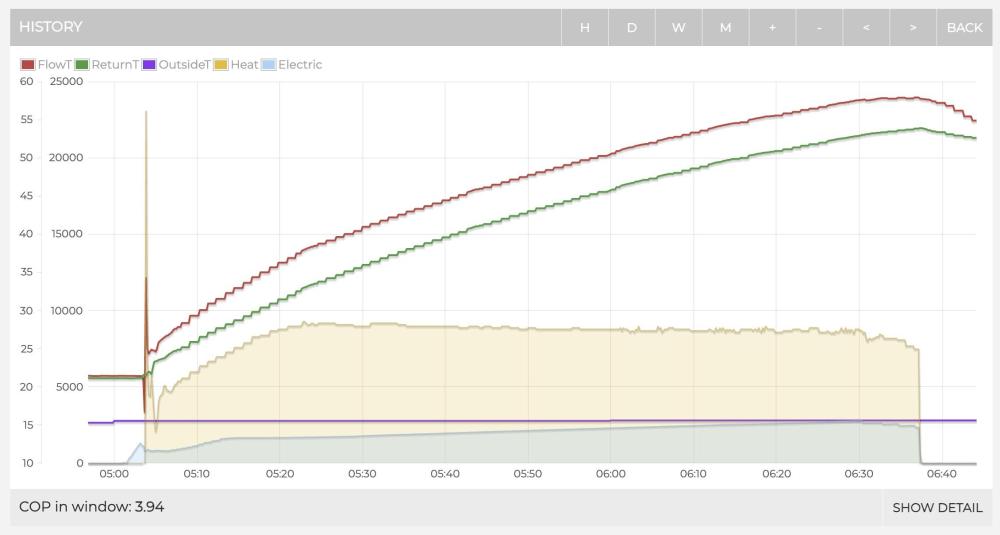
-
Structural engineer for a passive house basement
markocosic replied to WisteriaMews's topic in Basements
The upper 1/2 storey drains to adjacent land; pretty quickly. The lower 1/2 storey yes. Fortunately the flatlands are typically sand. Once you're through the silt/clay/peat cap it drains freely. 🙂 Not everywhere is the same; but passive house shouldn't make this assumption for you IMO. -
16 mm or 20 mm MLCP for combined bath/shower fill?
markocosic replied to markocosic's topic in General Plumbing
Kitchen tap. I like / have chosen the IKEA Almaren. If you pull the flow restrictor (vid/link below) it'll do 10L/min on pure hot or pure cold on the same supply that the HansGrohe shower does 12L/min on. That's 0.167 litres/sec; or expressed another way 6.6 seconds to purge 10 metres of 16 mm MLCP that holds 0.11 litres/metre from cold. If you're happy to whack the tap full hot open then dial it back to something reasonable to wash your hands etc (you have to - mixed flow is about 13L/min and would splash EVERYWHERE) you can be lazy about the hot pipe run / not go out of your way to find 12 mm MLCP etc. (sheds don't sell less than 16 mm MLCP here) -
16 mm or 20 mm MLCP for combined bath/shower fill?
markocosic replied to markocosic's topic in General Plumbing
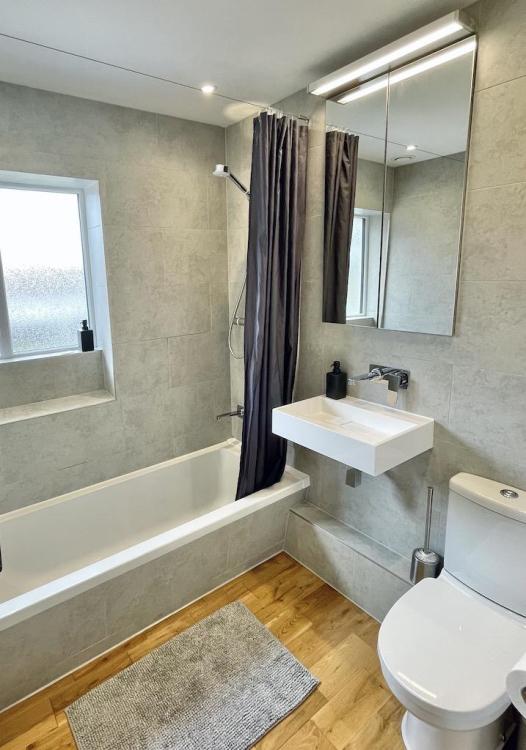
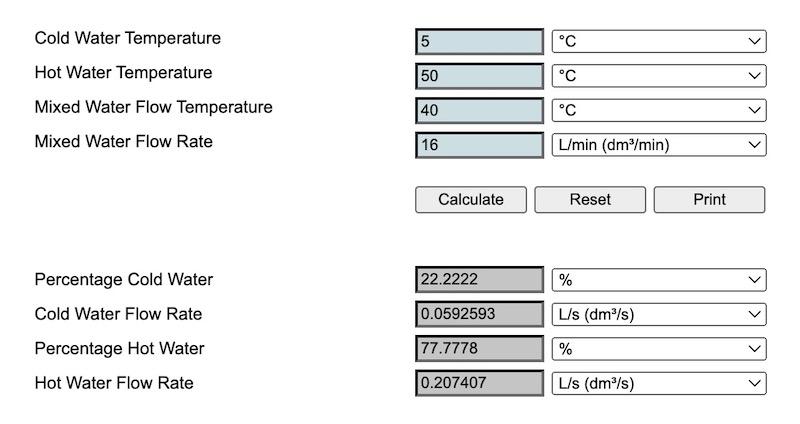
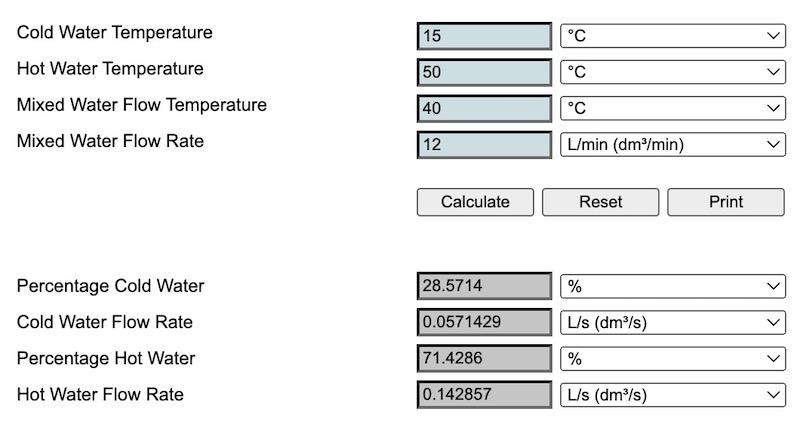
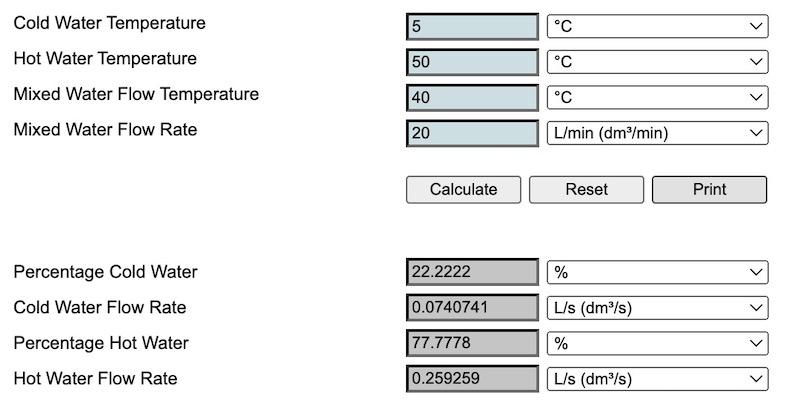
"What are you seeking to achieve?" is always a good question. On reflection here are a few data point and decisions to remind my future self. May be of use to others. In short yes; 16 mm is ok; if the run is modest and the fitting count is a total of two. (one off the manifold and one at the bar mixer) 🙂 I like is this shower: Notionally 16L/min @ 3 bar (at the handset) In the apartment it delivers 12L/min after taking the wallbox and pressure drop in the supply (20 mm MLCP) into account. Dunno what supply pressure is other than "decent enough" [to direct feed much taller apartment buildings direct from the mains without booster sets] Writing says Hansgrohe P-IX 28504/IB https://www.banemo.de/582742/hansgrohe-croma-select-e-handbrause-1jet-weiss/chrom-26814400 Current version: https://www.hansgrohe.com/articledetail-croma-e-hand-shower-110-1jet-26814400 I'm not astoundingly keen on is this: Notionally 9L/min at 0.5 bar (at the handset) https://www.mirashowers.co.uk/showers/mixer-showers/mira-atom-ev/ https://resources.kohler.com/plumbing/mira/pdf/1421588-w4-a-mira-atom-ev-datasheet.pdf https://resources.kohler.com/plumbing/mira/pdf/1393515-w2-a-mira-ev-thermostatic-bar-valves-v2.pdf Should be ok on paper. I suspect incoming main in 1/2" copper; water meter; combi boiler not set to the "optimal 65C" that the manual suggests; and another 10 metres or so of 15 mm PEX kills it. The bath fill is equally naff. But it's always going to be with a 24 kW combi. Took a holiday. 6 of us in a cabin with a single bathroom; bar mixer; and an 80 litre tank with 1.5 kW immersion set to only slightly below boiling. It worked out ok; stored water wise. The immersion would just about keep up if folks weren't ridiculous in the shower. And if the shower weren't ridiculous. I should keep that in mind given the intended use of this place (summer house / one bathroom but potential for back to back use for a while) One thing you can do with a cylinder, that you can't with a combi, is start and stop the shower without it being an inconvenience. Much easier to take a short, long, shower if you can start and stop the water inbetween soapings without having to wait 30 seconds with 10C water splashing about and cooling your feet every time you restart. So. We'll buy the bar mixer. A faster bath fill might be nice but it isn't worth the faff / it's not like folks will be in a rush in this place. https://www.hansgrohe.com/articledetail-ecostat-bath-thermostat-1001-cl-for-exposed-installation-13201000 https://online.depo-diy.lt/product/181956 Pipe and drops? If hand shower were genuinely 16L/min; off a cylinder at heat pump temperature (50C?) and water at borehole temperature (5C) then: https://www.spiraxsarco.com/resources-and-design-tools/calculators/water-mixing/water-mixing 0.2 L/sec gives 1.77 m/sec and 3.5 kPa/metre pressure drop for 16 mm MLCP by this book of words: (0.35 bar for 10 metres) https://www.multipipe.co.uk/images/MUL056-Multipipe-MLCP-Technical Guide.pdf If hand shower were 12L/min at the handheld after the various pressure drops and the cold feed were 15C (cold probably more like 15-20C given it will have been sat in a de-ironing / softening filter setup for a while) we're at 0.15L/sec; 1.33 m/sec and 2.1 kPa/metre. Fine in 16 mm MLCP. Bath fill worst case would be: A straight 20 litres/min hot would indeed be 0.3 L/sec for 2.65 m/sec or 7.2 kPa/metre. (0.7 bar for 10 metres). Too much for 16 mm MLCP. Thanks @Dan F - I'd indeed read 0.2 L/sec = 20 litres/min 😮 The cylinder does say that stratification is affected beyond 12L/minute though. If it were actually a 16L/min fill then that's probably about 12L/min at the cylinder; would maintain stratification; and only 0.35 bar per 10 metres on the pipe. So viable. Takes 15 minutes to totally rinse the cylinder @ 12L/min instead of 9 minutes @ 20L/min. Both are as good as forever. So 16 mm it is.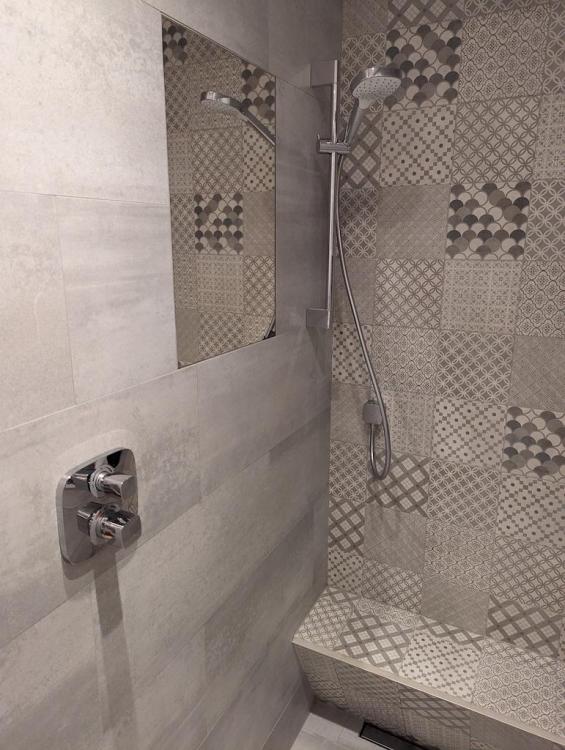
-
One that responds quickly and doesn't need a large delta between the hot inlet and the mixed temperature in order to operate.
-
Air Con single vs multi unit efficiency?
markocosic replied to ashthekid's topic in Other Heating Systems
1:1 units will modulate / control better. Might option 3 work? Single head system and duct it to both rooms: https://www.saturnsales.co.uk/Fujitsu-Slim-Ducted.html In terms of outdoor units one behind the other - that's a no - they have to be next to each other. Can be quite close to a wall / quite close to each other top/bottom / fairly close to each other on the sides; but the fan must face ay from the wall not into another unit. I wouldn't expect to hang 2.5 / 5 kW heads off an 8 kW outdoor unit. Probably hang that off a 5 kW outdoor unit.