
ETC
-
Posts
1673 -
Joined
-
Last visited
-
Days Won
9
Everything posted by ETC
-
Raise the FFL.
-
Floor plans, elevations and sections. Relevant construction details. Relevant materials specifications. Location map.
-
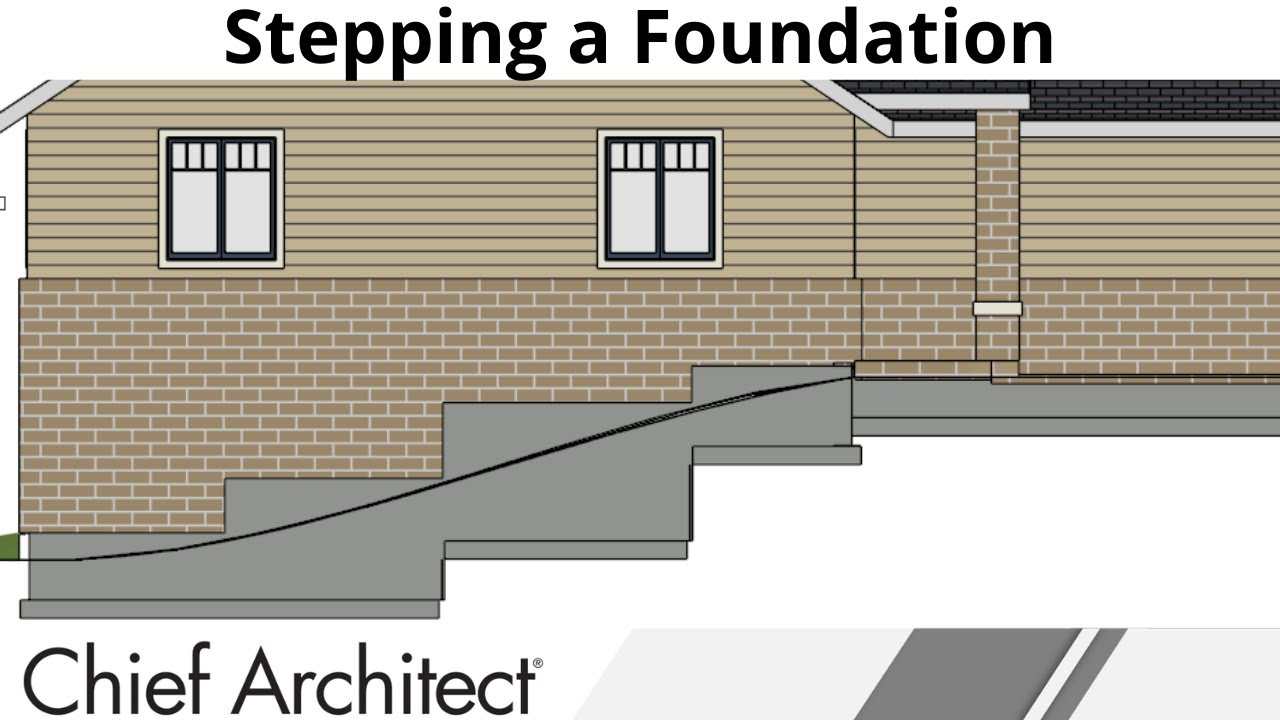
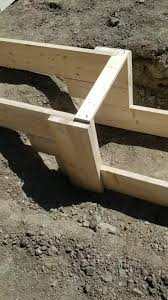
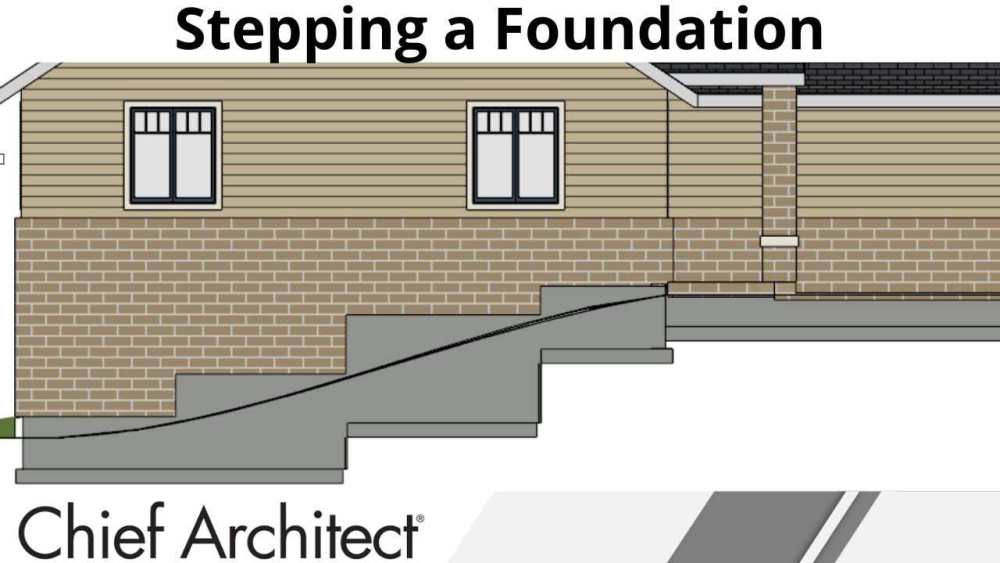
The detail of the step footing. I understand that regs require you to have 2 * the height overlap in the horizontal plane. Correct. What I am trying to work out is how you do the step. Either form it in timber or blockwork. Would you just step up 450mm in one place and if so, how does the bricklayer tie the block courses into the vertical face of the stepped concrete? The bricklayer won’t - the sub-floor blockwork work should be built solid and tied above the step.
-
What have you done so far?
-
What’s the issue(s)?
-
How are you venting the roof?
-
Murdocks.
-
Batteries in plant room and 120 minute fire rated walls
ETC replied to jimseng's topic in Energy Storage
Ask him to see the Regulation. Not just the Approved Document. 30 minutes in a house is more than enough. -
Paint it black.
-
Can we see some of the problems…..? Also….complain to ARB and RIBA…..
-
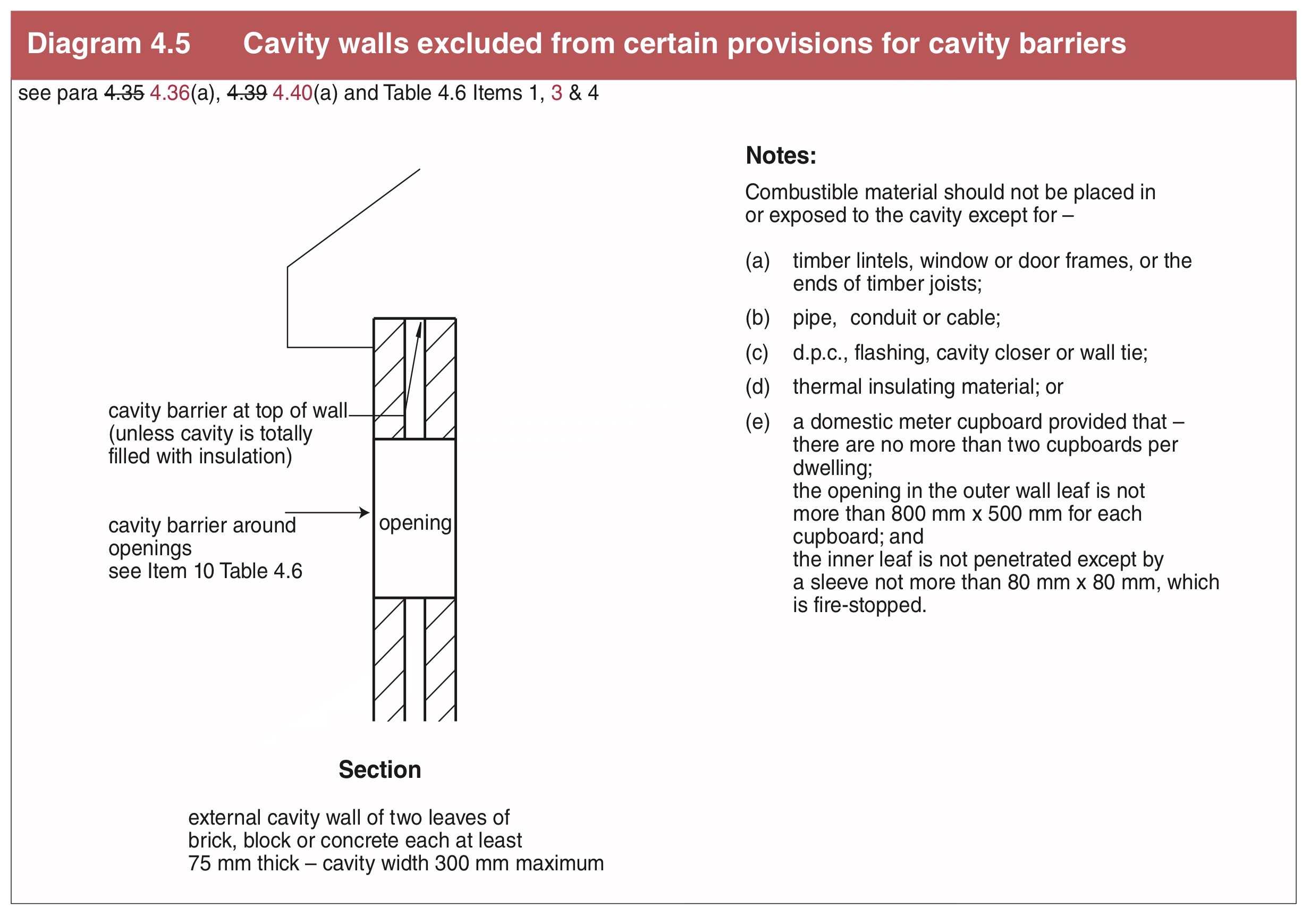
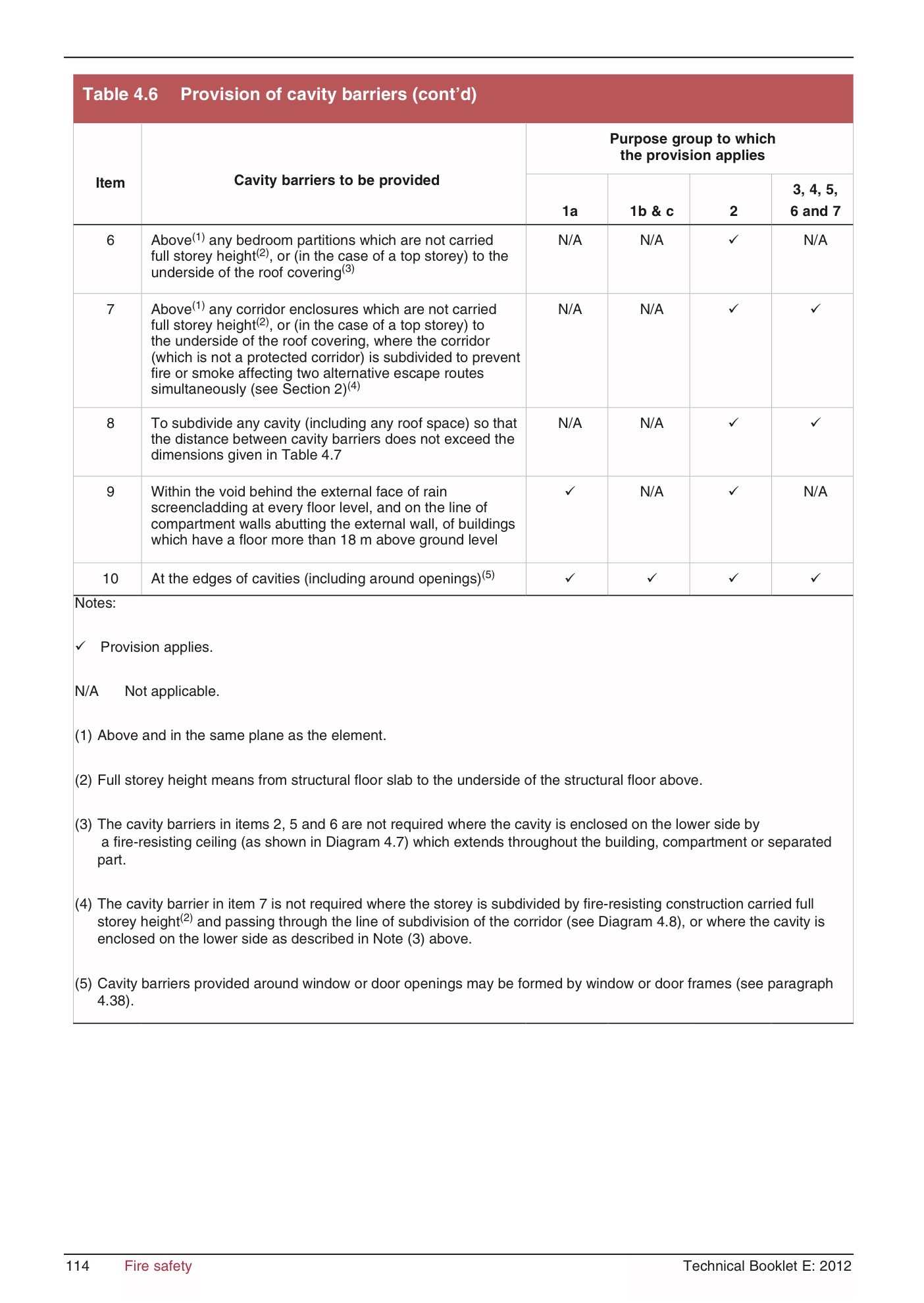
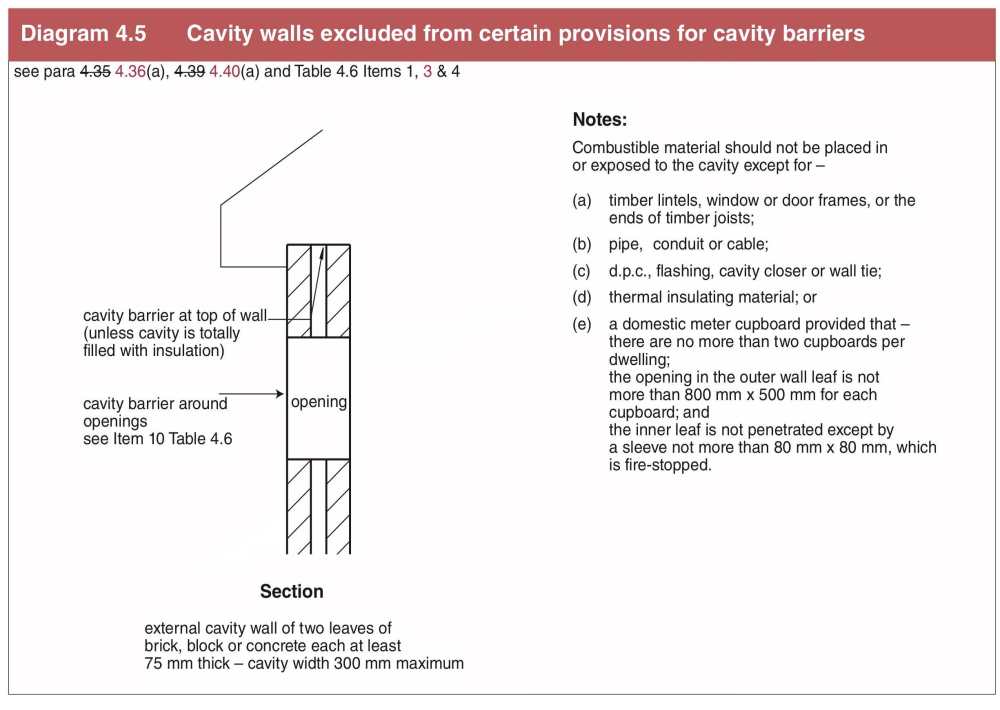
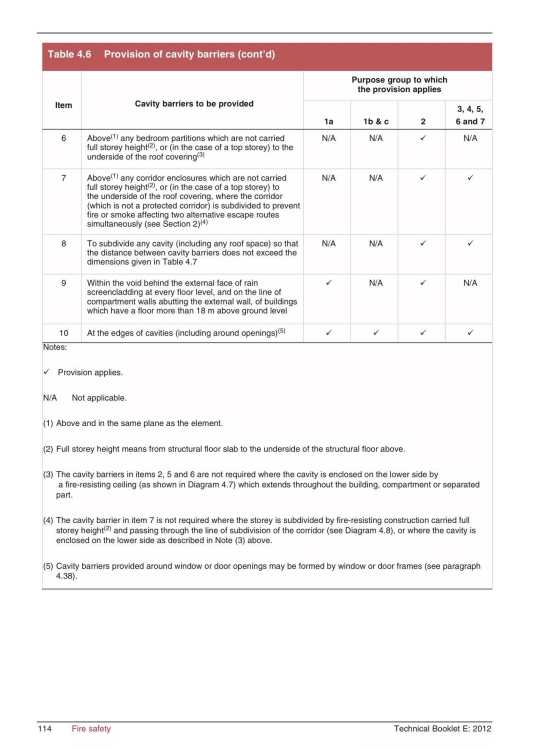
@kandgmitchell I have spoken to a senior BCO today who confirmed that here in NI FR cavity closers are required to the perimeter of all openings in an external cavity wall and that the text relating to the cavity walls is illustrative only.
-
I’m confused why cavity barriers are even shown in the diagram if this section relates to fire safety - it has always been my understanding that a cavity barrier should have FR but I am open to being corrected. I agree that insulation needs to be provided at a head, jamb and chill. I stand corrected in relation to self-closing fire doors. They are however a requirement in TBE NI Building Regulations - where alternative final exits are provided. Could I direct you to https://www.buildingcontrol-ni.com/assets/pdf/BCNI_CONSTRUCTION_DETAILS_-_November_2023.pdf where FR cavity barriers are required here in NI.
-
If this is the case I think the industry needs to realise this and to stop promoting FR cavity barriers for openings in masonry built dwellings. I genuinely think that they should be installed but if this is the case I stand corrected although I would question why the diagrams indicates cavity barriers if they are not needed.
-
I have. I think it’s confusing - why would the diagram show cavity barriers around a window in a masonry cavity wall if they are not needed?
-
You’ve lost me. Are you saying that if you have a standard masonry cavity wall you do not need a cavity barrier around an opening?
-
It still comes down to needing a FR cavity closer to the perimeter of all external doors and windows. The proprietary closers can be FR or non FR rated - as you say a piece of plastic with an insulation core. The AD even suggests 0.5mm thick steel - hence no requirement (at head level) where steel lintels are used. However, I will always advocate calcium silicate board - it is relatively cheap to buy and relatively easy to install - unlike many of the proprietary products which need to be installed in accordance with the manufacturer’s instructions and plasterers do not like them because the plaster can crack. A BCO will accept any product in the AD and those proprietary products that are certified to provide FR. The thermal requirement is different and if you use “standard” details these will need to be factored in.
-
Exactly - there is the idea that cavity insulation may be combustible and until this can be proved/disproved FR cavity closers will be required.
-
The other thing that comes to mind is the idea/notion/concept that where there isn’t a cavity (where the cavity is fully pumped with insulation) why on earth would you need a cavity closer? No cavity - no closer.🤷🏼♂️
-
The Approved Document is quite clear. You need to install FR cavity barriers to the perimeter of all external doors and windows. There are a number of ways of doing this and are listed in the AD - including the installation of calcium silicate board - https://www.promat.com/en-gb/construction/products-systems/products/fire-resistant-boards/supalux/ And yes - builders do cut calcium silicate board on site - I see it everyday. Some builders will line the complete jamb, head and cill with the board - others will cut a 50mm strip and close the cavity.
-
I suppose where these are used the FR is provided by some other means. Don’t forget that timber windows do not need a cavity barrier as long as the frame covers the cavity.
-
I’d like to see a test certificate for a 30 minute FR floor using insulated plasterboard below the floor joists.
-
I’m surprised that your BCO will allow you to put insulated PB to the underside of a FR floor.
-
Thinking how you insulate the garage walls. You will need self-closers on the fire-doors.
-
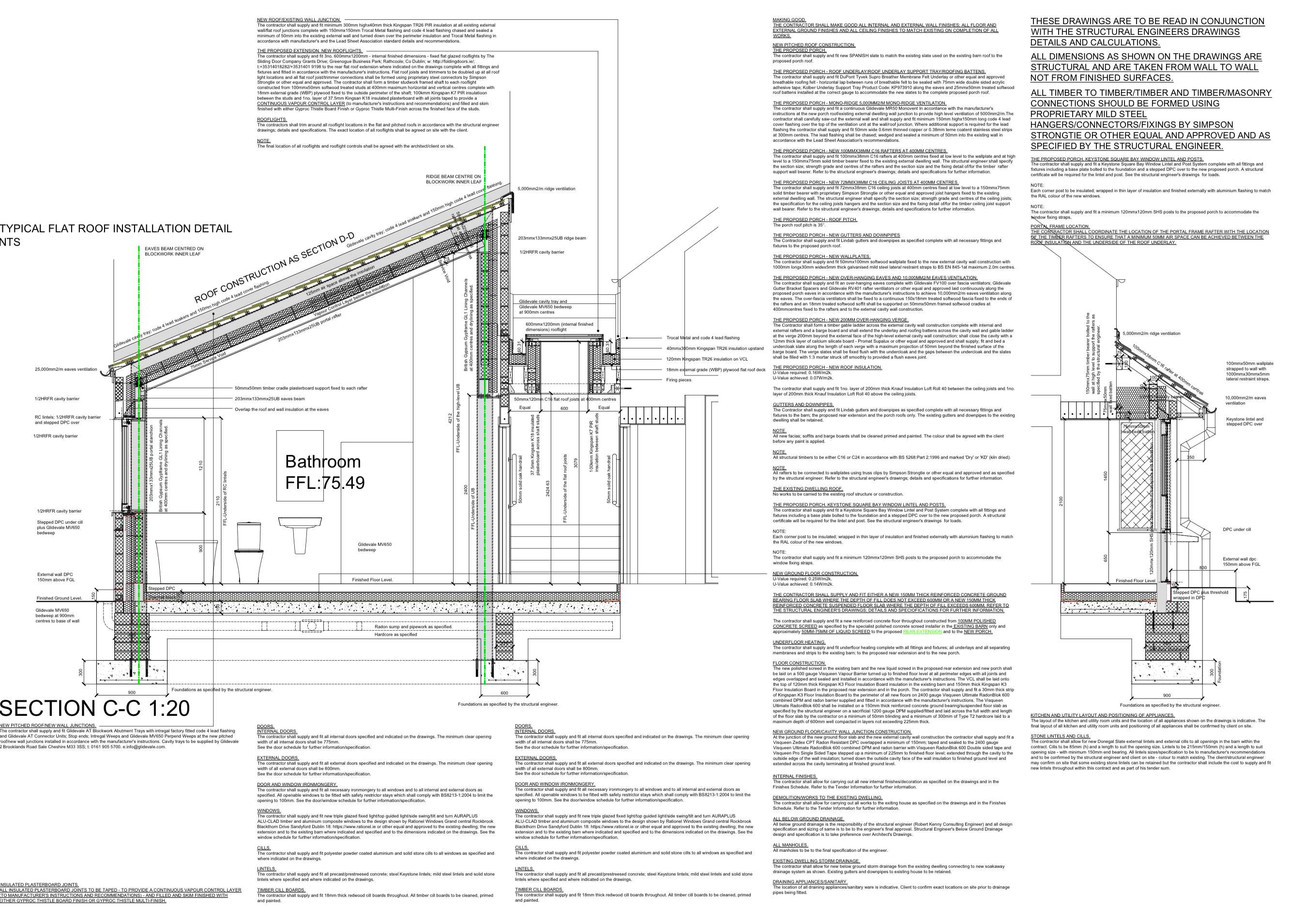
Had a look at your drawings - to be honest not great. Drawings look OK but the notes are - IMO - poor especially for a self- builder. I don’t see a heat detector/alarm in either in the Kitchen or Utility Room. Nor do I see smoke detectors in any of the Bedrooms - are they needed in England? I’m outside your jurisdiction and we need them here where I am. I presume your fire doors will have self-closers?