
ETC
-
Posts
1673 -
Joined
-
Last visited
-
Days Won
9
Everything posted by ETC
-
A phased approach to BC drawings / approval?
ETC replied to Alan Ambrose's topic in Building Regulations
Out here in the provinces it’s not acceptable since it is too difficult to administer - but then again we are a bit behind the rest of the UK. -
A phased approach to BC drawings / approval?
ETC replied to Alan Ambrose's topic in Building Regulations
I don’t think it’s a conditional approval - more likely a Plan Approval with a note on a drawing to say that certain information will be provided at a certain stage which puts the onus on you to provide that information before you can get a Completion Certificate. This is done quite often for elements that cannot be fully designed until a sub-contractor is appointed such as timber frame, trussed roofs and the like. In your case if an engineer designed a roof and submitted a drawing but no calculations I wouldn’t be too worried and would stamp the application approved - calculations will be filed. -
A phased approach to BC drawings / approval?
ETC replied to Alan Ambrose's topic in Building Regulations
Nope - not acceptable. Can’t condition a plan approval. -
Put a service void in front of the plasterboard.
-
Just give your local British Gypsum rep a call. He/she will be more than delighted to design and specify the wall. And yes - no foam - fire stop with an appropriate material.
-
If it’s just rainwater from a roof gutter you don’t need a gully trap.
-
Water butt.
-
Can you retrofit a direct air feed. Most stoves I see - especially greater than 5kW are fitted with a direct air feed.
-
NB
-
Internal.
-
800mm-1100mm for standard windows. Can be reduced to 600mm for roof windows. Don't forget - if you are NOT introducing a new bedroom AND you didn’t have an EEW in the bedroom before you did the work BC won’t ask for a EEW.
-
How to space two parallel reinforcement bars vertically?
ETC replied to AartWessels's topic in Foundations
Make it up with links but check the spacing first. Might just be 40mm/50mm from top and bottom for minimum cover. -
Standard two storey house fire doors not needed (except between an attached garage and dwelling). You’ll need EEWs to new created bedrooms on the first floor. No new rooms = no new EEWs.
-
Yes. 50mm air gap is normal.
-
Check your SAP for your floor insulation requirements. A 1200 gauge DPM is a minimum requirement. Don't forget about a VCL and perimeter insulation.
-
That’s the stepped DPC above your window. A cavity closer will be either a rigid board like Supalux or a flexible friction fitted sleeved mineral wool closer like the one I posted earlier. I don’t see a cavity closer and the insulation is “wobbly” because it’s just set on top of the stepped DPC and fitted without any wall ties or retaining clips and that’s probably why it’s not sitting flush with the inner leaf.
-
Yeah - replace it.
-
Architects, ballooning fees and estimates
ETC replied to Drellingore's topic in Costing & Estimating
First meeting with your architect: “your build will cost very very little and our fees are 10% of that” Meeting when tenders are returned: “the tenders have come in and it looks like your build is going to cost a shed load more than we anticipated - market fluctuations and all that - I’m sure you understand - and by the way our fees - well they are 10% of a shed load” rubs hands together.
-
Architects, ballooning fees and estimates
ETC replied to Drellingore's topic in Costing & Estimating
What I'm saying is that a fixed fee agreed at the beginning of a project is much better for you. If a fee is based on an estimated cost of the works the fees will fluctuate and will invariably end up much higher than you anticipated. Window costs = £ fees are low. Window cost = ££££ fees are high. Get me? PS fees will never go down. -
Thatcher: https://en.wikipedia.org/wiki/Joe_Sugg
-
Architects, ballooning fees and estimates
ETC replied to Drellingore's topic in Costing & Estimating
I just love this type of debate. Architects may as well stick their finger in the air and make a guess at %cost fees. I’ve said it before and I’ll say it again - this is a very lazy way of determining a fee for services and is in no way reflective of the time or effort required to do the work. Get the architect to give you a fixed fee cost. It will either be more than it takes to do the work or they will end up losing money. For example an architect does a door or window schedule - the sizes are specified and the material but there could be thousands of pounds difference in cost from a supplier - and you end up paying a premium just because you picked an expensive product. -
That’s a small kitchen. if it was me I’d leave it as it is until I could afford to do what I wanted.
-
@EinTopaz
-
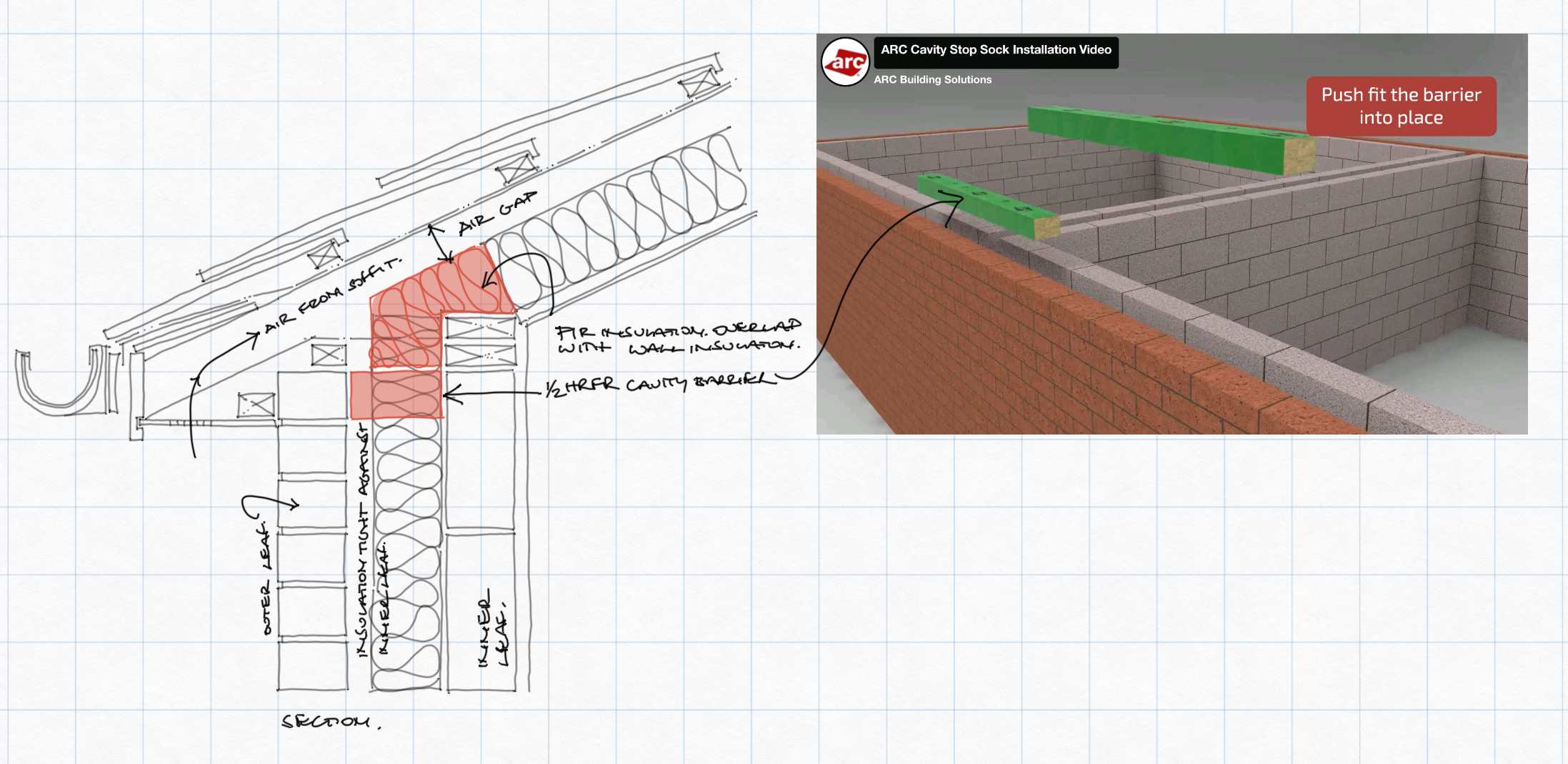
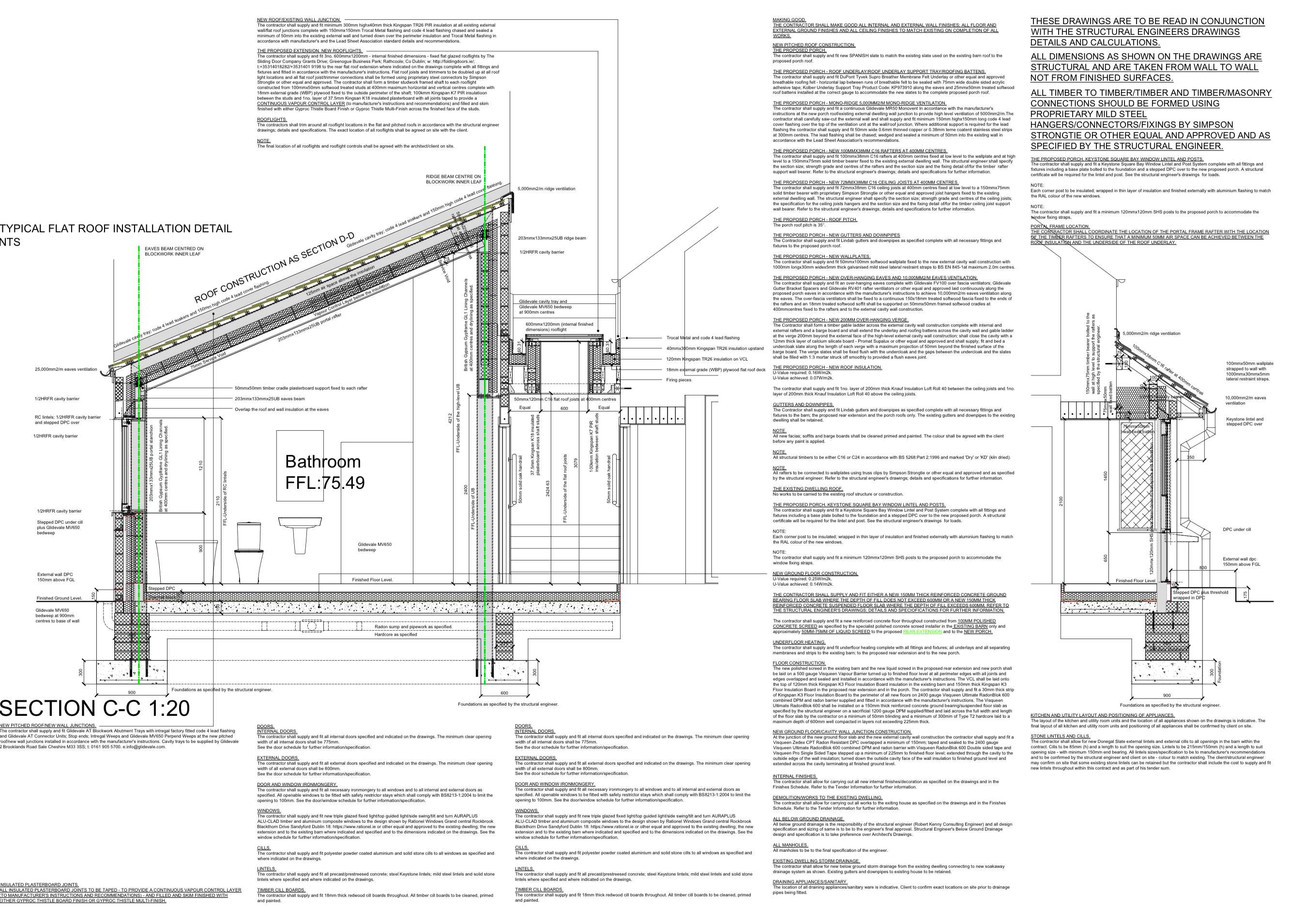
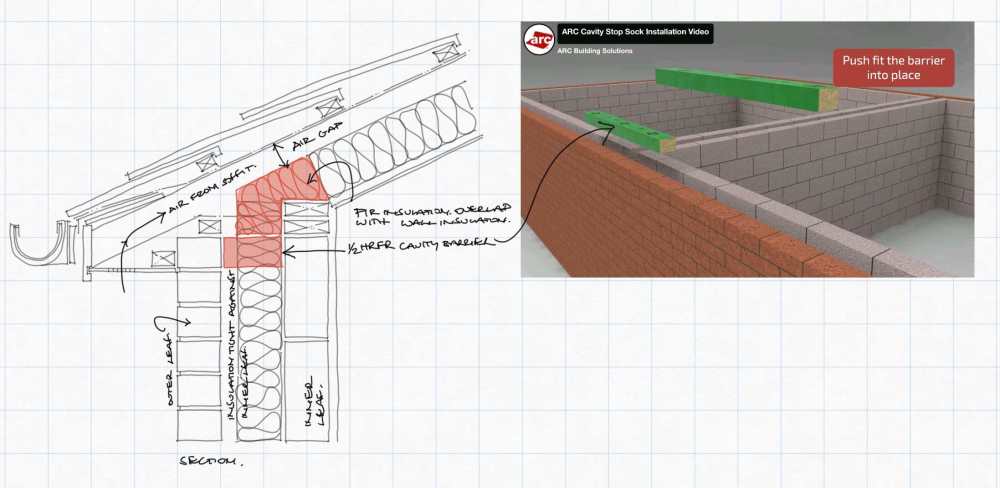
The builder should have closed the cavity at the top with a half-hour fire-resisting cavity barrier. You have plenty of options but I suspect the least time consuming will be a bagged fire barrier. If you put one in you need to close the cavity before you extend the insulation between the rafters down to the eaves. You can use a strip of 12mm thick calcium silicate board - Supalux or other equal board. This might be the easiest in terms of space but it could tern out to be time consuming.
-
Just tank the wall. Speak to Visqueen and they will do you a detail.