ProDave
-
Posts
30861 -
Joined
-
Last visited
-
Days Won
427
Everything posted by ProDave
-
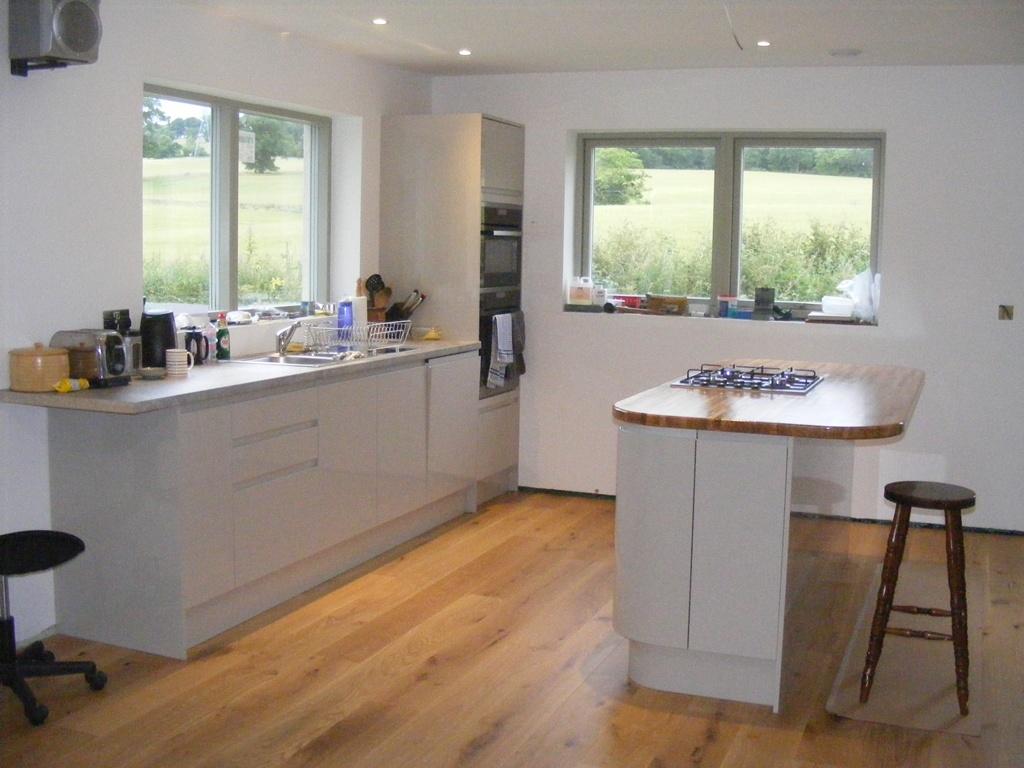
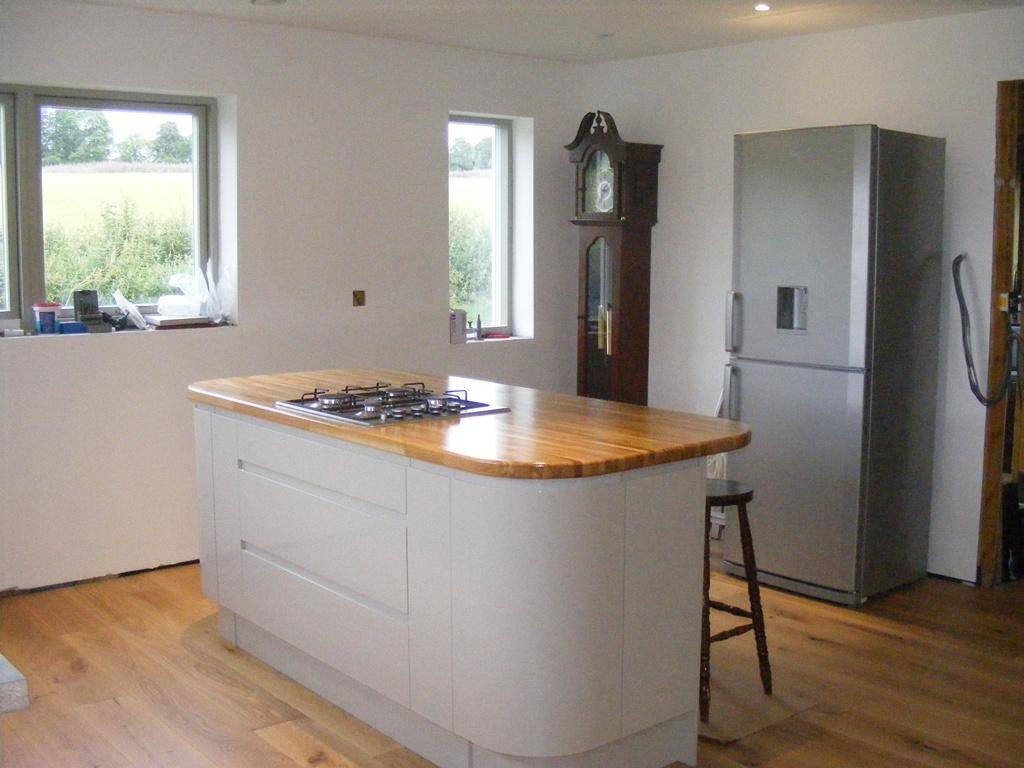
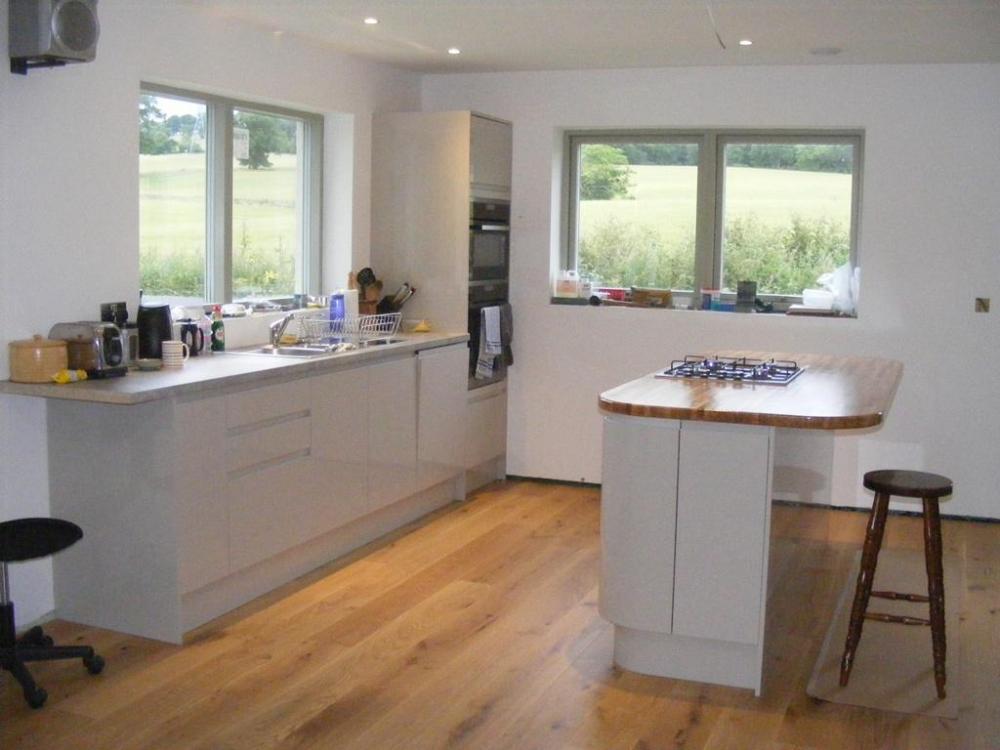
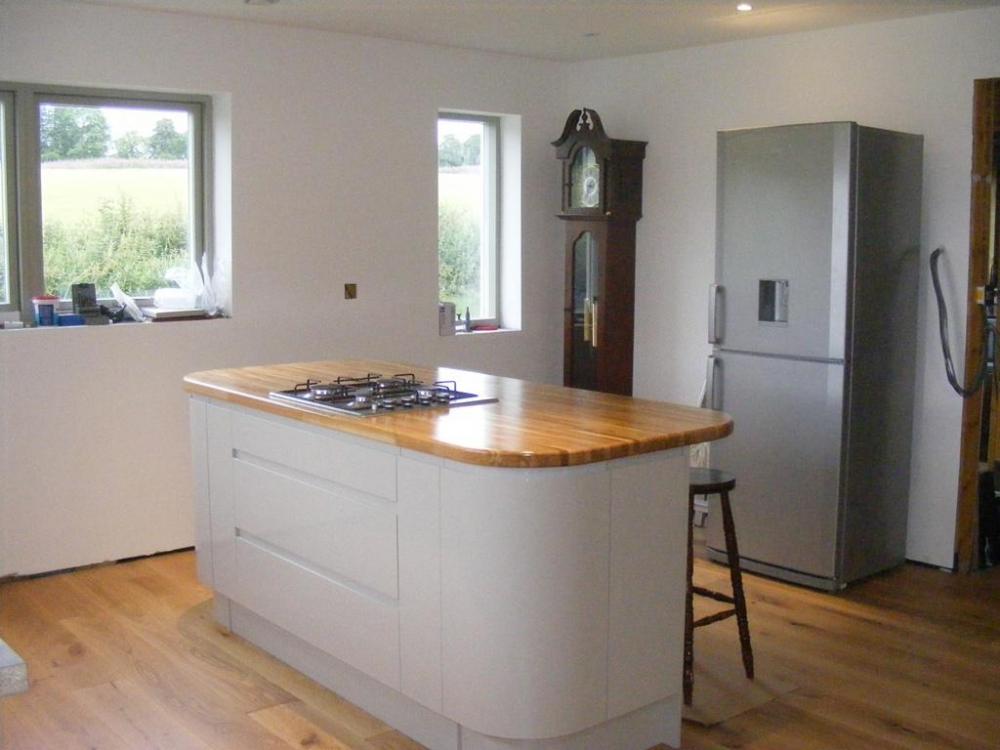
Kitchen finished today. It took me about a week to put the kitchen together and plumb in the sink and dishwasher. The worktop under the window is a cheap temporary laminate one to get the kitchen functioning quickly. Later on that will be replaced with a stone worktop and that one will be moved to the utility room, which is why it has been left over length for now as that's how long it will be in the utility. I then had to wait for Gus the joiner to machine the oak breakfast bar worktop. Sometimes even when self building, it is worth employing a good tradesman when you know they can do a better job of something than you can. It was then 2 days to varnish it, and finally today it was dry so I could fit it and plumb in the hob. Next to the fridge, where the clock is for now, will eventually be partitioned off to form a pantry. Sunday dinner will be cooked and eaten in the house tomorrow. A little more and a couple more pictures on the blog at http://www.willowburn.net/ look for the entry "Kitchen Finished"
- 25 replies
-
- 11
-

-
Water connection
ProDave replied to recoveringbuilder's topic in General Self Build & DIY Discussion
There was one on Grand Designs where they had not thought about this until the end, and the water connection cost them £40K -
Water connection
ProDave replied to recoveringbuilder's topic in General Self Build & DIY Discussion
The trouble with that, is the water connection will need to be deeper. Have a brown envelope ready on the day to "encourage" the guys that come to dig a little deeper than they would jus for a phone cable. It was handy having Scottish Water make the road crossing as everything else went in as the trench was being back filled. -
Water connection
ProDave replied to recoveringbuilder's topic in General Self Build & DIY Discussion
Mine was connected in 2015 -
Water connection
ProDave replied to recoveringbuilder's topic in General Self Build & DIY Discussion
Scottish water were a bit hard to deal with, but in the end they were very good value. Our quote for the water connection was about £1K but that also did not include the road crossing. The water main was a few feet into the field the other side of the road. and we had to do all the trenching on our plot. I then started looking for prices for the road crossing, an independent contractor wanted £2K as dis Scottish Hydro, but when asked Scottish water only wanted an extra £1K for the road crossing so they did it. What you need to ask them for is an "all works" quote including the road crossing. they supplied the pipe from the main under the road, and the boundary box, we just had to supply pipe from the boundary box to the house wtc. As it happens it was not SW themselves that did it, they subcontracted it to someone else. -
Just to finish this off, I fitted the new jets today. Here's what I ended up with: Mains jet size LPG jet aize 103 67 103 66 115 86 72 50 I had bought a pack of 6 jets which gave me a few more options to play with. All seems to be working fine.
-
The tale of the sale of our old house
ProDave replied to Jeremy Harris's topic in General Self Build & DIY Discussion
I see a house up the road has just had it's EPC re done. It used to be heated with an E10 electric boiler. The EPC was re done because they changed to an oil fired boiler. That was the ONLY change. The new EPC shows than annual KWh for space heating at HALF what it used to be. Please explain that to me? I would expect it to be exactly the same unless they improved the insulation, just a different, possibly cheaper fuel now? -
LG Therma V mono block Air Source Heat Pump
ProDave replied to ProDave's topic in Air Source Heat Pumps (ASHP)
It would be a bit of a pain and expense to change the motorised valves (all 2 port NC) But I can't see I want to leave them sat there energised almost 24/7, sitting there getting quite warm. One simple fix would be a small relay, only energised when the UFH is on, as an additional switch. Still seems a lot of unecessary buggering about to fix a flawed control system. -
LG Therma V mono block Air Source Heat Pump
ProDave replied to ProDave's topic in Air Source Heat Pumps (ASHP)
Still having a problem. The thing ran fine today, doing some heating and some hot water heating. All seemed to be behaving. Then I turned the hot water off at it's own control panel, and turned the room heating off at my programmer, so the heating would not be calling for heat (via the thermostat contacts) Since then, 4 times it has tripped out on a "CH14" (low flow) error. I can't see this is really a flow issue. Nothing is demanding heat or hot water. It should just be sitting there doing nothing. The pumps have not tried to start. So why is is tripping out? One to throw back to LG I think. This does seem to be giving more than it's fair share of issues, and if someone asked me right now, I don't think I would be recommending this particular heat pump to anyone. -
The tale of the sale of our old house
ProDave replied to Jeremy Harris's topic in General Self Build & DIY Discussion
Different register in Scotland I believe https://www.scottishepcregister.org.uk/ -
The tale of the sale of our old house
ProDave replied to Jeremy Harris's topic in General Self Build & DIY Discussion
There are some inconsistencies, and a lot of BS spouted about the RHI. I recall doing some work at a house that had just had a wood pellet boiler fitted. The owner went to great pains to tell me that the assessor said this was the best insulated house he had ever assessed, then went on to tell me how many thousand pounds he would get in RHI payments, which seemed two conflicting statements. -
The tale of the sale of our old house
ProDave replied to Jeremy Harris's topic in General Self Build & DIY Discussion
It is certainly a very variable thing. In Scotland you have to have a home report, so the surveyor that did that, did the EPC as well. I thought he spent a good deal of time looking at the property. He noted a couple of very minor faults, too minor to be mentioned in the report, and he asked and looked at insulation levels including looking in the loft and under the suspended floor. I felt he did a fair and honest assesment of the property taking into account things like it was one of the first timber frame houses built with a 6" frame (to get more insulation) when many of the period were still using 4" frames. The only thing he did that irked me, was he put down the garden as "repair code 2" implying there was something "wrong" with it that needed fixing. His issue was the burn running through the garden and to get a "1" I would have to fence off the edge of the burn for it's entire length on both sides. That irked me because it was the only thing not to get a 1 (meaning everything is fine) -
SWMBO noticed we had a wasp nest yesterday, very similar situation on the garage soffit. I can't think there is much space inside where they were making the nest. I dealt with it with the "squirt and run" technique. A quick squirt of Raid in the hole then leg it inside. The first squirt just had the effect of stopping the returning wasps going in, and for a while there were a lot just milling about outside. Each time I noticed there were not many about I went and gave another squirt then retreated. Something like 6 squirts and a couple of hours later there were none to be seen, so one last good squirt right into the hole just to be sure.
-
LG Therma V mono block Air Source Heat Pump
ProDave replied to ProDave's topic in Air Source Heat Pumps (ASHP)
Today I have enabled the room thermostat input and have the downstairs under floor heating working, just 1 room at the moment. I have set the water flow temperature in heating mode to be 30 degrees. It seems to run with a 3 degree hysteresis (a parameter you can change) so stops heating the water until it drops to 27 degrees. I have also adjusted the blending valve on the UFH manifold. By removing the knob, rotating it a bit on it's splines and putting it back on, it now goes lower than it's default minimum of 35 degrees. I will have to experiment a bit later (with the water temperature set higher) to see how well it regulates at low temperatures. I have now just turned the hot water back on and am watching to see how it divides it's time between heating and hot water and how it switches between then. It seems to do as set, do 30 minutes of water heating then switch back to room heating for 30 minutes. So far, 4 little "niggles" discovered: 1) Any paramaters you change, including even the day and time set in the clock, are lost if you power down overnight. 2) when powered up, even with no heating demand from the thermostat, it keeps the heating motorised valves energised. They only ever seem to get turned off when it switches over to hot water heating. 3) It tries to turn on the immersion heater when heating hot water. I presume the logic here is to heat the water quicker? I don't yet have the immersion connected to the heat pump so it is not doing that, but I have found no way to disable it doing this, just a parameter to give a delay before the immersion turns on. 4) The default when heating hot water was turn on the internal willis heater as well as the heat pump. I assume this was again done for speed of water heating? I have disabled this as I want the maximum COP rather than the quickest time Now I have disabled the internal willis heater, the unit is consuming about 7 Amps at 240V so consuming about 1.7KW while heating the hot water tank. -
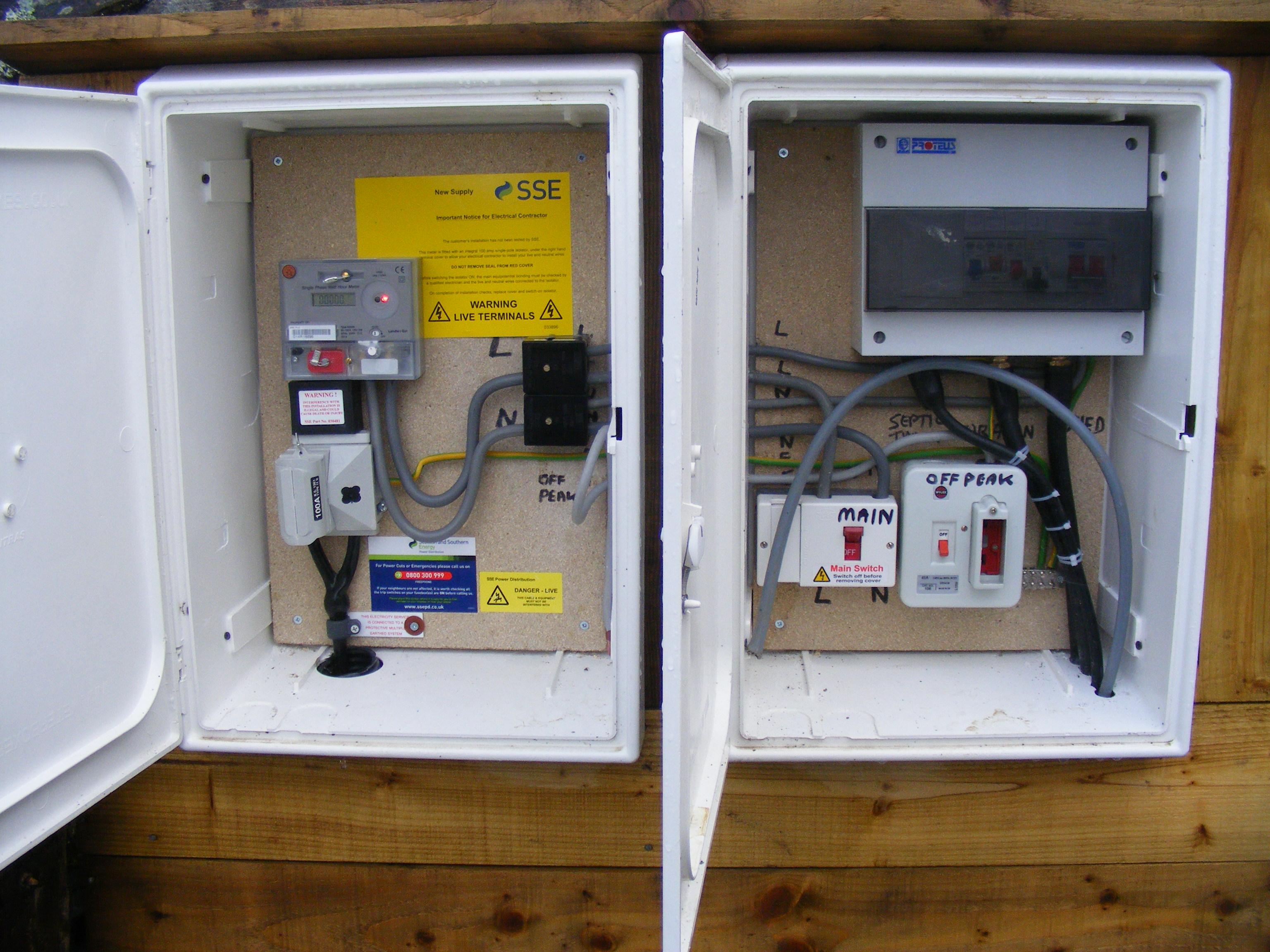
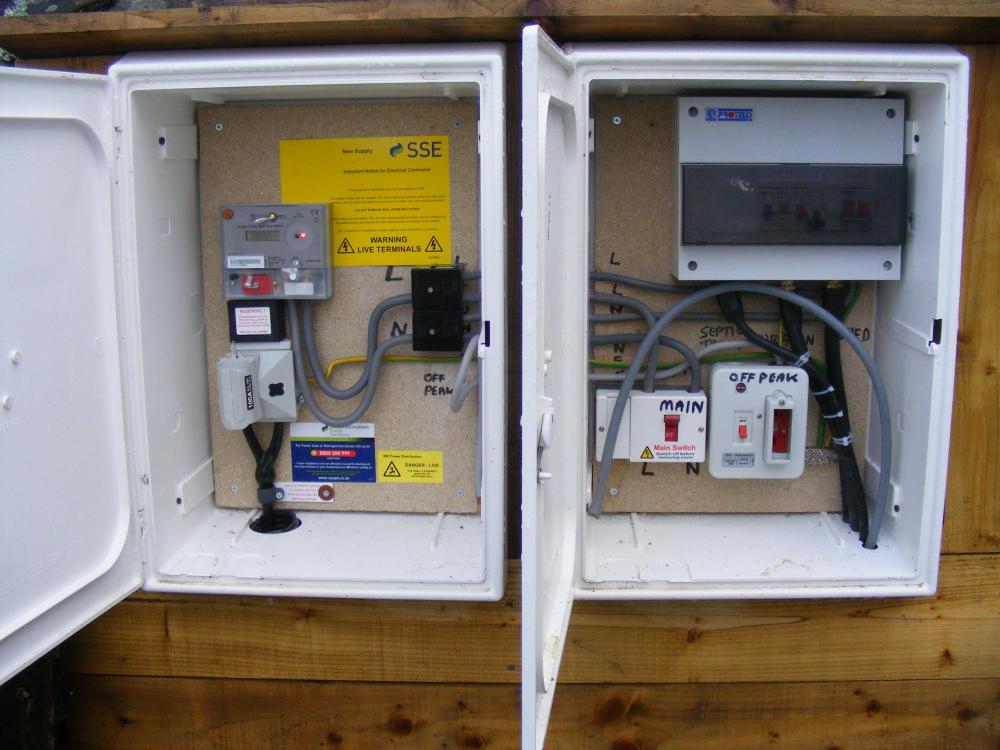
That is the surface mount version of a meter box. This is the flush one. https://www.ebay.co.uk/itm/Electric-Meter-Box-Recessed-UK-standard-domestic-meter-box-EBP0011/272284487833?hash=item3f656b9099:g:JisAAOxygo9Q7DF5 I used two side by side in a little bit of fence. Sometimes the DNO get a bit uppity if you put too much stuff in "their" meter box
-
Yes, that's a Rolls Royce job. Far cheaper to buy a flush mount standard meter box and build a wall or fence to put it in.
-
LG Therma V mono block Air Source Heat Pump
ProDave replied to ProDave's topic in Air Source Heat Pumps (ASHP)
I could do that. I would first have to take a couple of readings at different temperatures to determine what thermistor is used, then see what parallel resistance would modify the curve correctly. -
In a previous house we had a 1M wide fully glazed (i.e 1 big tall pain) 2G PVC door. It gave no end of problems with the door sagging and catching on the frame. Basically, the PVC door had no intrinsic strength, and the weight of the glass was too much for it. We had the window company back at least twice and the only fix was take the glass out, re stick it back into the frame and put shims in strategic places to try and stop the weight of the glass pressing down on the PVC frame. It never was perfect but the buyers never mentioned it when we sold the house. We have a similar thing in the new house, Rationel 3G ali clad timber and it has given no problem whatsoever. So I am minded to agree, PVC frames might not be strong enough for large heavy panes.
-
LG Therma V mono block Air Source Heat Pump
ProDave replied to ProDave's topic in Air Source Heat Pumps (ASHP)
When I dirst ran it up a couple of days ago it was about 2 hours in total to heat the 300L tank to 55 degrees which was plenty hot enough. We then each had a shower, did some washing up etc. Yesterday after the tank had been off for a few days it was only on for 1 hour and when I turned it off it had reached 45 degrees. That was still hot enough for washing up, and the bath had it's first use last night from that. I have now set the heat pump hot water temperature to 50 degrees which should be plenty for normal use and leave lots of headroom for solar PV to heat it further when we eventually get that. By default, this unit has a "room thermostat" input and when that is enabled it ignores any timers you have set and just operates the heating on demand from that thermostat contact, so that is my route to controlling the heating how I want it from my own timer and the UFH manifold controllers which will give a call for heat to the heat pump when any zone calls for heat. LG do sell a "dry contact" kit but as far as I can tell that just gives you one global on / off input so I can't see much use for that. The only bit of the controls that I can't see a tidy solution to is hot water heating. It controls the hot water to a set temperature with a thermistor probe in the tank. There is no other input associated with that. My only quick and dirty scheme I can think is when I want to turn the hot water off, switch with a relay from the temperature probe to a fixed resistor that gives a high temperature reading so it thinks the hot water requirement is satisfied. -
LG Therma V mono block Air Source Heat Pump
ProDave replied to ProDave's topic in Air Source Heat Pumps (ASHP)
My suspicion about the supplied controller was confirmed today. I ran the unit for about an hour doing my pump tests, heating the HW tank in that time. Then I turned it off at the controller. A little later SWMBO says to me "why is it still on" Sure enough, in spite of it's controller being "off" it was most certainly on and running. So it's supplied controller remains somewhat of a mystery with a mind of it's own, reinforcing my desire to integrate some proper controls so I can be sure when I want it off, it will be off. Part of my desire to have full control over how and when it operates stems from the eventual desire to install solar PV so as far as possible I want to ensure the heat pump operates in daylight, when there is a reasonable chance of PV generation, and does not operate at night, except perhaps in the darkest depths of winter when it might have to operate longer to keep up with heating requirements (when there won't be much PV generation anyway) -
I started to hear about this when I encountered the problem with ASHP #1 that some of the refrigerants were being phased out and were in limited supply, hence expensive. It would be a shame if heat pump technology is restricted by such issues. One wonders what the future will be?
-
Hi and welcome to the forum. I first wanted to self build when I was in my 20's. A plot came up for a reasonable price and that was when I found the hard reality that plenty of people would lend you money to build a house, but I could not find one that would lend money to buy the land. So that dream had to wait for another 25 years. If you ever find yourself north of Inveness you are welcome to look around by build.
-
The Build - Insulation ahead of 1st Fix
ProDave commented on Redoctober's blog entry in Our Journey North of the Border
Exactly that. My builders suggested it, and they had never heard it called a "Tony Tray" As with most things attention to detail is important especially at corners. One house I wired 2 years ago now did not do that, and I remember them spending ages taping bits of air tight membrane around every single joist. -
LG Therma V mono block Air Source Heat Pump
ProDave replied to ProDave's topic in Air Source Heat Pumps (ASHP)
I have now fitted a Grundfos pump as my secondary pump, and that, in conjunction with the Wilo pump inside the ASHP gives a slightly higher flow rate. I have now also found a setting on the ABV that gives sufficient water flow rate even with all my motorised valves shut. So hopefully that issue is now resolved and I can concentrate on connecting the controls over the next few days / weeks (this is a background job for me at present) -
The Build - Insulation ahead of 1st Fix
ProDave commented on Redoctober's blog entry in Our Journey North of the Border
Did the builders have the foresight to take a "Tony Tray" around the joist ends to ensure continuous air tightness at the ground floor / first floor junction?