WWilts
-
Posts
782 -
Joined
-
Last visited
Everything posted by WWilts
-
Concrete to plug the openings where drains / ducts pass through external walls? Or are there better options?
-
Just realised the underfloor heating will escape through the concrete inner leaf and be heating the cavity instead of the room. So, replacement with aircrete needed.
-
Trying to work out the U value of the offending parts of the wall, so that I can weigh how hard to squeeze Inner leaf concrete will abut screed too, 65mm thickness
-
Builder has put in 3 courses of dense concrete blocks around about a third of the foundation perimeter. Finished floor level about 700mm above footings. Thickness from blinding sand up through DPM, slab, insulation etc is about 315mm. This means the inner leaf concrete block will abut part of the floor insulation. Cavity wall insulation will be bonded EPS beads, 100mm cavity with 100mm inner and outer (Brick or reconst stone) leafs. Aircrete 7N is intended to be the inner leaf sitting atop 2 courses of foundation concrete blocks. What will be the U value of the wall section with dense concrete block replacing aircrete 7N? Assuming thermal conductivity of 0.18 for aircrete 7N and 1.3 for dense concrete. Trying to decide whether it will make much difference to thermal performance, correcting the error over a third of the perimeter.
-
Underslab will not permit that height of concrete. Encasing till the undersurface of the slab/DPM will hopefully suffice. Above that will sit the slab anyhow.
-
Could this work?

-
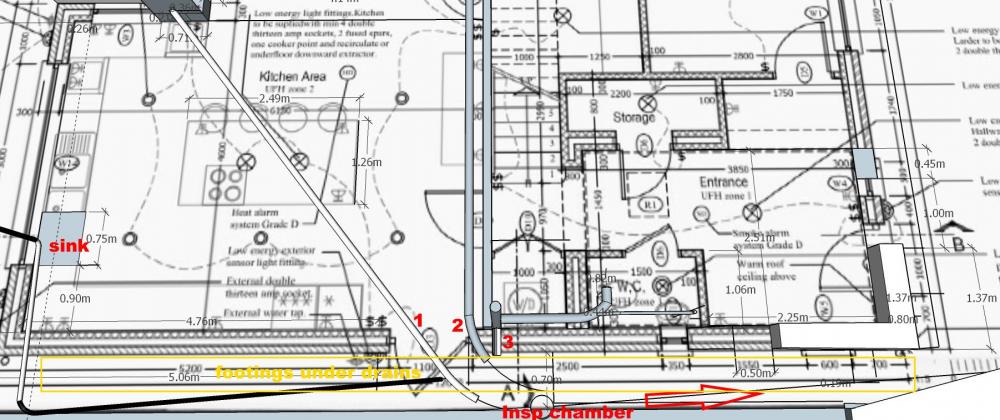
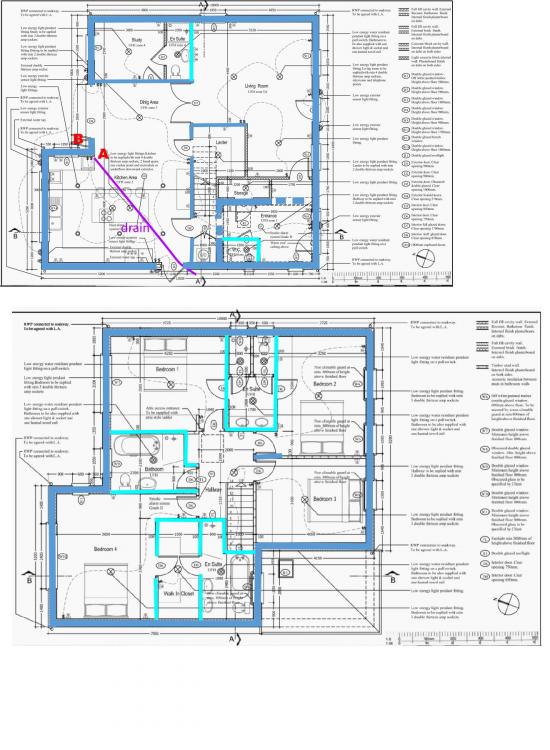
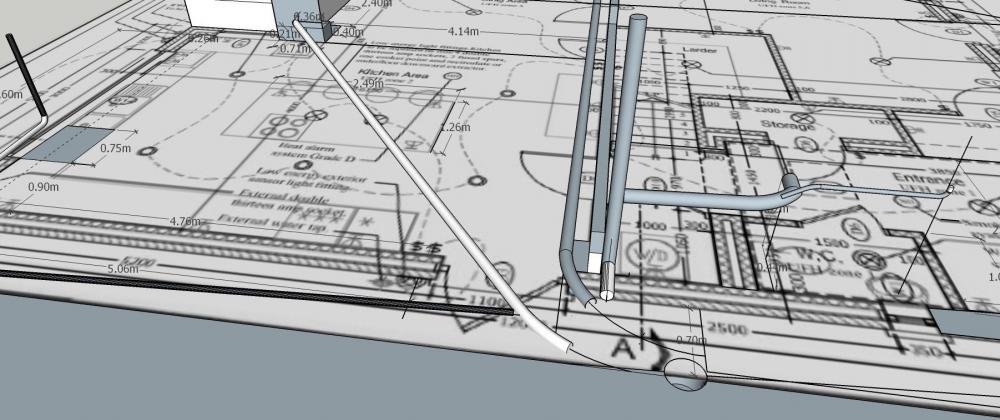
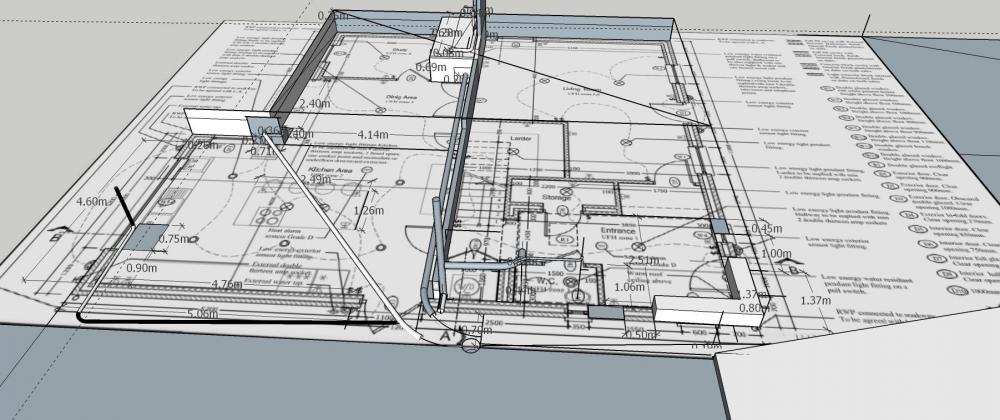
Drains numbered 1, 2, 3 to go into inspection chamber(s). En route to pumping station. Sink/dishwater waste pipe shown. How to get the drains into IC(s)? Footings (yellow) project about 0.6m from external wall. Need to have clear idea before drains are written in concrete. Openings in foundation masonry being positioned within next few days. Grateful for any ideas/suggestions/advice. PS Aware that a rest bend is needed in the soil pipe (3), exact position of soil pipe can be adjusted. Openings/lintels being positioned shortly.
-
Amazing to see the cognoscenti discuss things. But please, is it ok to encase (not just bed and haunch) the drain in lean mix? Bearing in mind that the soil has medium to high permeability (unlikely to heave or shrink).
-
Slope about 1 in 30 down towards front elevation of house. Top soil about 150mm. Limestone brash soil, high permeability. Trench fill, topped by concrete blocks cavity wall (lean mix fill). Backfill with limestone brash spoil. Sand blinding 50mm, DPM, Concrete slab 100mm, insulation etc. Do these foundations need to be waterproofed? Else will water simply run under the slab and swell or shrink whatever little clay remains in the limestone brash? (Moving the underslab drains)
-
No block and beams, no hangers. But is it ok to encase in lean mix? Not just bed or haunch, encase fully?
-
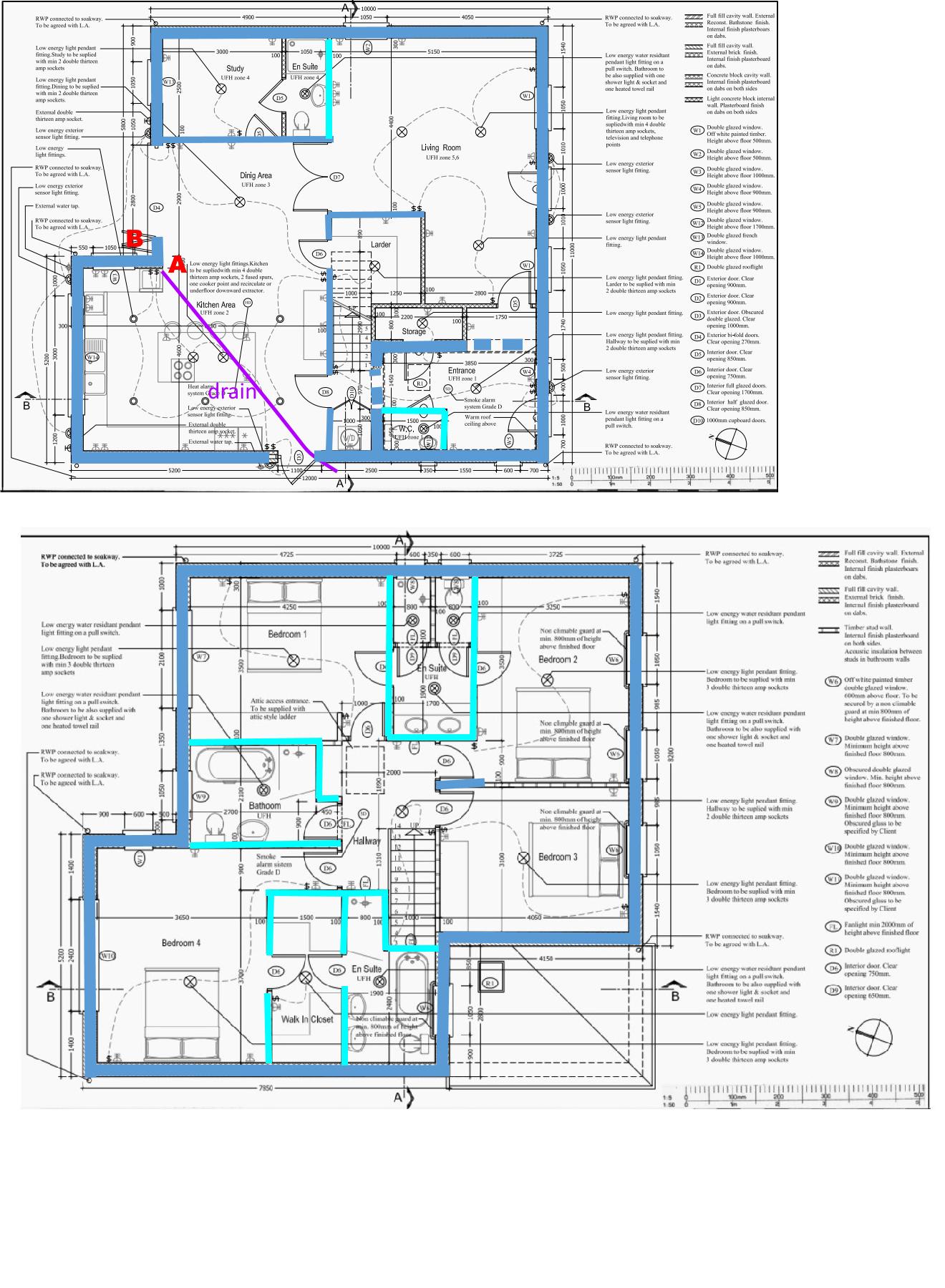
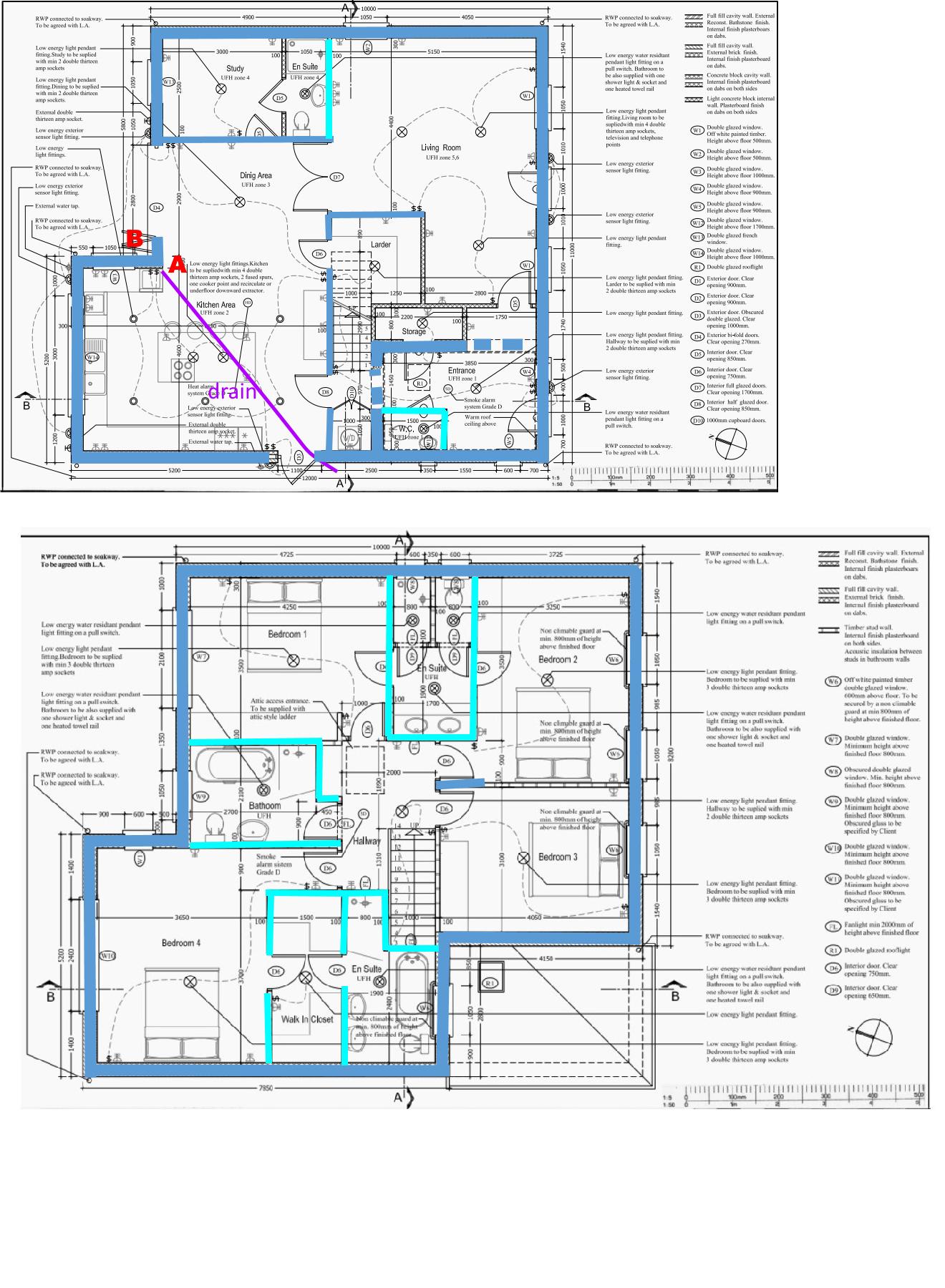
Ground floor WC/shower with external stack (top of floor plan). Need to get a clearer pic of fall, distances etc. That helps decide how low to keep the stack rest bend at the bottom. Got as far as the attached outline. Perhaps some obvious problems or solutions are being overlooked.
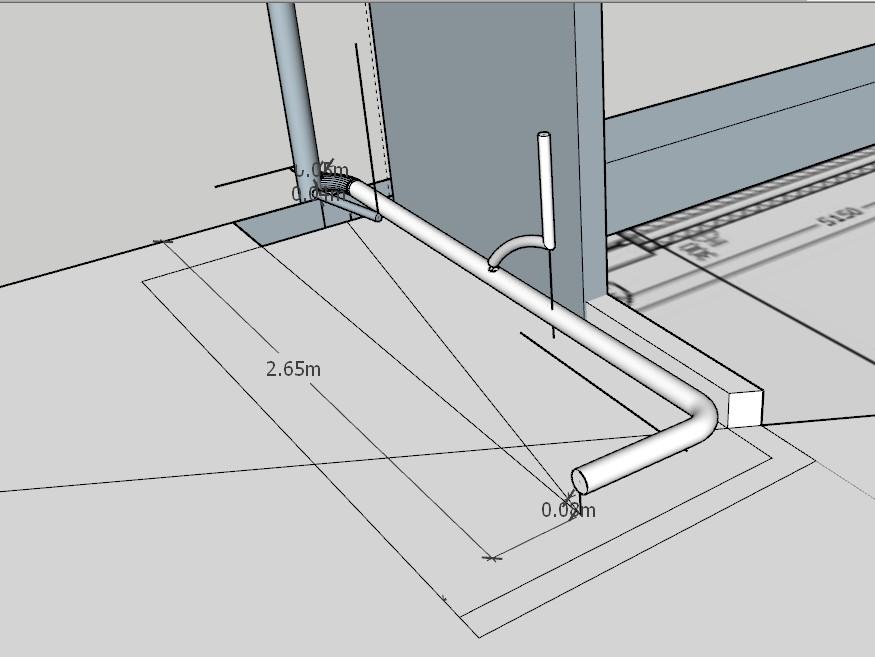
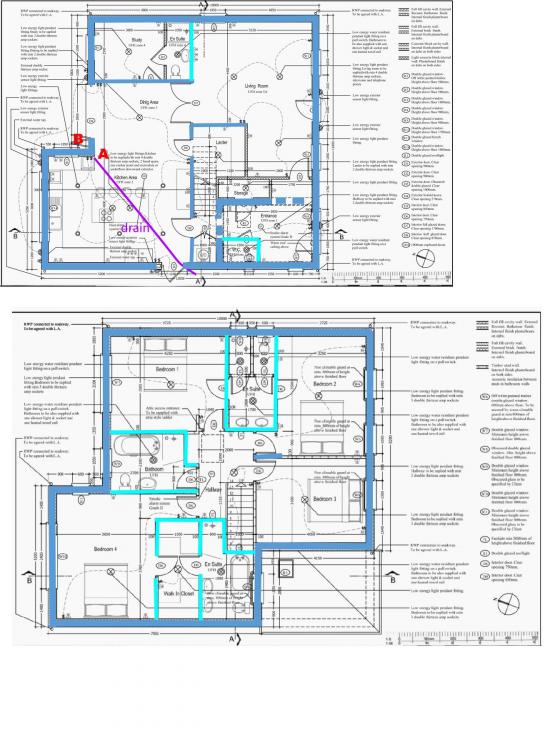
-
Attractive prospect. Limestone brash soil Only concern with encasing in concrete was movement of ground (swell or shrink) & drain joints potentially failing. But limestone brash might be sufficiently stable for encasing drain in concrete
-
In form work to hold it in place? Or does it just stand on its own in a heap? And covering drain or just bed and bench?
-
Yes, blocks have advantage of not absorbing or shedding much moisture. Won't move much
-
Yes, wondering how to hold the pea shingle in place. Option A is to build a stub wall on the footing (1 leaf of concrete blocks) parallel to the inner wall. Then pea shingle between the 2 walls to bed and cover the drain. Option B is to backfill the footprint with hardcore, compact well, and then excavate a narrow drainage trench above the trench fill footing. Then pea shingle in trench, bed and cover drain. Perhaps there is an Option C.
-
Underslab foul drain will run above trench fill foundation alongside internal wall. How to achieve bedding and covering? Perhaps lay another line of blocks parallel to the wall, for the purpose of forming a narrow "trench" in which the drain can be bedded and covered with pea gravel? If that's ok, how wide/narrow a "trench"?
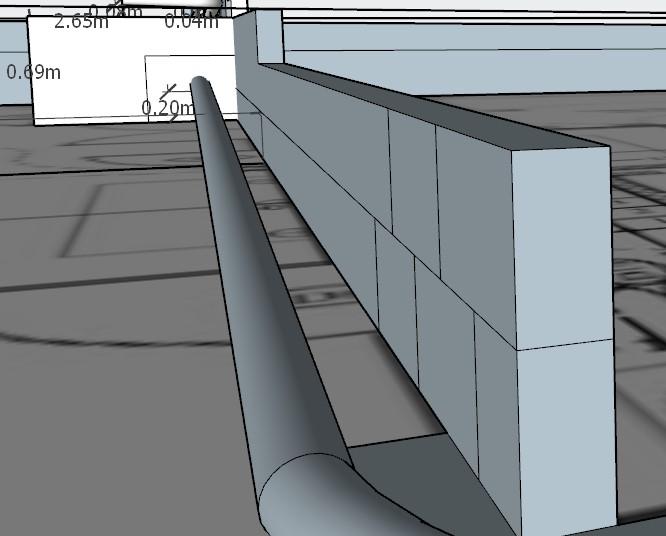
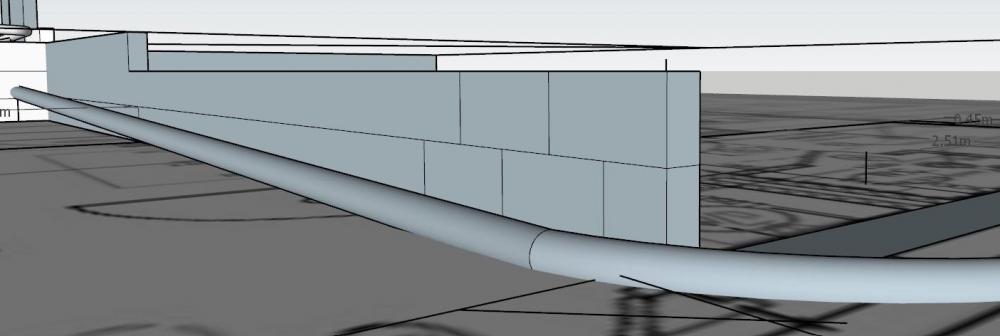
-
I thought it can't be right. Hopefully the walls will stand firm owing to the backfilling both sides and lean mix in the cavity
-
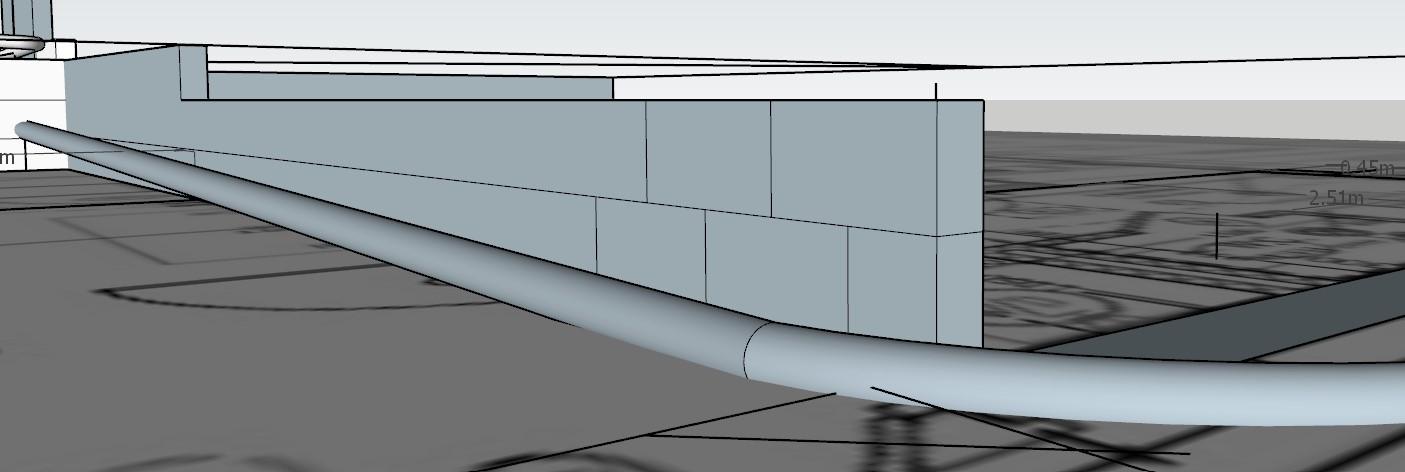
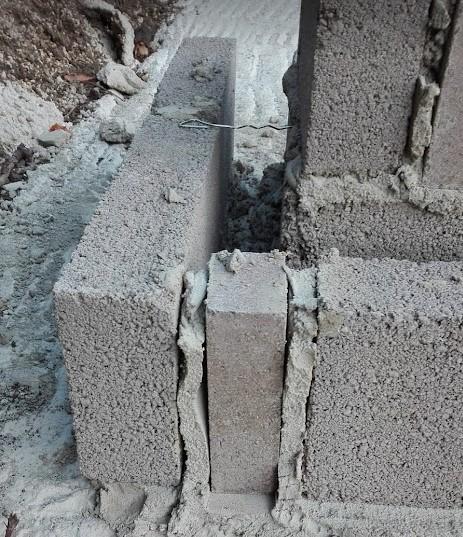
Saw this at a site. Foundation masonry. Does it matter that it looks like this? Will be backfilled on both sides and filled with concrete, I believe. Could the cavity walls be wobbly if these blocks move?
-
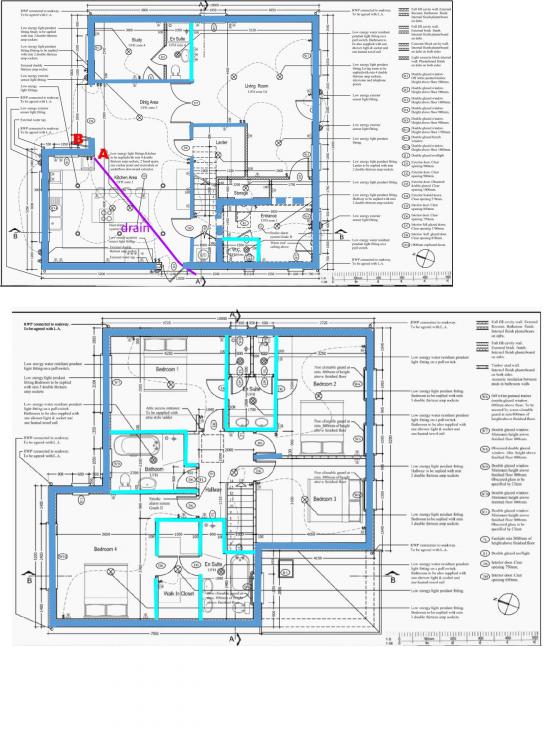
Soil stack from family bathroom, option A or B?
-
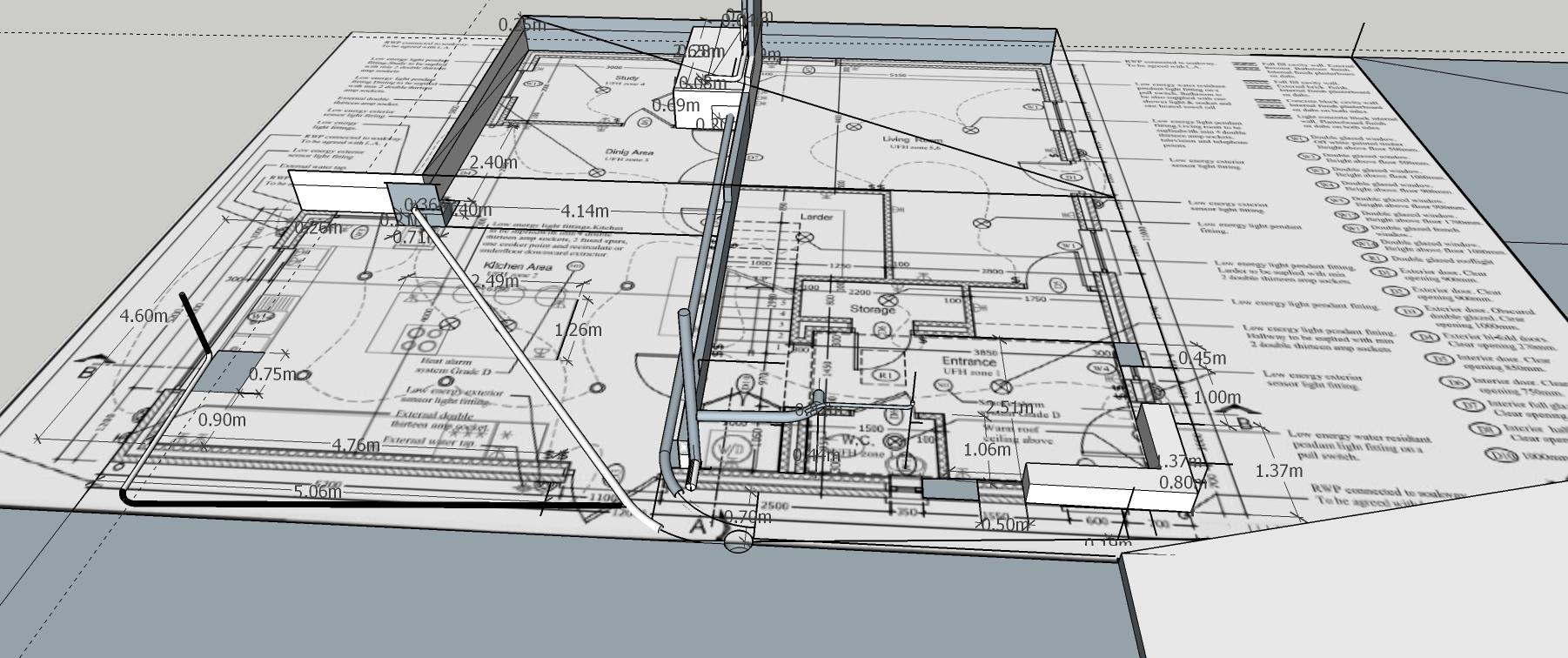
Builder thinks cables under insulation (above slab) will work fine and be more cost-effective than ducting under slab, lintels etc. Idea is to get the cables to a central room. Any reason to avoid that plan? Cables = SWA for 3 phase supply from external kiosk to inside house, Telecom cable (probably fibre 2 core) Data cable - - - - found this on google: https://forum.ovoenergy.com/your-smart-home-139/house-insulation-electricity-cables-and-fire-risk-the-good-and-the-bad-7367 Seems it's a really bad idea to surround electrical cables with insulation, owing to risk of overheating and fire
-
How to protect them under the slab? (hardcore) Probably duct, but what kind of duct do people generally use? In trench outside Have 50mm rigiduct for telecoms & data 100mm electrical duct for 3 phase cable
-
How to get services from outside the footprint to inside the house? (telecom, data; gas; electric cable from external meter kiosk) Is thermal bridging a concern? Cavity wall with blown in bonded EPS beads in due course Trench fill foundation, hardcore, blinding, DPM, concrete slab, celotex, screed
-
Structural engnr specified 7N aircrete for inner leaf of cavity wall up to ceiling of ground floor. Above that, 2.9N aircrete suffices for SE. Builder favours a course of aircrete trench blocks atop trench fill concrete footings, sitting on bed of traditional mortar. My hunch is that trench blocks should also be 7N to convey the load to the concrete footings. Could anything less than 7N (eg 3.6N) suffice for the trench blocks? 215mm high, 440mm long, 300mm wide
-
Thanks. Trench fill poured today, under the kitchen sink it is for the water mains entry. Hopefully will be able to run pipes (probably plastic) up and along the steel beam to supply the rest of the house. Including plumbing manifolds on (probably) upstairs landing recess, and boiler / cylinder in upstairs master en suite. That's bottom right in the first floor plan. Don't relish many holes in the ordinary timber joists
-
Near kitchen