Adsibob
-
Posts
3604 -
Joined
-
Last visited
-
Days Won
10
Everything posted by Adsibob
-

Can I just fit heat alarms instead of smoke alarms
Adsibob replied to Adsibob's topic in Building Regulations
???? Cavius = 97mm diameter by 52mm height (volume = 384,311 mm3) aicos = 150mm diameter by 66mm (volume 1,166,316mm3). So the Cavius is less than 3 times smaller than the aicos -
Can I just fit heat alarms instead of smoke alarms
Adsibob replied to Adsibob's topic in Building Regulations
I know these are well reviewed, but I find them rather ugly. The Cavius are about half the size for mains powered or a quarter the size for battery operated. Unfortunately mine need to be mains powered, otherwise I'd be going for the tiny cavius battery operated ones. -
Can I just fit heat alarms instead of smoke alarms
Adsibob replied to Adsibob's topic in Building Regulations
I've pasted directly from the report in the OP. Here it is again:, this is separate to the requirement to have a sprinkler system (which is a separate part of the report and which I've already installed).
-
Can I just fit heat alarms instead of smoke alarms
Adsibob replied to Adsibob's topic in Building Regulations
I’m spending a small fortune on a sprinkler system, so I doubt it would ever get anywhere near as bad. Also, downstairs there would still be 3 smoke alarms, I’m just wondering if in the main lounge area I can swap the smoke alarm for a heat alarm, so that the open plan area was mainly served by heat alarms rather than smoke alarms. -
Can I just fit heat alarms instead of smoke alarms
Adsibob replied to Adsibob's topic in Building Regulations
I live in England. I will call the fire engineer that charged us an arm and a leg for a cut and paste job and see if I can get some more information. -
Can I just fit heat alarms instead of smoke alarms
Adsibob replied to Adsibob's topic in Building Regulations
I guess I’m just wondering what the legal requirement is. The report says “fire detection and alarm system”, so I’m just wondering whether compliance would be satisfied with a heat alarm system. We have a large open plan area off the kitchen, and given the toaster in the kitchen and the wood burning stove at the other end of the open plan space, the potential for false alarms is fairly high. I was therefore thinking of installing the majority of the alarms on the ground floor as heat alarms. Happy to have smoke alarms on the upper floors. -
I have a very open plan layout at ground floor which caused our BCO to insist we get a fire engineering report. The report requires us to get a sprinkler system and also to do this: I have found a BS 5839 part 6 Grade D2 mains powered interlinked fire alarm which I like because it is quite small and unobtrusive, but it is a heat alarm not a smoke alarm. I think these go in the kitchen normally, but any reason why all the alarms in my house can’t be of this heat detection type, rather than smoke?
-
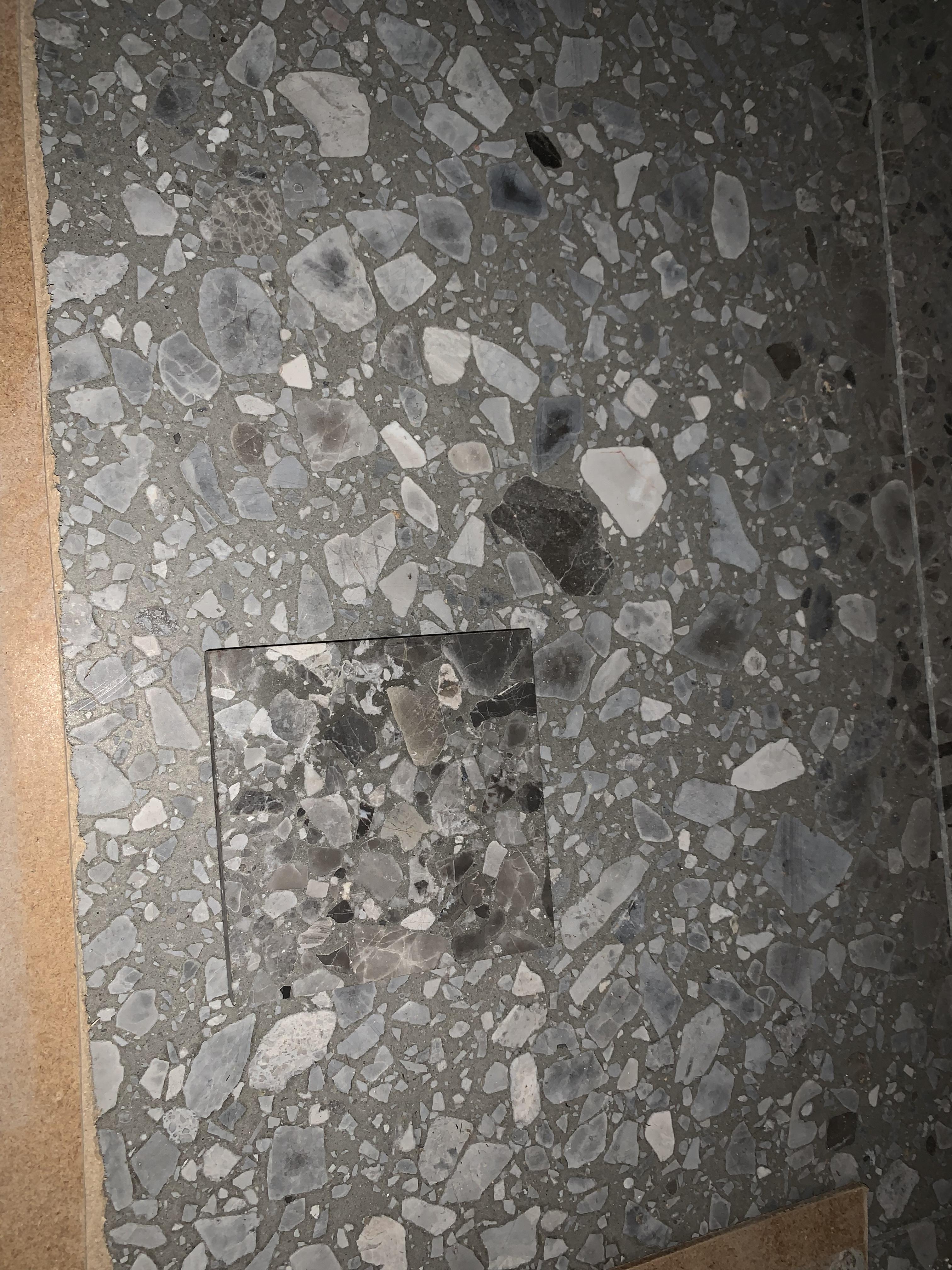
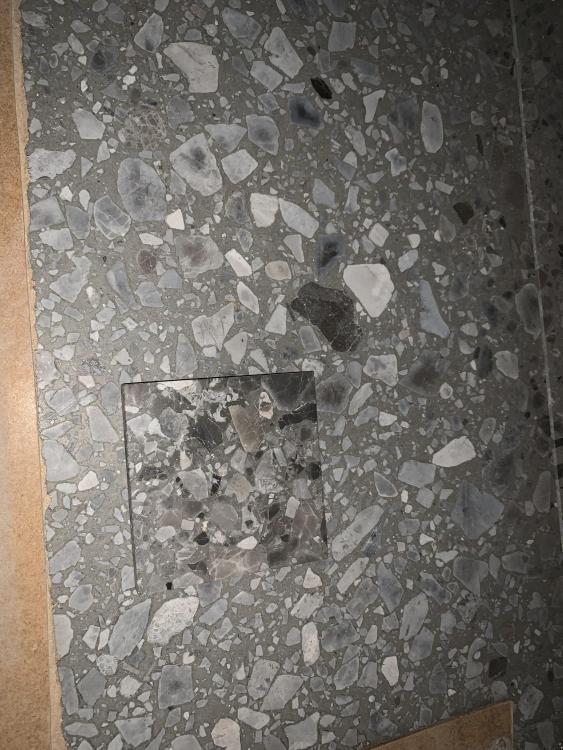
Not sure why previous photo upload failed. Here it is again (the small tile on top is the sample, the large tile below is my new floor).
-
Thought I'd update the thread and tell you how the terrazzo installation went. I previously said: Well, they were only installed in February, so some 9 months or so after manufacture. During that time they were stored indoors with 1cm wooden spacers between them in a fairly well ventilated area where relative humidity was generally below 55%. In the last couple of weeks before installation, we even brought in some dehumidifiers that brought the overall RH down to about 40% to 44%. They were then laid, then left to dry for about a week (although most of that time they were covered in cardboard, which I wasn't happy about but which the builder assured me would still let them breathe). Last week we cleaned them with Lithofin MN Power Clean and then they were sealed with Lithofin MN Stain Stop. I don't know whether the tiler used just one coat of sealant or two, but if only one there is still time to add another coat as they've not been grouted yet. There is some discrepancy between the tiles as they presently look, and what we were expecting based on the sample; see picture below which shows the sample on top of the tile. As should be visible from this photo, the sample has more of a sheen to it and the colours are slightly more vibrant, with more contrast. Oddly, when I raised this with the supplier they told me the samples are not sealed and they just get that more polished look from people handling them in the shop. Should I: stick to the installation instructions which is to put another coat of Lithofin MN Stain Stop sealant (if indeed tiler has only done one coat), then grout, wait for grout to dry then two more coats of Lithofin MN Stain Stop sealant; OR switch to a "colour enhancing sealant" such as Lithofin MN Colour Intensifier, although I see that on the description of that product, it states "Please Note: for protecting polished and very finely honed natural and artificial stones, we recommend Lithofin MN Stain-Stop" so maybe terrazzo, bring a combination of portland cement and natural stone falls into that category? Maybe @nod can come to my rescue and provide some tips.
-
Where is the kWh price heading in 2022?
Adsibob replied to epsilonGreedy's topic in General Self Build & DIY Discussion
Now why is that? -
Yes, well this was my thinking and why I asked him at the outset of the project 15 months ago that we would be keeping this door (albeit moving it).
-
The original door we were going to use for our side door is a bit knackered and my builder has said he would have to charge me £450 to refurbish it and I might as well get a new one. Although it's Sapele and nice and heavy and had a nice Banham lock, it has a rubbish U value and the wood may have rotted in one part, so I think he's right. Can anyone recommend an external door with a fairly good U value and preferably PAS24 or similar rated. Really doesn't need to be passive standards, just something in the 1.1 region that is fairly airtight. I don't care what it looks like, but it needs to be secure and open outwards. No glazed panels to keep it cheap. I probably also need a door frame.
-
Their custom size works, but at £400! Too much! Unfortunately this one has been lacquered. It's clear lacquer but I'm not sure that will work as I need to stain it and then lacquer it. Also couldn't work out whether I could shave off 8mm off each side.
-
Don't mean to sound defensive, but just in case anyone thought my misfortune and crazy long timescale was due to not spending money on professional advice, i totted up what i have spend on professionals: architectural fees: £26k planning consultant £5k SE £4.7k RICS Surveyor £1.2K But I agree that none of these professionals did a good job in advising me of the length of project i was undertaking.
-
What’s wrong with 5A lamp sockets? We have about 5 of them and I’m excited to use them when this nightmare eventually ends.
-
I have a similar problem. I'm trying to find a blank solid core door that is in unfinished oak in a 2032 (though i could possibly use a 2040 high one) by 710 width. I had thought of looking for FD30s as these are solid core (although i don't need this to be FD30 compliant). This really shouldn't be difficult as it's just a blank, but i can't seem to find one in unfinished oak. Any thoughts?
-
You can’t really compete with point 1. Unless you are going to redevelop it, the value to you of this house is not its redevelopment value. So ignore that consideration. Point 2 is also irrelevant. You are allowed to reduce your offer after a survey; by how much is down to relative bargaining strength and how obvious the issues “discovered” in the survey were before the survey. Point 3 also irrelevant.
-
If you are buying, then surely your offer is subject to survey? Get a survey from a decent surveyor and ask him to focus on the issues that really matter: subsidence and damp and wood rot. Then see what his survey says and then decide. A little bit of settlement won’t stop you from getting insurance. Subsidence might, and that is when it becomes problematic to sell. Alternatively, if it is fixable with a a few linear metres bit of underpinning or helifixing, then it’s not such a big deal, and you can get a SE to issue a certificate of structural adequacy to enable you to get insurance. Armed with a survey, you can get a quote for the work and the certificate and go back to the vendor and ask for a discount to account for all of that.
-
I’m not a SE, so no idea really. But based on my own experience of subsidence in a house of a similar age and style, I think that apart from where that tunnel is, none of this looks too serious. Most of your cracks (apart from that tunnel) appear to be close to windows or door arches. It is more likely that the lintels have rotted or given way slightly, or just shrunk a bit, as lintels in 1920s and 1930s houses were made of wood, which obviously isn’ta great material for a lintel when it is c. 100 years old. it might be a case of removing the render, then use helibars to stitch the underlying brick work together and possibly also replace the lintels, though this isn’t always necessary. My SE designed a fix like this for the front facade of my 1930s semi when we discovered the brickwork had cracked around the windows after removing the render. As for the tunnel, that doesn’t look great. But could look worse than it is!
-
I have a pair of old 1940s double doors, that are made of solid oak. They are heavy and around 42mm thick. We have got new frames with intumescent strips for them. There are two issues that I think might be picked up by my BCO (who is expecting these to comply with FD30). 1) each door has a couple of pretty small panes of glass which obviously won’t be fireproof. Could I fix that by adding some of this film into each pane: https://www.3m.co.uk/3M/en_GB/p/d/b5005059008/ 2) I think double doors need a “pair maker” to be made into fire doors. Anyone know if that is the case? Any other issues? Thanks
-
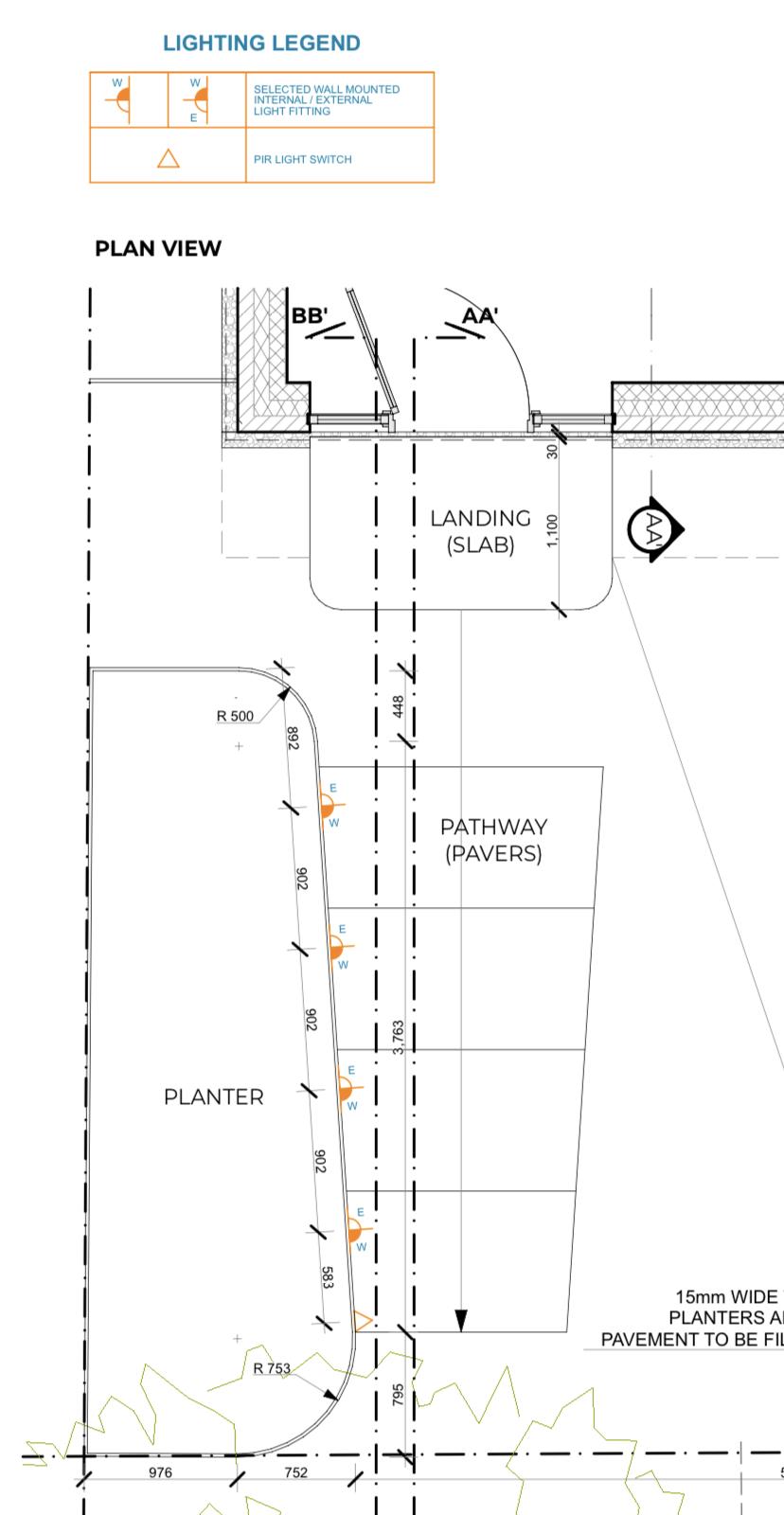
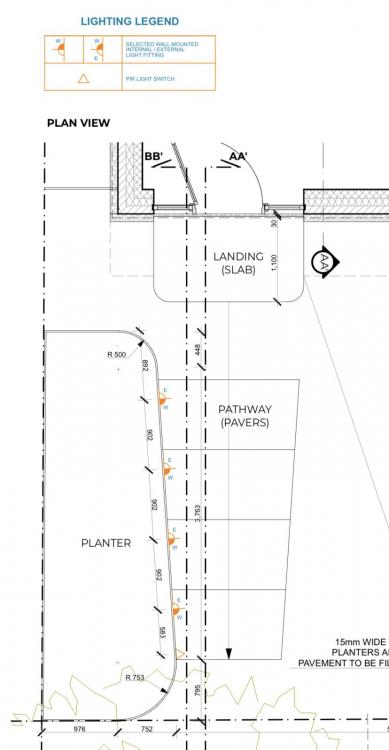
Below is a drawing of my front yard. I have some pretty deep steps for a shallow incline, their depth is just over 900mm. I want the steps to have a bullnose edge, and I have found some Indian sandstone that might work, but the pavers with the bullnose edge are only 350mm deep. I also worry that Indian sandstone looks nice and grey new but eventually goes green. alternatively, I’ve found largish format porcelain for outdoor use, which might retain its colour better than Indian sandstone, but it obviously doesn’t come with a bullnose. I’m also after something I can use for the “landing slab” which acts as a step/bridge over my French drain. any thoughts?
-
So the rate I was quoted is high, but is it high for London rates? The area is about 15m2, so not huge.
-
Very helpful, I really hadn’tspotted that at all.
-
a little pissed off by the prices I’m being charged for extras. We changed plans about a year ago (a couple of months after signing contracts) from a herringbone wood floor in a room, to a tiled terrazo floor. I only just got the price variation for this yesterday, a few days after most of the tiles had been laid (albeit the tiles have sat there for about 7 months waiting to be laid). I was credited £35 a m2 for not having to lay herringbone and debited £69 a m2 for laying tiles. The tiles are 600 by 600 whereas the herringbone was small pieces (about 85 by 280), so although the tiles need to be grouted, cleaned and then sealed I really didn’t think they would be such a big difference. Maybe I’m being stingy, but surprised the laying coat has suddenly doubled given one would need to seal the screed before laying a herringbone floor, si that would surely be equivalent to sealing the terrazzo. curious what @nod thinks.
-
Really very low today. Realise the build is starting to affect my work. Made a big mistake at work because I didn’t have my eye on the ball. Not sure I can take this much longer… Seriously concerned by ongoing delays. The latest ridiculousness is that my builder has only lined up one painter to do paint the whole house. Funnily enough, it is painting very slowly. Still so much to do… will go mad at this rate…