


LSB
-
Posts
994 -
Joined
-
Last visited
-
Days Won
1
Everything posted by LSB
-
We are planning on some of these barn style sliding doors, but does the lintel need to go just above the opening or the whole width of the opening and where the door slides. We were also planning on having one of these on a stud wall, but I'm now wondering if they will be too heavy. Advice greatly received as usual.
-
now that sounds like a plan. my son in law works at the nuclear investigation site so maybe he could help ?
-
Well despite the light evenings progress has been very limited during June. I've been working 8-6 with an hour travel each end, then with the dog to walk the horses to sort out and dinner there has just been no time. I've also been decorating in our house, which needs to be done because we have visitors in a couple of weeks. HID has been more productive, but as we have our separate roles he has been held up as well. Just outside the end of the barn when we were trying to dig out roots we hit some rubble. We thought it was a couple of stones, but it ended up being tons. The hole we started digging had lots of voids which we were worried about, particularly as this is exactly where the drainage pipes were supposed to be going so these had to be removed. Some of them were too heavy the the digger to lift so they had to be dragged. In the end we had a very large hole, but with digging out the floors we have enough to fill it, it's just hard work. One of my jobs is racking out the floors to get them more or less level, but I keep finding more rocks buried as part of the sub foundations. So, we thought, let's use the digger and dry the dumper in. Started well. What we didn't consider was that when the front goes down, the back goes up. Dumper well and truly stuck. As we didn't want to empty it to move again we ended up raising the roof with props to get the dumper out. Really stressful as I was worried we were going to pull the roof down. Not trying that again. Now we've knocked down the middle walls that are not supporting anything we wanted to start removing the corridor which is sloped as it, obviously, needs to be level. But, once we started we realised that even the lowest bit is 8+ inches thick of solid concrete. Plan B needed. We think that it will be a frame and level. I'm now hoping that the rest is as thick as it will certainly be solid and stable. We do need to remove the kerbs either side and there are some drains which we need to investigate and probably fill in. this floor is the base level from which everything will be built which means that the other corridor, which is 6" higher needs to be removed. HID is planning on hiring a cutter to do some of it which will then allow him to dig it out. So, a non productive month all in all. Hopefully July will be better, although I'm still going to be very busy at work. But, HID is currently in Slovakia for work so has to quarantine at home for 10 days. So, apart from checking emails and taking calls he plans on spending lots of time on the build (demolition). Looking at the barn in detail we still have so much to do just to take it back to basics. Then the SE will be out so the BR drawings can be finished. This building lark really is a lot of effort ? Thanks for trawling through, if you've made it this far and next update the end of July.
-
Re crushing and re-using. We were planning on doing exactly the same, but investigation showed that hiring a crusher was going to cost more than a grab lorry to take away and buying in. Also, someone (can't remember who) on BH said that the quality of previously used and crushed might not be acceptable. We had a fibre cement roof which can contain about 10% asbestos on the barn we are converting, this was the stuff that is not so dangerous, and the cost to get someone in to clear was circa 12k. In the end we suited up and carefully took it down ourselves, it all had to be double wrapped, look at my blog for pictures, and then we hired a skip and had it taken away. With the DPM to wrap and the skip hire it all cost about £800 for 3/4 ton and probably 30 - 40 hours of time. Good luck, and use BH as people on here have a lot of knowledge which I have already used many times. We are now at the opposite end of the country, but come from Somerset originally and love the area.
-
Some of the stuff we dug out was small so I've already done the 120m driveway and area around the barn, we have so much ? But, thanks, I will check what we can use. I sort of assumed that because it came out of the floor, we are just lowering it to get enough roof height, that it would be fine to go back in, sounds like that may not be the case.
-
 I didn't think that output from a waste plant was allowed to go into a water course that ultimately goes into the public water supply.
 -
Demolish barn to add extension to main dwelling
LSB replied to freeze's topic in Planning Permission
It might be worth looking at planning consultants in the area that know the rules rather than 'warn' the LPA in advance. Do you really want to get rid of the barn or could you get planning permission again to convert and then sell that. The house already seems quite large, if there is a particular reason for almost doubling the size it's worth discussing that with planning expert as well. -
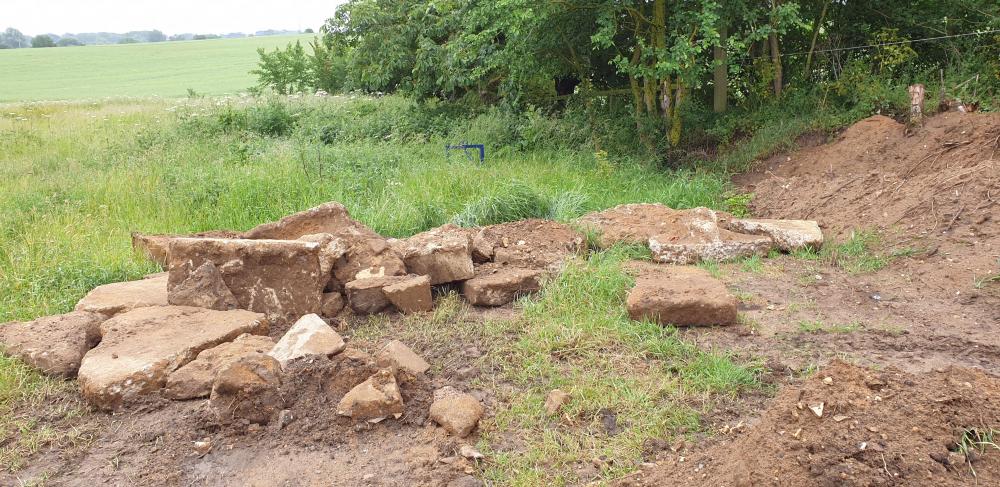
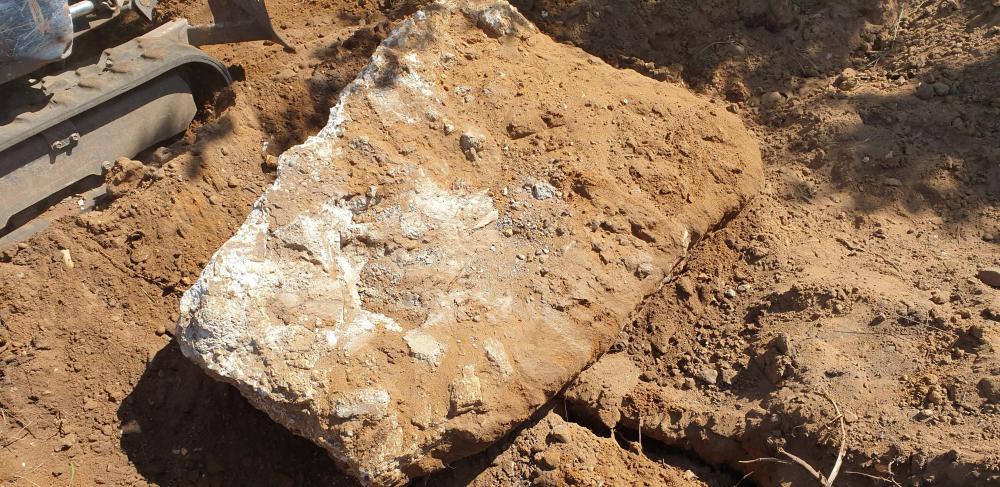
Hello We have many tons of rubble, some very large lumps. This is the original barn floor. As we are going to need ballast for the new floors I'm after the opinion about whether to have this lot 'grabbed and taken' or if we hire a crusher to make our own. The cost of a crusher is £576 for 2 days, which may not be enough and also will possible not handle some of the large pieces. So far we have only dug out about 25% of the floors so still have lots to do, but the pile is getting so large that I would like to sort this pile out soon to get space for the next lot. Some of the lumps are so big that our digger can move them, but not lift so these will need to become part of the garden (bit ugly) or grabbed. Here are a couple of pictures of the big bits and later I will take a picture of the main pile to give an idea. This lot all came out of a hole that suddenly appeared beside the barn where we drive to dig out the floor.
-
I've been looking up paper tape, but I'm not sure what you mean, is it this? DIALL PAPER JOINTING TAPE WHITE 90M X 50MM (619CF)
-
the plaster isn't loose so I don't have that, but downstairs there are lots of cracks where the old house can move and the extension can't. Thankfully, most of them are level. All the corners have crack, but as the house will be sold when the barn conversion is finished we need to make sure that nothing shows.
-
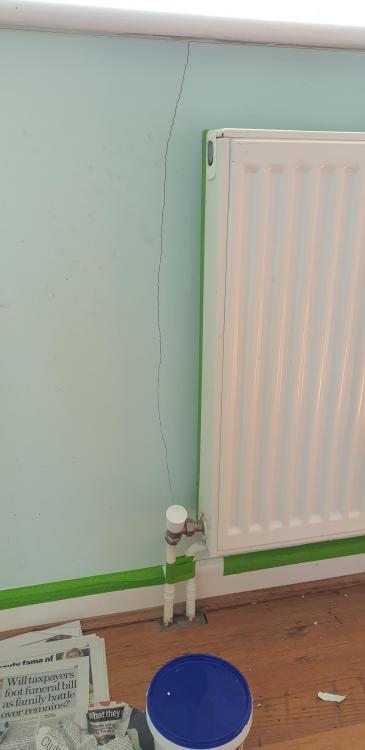
We built an extension on our house about 20 years ago. The old house was built 1860 and has no foundations and is on sand, so has always moved a bit. The new extension had to have 3m+ piles where it connects to the new bit. We are now re-decorating our master (in the extension), where there are a number of settlement cracks, easily filled and sanded for painting But, under the window there is one which is about 1mm raised from side to side and we are not sure what to do. This has been there for some time (years), but I'm not sure exactly how many. Can anyone advise what path we should take. We are not sure which side has raised or dropped, but it is the side by the radiator that is lower. The downstairs goes out about 3m further than the bedroom, it has a sloped roof. There are no corresponding cracks above the window or on the skirting. This is above where the heating pipes go down for the lounge, which are surface mounted in the room below, not sure what we were thinking back then. Picture to show.
-
Over the last month we've spent most of our time continuing to take parts of the barn apart whilst repairing some bits that need to stay. What's brilliant is that all the fibre cement roofing which contains a small amount of asbestos is gone. The skip company delivered on Friday and collected on Monday and after seeing it all wrapped said it was very good and we didn't need to wrap the skip as well. We've pretty much finished clearing the back sheds, although there is still quite a bit of moving from A to B with no real idea of where it is going to end up, such as 8 farm gates that I will need in the future, but am not sure where to store. I spent a number of days moving rocks, where are the chain gangs when you want them, these are ones that can't be reached by the digger. I also knocked down an internal wall that we don't need, this means that 2 sheds become 2 beds and a bathroom. I also removed a number of broken blocks and HID replaced them with new ones. Then HID started digging out the floors and I got to clear, sweep and drive the digger. I'm also revisiting my plans to measure again, thinking about windows and drainage. In my online plans I've added furniture to see how space works and the best place to put doors. With all the comments about price increases I'm thinking about ordering some items sooner than originally intended. As physical self builders this project is going to be a few years, yet if I wait then we might end up with boarded up holes and no glass, nice and warm I guess. Next month is going to be much of the same as will the following months with a lot of floors to be dug out. The digger cannot break the concrete so we have to use the breaker to start and then lift with the digger. Last month I bought an Aldi wacker as they seemed a good price. It will be a long time before it's needed though. I can see all this clearing is going to lose my interest long before it's done, but doing it ourselves is literally the only way we have any chance of affording this build the ways things are going. Well I guess it's back to the grind. And, thanks for all the help and answers that I have been getting from BH.
-
all our blocks have arrived on pallets, we were lucky that they could be placed right by the build, 48 per pallet, but absolutely no chance of moving them with the pallet truck. Also, ours are 25kg as they are 140 deep.
-
looks great, please can I see a picture of the twins ?
-
We actually need to make some of them smaller as new internal walls will hit the outside right in the middle of 3 windows. But, we are rendering and will have plasterboard inside so I hoped that it wouldn't show once we finish.
-
Thanks, I've read many times about using 'standard' sizes, but I doubt my barn holes are standard, are we better making the holes smaller to allow for this. For example the ensuite window is 1106mm x 685mm Or, will the window suppliers cater for this.
-
Do you have CIL where you live, if you have don't do anything until that is sorted.
-
Question: in my barn conversion I have some existing opening which will become windows. But, when I measure to get quotes is it the size of the hole that I use, i.e. if the hole is 1m x 0.8m then is that what I use and the glass is smaller. Or, do I allow for the frames myself.
-
Planning refused: entrance deemed too grand!
LSB replied to albion2021's topic in Planning Permission
We were refused twice for class Q and didn't get a 'free go' in either case as it was for PD. -
ok, I'm not sure then what the rules are. probably building regs
-
I think it would be permitted development, but that does depend on other extensions done to the property.
-
I have a copy of House Builders Bible, previous edition 12, 13 being latest which you can buy off me. Make me an offer ? It is heavy so post might be a bit, where are you?
-
Greetings from Surrey householder trying to update the family home
LSB replied to Edders's topic in Introduce Yourself
there is so much work on at the moment that builders can pick and choose. just to add to the complication, make sure that you check builders references and see some of their previous work. and don't pay up front.- 6 replies
-
- 1
-

-
- garage conversion
- heating system
- (and 2 more)
-
Hello, another self builder here from Suffolk, not SIPS though. Where abouts are you
-
Next question re the hollow blocks. I can't find any details on how much mortar it will take to fill each block, I know each side and level is 10mm * block depth, but how do I calculate the middle. I've done lots of googling, but can only find details for H blocks which are 200 deep whereas these are 140 and have 2 ovalish holes.


