IanR
-
Posts
1841 -
Joined
-
Days Won
6
Everything posted by IanR
-
I have 3 phase, although only use 2 phases for the house and 3 phase in the workshop. EV charging, batteries, V2H and V2G technologies are all in their infancy and will develop quickly over the next 10 years - If the connection costs around the same I'd go with 3 phase to protect for multiple EVs being charged over night with the larger battery capacities that will come along with solid state batteries. It may complicate a PV & battery installation, although keeping your house on a single phase and a SMET2 3P Smart meter may mitigate most issues.
-
Probably hearing it more at night due to there being less background noise. Scheduling the ASHP off over night is the best option, if the HP has sufficient capacity to heat the house on the coldest days. It sounds like you may have some air in the system if you are hearing a watery noise. Do you hear the same watery noise for both space heating and hot water production? You'll have some air valves in the system somewhere, you could try to blead out any air, or get an Engineer in if you are not confident. When was it last serviced, the primary heating circuit should have been bled then. Do you have a buffer for your space heating? There's likely a blead screw at the top of that to let some air out. This probably won't deal with the humming noise, just the watery noise. The humming noise is more difficult, but you may be able to reduce it by isolating the pipes either side of the pump at their mounting positions. ie. putting some rubber washers/pads between the pipe mountings and the surface it is mounting to. Depends how your install is to how easy that may be.
-
Oops.
-
Hi and welcome, You can schedule both climate and hot water within the SMO20 controller, to set the allowable times for the ASHP to run. Page 22 and 38 of the linked document. A couple of things to think about. Has a schedule been set to match with a cheap rate, over night tariff? Are you using such a tariff? If not then schedule your HP for times that suit you. If you stop climate from working for periods of the day, the heat pump may not be able to put sufficient energy into the house on the coldest days in the hours you have allowed it to run for, so may start to use "Additional Heat" more often (if your ASHP has this). This is a resistive heater, similar to an immersion, that is not as efficient as the heat pump so may cost you more to heat your house. You can block additional heat to check if your ASHP has sufficient capacity to heat you house in the allowed hours. I keep Additional heat blocked all the time. If you want hot water in the morning then don't shower within an hour*** of the schedule switching off at night or bring it on an hour*** before you need hot water in the morning. *** adjust the hour to how long your reheat time is on your cylinder. The noise you are hearing is unlikely to be from the SMO20, but from the circulation pump on the ASHP. Most Nibe ASHPs have an external circulation pump (located in the house) and you may have a second for your emitters depending on configuration - it's likely you are hearing the pump. Ref. https://www.nibe.eu/assets/documents/23948/231759-6.pdf
-
I'd challenge that. Unless it's allowing you to go 600mm centres, it's going to cost you quite a bit extra.
-
They're delivered pre insulated (at request), using a fibre board type insulation.
-
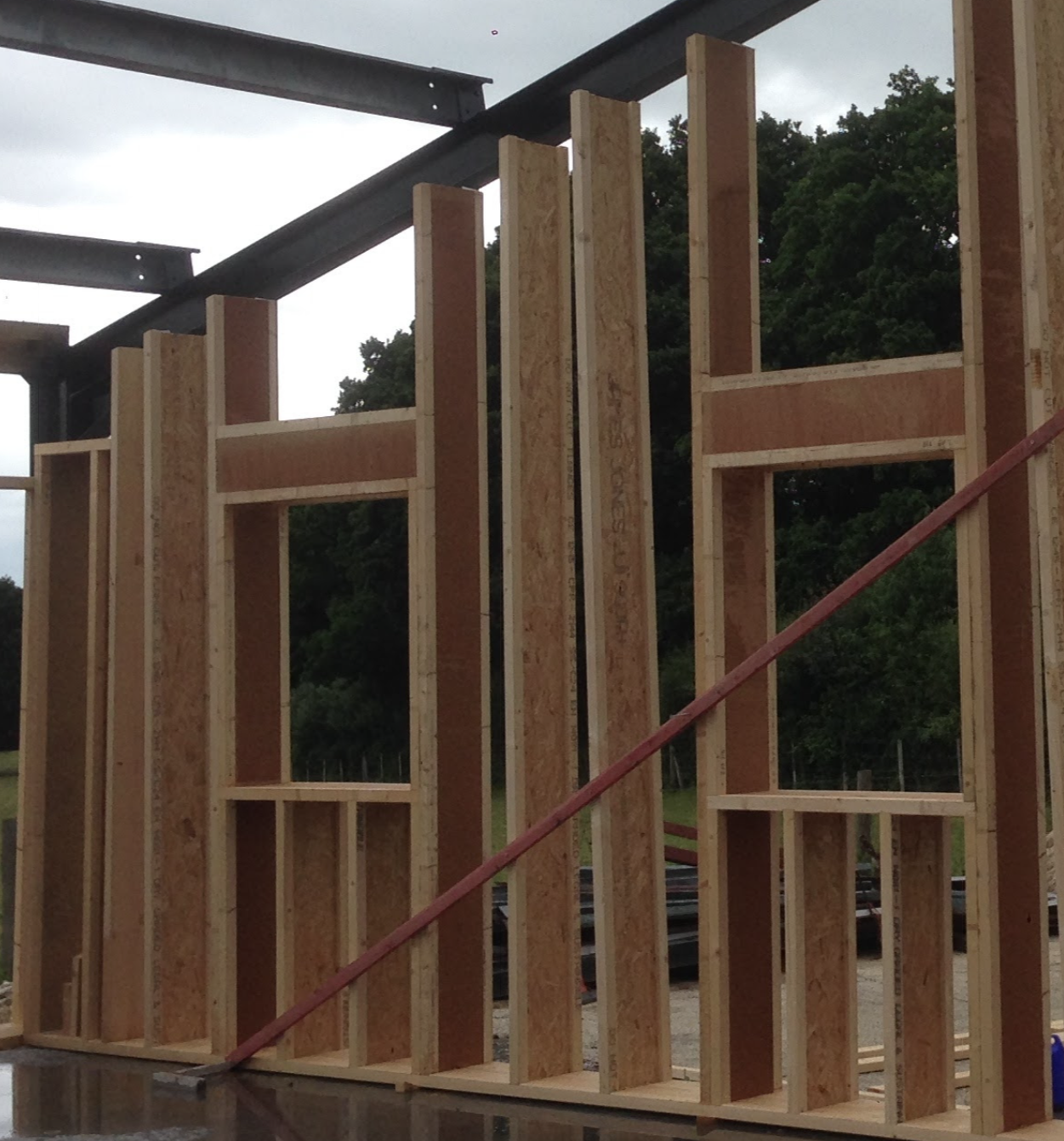
What's making you go with a 97mm flange width? I have 47mm on my walls. I only went to 72mm of the roof as JJ didn't do a 47mm or 63mm on a 350mm deep I-Joist
-
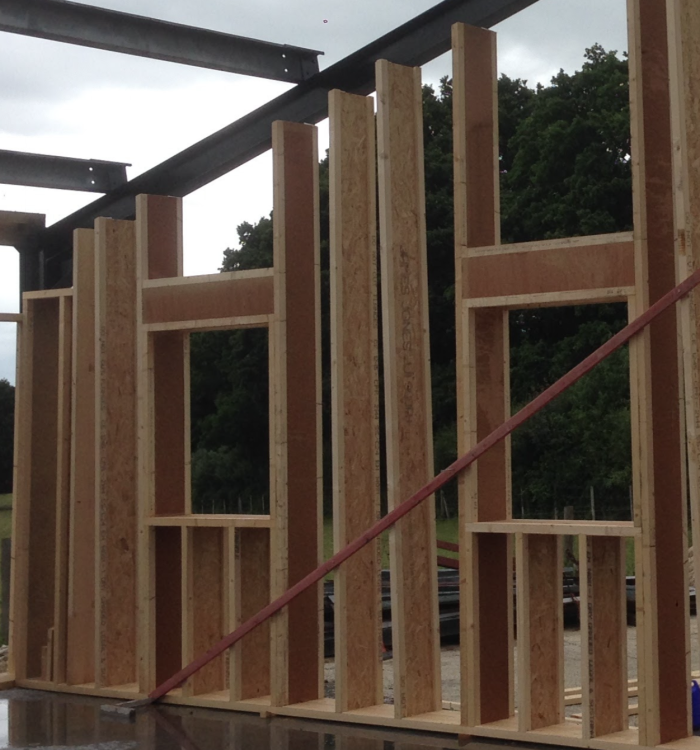
Insulated I-Joists
-
Announced in 2019 it's due to come in force in England in 2025 via a significant Building Regs update and is claimed to deliver a 75-80% reduction in day-to-day CO2 from residential homes. The consultation closed in March this Year and we'll hopefully hear soon how they expect to achieve the reduction, assuming Labour stick to the published timing. Not much detail is yet known, although the previous government had announced the banning of fossil fuel boilers for new homes would be part of it. The PassivHaus Institute are not involved with the FHS.
-
Not at all, achieving the standard is not particularly difficult for the self-builder. Probably because the standard is very well considered, setting achievable targets for justified reasons that deliver a return. Certification is a personal choice. It does cost extra, but doesn't tell you anything about your home that you don't already know. Living in a PH house has given me more significant reasons as to "why", than I had when I chose to build one. I initially wanted reduced bills, I was building a long-term family home. Since the targets are significantly higher than Building Regs at the time, especially for a conversion, I did wonder if they'd be achievable and wasn't too concerned if I didn't quite get there. I also knew that I wanted more glazing than a PH house should really have. Through the Design phase the PHPP software really informed my decisions, and demonstrated where budget was best spent to achieve the overall building performance. The PH targets became my targets, as the PHPP software showed what changes were needed and didn't leave me guessing whether or not I had too much roof light area or not enough insulation. Had I just been building "better than regs", there are loads of minor changes I wouldn't have made, because I wouldn't have been using the tools that showed me exactly how the building would perform without those changes. While PH does deliver the low bills that I was after, the greater impact is comfort. I believe it's the lack of temperature gradients across rooms, with no perceivable convection currents, stable internal temps across the day, no perceivable air infiltration, the quietness of 3G glazing and while not specifically PH, the solidity of blown cellulose insulation gives rise to a comfort level I've not felt in any other building.
-
I'd say yes, it's the one chink I have in my Solar gain mitigation and I wish I'd included blinds on roof lights
-
 On the assumption that you have a ground bearing slab that is integrating that horizontal UB "concrete encased", I would look into whether it's possible to get some thermal analysis completed. Unless the whole house was to PH levels then the cold bridging itself isn't going to move the heat loss needle too much, but do you need to mitigate a condensation risk? If the slab is ground bearing, the concrete and that horizontal UB will be at 8°C - 10°C. My question is what temp will UC be at as it pokes out of your FFL and is in contact with the internal moist air? If it's under 13°C or 14°C you have a condensation risk. As it's boxed in you won't see any tell tale water pooling. I don't know if the typical architectural software packages can do this type of thermal modelling, I used an automotive CFD thermal analysis package to work out the steel columns in my conversion would give me a condensation issue.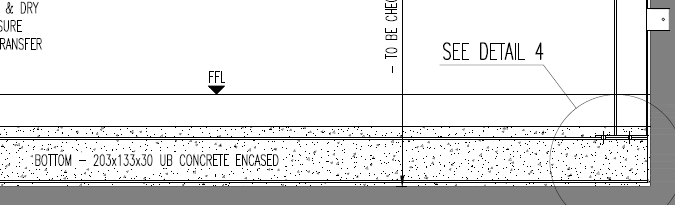
-
We were close to going with micro cemenet / micro screed but in the end went with poured resin. If you've not had a good look into poured resin it may be worth considering.
-
Loxone Holiday Mode 'replay' functionality
IanR replied to Thorfun's topic in Networks, AV, Security & Automation
You are right, and I'd not noticed the Block change, which must have happened on an update. I've now got the parameters for the randomisation, set to defaults, where before there was just the check box.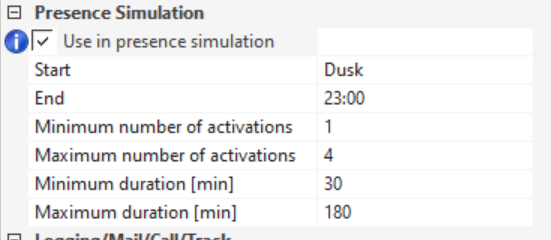
-
Cant get insurance for timber frame / Metal Roof !
IanR replied to bob the builder 2's topic in Self Build Insurance
Yep, was insured with them the last three years. They are very specific about wanting photos and if possible serial numbers of high value items and do state that they are not covered until that info is received. The negative reports I saw were about non payment of such items that had not been correctly identified. Had been very good value, but for this year it's gone up around 30%, but still just about the cheapest I've been able to find. -
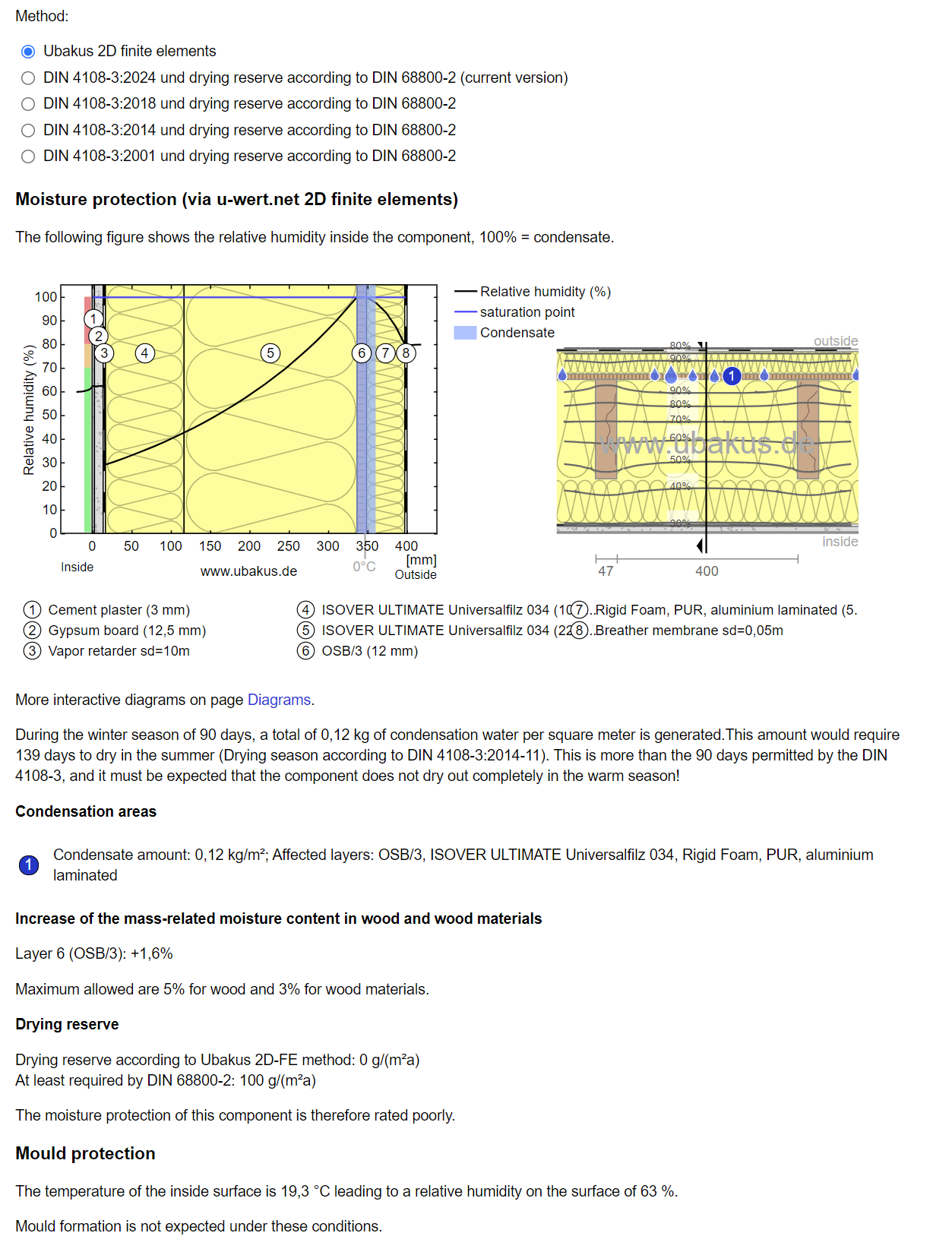
I'm not sure you are understanding what I'm saying, which is evidenced by the Ubakus analysis, so I'll back out of this discussion finishing with me repeating that it does not dry inwardly. That does not mean that its rotting away. It's not as black and white as you'd like to perceive it.
-
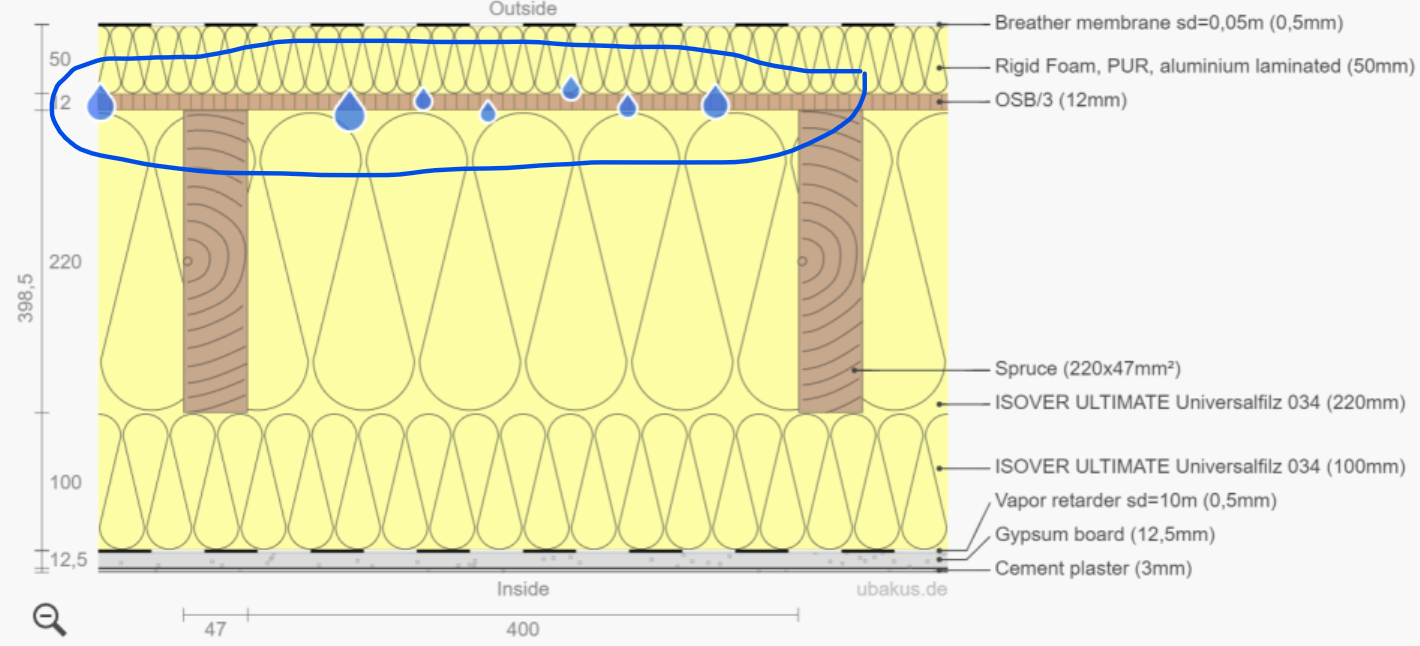
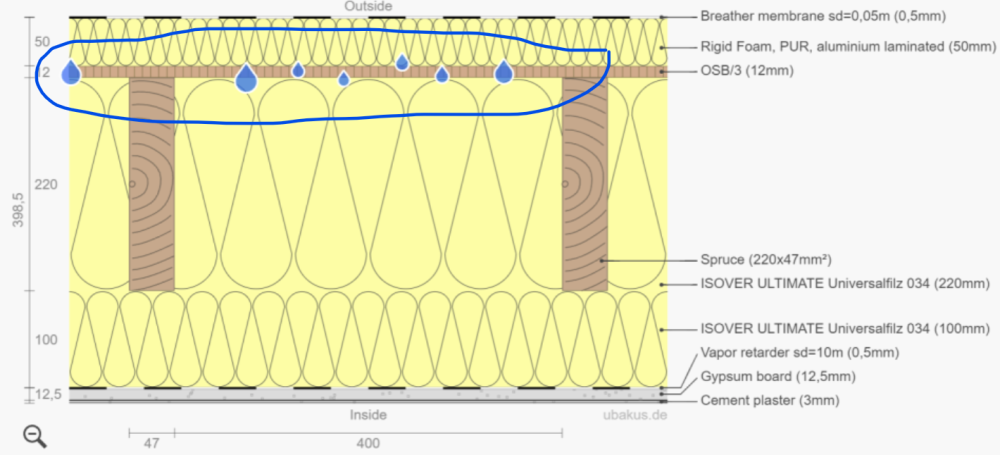
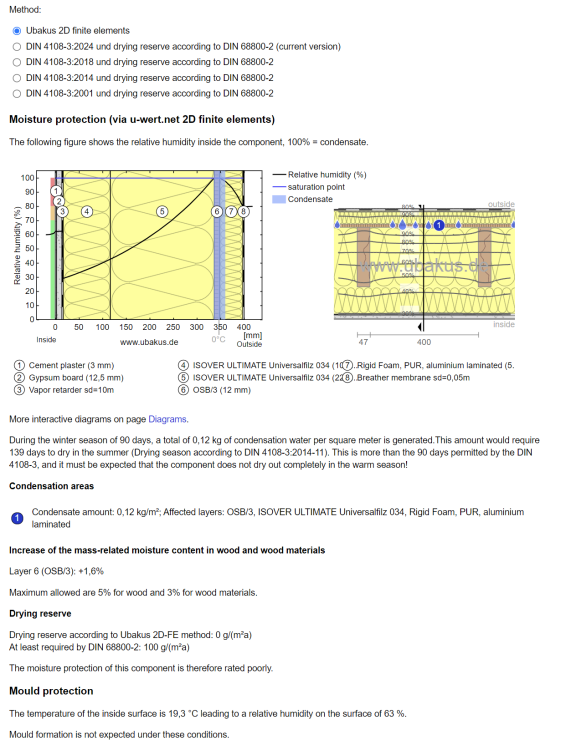
But that doesn't make the moisture turn around and head back the other way. If you look at the Ubakus analysis it finds the moisture will sit at the OSB and take 139 days to dry out. I'd assume by evaporation. Within the standards Ubakus uses, 139 days to dry out is a failure - 90 days is the max. I'd assume that's because there is insufficient drying time in the summer to garuntee it will dry out and is therefore at risk of continuously being "wet". One caveat with Ubakus is that it "does not take into account the capillary conductivity of materials", although with my limited knowledge I'm not sure that would help with the foil covered PIR being the next layer as I'd expect capillary conductivity to be negligible. As mentioned before, a more precise condensation analysis should be used for non-standard build-ups. BC should require it for sign off. Really? You've read that the product is OK to use if you do a crap job of fitting it and allow cold air to breach the insulation? Not sure that's a strategy I'd use.
-
I'm not seeing any evidence of that, why do you assert that it does?
-
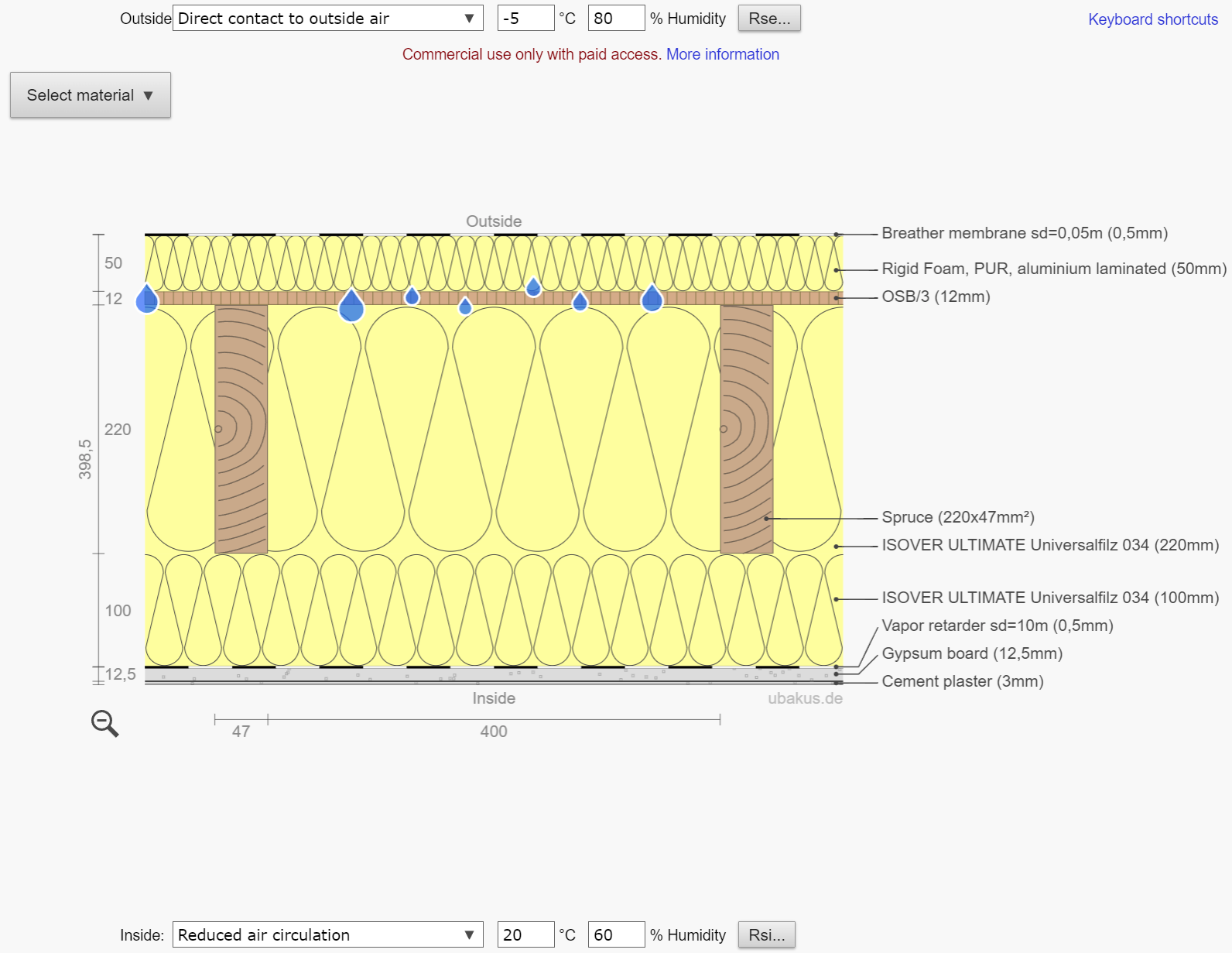
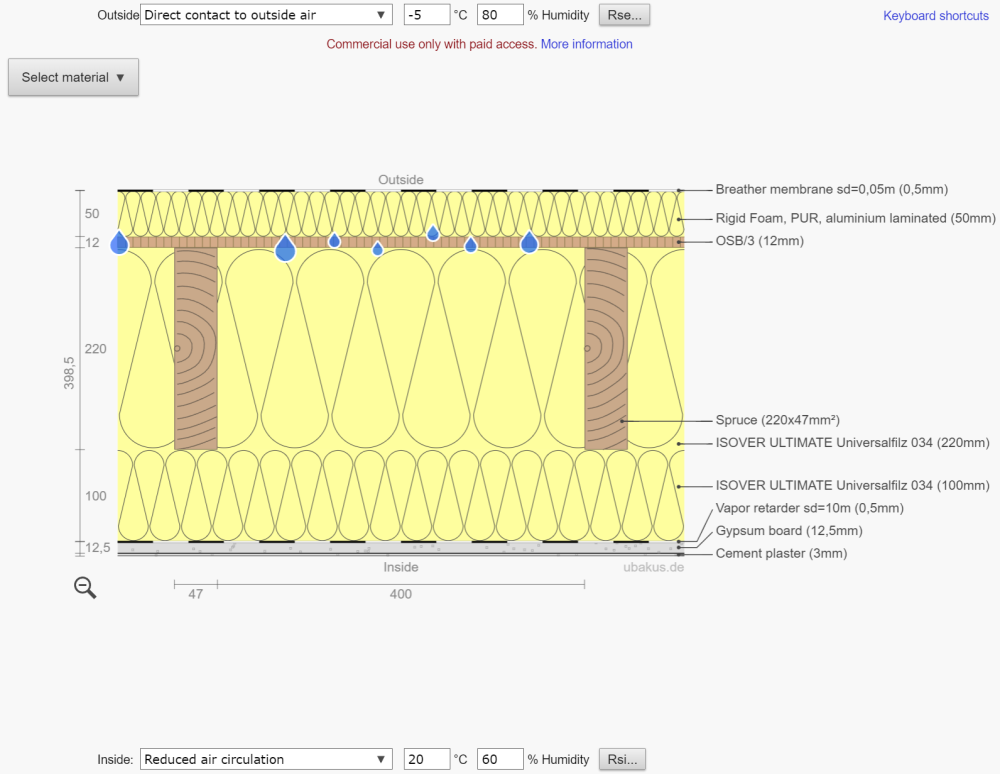
I've just done inside out to the vent cavity in Ubakus, and had to make some approximations, but chose products that were close in vapour permeability terms. It tries to dry outwards, as I would expect it to, and Ubakus highlights a risk at the foiled PIR (PUR in my build up below). Insufficient drying reserve. I can't select a sd=7.5m VCL, so used a 10m. I assume they used a higher def condensation analysis tool that showed something different.
-
There are no absolutes, so I've not been so definitive in what I have said. If there's sufficient air leakage though the structure, allowing plenty of evaporation, it could dry inwards. If it's warm and humid outside and there's good cooling internally with low absolute humidity, then it's likely to dry inwards for a period. As building performance improves though, with lower air infiltration and better insulation, "The natural order of things is for the vapour with the higher absolute humidity to move towards that with the lower", which in our climate is generally in to out.
-
Where about does it indicate that? It's a big document to read on my phone. Even localised condensation can occur, as long as there's sufficient drying capability for it not to stay wet long enough for mould to grow. Accepting that wet/damp insulation is ineffective. Above the dew point in a constantly heated home. What if heating is periodic, ie. mornings and evenings only. However, I agree that a low vapour permeable EWI can work. I considered PIR sheet external to SIP (before I saw the light) and the SIP supplier did the WUFI analysis before they'd approve it... and it passed. But perhaps that was helped by minimal moisture getting into the structure. There maybe sufficient drying capability in the structure, there may be sufficient evaporation that condensation dries quickly enough. For me though, no condensation risk is better. But if there is, and it's a non-standard build up that's not already been analysed you need to get the WUFI analysis done as Building Control will/should want to see it.
-
It's not good Engineering, it's attempting to work against physics. Vapour flow travels from a high vapour pressure to a low vapour pressure. Vapour pressure is a measure of water saturation in air, ie. absolute humidity rather than relative. Colder air outside is able to carry less moisture than warm air inside. In most circumstances, humans living inside a house put more moisture into the inside air than the climate does outside. So, generally there is a higher vapour pressure internally than externally. Vapour, as do gasses, moves in the direction from high pressure to low pressure, until equilibrium is achieved. The natural order of things is for the vapour with the higher absolute humidity to move towards that with the lower. The majority of time in our climate that is in to out. If you then try and interrupt this by not stacking your materials progressively more vapour open from in to out, you will either slow down or block altogether the vapour flow.
-
Yes, but so does a leaky structure that is exchanging warm moist air with colder air. It's the function of the cold air being warmed up that reduces the RH, not the MVHR.
-
It's not (directly) related to MVHR, it's simpler. With all else equal, RH increase as air temp reduces. In the UK we generally want the internal temp higher than the external temp. If warm vapour gets into the a building's walls, as it moves through the wall from inside to the outside it's temperature will drop and the RH will increase. If/when the RH reaches 100% the dew point is met and it will condensate. In a timber structure, if condensation occurs within the structure and its not able to dry out, the structure will rot. Even if it doesn't rot, the insulation performance will dramatically reduce. The Vapour Check Layer is to reduce the amount of vapour getting into the structure. Additionally it's typical to also ensure that vapour permeability of construction layers increases from inside to outside to aid the water vapour natural movement out of the structure. So VCL towards the inside and progressively more vapour open materials as you move out. Don't confuse airtightness with the VCL. The air tightness layer will happily exist within the outside construction layer, as long as that layer is vapour open. It is also fine to combine the air tightness and VCL on or close to the inside layer, as a self-builder you'll ensure that cold air can not breach the insulation and contact the back of the plaster board (or air tightness layer), but volume builders aren't always so successful. While it's good to understand the physics, hopefully you plan get some professional support with your wall/roof build up.
-
Just Finished - Thanks for all the Help and Advice !
IanR replied to bob the builder 2's topic in Introduce Yourself
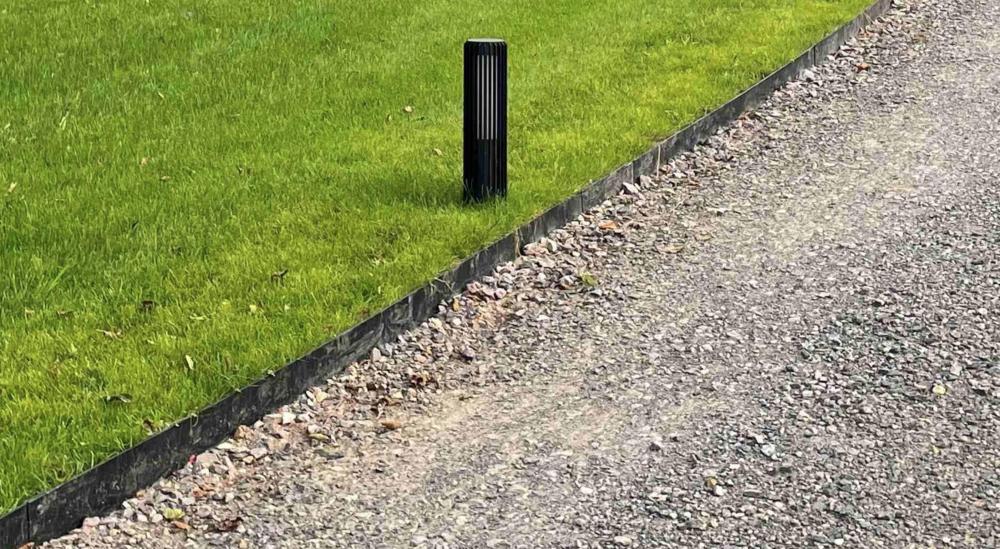
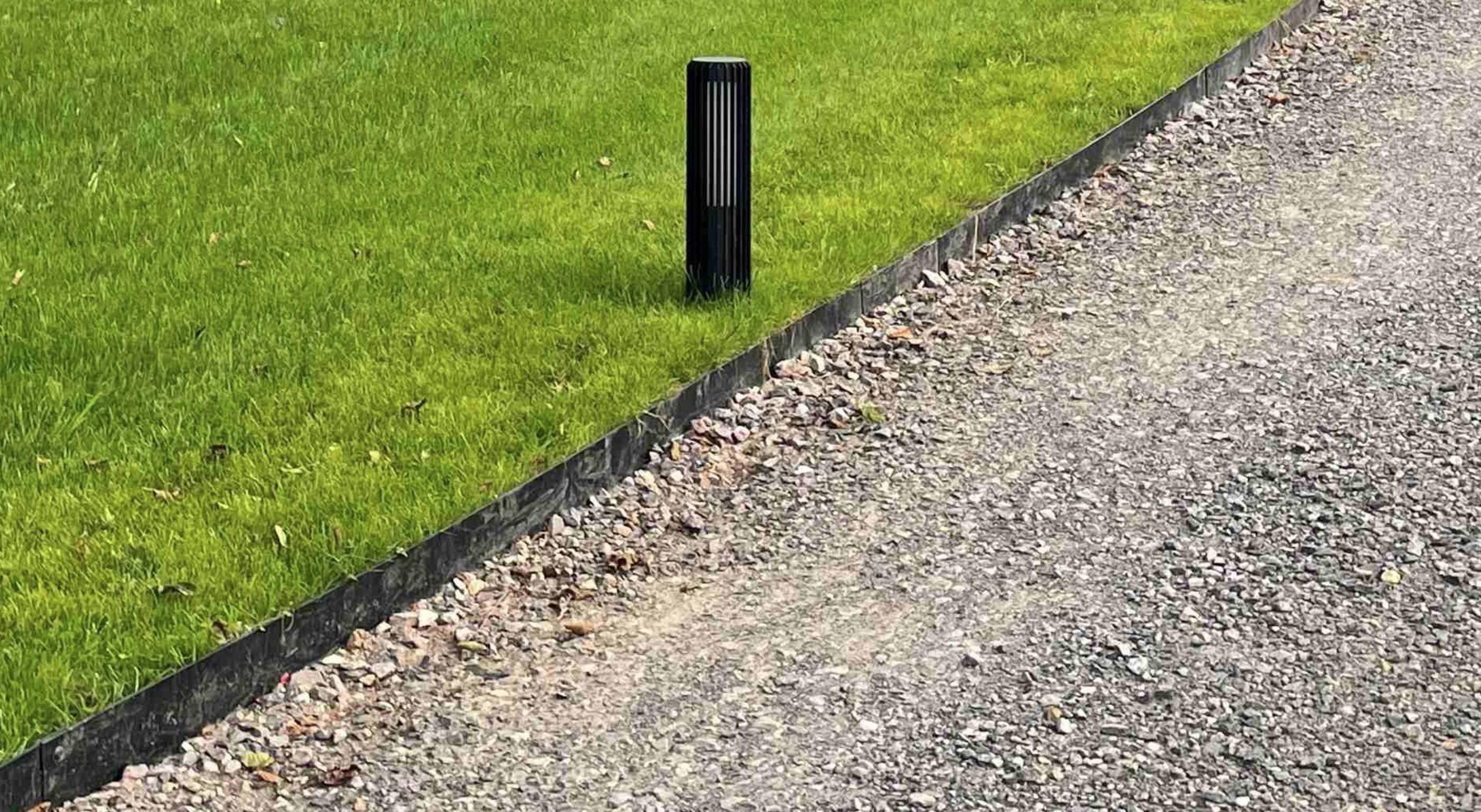
So, @bob the builder 2, tell me about your drive edging. What height is that steel edging you have used (ie. how deep does it go?) and what's it set in? I'd convinced myself I couldn't get away with staking it into the earth and would need a mortar base. In fact, have you got a section of the build up, including edge detail. Is the topping granite chipping?