


JohnMo
-
Posts
13292 -
Joined
-
Last visited
-
Days Won
200
Everything posted by JohnMo
-
 Chocolate, new wallet to replace the one stolen in Paris, socks. I'm easy to please.
 -
Yep, I'm in Scotland and the radio link is pants near us. I am the only one in location with a smart meter, that works and it's connected via 4G. Everyone else tried once and then gave in. 4G isn't an option until they have tried 3x doing everything else.
-
I wouldn't, OSB is vapour open. Do it correctly install vapour barrier, tape all joints, Use something like this https://passivehousesystems.co.uk/shop/adhesives-primers-sealants/fortax-6400/?utm_term=&utm_campaign=P-Max+Test&utm_source=adwords&utm_medium=ppc&hsa_acc=4901615203&hsa_cam=20355723828&hsa_grp=&hsa_ad=&hsa_src=x&hsa_tgt=&hsa_kw=&hsa_mt=&hsa_net=adwords&hsa_ver=3&gad_source=1&gad_campaignid=20364888406&gbraid=0AAAAApUFUNC26rUQyD2HwqFlOulMhVQWS&gclid=CjwKCAiAmKnKBhBrEiwAaqAnZ5CPWGBFVVio4GUfqzpKS1479NcoHwQrQVgTtExyEM110NUvopZ9HBoCl6AQAvD_BwE Only one chance to do it right - slow down a bit. You never know what's ahead of you, you maybe their longer than you think and wish you had done a proper job.
-
I had loads of trouble with signal, be a 'dog with a bone', keep calling them out to resolve the issue. It took 4 attempts before they got the correct kit in. They have to try 3x before they get permission install some better kit.
-
Worcester Bosch Greenstar 8000 System Boiler Issues
JohnMo replied to EinTopaz's topic in Boilers & Hot Water Tanks
Are you sure - 23 is a lot of flow, nameplate says 13? -
Newark ministore DHW cylinder (Shell and Tube Heat Exchanger)
JohnMo replied to Tide2's topic in Boilers & Hot Water Tanks
Could get 3 showers out of mine, you take the flow restrictor out, I never installed mine, because I always preheat with upstream preheat, can't do any better with UVC I now have. -
That really depends on your starting point. There gets a point where return temp doesn't really get much lower, especially with WC when heating at 10 degs outside. Return temp can never drop below room ambient, even if it got to ambient, rads would be huge. So practically you are at min return temp already. Getting a bigger dT is just increasing flow temp for no reason. If you lowered your return temp any more, your 4 degrees delta for restart would never be reached or take too long.
-
I'll nip into town later and pickup some proper centre clamps. Will struggle to correct the LH side clamping zone. Some of the clamping zone will take some thinking about. Prevailing wind is directly on the front of the panels. Any wind from behind sails straight over the panels due to the hill.
-
Copper vs aluminum clouts for slate roof?
JohnMo replied to ruggers's topic in Roofing, Tiling & Slating
We used copper. You don't with nails either. -
Clamping areas are the same as the last panels they were ok in 80mph+ winds. Yes two strings to independent MPPTs.
-
Baxi 105e Instant-end of service life advice please.
JohnMo replied to FlatMax's topic in Boilers & Hot Water Tanks
Pretty flawed heat loss calculation you should have done it at -3 outside and 20 inside, but your boiler is still ok for that. Your just fooling yourself with overly small heat losses and too smaller range rating figure. Range rating to your calculations for heat losses at +5, what happens when you get a zero degree day, and your house drops to 11 degs? Because your boiler output is too low. Think I would rerun the heat loss calculation for realistic figures and range rated accordingly. First alarm bell is this. If you letting the house get cold (16 is cold in my book and that's your target temperature), the boiler needs to run balls out (especially when range rated right down), so may actually be struggling. Taking a long time to find a comfortable running point. To get a house to 16 with radiators in 2 hours is a long time. For me You have range rated too low You allow too much set back when heating is off - at a target of 16 why would you set back at all. Just let the heating run 24-7. Let everything stabilise. Your boiler will start to run more efficiently and modulate down on its own. Range rating is good for stop start heating as it allows a level of heating output more suited to the house at startup, but you have to careful, analogy If you are trying to fill a bucket with a hole in it (your heat loss), the hole allows 10L per minute to leak out. You open the tap (your boiler) and it flows at 10L per minute you will never fill the bucket. Open to 11L per minute it going to take a long time to fill. That is where you are now. Boiler running hard for too long. -
Why not replicate the existing house with wood fibre IWI? Not a fan, too easy to make a dogs diner of it, and effectively make it useless. Disadvantage of IWI is you make the build thermally light, so temperature can yo-yo over a short time frame. It very limited thermal capacity. Or just go with a bigger cavity, heavy blocks inside and out, and either poly bead or mineral wool or similar cavity fill. Then just plaster, not sure what the parge cost brings to the party if your plaster anyway?
-
Me neither, every start equals wasted heat out the flue and stabilising metal work temperature, instead of real work heating the house. Long runs equal efficient use of gas.
-
You would drive down your pumping losses with a wider dT. But suspect they are low anyway. Your current mean temp is 29, the 40-28 drives your mean temp to 34, wouldn't you start to over heat the house quite quickly? To run 12 dT, and keep the same dT across the radiators wouldn't you be closer to 23 and 35? That would give an additional 3 degs of condensing and about as low as you could go. But whether you could actually get that low in practice is questionable, not sure you would ever get a permission to restart after a heat cycle, as return temp would never drop low enough. My Atag, with it's modulating pump and 32 flow would have been running 4-6 dT, like it or not.
-
Newark ministore DHW cylinder (Shell and Tube Heat Exchanger)
JohnMo replied to Tide2's topic in Boilers & Hot Water Tanks
Maybe simpler to do it upstream of the combi rather than after. Then small amounts of temp rise give massive uplift in flow rate. Combi-SuperFlow-White-Paper-v1-2-4.pdfCanetis-SuperFlow-Product-Sheet-WE-050318.pdf You can also do it way more cheaply than a mini store. As a mini store is based on heating medium in the cylinder and domestic water in the tubes. So you really need to connect the combi to system boiler for the proposed to work.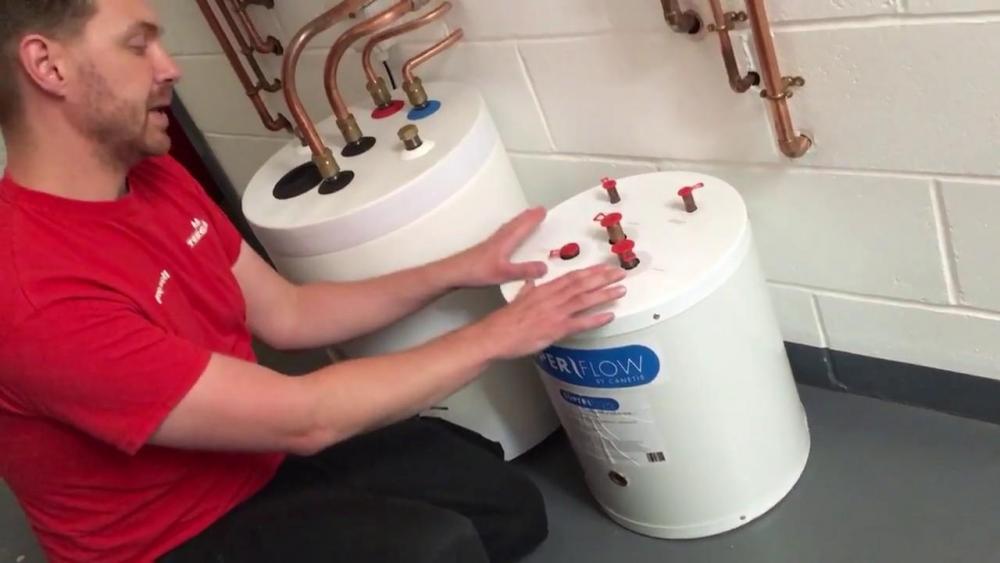
-
Newark ministore DHW cylinder (Shell and Tube Heat Exchanger)
JohnMo replied to Tide2's topic in Boilers & Hot Water Tanks
Why would you install with a gas combi? Tell us what you are trying to achieve? -
Unistut copy from local electrical factors (Medlock), comes 6m lengths.
-
I would want a number, otherwise it's meaningless. Getting towards something is very open to interpretation, scoring 6m³/m² @ 50Pa is getting towards passivhaus (it's nowhere near) compared 10. You possibly thinking under 1.0, so there may or may not be a big gap of expectations?
-
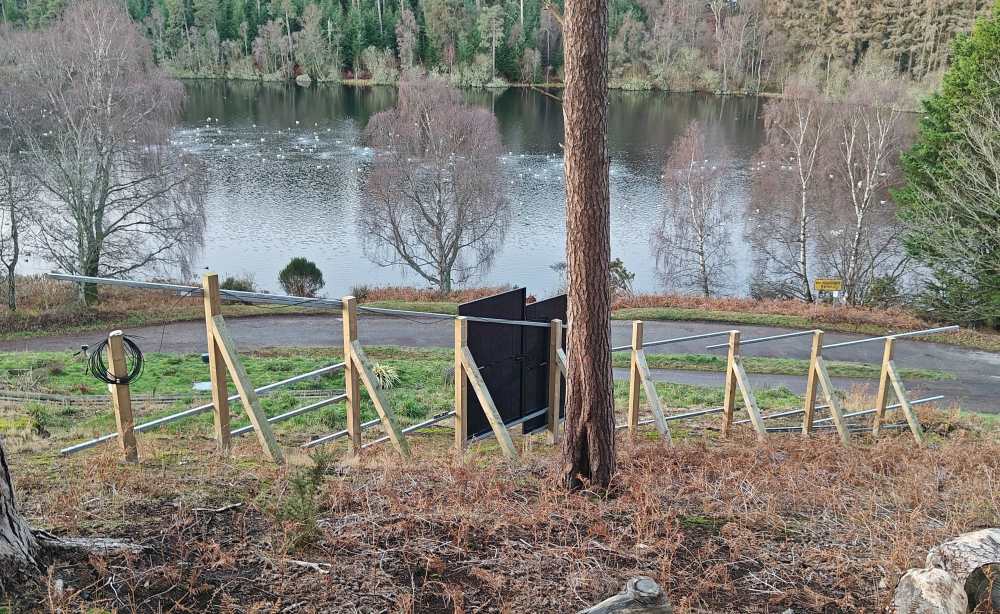
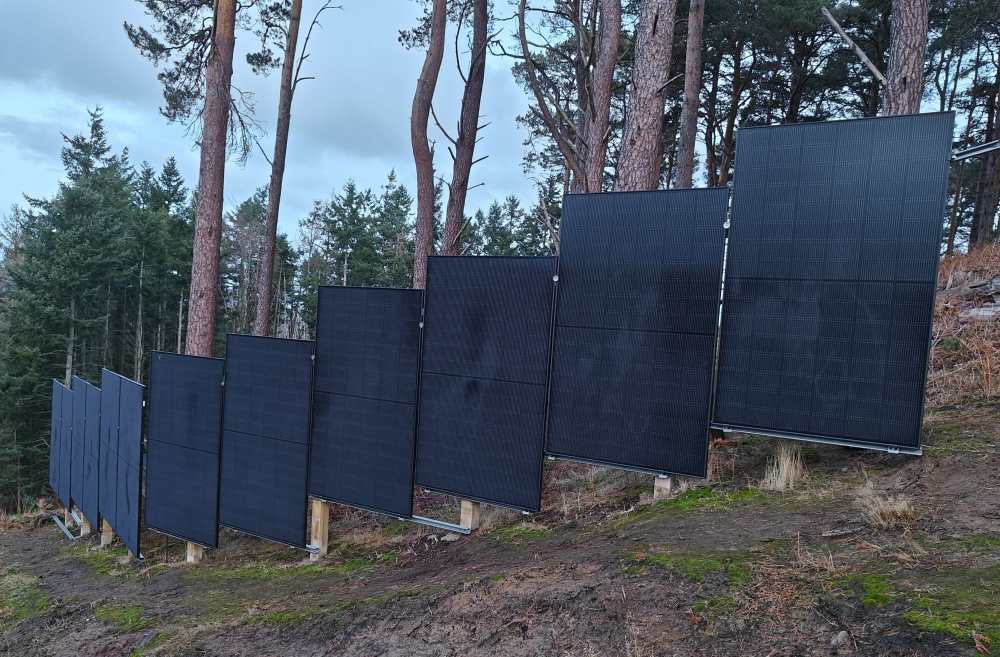
Steelwork modified, using 41mm square channel, two panels in place. New array
-
Call your installer
-
Panels now upgraded, photos tomorrow. Day one, took 12 panels off the hill Day two, very windy, modified the steelwork for new panels Day three, new panels lifted up hill and installed, reused all old wiring without issue. Switched it on and all worked fine. Materials 2x 6m lengths of 41mm galvanised channel 12 panels 28x 30mm panel end clamps.
-
That is pretty easy for most builds. One caveat, you and everyone else are working to the same drawing revision. People change stuff, they assume because they know, and the architect knows, everyone does. I had final sign off on all drawings for the build, once our building warrant was approved, no drawings got changed, no details where changed. But that isn't the case very often. So dot you eyes and cross you tees.
-
Surge protection, fuses and MCBs in loft from PV array.
JohnMo replied to jimseng's topic in Photovoltaics (PV)
Make sense to have something obvious like a DC isolator to kill the PV at ground level outside - I have a DC isolator outside near the front door. Isolator hidden in the fabric of the building or in a loft not easy for anyone. If switching under load kills the inverter who cares. -
Keep seeing these threads, and still see zero point with most of what people do with automation. Waste of time and money. But fill your boots. My current lighting scheme, is side lights in the lounge from a normal light switch and 3A wall sockets. Don't need home assistant or shelly or any other smart relay. Got a box of them, all removed, in my cr@p I bought box and was waste of money. 4 years in house, no smoke or heat alarms have ever gone off. They will all be binned at year 10 and replaced with new. If they go there's an issue. Heat alarms in kitchen don't react to you burning your toast.
-
Worcester Bosch Greenstar 8000 System Boiler Issues
JohnMo replied to EinTopaz's topic in Boilers & Hot Water Tanks
But it has a modulating circulation pump which will change output based on dT, so not sure that can be fully true. If 14.4kW isn't enough the return temp will always be low. So if the boiler has been range rated to 40% it will constantly chase it's tail. So @EinTopaz what is the boiler range rated too?





