
JohnMo
-
Posts
12469 -
Joined
-
Last visited
-
Days Won
179
Everything posted by JohnMo
-
 The thermostat can be configured to work in either cool or heat mode. Just a couple of buttons pushes. My worry with current configuration, is in heating mode I get some solar gain or light the fire or have the WC not quite right and the cooling switches on, not the best for efficiency.
 -
A Computherm Q20RF set to 1.0 hysterisis, so that gives +/-1 Deg either side of asset point. Currently set to 21, so at 20 heat comes on and at 22 cooling comes on. But I am thinking the control is too fine so a simple switch (heat cool) may be easier and use the thermostat to give a remote on off. Still a bit of a thought process
-
Solar Heated Hot Water Cylinder Heat Loss Overnight
JohnMo replied to BobRK's topic in Boilers & Hot Water Tanks
Looks to me they would quite easily setup a thermosiphon. Can you replicate the dog leg as seen on the upper pipe in grey, so pipes drop about 150mm before going horizontal and upwards. A check valve may not fix it if remote. -
Fancoil plan P (yes, there’s been lots of iterations….)
JohnMo replied to G and J's topic in Ventilation
Heat cool switching should be zero volt switching same as remote on off. So you may need two switched but could be a double light switch, one switch on/off the other summer/winter. -
You would need two one for heat one for cooling. One uses common plus normally open, this would then close when you hit say 25 the fan would start. When cooling set to say 15 but wire to the normally closed, any flow temp above 15 would not switch on fan. You most likely run via a relay to stop power back feeding itself. You would only use this on @Originaltwist fan coil.
-
None really, you balance the flows to get the room temperature you want. You get rid of a buffer that comes with zones, so you end up with a better CoP (lower running costs). Your install is minimal so costs less in useless equipment.
-
But have you actually read the data sheet? Does it do what you think it will? 40 degree flow, for a 200m² house at typical flow rates is just over 1kW heating. If you have UFH your max flow temp should be lower than 30, which represents a 0.4% CoP hit. Cooling flowing 7 degs would yield 1.88kW, on a 20 deg day that would give a CoP of about 5.1, while a fan coil or UFH flowing at 14 would give a CoP of 8.1, so a CoP hit of 3. If you are actually a Passivhaus that maybe ok? Otherwise it could be a waste of more than a £1000.
-
My Maxa heat pump doesn't have an indoor controller, everything is on the outside unit. I use a thermostat to switch between cooling and heating. Maxa now selling in the UK. Available in R32 and R290 (R290 is flammable so has placement restrictions). But for ease of use and setup I would seriously consider Panasonic. Heat pump generate low temp water for DHW (max around 50 Deg) so 3 bed house needs 210L plus. The cylinder can be horizontal or vertical, could you locate in loft for example?
-
UFH as a single zone on ground floor and any upstairs bedrooms. Consider fan coils if you need cooling upstairs. Other provision for electric panel heater in bedrooms (don't buy until after you know you need them). Electric towel rads in wet rooms. Make sure you have decent heat loss calculations before going any further. Ideally do them yourself so you know what's what. You don't want the sun shining on the ASHP, ignore any advice that says otherwise. Sun will mess up the heat sensor reading. Indoor controls depends on unit being installed. Many will have an internal thermostat so really needs to in the living space not in a cupboard. They are just like a thermostat. Only consider a monobloc ASHP so everything is outside except a small controller. Don't do any 3rd party controls. Single zone means no thermostats other than the one in your controller, no actuators on the manifold, no need for a mixer or pump on the UFH manifold. Most likely no need need for a buffer or volumiser. Using a Government Grant for the free £7500. I didn't bother was too expensive, so just bought it all myself. Installers just want to rip you off.
-
Fancoil plan P (yes, there’s been lots of iterations….)
JohnMo replied to G and J's topic in Ventilation
Don't do it, you will spend too much time looking at stupid computers and get nothing real done. I pretty much took the opposite approach, research, decide, put on plan. Freeze that bit of the plan. Otherwise procrastination takes over. Stopped looking on here once build started to stop any tangents. -
I was thinking more simple, but also adjustable https://www.toolstation.com/corgi-pcs-dual-pipe-cylinder-thermostat/p68281
-
Is this an unusual configuration of motorised valves?
JohnMo replied to Question's topic in Central Heating (Radiators)
If draining, mid point when depowered moves to the open position for the cylinder and 2 port would need to be over manually. But drain the radiators etc you would move the 3 port valve position. -
Is this an unusual configuration of motorised valves?
JohnMo replied to Question's topic in Central Heating (Radiators)
Sound reason for this. Couple of assumptions you have an unvented cylinder and the 3 port valve is a mid point valve. A Y plan will be a mid point valve. NOTE: mid point valve - No power - With no power applied, the spring holds the valve in position B, so water only flows to the hot water cylinder. With a mid point valve to comply with G3 you need a fail close valve to protect the cylinder from the heat source. The 2 port should be a normally closed valve and energised to open. Do not remove this valve, it ensures compliance with G3 regulations. All Y plan installs with an UVC should have this valve. S plan does not need the additional valve. -
Not sure it can you are only adding around 3kWh to the water to get from 52 to 60 degs. Where are you getting this usage figure from? I suspect to get to 52 degrees every day the immersion is kicking in more frequently than you think. Have you checked? Do yourself a favour and read the details of legionella. We store at 50, within 2 hrs 80-90% of legionella is dead - if it was there in the first place. We do not do a legionella cycle.
-
You take it off the UFH manifold, I have tee'ed into the flow and return before the UFH manifold. I have a 2 port valve that isolated that circuit only when there is a call for DHW. All other times the 2 port valve is open. Thing to also remember a decent fan coil will just look after itself. They generally have an in-built controller, modulating fan speed based on target temperature. They generally need an external temp sensor for cooling, but work well without doing heating. I just set mine to manual for cooling. No real need to stop flow going to the fan coil, as they work differently to radiators.
-
👍
-
That was my first unit and then moved to Greenwood and you cannot tell it's running. I would just do two dMEV units, as recommended in March. Yes - See above. My wife hated the first unit we installed before the noise.
-
Zones means a buffer, so really would not go that direction. You need to look at system volume and flow rates. But if you have fan coil up and downstairs why bother with UFH? Your making life complex and expensive. Why isn't it important, if the heat pump is short cycling you may not get any cooling effect. Plus constant stop and starts will decrease the life of the unit. I did timings last year based on PV being available, this year on and forget, runs as it needs 24/7 uses nearly no electricity. House much more steady temperature also, peaks in temperature when sun comes out are quicker brought down. Set a weather compensation curve for cooling and heating and have the system self modulating so it's either heating or cooling and never off. A simple high hysterisis thermostat to flick between the two, or simple switch. Keep it simple.
-
You have chosen everyone that carries a huge price premium. Nothing wrong with Grant, but hook up as per Chofu (original manufacturer), my only choice would be Panasonic if buying at full retail. But really depends on how the system is designed, good heat pump in poorly designed and/or operated system is a p*ss poor heat pump. Mediocre heat pump can be a really good one in the correct system. MVHR, nothing wrong with a Titon HRV unit, UK manufacturer, good technical support and spares if you need it. Also remember MVHR is ventilation it runs 24/7 365 days, it doesn't need lots of bells and whistles, once your house dries out boost is rarely needed so a simple momentary switch is all that is needed. Also look at the cost of filters as you will be changing every 6 to 12 months. Costs can soon mount up.
-
Uw value. That is the whole window U value as opposed to UG which is just the glass. How are they installing them. You really want them foamed in with airtight expanding foam. This will give a good degree of airtightness and eliminate the thermal bridge around the frame. Many will install in the hole and then cover everything leaving a void and you get mould around the window.
- 1 reply
-
- 1
-

-
Mine runs via two thermistors, one temp above for heating and the temperature below for cooling. A simple pipe stat x2 could do that. Normally open for one normally closed for the other.
-
Mine is, but you can also set it to sniffer mode, so the circulation pump run for a couple of minutes and off for 5 minutes.
-
No, but it would run in the summer when the sun's out and that would be it. Unlikely to get enough power to start in winter, most the time, especially when you need it.
-
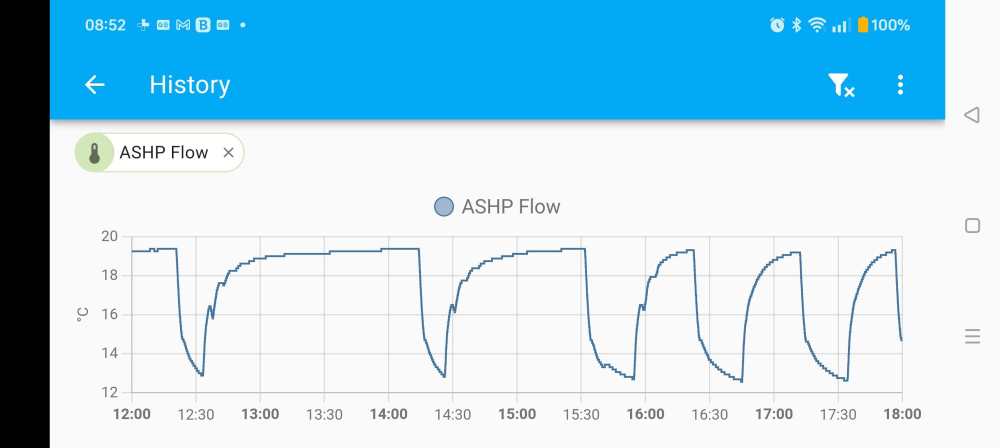
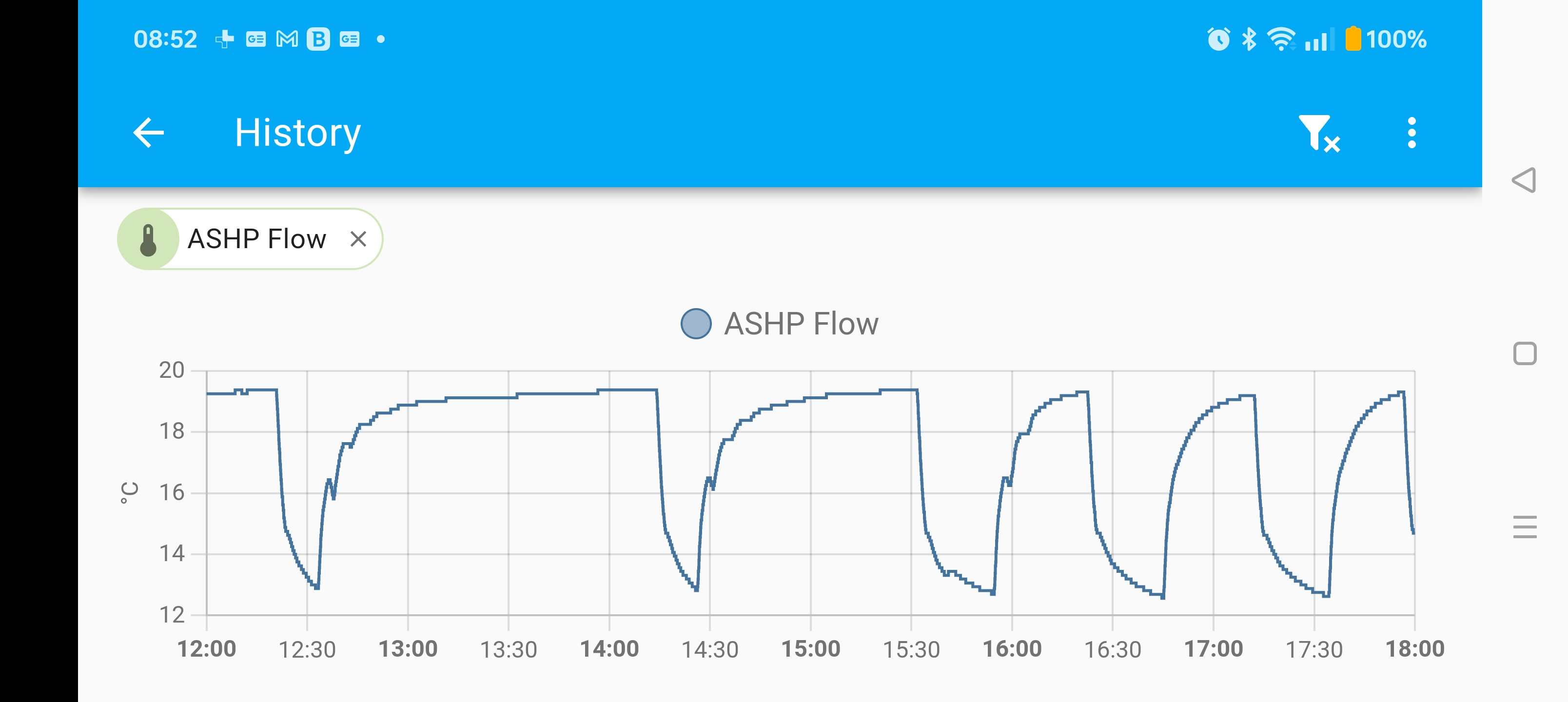
None. Currently just run the fan in the fan coil in manual at lowest speed. No, short cycling is uncontrolled short running and off cycling. I had 6 starts over a 6 hour period. Typically you would have many (10 to 20) restarts an hour and very limited heat or cooling given to the house. Typical short cycle is a couple of mins running and a very short off time. What you are seeing is capacity control when running below min turndown. Yes but then you run into condensation issues in the floor. So it's all a balancing act, long runs are great, but if you have condensation issues not so great.
-
You can run heating at 70 degs on timers and zone valves, it isn't efficient. Trying to similar with a heat pump ends up with huge running costs. You can run the heating at low flow temps slow and steady in all the time. It is efficient. Apply the same logic to cooling. Well insulated you can set the system so it's self modulating. Responding to demand. Even in 300mm pipe centres in a 100mm thick slab, you can see the heat pump responding quickly to solar gain. We get the solar gain around 3 to 3.30pm. This is a snap shot of the heat pump flow temp. The dips are the compressor starting and running. Prior to 2.15pm heat pump is off for two hours. Then an 11 min run and off again until 3.30pm. Then a 20 min run and off for 20, on for 20 etc, in direct response to solar gain.