


JohnMo
-
Posts
13296 -
Joined
-
Last visited
-
Days Won
200
Everything posted by JohnMo
-
 So the way I read it you can't do anywhere I have highlighted in blue, so first application didn't comply. So no surprise it was rejected, so just choose somewhere else to site the heat pump. Do the new noise calc - done
.thumb.png.88cd44ea2234bb56250fadb788539922.png)
-
It may e the Scottish rules just read the English rules and it states On land within a Conservation Area or World Heritage Site the air source heat pump must not be installed on a wall or roof which fronts a highway or be nearer to any highway which bounds the property than any part of the building.
-
I have the same, think I bought mine in the 90s, when they first came out. Mine also in the garage. May plug in one day and use as a heater the screen got so hot.
-
Best floor build up for acoustics when laying lino
JohnMo replied to markharro's topic in Floor Structures
What you putting between the joists? I would look at the rules for flats and how the floor is built up for them. They have to the same noise transfer as a party wall I believe. -
It's conservation area permitted development rules do not apply.
-
1m rule now gone as long as it passes noise assessment. Other than objection move it elsewhere, what about behind the square building?
-
Never understood the slope on a garage floor. I used to build cars and slopes were a pain. So now state they are flat. Now on my second flat floor no issues. Do you have to have a step down. Would expect the difference in height is to do with the insulation in the house floor and not the garage - could be wrong?
-
Where to mount the Sensocomfort control
JohnMo replied to Post and beam's topic in Air Source Heat Pumps (ASHP)
Quick search and it's 1.3m above the floor. Middle image.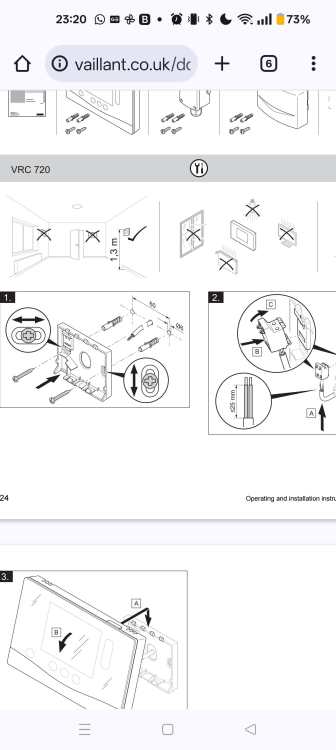
-
New extension, brickwork crap? Insulation concerns.
JohnMo replied to boxrick's topic in Brick & Block
They are supposed to add as they build. Like this Think a chimp could do better block work. You really need to stop proceedings and if they can't do better - bluntly sack them. The details you see are shocking, the details you can't are likely to be completely unacceptable. Do you have an architect or structural engineer - call them in.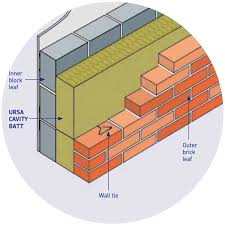
-
Ask your electrician, he will be one issuing the certificate to allow building completion from an electrical perspective. My simple question is who does all the checks required for certificate, if your doing lots of second fix?
-
How do I start a blog?
JohnMo replied to Great_scot_selfbuild's topic in General Self Build & DIY Discussion
Why it tells you exactly what to do "The blog functionality can be enabled via a request using the Contact Us link at the bottom of the forum. Once the functionality has been enabled you will have the ability to ‘Create Blog’ from within your user profile." Which is just the same as @garrymartin said -
How do I start a blog?
JohnMo replied to Great_scot_selfbuild's topic in General Self Build & DIY Discussion
As I said use Google search Second on the list of your topic used in a search https://forum.buildhub.org.uk/guidelines/ -
Individual topics?
-
If I need to search for anything on here, I do a Google search
-
I would make sure this will do all your needs, as the nameplate rating may not (very unlikely) to be correct at your design outside temperature. 16kWh of battery isn't going to last long driving a 16kW heat pump. If your max draw is 6kW, less than 3 hours your battery is flat. Especially so if you're in the workshop at the same time. Heat pump at full load and PV generation good at same time is unlikely. Have you checked the PV output in the winter, so you get to disappointed mid winter doing 140W instead of 14kW.
-
You will get just time the house pipe ban.
-
Haven't you answered your question. Wouldn't that need 3 phase? That will exclude you from any grants, for a heat pump.
-
Just put the models into Google and all sorts of stuff comes from straight MVHR to cooling plant combinations with MVHR? Do they need to talk to each other? We have 2x MVHR units and they don't talk and there is no need either. Need more info on what you actually have and what you are trying to achieve?
-
For what costs and time to do I would add vapour barrier. Reasons You have PIR insulation, it's not vapour open, so any moisture is likely to be trapped in the structure. So best to keep it out, not allowed moisture in. Every time you open either inside or outside door the air will be replaced. I would also heat it.
-
That is is simple, you go to the supplier (almost any) by and pick the piece you want. They deliver it. You then need to use it immediately. But any decent joiner will pull most things straight.
-
What to paint a Steel goalpost frame with?
JohnMo replied to Mulberry View's topic in RSJs, Lintels & Steelwork
I would say you have two options a sensible one and an ok one 1. Hot dip galvanised 2. Sand blast, epoxy prime with high zinc primer and suitable top coat if seen or just primer if not seen and uv cannot get to it. -
Minimum safe spacing for Velux from valley and ridge tiles?
JohnMo replied to zzPaulzz's topic in Skylights & Roof Windows
Sorry - unfortunately no real answer from me. Only things that come to mind are Ridge valley likely to be leaded, so you need room for that. Slates or tiles, the first one below the velux and at the valley will need enough space so when cut it isn't to fragile. And has something to hang from. The velux window will also have flashing this will need to be accommodated. -
Search for the phase below in your EPC. That will give you the number you are looking for % DER<TER
-
Where to mount the Sensocomfort control
JohnMo replied to Post and beam's topic in Air Source Heat Pumps (ASHP)
The instructions will tell you the height to mount it. Just follow the instructions? -
Stainless steel and aluminium are not friends. Stainless steel causes aluminium to corrode. Stainless steel will be a very low grade or not stainless steel to show any corrosion. Aluminium and carbon steel are pretty much ok together. They arexin friendly terms. But you have bigger issue if the steel and aluminium are together in your case - you have a thermal bridge, this will heat heat quickly and likely cause a condensation issue. You really need to think about how everything goes together and how you mitigate the bridge. A drawing of your thoughts will be way easier to understand.

.png.32118b4e32305bfc830da4db95a91ef2.png)


