
JohnMo
-
Posts
12468 -
Joined
-
Last visited
-
Days Won
179
Everything posted by JohnMo
-
The recirculated cooker hood we have has worked well. It's is very often off and not needed with continuous background ventilation. We have MVHR, but the dMEV fan would perform the same job. If you go this route get a Greenwood CV2 or CV3. There are really very quiet and easy to set up and will boost automatically based on rising humidity. Generally pretty cheap on eBay.
-
Think OP decided the criteria, not AI
-
I did most. Roof no (all internal battens yes), electrics no, plasterboard no, ground works no (except insulation and UFH) but did just about every thing else. I selected my battles
-

ASHP - our architect negative about them
JohnMo replied to Wadrian's topic in Air Source Heat Pumps (ASHP)
Sorry architect is talking utter rubbish. A simple design ASHP (so no zones, no buffer) will do anything asked of it, if sized correctly. You basically run it 24/7 on the lowest acceptable flow rate to keep house temp stable via weather compensation. Ideally size rads to a max design flow temperature of 45 or below. The lower the better. The exact same rules above apply to a gshp. Sub 5 degs outside the gshp will get a slightly better CoP generally, but the average winter temperature is generally higher than that. At warmer temps the ASHP will get a better CoP. Any savings aren't worth the additional costs of installing a gshp. -
That looks like it may hurt a bit.
-
Why not keep it sorted of simple. Recirculating cooker hood, then a dMEV in an appropriate easy to install place.
-
When I did our floor (2x 100mm thick PIR layers and 192m² of each layer) it just wasn't worth the risk to get odds and ends of random stuff added to the mix. In the end shopping around got new factory fresh stuff, direct from factory at about the same cost when you include shipping - which was half a lorry load.
-
Only £7500 for the basic unit.
-
Gee, they are expensive - £260 at 175Wp each. That's £1500 for the same power output as my sub £140 spend. Around 700 miles further north makes a difference.
-
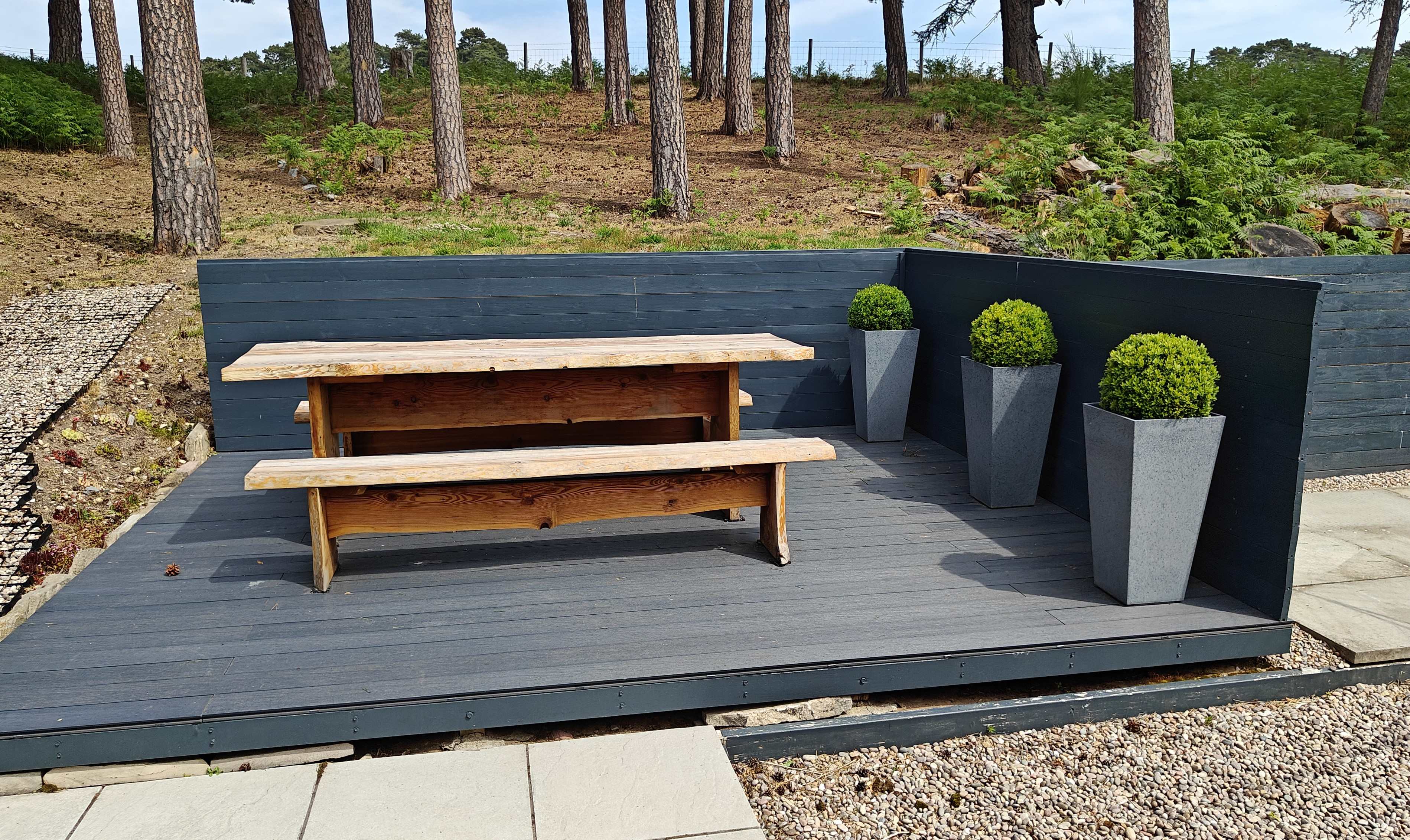
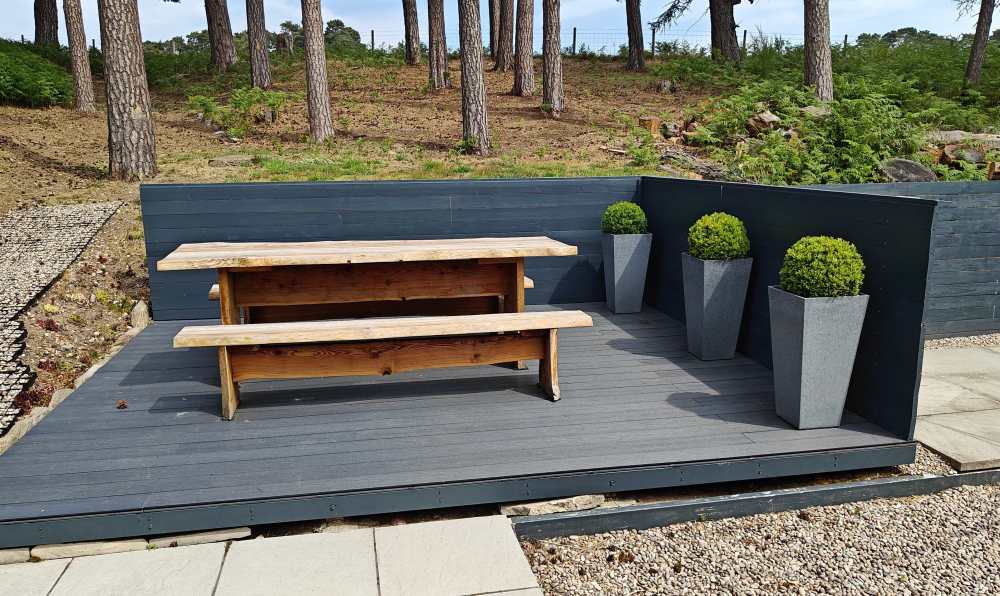
Planning a new pergola on an existing decking. It will also have two 500W solar panels in the roof section, these are to provide some rain relief above the table, and additional free (?) power. The rest of the roof will be slats at 45 degrees. These will provide a exit for wind and prevent lift and stop direct sunlight. The structure will be all wood, with metal brackets as needed (£130 so far). Main posts 4" x 4", roof perimeter 6" x 2" (£120 so far). Still lots of wood left from house and summer house build, so hopefully they will contribute. Max height above decking 2.4m. Size 4.5m x 3.9m. Priced up a similar sized kit and were about £8 to 10k. Including solar, battery and all materials to make pergola looking at nearer £16 to 1700. Panels 2x DMEGC 500W bifacial, mainly because they look nicer with a glass back than a normal panel with a white plastic back cover. They are £67 each. These will be connected to an Ecoflow stream Ultra battery/inverter. This comes with 4x MPPT charge controllers and a 2kWh battery. 2 MPPTs will used one for each panel, not the cheapest at £999, but includes the inverter. The other two MPPTs will used later for another project maybe. The panels will lay flat and should generate about 560kWh per year. Not a lot but ok. So far have ordered the wood to build the basics structure, all brackets for structure, PV and battery.
-
Insulated tile backer boards and thermalite wall
JohnMo replied to tommyleestaples's topic in Wall Tiles & Tiling
Use fixing like these in thermolite blocks https://www.screwfix.com/p/dewalt-anchors-nylon-60mm-50-pack/454HT?gclsrc=aw.ds&gad_source=1&gad_campaignid=901249366&gbraid=0AAAAAD8IdPyrPaWtYCDl-12B6WyYxf6-9&gclid=CjwKCAjw9anCBhAWEiwAqBJ-cxkXAFu8EM2b6-pp6eH2onsHE_OPHgKWRQ9vbSiWb-nbnB_0IGEZchoCitcQAvD_BwE&gclsrc=aw.ds -
Isn't it based on the actual property size - not the land size, you are quoting land size. Unless you actually have a 100 bed mansion
-
How can that be done under permitted development - that's a big house size of building.
-
Think you are just making life hard for your self. Give them a rent holiday, be cheaper for you and possibly more appreciated by them.
-
No sorry no idea. But you don't need PV connected to a hybrid inverter for it to function with a battery.
-
Your structural engineer should tell what you have to do. Not sure it's down what you or I feel is correct. Your wind loadings are huge, call or email the structural engineer.
-
Is that a load of steel rafters in the roof? If so they are just cold bridging the insulation. You don't need to insulate the overhang, but I would close all the gaps below the insulation as it it's installed now.
-
Door linings: narrower than the opening
JohnMo replied to Post and beam's topic in Doors & Door Frames
Think a drawing may help? -
Stamp duty and Council Tax
JohnMo replied to IanB's topic in Self Build VAT, Community Infrastructure Levy (CIL), S106 & Tax
We bought a property for rental which was a complete wreck, we were paying double hit council tax until the council inspected and agreed it wasn't habitable (no kitchen, bathroom, toilets, running water etc. But had to also prove we didn't make it that way, by way of sales documents which stated and showed photos of all rooms. Plus you could be a while between purchasing and knocking down -
Plus once the planning condition gets a tick no ever looks at it again most likely. The world or UK at least is going mad
-
Think the sap, once done automatically spits out an EPC. Have you checked the EPC database. We never actually got the EPC from the assessor just a link to the database. Do a Google on EPC database.
-
Trying to understand Heat Loss and UFH options
JohnMo replied to yellowbert's topic in Underfloor Heating
Just to give a comfort feeling, our house is 192m² and at -9 our heat loss is around 3.5kW, so in the same ballpark as yours pro-rated. We are single storey, so no upstairs. All our UFH is done at 300mm centres, but also omitted pipe under all beds, wardrobes and kitchen units. Have only 7 loops and under 700m of pipe in floor. At -9 our flow temp is about 33 degs on a 4 dT. As rooms were a balanced design (loopcad), so UFH output and room heating requirements are matched, very little tuning was needed. So basically all flow meters on the UFH are fully open. Note: I would cram as much pipe as you can into bathroom floors, do them at close to 100mm centres. Wet rooms can never be too hot. You can always reduce loop flow to bring output down on that loop. Also get an idea of floor covering, we ended up doing thick wool carpet in bedrooms, not the best for UFH output on a low temp system. But open the doors for half an hour, the whole house is pretty much the same temp anyway. -
Trying to understand Heat Loss and UFH options
JohnMo replied to yellowbert's topic in Underfloor Heating
Why have you 1 ach? Wouldn't 0.5 be more appropriate? You have MVHR so should be pretty airtight, so the only ventilation is MVHR. Once house dried out we reduced our flow rates to about 0.3 (passivhaus levels). You really should download loopcad makes the whole process way easier. If you feel the utility needs heat, do at 150mm the rest I would do at 200mm and fine tune flow rates when you see how it all settles out. -
It has been asked a few times. The answer depends.... I have the structural and architectural cad drawings for my house, they also freely gave to any third parties I needed to get quotes from. But you want them to give to an alternative architect - the likely answer is NO. Believe they would normally hold copyright of the document. Even if they didn't the answer is still likely to no you can't have them.
-
They (wind turbines and and excess renewables) will all be generating hydrogen soon, when there is excess power. Scotland is lookin g to be an exporter of hydrogen in the next five years and produce 3.3 million tonnes of the stuff per year by 2045.