


MortarThePoint
-
Posts
2294 -
Joined
-
Last visited
Everything posted by MortarThePoint
-
Tanking a shower without foam boards
MortarThePoint replied to MortarThePoint's topic in General Plumbing
Thanks, Can you think of any product names, or is it the same stuff as the plasterboard tanking kits? -
I have mixture of two substrates for my shower walls. One shower is 1 side MR plasterboard and 1 side blockwork, another shower is 2 sides MR plasterboard and 1 side blockwork and the last is 2 sides blockwork. I know the 'easy way' of doing is to use a foam board like Jackoboard/Abacus Elements/Marmox/... but we're not using any foam products inside the airtight envelope. Why we are doing that is a different debate and once we've started down the road backing out undoes all the sacrifices made up to now. It's very hard as building today without spray foam is hard to do. This also precludes foam tile backer boards like those mentioned. I know you can get tanking kits to tank plasterboard and make it suitably watertight for a shower, but what about the blockwork?
-
Are Shower Tray Toleranced to be Undersized?
MortarThePoint replied to MortarThePoint's topic in General Plumbing
I can understand that. Murders the timeline though -
Are Shower Tray Toleranced to be Undersized?
MortarThePoint replied to MortarThePoint's topic in General Plumbing
Attached are the dimensions sheets that Mira emailed me, converted to images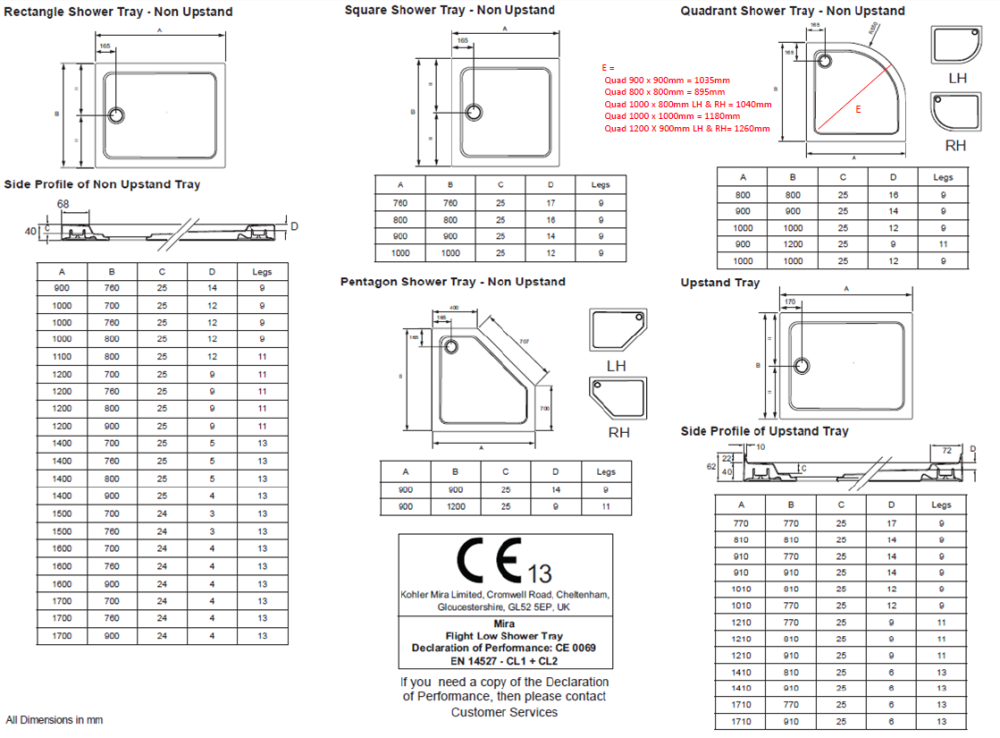
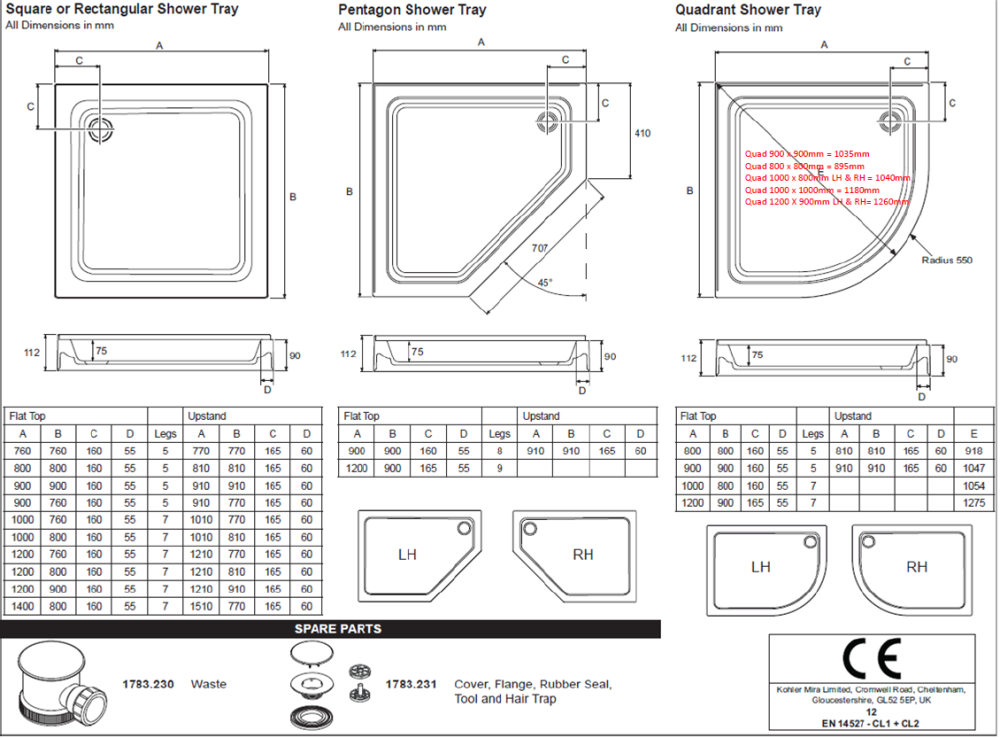
-
Are Shower Tray Toleranced to be Undersized?
MortarThePoint replied to MortarThePoint's topic in General Plumbing
Just went to City plumbing and they said would be spot on but was slightly over 1210mm. That was the with up stand type (see pic below), which may be slightly larger. The guys in the store were genuinely surprised when they saw what I measured. This was a 4 sided up stand Mira Flight 1200mm x 800mm.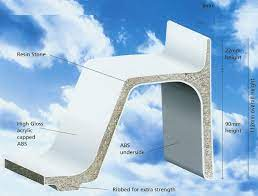
-
32mm Waste Pipe in Metal Frame wall
MortarThePoint replied to MortarThePoint's topic in Waste & Sewerage
Thanks, I had wondered about that. It's very snug where it passed through the studs (in fact concerned it may squeak due to thermal expansion) but clips would be good I agree. -
32mm Waste Pipe in Metal Frame wall
MortarThePoint replied to MortarThePoint's topic in Waste & Sewerage
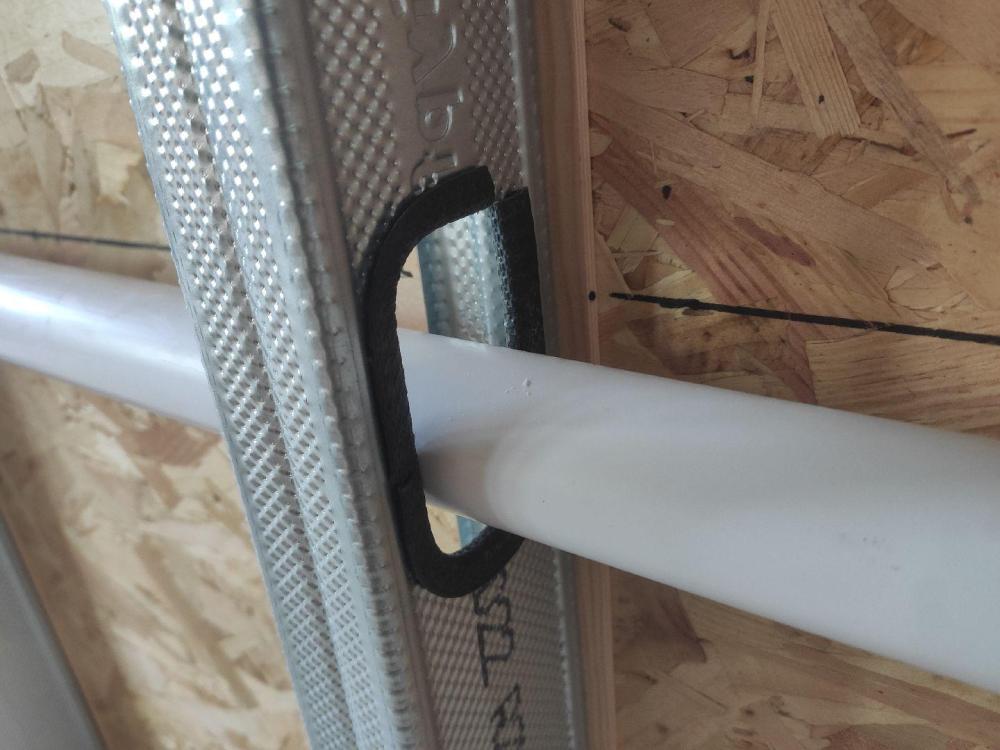
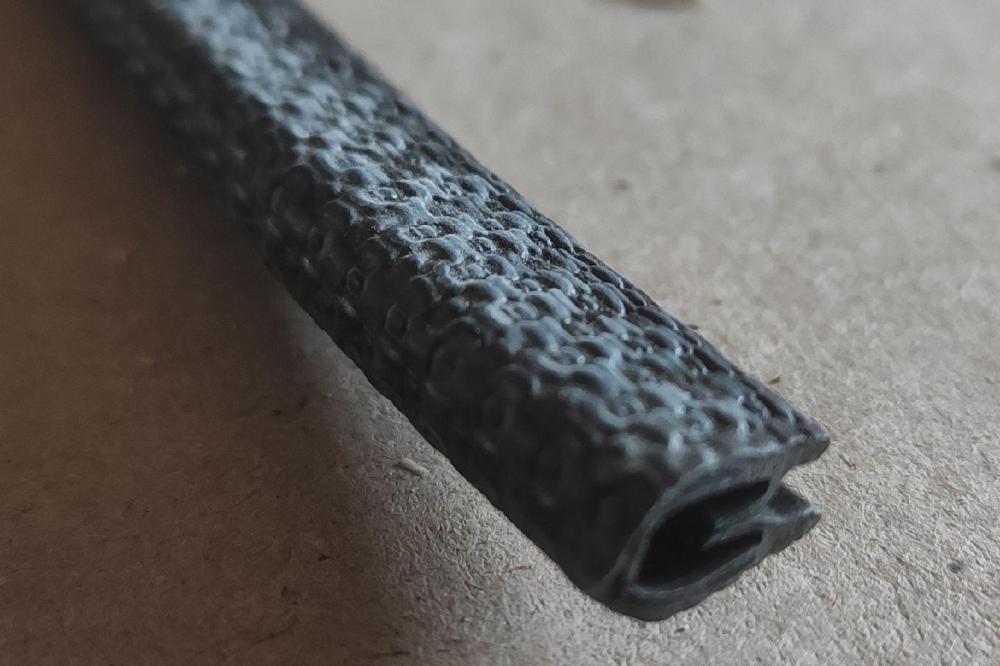
@Nickfromwales this is what I've ended up with. The cutouts are only slightly larger than the pipe so no real way to isolate. I've used rubber edge strip which will hopefully help. I'll be putting some Kilmat on the pipe and filling wall with Acoustic Partition Roll.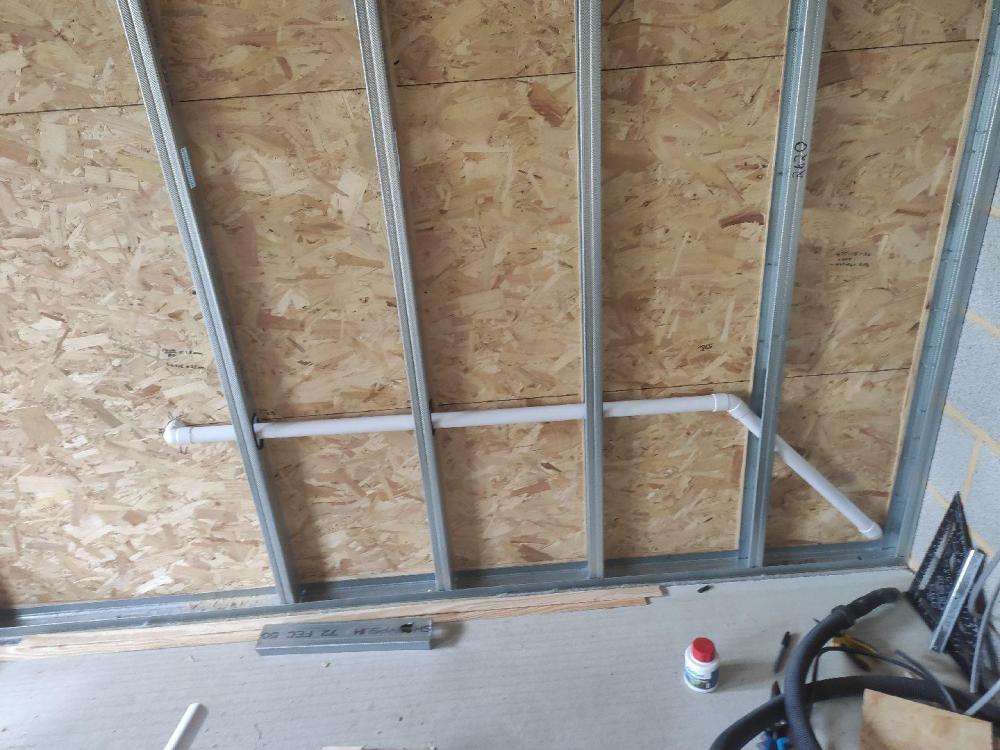
-
Gyproc Sealant - Pointless?
MortarThePoint replied to MortarThePoint's topic in Plastering & Rendering
Thanks nod, good to hear it is used. There's a lot to be said for following the standard recipe. I can appreciate a sealant could help air leakage, but am doubtful about the sound. Sound can't leak through small gaps like air does due to diffraction. Think of your microwave door with its mesh. Perhaps it helps by acoustic coupling the frame to the background. -
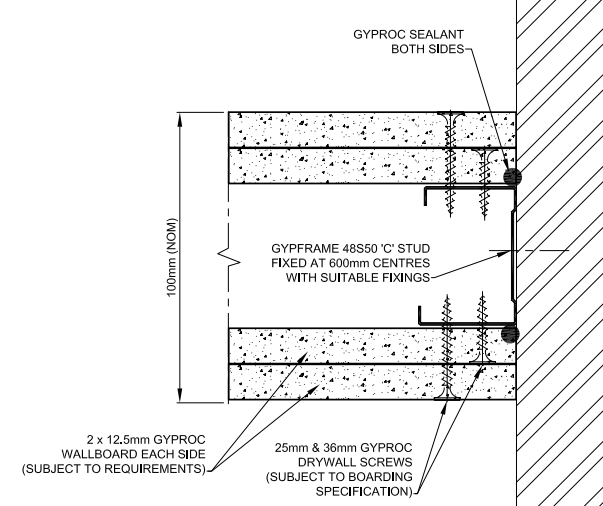
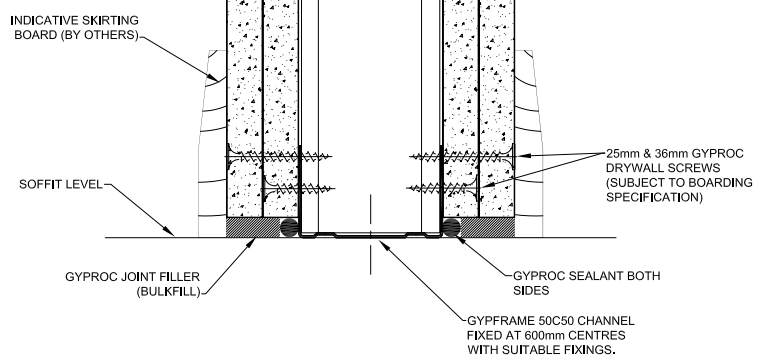
BG show this used all over the place. They recommend it is used around the edge of metal frame, so between frame edge and wall, floor or ceiling soffit (couple of examples below). I'm a bit dubious as you're then putting plasterboard over the top and skimming or taping and jointing which ultimately adds far more material. Am I missing something, or are BG just trying to get more of the value chain? They say it "Boosts acoustic performance by sealing gaps". If it is worth putting something there, why not just use caulk or something similar/cheap (Gyproc Sealant >£12/tube, caulk ~£1/tube). I often find I phone up merchants trying to buy parts of a 'system' that it turns out nobody actually bothers with. https://www.british-gypsum.com/products/finishing-products/gyproc-sealant https://www.gyproc.ie/knowledge-centre/cad-drawings
-
Are Shower Tray Toleranced to be Undersized?
MortarThePoint replied to MortarThePoint's topic in General Plumbing
It was my plan to get the walls up this weekend 🙂 Change of plan time -
Are Shower Tray Toleranced to be Undersized?
MortarThePoint replied to MortarThePoint's topic in General Plumbing
1200mm x 800mm reasonably low. Not too fussy about style but needs yo be white or very light grey, but the waste needs to be in the middle of the short end or in the corner shown below. Something like : https://www.screwfix.com/p/mira-flight-low-rectangular-shower-tray-white-1200-x-800-x-40mm/1906x
-
Are Shower Tray Toleranced to be Undersized?
MortarThePoint replied to MortarThePoint's topic in General Plumbing
That was my fear. Is there anywhere you can think of with shower trays on the shelf? Would be good to unblock progress -
Are Shower Tray Toleranced to be Undersized?
MortarThePoint replied to MortarThePoint's topic in General Plumbing
I haven't got the tray yet and it could get trashed if I did -
Are Shower Tray Toleranced to be Undersized?
MortarThePoint replied to MortarThePoint's topic in General Plumbing
I'm avoiding Hardie Backer and the like. Also I'd tank the moisture resistant plasterboard -
Are Shower Tray Toleranced to be Undersized?
MortarThePoint replied to MortarThePoint's topic in General Plumbing
Yes moisture resistant plasterboard. I have the materials on site so that saves time. -
Are Shower Tray Toleranced to be Undersized?
MortarThePoint replied to MortarThePoint's topic in General Plumbing
12.5mm Plasterboard over 11mm OSB -
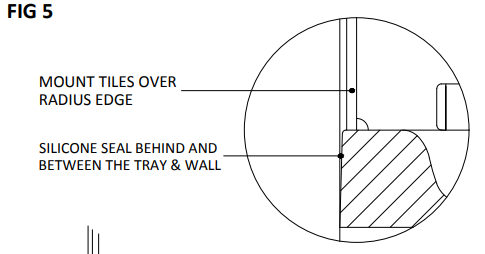
I'm building the partitions of a bathroom and it's 1200mm wide for a 1200mm x 800mm shower tray. I'll be tiling onto the top of the tray (as shown below), but if I make the room 1200mm will the shower tray definitely fit or is there a tolerance that could catch me out. I'm hoping the tolerance is +0 / -Xmm so not allowed to be oversized, but hope isn't good enough. Does anyone know. I can easily wiggle an extra 3mm out of the plasterbard (1.5mm gap at each end) but wouldn't want to go much further.
-
Just to be clear, do you mean all cold pipes or just near the main feed?
-
Cheers Nick, even 15mm ones? So if not HRC do you only insulated your cold water pipes to stop condensation?
-
When insulating 10mm pipe do you just loose fit 15mm? Looks like insulating 10mm hot is of marginal benefit. It looks to about halve the rate of heat loss but I think it will cool to near ambient in half an hour (1.9C/minute at 55C, dropping to 25C in 31minutes). 15mm pipe does better at takes over an hour to get near ambient (0.9C/minute at 55C, dropping to 25C in 71minutes). I adapted the CheGuide spreadsheet (my changes in red including on 'Properties' sheet): Heat_Loss_Insulated_Pipe-10mm.xlsx
-
Not sure I follow. The insulation at ceiling level chiefly acoustic.
-
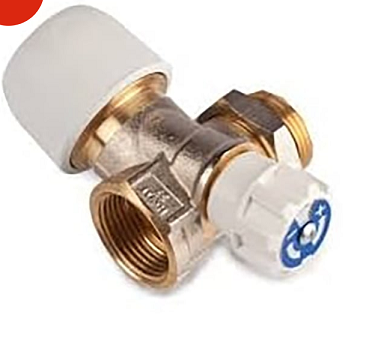
Does anyone know if these Hep2o manifolds, or any other hep2o manifolds, can have an actuator attached? I'm thinking like the standard actuators that Wunda sell (link1) (link2). The knob in the photo below doesn't look promising.
-
32mm Waste Pipe in Metal Frame wall
MortarThePoint replied to MortarThePoint's topic in Waste & Sewerage
You link seemed to get broken. I guess this is the stuff you mean: https://www.amazon.co.uk/Galvanised-Steel-Fixing-Perforated-Builders/dp/B08M3L7YYZ/ Looks good with the PVC coating. I think this is one of those materials that once you start using it you discover lots of good uses for it. I've yet to use it but can already start to think of some other uses. How do you use that within a stud wall like I am looking to do? Do you secure a loop of it to the metal stud and suspend the pipe in the cutouts?
-
Is soft water just a preference thing? Plastic pipes are better with hard water that copper aren't they?
-
32mm Waste Pipe in Metal Frame wall
MortarThePoint replied to MortarThePoint's topic in Waste & Sewerage
So do you just have the Kilmat wrapped pipe resting on the studs or do you use pipe clips screwed to the OSB in the bathroom side of the wall to hold it in place?


