


Hilldes
-
Posts
375 -
Joined
-
Last visited
Everything posted by Hilldes
-
Not everyone will agree with all of these but this has my thinking, relative to a render on blockwork external skin: can be quicker, can be more accurate (e.g. around window reveals), can DIY some of it (battening for render board and the boarding itself if you have time). Not sure on relative costs as I never looked closely at the blockwork option. The house is a modern design and the render looks really 'crisp' and 'sharp'.
-
We have a render on render board outer skin on timber frame. The mortgage lender is fine with this, but the surveyor acting for the lender said it would have been a different story if we had specified timber cladding on timber frame.
-
How to fit acoustic insulation to Posi joists
Hilldes replied to Hilldes's topic in Sound Insulation
There are some opportunities to reduce threading through joists e.g. this one where the top chord of the posi is supported on the glulam beam and the bottom chord is cut short. Unfortunately, most of the joist ends are not like this.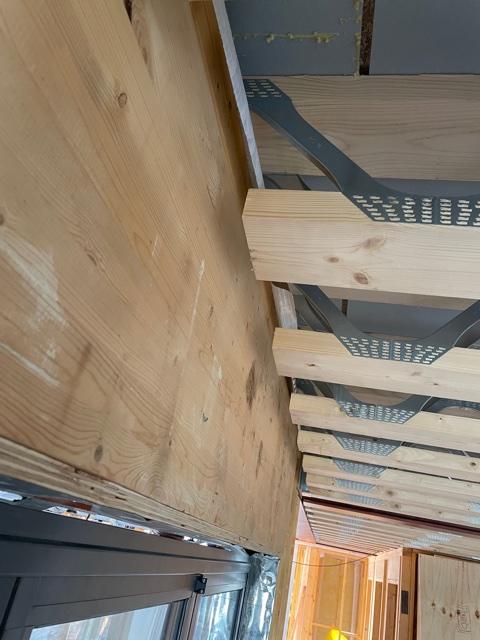
-
How to fit acoustic insulation to Posi joists
Hilldes replied to Hilldes's topic in Sound Insulation
22mm Caberdeck + (1) underlay and carpet or (2) tiles in bathrooms -
How to fit acoustic insulation to Posi joists
Hilldes replied to Hilldes's topic in Sound Insulation
Going to have a play today with some longer pipe offcuts from the slab UFH installation. I know you and others are going to be right. Looking at overfloor, looks like the total additional depth would be 28mm for Wunda: 20mm boards: https://www.wundatrade.co.uk/shop/home/quick-shop/wundatherm-quick-shop/boards-quickshop/underfloor-heating-board-wundatherm-premium/ 4mmx2 duo boards: https://www.wundatrade.co.uk/shop/home/overfloor-retro-fit-solutions/wundatherm-underfloor-heating-boards/7mm-duo-board-system/ Besides the headroom issue, may also bring floor level too high to open Juliet doors, but will take a look today. -
How to fit acoustic insulation to Posi joists
Hilldes replied to Hilldes's topic in Sound Insulation
Great idea, but I don't think you can notch the chords of posi joists. -
How to fit acoustic insulation to Posi joists
Hilldes replied to Hilldes's topic in Sound Insulation
I am effectively the M&E consultant and I can't run away ? Agree its not going to be easy. The main reason for reluctance to install on top of the floor deck is limited headroom on the first floor - but if it just will not work below, we'll install above. A lesson for anyone placing a contract with a timber frame company, you might ask if they can pause the frame erection while you install spreader plates on the posi joists and lay the UFH pipes, then you discover when they arrive to erect they have manufactured the joists and deck into cassetes. -
How to fit acoustic insulation to Posi joists
Hilldes replied to Hilldes's topic in Sound Insulation
Agree that would be a nice solution. My UFH is to be fitted* to the underside of the floor deck in aluminium spreader plates. I'm thinking the acoustic insulation would be needed immediately below the UFH spreader plates in order to stop the UFH pipes heating the services pipes and cables (and maybe to help focus heat from the UFH pipes upwards). When Wunda specified the spreader plates, they also specified a layer of EPS insulation immediately under the spreader plates, but I omitted this as 100mm of acoustic insulation would do the same thing - provided it was immediately below the spreader plates. * when I say the UFH pipes are to be fitted beneath the floor deck I have not yet tried to thread the pipe through posi joists. From laying the ground floor pipes in the slab, I now know the pipe is like a snake with rigour mortis ? (it is the pert-al-pert I think). When we try this in the next few days, it might prove impossible and we'll have to install the UFH pipes on top of the floor deck. -
How to fit acoustic insulation to Posi joists
Hilldes replied to Hilldes's topic in Sound Insulation
I was wondering the same thing. I guess doing the insulation before will hamper first fix electrics and plumbing. Doing it after means installing the insulation over the top of pipes and cables. -
Thanks Nick, steels are all enclosed in the plasterboard envelope. BTW, just ordered Gyproc firefline red 12.5mm plasterboard for plant rooms. No response from BCO as yet, but as you said, a relatively small extra cost cost relative to standard wallboard.
-
I just tried to read Part B of the building regs - have not a clue what is was saying. Not just about the specific question on plant room wall coverings, but even the requirement I am aware of to project steels with special plasterboard - could not even determine that from the hieroglyphics. Means of escape is clearer - already covered that with BCO with the plans review.
-
Its more the height that was the issue because its a 1.5 story house and the roof slope clashes with the top of the cylinder. Just need to expand the plant room footprint further from the roof. As a bonus it will actually simplify the UFH pipe routing.
-
My plant rooms are bare right now but need to decide very soon as UFH installation is the next job. Need to find a home for these beasties: ...and discovered today that neither unvented DHW cylinder I have quotes for will fit in the first floor plant room, so now looking to enlarge or move the room ?
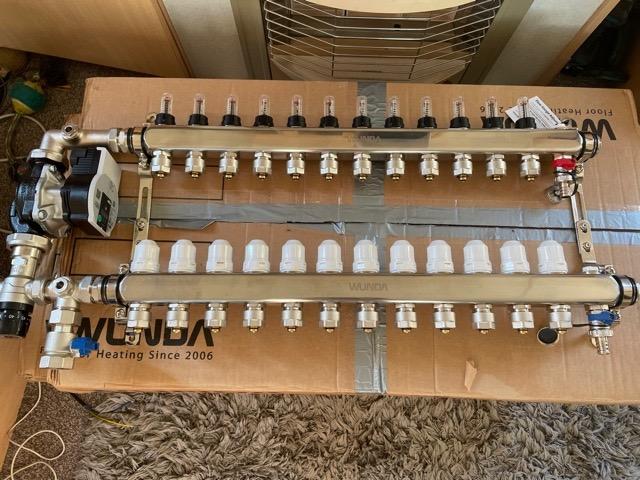
-
Thanks all for the replies, really helpful - I do plan to ask the BCO. I'm thinking if the BCO is OK with standard wallboard it might be almost as easy to just skim it rather than fill the gaps with foam/intumescent acrylic caulk. P.S. will have smoke/heat/CO2 detection in the plant rooms.
-
Good point @Bitpipe - I don't plan to skim the plasterboard. Was this preference from BC due to the location in a basement?
-
Thanks @nod and @markc - I’ll go for standard wall board.
-
Hi all, I'm lining my plant rooms with 18mm ply. Given the house is timber frame, do I need to fix plasterboard on top of the ply for fire protection? If yes, standard wall board or a board with extra fire protection such as Gyproc Fireline?
-
Yea at some points I was using a 6 inch steel rule and a scriber to compress the compriband to tease it into the gap - but even that is tricky when the gap is so small you can't see what you are doing.
-
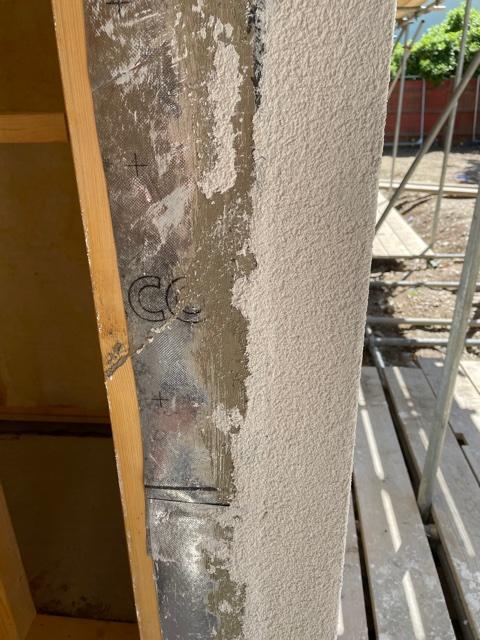
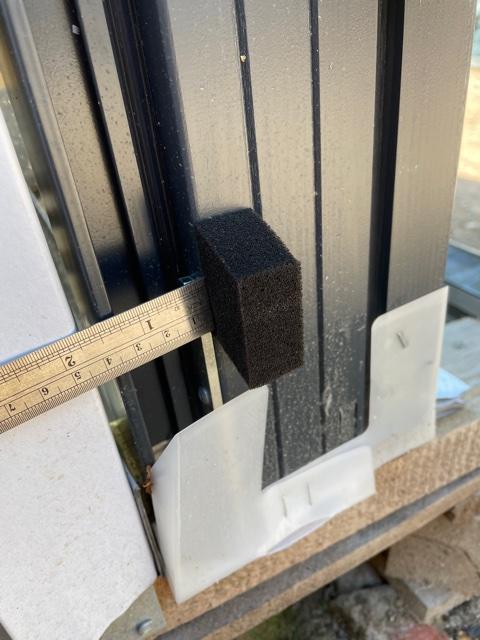
...so now speaking from experience.... Plan A was to use the Illbruck TP600 product mostly in the 8 to 15mm size (and 20mm width). I bought 19 rolls ?. Stored it for at least 24 hours in the fridge, then took one roll at a time to the window in a cool bag. Ambient temperature was 15 to 20 deg C. The experience was really poor - despite the cooling, the product expended so rapidly I could not get decent lengths in correctly. As I cut off a length from the roll, I applied a clip and put the remainder back in the cool bag. I ended up wasting a significant portion of each roll. In the end I used it only for gaps that were 10mm+ and uniform gaps at that. I purchased more of the Pro Clima CONTEGA FIDEN EXO product, which expended much more slowly - giving time to get the product into the gap effectively and neatly. When fully expanded, the Pro Clima CONTEGA FIDEN EXO product has a darker appearance that the TP600 and if anything feels to be more impregnated. A note on gap sizes: Our gaps were designed to 12mm for most windows (with wider cill gaps in some cases). In practice the gaps tended to be slightly smaller as the render could be slightly proud of the timber frame opening, especially where the render overlapped with breather membrane in the window reveal as pic... So basically the gap to seal could be as low as 6mm in practice and in some sections even narrower. With the Pro Clima CONTEGA FIDEN EXO product I bought in a wider variety of sizes: 7 to 12mm, 5 to 10mm, 3 to 6mm (and 2 to 3mm but did not use). A note in Velfac V200E windows - I should start by saying I'm very happy with the quality of the windows. One challenge though when applying compriband is it needs to be pushed some way into the gap - because there is a void behind the outer aluminium profile and the wooden window frame behind it (see pic) and the compriband needs to adhere to the wooden frame. This is especially challenging when the actual gap is less than the 12mm designed.
-
How to fit acoustic insulation to Posi joists
Hilldes replied to Hilldes's topic in Sound Insulation
Thanks all. The frame batts I have are for studs at 600mm centres so should be a snug fit. The product I have is Isover frame batts not as itchy as some but not great when working overhead. Is that because if you use an oversized width for 600mm centres, it will naturally push into the webs above the bottom chord of the joist? -
Anyone have experience of fitting mineral wool acoustic insulation to metal web/posi joists? How to keep it in place (suspended)? How to get it between the metal webs within a joist? And where do you put it relative to other services? We have 253mm high posi joists at 400mm centres. I'm thinking, from top: 1. 22mm Floor deck 2. UFH pipes in spreader plates fixed to the underside of the floor deck using spreader plates. 3. Acoustic insulation - but supported how? 4. All other services - MVHR ducting, cabling, downlights, other plumbing. Will MVHR ducting be noisy if lying directly on plasterboard? 5. Plasterboard P.S. will be using 140mm Frame batts for the acoustic insulation in between the joists as I over-ordered for the timber frame. Any advice/pics greatly appreciated
-
My windows from Velfac, Solarlux and Kloeber were all delivered on time, but any materials shortages may have been factored in to the lead times for manufacturing and delivery - 13 weeks for Velfax and Solarlux and 7 weeks for Kloeber (latter a front door only).
- 1 reply
-
- 1
-

-
I have bought loads of materials from our local Jewson for our build - not just blocks, sand, cement, below ground drainage and timber but whole house worth of insulation, Velux windows and Marley Alutec fascia and guttering for example. In every case they have been able to match or beat prices of the web-only shops.
-
Mains water stop valve / cock value for 32mm MDPE
Hilldes replied to PI build's topic in General Plumbing
Thank @JFDIY so you connected to 28mm copper, have a 28mm brass stop cock then 28mm double check valve? -
Mains water stop valve / cock value for 32mm MDPE
Hilldes replied to PI build's topic in General Plumbing
@A_L looks like it is compatible with sea water then ? (with other benefits I now know). Thank you.
