
puntloos
-
Posts
1575 -
Joined
-
Last visited
-
Days Won
1
Everything posted by puntloos
-
And one delayed update: Demolition + Removal + Groundworks: 20,000 Digging a massive hole for the basement: 10,000 25m2 basement + 130m2 foundation to 'cover' the entire house footprint: 100,000 To be clear, the above is under the assumption that the soil is 'solid', No unexpected water, or sagging, or unexploded WWII bombs. Yes we'll have to do some investigations. My question is: How much more is this cost (130,0000) than if I were to just clear, groundwork, foundation? I'm trying to separate out the GBP/m2 of the basement
-
Interesting point, I dunno, when buying houses I can't recall a single time that anyone mentioned explicitly the method either direction in their sales pitches. Never mentioned in e.g. rightmove blurbs etc etc. Perhaps there are a few people obsessed either way, but if any thing I think that once the house actually stands, and assuming (...) that it indeed has succeeded, the results would speak for itself. So yes, if you're worried TF has a larger chance of being 'broken' somehow then perhaps not do it, but once it's proven itself, surely it's fine..
-
Let me know if I'm missing a more recent thread but I figured I'd resurrect this one since it covers a little what's on my mind. Context being our Architect telling his gut preference for B+B rather than "TF" (any variant, ICF, SIPS etc etc included). As far as I can summarize this thread so far, and when I say 'TF' I again mean all variants, rather than some specific brand or technology General TF Pros: - Ultraquick 'slab to airtight' stage. - To me this is quite important, but it's more a gut feeling thing.. it just 'feels' wrong to have some open house being rained soggy with wet cement. The more this can be limited the better, but perhaps not a massive deal. - Precision - Clearly the TF design can also be screwed up but especially with a bunch of experts looking at this, this can be done with a high degree of certainty. - Reason why this matters: - Disagreements: Many annoying situations arise when people start to deviate from the plan, things move slightly to the left or right and suddenly things don't align, it's your fault no it's mine etc. - Airtightness/Insulation: much easier to get airtight, it is 'close to airtight' by default rather than something brickies will have to pay close attention to at all times. (wheras their incentive is a lot more towards speed) Neutrals: - Cost - Sounds like the price depends a lot on what you compare to what, and it's super tough to compare apples to apples, but in the end, while one or the other might win out, I think the variations between companies/builders and offers varies more than between 'philosophies'. maybe TF is slightly pricier because it is good sense to make triple-sure you have everything right before going onsite, hiring a 3rd set of eyes to prevent surprises might cost you a cool 15,000. - Total build time - Because increased pressure to get it completely right, it takes more design time - But when ready, it's built quick. Evens out (mostly)? - External sound insulation - Apparently, keeping out the sound from outside is pretty easy with TF - Experience of the workforce - @epsilonGreedy seems to emphasize this, and it's clearly true that 'traditional' - by definition - is done more often historically. I call this neutral because while indeed giving an builder a massive flatpack and the ikea style 'screw this to this' instruction leaflet is a recipe for disaster, but an experienced builder will be absolutely fine. General TF Cons: - Corrections onsite hard/costly - IF something is askew onsite, you are in trouble. If the TF design or the slab was shoddy, weird stuff has to be done. - Internal Noisiness - Not insurmountable, but because TF just has less 'heft' it is easier to move, which means sound travels easier. - As a result, extra hard work needs to be done to make sure the house is quiet. As I understand it ICF might be the optimal one here, but if I remember correctly it might be hard to find, perhaps with Brexit doubly so? - Underfloor heating - Still not quite sure if this is a myth but some extra care needs to be done to allow the 1st floor be able to even carry the UFH pipes, slabs, waterworks etc. Philosophical A lot of discussion here is going on about risk, and a there seem to be two philosophies: 1/ Building is messy, but a skilled brickie/PM can steer the ship easily into calm waters whatever happens. 2/ Let's prevent any chance of messiness, and while the requirements for skills are not gone, they have definitely shifted away from gut feelings to precision, meticulousness, etc Which, to me, kind of comes down to "Who do you trust". If you know yourself and/or your builders, you will be able to make a call on if they can either be meticulous, or skilled navigators of choppy waters. And if you don't trust the "3D computer fanciness" design will be done properly beforehand, or perhaps even that the foundation is done so poorly that a TF will almost literally fall off, where a brickie can compensate for a poor foundation. One thing I will say - I work in computer software and for me, and my philosophy, I have seen the #2 approach work very well as long as someone in the chain is strongly skilled and/or incentivised to 'lose sleep over' upfront precision/design quality. Thoughts? Comments? Anything important I missed? Pointers to different discussion where I should've posted? Please do shout.
-
https://www.cbi.org.uk/uk-transition-hub/importing-goods-from-the-eu/ is the closest thing I could find, sorry. I think I heard it on TLDR news or something. Apologies I should've caveatted it a bit better that it's something I think I heard but can't find now.
-
One thing I heard is that at least for the first 6 months, the UK is waiving all import fees from countries, so while there might be export fees, presumably if you manage to get some orders in before July you could still have good value?
-

Hard to clean pitfalls? Cleaning dreams?
puntloos replied to puntloos's topic in New House & Self Build Design
Slight anecdote I just ran in today: don't get a bath with a drain plug in the middle. Rinsing it out is much more cumbersome with water randomly 'overshooting' the plughole. 2m eh? Yeah the 2mm is pretty common. Not something to lose sleep over I guess. I'm tempted to go for some type of tile in the kitchen, but I suppose that doesn't help the staining.. Seems to me wood is easy to restore, but it does require a lot of ongoing work and being more careful. Any type of liquid that stays on it for some time just gets embedded in the texture, like it or not. Good call, have a small kid. Carpet doesn't feel super modern, but has a bunch of pros and cons - Pro: + sound echo - I'm not a big fan of echoey rooms, both for cinema quality as well as just living quality reasons + warmer to touch (bare feet?) + doesn't tend to really 'absorb' colors (e.g. bleach) - Con - harder to clean spills - fluffs coming off - looks a bit antiquated But as a curveball, I'm tempted to go for amtico in most places.... Good idea in general.. although I think I like the idea of ground floor = shoes on, top floor = shoes off? Yeah gloss doesn't seem like a great idea, and some 'grey pattern' wokrtop seems ideal to hide both calcium and other stains Ah it was just a joke Good point Would love to hear more examples! Thanks, indeed pyrolysis seems like an important option! -
Many things in a house collect dirt, scratches etc etc. Does anyone have opinions on which items you might want to avoid because they're hard to clean, or what things to do to make it even easier? Hard to clean: Shaker Doors, Wooden worktops and Gas hobs come to mind, but I could imagine (totally made up) that a steam oven sounds nice but is a nightmare the water toboggin keeps on slipping away or brandX washing machines just collect nasty smelling scum that you have to disassemble the entire thing to get to. Easy to clean: Most electic hobs are pretty good but there's still a line around it that's a touch annoying. Has anyone ever recessed the hob fully into the worktop or is that a bad idea? Have closeable cupboards only. Any open shelving will be dusty in a week.
-
Share your research on 'obvious items' - list a few good ones.
puntloos replied to puntloos's topic in Research Resources
Interesting, I indeed didn't realise that pull-out drops the flow rate. Wouldn't it make sense to try to fix the pressure problem though? A pump? Build your own water tower? -
Share your research on 'obvious items' - list a few good ones.
puntloos replied to puntloos's topic in Research Resources
Care to share your research? ? but indeed a fair point that "non feature related" stuff such as delivery times still matters a lot. -
Share your research on 'obvious items' - list a few good ones.
puntloos replied to puntloos's topic in Research Resources
@joth @PeterW @Temp you're all not wrong about the networking, in that particular case I casually jotted down a 'good one' in one of my hobby trawls through geek forums. Agreed that I probably don't need the speed it provides before the technology itself is mostly superceded, but this particular item on the list, eh, if I can score one on ebay for 250 it might just be 'fun'. @joth - main windows - that's why I have you! (both you personally and the collective 'you' of Buildhub ) - no we didn't look at windows yet, and we should do so, but indeed in a way they also feel "trivial" purely in the sense that as you said, as long as they are high-quality I don't have a strong opinion for any brand, the Fakro stood out purely for its smart home chops, nothing else. I realise the above 'messiness of real life' drops the quality of the spreadsheet, I debated which columns to create and populate that would reflect things like "thoroughness of research" "rate how weird you are"(e.g. I realise my needing a windowframe that came in bright orange limited my selection somewhat.." and "value for money" etc. but I didn't want to overcomplicate just yet.. -
Share your research on 'obvious items' - list a few good ones.
puntloos replied to puntloos's topic in Research Resources
Today there's no way I'm using the speed, but if I'm designing my network closet I figure a bit of give is not a bad idea. -
Share your research on 'obvious items' - list a few good ones.
puntloos replied to puntloos's topic in Research Resources
We recently moved. A hassle, but it's been very helpful comparing and contrasting. Previous place's strainer plug worked pretty well, and much better than the current. And to be clear I don't think it's just the bit that you can pull out, it's also the hole it fits in. Current house's is very shallow. Not sure it matters. Wow, that seems like poor design. I was wondering about this. Another useful feature of new rental (to compare/eval) - it has pocket doors between living and kitchen. I must say I find it harder to open/close them than I expected, and they aren't even huge. maybe 1.7m wide. I was expecting a good system to allow opening and closing "with your pinky" so to speak, but especially the first 5cm takes a serious shove to get it going, not helped by the fact there are no good handles on it. There's one pocket door in my design that is probably going to be used daily - our master bedroom. (see here for a reminder) - the reason for it is that it 'effectively' adds the walk-in to the master bedroom, so master feels more spacious, yet when closed you can quietly, and with light, get dressed/undressed. Also, I hope/imagine the pocket door can be opened fairly quietly But indeed, I think I need to get the absolute best quality pocket door mechanism I can find. Elisse might be 'ok' but perhaps I need like fancy swiss engineering precision or somesuch.. Good point, this one is mainly intended for space saving. You would think but on ebay, they go for 250-ish quid if you have some patience. And as the heart of a future-proof network, you'd want something that can really *sustain* gigabit from anywhere to anywhere. Most "gigabit switches" can connect one machine to another and maintain that gigabit, but add one more link (a second pair of devices starting to try and talk) and most cheap switches will drop to 500Mbps. Not to mention the power-over-ethernet part, which allows you to do wired cameras and other devices without a power socket -
Vague title, sorry. TL;DR: Share your research on "common house components" in this sheet How many standard things have "good ones", where the "bad ones'" will only turn out bad when it's too late. Can we share the research? Tons of things have personal choice in there.. color of your kitchen doors, or features of your microwave. But in particular super common things, like e.g. "power sockets" probably have 200 brands, all roughly the same, but some are terrible (e.g. switches that die after 5x switching) and some are fine. Here's what prompted my question Can you tell this is a bad one? No? Well it is, it's in my new rental, the 'open' position is so elevated above the sink that it never actually drains water away from e.g. some vegetable scraps, it immediately gets pushed back in. And if you don't spot it this will bug you every time you clean your kitchen. (ok, well, it bugs me.) How about this - I've started a shared spreadsheet here I'd love to put things in here that "we all need at some point" when we're building. Simple stuff like power cable, sockets, faucets, downlights, hinges, windows, but if you're willing to share, please also tell us which ovens and hobs and fancier stuff you've chosen and why!

-
Golden ratio around room size?
puntloos replied to puntloos's topic in New House & Self Build Design
Ha yes, I know the ratio from math/nature/mandelbrot, I just.. with my topic at least - kind of meant to imply (or at least question) that there's a different GR for room dimensions. Also not quite sure how the simplest form, in 3D, works. My livingroom currently is 7.5 x 4.9 (doh, close, GR would be 7.5 x 4.6) but then.. how high would the ceiling be? -
Golden ratio around room size?
puntloos replied to puntloos's topic in New House & Self Build Design
That's pretty unusual. Normally you'd optimize for the places you spend most time (well, awake..) What was your rationale? So.. there IS a golden ratio? What is it? -
I've been dissuaded from the in-wall due to the extra complexity of making it cold-bridge-free.. but indeed I hear some good things about Roche!
-
Well the simplest way is something like this: But obviously not ideal to have no windows in your master.
-
Examining the 'house sandwich' - working with 8250mm
puntloos replied to puntloos's topic in New House & Self Build Design
Do I get a prize? (badum-tish) As mentioned before I don't think this topic is really representative of my approach, the whole 'ceiling height' was just a rabbit hole thing I went down to figure out if I could prevent hitting my head in the loft. In general the changes I've asked of the architect primarily came down to making sure things were optimal that we couldn't change in a quick NMA after pp. But again, thank you, I will make sure to tread carefully and I actually should be done at this point. -
(Mostly just @oldkettle and myself being curious) Are there any golden rules of room width/depth/height that are known to produce good results? Taken to some extremes we all understand a 1x25m room will feel less nice than 5x5m, and that a 2m60 ceiling will usually feel nicer than 2m25. But anything else? How high is too high for example? A 2x4m room that is 8m tall will probably feel iffy too. Also there's some practical limits, the width of the room will influence how strong the roof above needs to be (metal beams?). Most standardized paneling is 2m40 so 2m60 will mean extra work and/or cost etc.
-
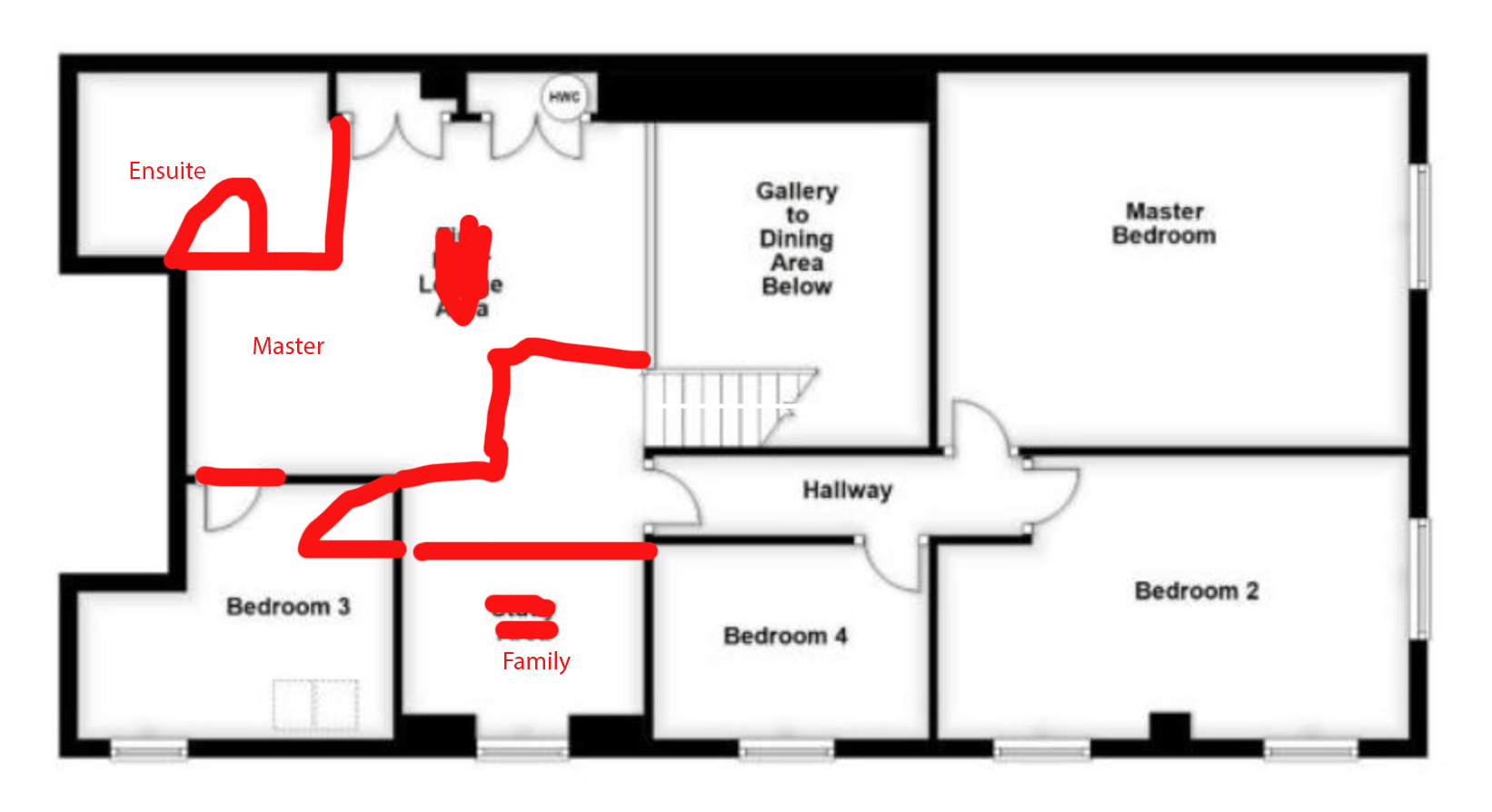
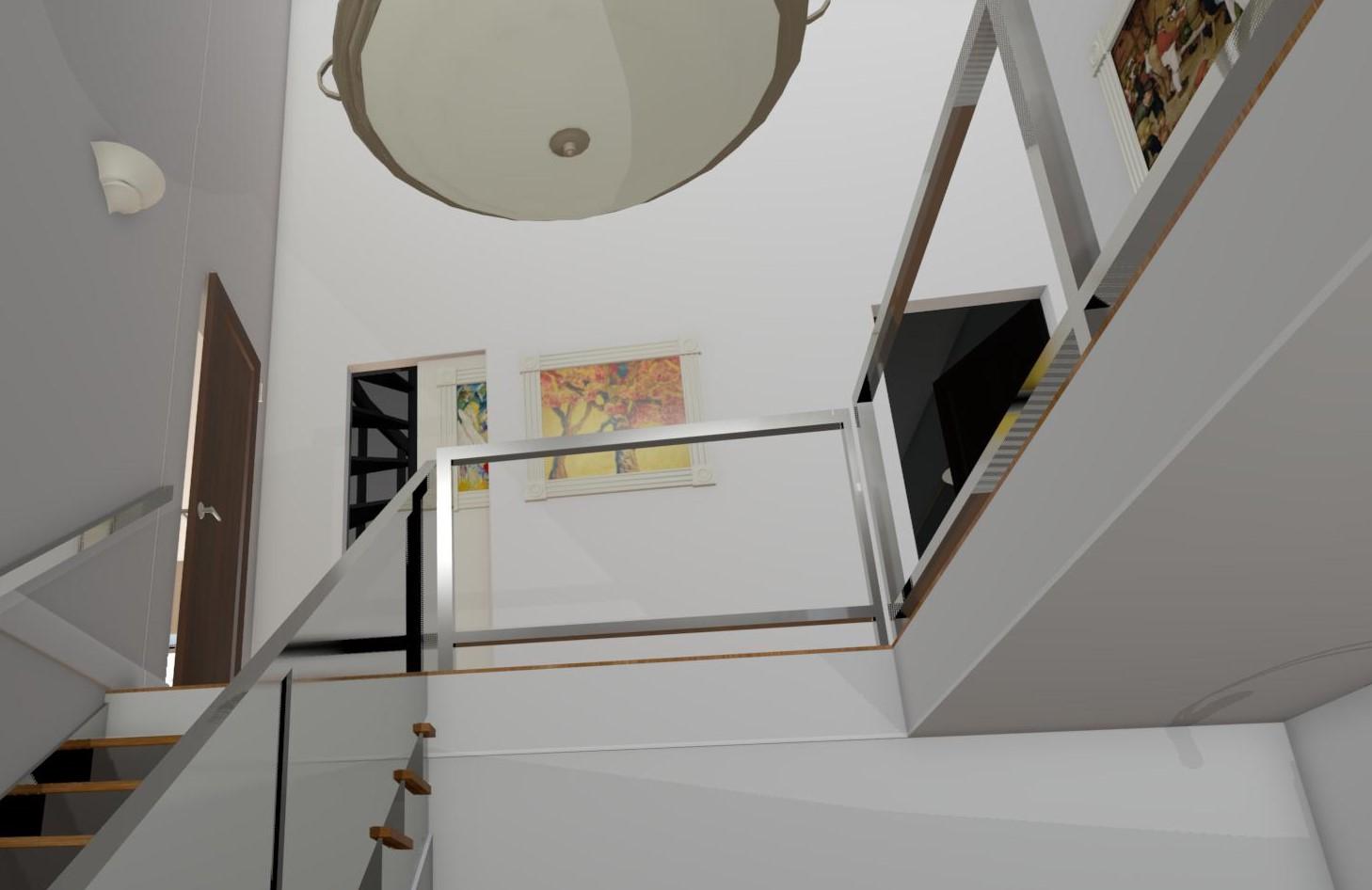
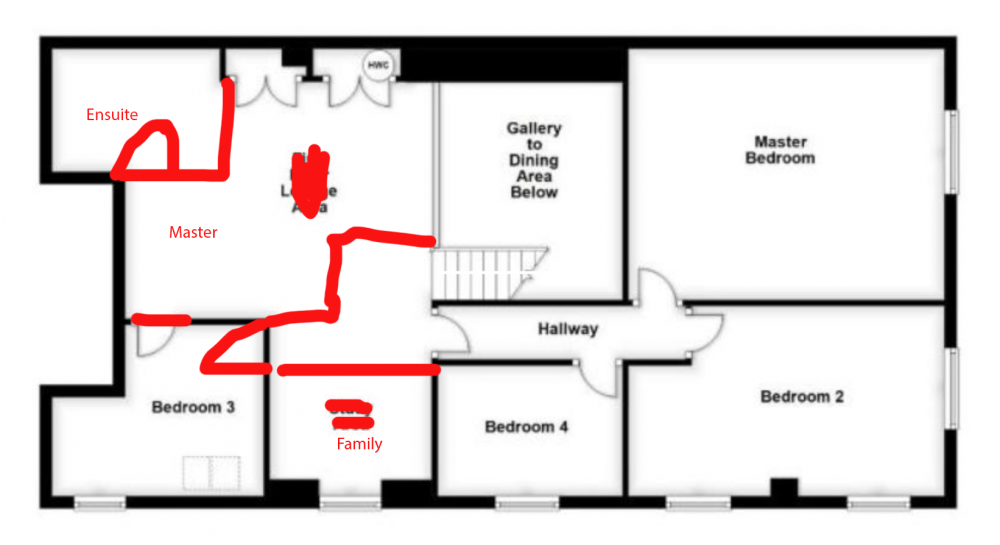
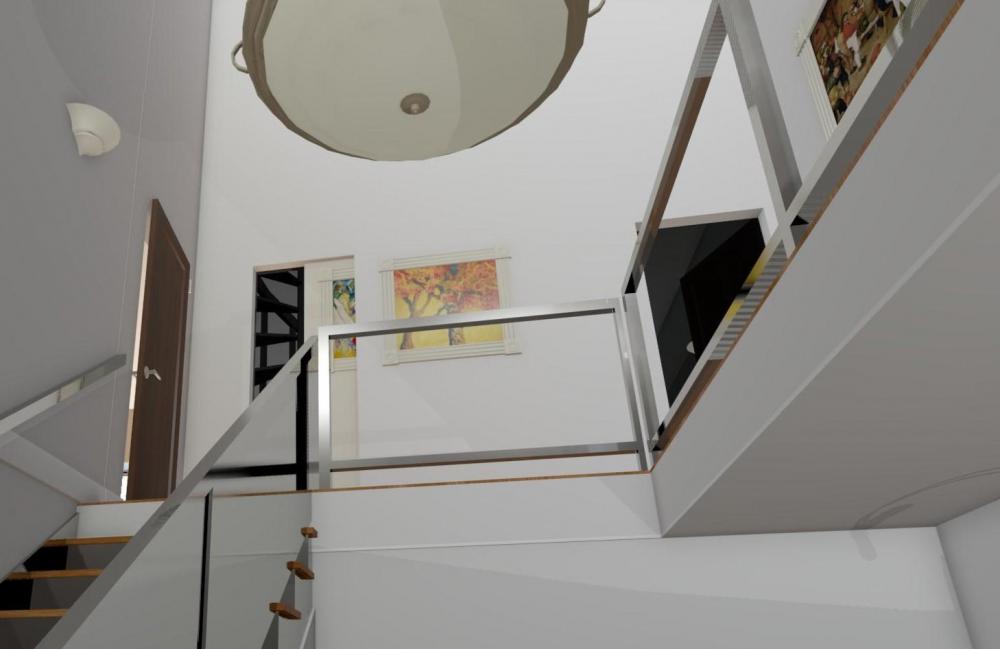
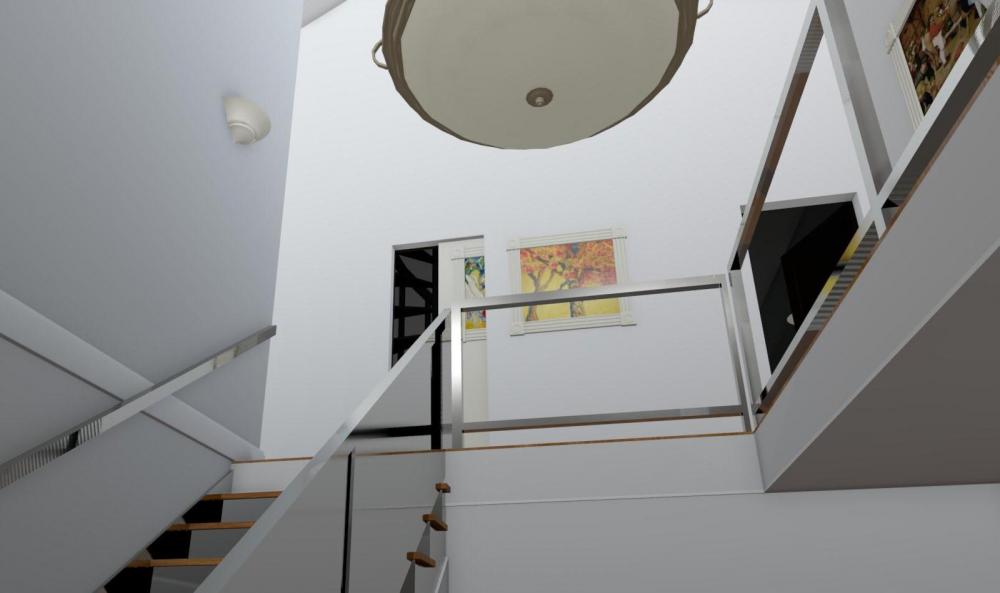
Weird, I missed your post! 2 reasons: 1/ Visual. Compare: (sorry I don't know why the program is changing the colors, ignore. As you perhaps agree, the hallway in the first picture looks, to the eye, as if it could go on for miles. It gives the impression of a larger house. 2/ The hallway actually can fit a door, allowing us to easily split the one big bedroom into two. Of course it can but the idea of our walkin is that my wife and me have very different bed schedules, so it's important for us to have a separate dressing room (light/noise) from the bed, but also we'd like a spacious master bed, so with the pocket doors open, the walkin effectively is added to the depth of the master bed. Slightly confused. (to be clear though sadly I didn't notice the bedroom numbering on my designs (yellow walls) and the arch is different. Now fixed in my design. Not quite sure which bed you want to put where. Yep, good shout. But probably not achievable to hit 2200mm head height. Either way not a bad idea.
-
It's not design by committee, it's design by buildhub! Seriously though, perhaps in retrospect I could've saved time by "consolidating all changes" while I thought through every aspect of the house design, but there's a ton of things that were suggested/discussed on buildhub that made it into the plan without dramatically modifying the original vision of the architect.
-
Examining the 'house sandwich' - working with 8250mm
puntloos replied to puntloos's topic in New House & Self Build Design
Since the architect is on a fixed quote for the various stages there's only "so much" one could expect to be included? They visited us 2x (3-4 hour session) and then perhaps 5-6 more hours of discussion, then created 5 sketches, then worked up the sketch we picked (after some of our amendments) one sketch that was worked up into a full 3D design and did a few more minor changes and provided the materials for PP. After that they started charging the pre-agreed hourly rate. I don't think they did anything wrong, just that I'm avoiding the hourly rate by also doing my own legwork -
Examining the 'house sandwich' - working with 8250mm
puntloos replied to puntloos's topic in New House & Self Build Design
Easy for you to say if you're in the business for ages! But fact is that if you're new to this process, you actually don't know exactly what you want, and it's absolutely unrealistic for an architect to talk their client to every single detail that I, due to a personal interest, have now picked up, and - to a point - understand the implications and the choices that the architect made around it. As you well know, many such small design choices can have big effects, and I completely understand that my architects made some of them very well-reasoned but never explained the exact reasoning since you can't talk through every tiny thing. Instead, we did exactly as you said, and I even still stand by the point around the number of floors we initially wanted mind you. Fair enough, FWIW I'm at this point resigned that I can't achieve 2200 (but I know that "for a fact" now, due to buildhub!) rather than just my architect's word. This is valueable to me at least. But - given that I'm 1m93, I am slightly hoping I can achieve 2000 so I can at least stand without hitting my head. Anyway it's just one example (although ha it's more on-topic than the rest here ) Ah you apparently haven't followed my journey on this. We had one of the most detailed briefs out there Yeah. I guess I'm weird. But I do appreciate your opinions on this, and I definitely don't want to wear out my welcome, either here in buildhub, or with the architect. This loft discussion has been a bit of a strange rabbit hole though, because "as an amateur" I thought just raising the roof a little by taking a bit off the GF and done, but taking me into the weird world of building reqs and drainage slopes etc - very interesting for sure. I don't consider it a negative, even if it leads me to simply accept the architect's 1800 as is. As for cost, eh, we have made explicitly clear to the architect they are being hired to make sure the house is 'coherent', we've never disagreed with their professional opinion on that area, so other than that we are just having a fair dialog (where the architect probably (?) doesn't know I'm critiquing/improving/designing-by-Buildhub-committee ) and their hourly rate is - for now - acceptable cost. -
Examining the 'house sandwich' - working with 8250mm
puntloos replied to puntloos's topic in New House & Self Build Design
All true, but take this loft situation for example. We've established at the start that we don't "deeply care" about having a livable loft, but it would be nice I suppose but price and etc etc. So, their design included a loft with a low ceiling as shown (1800mm). But 'at this point' (unfortunate I didn't check earlier perhaps) I've noticed that I am 'close' to reaching a convertible loft etc. So I don't feel they have done it wrong, its just that this came to my attention fairly randomly, perhaps during the discussion around the spiral staircase.. that needs a 2m opening... that needs a 2.2.. all these knock-ons, oh and then I could lower the house theoretically etc etc. I am finding out step by step as an amateur does. Clearly I could just "leave it be", or indeed I'm certain the architect would be happy to sit down with me too, but they have delivered the planning pack materials within reason, what they should have for the pre-agreed price, and currently they are on an hourly rate.... -
Examining the 'house sandwich' - working with 8250mm
puntloos replied to puntloos's topic in New House & Self Build Design
Worth keeping in mind for me. Too many people here have raised a bit of a warning flag to just wave away but if anything I just think it's because I'm communicating poorly here - or falling major victim to the XY Problem "Table" in covid doesn't really work.. Can you explain a bit more what your concern is? Do you feel I'm behaving inappropriately, or the architect is not doing their job? Why upset? To be clear I have tried hard to leave out any identifying info and/or architect names to not connect it to them, and I doubt I've been too negative about them since that's not what I've felt about them. Very much in general though, the core reason why we got an architect is that I don't have the skill/experience/confidence to be my own architect, but I do care a lot about getting this stuff optimal not just 'fine', so indeed I'm basically kicking the tyres of the entire process, running things by BuildHub as you've seen etc etc. It's a way for me to learn as well as indeed deeply understanding various implications of choices and compromises we're making. At the end of the day I don't want to be responsible for "signing off on the design" as solid, but I have been actively contributing to it. So far the architect hasn't complained. For what it's worth a friend of mine is a freelance architect/project manager who has been advising us and she hasn't put up any warning flags around our process either.