
puntloos
-
Posts
1575 -
Joined
-
Last visited
-
Days Won
1
Everything posted by puntloos
-
Interesting point. But that downpipe would only service the little roof, not the main roof.. although I guess you could sneak a few pipes here and there I was wondering about this but at the end of the day it has to be about access to the pipe if things get plugged up. Not sure if such a box would just remove all ease of access? So no main problems with square downpipes in the first place?
-
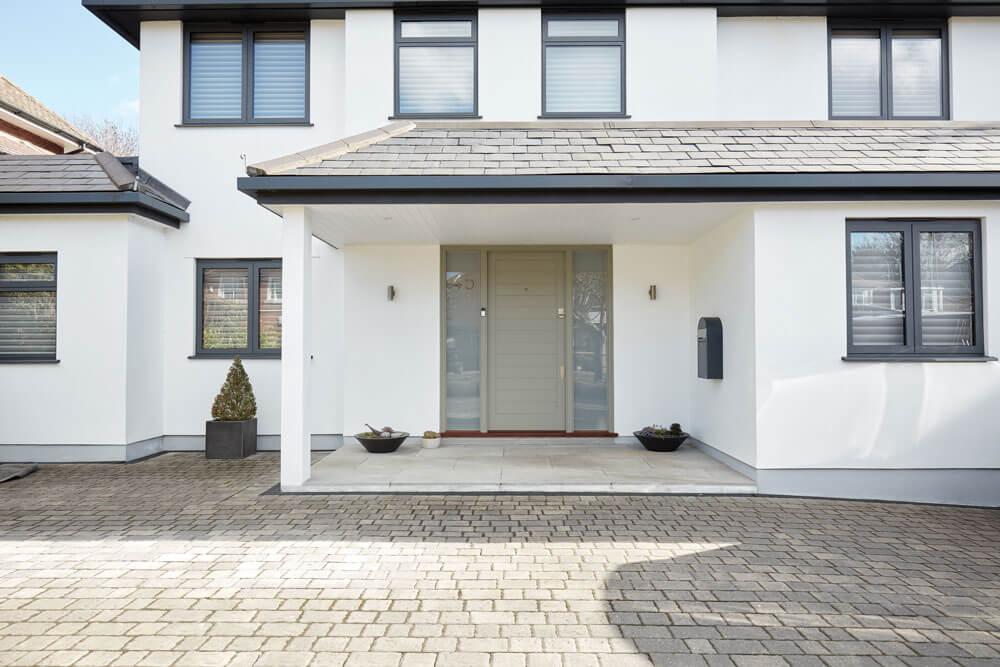
Super high level my house should look something like the below. The pictured house doesn't seem to have external downpipes. I won't go that far but I am thinking to put square white downpipes in strategic positions to be as unobtrusive as possible. My questions: 1/ Are square downpipes a good idea in the first place? Do they have downsides I don't expect? Kinda feels gunk might accumulate in the pointy corners? 2/ Material? As noted I'd want them to be the same color as my render but from that point on I don't really care. Is it even doable to get a color close enough? Would you put the same render on the pipe? Or just go for white and hope that it doesn't stand out too much from the fancyschmancy off-white render color 3/ Positions? If I can I guess I'd put them in the house corner, flush with the front (and back) wall so the house looks slightly wider? Bad idea?
-
I'm assuming that it's ideal to have the roof tile colour closely match the colour a PV panel has. Monocrystalline is black with a blueish tint? Anyone have suggestions for a decent tile brand/type that matches PVs closely?
-
Of course - I mean I wouldn't be shocked if it existed for the ultra rich - but not practical for mere mortals I'm sure.
-
Yeah I heard that. Ha, as per usual. I just got a quote from a grower that they would be willing to deliver and plant a 10m wide, 2m tall, 1m deep laurel hedge for about 900quid which is a pretty good baseline for me. But indeed yew seems to be better. (although I do think laurel is prettier, it feels more like a 'forest') Maybe we can get some grower (budget...?) to grow laurel between glass plates or something so it sticks to 50cm?
-
As the subject says. But more detail: - Year long cover - possible to make/keep thin - I don't want to sacrifice more of my small garden than I have to, so if I can have 500mm thick and 2m tall yet still not see-through that would be amazing. - Easy to maintain (at least - won't die too quickly in frost or prolonged heat) - Can grow up to 2m, ideally quickly-ish - No other negatives known, for example some plants drain a LOT of water and actually cause concern for structural engineers if they dry out the clay etc - Anything else I should care about? Smell? Cleanup (does it shed?) Pollen? My current shortlist is - Laurel - English Yew But not even sure if either actually hits some or most of my criteria!
-
OK, I guess it sounded good on paper, but not worth it. EIther a proper basement (meaning 5x5m in my case) or none at all. Probably can't afford the proper one - seems like the cheapest option is 50,000 over here.
-
Anyone? Would there be meaningful benefit to create more like a 'wine cellar' style basement box, or would it be more sensible to either do no basement, or a 'proper'ish one?
-
But, you are all talking about 'standard basements' - is the benefit of a "crawlspace-y" basement not worth it? Thinking 1m50 effective ceiling height would fit most plant, installation will be *somewhat* awkward but.
-
My situation: I have PP approved for new build, 25m2 basement middle of plot, and soil analysis says I have 'good ground' (standard clay, no need for unusual structures), but given how much space I have in the house already, I don't really need the extra 25m2 for outsized price/sqm. But. I'm now told a basement might be a quite elegant way to store plant, I have a bunch of smart home, networking racks, water cylinder perhaps etc. Yes you can stash the things in various spots but perhaps it's nicer to have a central plant room. My thought: rather than a full basement, (almost) livable room, needs to meet tons of regs etc.. can I not build a "4x4x1m50 box" - so something absolutely not suitable for living - no regs to meet - but that can indeed store most plant, build everything 5cm off the floor just in case, simple sump pump for emergencies and hey ho?
-

Size and layout of your networking cupboard?
puntloos replied to puntloos's topic in Consumer Units, RCDs, MCBOs
Nice! Thank you so much. qq:, you said your AV people wanted 800mm .. can you expand somewhat? Which things are actually that deep? Also - do you mean 800mm actual space, or is the outside of your closet that big? (what are your internal, vs external dimensions of the box?) -
Size and layout of your networking cupboard?
puntloos replied to puntloos's topic in Consumer Units, RCDs, MCBOs
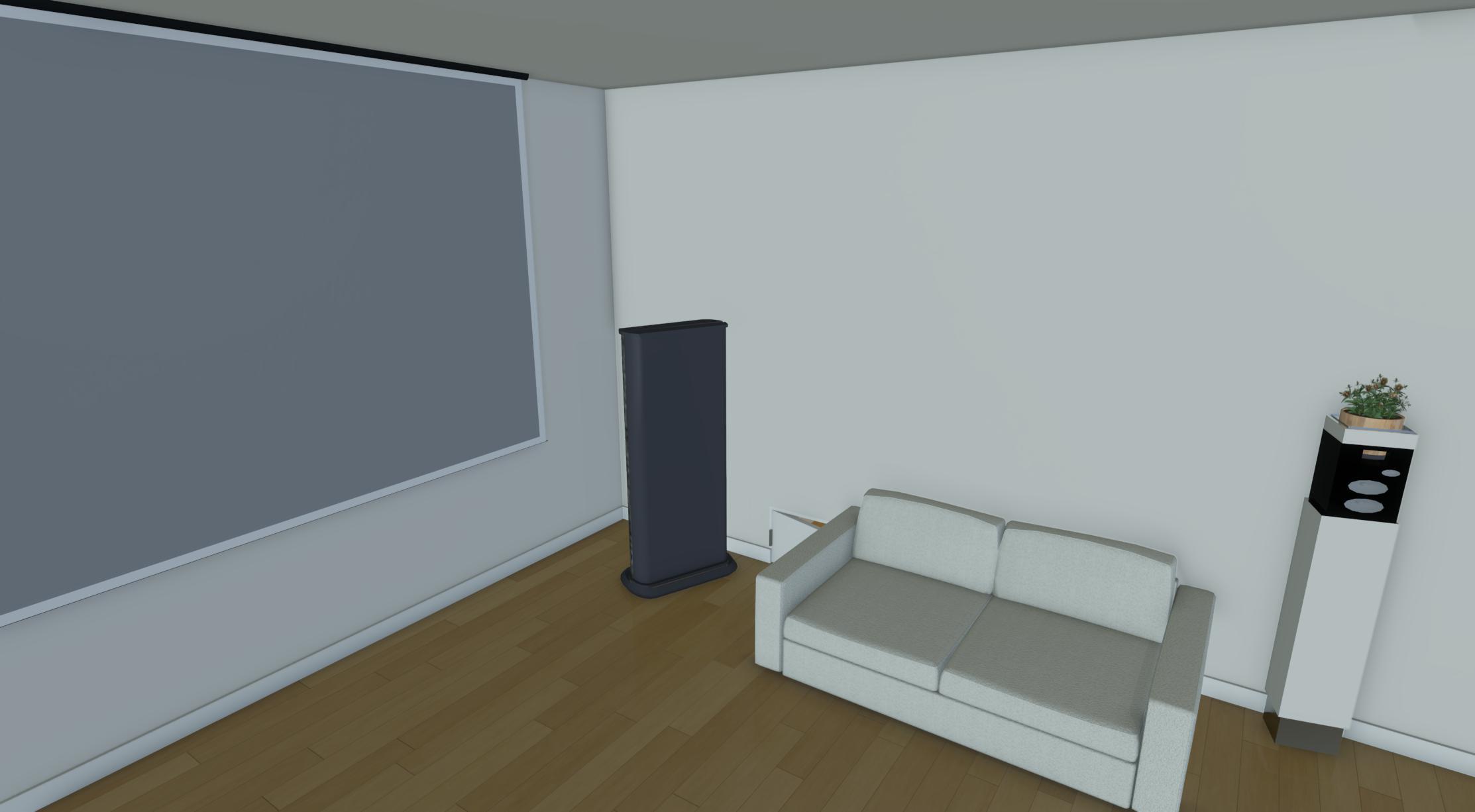
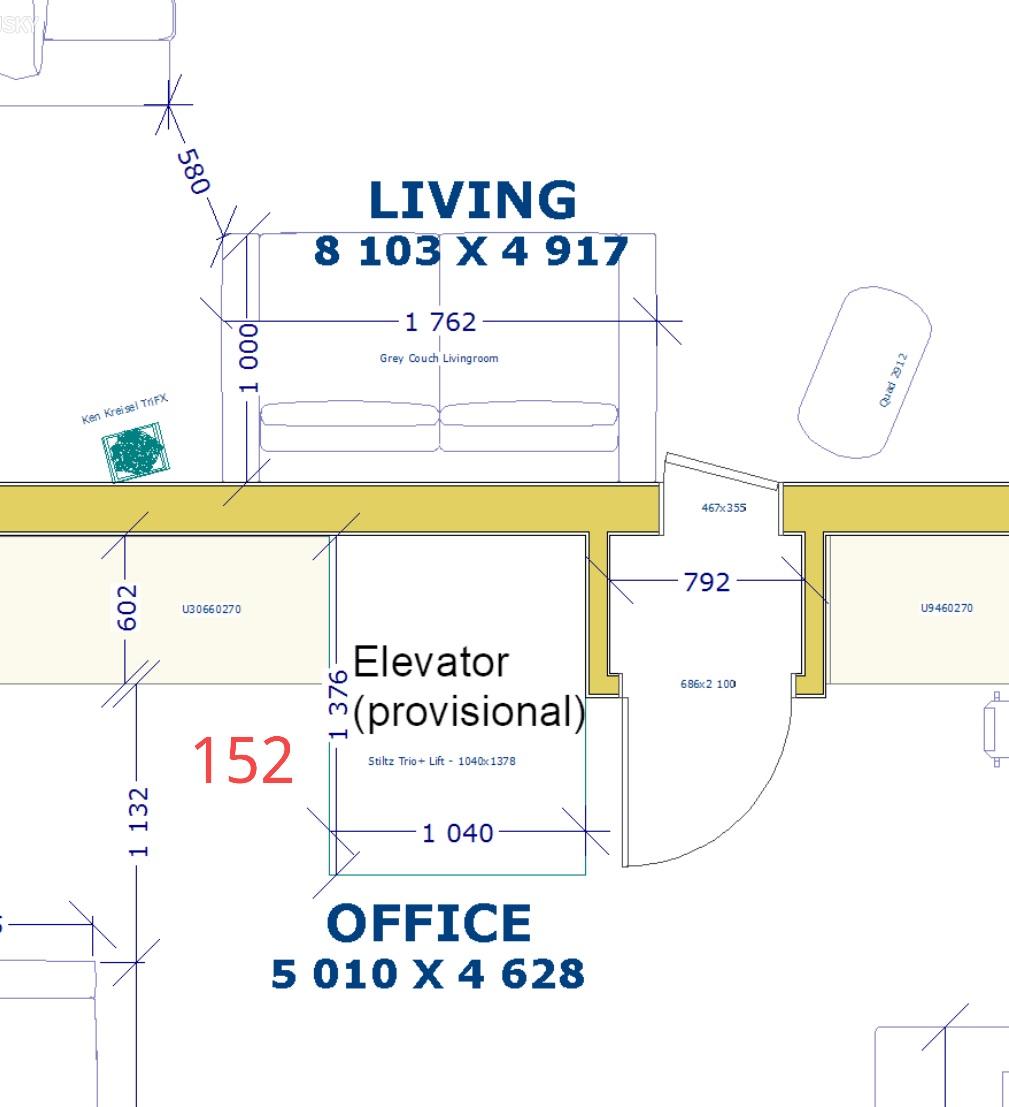
@jothVentilation is going to be crucial, that much is clear. Although, I am somewhat surprised that MVHR can't handle it because in the kitchen we have 1500-3000W burners generating theoretically much more heat. Much larger space of course but presumably still the same amount of heat that has to be dealt with? Are these storage racks typically open at the bottom, and exhausted at the top? Yes I'm still trying to figure out how to keep things both accessible, not moving *too* much. The pivot looks cool but the flexing point is important. My challenge is that aesthetically, (and you can now revoke my nerd credentials) I want as little network/AV gear to be seen as possible. My current design literally had a teensy hidden 'door' peeking into the livingroom. I think I might have to create a full door, but it would need to be as hidden as possible in the livingroom. What are the best type of hidden doors here? Or does it work better to not be 'embarassed' about a door?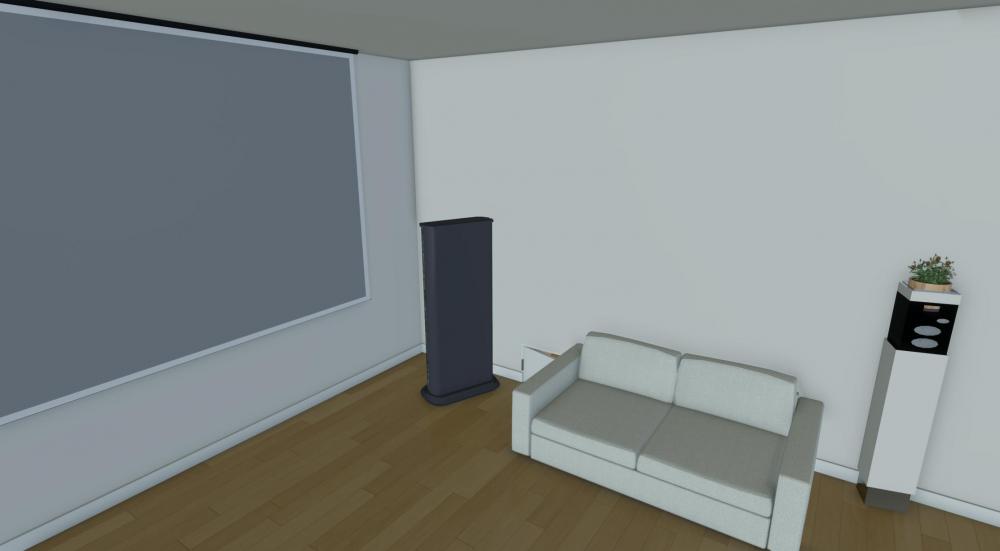
-
Size and layout of your networking cupboard?
puntloos replied to puntloos's topic in Consumer Units, RCDs, MCBOs
So you have a full-height door into the livingroom so you can access your AV stuff- do I have that right? My plan for now really is more a tiny hatch in the living room (less "jarring" than a big door).. The hatch only really needs some minor access to the front panel of the main amplifier, and a guide for my VR headset to pass through Very cool. Do you by any chance have any pictures for me? Pretty nice! Will consider the right one, maybe the pullout methods is somewhat easier, and at the end of the day it is 'install once, and only minor mods since' - it doesn't have to be ultra-easy to maintain. -
Block and beam floor buildup for insulation?
puntloos replied to puntloos's topic in Sound Insulation
Why so much thermal insulation though? Between ground and first, is it a major problem for heat to transfer somewhat (I assume the rising air will carry much more?) OK so that's the same as our design If you have a moment I'd love a sketch, yes. -
Block and beam floor buildup for insulation?
puntloos replied to puntloos's topic in Sound Insulation
@Moonshine An update - my architect suggests: 75mm screed with underfloor heating 20mm PIR insulation (this can be a high performance one such as Celotex TB4000) 5mm Regupol resilient layer (acoustic underlay) 150mm beam and block 150mm void 100mm mineral wool insulation 12.5mm SoundBloc plasterboard (you can use two layers for enhanced acoustics) Would that be sensible? Nice, different topic - I've forwarded that to the architect too btw -
Size and layout of your networking cupboard?
puntloos replied to puntloos's topic in Consumer Units, RCDs, MCBOs
Very interesting given that the specs page seems to say something like 60-odd cm width, so if you believe them and build a 60cm wide box you will not be able to open it. I'll go with 75ish cm wide, 60cm deep.. but I just realised it will probably not work for me. What I want is open(ish) on both front and back and I don't think the back is accessible. I like the pivoting forward action but a few devices I actually want to see the front of (in particular - the amplifier needs to face my living room - see attached pic)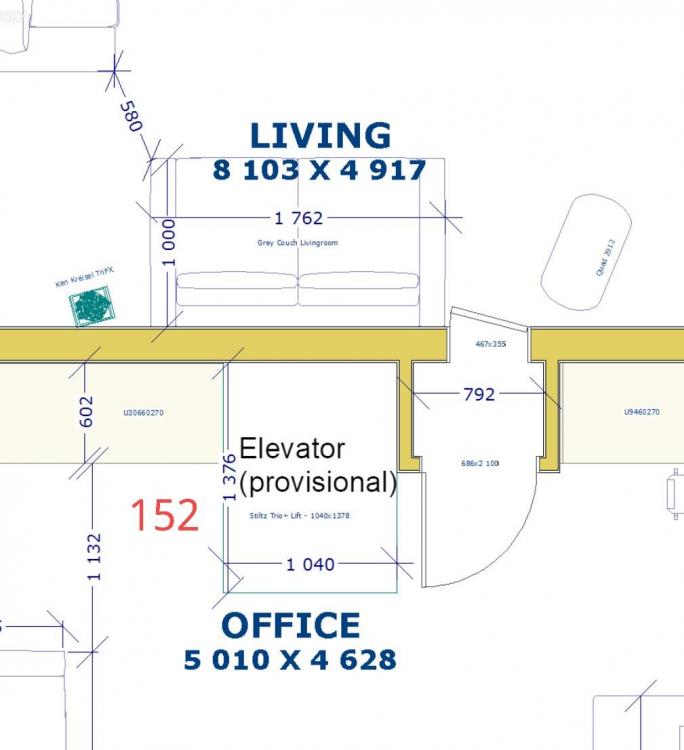
-
Size and layout of your networking cupboard?
puntloos replied to puntloos's topic in Consumer Units, RCDs, MCBOs
https://www.habitech.co.uk/Mid-Atlantic-Wall-Rack-Pivoting-Sectional-Cabinet-Black?quantity=1&uvalues=3 this one? What do you figure is the absolute minimum closet size to be able to use that pivoting action? -
Ah so both UFH (any condensation concerns? How did you pre-empt them hopefully?) as well as heat exchangers? In day to day do they actually meaningfully work? Some people say MVHR is too low power to respond quickly to overheating challenges
-
How did you wire up the cooling bit? Are you just using the UFH or all types of chiller coils?
-
Yep. I believe you mentioned this before, I'm still somewhat struck by how 'hard' it is, but I believe you said it's more a regulatory thing than technology. I suppose it does add a lot of potential failure points if people mess about. Still just a couple of fan coils in the loft might work somehow. But does the ASHP generate water that cold? I suppose the switch only has to happen twice a year or perhaps 4-6 times in dire need, but still, weird tha
-
Speaking on the subject of cooling, some people handwave it away saying that you can just 'reverse' the ASHP/GSHP (it's more a rerouting of pipes) and it will pump chilled water. The big issue as I understand it, is condensation. Some people told me that with ASHP-level water, which isn't super cold, it's actually not an issue. Some others insist that some cold water coolers might be the better approach. more detail:
-
Wow tons of discussion, thank you all. Some thoughts: Budget> in my area, and assuming I can get RHI, the raw price difference isn't huge. Interesting point about refreshing the brine and maybe antifreeze. Need to look into running cost somewhat Running out of heat to draw> Strange! I'm somewhat surprised that drawing heat out will be a problem, wouldn't "balancing it out" in the summer not work? I've certainly heard that the london underground slowly heating up so ineed the idea in principle doesn't sound crazy. Slinky> One installer I spoke about said the slinky wasn't great but 'strings' were better. I don't know what the difference is really. Also, how deep do these slinkies lie? I have a small kid, if he can dig it up I'm sure one day we'll be out of heat. But also I guess what about trees that over the years start to crowd out the string? Gas> eh, I don't think it's a good enough option to really care about. Yes it's cheaper but it costs the environment much more so doesn't seem good to install anymore (if you have viable other options, of course) Self Install> I know this is buildhub but not something I personally dare attempt. Perhaps I can manage (no) but even so I wouldn't want to be responsible if anything goes wrong or is poorly done. Noise> It all depends. From the Nibe manual it hovers between 32 and 47dB where eg a random fridge I found is 44dB so 'eh', and the outdoor units of ASHPs are definitely somewhat worse. (first random one I found was 40-60dB, so I guess it depends where you can stow it. Size/Location> Again depends on where you have the space you care about, but given my cramped garden and largeish house I am tending towards effectively a standing fridge device you can put anywhere, rather than a huge outdoor device that needs decent clearance from all sides etc etc. What does an interim test do? Any details? Between when and when would you run it?
-
Apologies can't seem to find a topic that goes into this explicitly - maybe I am terrible at searching? But - as the title indicates.. ASHP vs GSHP seems to be less clear than I thought. ASHP: + Cheaper, roughly 16000 minus 10000 RHI funding - 6000 + Easily creates hot water in summer - Large outdoor unit - Some noise - Less efficient in winter when heating is needed most GSHP + More efficient in winter + No ugly outside device +/- medium indoor unit, standing fridge size. - More expensive, roughly 44000 minus 30000 RHI funding = 14000 (includes 2x borehole of 10,000 each) - Hard to install - either digging boreholes or digging up garden for slinky, so might be a dealbreaker Of course the benefits of GSHP over ASHP are not dramatic, so one can certainly argue that for many cases it's perhaps not worth the 8000 quid. Am I missing any major pros/cons for either tech?
-
Yes it'll have to be calculated and perhaps mitigated. I'm not expecting a 100% open standard window, but have built-in blinds or smartglass. curb? kerb? An upstand? - https://www.aspirerooflights.co.uk/2018/12/21/630/ Only works if they can be safely reached I've got the power Why does the curb matter?
-
'worried' is the wrong word, I don't think there's anything structurally harder than normal (pitched or normal walls) but I'd note that typically there are 2 issues with use of such: 1/ cleaning tends to be harder - and self-cleaning glass apparently is expensive but I haven't actually seen any quotes yet - does anyone know a rough ballpark for triple-glazed-but-standard vs triple-glazed-plus-selfcleaning per sqm? 2/ Hard to fight solar gain. So, perhaps you'd want triple-glazed-with-builtin-shutter-and-selfcleaning (which of course is GBP 20,000 per sqm or something.. happy to hear more accurate estimates )