
Great_scot_selfbuild
-
Posts
409 -
Joined
-
Last visited
Everything posted by Great_scot_selfbuild
-
Aerobarrier air tightness product/process
Great_scot_selfbuild replied to thaldine's topic in Heat Insulation
UPDATE: I've already cancelled the AB visit - onwards! Few responses below - thanks for the input. @Andeh I like this summary - thanks. @JohnMo yes, pre-plasterboard. Chasing the number was more just a reflection of my 'completer/finisher and desire to get the figure we aimed for (for myself really). Please to say I agree it isn't worth the cost. @saveasteading All excellent points - I'd been overlooking the potential for the AB substance to degrade over time. @Nickfromwales The AB process involves masking off the windows to avoid it getting anywhere you don't want a residue on, which is also why they very much prefer doing it at the pre-plasterboard / MVHR stage (which we're at). I don't know if they do houses at a later stage, but they certainly prefer not to. @torre The TF contract only relates to the TF, not the windows/doors etc. When I was searching round for the TF supplier I was pleased with Broadaxe's approach which proactively does the test once the build has windows and doors in, and if they're particularly leaky then they tape an airtight membrane (Intello) over them to isolate them from the test (of the TF). I did discuss with them deducting the split amount off the final bill, but understandably they'd outlay it if it meant that we were totally happy from a customer experience, and it would contribute to a high performance result, but not if it was just to accept the 0.64 (which is quite realistically able to fix the 0.04 by isolating the many windows we have. All-round, I'm very happy with the build result. By way of context, their other builds have been comfortably below 0.6 (in the 0.2-0.3 range, so I was just hoping ours may be there - it's not a very standard shape though). I've not had anyone comment on this - no idea if it's actually the case that the calculated volumes differ or not. Thanks Oh my word. Just taken a look at the post - @Captain Scally has done a great job. We are looking at some slightly upmarket gutters, but I think even these are budget compared to the beauties on that bungalow (I'm looking at black aluminium from https://clearambershop.com/collections/aluflow-aluminium-guttering coming in around £1500; ouch... 🫣). -
Beautiful. Great job. Would love to see more pics / details. Excellent guttering.
-
Aerobarrier air tightness product/process
Great_scot_selfbuild replied to thaldine's topic in Heat Insulation
These are all the responses I was hoping for. Now I can afford some guttering 😆 -
Aerobarrier air tightness product/process
Great_scot_selfbuild replied to thaldine's topic in Heat Insulation
Hi All, I'm just about to cancel getting Aerobarrier done and this is just a final check to make sure we're not missing something, as the figures involved are tiny. Situation: Current test result: 0.64 Contracted arrangement with timber frame = 0.6, however there are tiny leaks out of the window frames, sliding doors and velux (velux are by far the worst areas of leaks). The TF company has been brilliant and would be willing to go halves on Aerobarrier to both make sure we're as happy as possible, and helping achieve a well-below 0.6 result (even though it's rather unlikely to be solely down to the TF airtightness). The current performance will get worse(?) 1. There are ducts in the floor that are fully taped and sealed and in reality at the end of the build there are likely to be small leaks in these areas. 2. The air tester stated that at completion, the way the volume is calculated differs from this stage - they will measure each room individually rather than using the outside envelope of the house, therefore the volume of the wall thicknesses and intermediate floor depth will be deducted from the current volume - hence 0.64 of a larger volume will equate to a higher ACH of a smaller volume. 3. I've not yet found any documentation to confirm this - can anyone point me to detail as to how ACH and volume is calculated at initial and final stage of build? Cost: Aerobarrier have quoted c.£4,300 for 304sqm footprint (we'd split the cost with the TF company). Summary: Our thinking is that the £2k+ would go a long way for more benefit elsewhere in our build. Will we notice the performance? Is there a financial benefit to being able to state 'Passivehaus performance level' (without rounding down - 🤣!); we plan to live in the house for 40+yrs so I figure today's passivehaus reference may not be very relevant. -
Week 40 - We’ve moved in!
Great_scot_selfbuild commented on Benpointer's blog entry in Contemporary build in north Dorset
Amazing quality of finish - excellent job 👏- 21 comments
-
- 1
-

-
- moving in
- airtightness
- (and 3 more)
-
@Square Feet Excellent work. We bought our plot without planning permission (had been within the family for 30+ yrs) and although we knew a lot about it by word of mouth, we knew there would be a challenge getting planning and so I also did the same as you. Couple of things I learned along the way during a lengthy planning journey were: (Although we’re in England, the principle of these will still apply) 1. Read the building regulations early - ‘You can get planning permission for something that you can’t build’; a passing comment by one of the architects we spoke to mentioned this in relation to fire access and it made a big difference to how we approached the planning and design. I was repeatedly disappointed in the consideration of ‘buildability’ by the architect (and I’m seeing the same being experienced by a neighbour with a different architect). 2. We got all the services drawings in advance (for free from the utilities company where we are - took a lot of effort not to be steered towards all the companies that charge for this). 3. We got the land deeds for all the surrounding plots - this was so we could see their covenants and understand the comparison against our own. 4. We carefully planned how we would engage the neighbours - doing this proactively before even submitting planning was key to us now having a very positive support from them all. It’s not been a perfectly smooth journey, but it gave us a starting point where they know we’ll keep them informed early and transparently. If I was buying in an unfamiliar location then it would very much depend on the specific circumstances as to whether it would be good to approach them before making an offer - especially if any permission would depend on agreements in place. In terms of de-risking, it could make sense, but would also depend on whether you’re building for yourself or as a development - their response may be very different. It’s all a risk, but just needs scrutinising. Perhaps find someone who would check your logic and offer you a different opinion. The stage you’re at (and pre-planning approval) was the most frustrating for me, as so much of it is out of your control. Set your expectations low, but maintain your optimism and keep working the problem. Every piece of land once started with no permission. Good luck.
- 23 comments
-
- 1
-

-
- due diligence
- land registry
- (and 4 more)
-
Architects - Hmphhh
Great_scot_selfbuild replied to Mulberry View's topic in General Self Build & DIY Discussion
We had an experience like this with a PM early on. Didn’t last long and we chalked it up to experience and was so relieved when I told them we were going to draw a line there. Reading this thread fells strangely familiar and I really hope it starts to improve for you. Our architect also proposed zinc standing seam at the design stage. We ended up going for corrugated steel (galvanised, plasticol-coated) sourced from an agricultural supplier - really pleased with the product. When it came to the flat roof detail from the architectural technician (single ply membrane) I’m so pleased I was checking everything - spotted some significant issues that were thankfully caught early enough. I thought that would be it - the flat roof build would be simple. How wrong I was. The small flat roof took longer to install than the timber frame company took to put the whole house, roof and internal walls up. I had an insight into this one day when I happened to be on site doing some design checking / thinking for service runs inside. Weather was due to turn at midday; they hung around in the van most of the morning, started moving material up around 11 and then. When a few drops of rain started (as forecast) at 12 they were gone in a flash! Thankfully The ply seemed to have been installed to a good standard, but because of the time taken, there was a period of trapped water that briefly gave concern before we could get access and clear the issue. Quality of workmanship, and attention to detail has been a frequent area we’ve battled. We’ve had issues with our SE and piling company, and as frustrated as I get sometimes, I always try to have a conversation before sending emails and pair down how I get across my concerns (even though on more than one occasion I’ve been proven to have been right and could have been more blunt - I can tell from your posts that you’ve tried doing it exactly the same and have been let down). Some of the best advice I had from a friend was that, unfortunately, you have to ‘be that guy’ and really micro-manage these projects. This is the opposite of what I experience in my day job where we actively seek to empower and set the conditions for people to know what they’re doing. -
One of those simple /mundane questions that doesn’t normally generate a post… I’m mixing up cementitious grout in manageable batches as it has a short working time. When I’m left with a small-ish amount starting to congeal in the tub, where are you disposing of it/cleaning out the tub before starting the next batch?
-
Insect mesh and air gap for timber cladding?
Great_scot_selfbuild replied to Great_scot_selfbuild's topic in General Joinery
It is double - just hard to see with the shadow under the sill. Yes - unfortunately the battens are the wrong spacing so this needs correcting first 😭… I have the same concern but hadn’t thought about it in this way - really appreciate the nudge. How did you do your fire stop above windows in this case.? I have always expected to need intumescent strips in some areas for the fire stopping, such as the line around ground floor ceiling, but timber for the vertical sides of windows for instance. Thanks 👍🏻 -
Yes (mentioned in first post) - there's a drain, but it will be plugged to retain the airtightness. Valid point about any connection could spring a leak, but only one room has a tank ready-filled with 300L. Good to hear I'm over-thinking it, but a sodden ground floor with timber walls was my worry.
-
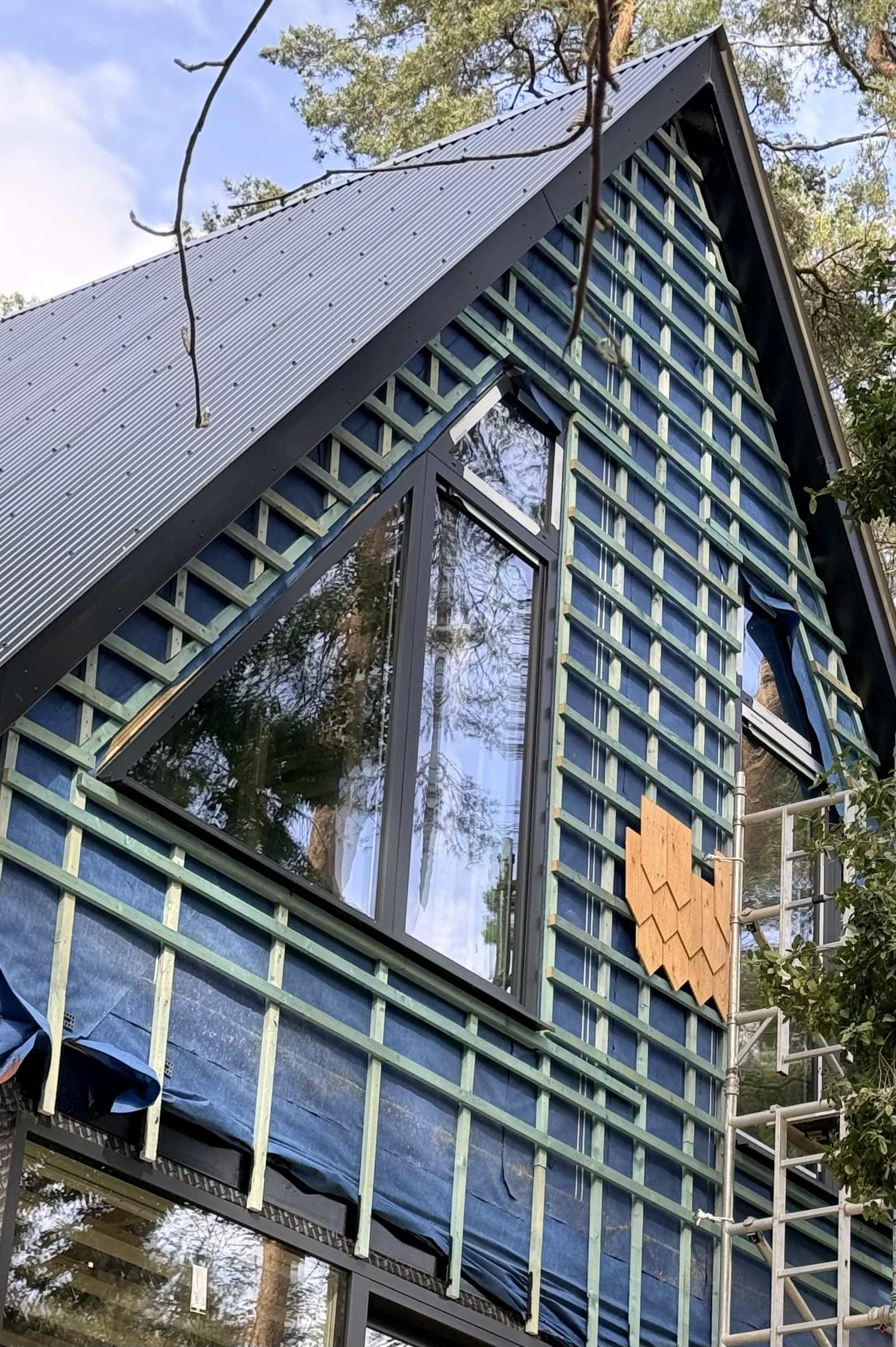
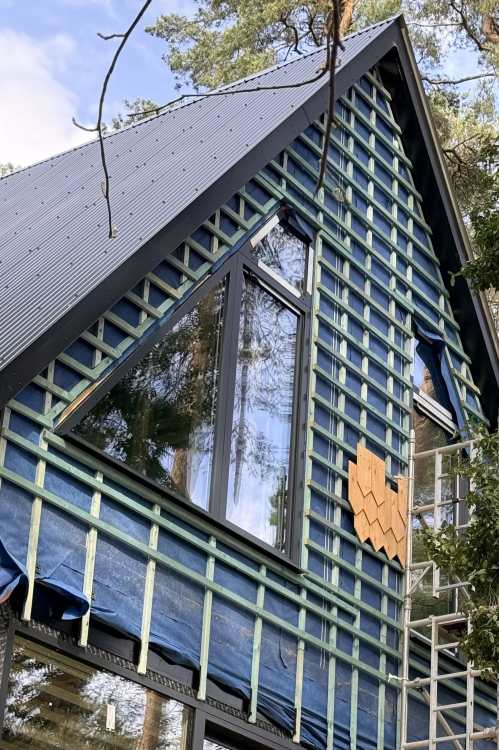
Question for those who have installed (or had installed) timber cladding… I know we need an airflow behind the cladding, and because we need to fit our shingles onto horizontal battens, we have vertical battens followed by counter-battens. I’ve 2 questions: How large does the gap at the bottom and top need to be? What have you used for the insect mesh at the bottom and top? Does it matter if the top and bottom of windows doesn’t have a gap? Around the windows, our builder has installed double-thickness battens, which is good for the fire stopping, but limits airflow - however, because we have counter-battens, there is still airflow laterally and the windows don’t cover the full wall, so does this still meet the requirement?
-
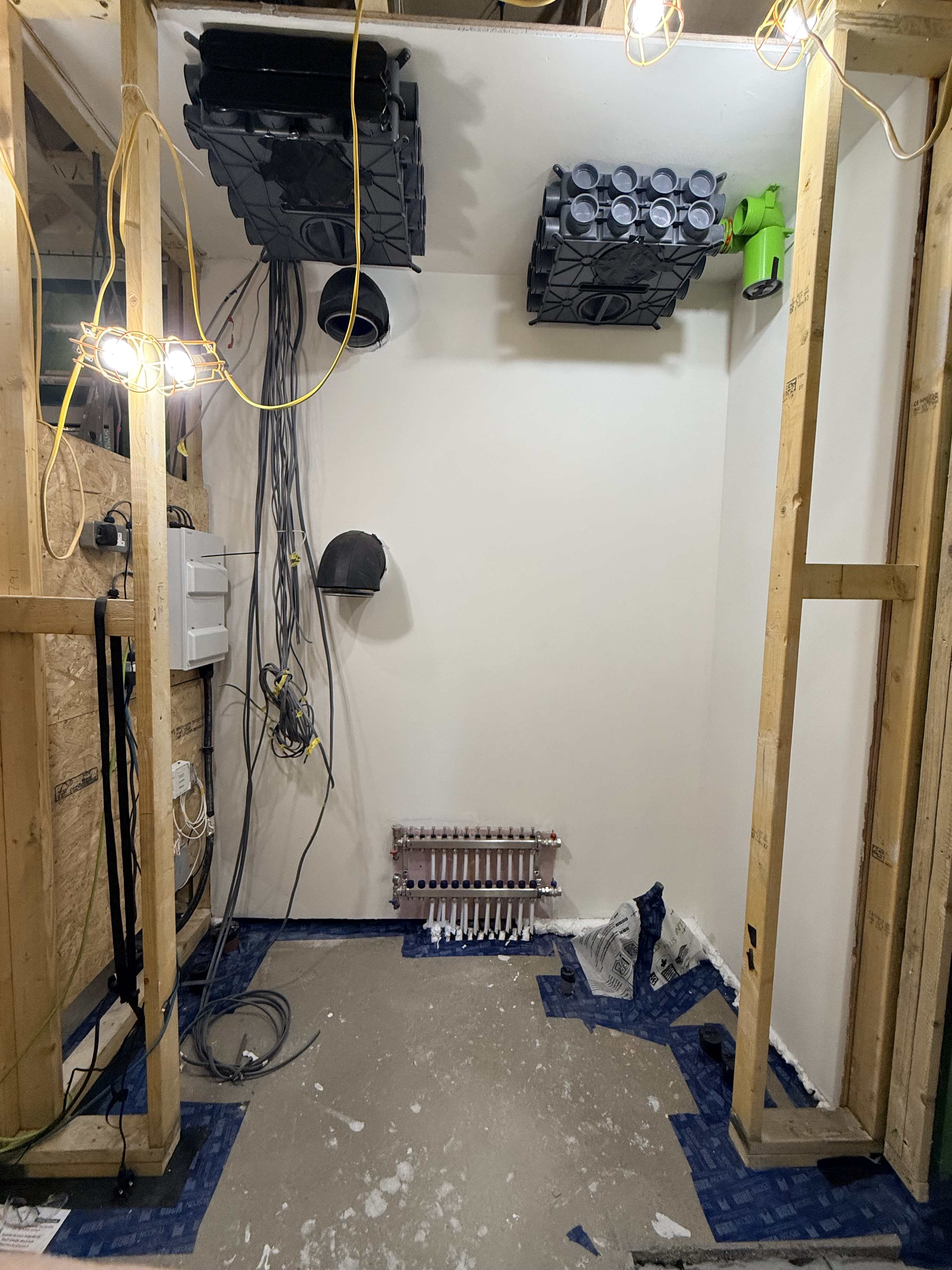
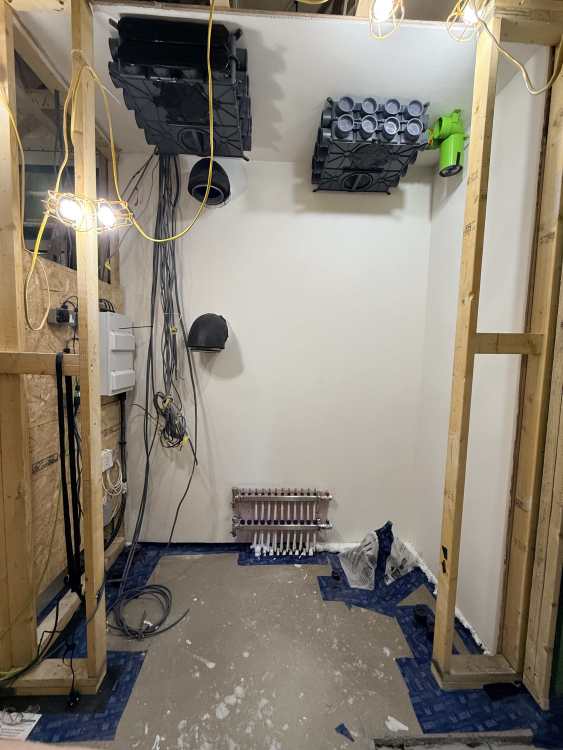
We've a very airtight build (timber frame) and the plant room has a dry screed floor. I want to tank the plant room so the if the DHW cylinder leaked / flooded, then the plant room could hold the 300 L long enough for me to pull the plug out of the drain (before laying the floor I installed a pipe that it could drain through); the floor of the house is suspended off the ground, so there's no issue with where the water then drains to btw. The photo shows the plant room floor with the various ducting and airtight tape. I need the tanking area to be 150mm deep to hold 300L, and was going to batten off the bottom of the door area to create a step-over into the plant room. What would you recommend for tanking the plant room floor and up the sides of the walls to the 150mm height? Any other comments / advice welcome (is this overkill? I'm perhaps being over-precautious about having a timber framed house and not wanting to risk anything significant). TIA
-
Outside tap fitting
Great_scot_selfbuild replied to Great_scot_selfbuild's topic in General Plumbing
Thanks all - really appreciate the advice. BH win again! -
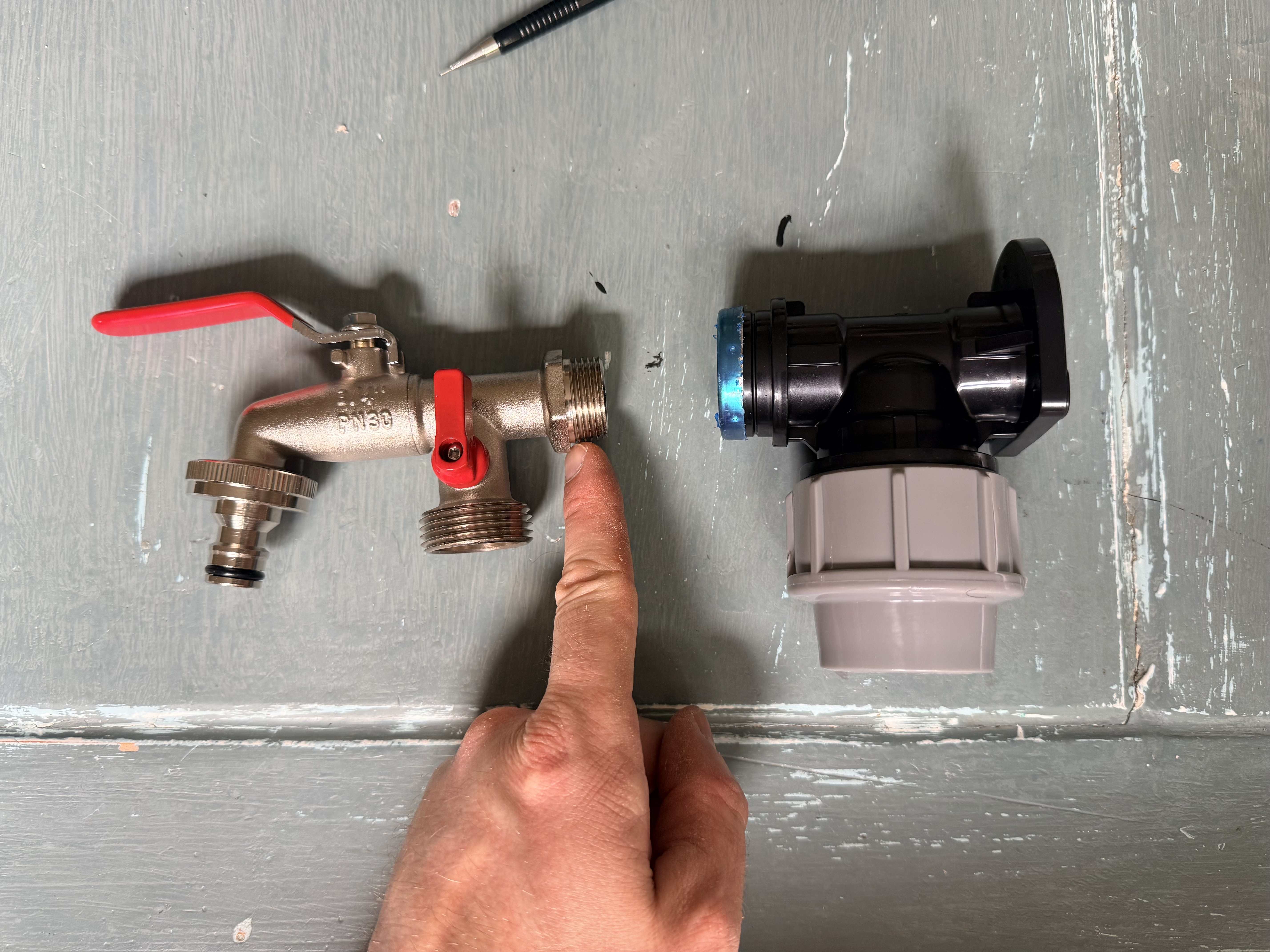
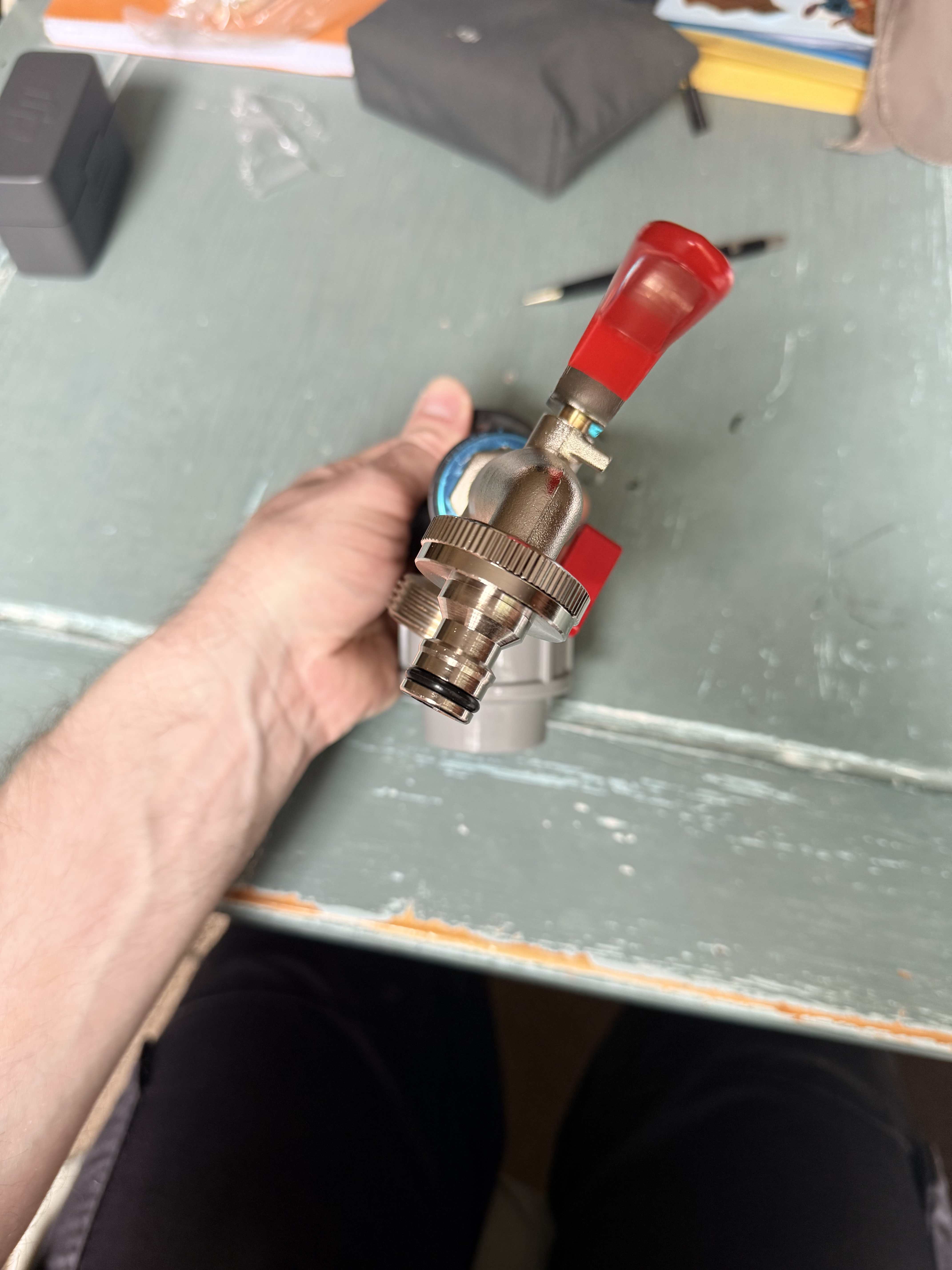
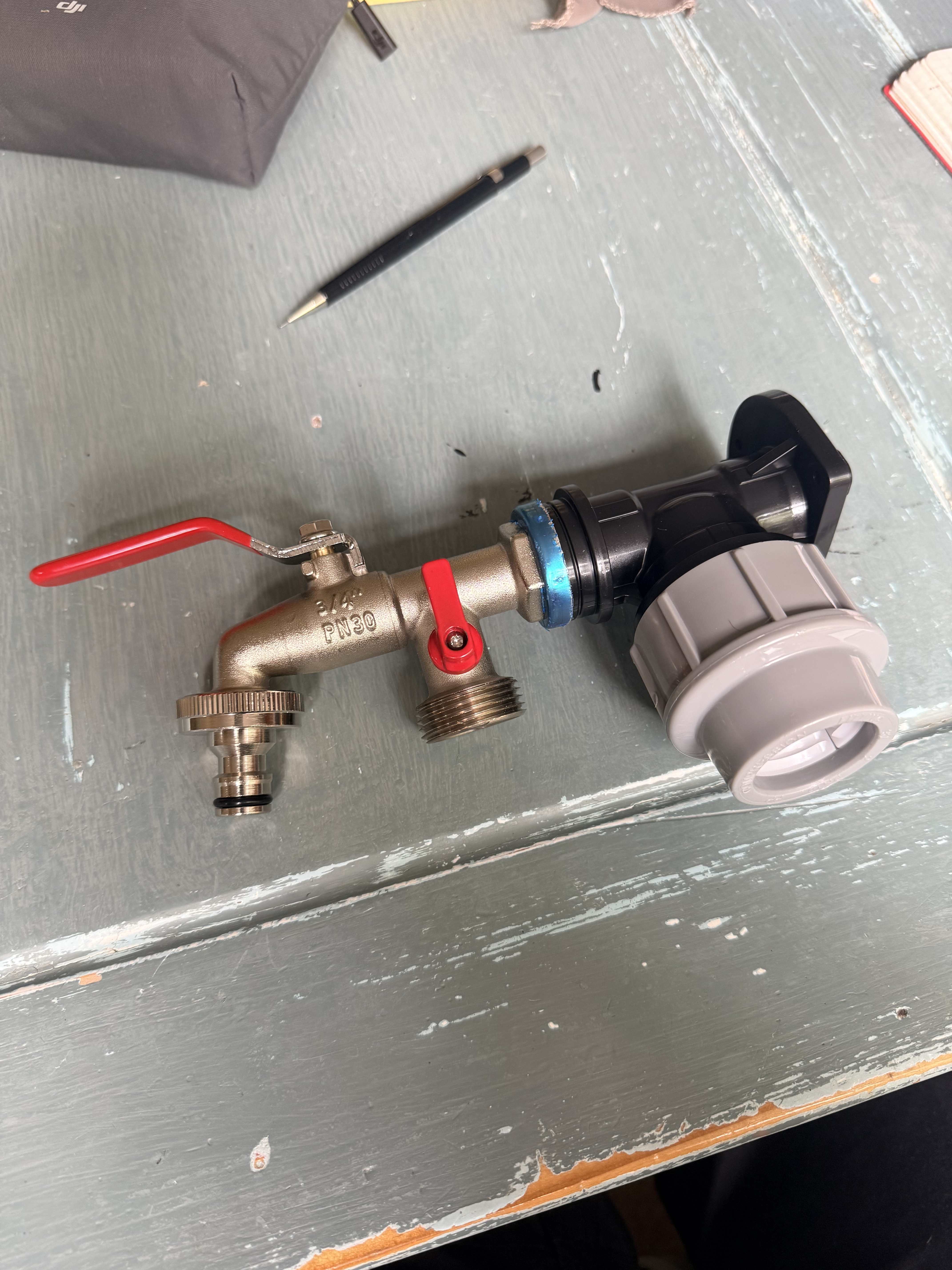
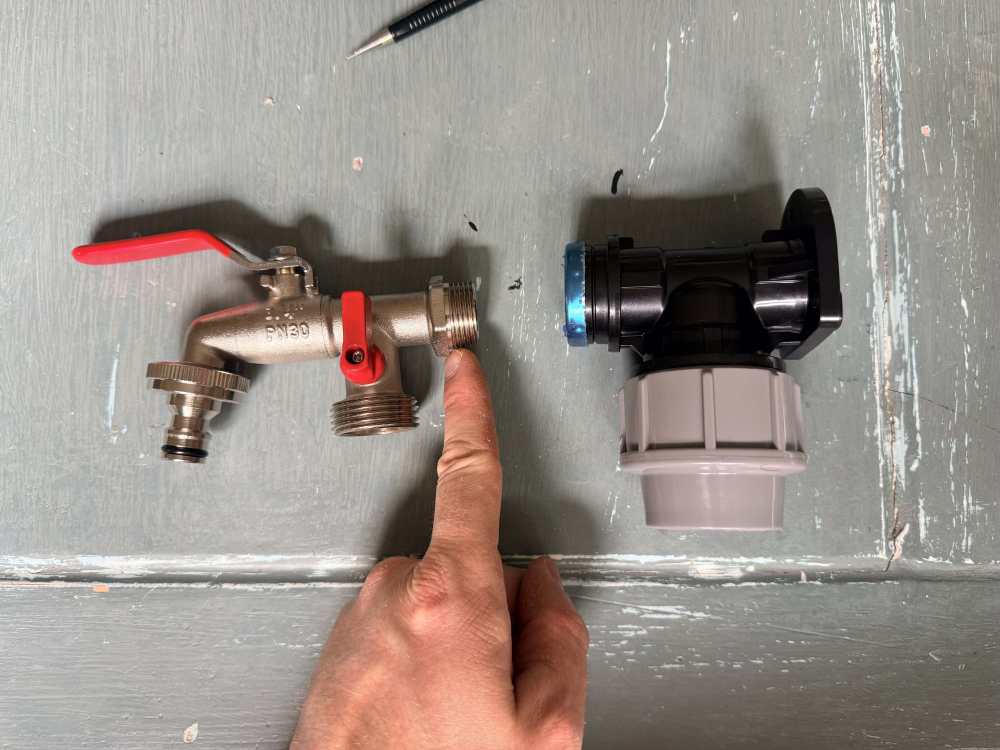
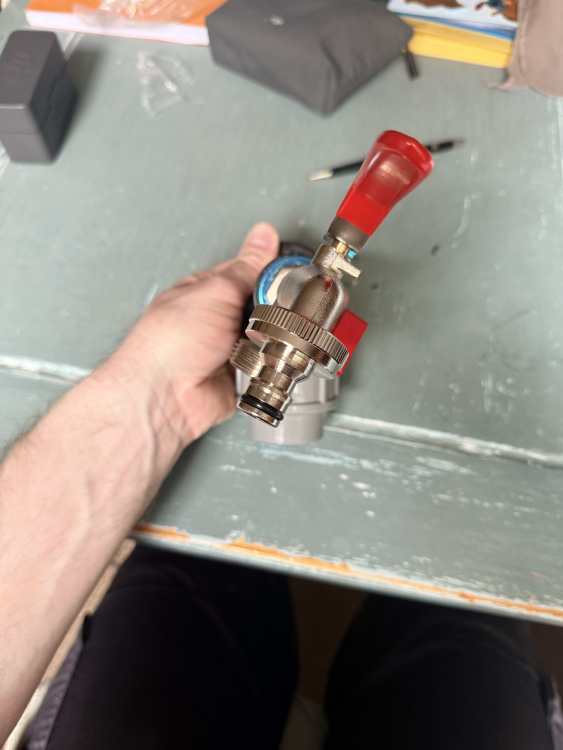
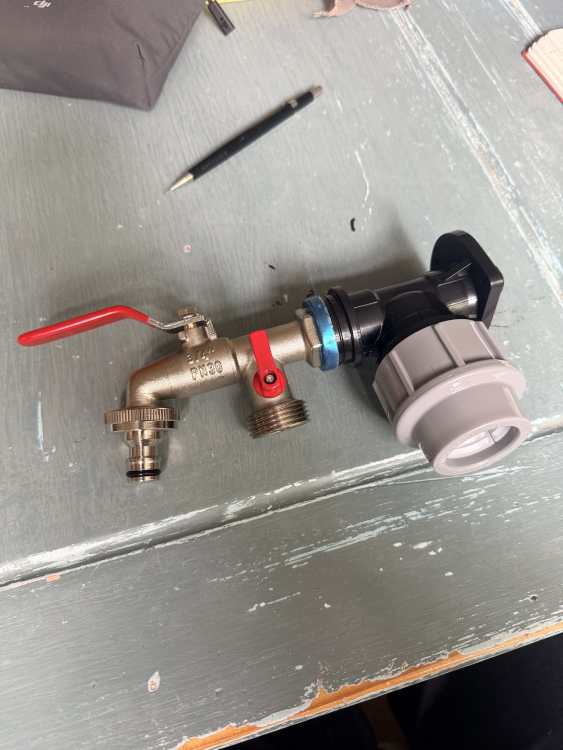
Basic question - should there be a rubber washer / seal on this connection on the tap to the HDPE connection (would have thought it would be supplied). Thread dia is 25mm and as the photo shows, even when just nipped up, it’s off centre.
-
No, but choosing which battles to fight is a skill. Everything about self-build is a marathon rather than a sprint I'm finding. In the scheme of things, this is a small issue tbh. There are plenty of other aspects that wind me up far more!
-
@Spinny good luck - you deserve some after dealing with all that 💪
-
Hmmm... I'm looking to re-use the wood rather than the nails though 🤣
-
Easy to say, less easy to implement, especially if I want to maintain a working relationship for the other bit that I can't do myself.
-
Have considered this, and even did the maths to work out the most efficient spacing, but it's all a compromise somewhere. That will incur cost as well as time (not just the install time, but it means the exact height of the shingle fixing will vary from row to row, so the measuring and checking each time has a greater likelihood of being messed up.
-
The horizontal battens have been installed for our shingle cladding at the wrong spacing. After much soul-searching, I am seriously looking at removing, de-nailing (if that’s a word), and then re-fitting at the correct spacing. Grateful for any tips.
-
By coincidence I came across this too, and then found this useful (clear) YouTube channel which explained how the 2.5mm ring came about from a post-war think tank assessment of how large scale housing could be done whilst limiting the amount of copper needed (well I found it interesting…). This video explained the ring vs radial importance:
-
1 or 2 mvhr units?
Great_scot_selfbuild replied to lizzieuk1's topic in Mechanical Ventilation with Heat Recovery (MVHR)
@lizzieuk1 I’ve had a great service from Pete at CVC systems with a big discount on my brink system (design & supply only). Huge price difference to the response I had from PaulHeatRecovery. https://cvcsystems.co.uk good luck! -
probably end up being about 30-40mm. Foundation is a suspended beam & block floor, DPM, 150mm PIR, Vapour membrane, UFH, slip membrane.
-
@torre The vapour membrane is below the pipes, the slip membrane on top.
-
We’re covering a small area of UFH (which was too shallow to lay the dry screed) with self levelling compound. In searching about SLC I’ve seen mention of a primer - is this always needed? The SLC will be onto a slip membrane which is over the pipes. This is the stuff I’ve been recommended to use.