
Great_scot_selfbuild
-
Posts
409 -
Joined
-
Last visited
Everything posted by Great_scot_selfbuild
-
I like it. This matches my preference for always offering a solution to a design that I can make work, rather than someone else coming to me with an unworkable one. Do you have any recommendation on product? I need it to fit behind the counter battens (I have a 25mm gap)
-
I could write you the response I'd get from my BCO: It's for your Principal Designer to define where it goes, I just check it's where they say it needs to be. (I'm assuming this is now the common approach to all BC questions?)
-
I sometimes wonder why I bothered nominating a Principal Designer and Principal Contractor. The PD hasn't made clear on the drawings where fire stops are needed (though I've done my reading and understand the principles), and the PC hasn't asked about them before rushing in to install the battens for cladding. I've read this helpful thread - (surprised I couldn't find many more tbh) In short: I'm going to have to notch out of the battens space to install fire stops around each window and at the first floor level. Our build is, fortunately it seems, a Larsen truss wall filled with cellulose, which leads straight into the roof trusses (without a break or void), which appears to solve that worry. We have shingles fitted to counter battens and so only have a 25mm gap to be able to fit a fire stop in line with the vertical battens (or cutting across them for the horizontal break between ground and first floor). I believe I need fire stops around each window, at the break between ground and first floor, and literally just above this, at the top of cladding under the eaves. Inside, because we have a warm roof on the flat roof, I expect we need a fire stop above the wall where it meets the flat roof joists - but this will involve cutting it to fit the small gaps between the joists. What I need advice on is: What fire stop material have people used behind a timber cladding?
-
@HanleeHouse did you ever get any resolution to this (from elsewhere) I'm just about to post on the same topic and was doing my due diligence of seeing what other threads had been started - very surprised to see so few threads on this topic. I like the design btw!
-
This is an excellent suggestion (just the idea I was missing!) - to add to it, I'm thinking that rather than jigsawing, the pilot hole could be used with the pilot drill on a hole saw.
-
@Iceverge This is the space I'm in atm, it will remove an inch of useable space from each wall, which on the end walls would bring it down to 888mm wide. My main specific challenge from a sequencing perspective is the following: Timber frame is a Larsen-truss wall, from the outside: Breather membrane 12mm medite vent board 350mm cellulose insulation 12mm Pro passive board (assuming I keep the service void) 25mm batten 18mm hardwood ply (fermacel/similar?) @crispy_wafer @JohnMo @G and J @MikeSharp01 @Russell griffiths @saveasteading So, I need to drill/core holes for the MVHR supply & extract ducts (~210mm dia hole). I've been pondering the challenge of drilling all the layers - I don't trust doing this by measuring, so I'd want the ply in place first, then I figure I would: Drill the ply and pro passive board Remove the ply so I have a (little closer access to reach through to drill to the outer medite-vent board. Once the duct is installed, I can then seal around the pro passive board, then re-fit the ply over the top and then think about painting / finishing. QUESTION: How do I drill through the propulsive board and then bridge the 350mm gap to the outer board? (for info, it is highly likely the insulation will have been installed already, though I'm going to see if I can delay this)
-
@Russell griffiths This has given me pause for thought - although I would like it a nice painted, clean room, the practicalities of slowing everything down for this room (when I actually like the natural finish of the hardwood ply) is something I'm weighing up. I also already realise I've built the garage before the house and if I tell my wife I'm going to board and paint the plant room, before we've guaranteed the kitchen and other family bits of the house, I may not survive the build! 🤣 Do you have any photos of your plant room for inspiration please?
-
Week 15 - UFH, screed, and render base coat
Great_scot_selfbuild commented on Benpointer's blog entry in Contemporary build in north Dorset
@Benpointer those windows look great (love the colour too). -
Was this recently? When you say you spent £7500, was that on materials, or the plastering?
-
Great to know. @NestorI think I've been reminded that we will need more light and so need to paint our ceiling. That said, I really do like what you've done. What fixings did you use (I can't see any trace of a pattern of fixing points - lovely job!
-
@Russell griffithsI hadn't thought about that detail for window reveals (the walls are really well insulated, but window reveals will naturally be an area of less insulation - really like this prompt. I must start a log somewhere of things I shouldn't forget...
-
Week 15 - UFH, screed, and render base coat
Great_scot_selfbuild commented on Benpointer's blog entry in Contemporary build in north Dorset
@Benpointer thanks - I plan on laying the pipes myself and having someone lay the screed. We're on full cost-saving mode now, having had most of the build so far involve work that I simply couldn't do myself (not if I want to actually get to live in it during my lifetime). -
The intention for plant room is that the 12mm green PPB has 18mm hardwood ply board nailed directly to it, then items will be installed into it, with screws going through both. My main concern is if screws are put in and then later removed (items moved), then how do I maintain the airtightness. All of this is, of course, easy to keep an eye on when I’m doing it myself - my concern is once I have the electrician, plumber and others involved who don’t get the significance of ‘its just a screw’. So, how important is it to fuss over this level of detail - am I right to be so picky? (Possibly my ‘default’ approach 🫣)
-
@ProDave Thank you so much for this suggestion! We had some offcut Medite vent board do the same as it was left to one side. This is absolutely within my ability 😁
-
Useful to be made aware of this sort of detail - TVM. Is sounds like you’re suggesting that all XPS boards are cement-faced, or are you just highlighting the need to check whether they are cement-faced?
-
Thanks - once the battens are in place and give the final radius I was thinking about getting a board to test out options. I hadn’t been aware of the tile backer board for this purpose (just had it recommended for going under electric UFH mats, but wondering if it’s really needed there - that’s a different matter entirely). I’m wondering if the cuts/scoring can be made in the other boards (20mm is very deep).
-
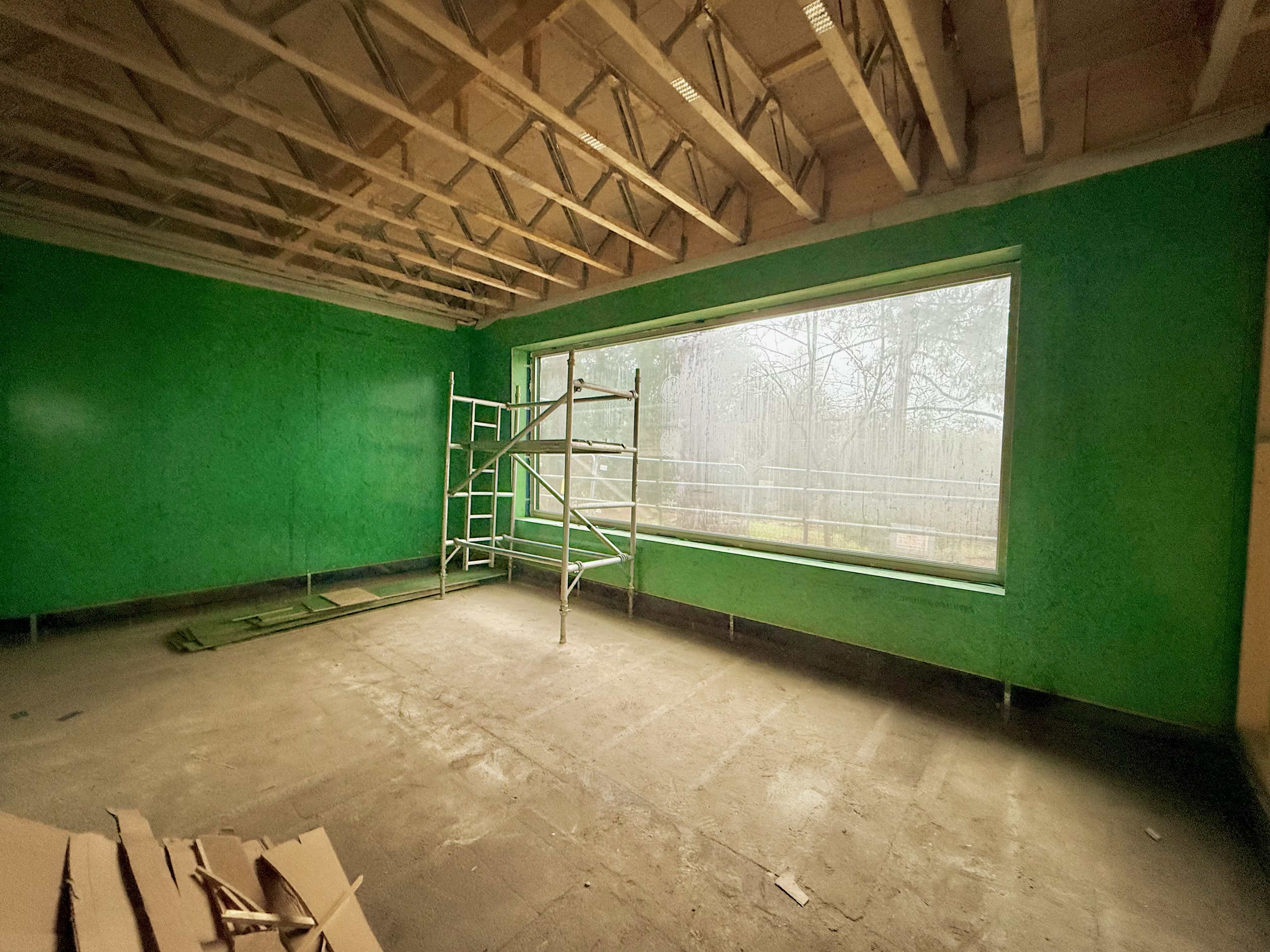
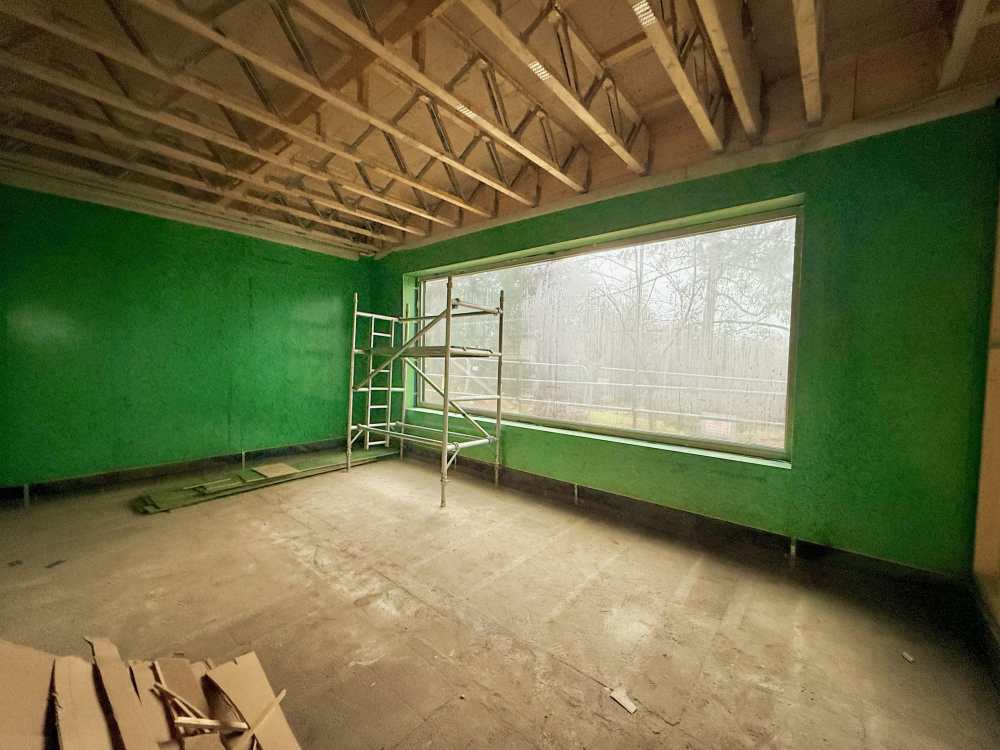
Hopefully I’m overthinking this, but having read about the impact of small gaps in mortar on airtightness I just want to check… Situation: Timber frame build. Internal face of stud wall is Pro Passive Board. Intello airtight membrane used to lap joints and maintain airtight layer where PPB won’t fit. Timber frame company has a proven reputation for achieving better than 0.6ACH. They will install PPB & service battens, that’s where we pick it up from. Plant room: This is the first area where I will be installing 18mm ply throughout to give us a solid fixing for all the equipment that goes in here. I’m thinking that we can do away with the need for a service void here because all the wiring, piping, ducting etc is going to be on show anyway. I’m very keen to see how others have done their plant room fit-out. My questions are: 1. Should I still keep a service void in the plant room? (Why?) 2. When screwing through and into the PPB (which would be the case with/without a service void), this will pierce the airtight green coating on the PPB - will this affect the ACH performance? 3. There will inevitably be cases where screws are put in and then taken out, having gone through into the PPB layer. Will this affect the PPB? How significant can these piercings impact the air tightness performance? Photo for interest. This is ‘the big one’.
-
@Nestor thanks - Ihad been wondering if you went for ply to keep its natural colour, but looks like you’ve painted it. What was the reason for going for the ply? was it the curve? We have a spiral staircase and I’m yet to get to the challenge of working out how to get plasterboard to fit without snapping (one for another day).
-
Week 15 - UFH, screed, and render base coat
Great_scot_selfbuild commented on Benpointer's blog entry in Contemporary build in north Dorset
Just came across this whilst browsing through the blogs - I'm planning our UFH and we'll be having a screed; what is the blue foam surround and is that part of the screeding process, or associated with laying the UFH pipes? I ask because I'm planning on laying the UFH pipes, but having someone in to do the screed. Congrats on your build progress - looks amazing. -
Thanks. You've no idea how happy I am to hear that this amount of sqm to plaster isn't totally off the scale! I've got our builder getting quotes from someone he trusts and does a good job. Although our builder is great, and has been fair with his costs, I'm always nervous when a new sub-contractor comes along to quote and may think 'oh great, a self-builder, they must be loaded' (I really have no idea where some of these people get this idea; some of the builders we quickly discounted were clearly testing the water on their visit to site, saying to expect an average cost of £3-5k/sqm - we didn't go back to them...). Friends have said to expect £20k. I'm trying to manage my expectations. I'm interested in your ceiling of birch plywood (we're having a birch plywood staircase) - would you be able to post some photos please? How did you fix it to the ceiling (are screws visible/a feature)? What about light fittings etc?
-
We've just mapped out the wall areas to calculate the sqm area to be plastered (a time-consuming task we've been putting off tbh!). Well, the answer has come out to be 880sqm - house is 260sqm but with tall ceilings and upstairs in the roof space (this figure hasn't yet had the doors and window areas removed from it, but as an overall ball park figure it gives a figure to work from (noting they all have deep panels around them, plus we need to cater for wastage). I'm looking to fit the plasterboard, and concerned about how costly the plastering would be. A few questions: 1. What sort of plastering cost should I brace myself for? 2. What alternative options are there for achieving a good finish? (just want to make sure I'm aware of all the options) 3. Any tips on fitting plasterboard? (any at all!) Thanks
-
Just came across this whilst searching for plastering costs. Remarkable achievement. I'll be happy if we get close to £2500/sqm. We've made some decent savings along the way, but the combination of material and labour costs is a continual challenge!
-
Fabric and ventilation heat loss calculator
Great_scot_selfbuild replied to Jeremy Harris's topic in Heat Insulation
This has been my approach recently (prompted by this group), but as you experienced, the MCS calculations from a couple of these companies were recommending 14kw!?! This has rather dented my confidence in them. -
Fabric and ventilation heat loss calculator
Great_scot_selfbuild replied to Jeremy Harris's topic in Heat Insulation
@JohnMo I’m loving the summary, but would you mind explaining where you get these numbers from (in particular the flow temp) - treat me as you would a small child, that just about caters for my ‘speed’ of learning this topic 🤣 (or reference the cell row/column). As for the ASHP you’ve identified - TVM! 😍 I can entirely see why people have previously commented about why the MCS grant doesn’t always work out cheaper at all. I may find that I do this myself… now looking into the spec details 😁 -
Fabric and ventilation heat loss calculator
Great_scot_selfbuild replied to Jeremy Harris's topic in Heat Insulation
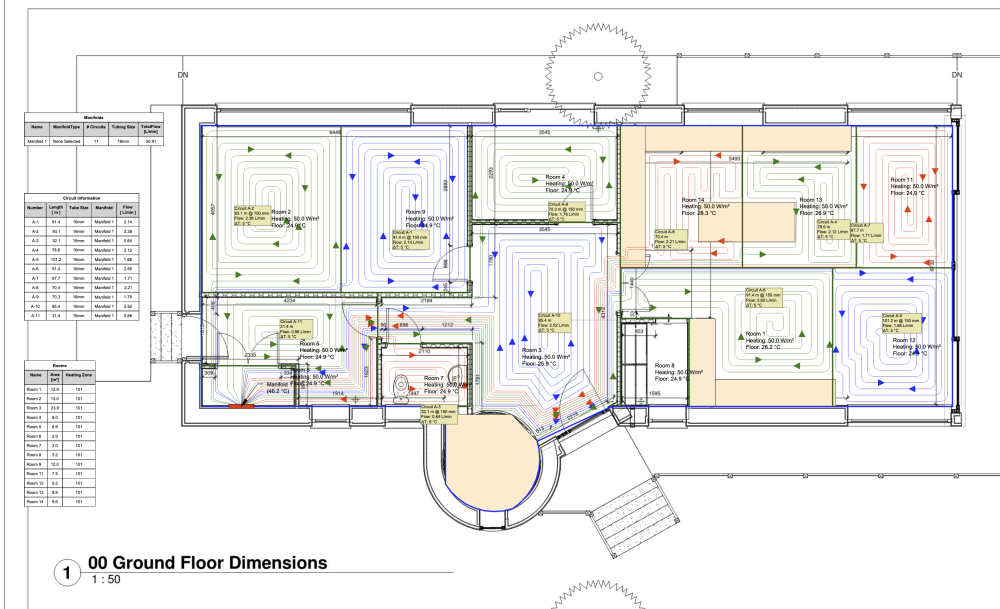
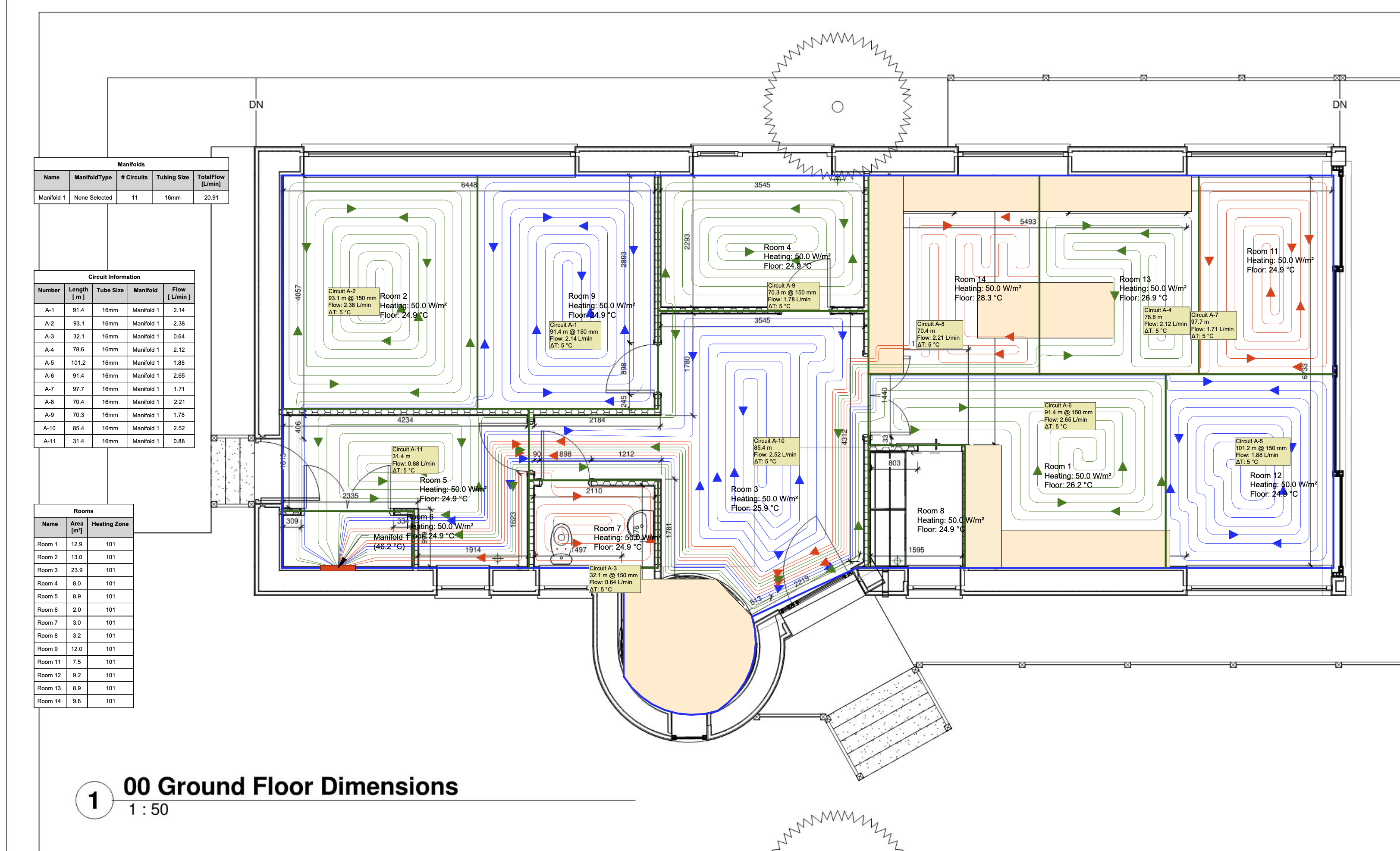
Thanks @JohnMo - really helpful. So, I was thinking that the UFH quote I had for UFH stating 50w/m2 was well out, especially as it had the UFH running at 46 degrees(!), but the following numbers would appear to come out at 50w/m2 if we want the ground floor UFH to meet the whole-house heating load. It just 'feels' high to me based on the thermal performance figures etc. Could someone have a look and see what I'm missing, or if we do indeed need 50w/m2 but at a lower temp? I've revised the figures in my calculator as follows: Target room temp of 20 degrees Under-slab temp to match the OAT of -5 deg (our house is on a frame supported above ground and so beneath the beam & block floor it is OAT) This gives the total heat loss (row 39) as 3156W ...equating to 3156W / 131m2 = 24W/m2 (single floor, therefore 48W/m2 to meet whole-house load) How would the UFH firm get to 46deg as the running temp? (they didn't ask me for heat loss or thermal property values); but more importantly, how do I calculate what temp I need to run it at? However in the second section of the calculator, row 65 averages as 2172W total heat loss (2171 / 131 =16.5W/m2 or 33W/m2 for whole house heat requirement) (for clarification, the UFH plan - based on feedback here actually - is for a single zone across the whole of the ground floor. Expecting to use 16mm pipe at 150mm spacing in a spiral pattern) And so in summary: What figures should I be taking from this to establish the size of ASHP? (noting @JohnMo's answer above about needing to scrutinise the manufacturer's spec sheets to make sure I'm comparing like-with-like) What should the lower and upper modulation / performance values be for it to be able to keep running and be at or close to its optimum CoP? (the more I read, the more I am hell-bent on not over-sizing) Many thanks! 🤞