


junglejim
-
Posts
282 -
Joined
-
Last visited
Everything posted by junglejim
-
Thanks yes will go back to the designer. Looking back at the designs I can’t see any straps specified. I’m wondering if it’s because the panel above the window is so small that it doesn’t need much and is has a structural pocket so the ridge glulam is essentially holding it together… I’d prefer something else though! The main structure is below the window and tied into the side walls and floor so not an issue. Any further advice welcome.
-
Thanks for the suggestions. I’m wondering about taking out the bottom 2” of noggin and then adding a soffit vent underneath. Do you think that would work?
-
window is SW facing. 40-50mph today but that’s fairly common here so not concerned what it will be like when we get to 70+ which is a few times a year. The window is approx 2 x 1.5m
-
Thanks. Going to go back to the manufacturer & installer to see what they say but keen to strap up. If still got temporary timber ties in place so not worried about it going anywhere yet. The ridge glulam is going to be exposed so can’t strap along there where it will be exposed . I can go onto the horizontal glulam. Would welcome any advice. Thank you
-
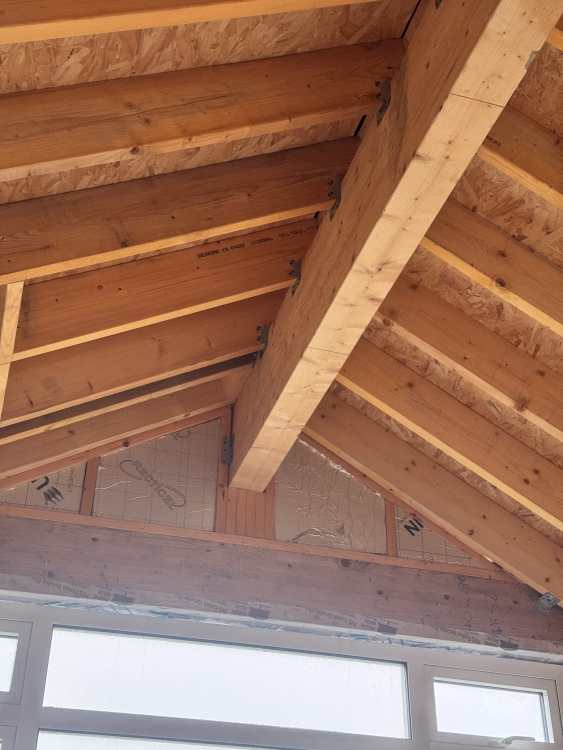
I don’t know that this needs anything extra but it was recommended by the supplier as we’re in a windy location. I’m just looking for advice on how to tie in. I’m going to take out the small brackets that were temporarily put in as will interfere with the osb but looking for suggestions of how to strap the gable into the roof structure effectively and without interfering with anything. Thanks
-
Just wondering if it’s normal for double glazed window glass to flex in the wind? We have one large window on the gable end that the glass is visibly flexing in the wind so I’m wondering if this is likely to be a problem or not?
-
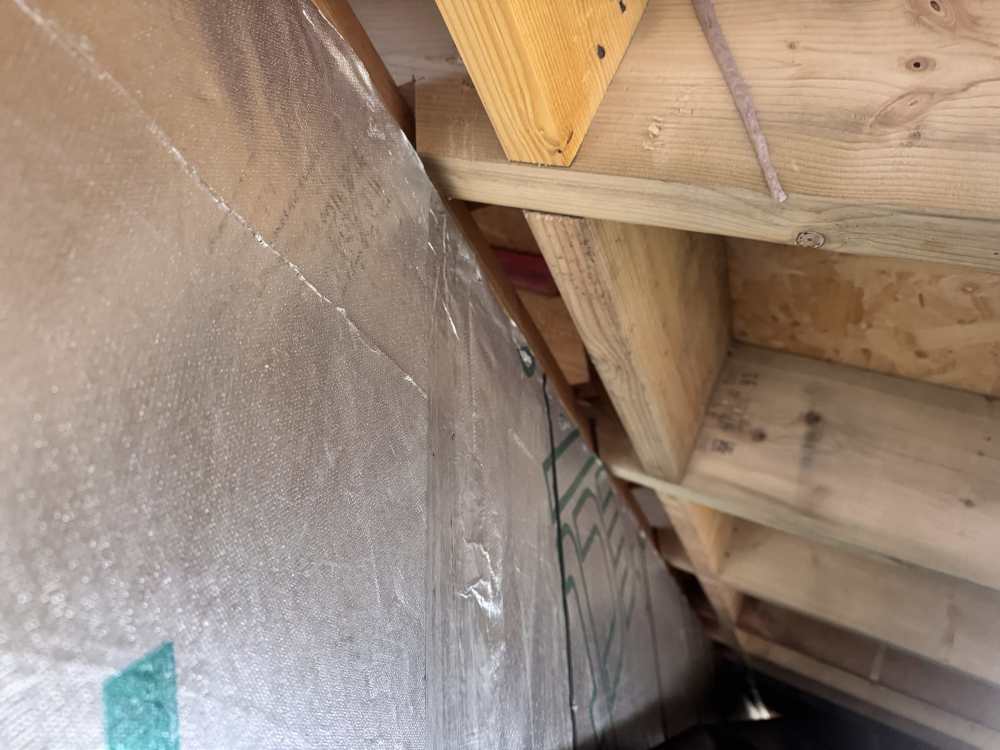
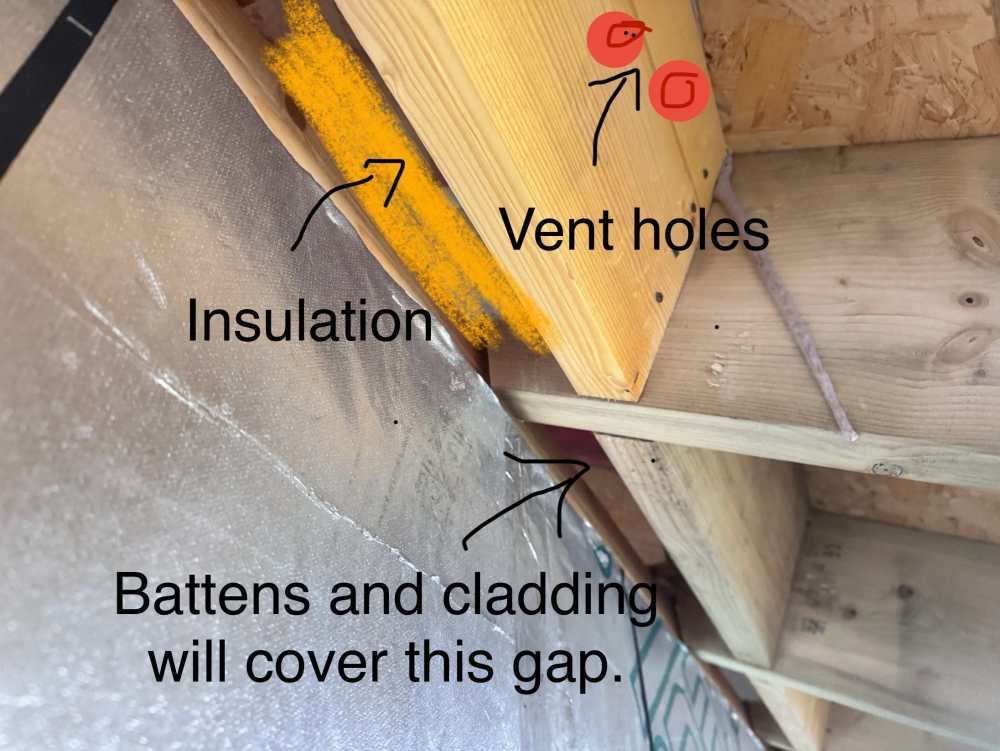
I’m still trying to work out the insulation ventilation detail. We have a large overhanging roof along the side if the house but will need to enable ventilation above the insulation. The challenge is creating this ventilation gap and working out the best way to do it as the noggins are close to the external wall (see photo). My thought is to over run the rigid insulation beyond the wall plate to butt up against the noggin. Then drill holes in the top of the noggin and vent from there. however I’m also thinking that this would prevent air from exiting top of the cladding So any thoughts or suggestion would be really appreciated. Thanks for all the advice.
-
Still looking for advice on this if anyone is able to share any expertise? Thanks
-
Thinking of getting a mixture of the stainless flexible mesh and this closure: https://weatherboardsupplies.co.uk/product/30mm-x-40mm-perforated-closure-2-5m/ any reason to go for one vs the other. I’d use the angled trims above and below battens and flexi mesh at other openings. Wondering if the difference in material is significant but clearly both made for the job. Really appreciating everyone’s insights and advice, thank you
-
Thanks for the tips. Did you find it stayed tight enough or is likely to sag and open up along the cladding face?
-
Ps the angled trims look a lot more expensive.
-
Thanks. Yes the first link looks good… easier to install but struggling to see how to get the exact width when it’s only multiples of 10mm 🤷♂️… I must be misunderstanding something.
-
Thanks @JamesP any photos of how you fixed the mesh?
-
No looks good to me but a few comments on Amazon suggested it might be thin and frayed when cut.
-
Does anyone have experience with this from the mesh company: https://themeshcompany.com/shop/wire-mesh/insect-proof-mesh/flyscreen-insect-vent-soffit-mesh-for-netting-and-cladding/?attribute_pa_insect-mesh=stainless-steel-304-grade-16-lpi-0-23mm-wire&attribute_pa_soffit-roll-size=30-metres-length-x-100mm-width-roll
-
@SuperJohnG just wondering you can advise on the cedral… I’m struggling to work out how the fixed dimension will close the gap accurately but probably missing something. For example they seem to come in multiples of 10 but if battens are 38mm or when double battening 38+25mm I’m not sure how this would work. Probably missing something obvious!? Thanks
-
A combination of both might be good but still unsure about fixing the rigid angles given the dimensions… I saw somewhere else someone recommending the cedral mesh so any advice on fitting to ensure good closure would be useful. Thanks
-
Thank you that’s really helpful… hadn’t even thought about the cills yet … can see the advantage of the flexible mesh.
-
Thanks for the advice @Russdl yes that looks like the most versatile and cost effective but angled strips also look easier to install but I’m a bit confused shift the dimensions… they come in multiple of 10 but battens are 38mm or 25mm so seems like it’ll either overhang or leave a gap… I must be missing something. 🤷♂️
-
Just resurrecting this thread because I’m about to start cladding and have overlooked the mesh. I’m going for a mixture of horizontal and vertical timber cladding. Not sure where to go for the stainless mesh roll or cedral closure… also unsure about fitting despite watching the above video. Any advice and help greatly appreciated as will need to order tomorrow. Thank you
-
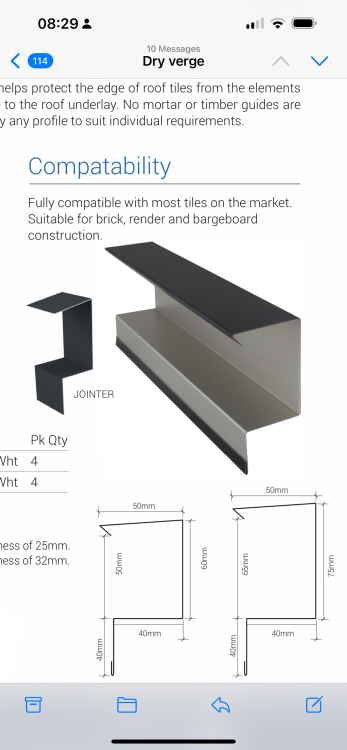
I’m looking at this dry verge by Kytun for tiles. I can see this working for thin slates but for l tiles (flat profile) there will essentially be a step where each tile overlaps the one beneath which means there would be a large gap into the dry verge where water could easily get in… am in missing something?
-
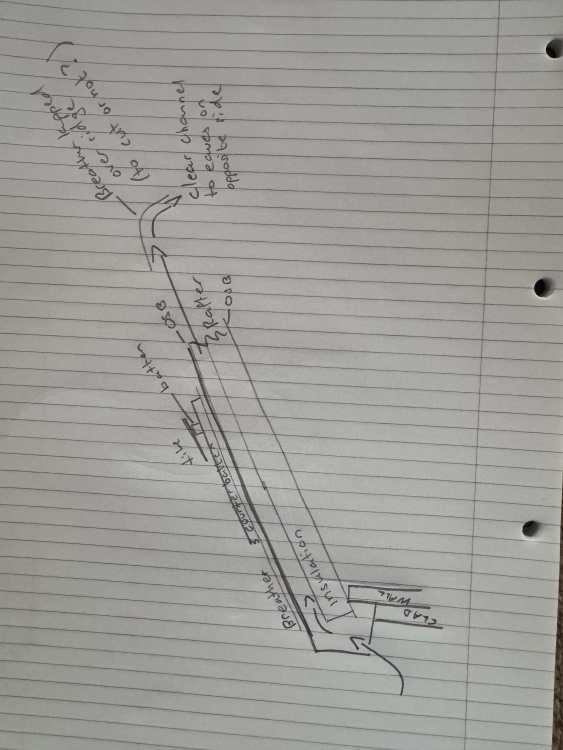
Thank you for the advice. Yes I have counter batten and then batten… sorry not very good at drawing 😂 that was my thought on venting and several people have said the same which is reassuring. My concern was whether Warner air would accumulate at the top and condense but my assumption is like you say the differential pressure one side to the other will ensure air flow.
-
thanks @scottishjohn sorry I’m not being very clear basically a normal roof but sections made in the factory and then assembled on site. It’s a cold roof. yes vaulted ceilings. The roof layup from inside to out is: plasterboard - batten - ybs insulation - osb - insulation between rafters - air gap - osb - breather membrane - counter batten - batten - tiles Guidance from lots of sources is that airflow is needed between insulation and top osb. I’m just not sure whether I also need to cut the top membrane or because there isn’t a ridge which means air can flow across, whether I can get away without cutting. thanks for all your thoughts.
-
Factory made in sections built around rafters; osb - air gap - insulation - osb
-
Was this on a solid roof ie; osb cassette?


