
D Walter
-
Posts
116 -
Joined
-
Last visited
Everything posted by D Walter
-
and so it begins........ design 11 so far
D Walter replied to Sue B's topic in New House & Self Build Design
Sorry, forgot to say that the Velox floor modules are laid in line with the MVHR ducting runs and the voids in the underside of the modules are chased out after the concrete has cured. For most of our flooring we had approx 190mm x 380mm voids to utilise. I attach a couple of SE plans showing the first floor structure and details. 9423-03A First Floor Plan.pdf 9423-07B Sections & Details 3 of 3.pdf -
and so it begins........ design 11 so far
D Walter replied to Sue B's topic in New House & Self Build Design
Hi Posty697, I did use the Velox ceiling modules for the first floor. Setting up, pouring and levelling concrete floors was a labour of love and you have to get it right first time. In our case we had 80mm cover of concrete rather than the standard 50mm and it was still a major job getting the rebar levels right before pouring. It also involves hundreds of acroprops in situ for a month. We got an excellent result but it was not quick. And, yes, we are using the void in the underside of the Velox ceiling modules for the galvanised ducting for the MVHR. -
and so it begins........ design 11 so far
D Walter replied to Sue B's topic in New House & Self Build Design
Hi PeterW. I am using the Velox WS EPS Plus 215mm, this is 35mm Velox WS board bonded to 185 graphite EPS. This, with the 150mm concrete and 35mm inside facing WS Velox board makes 400mm walls. -
and so it begins........ design 11 so far
D Walter replied to Sue B's topic in New House & Self Build Design
Sue, it was great to meet you both and I hope the rest of your day on the Island went well. Best wishes for this year! -
and so it begins........ design 11 so far
D Walter replied to Sue B's topic in New House & Self Build Design
Damn, I have the Plymouth Gin but forgot the Angostura Bitters! -
I have seen the delay argument before in relation to internal insulation but I am a bit sceptical and so am making.sure there will be no air gaps between finished plaster and Velox. Probably not a big issue but would be interesting to see it modelled. It would be worth checking how the Izodom system is specified for a build as it does look complex and may need computer modelling. Also worth checking how quickly you can get components to site. Changing features of your build may be difficult/cause delay if it is dependent on specific modules. If it all fits together like a jigsaw puzzle changes.could be problematic....
-
Yes, looks really good.
-
Looks quite sophisticated. Izodom and Velox are pretty much coming from opposite ends of the ICF spectrum. Velox has a limited number of different elements, cut to size on site and with pull strength at a premium. Izodom would, I assume, be computer modelled on the basis of the DWG plans given the number of different elements.
-
Interesting as we are also using Tata for the roof (also cladding some of the walls in Tata) and are concerned that the timber clad walls going naturally grey may make the whole house grey and lose the contrast between metal and timber.
-
Thanks Big Neil - our concern is actually the metal webbing and the timber itself acting as a cold bridge rather than insulating between and around the timber and webbing. Thanks ADLlan, I will look again at how we can improve the U values........
-
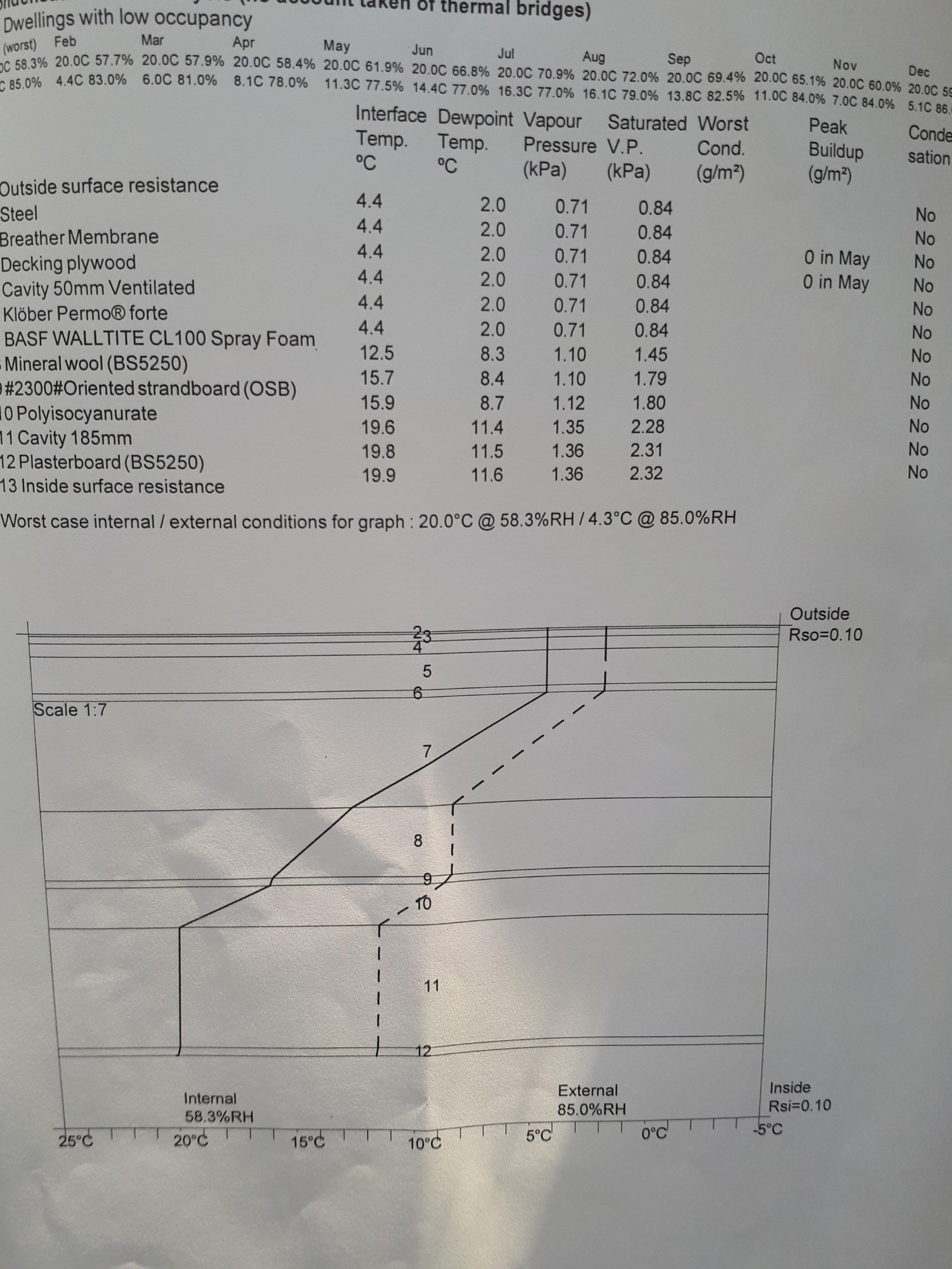
Thanks ADLlan. Very helpful. I am not sure what the impact will be overall orhow to cure it, other than increasing the depth of insulation or replacing the soft roll with additional depth of Walltite or semi-rigid. What we wanted to do was put some PIR on top of the joists (without any foil backing) but this is treated as creating a vapour impervous layer under which condensation can form, even though the Walltite is bonded to the PIR.
-
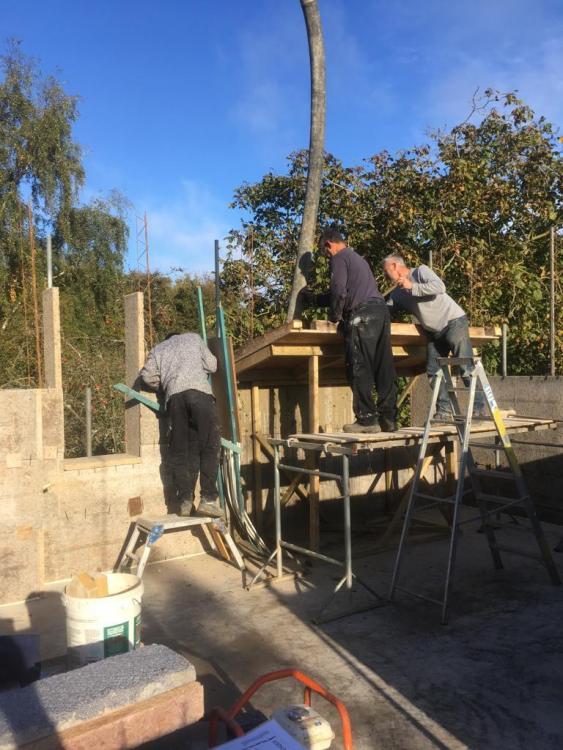
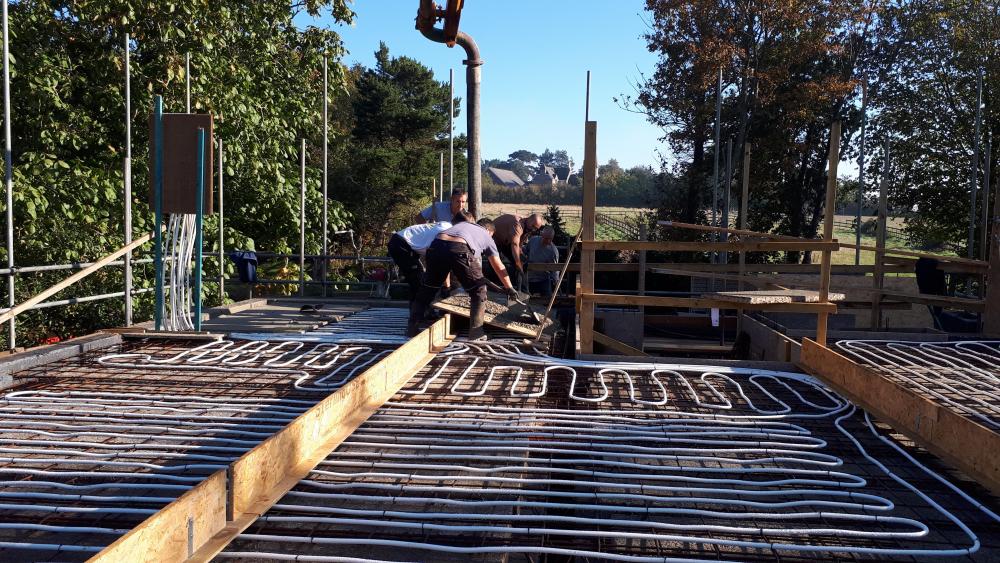
The above pic may be of interest as it shows a) how we divided the flooring so we could pour, level and power float a section of flooring at a time, and b) shovelling concrete from an OSB sheet into the wall void as our pump was too brutal to pour directly into the void. The attached pic shows the moveable platform we used for pouring concrete into the wall void, again because of the wrongly spec'd pump.
-
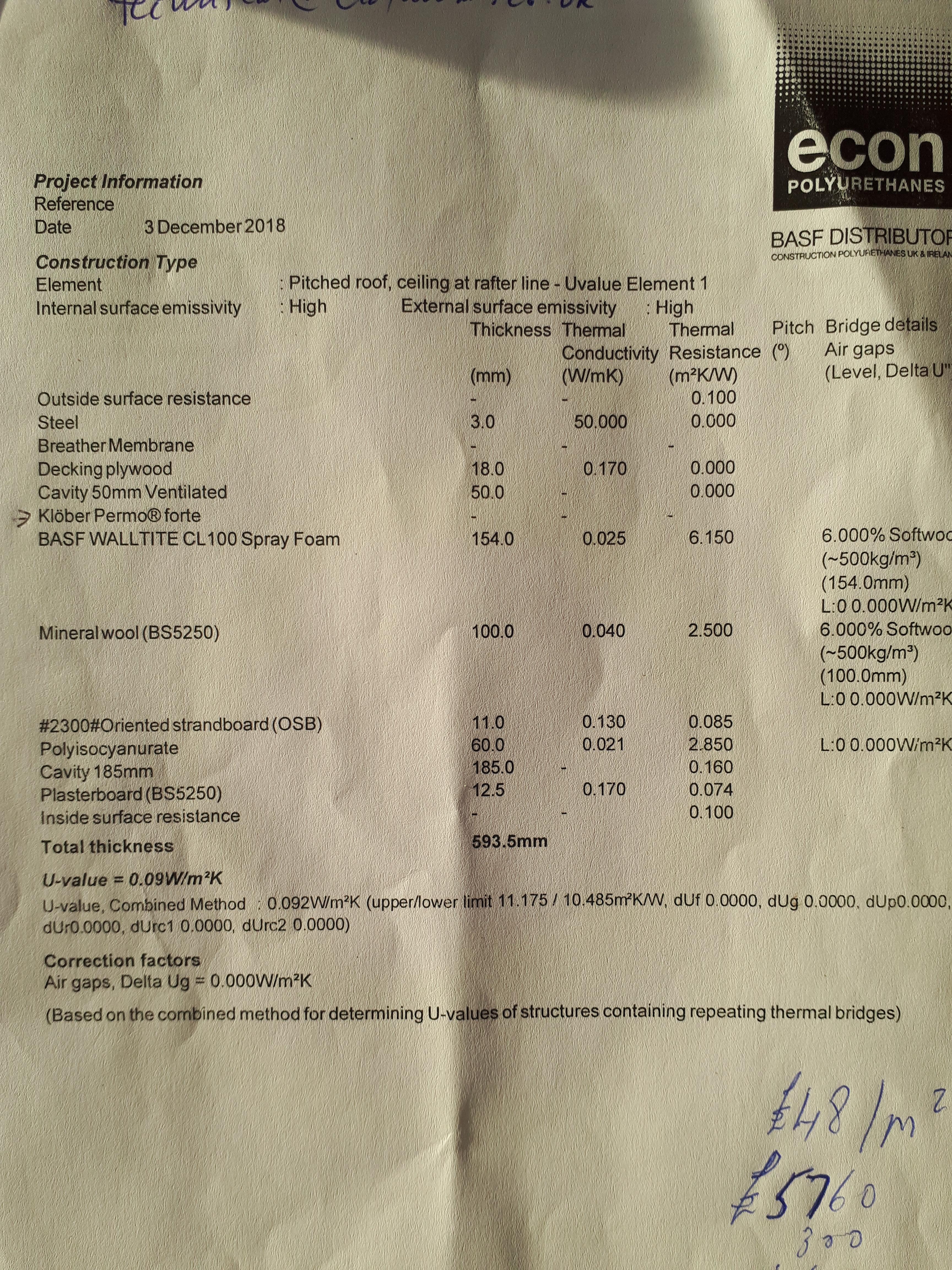
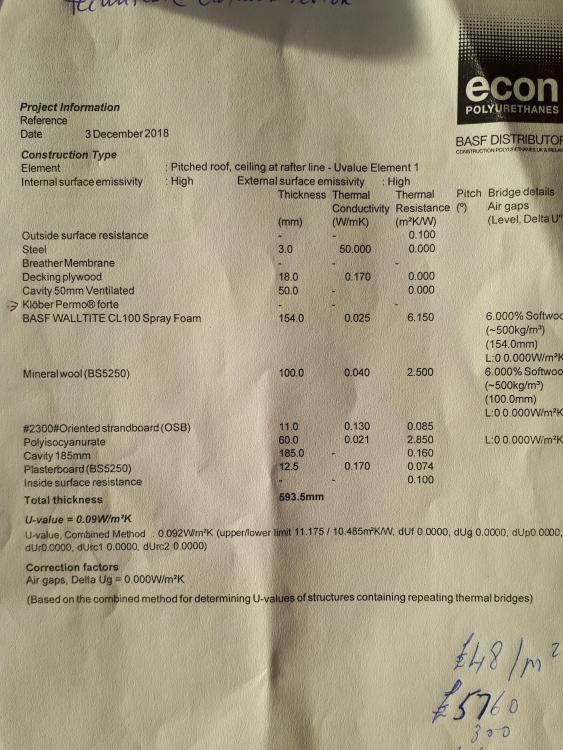
Thanks ADLlan. The attached link is to the Ecotherm calcs which are not as good but still ok. Their comment in the covering letter was: "This construction achieves a 0.10W/m²K U Value. There is no risk of condensation shown in the construction so we find this construction acceptable from a condensation risk analysis point of view.". I did discuss these calcs with the BASF technical team and they stood by their calcs as they said that the complete infilling of the EasiJoists with Walltite (including the holes in the webbing) reduces the EasiJoists' cold bridging. They also said that the Ecotherm calcs were ok as the max condensation risk shown was in the 50mm ventilation void. 5K15CB4023.PDF5K15CB4023.PDF
-
Yes, ours is directly in the concrete and that is recommended (see pic attached). Given that it means that there will be no self levelling screed, real attention is needed to get the concrete as level as possible. The whole system also needs a good bit of time and attention to get it all set up in advance.
-
We did check about compromising the breather membrane and we are promised copies of confirmation from various manufacturers that the breather membrane will still work. The Walltite does allow some degree of vapour permeability though it is closed cell and whilst the breather membrane is primarily acting as a surface to spray against, the breathability, even if reduced by the Walltite, does have some advantage.
-
Hi ScottishJohn, our reasoning is that we want fixability for cabinets etc and benefit of thermal mass and if we have any air gaps those features will be compromised. We have 35mm of Velox cement board to chase out for services in any event. The house has been designed around getting the benefit of the thermal mass (concrete walls and floors and glazed SW aspect) so we don't want to compromise that.
-
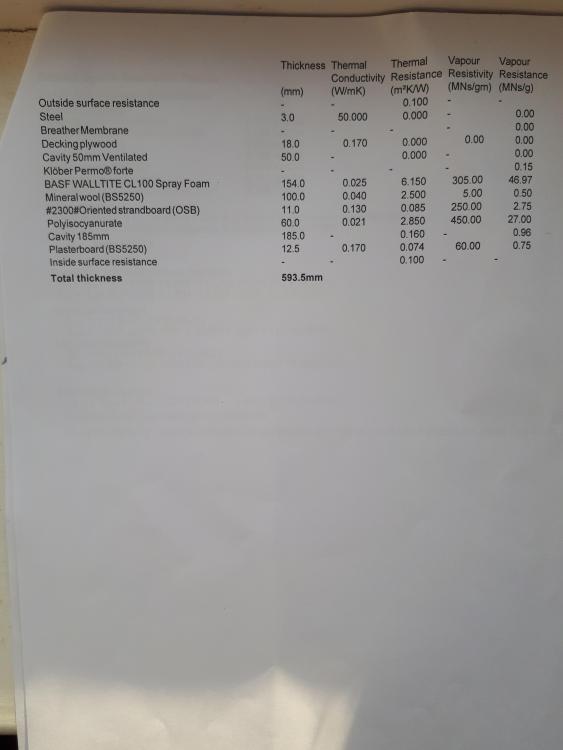
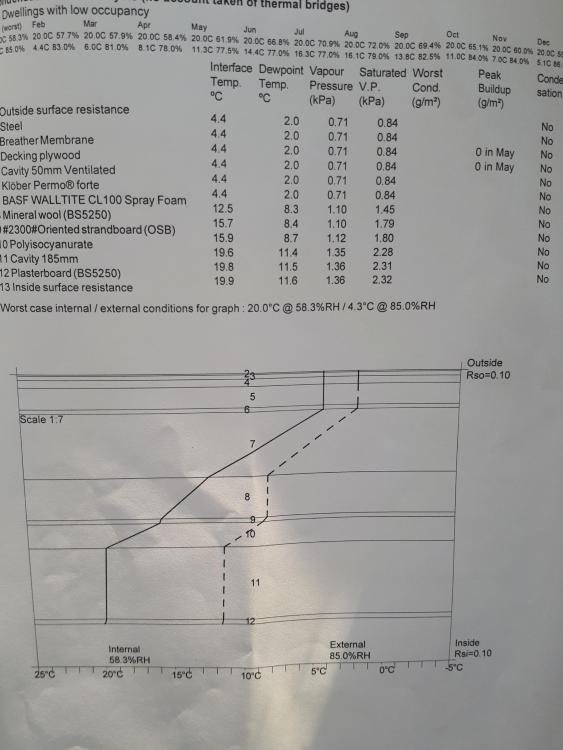
Hi Adllan, I attach one of the calcs. The other one was not quite as good but had less information. The details of the EasiJoist values are on pp 21 and 39 of the manual: https://www.wolfsystem.co.uk/media/114954/easi-joist-tech-guide-v8-6th-edition.pdf On speaking to the BASF technical team the view was that it was possible to get better overall U values and mitigation with cold bridging with EasiJoists than timber rafters as the Walltite will completely fill the gaps between EasiJoist cords and the holes within the webbing. The Wolf manual suggests no difference.
-
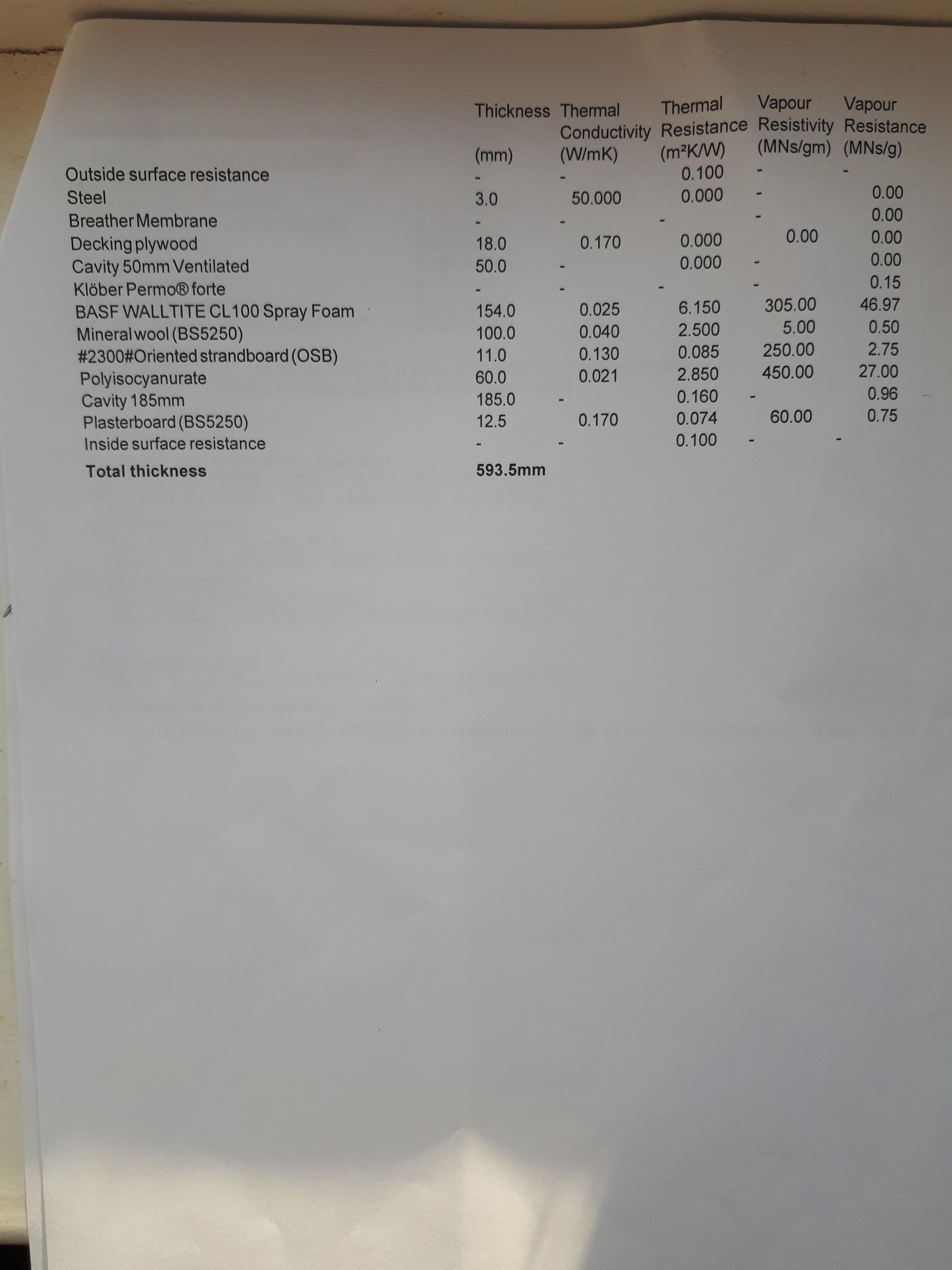
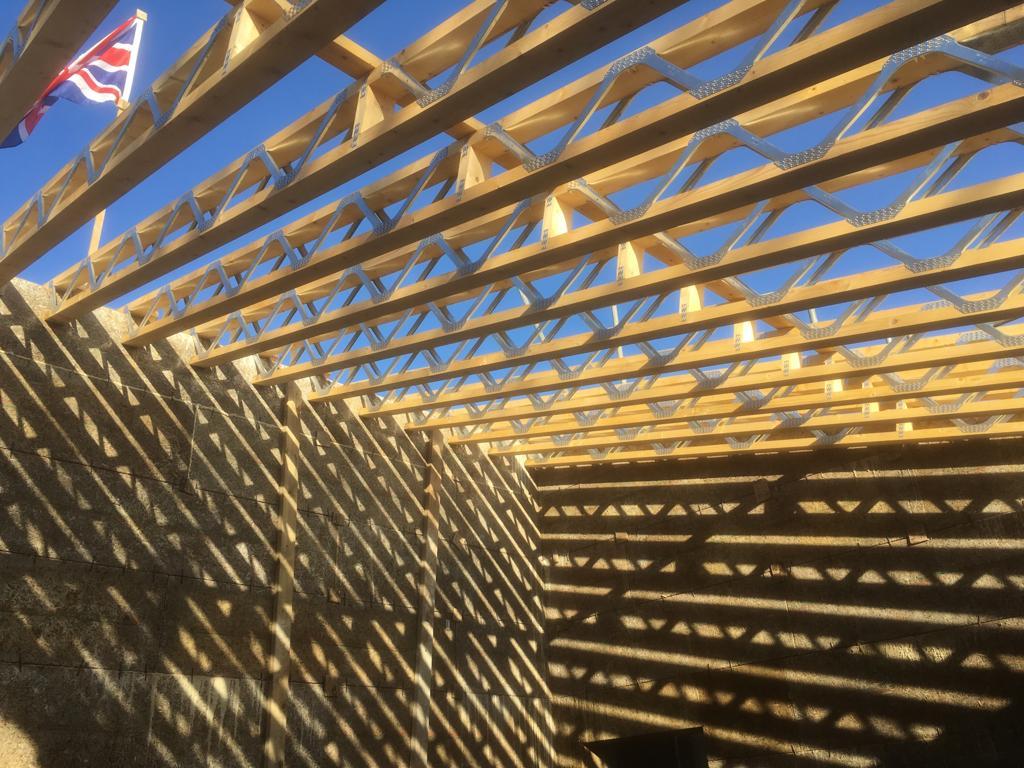
We got more detailed information on the thermal bridging from the EasiJoist webbing from two sources and it looks much better than we feared. We have decided on breather membrane on top of 254mm EasiJoists, spraying 154mm of foam directly under the membrane and an additional 100mm of soft roll underneath to fill the remainder of the EasiJoist space. We will have an additonal 60mm of PIR under the EasiJoists. There will be a ventilated 50mm batten cavity above the Easijoists with standard lay up for Tata above (18mm OSB, breather membrane and Tata). This gives us a U value of 0.1 with no condensation risk. It will also give us a really good head start on airtightness for the MVHR system. We did look at having 25-60mm of PIR (not foil backed) above the EasiJoists and spraying directly under that (with a view to countering the potential cold bridging from the steel webbing) but the calcs showed a risk of condensation. On speaking to one of the technical teams we were told that because the spray foam bonds with the PIR there should be no increased risk of condensation as there is no surface for condensation to form on but the calculation programmes cannot cope with this level of sublety so to be safe and for guarantee purposes we are going with spraying under the breather membrane instead.
-
Previous Velox builders I spoke to have praised Velox for ease of plastering . We are looking at two options: 1) spray plaster; or 2) dry lining and skimming. My concern with dry lining was that the wire ties used to join the Velox panels protrude approx 5mm (so we would effecively be introducing a layer of insulatiom between the thermal mass in the walls and the rooms) but on enquiring with Velox we were told there is no problem cutting the ties off on the interior and we could therefore screw plasterboard (possibly use high density plasterboard) hard against the Velox.
-
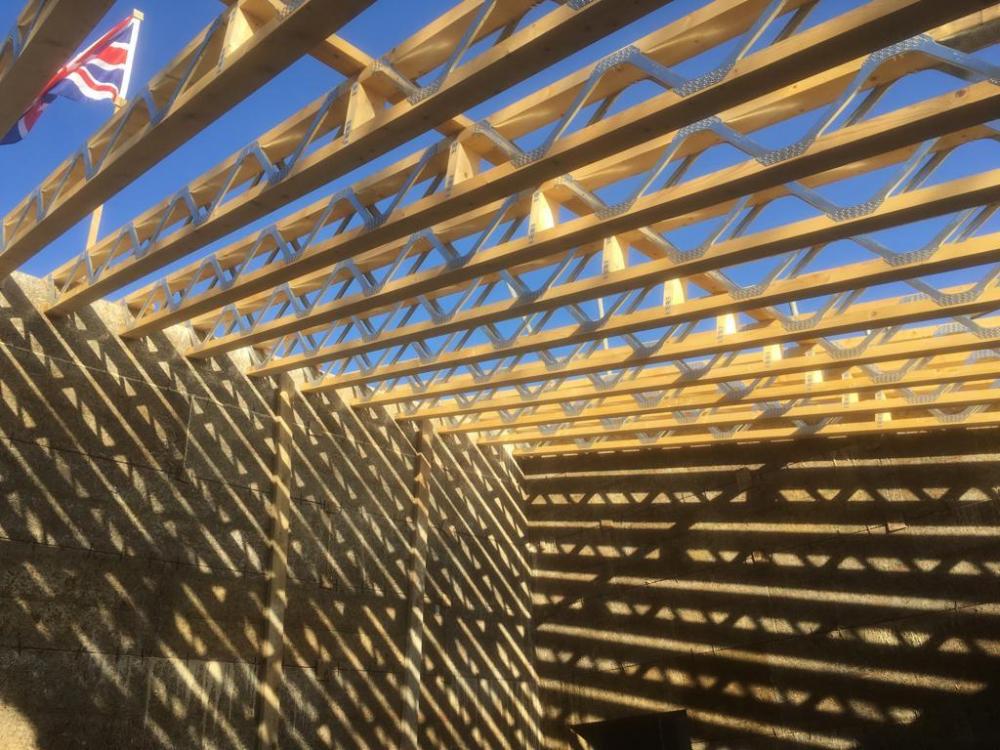
Hi Sue B. We did our last pour a couple of weeks ago now and are in process of putting up membrane and battens for cladding and getting ready to put the breather membrane on top of the rafters. You are welcome to visit any time but the Velox part is completed now.
-
Hi Sue B, When I was researching I visited two builds in Hampshire in close proximity to Four Marks but both of those will be finished by now. I would not be surprised if Marek has other builds ongoing in Hants. You are very welcome to visit here on the IoW if you can't find anything more convenient for you. David
-
Having everything set up for Easijoists for our rafters we are now thinking again about the possibility of importing i beams from the mainland and using the Easijoists for the garage. Our main concern is the potential cold bridging from the Easijoist metal webbing on our ventilated roof. Does anyone have any experience/insights into the level of cold bridging the webbing could introduce? It seems that the insulation manufacturers don't have the software to calculate this impact in their U Value/condensation programmes.
-
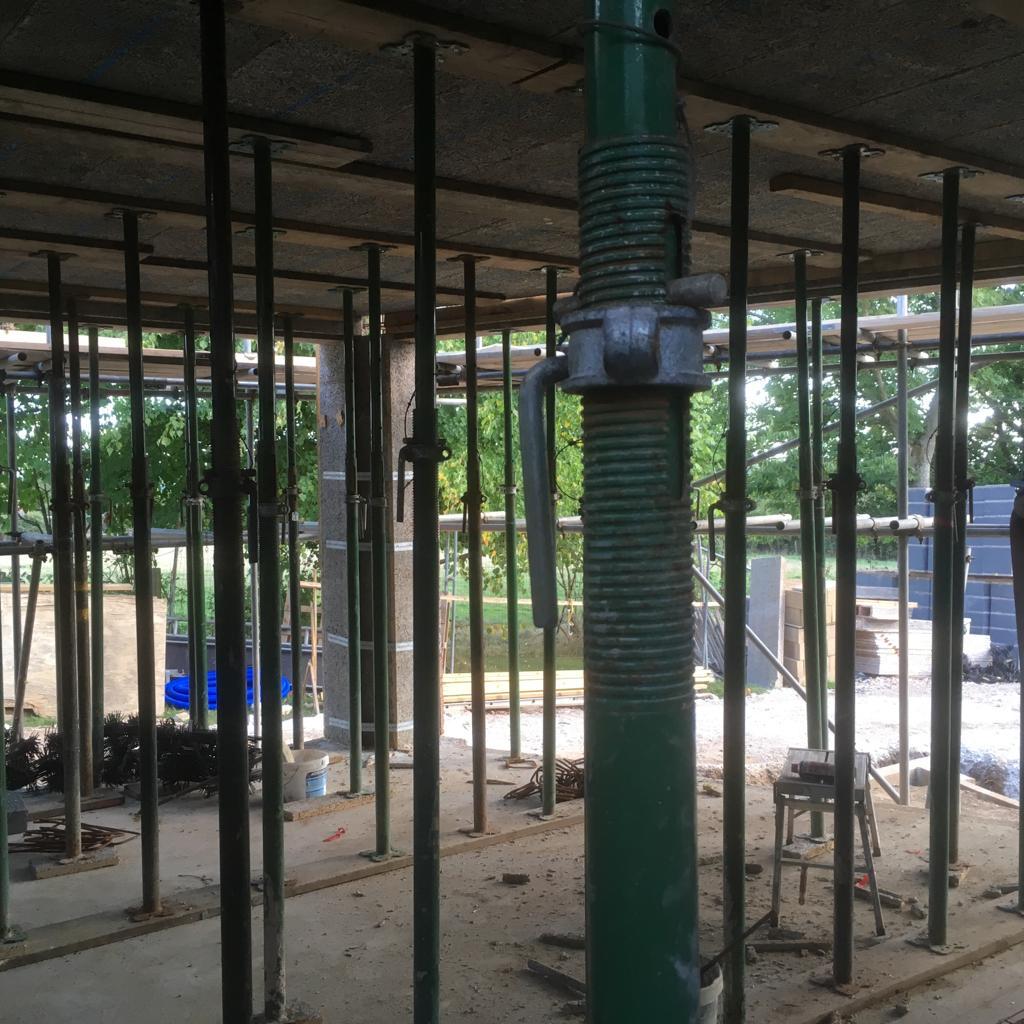
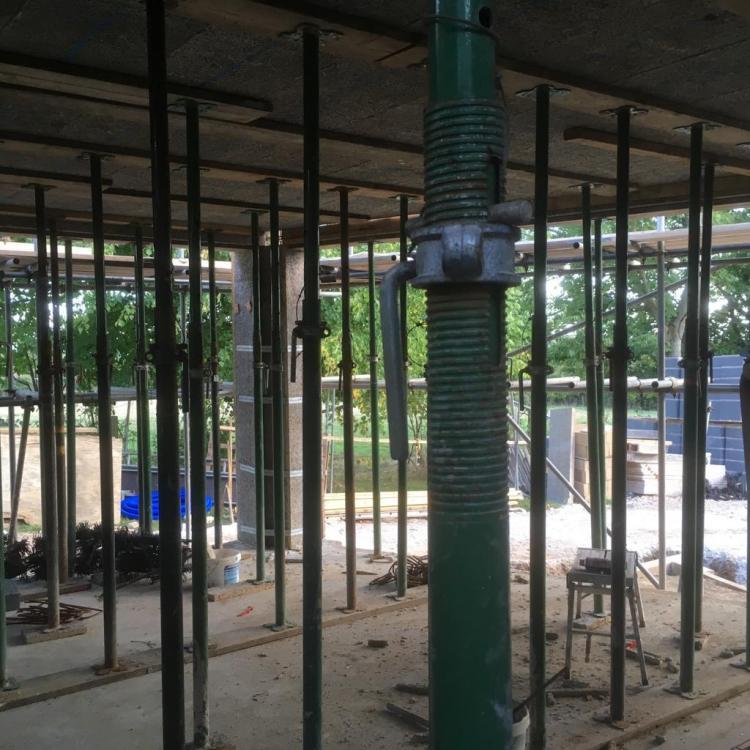
A further thought on the "swings and roundabouts" theme, if you are pouring an unsupported concrete floor (e.g. a first floor) you will need access to hundreds of acrows for in excess of a month to support the floor while it is curing (see pic). The acrows can also come in useful for bracing walls when pouring concrete and we purchased ours from a previous Velox builder introduced to us by Velox. We will sell the acrows on in turn when we have finished with them. An upside of the Velox floor is that we will be utilising the voids (195mm deep by 380mm wide across most of our spans) in the Velox first floor flooring modules to run the ground floor MVHR ducting.
-
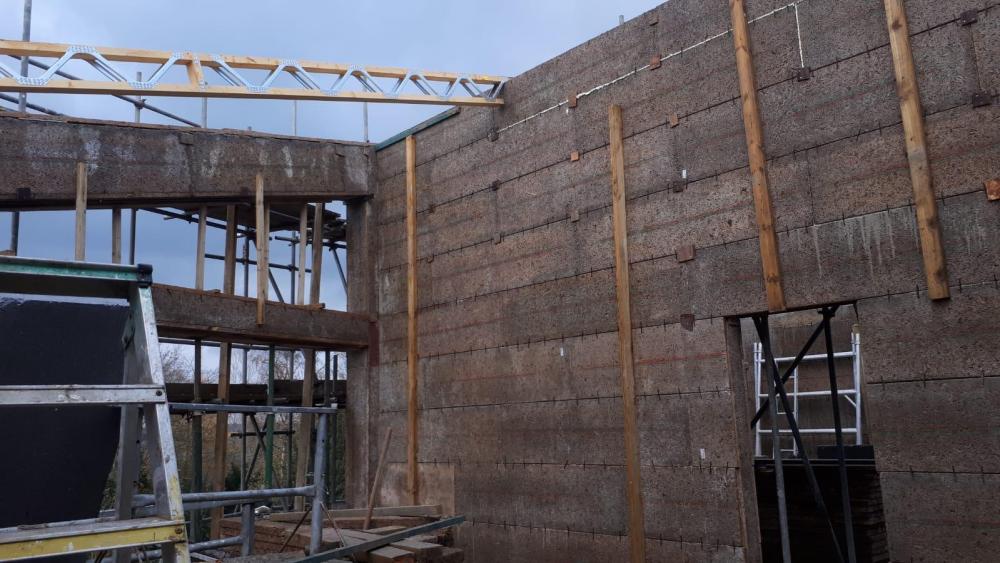
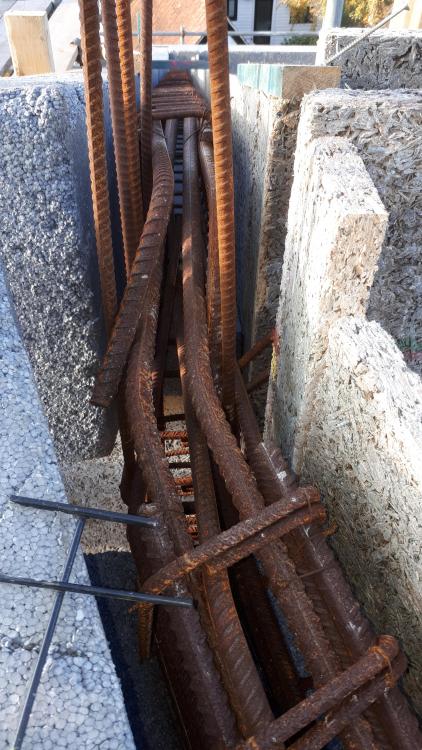
Not sure I can think of any particular disadvantages but as a first time builder I have nothing to compare it with. Clearly, with any concrete walling system, you have to get everythig right first time as it's very difficult to change once cured. As I have said previously, we did not manage to get a suitable concrete pump and that made pours more difficult/take longer but I suspect that problem would have been exacerbated with other ICF systems which have compartmentalised voids for the concrete. We did take extra precautions such as lots of bracing with timber and acrows before pouring. We also cut little squares of plywood and screwed them over intersections where vertical joins met horizontal joins to keep the faces "true" until the concrete had cured (you can see some of these if you blow up the attached pic and the pic in one of my previous posts above). As such, we did not trust totally in the wire ties supplied with the Velox system. My builder said these squares of plywood made a big difference in keeping the walls 100% true right across the planes. My builder was a little bit concerned about cold bridging in a couple of areas around the foundations but that is largely down to the engineering rather than the system. There are some swings and roundabouts, for example with 180mm of insulation outside the concrete thermal mass (great for utilising solar gain) we will need to bolt right angled steel plates to the outside end of the concrete first floor to support the massively heavy triple glazed lift and slide panes at first floor level, which effectively sit predominantly on unsupported EPS. I don't have a good picture to illustrate this but if you look at the attached pic. you can see the horizontal cast beam which will be supporting the much smaller triangular windows under the first floor eaves. Inside the external 35mm Velox cementboard face is 180mm of EPS, then 150mm of concrete then another 35mm inside face of Velox cementboard. The triple glazed triangular windows will, again, largely be supported on the 180mm of EPS supported by shear strength and the 50mm Velox cementboard reveal strips below. This is less of a concern here but the larger rectangular lift and slide panes below will require greater support. We did end up with some very congested rebar (see pic) but that was due to my decision to go for cast beams and columns rather than RSJs. I did see a question somewhere as to the relationship with the supplier of Velox. I found him extremely helpful and easy to get hold of. I always contacted him on his mobile and if I could not get through he would call me back in short order. He was also very helpful at looking through plans and giving suggestions/tips. If anyone wants to see any plans/engineering drawings or details let me know.
-
Thanks Ronan. My parents are from NI and love it.