


-rick-
-
Posts
1367 -
Joined
-
Last visited
-
Days Won
6
Everything posted by -rick-
-
Right, but I didn't draw where the ceiling was
-
You are just guessing. Remember all the M5 Ultras with 256GB for the next year were likely ordered last year. The lead time for this stuff is huge. It's not made on demand like Dell putting DIMMS in your custom PC order.
-
The argument has been we've been moving up the value chain. But not sure that holds. Brexit has done a number on manufacturing (which was previously tightly integrated with EU supply chain) and the previous low cost producer is now galloping up the value chain: https://www.ft.com/content/7d51a630-a3de-4cc7-9f5f-0f3e7f0d305a?syn-25a6b1a6=1 (I looked at doing a gift link but looks like with my subscription I can only share to individuals - no point sharing it on a forum). Having said that, the problems we have in this country are far deeper than energy. Solving energy doesn't solve industry and solving industry does not require solving energy (except in some limited high energy cases). Yep. Covering factory roofs in solar panels + batteries could be a huge boon if properly marketed. One of those things that hasn't happened to the degree it should have. Though the government shouldn't fund subsidies as it should be a cost benefit to the companies, but marketing it and maybe lower cost loans to fund it should be something the government is doing. (yes low cost loans is a subsidy but relatively limited compared to other renewable incentives).
-
Just to add, I think this would work fairly well on walls with a service cavity (ie, external walls). Doesn't work so well on internal walls (as Nick suggested). Still not really come up with a flexible solution I'm happy with there.
-
A crude diagram of how I would plan my formed tray as @andyscotland describes. If you have wall sconces, provisions for motorised blinds, etc, you could run either horizontal (blue) or vertical (green) zones around them (obv need to place a socket/switch somewhere in line to produce a safe zone). The other thing I currently plan to do is to place way more metal backboxes than I plan to expose (always pairing a double with a single for data/etc). Use shallow ones so that you can put plasterboard on top of them. Then use a router to cut out access on the ones you need. Americans seem to use this technique a lot (without the unused spares) and it looks like it makes putting up plasterboard a lot quicker. Plan would be to then add metal backbox extenders onto the exposed ones to make them into deep boxes. The unused ones remain buried ready to be exposed if needed in future. This does require some careful thought, I'd want to be able to remove the backboxes to access cables behind and also want to be able to easily find buried ones (so maybe need to make a filler of some kind with some cheap magnets attached so that you can pass a template over the wall and it registers the exact location from the finished surface).
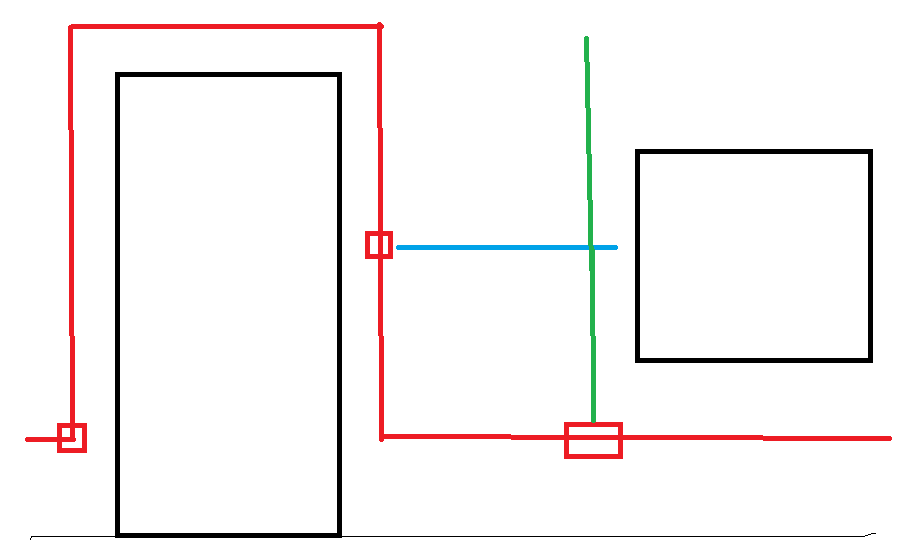
-
Agree with this for installed fittings. Just think the 5A sockets, fixed positions and extra wiring effort is unnessary these days. Future buyer of property is not going to make any purchasing decisions based off having 5A sockets (and will they necessarily be in the right place for them anyway?). Absolutely.
-
Don't have a source but I'm pretty sure I remember the last government had to implement various incentives for the last big round to go ahead. Things like reducing the provisions that need to be made to clean up after the rigs are done, tax breaks. I'm not sure what the current situation is but while I don't have huge problems with new licences if they are purely at the companies risk I would have problem with any sort of subsidy direct or indirect. Any public funds put into energy independence should go on renewables as that is the most cost effective option at this point.
-
Im not sure how a cable tray helps you run additional cables later. The ties for the cables and all the perferations will present more snag challenges for pulling cables behind plasterboard than bare trunking or similar. I too want to be able to add additional cables later (especially low voltage/data/hdmi/etc) and am curious what other people think is the best way to go but personally don't think cable trays would help. My best guess at the minute for how to do this is to form two parallel cable paths horizontally along the wall behind the sockets with the metal back boxes mounted in front. Depth is a bit of an issue though. 50mm cavity + plasterboard on top is ok. Less seems to get tricky. Main reason for me to want this ability if I get a chance to build I want to get the basics in and done and then come back and be able to fit 'smart' stuff in a suitable way without ripping up the walls. I don't really want to have to plan where every device cable goes (and what type is needed) before being able to crack on with the rest of the property.
-
Definitely the way to go if you want to control an outlet from a light switch hard wired. But with todays 'smart' products it seems a somewhat unnecessary complication. Even if you don't want smart stuff anywhere else, wiring it into free standing lamps and a switch on the wall to control them gives you a lot more flexibility. ie, you can move lamps around, add extras, etc, no need to predetermine locations or run special cables. It doesn't even have to be that smart if you just want on/off. Quinetic switches are an option there https://www.quinetic.co.uk/
-
Seen US youtubers use it a lot over the last few years. Seems like a good option for some use cases but only if what your doing is suitable for using the premixed bags.
-
Dumb question - can you usually run inverters in parallel?
-rick- replied to Alan Ambrose's topic in Photovoltaics (PV)
Seen these before. Thought at the time they are the wrong approach plus they add something like £20-30 per panel to the cost which seems high. Other countries mandate their inverters do Arc Fault detection on their inverters. Not sure we have caught up but suspect arc fault detection is availalbe in some inverters at least. If not, you can get (though difficult to find) separate devices that do it. One per string rather than one per connection (though not sure how the costs work out). Arc fault detection not going to be quite as good as the boxes but if it comes with the inverter then it's basically free. -
Or cap the tray with 3mm steel?
-
Grand designs: off site construction
-rick- replied to Post and beam's topic in Property TV Programmes
Worth adding: My ideas were related to EVs and there the rules get harder. Normal combustion engine off an existing certified vehicle, pretty easy. -
Grand designs: off site construction
-rick- replied to Post and beam's topic in Property TV Programmes
Nope not at all. Just have too many things running around my head and find sometimes the easiest way to stop thinking about an idea is to spend a day or two deeply researching it. -
Local Authority Refusing To Visit - No Sign Off
-rick- replied to BTC Builder's topic in Building Regulations
How long have you been in this situation? -
Too much looking down at smartphones (It's a joke but you have my sympathies, not a good situation to be in).
-
Grand designs: off site construction
-rick- replied to Post and beam's topic in Property TV Programmes
I looked fairly recently and it seemed easy enough. I'm guessing the articles you looked at were from a time when regs for everyone were getting stricter and the Mondeo was made under older regs. (Maybe the big co's had more time to adapt). -
Just spend 5 years of subs money on a mac to run the LLM on and hope that in 2 years time it's still good enough to run the current models Reason I asked is you said the new setup seemed to be performing better and everything I've seen suggests that local models are generally a little worse at chat type stuff and quite a bit worse for agentic workflows (still much better than the leading models from 9 months ago). I guess with the $20 gpt sub you can't access the better OpenAI models?
-
Which means? ChatGPT? Free, Plus, Pro? Codex? Claude?
-
What was your previous setup?
-
Oh.... You are still working that way? I thought that was considered very inefficient these days. Better to have it help you write a spec, including testing regime, code-quality metrics, design philosphy and then ask it to go build (and spawn agents/tools to help). Not that I'm doing any of this. Just watching people like Theo explain it: https://www.youtube.com/@t3dotgg/videos Had this in my 'to watch' list for a while:
-
Independent battery storage comparison??
-rick- replied to BotusBuild's topic in General Alternative Energy Issues
DHCP? Either change it to a static IP in the settings (could cause trouble if you change internet routers) or go in your internet routers control panel and assign it a fixed IP there (DHCP will then always dish out the same address). -
Independent battery storage comparison??
-rick- replied to BotusBuild's topic in General Alternative Energy Issues
Does all the normal stuff work without the cloud? Full ability to change configs, etc? This situation is why I'm very dubious of SigEnergy. They seem to be market leading technology wise but they are very cloud dependant and I don't want to put money into a system that could go away/start costing more than expected/lose features. -
Good job Macs are about the most efficient AI platform then
-
You looked at Gemma 4? Supposed to be able to get qwen like performance/capability but in a much smaller model. 96GB bit of a waste for it


