marshian
-
Posts
1605 -
Joined
-
Last visited
-
Days Won
6
Everything posted by marshian
-
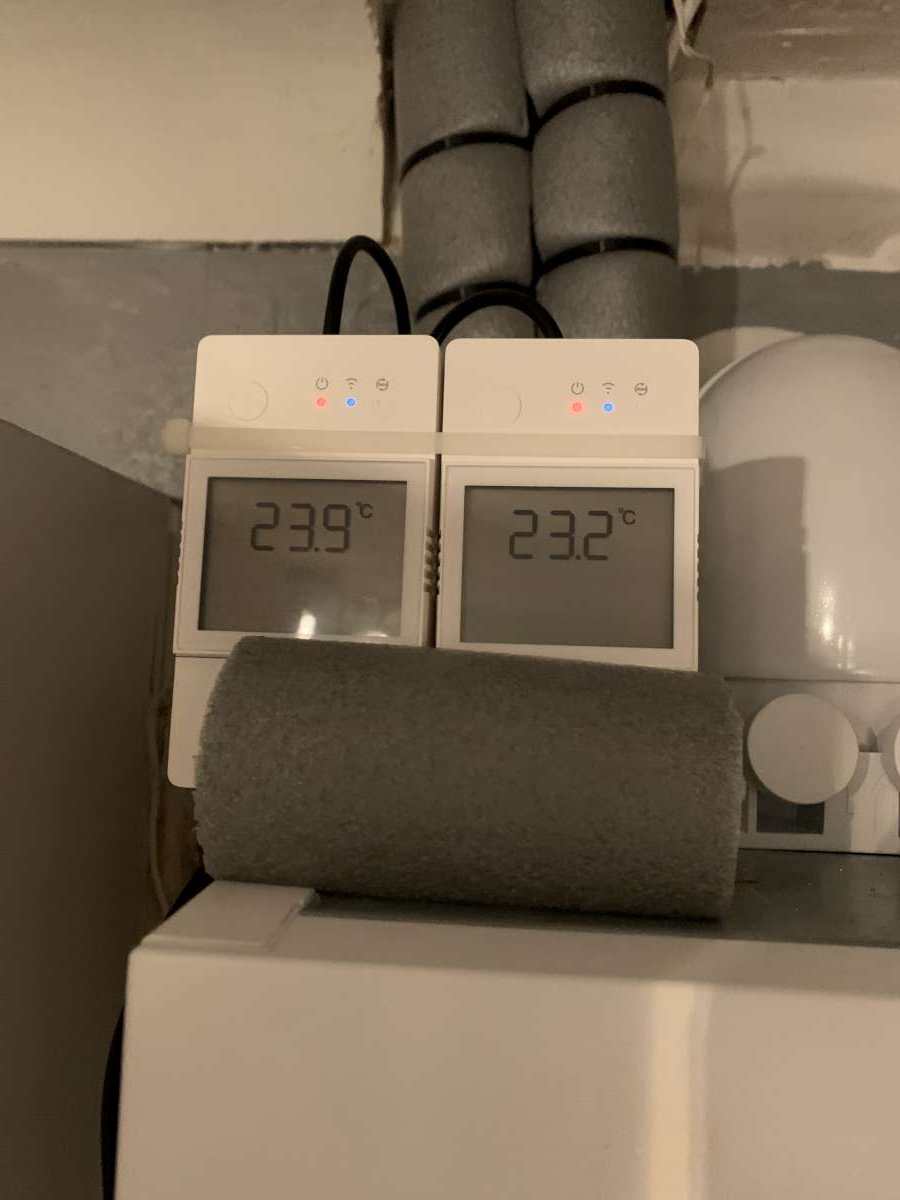
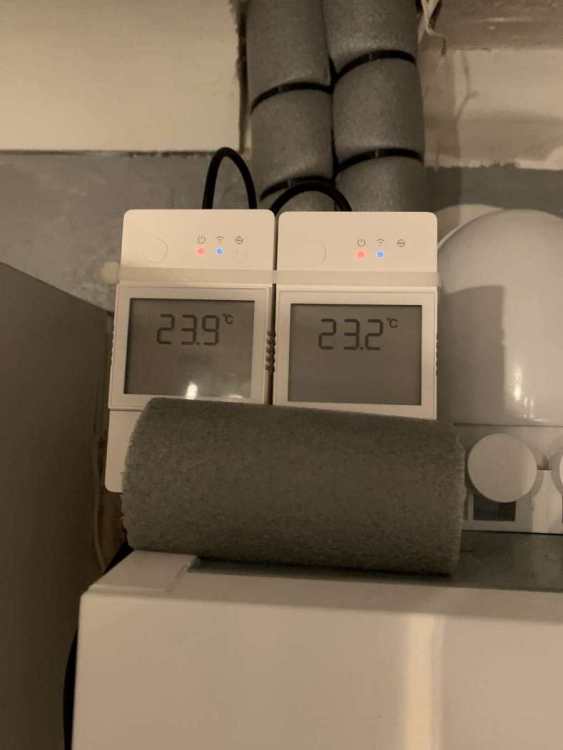
My flow temp last night at 6 deg C was 30 deg C The boiler over the course of 15 mins gradually went over target temp at min modulation 10.6% (3.2 kWh) by 4 deg in order to extend the run time so finally shut down at 34 Deg C I wasn't busy so watched my temp sensors for the 20 mins it coasted (pump running boiler not firing) and it re-fired shortly after this picture was taken. Left side display is flow temp Right hand side is return temp I'm pretty sure my boiler doesn't follow the flow temp - 5 deg rule My previous glow worm boiler didn't either
-
Yeah it may well be but the boiler is reacting to the temperature it gets from the internal sensor.........
-
Hmm OK I'll defer to your knowledge but I think 5 deg delta from flow temp is really bloody narrow at 60 deg flow temp - especially as on that flow setting the boiler is getting no benefit from the condensing process with a return of 55 The glow worm I had would only re-fire when return temp = flow temp (typically with a 50 deg flow temp return needed to get down to 31 (ish) before the boiler fired Same with the Viessmann I have now (trouble is I'm running much lower flow temps but a 30 deg C flow temp it re-fires when it sees no difference between flow and return temps which is around 24 deg C (I thought this was because most of the heat in the circuit had been extracted)
-
But you said you set it to 60 flow and at 56 return it fired up? I realise that 60 = 65 when boiler coasts but I would expect a 60 deg set point to relight at 50 deg not 56
-
That's not a lot of difference between flow and return for the boiler to re-fire??
-
 Same here all the windows and doors replaced with PVC double glazed back in 1994 still got them 30 years later - glazed units might not be up to current regs but they all still seal perfectly no leaks or drafts - never had a single glazed unit fail and they haven't gone yellow either but they were the best quality units we could find. Neighbour is on his 3rd set of windows and doors and he's only been in that house 20 years - first set to replace aluminium framed originals, they went yellow in a few years and then one by one the glazing started failing - most recent set has already had glazing units replaced Buy cheap rubbish you need to buy it more often
 -
But it’s not being used as a buffer - it’s being used as a volumiser - useful link tho will read it properly later I considered fitting a volumiser with my old boiler to aleviate some of the short cycling issues I had (resolved instead by replacing the boiler with one that had a far better turndown/modulation) My intention was to fit it to the hot side so after the boiler hit the overheat limit the volume of water that needed to pass thro the rads before the restart temp was reached would be higher than the circuit without a volumiser but I had a flow rate of 10 lpm so With a few rads in circuit and the volumiser the total volume before the return temp dropped down to the flow temp (aka boiler restart time) I would have had maybe 6 or 7 mins of coast rather than 3 mins. However once I worked out the valliant/glow worm anticycle settings I could force the boiler to wait so no more need of a volumiser
-
Oh that's odd - I would have expected the volumiser to be on the hot side of the boiler not the cold side but I guess it doesn't matter
-
Thinking about it that's a heck of a circuit temp drop in 3 mins 65 deg down to 50 (ish) Have you got an ABV in the circuit?
-
My Heat only 16 kW 100-W Viessmann (so 3.2 kWh min output) when OAT drops to 0 deg C will happily run for 100 mins each burn at a flow temp of between 30 to 32 deg C Return temp is 24 to 26 Deg C
-
@JohnMo has an ATAG from memory
-
If in 60 mins you have 30 mins of burn, 3 mins of flame out and then another 27 mins of burn (in the hour) I would not call that short cycling - but that's just me............ If you had 3mins of burn and 3 mins of flame out and that process is repeated throughout 60 mins so that it's 10 burns in that time I would call that short cycling and badly short cycling at that. Ahhh explains it My question is if the rads are rarely used why are you using an elevated flow temp much higher than the floor needs and mixing it down - why not set the flow temp much lower (or as low as you can get it - like 45) it makes no sense to me to heat the circuit to a higher temp than the circuit is set too If the rads are required due to OAT being low then just increase the flow temp when the rads are required I'm not sure you need to do that based on my comments above Incidentally I'm all rads no underfloor and my boiler is currently at a flow temp set point of 29.4 deg C, since midnight last night (or this morning depending on your viewpoint) with the heating demand being 24/7 with no setbacks the boiler has been on for 780 mins - it's fired 21 times today with an avg burn time 37 mins. I have no volumiser or buffer as the circuit size is 130 Litres with 100 Litres being the volume in the rads and the boiler will modulate down to 3.2 kWh
-
Only if you want too - but towel rails are normally bypass rads because towels take longer to dry and bathrooms with towels over the rads take longer to heat. If you do fit them with TRV's you'll need to make your ABV less restrictive If you are happy the valve isn't allowing flow thro it due to an aging spring and the temps are very different either side then - my ABV has a scale with a number of points on it from 0.05 bar to 0.5 bar and it takes about thirty turns to go from 0.05 to 0.5 bar so I'm not sure how one with 0-5 numbers each 60 deg apart would work - I've tried google image search but not found anything similar Not sure why the focus on 12 Deg but I've said that before OK get a plumber to look at it It should only be a similar temperature to the water circulating thro it Seen them and responded
-
Quick fire questions Boiler flow temp still 60? All TRV's (where fitted are wide open) for a decent period of time say 30 mins after heating first came on before you took the readings? Because I'm now checking everything - You took the readings in the warm up phase - ie not when the rooms were up to temp and every room was cosy? Still don't know why you are trying to target 12 Deg delta on all the rads? Also don't know why you can't understand a really simple point The "hot" end of a rad is the "flow" and the "cooler" end is the "return" It doesn't matter if the hot end has a TRV or a lockshield at that end it's still the hot end therefore the flow - when you insist on putting the higher temp reading as the return value and the lower temp reading as the flow it makes no sense whatsoever. In the case of K1, Loo, Hall and Bed 4 you are declaring that the water in the radiators are being warmed up by the temp in the room because the return is higher than the flow - if that is the case then I think your room temps are too high
-
I might not be following but you've only got the volumiser (Buffer) in the underfloor circuit and one rad - not the rest of the rads?? I had huge issues with my glow worm boiler cycling (24kW - min output 10kW * see note) house heat loss after improvements 4.2 kW at -2.4 Deg C any warmer than that and it was going to cycle - shoulder season it was 3 mins on 3 mins off What I found helped was the anti cycle setting (on glow worm it was also related to flow temp) - does your boiler have that parameter - because if it does you can basically force the boiler to wait longer between burns so the circuit cools more. Obviously if the house isn't getting warm because of the anti cycle parameter then you need to reduce it but I found it very useful in managing the cycling issue Note * on initial fire it was throwing 85% of the max at the circuit so if the circuit was small it was overshooting and shutting down
-
I do it all the time when decorating no leaks or issues - obviously only works with conventional rads (fed bottom in bottom out) and not towel rails or vertical rads but that's life Only one rad in the house has no pull up clearance so I can't on that one but all the rest have a good 5 - 10 mm of "pullupability"
-
-
I reckon with a few rads always in circuit and no TRV's you might get a better drop on the return to the boiler with a tighter ABV If you don't get a better return temp and you know what setting it is now you can always put it back to where it was - you can't really lose??
-
That would be good..... What setting is the ABV now?
-
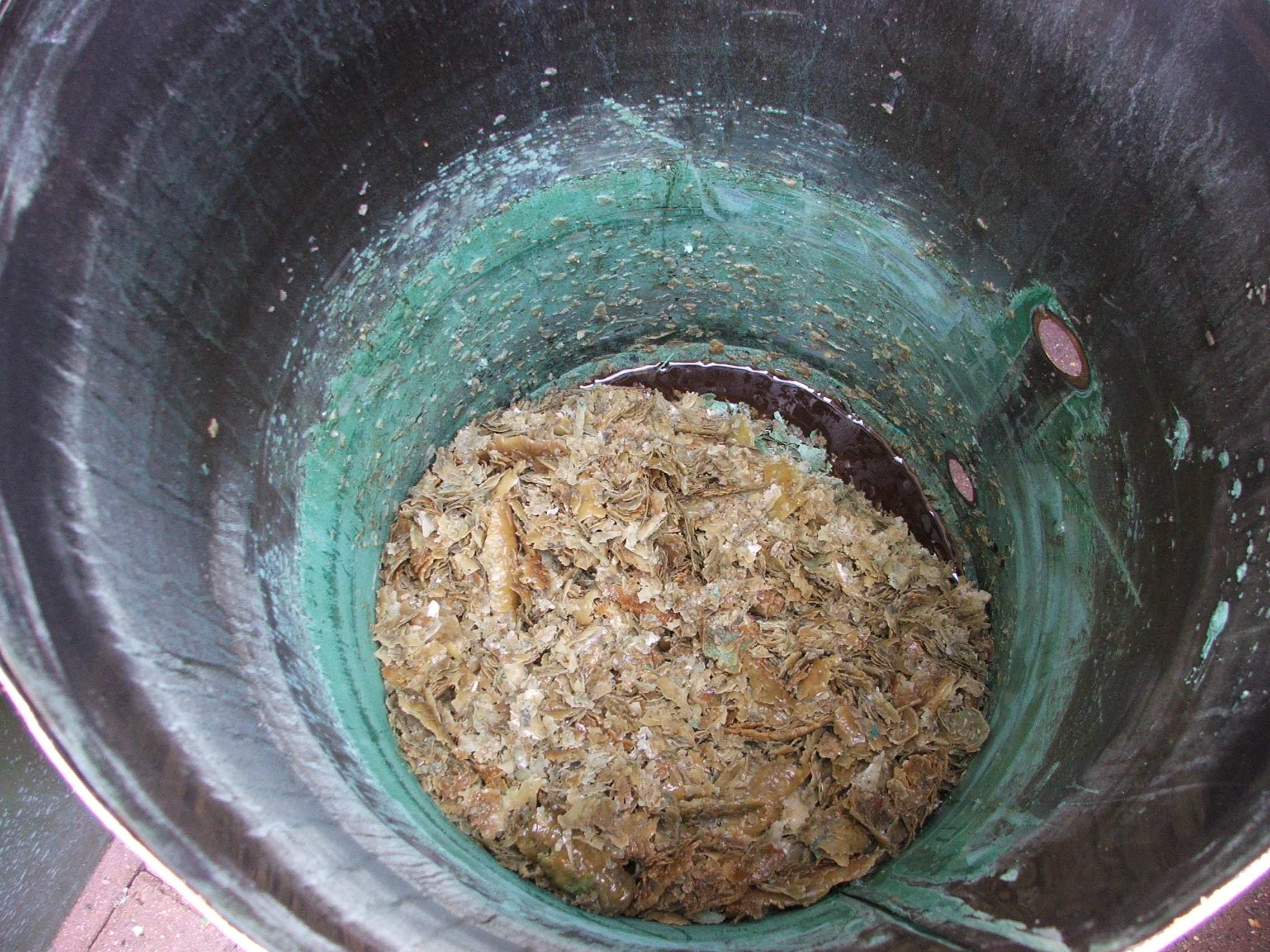
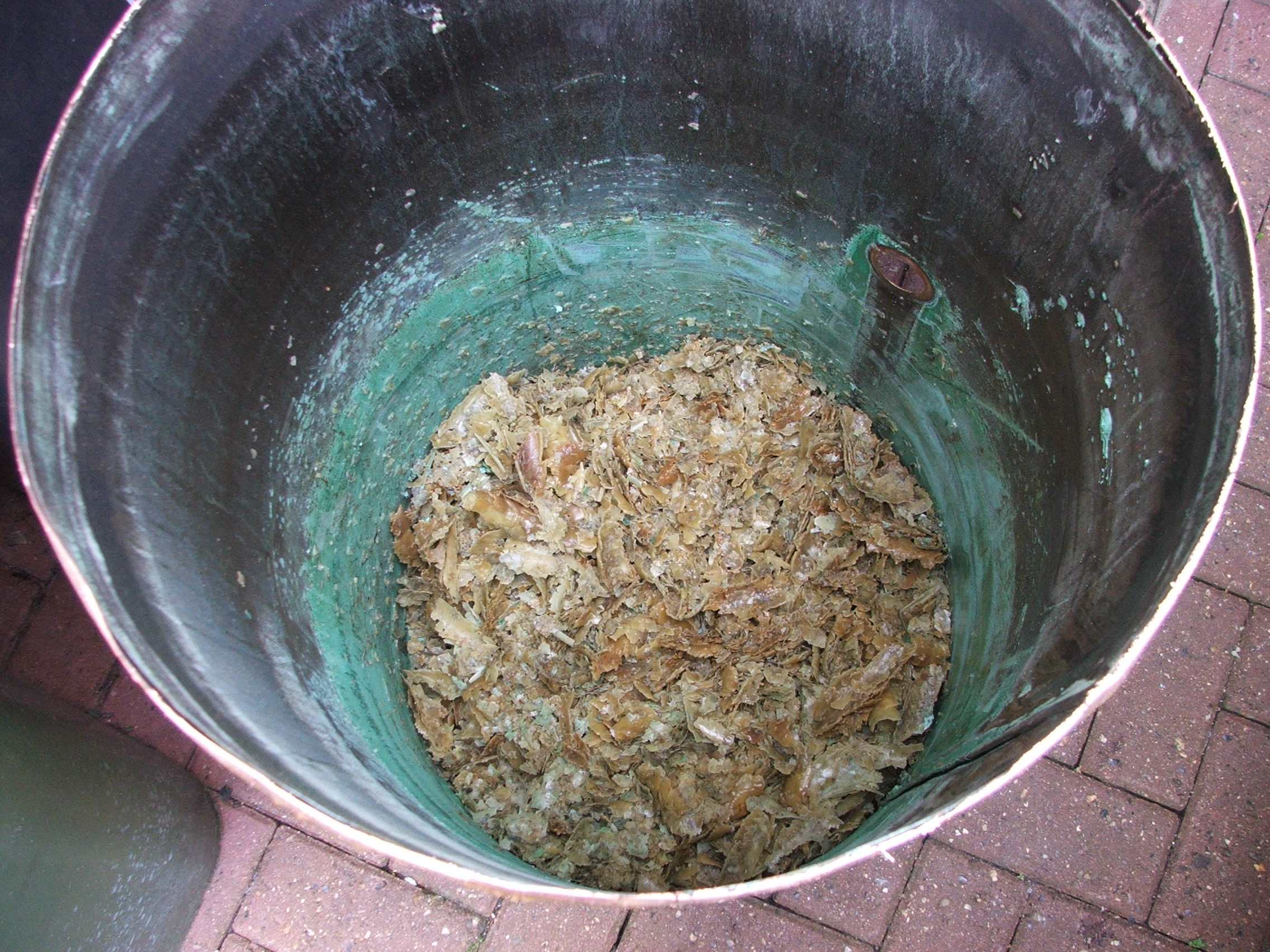
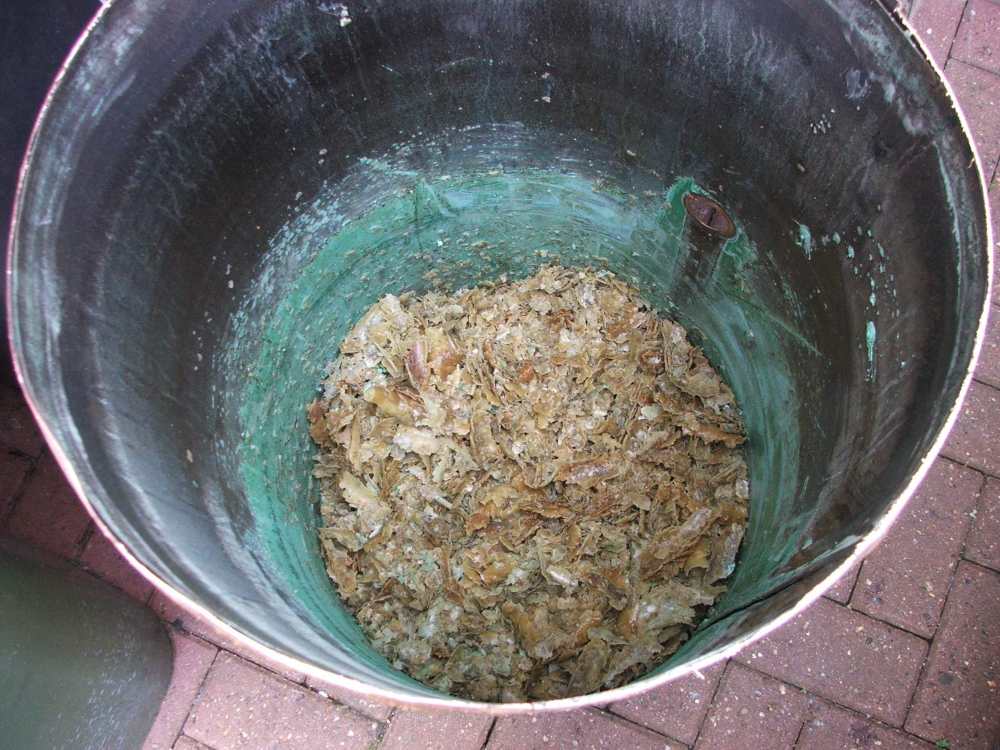
i couldn’t see the heating coil when I cut the top off once I’d cut the coil connections and pulled it out this was was left inside

-
I'm not a self builder (just a very hands on DIY'r who would like to self build one day - is it OK if still come ) but you make a good point very well
-
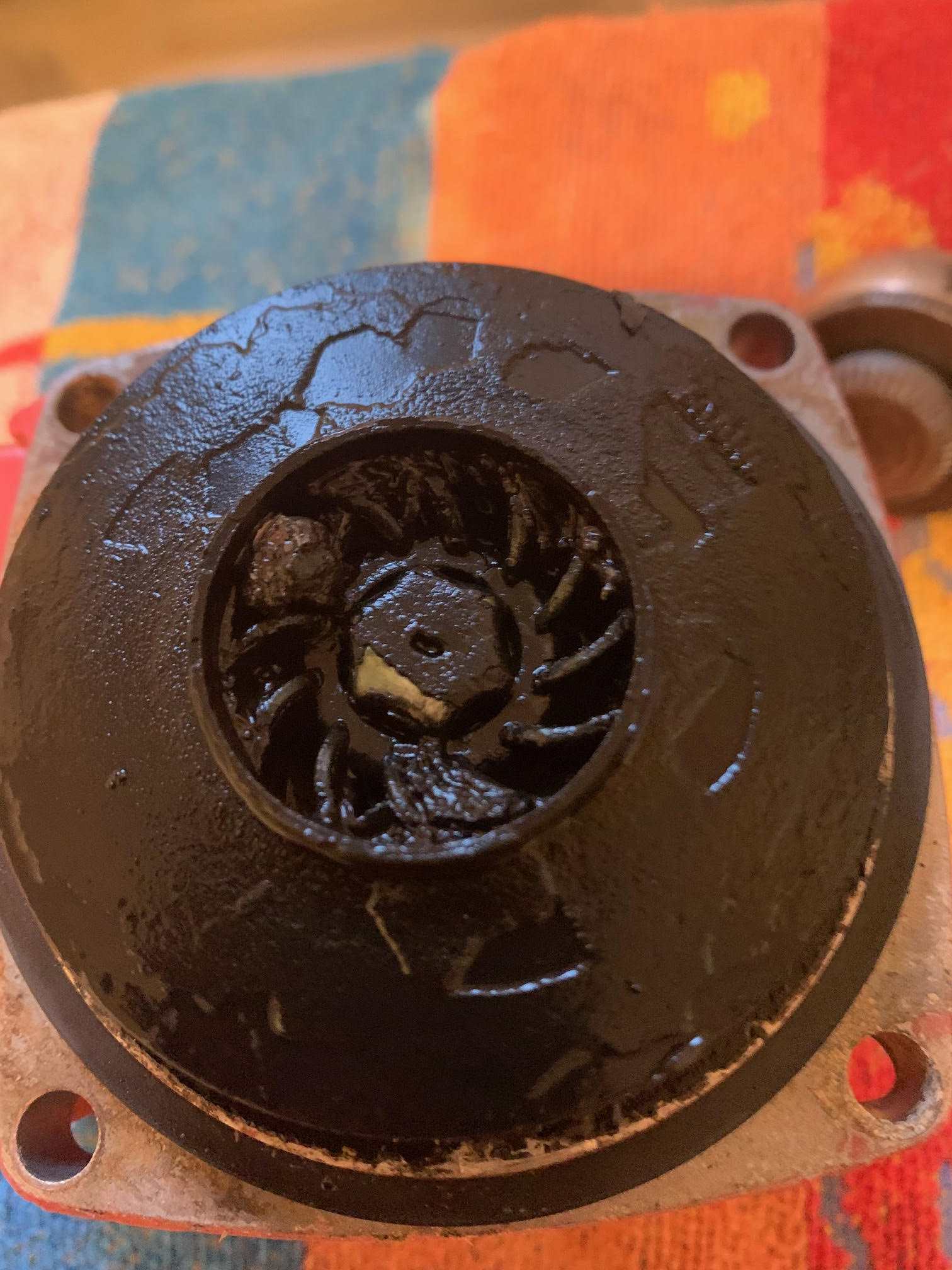
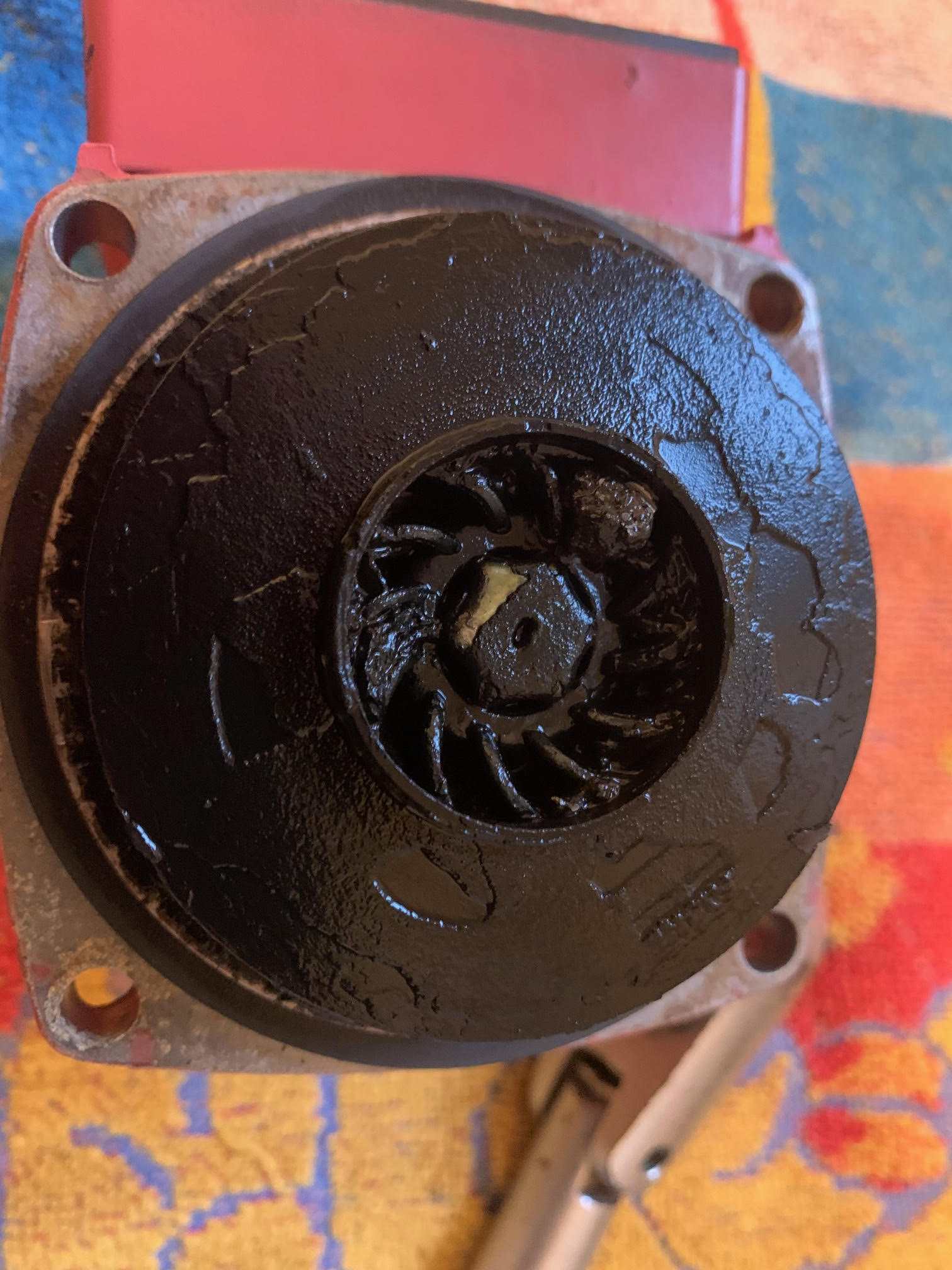
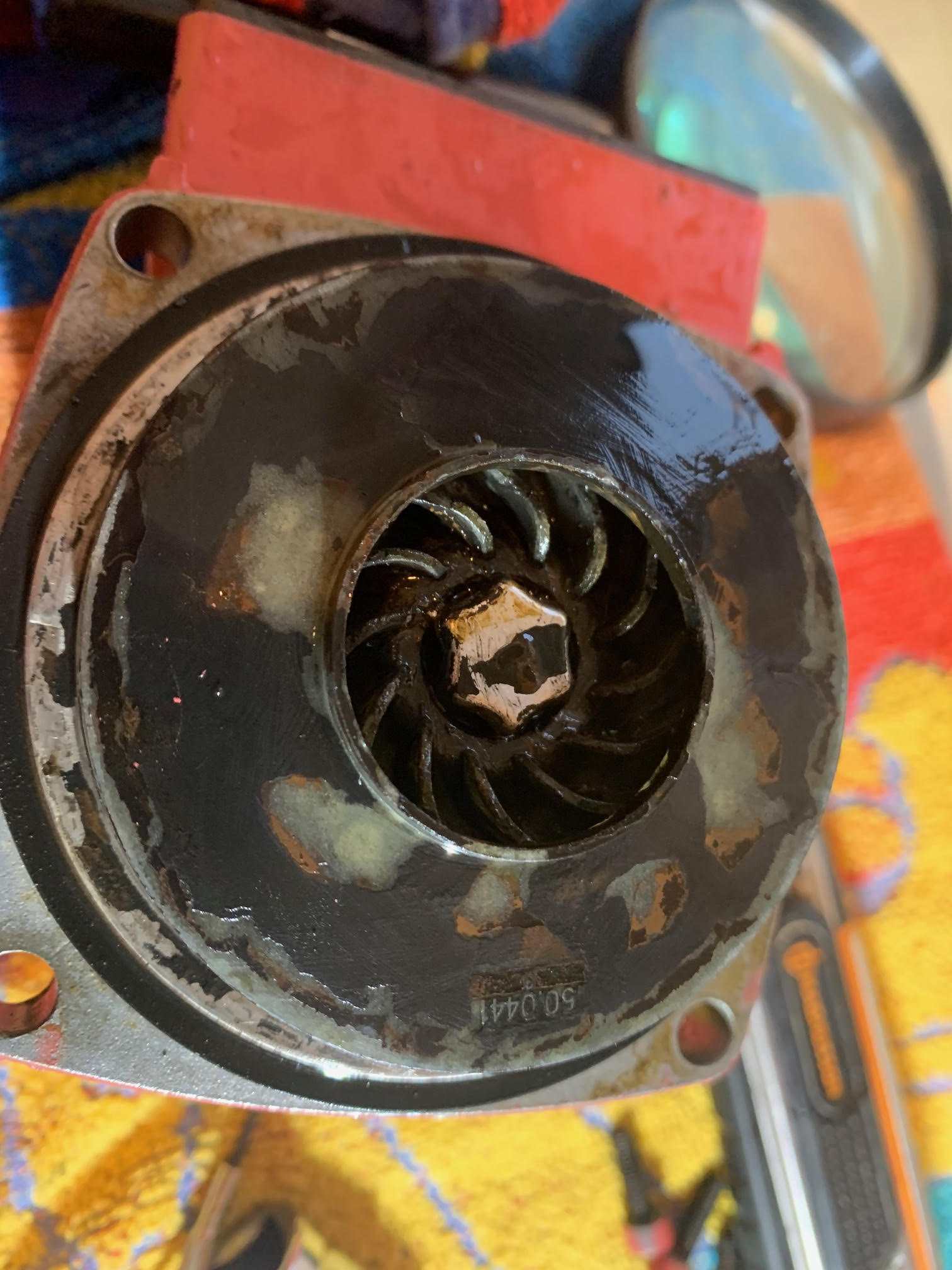
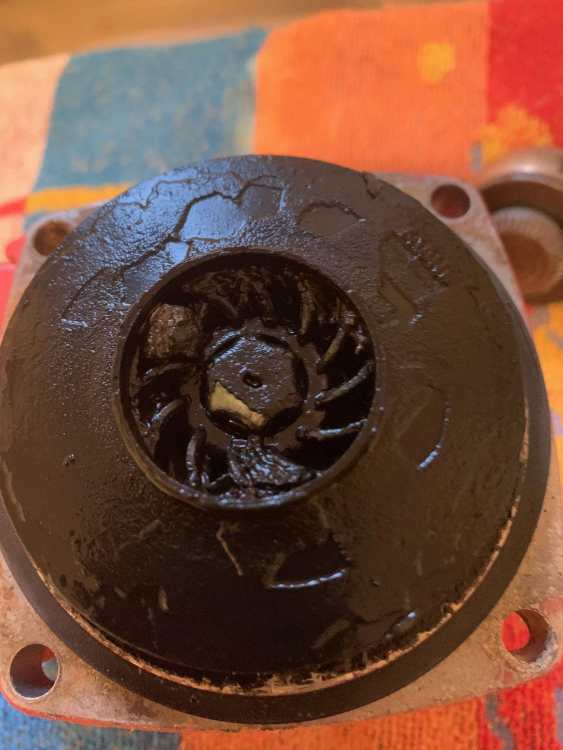
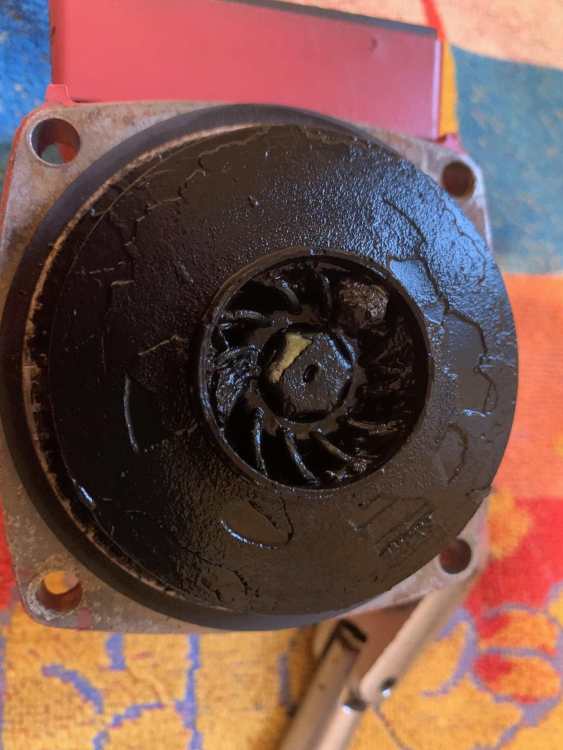
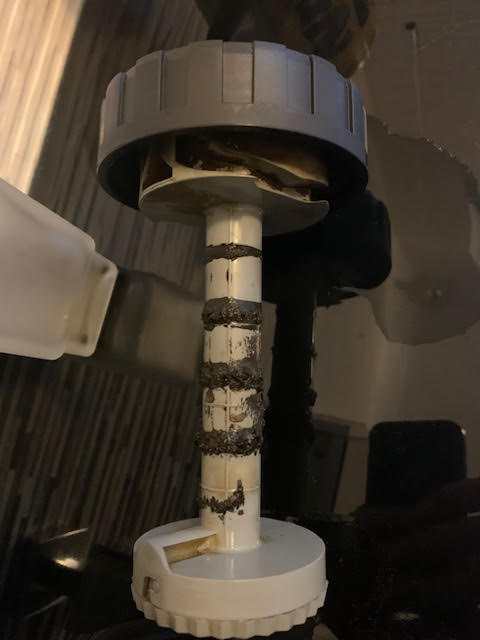
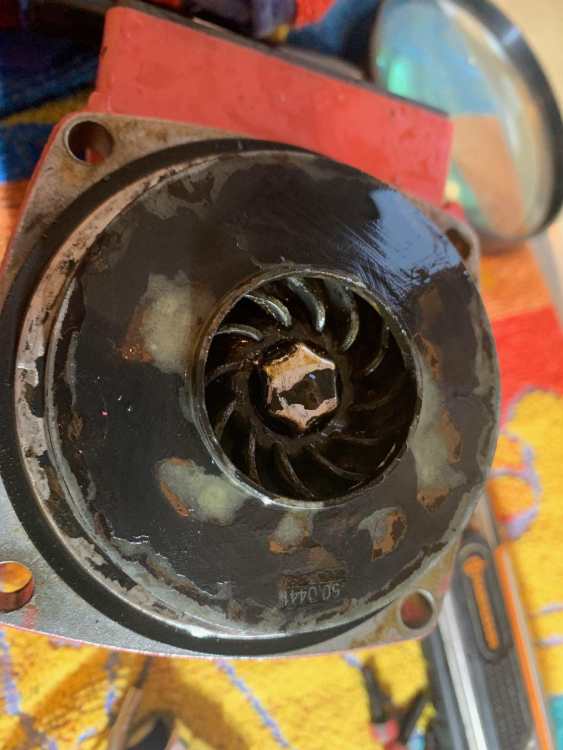
@John Carroll would probably be able to tell you what that circulation pump flows but on Pump Speed 3 it should be more than enough to cope with a big circuit of 19 rads TL:DR - might be worth checking / cleaning pump internals?? Long Version I've just had a thought (based on my experience a couple of years back) My CH circuit always ran on PS 1 (Pump Speed setting one) ie the slowest setting on the pump - gave best DT's at the rads - the house warmed up quickly and all was good in the world (I didn't have WC but ran a fixed Flow temp of 55 Deg C because below that the HW tank wouldn't heat up in the time slot) Only when it was really cold did I bump the pump speed to 2 rather than turn up the flow temp. I didn't like PS 2 because it circuit was noisier and Mrs Marshian is a stupidly light sleeper and circuit noise wakes her up. Then one winter the house wouldn't heat up as well and I had to turn the pump speed up to 2 when it wasn't really that cold outside. I really struggled to understand what was happening but eventually put it down to an aging pump (20 years old) Then when it got really cold I needed PS3 - something was really wrong. So I isolated the pump, removed it and split it This is what the impeller looked like Yeah that's really not going to help move water I have a magnaclean in circuit it never pulls much out of the system - this is typical after 6 months However there was one thing I missed - the magnaclean is after the pump not before it so protecting the boiler but not the pump So I cleaned all the vanes out on the impeller Yes I know it doesn't look like new but the magnatite I scraped out was a good half an egg cup worth. Pump back together and guess what - Pump Speed 1 was absolutely fine again - no system noise, warm house, happy wife = happy life. Next time I did some work to the CH circuit I swapped pump and magnaclean unit so it now protects the pump as well as the boiler.
-
Isn’t that gonna be a bit “sweaty” I do like the high Viz idea from a guessing who is part of the meet up - but I wouldn’t want to wear one all evening
-
Well @Dee you need a bit of help and she or he or it it matters not - I'm a he but it doesn't matter either way - you still need help Come to the Crown we can say hi and we continue the conversation in real life
-
He She It - Apparently gender can be fluid these days so I'm a she, a he, an it but best of all I'm a banana split