marshian
-
Posts
1605 -
Joined
-
Last visited
-
Days Won
6
Everything posted by marshian
-
4 Bed - 2 occupants but we sized the unit for full occupancy (ie family of 4) We have very hard water. (from memory the test result was 400 but it might have been 600) BWT metered water softener - so regens by volume thro it rather than a fixed time interval It is powered 24/7 We use roughly 100 - 125 kgs of salt per year (tablets rather than blocks) so max £100 per year Before installation 1. A washing machine was doing well if it lasted 5 years 2. Shower screens, sinks, toilets and taps would need regular applications of limescale remover 3. When you washed your hair it felt like straw (According to Mrs Alien) 4. For clothes to smell of washing powder (apparently this is a good thing) it would take the max dose recommended After installation 1. Current WMC is now 10 years old (replaced just after fitting Water Softener) 2. Can't remember the last time we used viakal anywhere (If I could stop Mrs Alien using bleach (wrecking chrome and rubber seals) I would have a perfect life 3. Hair apparently in no longer like straw (According to Mrs Alien) 4. We have a line on the washing powder cup and it's sod all but the clothes still smell of washing powder (apparently a good thing)
-
 That looks excellent - thanks for sharing an updated picture
 -
No offence intended here - why is the best way to insulate a suspended floor by insulation under the floor ruled out I'd much rather do that when there is a std floor than have to do it later and ruin a herringbone floor Having insulated almost all the entire of my ground floor from underneath in a 2 ft crawl space due to a range of finished flooring above (Kitchen and Utility room tiled, Front Hall, hallway, downstairs loo and dining room 25mm Oak floor.) I'd choose ripping up a std wood floor and insulating from above in a heartbeat!!!
-
Wow that all looks quite snug Clearances around some of the pipes where they cross over looks tight for decent thick wall pipe insulation Has the room got any other heat source in it - clearly someone does the ironing in there
-
One simple sentence that explains so much
-
The radiator with the highest mean temp would be the one that emitted the most heat (that might not be the highest difference)
-
He didn't say his floors squeaked He asked the question "would option 1 lead to squeaky floors?"
-
Just to show potentially how much a leaky cistern could hurt here's my water usage when I had a a cistern that was overfilling and letting water flow into the bowl due to a failing fill valve It was in a the downstairs toilet which is rarely used and was the only explanation for the increase in water usage The £ killer is not the billing for the water used it's the £ sewerage charge based on ~80% of the water used

-
@Nick Laslett have you got any pictures with the in roof install finished? I will at some stage need to strip my south facing roof to replace the felt (Old bitumen style felt from the 80's) I have a small stock of spare roof tiles from when I did the extension (I could still get the original tiles then) but the in roof solar PV looks like I could get away without trying to find seconds to match the existing tiles.
-
What size boiler would you recommend.
marshian replied to tommyleestaples's topic in Boilers & Hot Water Tanks
comes with wifi connectivity out of the box so all the parameters (boiler run time, cycles (starts) all avaliable - if the house heat loss is 8kWh at -2 I’d go for one of the OP’s selections because at 10 deg C OAT they would be a good match but if the OP’s heat loss at -2 was 4kWh I’d go for the viessmann - low and slow like a heat pump is a much better way to heat a house -
Boiler short cycling with low flow temperatures
marshian replied to seanblee's topic in Central Heating (Radiators)
Sheesh....................... I posted it because it's useful to have an expectation of what your return temps are likely to be based on a lowered flow temp. 30 Deg Boiler Flow Temp 20 Deg Room Temp You aren't going to get a DT of 20 and a boiler return temp of 10 Deg I think you need to consider the audience that the blogs are aimed at - mainly the general public / DIY enthusiasts It's a "rule of thumb" - a "guide" call it whatever you like it's not "Gravity" They do training sessions for Heat Engineers that are way more detailed -
What size boiler would you recommend.
marshian replied to tommyleestaples's topic in Boilers & Hot Water Tanks
Unfortunately the three boilers shown compromise space heating min output by increasingly high min modulation I'd pick the smallest one on that basis Actually I wouldn't I'd go for a Viessmann 200-W and have a CH min modulation of 1.9 kWh regardless of how big the HW side was https://viessmanndirect.co.uk/Catalogue/Residential-Boilers/Viessmann-Combi-Boilers/Vitodens-200-W-Combi-Boilers/Vitodens-200-W-35kW-Combi-Boiler-Z020316 HW 17l/Min @ 60 Deg C for the 35kWh Combi CH Modulation range 1:17 -
Fix the leaking cistern - if the noise stops happy days that water leak could cost you a significant amount…….
-
Boiler short cycling with low flow temperatures
marshian replied to seanblee's topic in Central Heating (Radiators)
Table generated by "Rule of thumb" Heat Geek article said As the controller causes the return temperature to drop and get ever closer to the room temperature, it becomes increasingly more difficult to shed the heat. This is because the 'heat transfer coefficient' of the radiators drops. For example, if you have a room of 20°c you'll never be able to get a DT of 20 if your flow temperature is for example 30°c. A more realistic target is a DT that's around 30% of the flow temperature. For example; If we have a flow temperature of 70°c, (70 x 0.3) gives a DT of 21°c. If your flow temperature is 50°c this would give a DT of 15°c (50 X 0.3) and so on. This is not exact, it's just to get the flow rate in the right ballpark. There are more complex calculations for this if you need but really not worth it. -
To get your head around all aspects of boiler sizing, efficiency optimisation etc etc have a watch of this
-
Boiler short cycling with low flow temperatures
marshian replied to seanblee's topic in Central Heating (Radiators)
Found it https://www.heatgeek.com/do-we-really-need-dt20/ Basically as you lower the flow temps the delta between flow and return will drop I'm currently running ~30 deg Boiler flow with a 7 Deg drop at the return of the boiler Flow Temp Return Temp Diff 80 56.0 24.0 75 52.5 22.5 70 49.0 21.0 65 45.5 19.5 60 42.0 18.0 55 38.5 16.5 50 35.0 15.0 45 31.5 13.5 40 28.0 12.0 35 24.5 10.5 30 21.0 9.0 -
Sorry I must have missed it but why would you specifically want opentherm over std weather compensation using an external temp sensor?
-
Nasty clickety pipes and how to avoid them?
marshian replied to MikeSharp01's topic in General Plumbing
Alternatively increase your rad sizes (in alignment with room heating requirements) and then lower the flow temp at the boiler. The lower the boiler flow temp the less expansion in the pipes and as a result the clicking reduces. In our house used to be terribly noisy every time the boiler fired up on 70 deg flow temps. Over the years (with improvements to rad sizes and house insulation) I've managed to reduce flow temp to 45 to 55 deg C (manual weather compensation and scheduled heating periods) With a boiler change as well as a move to WC flow temps and heating 24/7 it's now at ~30 deg I only get click clacks from the pipe work just after I have finished a HW cycle (because the boiler heats the HW tank at 80 deg Flow Temp and a small slug of 80 deg HW gets dumped into the CH circuit when the boiler reverts to CH at ~30 Deg C and this does create a little pipe work noise for a couple of mins -
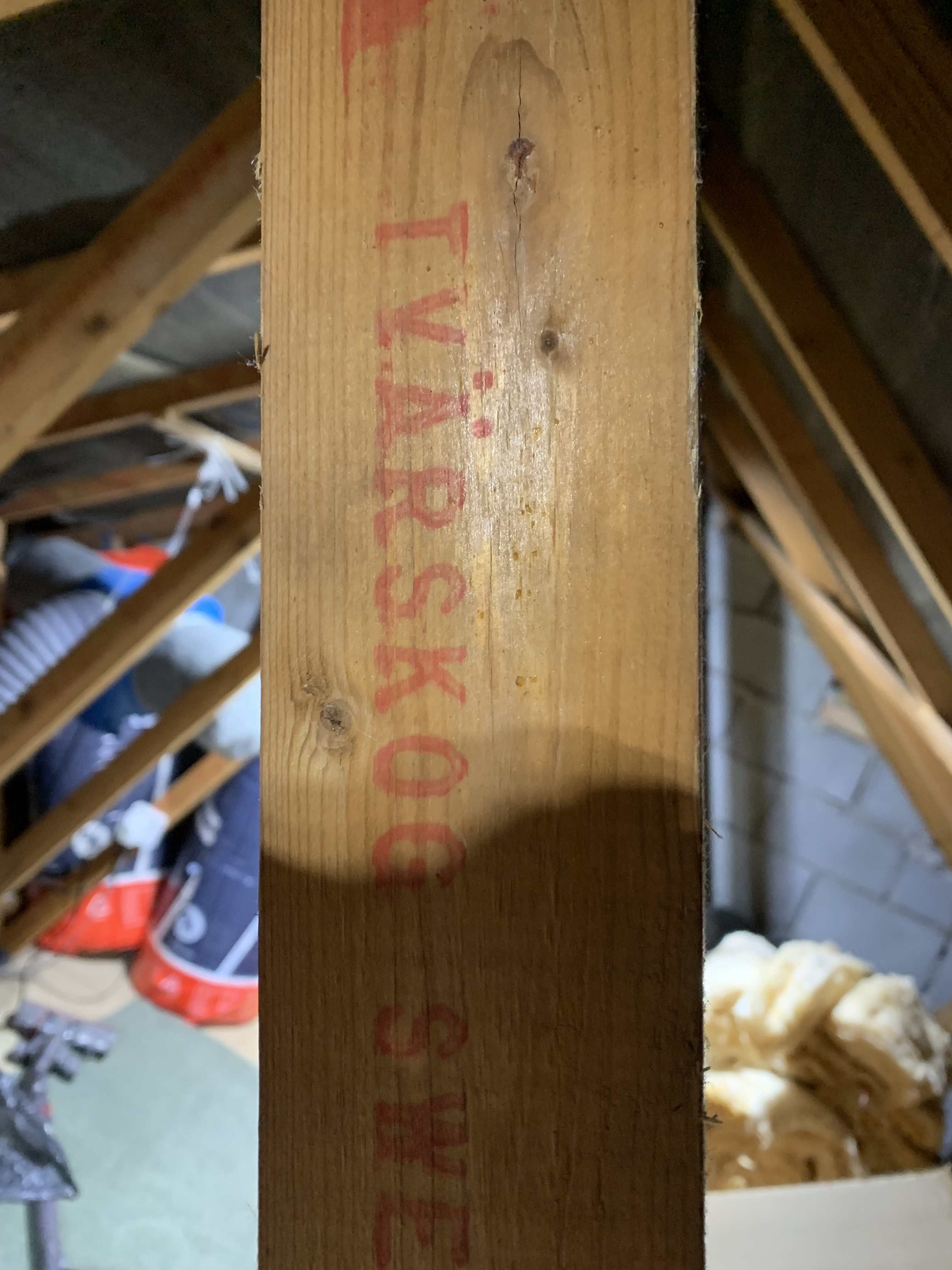
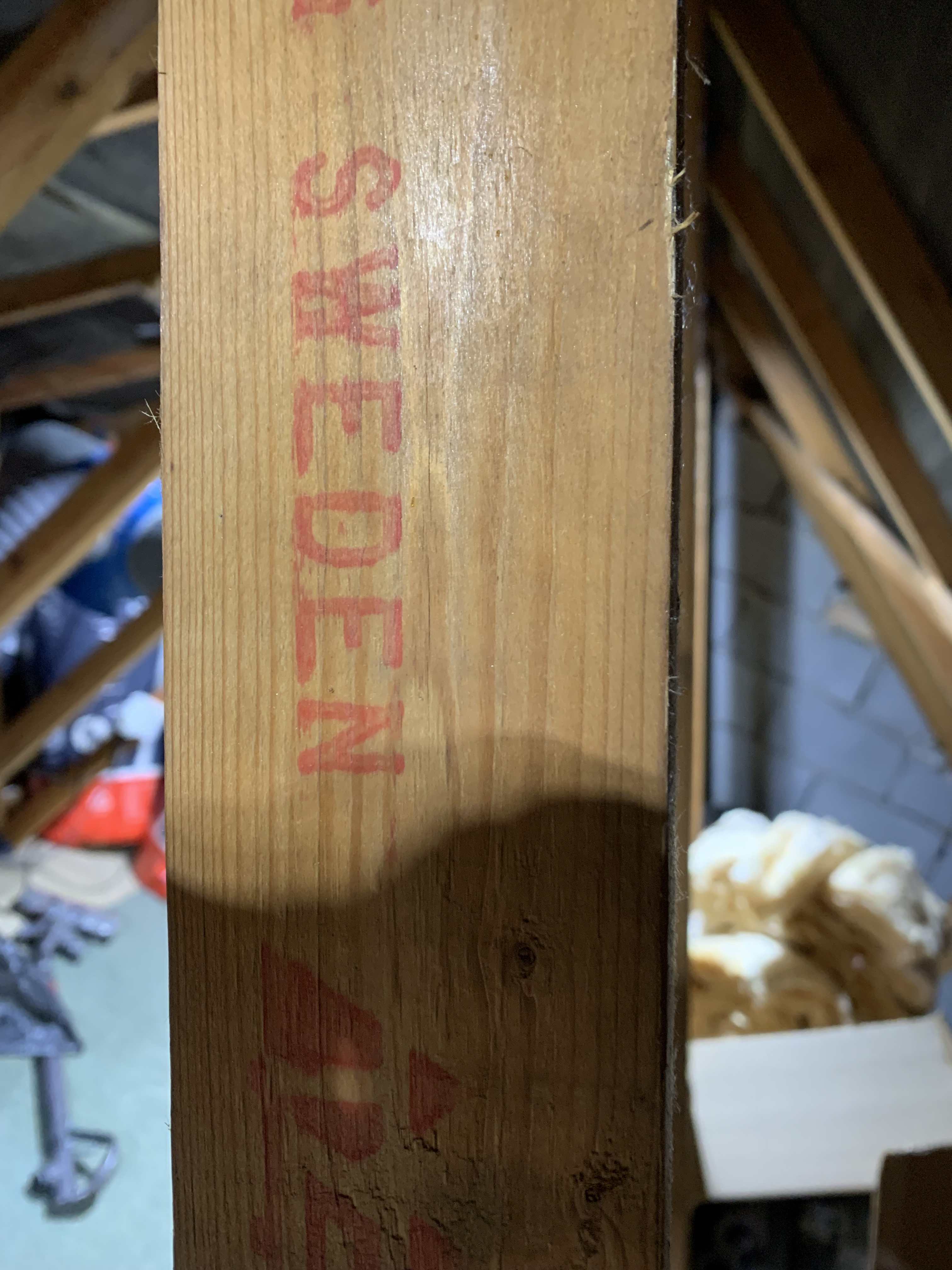
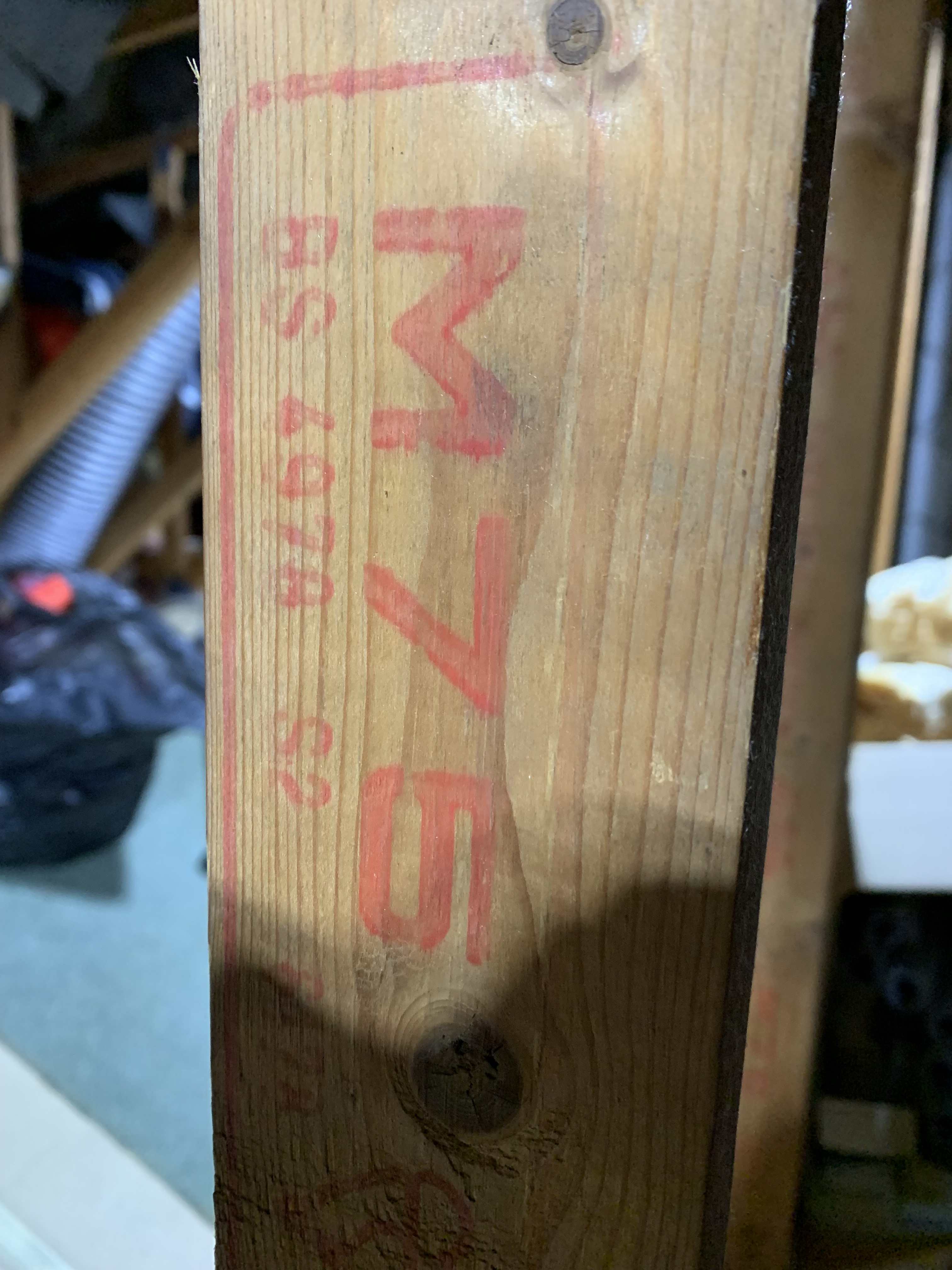
Ahh google informs me that is the std for graded timber used in the trusses. I'm pretty sure the Trusses would have been fabricated by local roofing company but they've been amalgamated into another company.
-
Took pictures so I don’t forget BS 4978 - is what they are marked up as
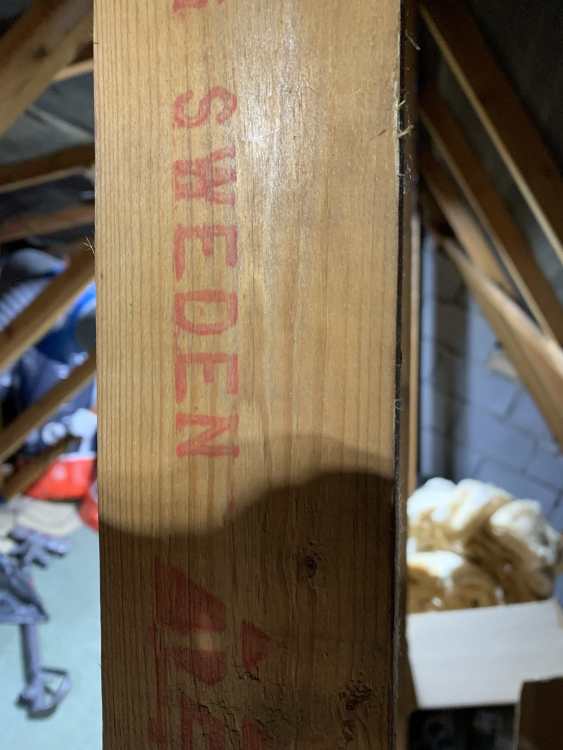
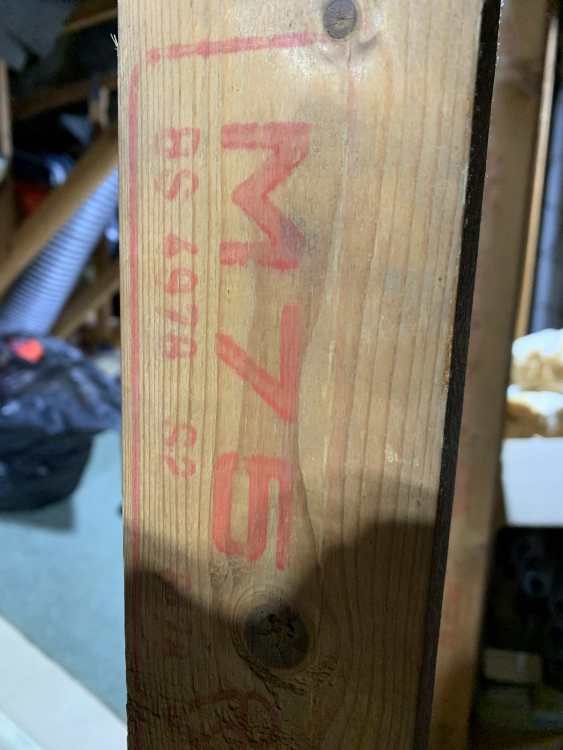
-
1. yes lower the return temp (below 54 deg C) the better the condensing and efficiency improvements @JohnMo has experience with atag - I don’t 2. Circuit size and volume of water in the rads normally drives the need for a volumiser @JohnMo is your man for discussion around that 3. No you will always have a difference between flow and return unless your room and rad temps are equal 4. You really want to make A, B or C work don’t you???? I’ve no further comments on any of those schemes
-
On the plus side @Ann D Mann credit is due for the choice of user name - did make me chuckle a liitle
-
much better reply than mine - said it all so well bravo @SteamyTea
-
so as “waste not want not” people surely you can see that adding 1. A boat load of extra cost 2. A shed load of complexity and probably 3. A bucket of safety risk (kettling a HE behind a stove leading to steam which considerably ramps up the pressure in a circuit and that would be “sub oprimal” Would not be a “waste not want not” solution Treat the stove as a stove and let another heat source do what it should be good at all in my opinion of course you will do what you want at the end of the day but remember one thing - you came on here asking for advice If you came on here asking for your options to be validated you should have said so at the start - no-one would have responded
-
@Nickfromwales any chance you can fix the replies within quotes by @Ann D Mann - makes it hard to read….. @Ann D Mann reply outside/below the quoted box please or your replies get buried in the quotes and they need to be expanded to read