Tyke2
-
Posts
126 -
Joined
-
Last visited
Everything posted by Tyke2
-
If it gets refused, despite having officers recommendation for approval, the council have little or no chance of winning an appeal.
-
Any objection has to have a valid planning reason to be taken into account. As said before, the planning officer should have taken all into account anyway. If it goes to committee and a councillor with some clout gets nobbled by enough objectors, they could refuse. But you would win on appeal. From experience - I had an application refused at committee despite it having officers recommendation for approval. The planning officer asked the committee to give him the reason for refusal to record the decision. the councillor replied "Just put - Too silly". The officer obviously didn't record it this way. When we appealed, the councils written representation extended to just two sides of A4. Ours was 200 pages. We won the appeal.
-
Any column would need to be supported, either from the existing footing or a new specialist pad to support the new column. Or if adding extra load to the existing structure a structural survey would need doing. But unless its on filled ground or piled, I would think that the foundation used for a bungalow would support a second storey. In any case you really need to know what's down there.
-
If the wayleave is voluntary and there is provision to terminate this agreement and serve notice for them to remove the over sailing equipment, why don't you just serve notice? If they then apply for a compulsory deed etc, they will have to compensate you for loss of value of your property and pay your reasonable fees I would have thought. @Ferdinand is wholly correct in my view. The professionals including your lawyer when you bought the property, and architect should have identified the obstructions and advised you accordingly. I had a similar situation with powergen a few years ago on a site, There was an easement for overhead lines 33kv if I remember correctly. Usually they have you over a barrel and you have to pay the costs of diverting them. But on this occasion the legal agreement had a lift and shift clause, where on notice, they had 3 months to remove them from the site. Straight away Powergen advised us that it would cost us £250k and take 12 months, until I produced the legal agreement. They said it was impossible due to their network agreements etc to divert them in 3 months. I just pointed them to the agreement and advised them to begin working up a compensation package for our losses. They started treating us with a little more respect then.
-
There’s many reasons why a developer has covenants in the deeds to curtail homeowners builoing things. Such as to stop you building things too close to sewers and stopping them from being adopted. When all the plots are sold and roads and sewers adopted, they have zero interest in being involved. I was the person with the job of issuing such approval. Sometimes I would get a call from the owner of a 20 year old house insisting that we stop a neighbor building a rabbit hutch etc: Definitely not interested!
-
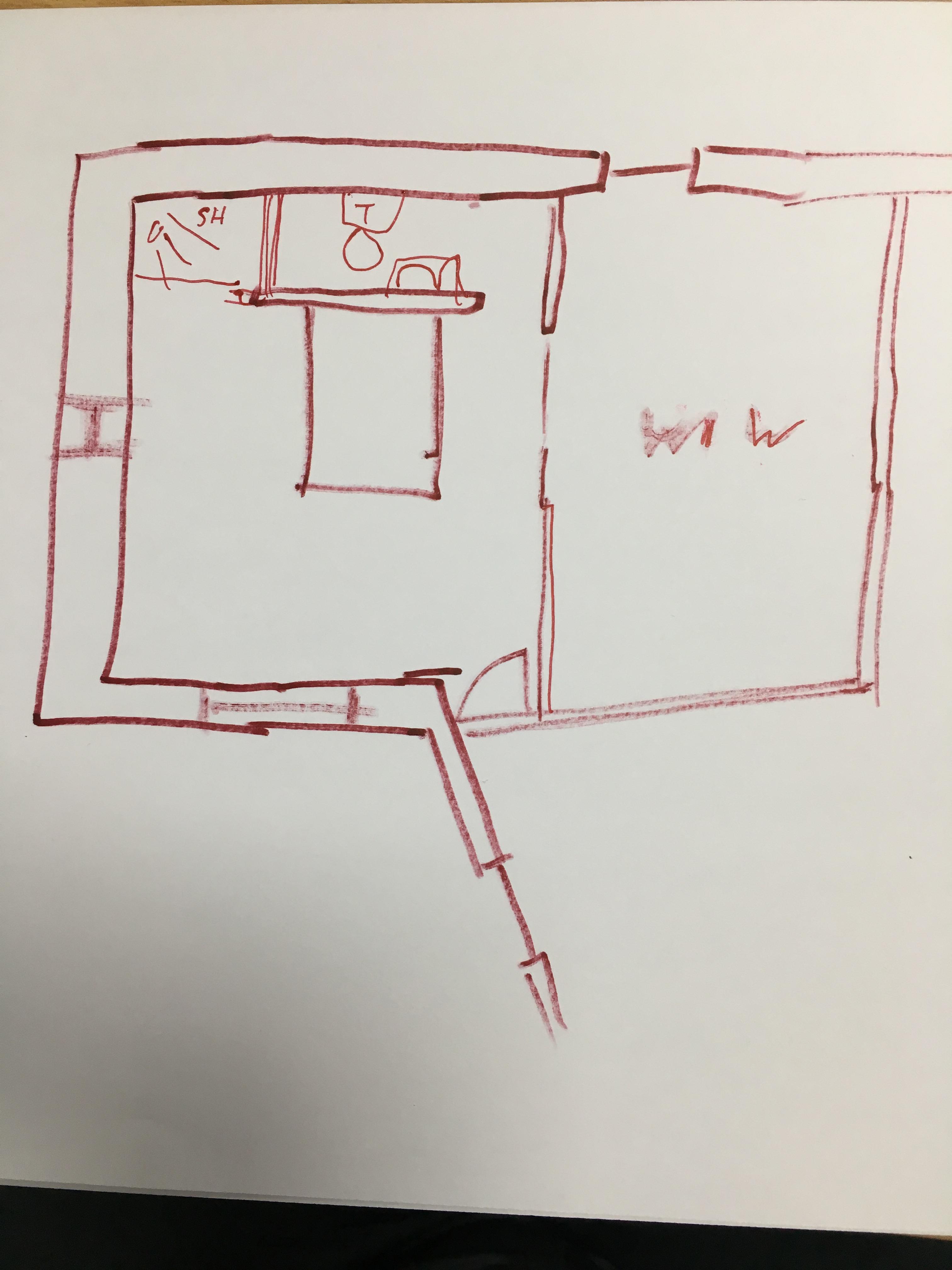
I’m thinking more like this. Sirry for terrible sketching. tweak the wiw wall to the landing a bit too
-
Looking completely out of the box - Could you perhaps move the ensuite sanitary ware to the space behind the bed. The space could even be a bit wider looking at where the foot of the bed is. I have seen similar without even doors on (not my choice but each to their own) The walk in wardrobe could then be twice as big or a combined WiW and dressing room.
-
I have been reading loads of threads regarding everyone's multi faceted heating / hot water systems. One thing I haven't really seen, despite looking, is a common thread on how the systems are managed. If you have UFH, Sunamp, PV, ASHP,MHVR etc. how are these managed together? Are there proven Building Management Systems for domestic use? or is it more keep tweaking until they are balanced? and rebalance each seasonal change? I know in commercial buildings that BMS is common place, and that designing and setting these up is an expensive and complicated matter.
-
Price wise. I don't know. Its just what the cost calculators for self build finance seems to produce. I assume its a new build garage. but if you extend the existing one , the costs will vary. 1) -One less gable to build. 2)+ Insulate existing gable. Build all the new walls in double skin brickwork plus insulation. 3) +build floor to building regs of a habitable room, i.e. insulate floors. 4) + cost of heating, toilets etc. 5) + internal finishes So I would imagine the costs will increase over that of a double garage. If I was you I would look for a local person who can draw up some sketch plans, the local paper etc normally has someone advertising plans drawn for extensions etc, and have 3 builders price it. Unless of course you intend building yourself.
-
Its because they are operating a production line of a standard product. They would need to divert resource to making a bespoke item for little or no benefit to themselves. Look at it like if you went to Nestle and said " you're making five finger Kit Kats on that production line. Can you make me a six finger one, and a bit shorter than the others please"
-
Speaking from a developers point of view - They would not touch it. They are in it for a quick in and out of the development. If you want something bespoke you need to do a self build. They might let you buy the materials through them. But if not they will surely let you know the exact manufacturer and type of brick, tile and maybe mortar if its coloured? If not just look on site at the brick and tile packs, it will say on the side what they are. The PD rights are in this doc :-https://assets.publishing.service.gov.uk/government/uploads/system/uploads/attachment_data/file/606669/170405_Householder_Technical_Guidance__-April_2017_FINAL.pdf Looking at the costs that some websites state for a double garage , they quote around £18k to £23k. This sounds a lot to me. You need to check what the foundations are on site also. Hopefully its a standard strip footing. If its raft or piled you will quickly increase your costs.
-
It depends on how it arrives from the manufacturer. Mine came with tread/riser stair assembly all in one piece, all balustrade, and all other bits loose. I needed a joiner. To fit altogether along with internal balcony balustrade took a full day.
-
Hi Gudji Good luck in your ambitions for a group build. I think getting a group of people to agree everything necessary to buy a piece of land, get the finance together etc will be pretty much impossible. Its difficult enough when you can make your own decisions and act quickly.
-
@PeterW is correct. Its one of the things that keeps me awake at night, contemplating the section through the stairs.. You need to know if the downstairs floor covering, carpet, timber ect is to go under the stairs or around the base and seat the stairs on the floor slab. Also what is the floor covering at first floor. Take the measurement with the builder. i.e. measure from whatever you are seating the stars on to wherever the top of the stairs will be. if its carpet, then I would think you need ground floor slab to top of first floor timber. make sure you and the builder are ok with what you measure and give this to the stair manufacturer to work to. Easy!
-
It’s up to you really. But if the BCare not happy they will be a pain. Normally it will be a planning condition that all SW will go to soakaway . As a developer you wound have to overcome the issue. As a self builder I have never seen a building go up and then not be allowed to connect to a drain. In my case I had similar clay, and built a soak away in any case. I only put one connection into it from half the main roof. The rest I piped into the existing combined drain. The soakaway has not caused any issue though. When in clay it is best to have a long narrow trench soakaway which may span over cracks in the clay etc and allow water to “soak away” even though the clay is pretty iimpermeable.
- 10 replies
-
- 1
-

-
- planning
- building control
- (and 2 more)
-
Hi i have used a phigroup system on a 70degree slopec so not quite verticle. It was a system called soil panel. Like a thin gabion but filled with soil, then impregnated with a grass mix to give a green wall. Worked well in a high exposure area and very sensitive in a conservation area.
-
One way is to use the architect initially and then if using a main contractor, novate the architect and any other consultants over to the builder, so that the builder becomes responsible for everything.
-
This is true.
-
Hi I don't think it will save you anything to wait until you have structural details before appointing an architect. If you are wanting to have an architect on board, they may have some local engineers that they have good relationships with already. Also the architect may advise you on other aspects of the building structure they need a structural engineers view on. So I would get the architect on board first, tell them what you want to do to the building and let them advise on what they need from the engineer. Which will definitely involve digging trial holes to expose the existing foundation.
-
Retrofit underfloor heating recommendations?
Tyke2 replied to ThePoplars's topic in Underfloor Heating
I worked on the regeneration of the Ragworth estate - Stockton. That was an adventure! -
The Build - Things have got very messy!
Tyke2 commented on Redoctober's blog entry in Our Journey North of the Border
Hi I like your internal doors. -
I'm not a fan of fees related to build cost. Why should an designer be paid more if you put gold plated stairs in? It is in their interest fro the build to cost more, when you want them to add value by reducing you costs overall. I would only go with a priced schedule of services.
-
it is interesting, differing peoples view on self building. I stopped watching grand designs years ago, It went from being mrs+mrs average struggling to build a house with little skills, a few mates and assorted local tradesmen. to Mr+Mrs wealthy, buying a £mega plot, having an architect, project manager, main contractor and site forman etc. Most big housebuilders use fairly standard house types, a booklet of standard details and a architectural technologist or "tech" in the trade. In reality if you had one of the BArrat sales brochures and some standard details for floor, stairs, eaves, any reasonably experience person could knock up a house. The difference with self buils is that you may have some very specific features that are precious to you. Maybe balconies, undercroft leisure suite, passivehaus etc. Your plot maybe on difficult topography also. So an architect may be best placed because of their experience or even just "vision" that you may not have. If you are building a square box to building regs, then a local Architectural Technologist is more than enough to get you planning and sort some basic details. Call on them if you need them for any niggles that crop up. If you are doing something more ambitious, why not use an architect to do the design and planning, then a techo to help you through the build.
-
2.4 m back and 70 m along back of footpath. Try this: https://www.homebuilding.co.uk/visibility-splays/ But I would have thought this was fo ran adoptable access road and not a domestic driveway.
-
Also.... A good setting out engineer, regardless of what equipment he is using will take check measurements - using a tape, before he is satisfied all is well and leaves site. They should work out the diagonal distances (hypotenuse) across a sample of the squares across the foundation to check for square. Also take a few check measurements to site boundary, road etc. They should record these checks for future reference.. This is to a) make sure its correct. B) to safeguard against someone moving the pegs(or whatever) either accidentally or purposefully and then claiming against them. As a young engineer If I returned back to base, my boss would ask to see my record checks in my level book. If I couldn't produce them I would get sent back to site to do them It only happened once!