


Tyke2
-
Posts
126 -
Joined
-
Last visited
Everything posted by Tyke2
-
New build - heat and energy considerations
Tyke2 replied to Tyke2's topic in New House & Self Build Design
Hmmm. Not really. the cold water supply will regularly have elements of legionella present. From HSE guidance:- What is legionella? Legionella bacteria is commonly found in water. The bacteria multiply where temperatures are between 20-45°C and nutrients are available. The bacteria are dormant below 20°C and do not survive above 60°C. -
New build - heat and energy considerations
Tyke2 replied to Tyke2's topic in New House & Self Build Design
Not relevant to residential properties, but for legionella regulations hot water at the tap should be 50 Celsius. 60 Celsius in a storage vessel. -
New build - heat and energy considerations
Tyke2 replied to Tyke2's topic in New House & Self Build Design
I'm pretty sure a noisy heat pump/fan on the HP would be changed similarly? -
New build - heat and energy considerations
Tyke2 replied to Tyke2's topic in New House & Self Build Design
Hi Joe90 Thanks. I'm 100% in favour of fabric first. I doubled up on insulation on my last build, the cost was minimal. For the electric UFH - does this have a high energy usage? Is it electric matting or electrically heated wet system? I hope you are correct on the issue of the heat rising upstairs. I am aware that one of the companies I worked for did a UFH downstairs and radiators upstairs. I was not involved but am told the radiators with TRV's never actually came on, so you may be correct. I have installed an electric wet system using E10 , but again back in 2000 when smart meters were not in use. The E10 was very difficult to get sorted, hopefully it is easier now. I would be interested what actual the electricity usage is on yours, if the temp is kept during normal hours at a comfortable temperature, e.g. 22 to 24 Celsius. -
They are still in business. And it looks like since I used them in 2000 they have grown from a small fabricator to a very big one. Looking at the receipt they even supplied the resin applicator gun too. https://acsstainless.co.uk/ Good luck.
-
Remember to include for cover and invert levels of ant drainage you may be connectibg to
-
New build - heat and energy considerations
Tyke2 replied to Tyke2's topic in New House & Self Build Design
That's interesting. What's the annual running cost of running? Also what's the domestic hot water situation ? Temp/ flow etc? Why have the ASHPs and not fit them? Ill take a long look at the heating threads to swot up a bit, -
Hi I would not necessarily expect a topographic surveyor to be a member if RICS. It seems odd, but land surveying as in topographic is a different discipline from the land/buildings surveying in RICS world. RICS is more commercial valuing, building condition. However some will be registered if they have a broader field of experience. I checked with some that I have used for many years and they are not members. If its just a single plot and he's using a modern total station it should be fine.
-
New build - heat and energy considerations
Tyke2 replied to Tyke2's topic in New House & Self Build Design
The buildings are all designed by an M&E/building services specialist engineer, with accompanying Breeam assessor. All are maintained in accordance with manufacturers and design requirements, and audited on a quarterly basis. There are "energy committees" in the buildings to engender good practices with staff.. i.e no fan heaters, close doors to corridors etc. It is definitely not apples with apples as you say. But the data is very robust. -
New build - heat and energy considerations
Tyke2 replied to Tyke2's topic in New House & Self Build Design
The buildings are sealed. I.e no opening windows.. Lights are PIR. Heating level set centrally with no local control. -
New build - heat and energy considerations
Tyke2 replied to Tyke2's topic in New House & Self Build Design
No I am talking of energy costs only. I think maintenance cost of a ASHP would be similar to a boiler etc though. -
New build - heat and energy considerations
Tyke2 replied to Tyke2's topic in New House & Self Build Design
So - Im at the stage of trying to agree a plot purchase, so quite premature to be worrying about heating some may think. But say I want UFH and this effects the floor slab design/thickness. So it needs thinking about SAP I think. Similarly the plot is in a conservation area and at present would need a natural stone roof. So If I want PV there is some work to do. I'm a fan of "fabric first" but not a fan of lots of mechanical gadgetry. I'm happy to be educated, but MVHR, HP etc seem to be ringing my maintenance alarm bells. In back ground for a living I manage a company that manages a large portfolio of big public buildings. The ones built in 2004 to 2008 have traditional heating systems and opening windows. Their energy consumption is £x. The buildings built late on to Breeam standards with PV, HP, MVHR, ST are generally running at £x +40%. So you can understand why I'm sceptical. -
New build - heat and energy considerations
Tyke2 replied to Tyke2's topic in New House & Self Build Design
Thanks. Its all quite overwhelming! Ideally I would have UFH downstairs. Radiators upstairs ( Mrs T wants to dry her washing). These are the basics of what I would like. As there is no gas in the village I assumed I would need either Gas or Oil tank installed. So what are the options on a pretty standard construction, 250m2 house, traditional build, concrete ground floor slab.? Ideally as little that is mechanical as possible. In my experience the more hitech "green " stuff I have in the buildings I'm involved in through work, the higher the running and maintenance costs. Also I want to have heat on demand. Again shivering at night is not on the agenda. -
I know its an old thread, but I know the people at CRS futurebuild quite well. I have worked with them on bigger housing developments since about 1995 and I can say they are as good as any I have worked with. I know nothing about Isolohr though.
-
Feel sick with worry about escalating build costs
Tyke2 replied to Jude1234's topic in Costing & Estimating
Hi I will come and have a look if thats ok. Im as much interested in the next stage also. I.e how it all plumbs in together. UFH,Thermal store, radaitors ands perhaps Solar. The issues I have on work installs are that each technology is fine on its own, but getting them to work together is more difficult. -
Feel sick with worry about escalating build costs
Tyke2 replied to Jude1234's topic in Costing & Estimating
I think it fair to say that the planning authority has so little resource due to austerity cutbacks that they weill have little or no appetite or capacity to be bothered by such things. Unless there is a proper nuisance or H&S situation, or a local councillor takes a dislike to you. Maybe if it was in a particular sensive conservation area etc. I moved in ages before the competion cert as I delayed the final certificate so I could get as much done prior to submitting my VAT claim. -
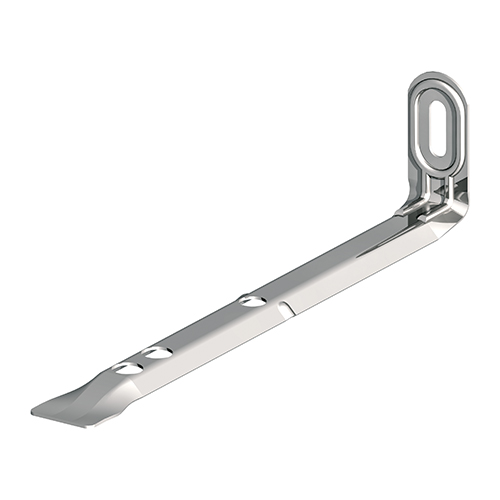
Funny, it’s the first receipt in the vat file. ACS stainless steel fixings in Leeds. You may be better using something like the lower picture - a frame cramp. You could use a hilti nail gun to fix them and the bricklayers could fix as they went aong. It would be much simpler, easier and cheaper than what I did. When I built mine, the internet was not as it is now so finding specialist bits was not so simple.
-
I had the ties made up at a small tie manufacturer in Leeds. They may still be around. I didn’t fill the cavity. I’m the external walls are 750 mm thick sandstone, so I used a thermal block with the best insulation level I could get for the internal skin. It worked great. The house is warm. I will have a look in my loft and see if I have the receipt from the tie Co.
-
Feel sick with worry about escalating build costs
Tyke2 replied to Jude1234's topic in Costing & Estimating
The plot I’m looking at now has no mains gas, or sewers available. I have a few buildings in my work portfolio with renewables , such as solar thermal- never worked, ASHP - works ok. Biomas - works 10% of the time. So I am a little sceptical to be honest. -
I fancy wet UFH downstairs, but radiators upstairs. Im not sure how easy this is as they would run at different water temps. If i go with Solar thermal too it gets more complicated. Id probably use someone with expertise to design a system and work with someone local to install it. But if the instal cost is prohibitive I'll go standard gas combi with thermal store as i have now.
-
Feel sick with worry about escalating build costs
Tyke2 replied to Jude1234's topic in Costing & Estimating
Do the plumbers know anything about undrfloor heating, solar hot water etc? Its something im considering. -
Feel sick with worry about escalating build costs
Tyke2 replied to Jude1234's topic in Costing & Estimating
If my new plot come's off I may need some of your tradesmen! I got ripped off by a plumber from Hoyland on some tiling when I refurbed a bungalow a few years back. -
Why is internal sewage pipe round and not square
Tyke2 replied to Triassic's topic in Waste & Sewerage
Now I know a lot of people won't agree . But I would recomend not having internal soil stacks. Because:- Whilst external ones are ugly from the outside you soon fail to notice them Plus internal ones are ugly inside and mess up the aesthetics of rooms, make things hard to fit in etc. The plastic grommets holding in lateral pipes into th estack, can shrink and perish over time. Leaving you with waste wateer leakage inside your boxing. Not nice. If you must have them inside, take them throughthe roof to vent externally. Air admitance valves do fail and leave you with a smelly house. Whilst working for th ebig developers, internal drainage pipes were the No1 pain in the butt to rectify. -
Foul sewer, Anglian water shrugs its shoulders
Tyke2 replied to Dreadnaught's topic in Waste & Sewerage
Hi The law on such drains changed a few years back. I'm not 100% on the technicalities but, all foul drains in the ground that serve two or more properties is now classed as a public sewer. So if a drain was laid as private and served just one house, then later a second house was attached, then it becomes public. This link shows an illustration:- https://www.stwater.co.uk/help-and-contact/faqs/are-my-drains-public-or-private/ -
With a treatment plant is there any restriction on the cleaning products etc you use in the house? For instance will my wife have to give up on her love of bleach?


