


Beelbeebub
-
Posts
1224 -
Joined
-
Last visited
-
Days Won
6
Everything posted by Beelbeebub
-
Heat Pumps work when installed correctly...
Beelbeebub replied to Marvin's topic in Air Source Heat Pumps (ASHP)
and the problem is both are porky! I know modern safety standards dose impose a weight penalty, but we are also making cars heavier by making them bigger, more powerful and with more stuff. A MK1 golf weight well under 1,000kg and a mk1 Polo could be under 700kg The latest Golfs can weigh more than 1,500kg and the lightest polo weighs more than the heaviest MK1 golf at 1,100kg When Tesla make a car with 400bhp and a 0-60 that would shame a decade old Supercar, that doesn't help efficiency of materials or consumption. We should be going back to lighter, smaller (at least externally) vehicles with "sufficient" performance (say 0-60 in a glacial 7 seconds and a top speed of only 70mph) The problem is, driving such a car would be less pleasant when everyone else is roaring around in 5 meter long, 2.5t pickup trucks at 90mph. I think Ciroen have the right idea with their Oli concept (thought the looks are somewhat errrr unique)
-
Heat Pumps work when installed correctly...
Beelbeebub replied to Marvin's topic in Air Source Heat Pumps (ASHP)
Nah...... -
Heat Pumps work when installed correctly...
Beelbeebub replied to Marvin's topic in Air Source Heat Pumps (ASHP)
Sorry, you're correct. But the point is measuring actual heat delivered and recording it for billing/subsidy use is a thing that has been done. I can't think of a technical road block to my scheme. I can think of plenty of ways to screw it up from a political or organisational perspective. But then that seems to be pretty much true of most government actions these days -
Heat Pumps work when installed correctly...
Beelbeebub replied to Marvin's topic in Air Source Heat Pumps (ASHP)
Heat meters are a thing - see @ReedRichards description. Smart meters that automatically send the data to your energy supplier are a thing. There just needs to be the framework (and cash) to set up the scheme. Heat meters were already required to be fitted for the now defunct RHI scheme. But that scheme didn't tiw in with consumption, you were just paid a fixed price for the amount of heat you generated. So the innovation is just around how you calculate the bill. I did a quick fag packet estimate a while ago. I think the subsidy over 5 years for a typical UK house achieving a SCOP of 2.5 is around £2,500 (very round numbers). This is about the recent uplift of the BUS grant from £5k to £7.5k. So from a cost point of view this scheme could have been added to the original £5k install grant for no more(ish) than the cost of making the grant £7.5k plus you could recoup extra from a tax on gas bills. -
Heat Pumps work when installed correctly...
Beelbeebub replied to Marvin's topic in Air Source Heat Pumps (ASHP)
To be fair the AGR family a bit crap. Maybe the RR small modular reactors have a future though -
1 m planning requirement to be scrapped?
Beelbeebub replied to sharpener's topic in Air Source Heat Pumps (ASHP)
It does seem daft to have both a noise restriction and a 1m planning rule. If a HP installed on the boundary is quieter at the neighbours property than a permitted one installed 1m away why stop it? -
Heat Pumps work when installed correctly...
Beelbeebub replied to Marvin's topic in Air Source Heat Pumps (ASHP)
I don't think so. The RHI paid a fixed amount per kWh of heat generation. I'm proposing monitoring the electricity input via a smart meter in the unit and the heat output via a smart heat meter. The data is sent to the energy supplier who integrates in into the bill. The cost of that heat output if that were generated using gas at the current prices is then calculated and consumer is paid back the difference between the cost of the electricity they used and the cost of the gas they would have used. The bill might look like this Electricity domestic 50kwh @ 30p = £15 Electricity heat 200kwh @ 30p = £60 Total Bill = £75 Total Heat 500kwh Your COP was 2.5 Subsidy ref price 500kw @ 10p = £50 Subsidy = £60-£50 = £10 Amount payable = £75-£10 = £65 Effectively the consumer is guaranteed that their heating won't cost more than it would have on gas for 5 years and then it tapers out over the next 5. They also get a COP readout and can see if they are in a position to be lower cost when the subsidy ends. Consumer's who aren't cost neutral are given info on schemes to help them meet the cost neutrality performance target before the subsidy runs out. Say radiator scrappage vouchers and insulation subsidies. it would take away a big chunk of that "but what if it costs me more" fear. it would also generate (ha!) a huge database of actual HP performance across the country and different housing types and different interventions which could feed in (ha!) to better estimation and best practice in the industry. -
Heat Pumps work when installed correctly...
Beelbeebub replied to Marvin's topic in Air Source Heat Pumps (ASHP)
A key thing to note is that there is a difference between carbon and cost. 15 or so years ago there was a solid argument that gas central heating (about 200g/kwh) was a lower carbon method than using a heatpump running on a grid that used alot of coal and gas (5-600g/kwh). You would need a SCOP of 3 or better to be lower carbon. Now the grid is much lower carbon. There is an argument that even direct electric is now lower carbon than a gas boiler. Heatpumps not only lower the carbon emissions, but also reduce the amount of generation we need to build. So from a carbon perspective, heatpumps are an absolute "no brainer" even in a leaky old house with tiny radiators Cost is a different matter. The UK pricing structure means getting a heatpump to be cheaper than a gas boiler is much harder. My proposal is a 5-10 year subsidy for new heatpump installations that guarantees the cost to the consumer is no higher than if they used gas. This would be paid for by extra taxes on gas. The subsidy would taper out after 5 years so there is an incentive for users who aren't quite efficient enough (eg not enough insulation, too small radiators etc) to improve before the subsidy tapers out.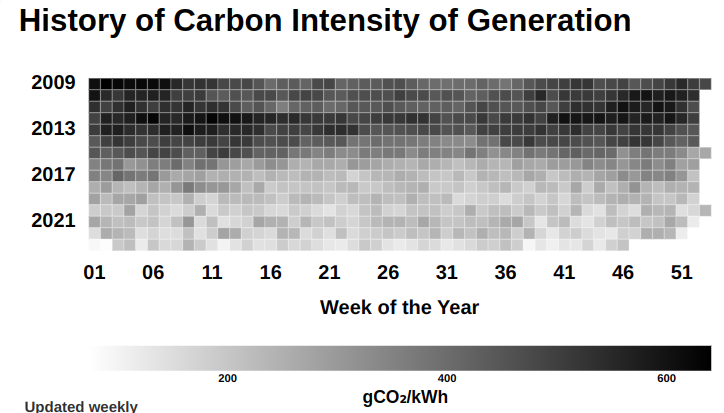
-
Help with air source heat pump
Beelbeebub replied to thenight's topic in Air Source Heat Pumps (ASHP)
That said, "designer" radiators often have a lower output than big standard radiators so it's probable you won't get enough heat from the "designer" ones at efficient flow temperatures (typically less than 45C) -
Why is my flow fluctuating so much?
Beelbeebub replied to Ambaz79's topic in Air Source Heat Pumps (ASHP)
Are there any thermostat or sensor pockets on the tank? -
Mitsubishi settings for DHW and Home Heating
Beelbeebub replied to roadrunnerAlgarve's topic in Air Source Heat Pumps (ASHP)
Following on, If you had a setpoint dial (as now) and internal temp monitor you could see the actual internal temp Vs the desired. If you were spending alot of time away from that temp the system could realise something isn't right. It could monitor the response times to external fluctuations, especially at night when there is no solar gain issue. This would allow it to tweak the flow temps higher than one might normally set it if the response times were too sluggish. Likewise, lots of overshoots might indicate turning the flow down to slow the response. Like I said, with machine learning it should be possible to work out the optimum flow temps given the external, internal and desired internal temps over time. -
Mitsubishi settings for DHW and Home Heating
Beelbeebub replied to roadrunnerAlgarve's topic in Air Source Heat Pumps (ASHP)
To some extent yes! 😁 I'm not implacably against cloud data. I have a homebrew bit of kit that uses open weather data. But if that source were to go dark for whatever reason (failure at my end, API changes or just stopping) the system just rolls on without it. The cloud data is "gravy" - nice but not essential. Any WC system will require tuning from time to time. Changes to the house fabric (say new windows) or occupancy levels (kids arrive or leave home), external factors (hedge grows up and shades windows) will change the curve,.so we need a system that can adapt. This is why some sort of "too hot/cold" button would be useful (and maybe an internal sensor). It could feed back when to adjust the curve. -
Mitsubishi settings for DHW and Home Heating
Beelbeebub replied to roadrunnerAlgarve's topic in Air Source Heat Pumps (ASHP)
I am very wary of "smart home" and "smart" systems that require a subscription or cloud connection. There is a pretty long history of these items just stopping working because the company has gone bust, decided to stop support or even just decided to change the terms to remove functionality. There's a popular garage door opener in the US that has just stopped working with Google and alexa because the company has decided to change their business contracts. Don't want that to happen to your heating, or have to pay extra for different weekend timings or if you want to have night setback just because some silicon valley exec decides to boost their earnings. -
Mitsubishi settings for DHW and Home Heating
Beelbeebub replied to roadrunnerAlgarve's topic in Air Source Heat Pumps (ASHP)
need a simple learning algorithm where the occupant can press "I'm too hot" or "I'm too cold" Over time the system tweaks the curve up if "too cold" is pressed too often, and down if "too hot" is pressed too often. Could also do clever things like start to notice patterns and dynamically adjust the curve for different parts of day/week. So if it notices "too cold" is prodded a lot on weekend mornings, tweak the curve up a bit on weekend mornings. "too hot" in late afternoons, tweak it down a bit etc. If it also had some extra external sensors like solar radiation monitor or wind speed (or it could pull them off the cloud) it could start to correlate that info as well. Machine Learning is supposed to be able to do all manner of clever things, surely working out how to heat a house is a trivial task! -
Why is my flow fluctuating so much?
Beelbeebub replied to Ambaz79's topic in Air Source Heat Pumps (ASHP)
Your tank temp is taken at a single point which is also the control point. As the tank heats up from top to bottom there is a fairly small vertical zone where the temp goes from target temp to cold. This zone moves down as the tank heats up until it crosses the control point which goes from being in cold water to hot water quickly. Then the heat source shuts off. At this point the temp sensor is only just in the hot zone and just below it is the cold water. So the sensor cools quickly even though the tank as a whole hasn't lost much heat. -
but where's the fun in that? 😁
-
You can use off the shelf algorithms like the PID library. My current mini project is to control my UFH flow temp (from a thermal store) by controlling a thermoelectric UFH zone valve on the cold return from the blending valve. The idea is to sense the outside air temp (from a temp probe in the heat recovery air inlet) and calculate a desired slab temp (assumed to be the return flow from the slab). The system then controls the valve on/off to achieve a desired flow temp to the slab that is 5C higher than the desired slab temp. My tip.is to use a M0 Arduino rather than the old atmega type I favour a seeeduion model, with their "grove" shield on top. This makes all the sensors plug and play. Use DS18b20 temp sensors and M5Stack relays DM me if you want any info.
-
Outdoor unit in ventilated garage??
Beelbeebub replied to Archer's topic in Air Source Heat Pumps (ASHP)
Yeah it's really odd to include a calculation step that references a background level (which isn't in itself a stupid thing to do) but then assume the background noise is fixed at 40db. It explicitly says not to use any other figure. So in effect you will fail the 42db test in any circumstance where your corrected figure is greater than 38db So why not just say that? -
Having the noisy stuff outside is the better solution. No doubt But "it's a big ugly box" and "aren't they really noisy" seem to be two common misconceptions. Was just a thought about how the external box could be made less obtrusive visually and acoustically The external boxes would just be a tangential fan and a coil, wonbe cheap and modular. A 2.5kw install for a flat would have 1, a small house 2, bigger house 3 etc. the units don't even need to be next to each other and could be tucked away descretly under eaves or similar. Yes the compressor would be inside but that could be in a nice acoustic enclosure as there isn't an airflow issue. It's not like boilers are totally silent.
-
I've never met an automatic air valve that didn't eventually leak In a sealed system they are only needed initially when the system is filled and for the first few cycles when any dissolved gasses come out of solution. So I either fit a manual valve and just bleed it a few times over the "break in" period. Or I fit an automatic valve and then screw the cap closed after the break in period.
-
Ok, came across this on Instagram... https://www.instagram.com/reel/CxI6tiGgVBh Ha Ha, look at the stupid person etc. But.... The heat flux is the same through the system ie if the inside unit is cooling the outside world by 2kw then that 2kw plus whatever the compressor etc absorbs (say 500w) will appear at the outside unit as 2.5kw of heat. So we've created a 2.5kw heater Crucially, the external unit - the one the planners get so in a twist about - is smaller and quieter than the one inside. Now if we were to replace the large (and noisy) fan and coil on the outside unit (that is now inside) with a plate heat exchanger and circulator pump, we could fit that in a small boiler sized package. Basically a split heat pump, like the ones commonly in use now *but* with the compressor inside and using the internal units as the basis for the external heat exchanger This would allow the external units to be quieter and more discrete getting around that aspect of resistance and the most likely to be serviced bits are inside. Just a thought
-
Outdoor unit in ventilated garage??
Beelbeebub replied to Archer's topic in Air Source Heat Pumps (ASHP)
What if the noise was focused *upwards* 😁 If the exhaust duct curved up and exited the roof of the garage then theahority if the sound would go up. More likely a brick "chimney" constructed on the side -
It's a standard component (though I have not seen one with the hose outlet before), any plumber should be able to swap it out for you. If you are a competent diyer you should be able to do it, just need some spanners and PTFE tape.
-
Air bleeding, ASHP install
Beelbeebub replied to crispy_wafer's topic in Air Source Heat Pumps (ASHP)
You can get manual air bleeds. https://www.screwfix.com/p/flomasta-end-feed-air-vent-cap-15mm/52451 -
Outdoor unit in ventilated garage??
Beelbeebub replied to Archer's topic in Air Source Heat Pumps (ASHP)
More or less this.

