


sharpener
-
Posts
1492 -
Joined
-
Last visited
-
Days Won
1
Everything posted by sharpener
-
Combining 3 phase and 1 phase systems?
sharpener replied to Lemna gibba's topic in Photovoltaics (PV)
Ah, didn't realise there was already a 1ph cable passing the new location, which changes the logic somewhat. I have a similar setup in that the supply comes in the drive and goes underground all along the back of the house to a point at the other end which is only a few feet from the road again. Have just had WPD check out their fuse, it is only 80A bc of the 80A meter and 16mm^2 meter tails so with EV charger am a bit restricted in the size of HP, no auxiliary heating allowed. Make sure they give you 100A when they do it! -
Several limitations IME and the worst is that the rad picker didn't put the correct rads on for me. Also I couldn't find a way to do a new solution based on a drawing I had done earlier (can't remember exactly what). Tried a whole load of variations but then one of the installers sent me his room-by-room heat loss table which agreed quite well so like @JohnMo I eventually gave up.
-
aroTHERM Plus DHW Flow Temperature
sharpener replied to Dan F's topic in Air Source Heat Pumps (ASHP)
This was definitely a feature on the old Fortic tank (very similar in principle to the RM one from screwfix upthread). There was a cold fill pipe which went from the bottom of the cold tank to the bottom of the hot tank like @Beelbeebub has just drawn, and also a vent pipe from the top of the hot tank to the top of the cold tank above the water line. I imagine the RM tank will have a similar arrangement but you can't see it because of the integral lagging - which the Fortic in my flat did not have, only a loose jacket. It seems cheap of them not to fit a ball cock and overflow arrangement. I suppose it allows you to choose the orientation but they should at least supply compatible parts IMO. I have seen the table on the MCS guide somewhere before, I think all the material on p1 under the heading "Cylinder Sizing Example: a manufacturer produces a range of 90 to 300 litre indirect domestic cylinders" is taken, presumably with permission, from one of the tank mfrs literature, maybe Gledhill or Tempest. The rather long-winded calcs were new to me. I am not sure why they think "Mixing rather than stratification is typically realised with an indirect cylinder". Maybe this is the case for HP cylinders which have long coils to get enough surface area. It doesn't happen with my old OSO 210l cylinder. The coil is right at the bottom and we can get 4 good showers out of it before it runs cold. Another reason not to replace it. -
aroTHERM Plus DHW Flow Temperature
sharpener replied to Dan F's topic in Air Source Heat Pumps (ASHP)
This discussion needs to include the benefits of heating water using off-peak electricity and storing it for daytime use. As this is typically half price or less the losses are dwarfed by the savings leaving a big net gain whether or not a HP is part of the process. Power showers and "rain showers" are fashionable but use dreadful quantities of HW. Will perhaps try one of the aerated shower heads. (Saving water is also a consideration though the rainwater tank is unseasonally full just now.) But so far I haven't read anything that suggests I will be better off with anything more complicated than keeping the existing conventional small-coil UVC, heated to 55C with a HT HP*. At the same (off-peak) times I plan to heat a separate 200l TS for the radiator circuit, that alone will halve the cost of some 360kWh(e)/yr and should act as a big parallel load so the HP will be happy. Except that my prospective installers do not understand and/or like the idea. *This is the temp the PV diverter immersion is currently set to. Anything higher gives a green deposit in the shower tray which is to be avoided for obvious reasons. -
Combining 3 phase and 1 phase systems?
sharpener replied to Lemna gibba's topic in Photovoltaics (PV)
What deal are WPD offering? IIRC they are now fitting 3ph as standard for new housing, if you are considering more PV or an HP or an EV charger in future it might be better to take their offer now. EV chargers are a max of 7kW on 1ph which is quite slow if you are trying to recharge at night rates but 3ph 22kW will fully charge most cars in 4 hours. You can leave the existing PV on one phase and @Dillsue is right, it should not affect your FITs, and put more on other phases, WP should be very happy with that. 3-phase inverter not worthwhile unless a massive amount more PV. Germans e.g. Sunny Boy very keen on them but domestic 3ph almost universal there. OTOH if you have to change the (moved) single phase supply to 3ph later you can be sure WP will want to charge you £££ at that point. -
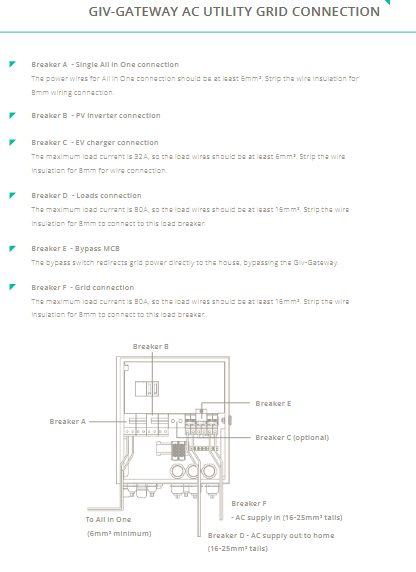
AFIUI the anti-islanding is provided by the Gateway not the inverter itself. N.b. since that is >16A (3.68kW) it does not qualify for install-and-notify so I think (rules vary) you will have to get your DNO's consent in advance, they will check it is on the ENA database which requires anti-islanding relay operates within ?5 secs of grid failure. Also if they are like WPD were, they will not grant approval without de-rating the inverter to the 3.68kW - which is my case is not too bad since inverter has 50A passthrough which gives it a max o/p of 12kW when grid is up. The SunSynk was only 32A passthrough which IMO is defo on the small side esp as I have electric cooker (or I would have gone for the cheaper 3kVA Victron). But sthg you should perhaps check for the Giv, I can only find mention of 25A cont, 32 pk so maybe those are the upper limits. Incidentally I note it has an integral bypass at B below and also provision C for EV charger.
-
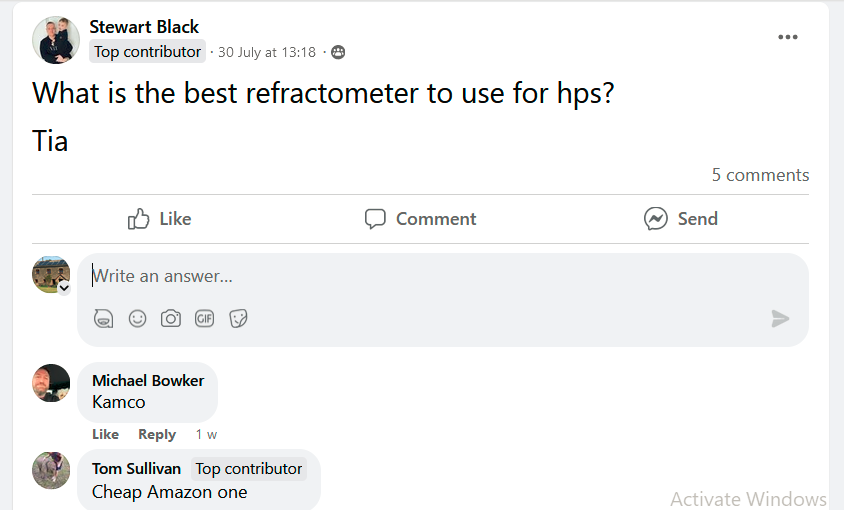
There seems to be some awareness to judge by recent postings on Heating Design f/b group. Someone else mentions the Fernox but it is well over £100 and looks just the same as the ones on Amazon which others swear by Many have a crankcase heater for the compressor and some have trace heating for the condensate drain as well. But only as good as your electricity supply. I am just 200m from a substation but I would still prefer a passive solution.
-
Interesting experience! Both the Victron I have and the GivEnergy @JohnMo is proposing have automatic anti-islanding which will disconnect in a power cut so are safe for the repair crew. I was talking about fitting an (optional) manual bypass in addtion so you can - when the grid is present - take it completely out of circuit in case you want to maintain the inverter or it has a fault which would otherwise leave you in the dark. This is a sensible option if you have the whole house behind the inverter, as opposed to just one or two wired emergency circuits or as some people do a twin 13A socket for plugging a table lamp and the TV into. This last option with the really cheapo Chinese inverters is non-compliant because of the inadequate earthing arrangements.
-
By coincidence have just had a call from "Tony" at EdF. He looked up the EPC and after the usual questions about construction and # of beds/baths he tells me they cannot quote because the solid walls mean the heat loss is too big for the largest HP in their range which is 22kW. So I responded that as I have had 3 quotes for fitting a 12 or 15kW unit I thought their process was overly conservative and would lead to them unnecessarily ruling out a significant part of their target market - which he said he would pass up the chain.
-
aroTHERM Plus DHW Flow Temperature
sharpener replied to Dan F's topic in Air Source Heat Pumps (ASHP)
How does that give you stratification then? BTW @JohnMo did you see my latest on this thread? -
No personal experience (as yet) but I do not like the idea of returning after a winter break to find house cold and HP inoperable because water has been dumped to drain. Or finding the valves were stuck shut and the HP is a write-off. Cost is about the same order anyway.
-
aroTHERM Plus DHW Flow Temperature
sharpener replied to Dan F's topic in Air Source Heat Pumps (ASHP)
Has anyone found a complete description of how the Harlequin works? From reading here and (scant info on) H web site it seems they have one coil at the bottom to input heat and another at the top for DHW flow to abstract it in real time. If the water cooled by the latter falls to bottom of tank without mixing then there will be stratification and you will get hot water at constant temp until the cold level reaches top coil. If so what is the gubbins on top of the tank (flexi-hoses, solenoid valve are visible), how does the ?stagnant body of water keep free of nasties, what are the different overfill options referred to? H are a longstanding mfr of (polythene) oil tanks etc so this looks like a logical diversification for them. Polypropylene has been used for washing machine tubs for many years so should be an appropriate material to use for the inner and an interesting change from metals. -
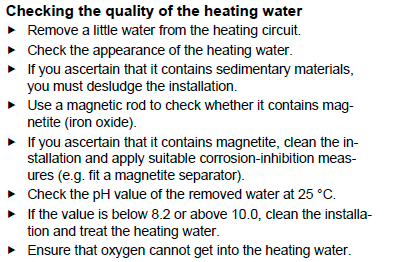
Annual HP maintenance will include checking the glycol concentration with a refractometer. Don't know about chemical degradation but if it incorporates inhibitor I would imagine a life of many years just like water with inhibitor. Also the HP does not reach the same temps as a boiler. Some mfrs have warnings (no idea if anyone pays any attention) about dissolved oxygen, pH and hardness e.g. Vaillant Arotherm Plus - but the following appears actulally to have been cut-and-pasted from a boiler manual. pH 8.2 is quite alkaline, mains drinking water pH only has to be >6.5:

-
aroTHERM Plus DHW Flow Temperature
sharpener replied to Dan F's topic in Air Source Heat Pumps (ASHP)
Yes but nothing to do with the heat pump per se. I would say you need to have 50l per person min at not less that 50C. One installer has quoted me some rule of thumb of (# of bedrooms + 1) x 50 as the min vol, I think this came from a cylinder mfr. Are you differentiating between a conventional HW tank and TS? The problem with having a TS with HW flow through a PHX or secondary coil is there is no stratification so as you say the temp will fall steadily as you draw off. Is this a TS as just described where the temp falls, or a conventional HW cyl in which case I would expect 250l should be adequate stored volume, and 9kW input would provide a (not very generous) shower on a continous basis. -
Ignore ASHP's that dont have WC?
sharpener replied to Post and beam's topic in Air Source Heat Pumps (ASHP)
Dunno. I checked and it has various errors for the Vaillant products I am interested in. Seems to be a version of the ENA spreadsheet which is also not very good. I don't imagine they do any testing, and rely on mfrs data which is only as good as the test houses they use. Maybe there is an EU database which is better but I have not looked. -
My 1.9m was assuming you can therefore change any point by +/- 1m so you can excavate a 0.95m hole and then build a 0.95 high bund round it.
-
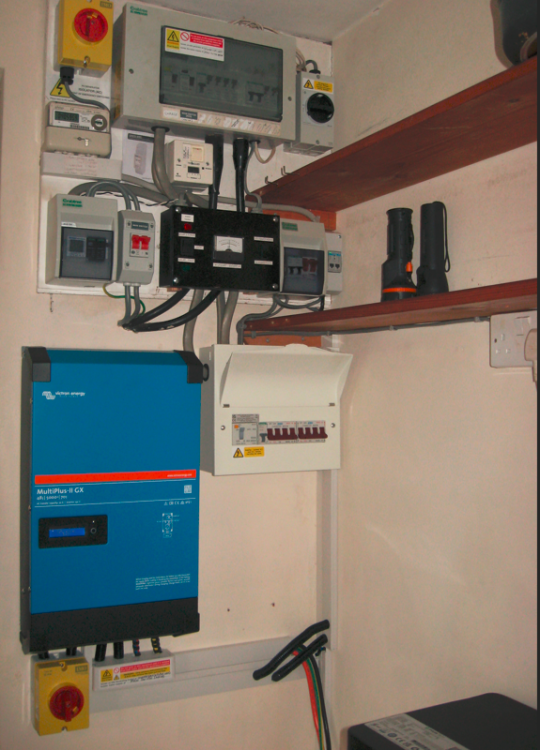
If the whole house is behind the inverter it might be worth installing a switch like this anyway to allow bypass of the inverter for maintenance/in case of fault. Will go in an ordinary CU and much cheaper and neater than the free-standing ones often fitted. I have a second one for the garage as well, allows me to have the EV charger direct on the grid while I am using it. They are in the CU on the rhs of this pic However I wish now I had made the house switch a changeover relay so it would fail over to the grid automatically, to keep the freezer, alarms and router going if the inverter packs up while I am away. GivEnergy gateway is a good solution as it gives much more freedom with equipment placement and IIRC has got a built-in bonding relay. So much to think about, will have to evolve further to accomodate the HP...
-
Gas boiler lobby obstructing heatpumps
sharpener replied to Beelbeebub's topic in Air Source Heat Pumps (ASHP)
That seem a good explanation. But what are the spikes in heat o/p at 0850 and 0905, there a corresponding dips in the F & R temps but nothing on the elec consumption, what is going on here? -
Ignore ASHP's that dont have WC?
sharpener replied to Post and beam's topic in Air Source Heat Pumps (ASHP)
Not much UK market for them as WC is mandatory under MCS. FWIW Midea is what Good Energy fit under their scheme. EdF seem to use Daikin. -
Looks like from this there are a lot of connection options inc genny but I can't say I have got my head round it all! Seems they will need to fit an external relay for earth-neutral bond in island mode, also you will need an earth electrode if you are not on TT supply already. Lots of info and several Sunsynk users on this forum https://camelot-forum.co.uk/phpBB3/viewforum.php?f=11.
-
Out of interest does the Sunsynk provide the full 5.5kW to the house in a blackout or have you had to compromise with only a few circuits on the EPS output? I think if you put the CT on the grid side of the tee to the outbuilding the Sunsynk will manage the installation as one.
-
Gas boiler lobby obstructing heatpumps
sharpener replied to Beelbeebub's topic in Air Source Heat Pumps (ASHP)
I have wondered about doing one of various HP courses e.g. this one from NAPIT, £550 looks very reasonable for a 3-day course. However like most of the others it requires a daunting array of preconditions including 3 yrs industry experience and a Water Regs certificate. Whether they would in practice turn down the extra £550 is another question. -
I was told by LAPD in respect of the neighbour building up the level of his garden that changes of level of less than +/- 1m do not require PP. After 3 yrs it is "established" and so you can do it again ad infinitum. I guess if a 1.9m depression fills with water as a result of forces of nature they cannot argue that you must drain it.
-
Gas boiler lobby obstructing heatpumps
sharpener replied to Beelbeebub's topic in Air Source Heat Pumps (ASHP)
Total rubbish solution. CoP of 1. Increases maximum demand. In what scenario would you do this? Might as well have instantaneous water heaters everywhere. My 80A supply has DNO approval for an HP only, not any supplementary heating. -
Gas boiler lobby obstructing heatpumps
sharpener replied to Beelbeebub's topic in Air Source Heat Pumps (ASHP)
Yes that's the one I have been using. Agree with your comments on interpretation of the boilerplate. I imagine that the degree of oversight by Vaillant will, like any other commercial relationship, depend inter alia on how long the installer has been on the approved list, how often he wants to install "specials", how much aggro there has been in the past, what warranty claims there have been etc. As installers get referrals from the Vaillant "Find an installer" service they will not want to do anything to prejudice this situation. That would include making lots of requests for design approval relative to the number of HPs they actually install, and putting in systems which may result in warranty claims or requests for troubleshooting. So as there is plenty of work around they can afford to play safe. Or so it would seem to me. Having been Business Manager of a contract R & D company I can see this from several different points of view.

