oliwoodings
-
Posts
130 -
Joined
-
Last visited
Everything posted by oliwoodings
-
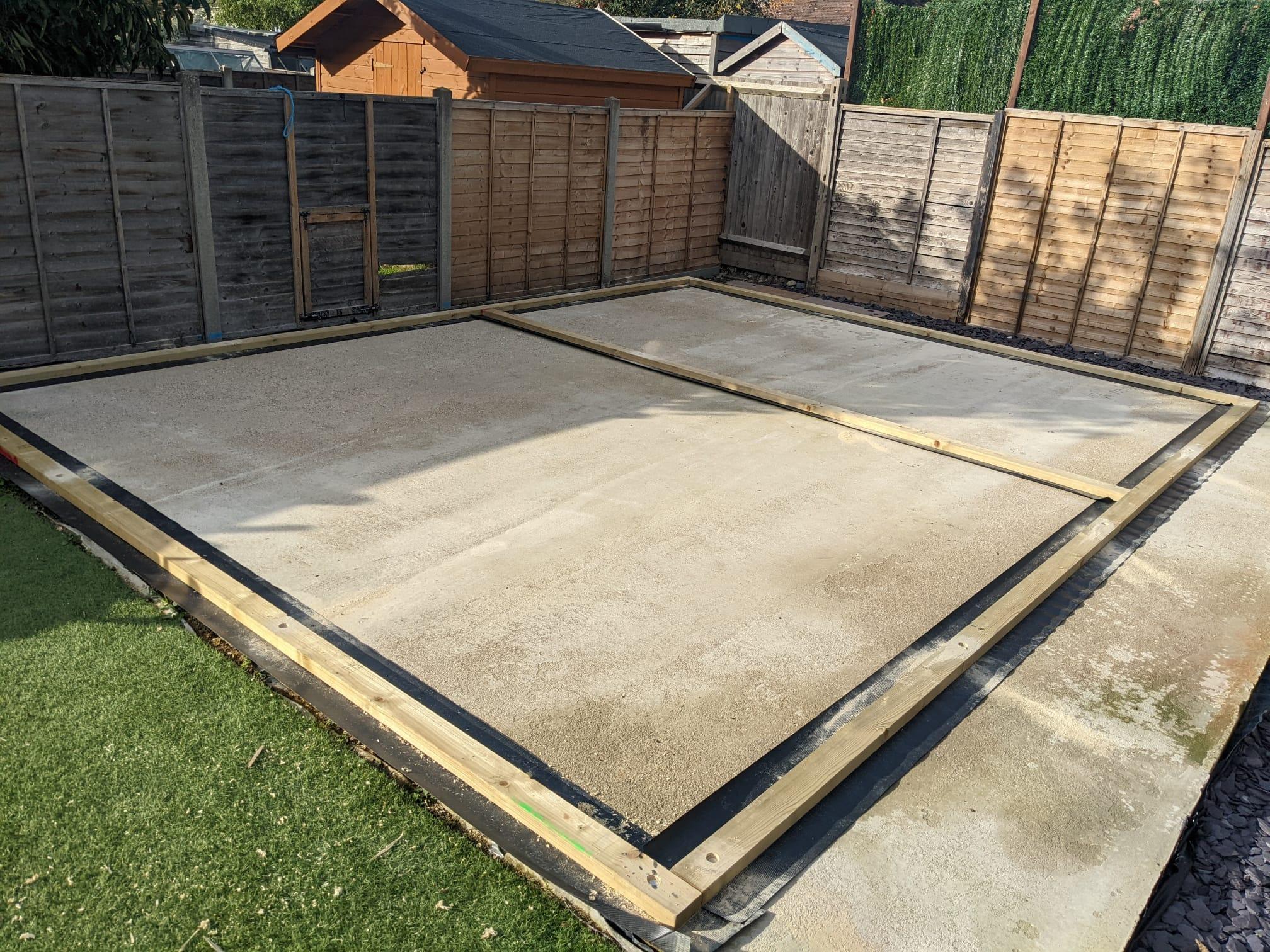
For my 6x5m garden room I did a 100mm reinforced slab over dpm and 100mm of mot1. I then put oversized dpc under the sole plates of the walls, which I could lap up the outside underneath the breather membrane once I'd built the walls. Sole plates themselves were anchored with M10 concrete bolts. For floor insulation, I put down more dpm, taped to the inside edges of the dpc sticking out from the sole plates, and then put 100mm of pir on top, taping the seams with foil tape. Then 22mm t&g (glued) osb subfloor floating on top of that.
-
Minimising down time is one benefit, yes. In general, Zigbee2mqtt is better for the more advanced/power use cases, while ZHA (the built in home assistant ZigBee integration) is easier for the simpler stuff.
-
One advantage of Zigbee2mqtt is that your ZigBee network doesn't restart (and temporarily go offline) when you restart home assistant. I've got home assistant running on a raspberry pi 4 and I'm very impressed. The UI is very easy to use, I've got some quite advanced stuff running without having to resort to custom YAML config yet. I also found a great backup add-on that syncs backups into Google drive for disaster recovery.
-
Herringbone LVT around decor pieces
oliwoodings replied to Logan's topic in Wood & Laminate Flooring
It's too late now, but another way to do it would have been to lay the floor first (after marking up where the plinths will eventually sit), put floor protector sheets down and then install the kitchen. Did this recently on a project, worked well. -
Ah I'm guessing you're installing mvhr? In which case recirculating with a charcoal filter is your best bet. I like the idea of a bulkhead over the island with the extractor in, my mate just had one done. He had them to a shadow gap around the top which he then put LED strips in.
-
What way do your ceiling joists run? No way to duct outside? I can't stand recirculating ones personally, unless you have no choice. And the downdraft ones sound like a pain to keep clean.
-
Island size is much better! What do you anticipate using all the other worktop for? What's your plan for extraction?
-
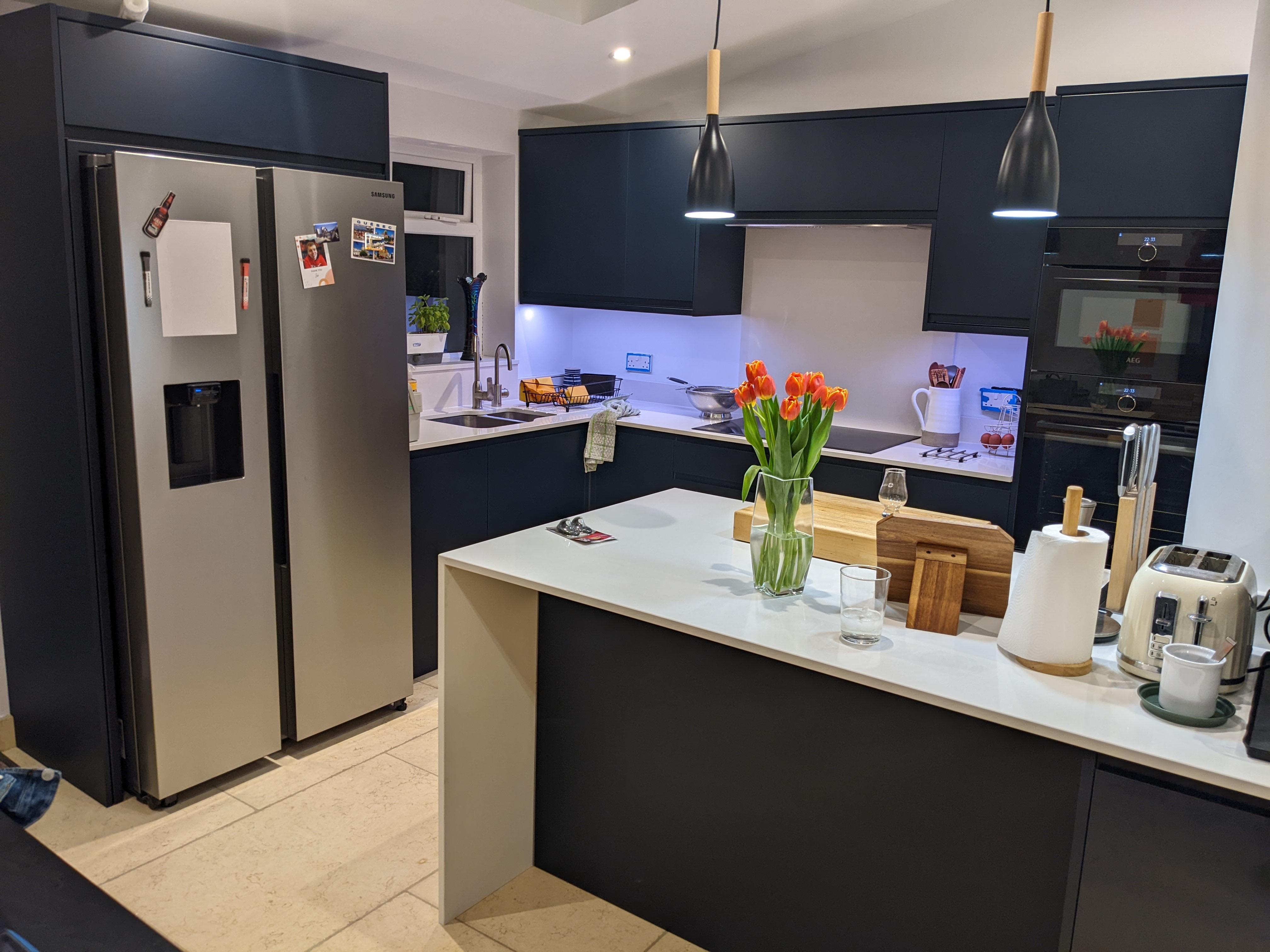
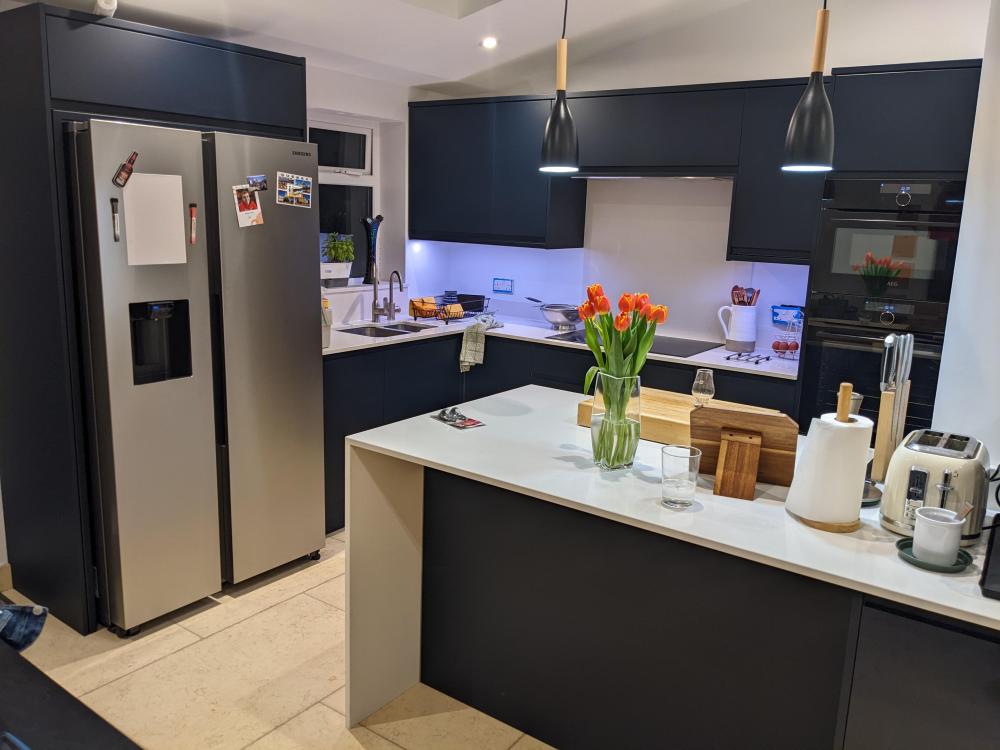
I'm not a fan of the two-sided overhang on your island design, can you do that with stone worktops without support? I'd be worried about someone putting too much weight on the corner and it snapping. Might be worth checking with a worktop supplier? I think your island design could work if you made it narrower by getting rid of the cupboards on one side. You've not got enough walkway around it in my opinion, 70cm is definitely not enough. 1.2m is ideal and I wouldn't go lower than 1m. I do like the close proximity cooking triangle you get with the island. If you go with your peninsular design then consider waterfalling the worktop down the end onto the floor. Looks really effective in my opinion! Here's ours:
-
Electrical first fix in an ICF house
oliwoodings replied to Meabh's topic in Insulated Concrete Formwork (ICF)
Repeaters are not great for reliability - worse than powerline extenders. There's a good explanation of repeaters Vs extenders here: https://www.screenbeam.com/wifihelp/wifibooster/wifi-extenders-beat-wifi-repeaters-every-time/ -
Electrical first fix in an ICF house
oliwoodings replied to Meabh's topic in Insulated Concrete Formwork (ICF)
The primary reason for most households to run cat6 would be to install proper WiFi access points on the ceiling to get great coverage. You're right that the vast majority of people don't need hardwired ethernet access, although it's nice to have the robustness for things like TVs, games consoles, desktop PCs etc. In this situation, I don't agree with your recommendation of relying on powerline WiFi adapters, however. They are fine for retrofit applications where you can't easily pull a cable, but if you are able to run ethernet then you can get a much more robust WiFi network using proper access points hooked up together via ethernet, for not much more money. -
Electrical first fix in an ICF house
oliwoodings replied to Meabh's topic in Insulated Concrete Formwork (ICF)
You need a PoE switch in your plant room. It basically injects low voltage power into the ethernet cables in order to power whatever is on the other end without running a separate power cable. Only works with PoE-compatible access points, of course. You can also use that PoE switch to power security cameras amongst other things. Very hand bit of tech. -
I can no longer recommend blinds2go, we had an absolutely TERRIBLE experience with them recently. The first set arrived damaged, they then 'forgot' to submit the replacement order, then only one part of the replacement arrived, eventually and unexpectedly followed by the second half over a week later. Should have quit at this point but thought '(expletive deleted) it they are here now'. Installed them, went to pull them open, both sets snapped. The mechanisms on their vertical blinds is atrocious, cheap flimsy plastic connecting the wand to the runners. Getting a refund out of them was like pulling teeth, took 2 hours on the phone and 3 videos (during which we found their support system silently rejects emails containing more than 3mb of attachments). Ordeal lasted over 4 weeks since the time of ordering. I've used swiftblinds before, service and product was much better. We will probably just use recommended local blind suppliers in the future though to be honest.
-
Electrical first fix in an ICF house
oliwoodings replied to Meabh's topic in Insulated Concrete Formwork (ICF)
+1 to having cat6 run into the ceilings for PoE APs. You don't even have to use it straight away, but then at least you always have the choice if you find WiFi deadspots. What are your internal walls made of? -
Indeed. Something along the lines of: https://www.electriq.co.uk/p/iqool-smart12hp/electriq-iqoolsmart12hp I actually ordered one of these to try out in our bedroom, but didn't quite appreciate how much volume it would take up on the wall, so returned it. I also didn't quite clock when ordering that I'd have had to core drill two 180mm holes in the front of our house 😂
-
I strongly considered one for my build and ended up going against it, primarily because we didn't want a heat pump or condenser running inside the room - very noisy. They also take up a lot of room, and require massive holes through the wall. In the end it only cost about £400 more for our two-room split unit including install.
-
Hello! Almost-complete on my garden studio build
oliwoodings replied to oliwoodings's topic in Introduce Yourself
That paragraph completely changes meaning if you remove the word 'educational'. -
Hello! Almost-complete on my garden studio build
oliwoodings replied to oliwoodings's topic in Introduce Yourself
Long drive from Cornwall 😂 -
They are Samsung Cebu units inside (WiFi connected, integrates with smart things) can't remember the model of the heat pump unit outside but I can get it tomorrow if you like.
-
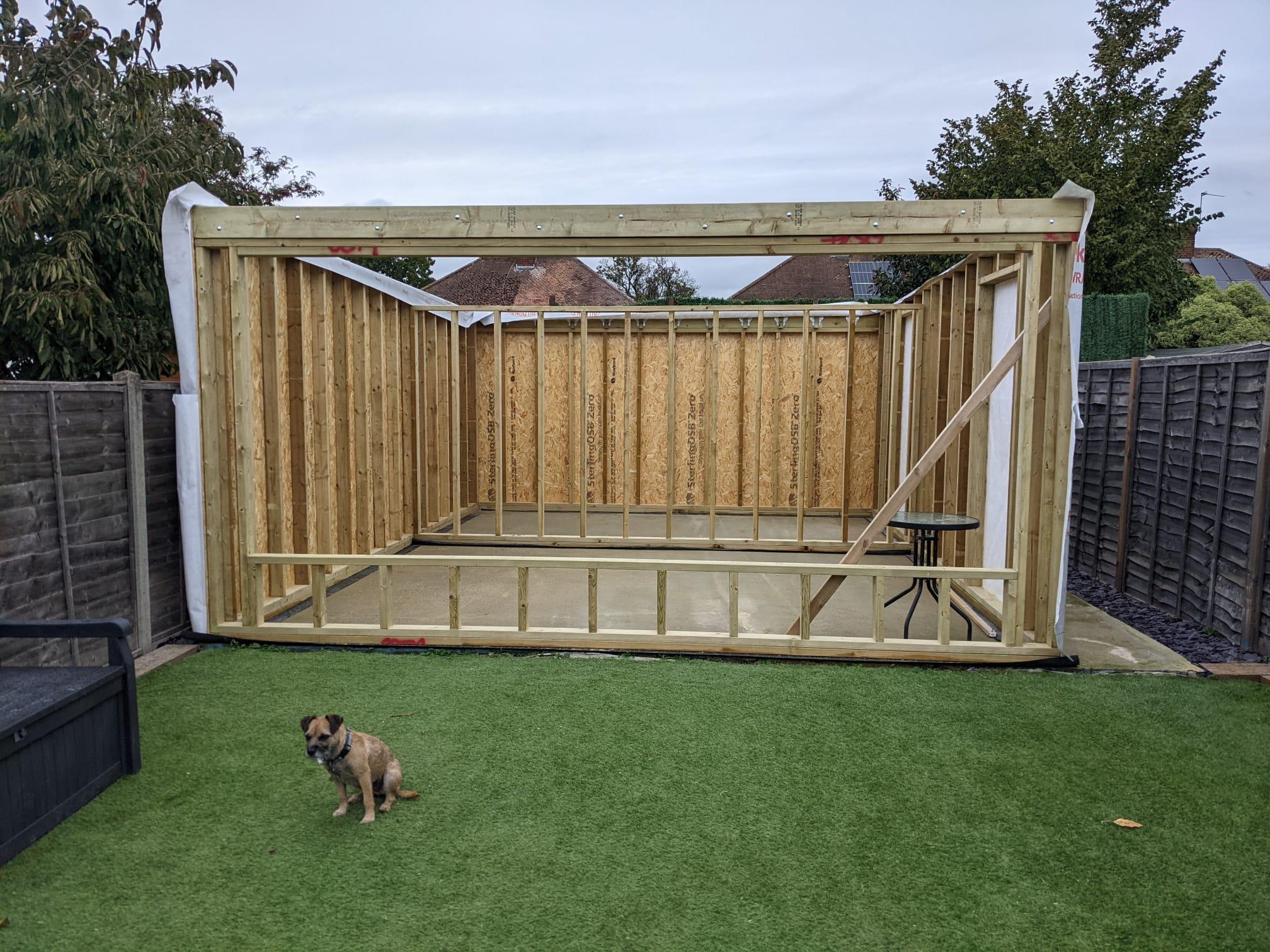
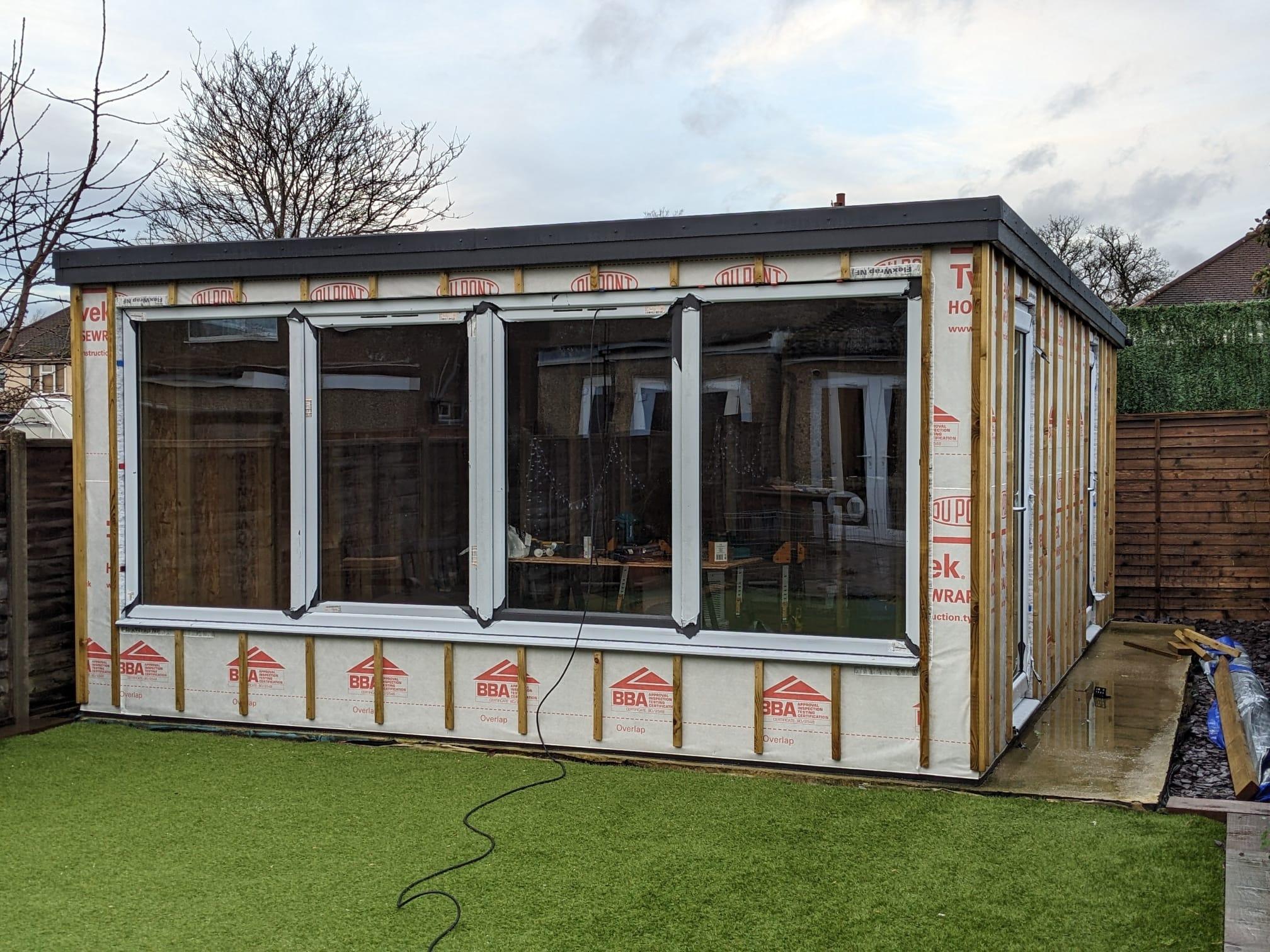
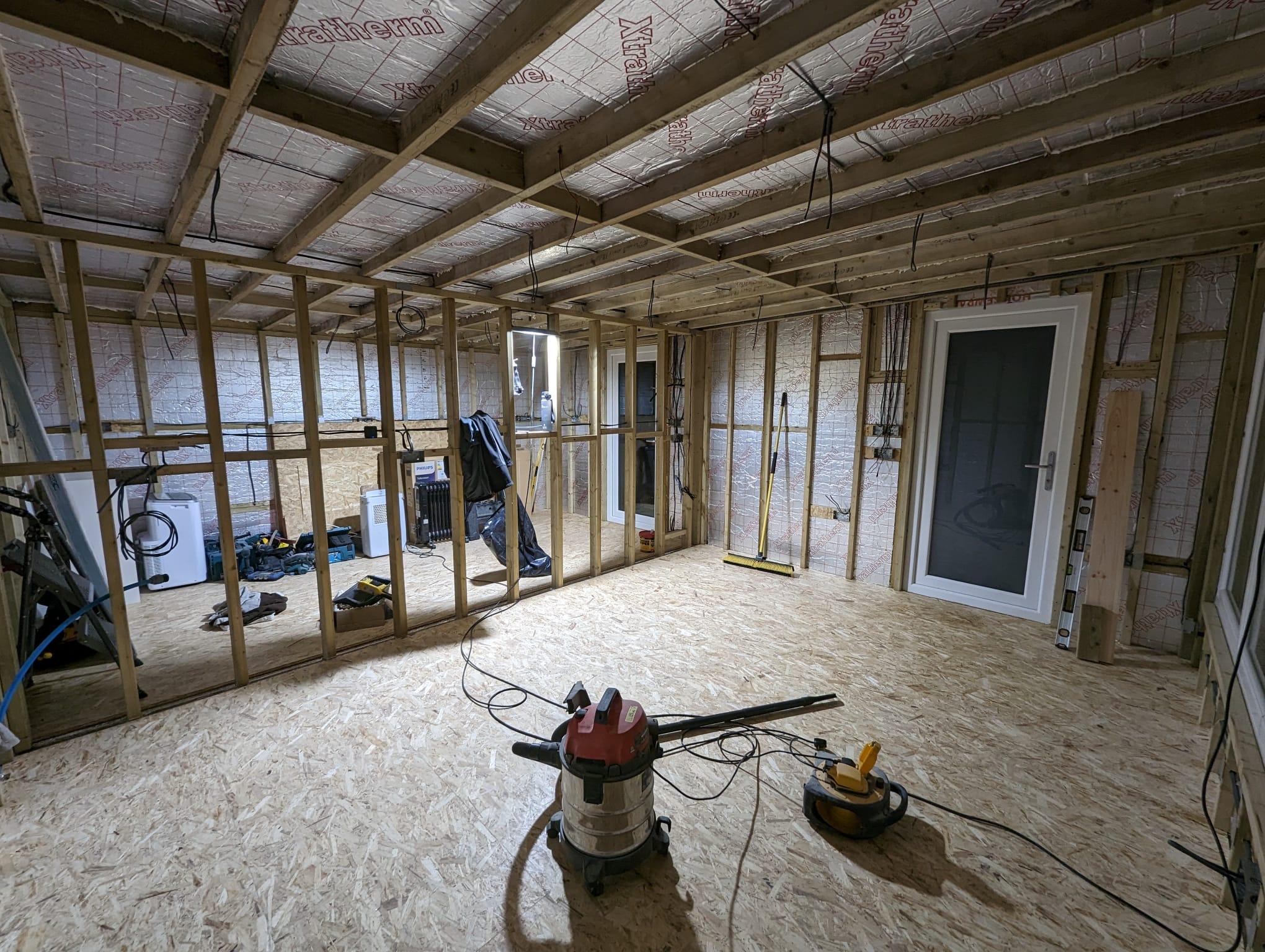
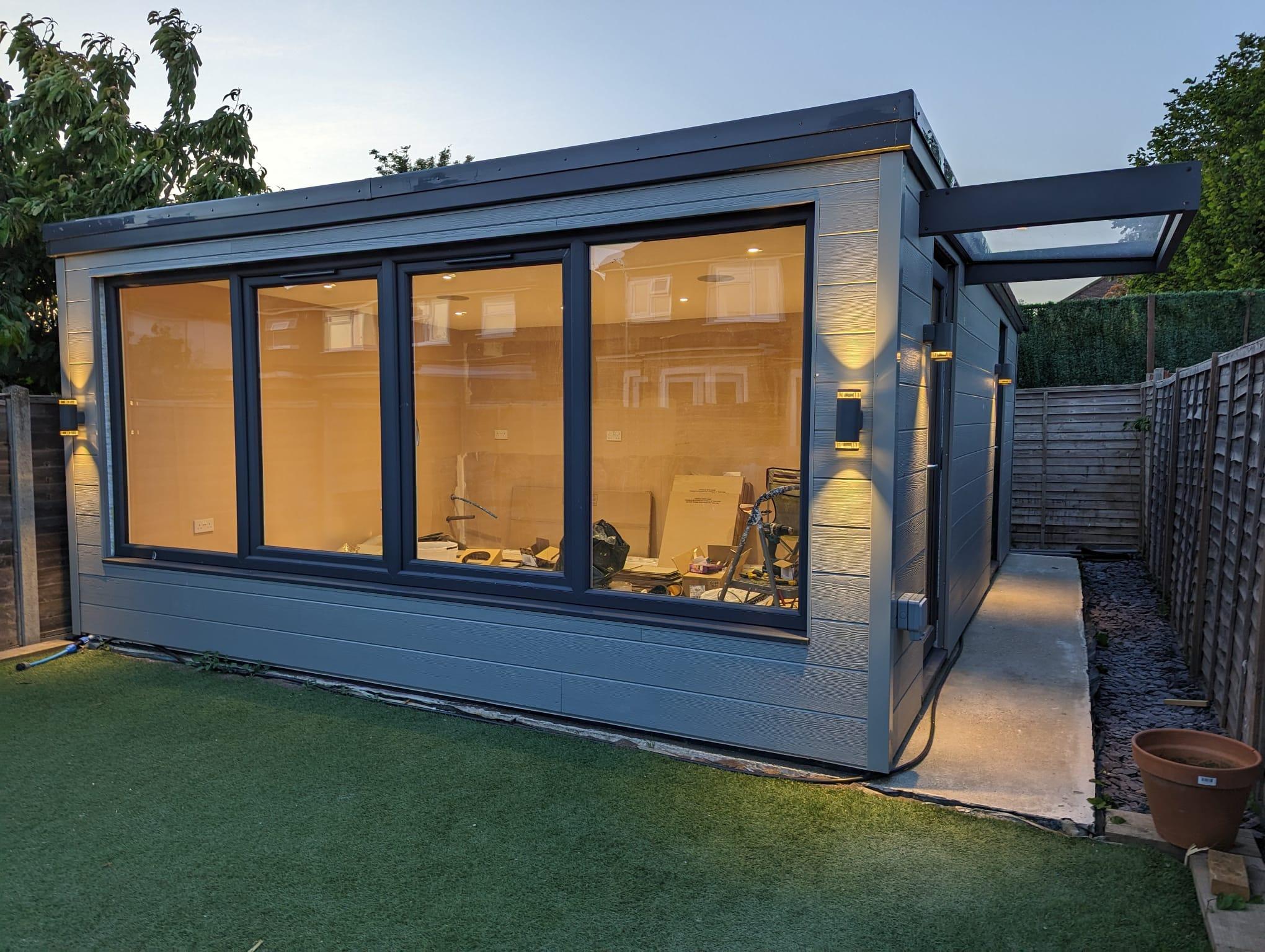
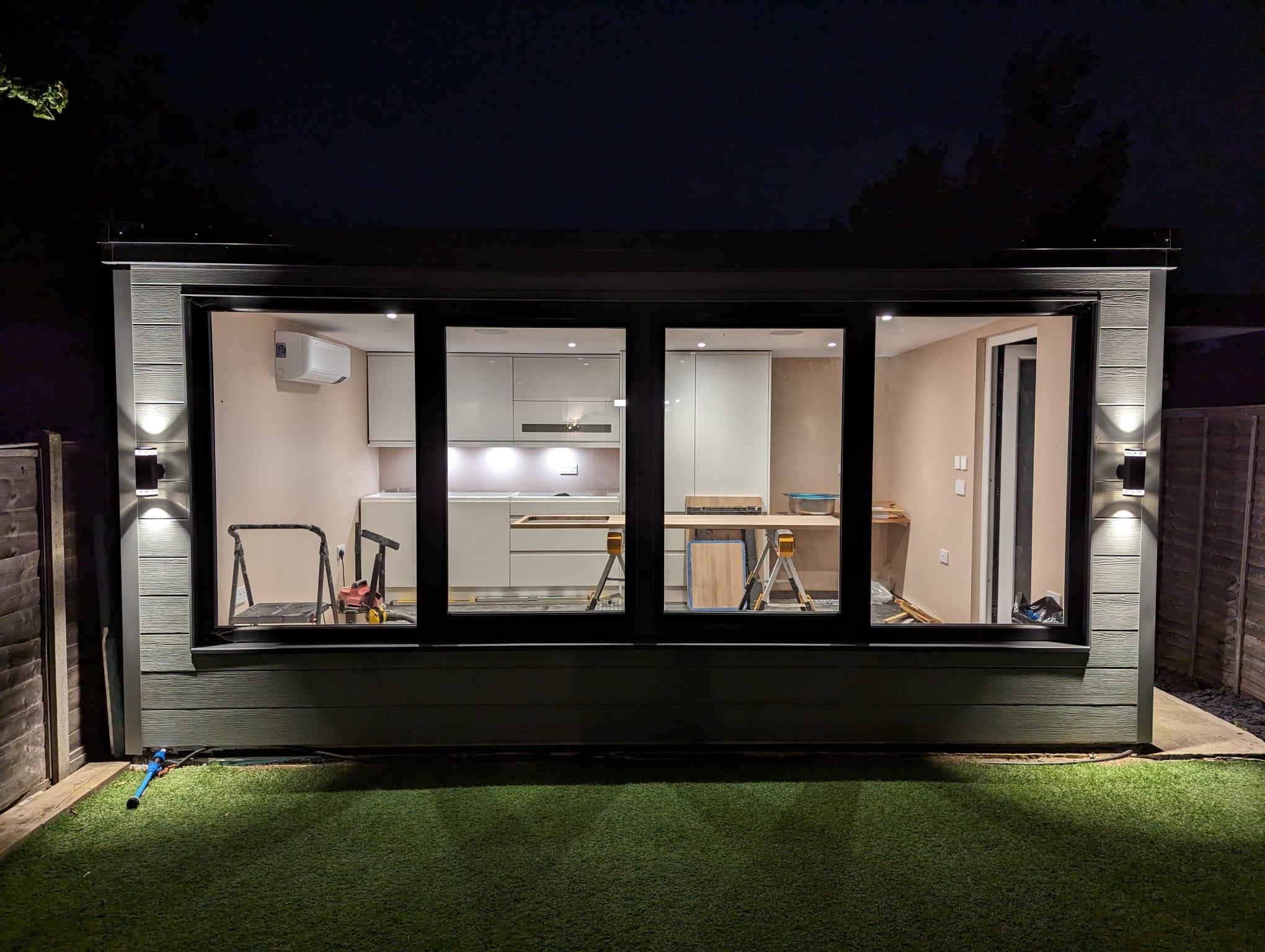
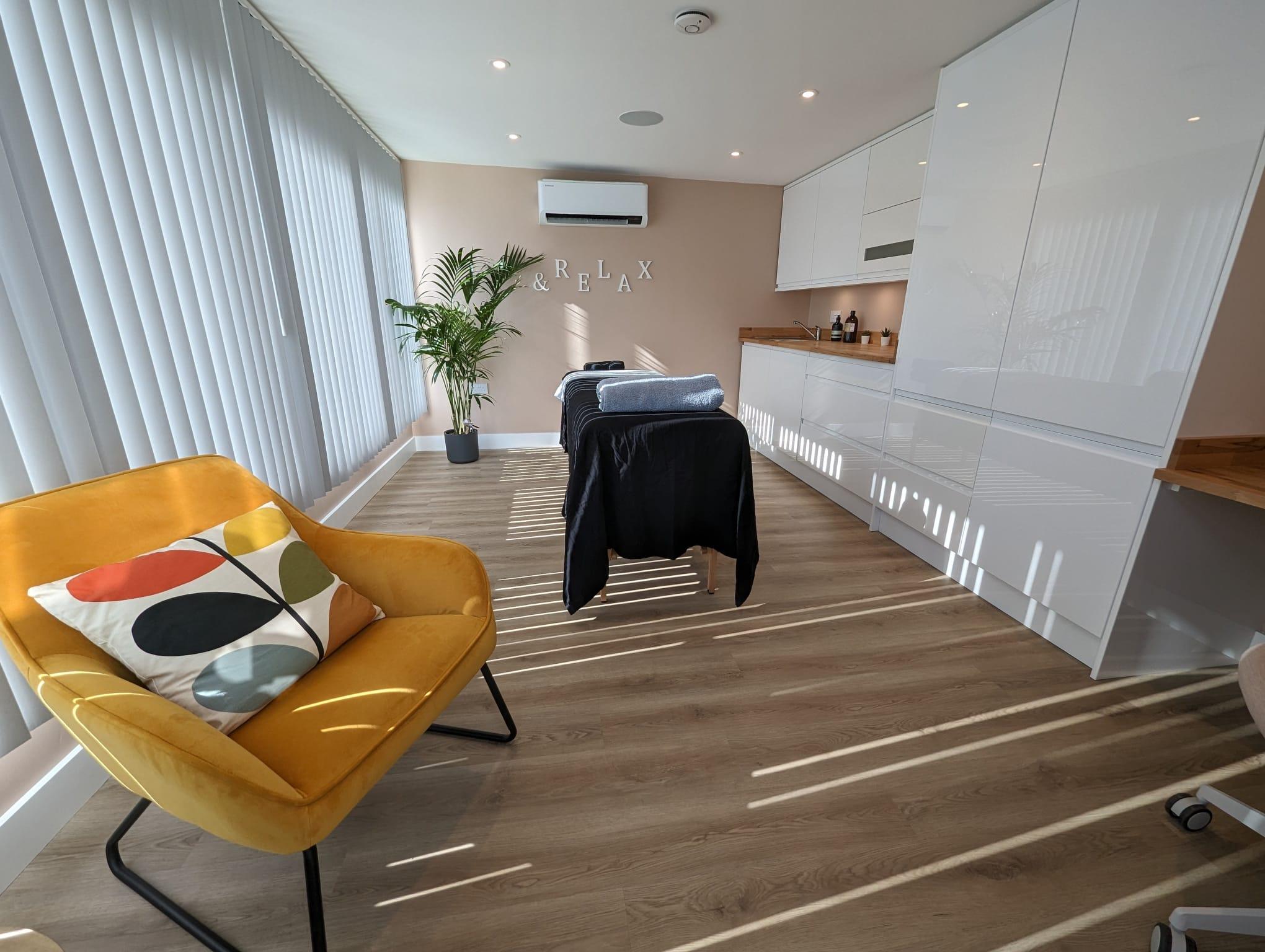
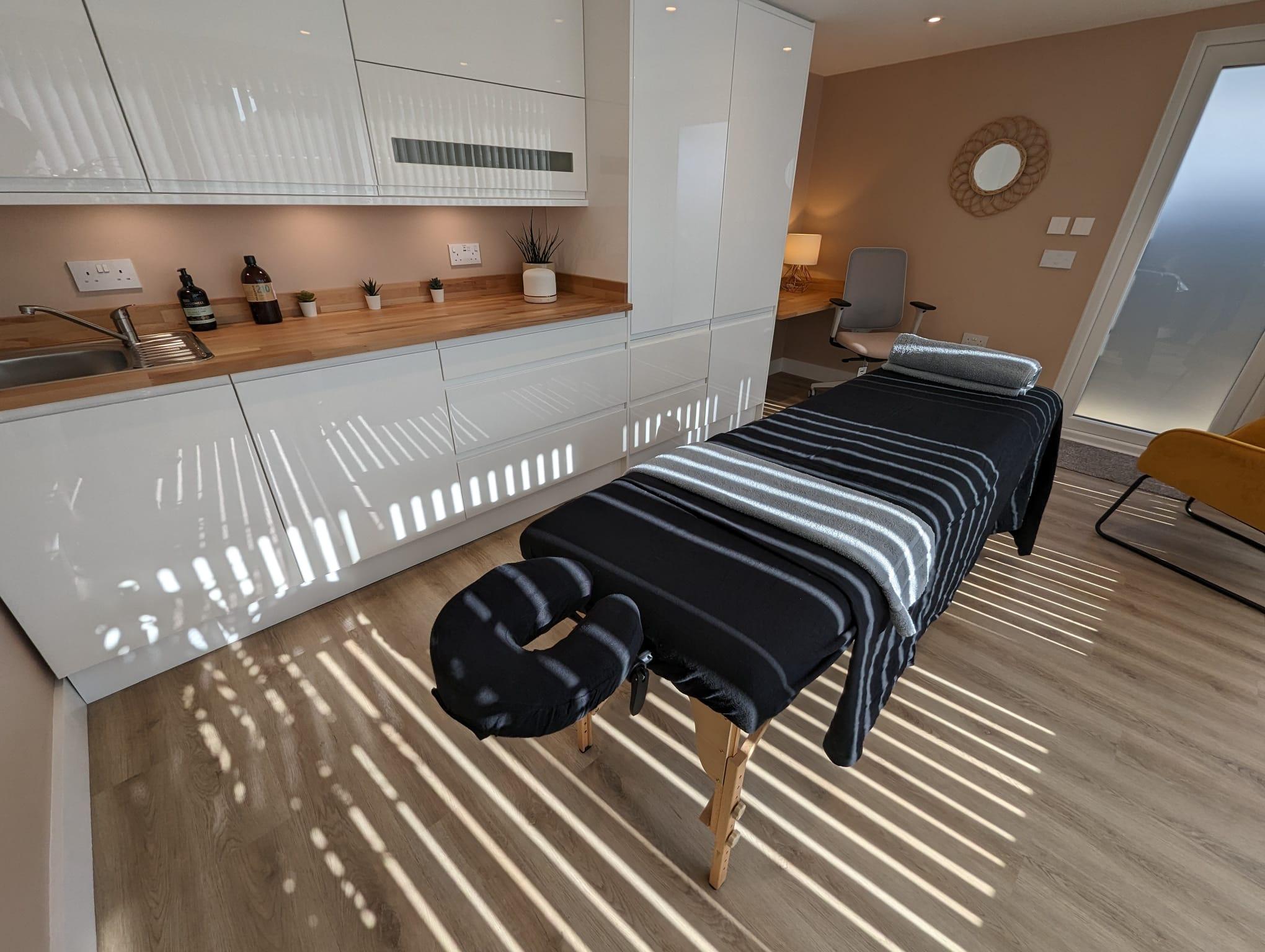
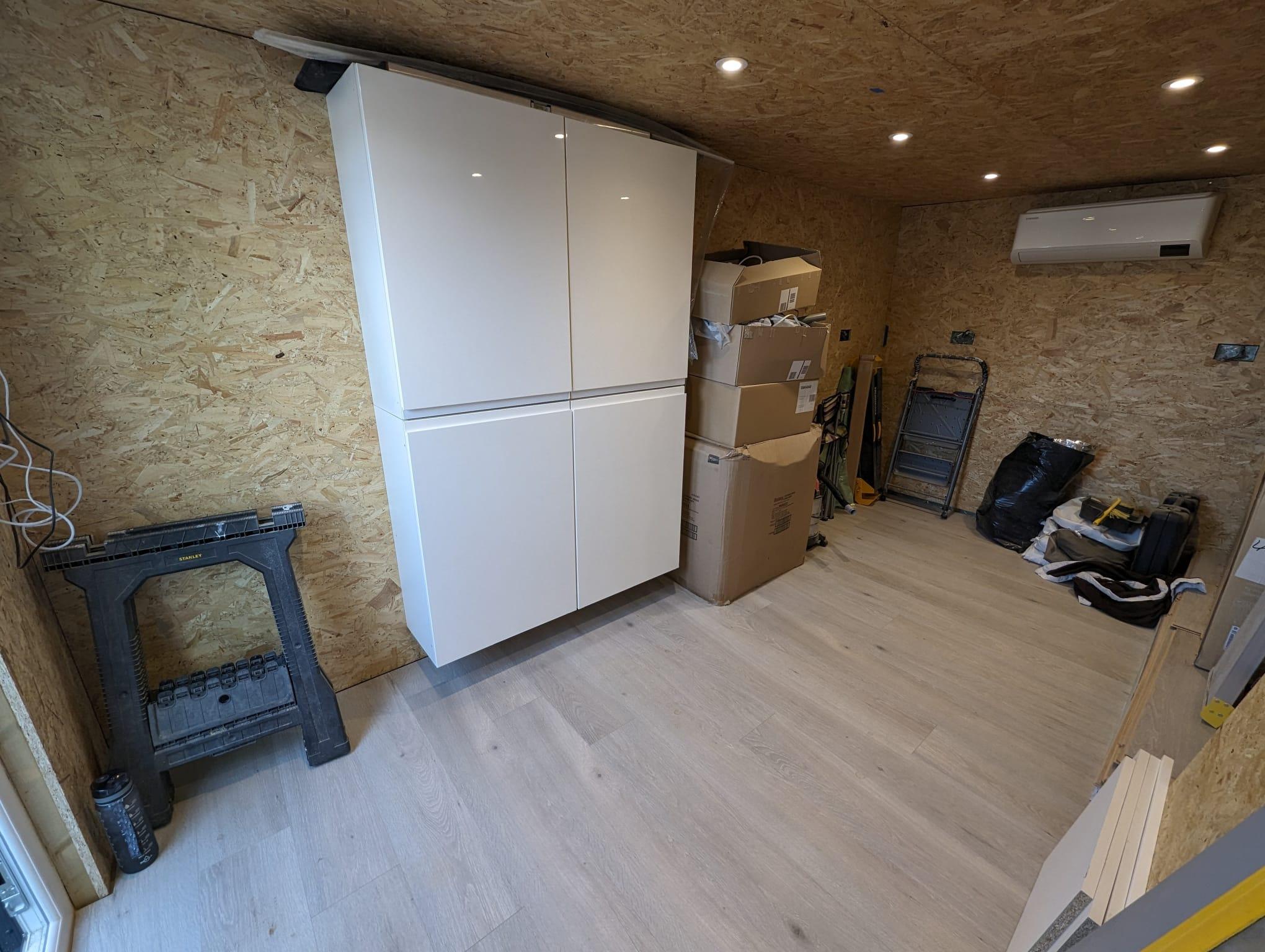
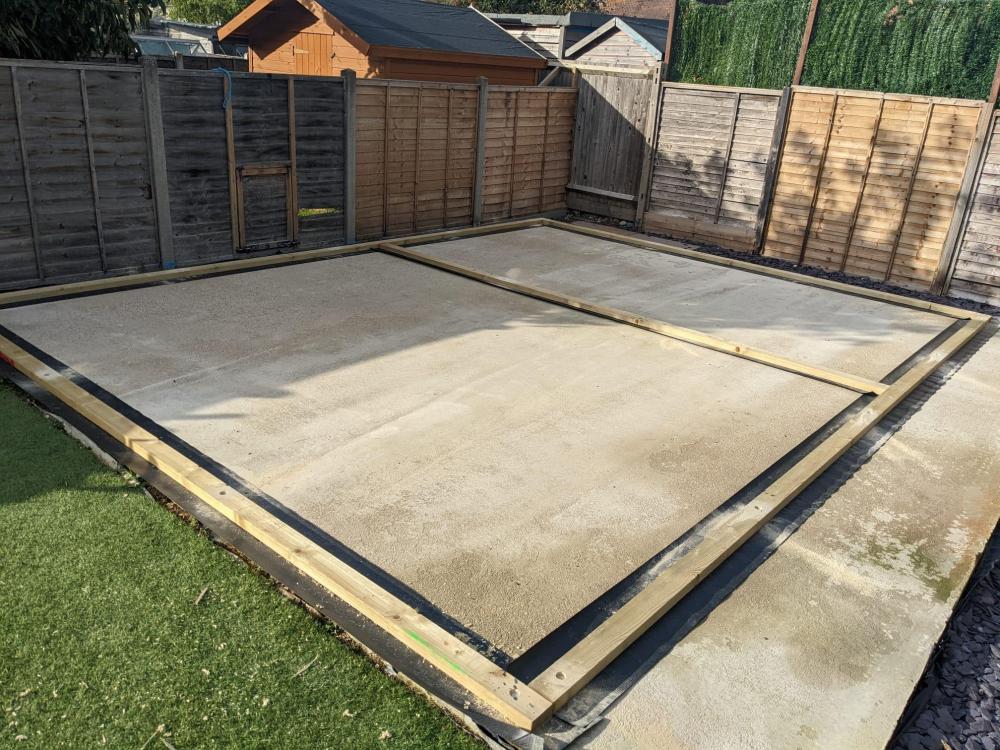
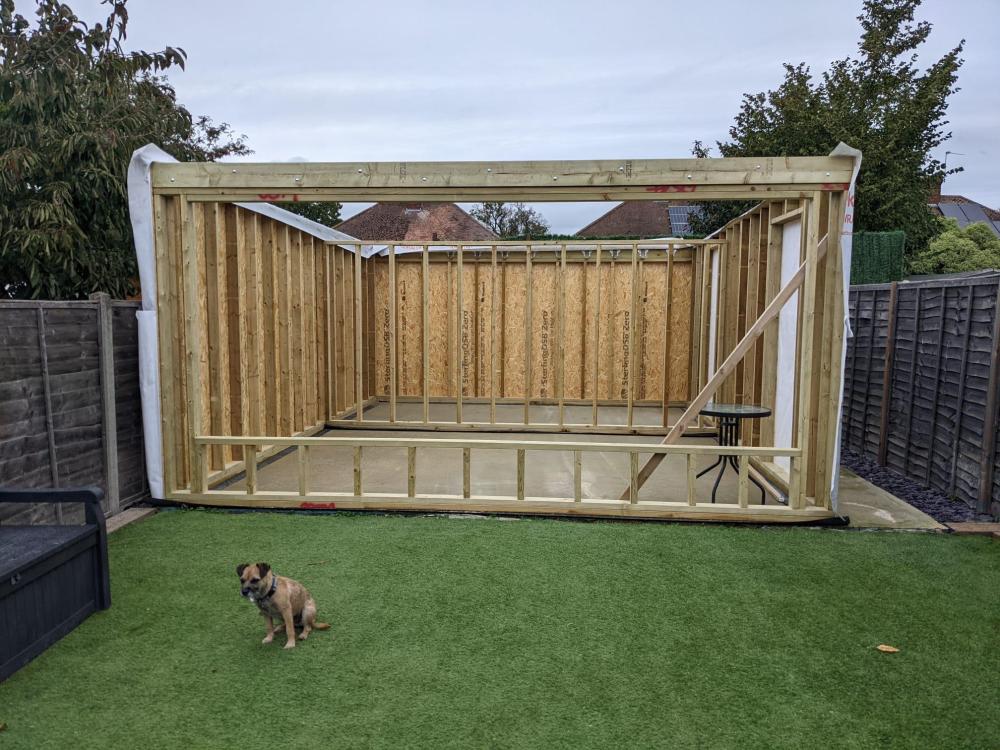
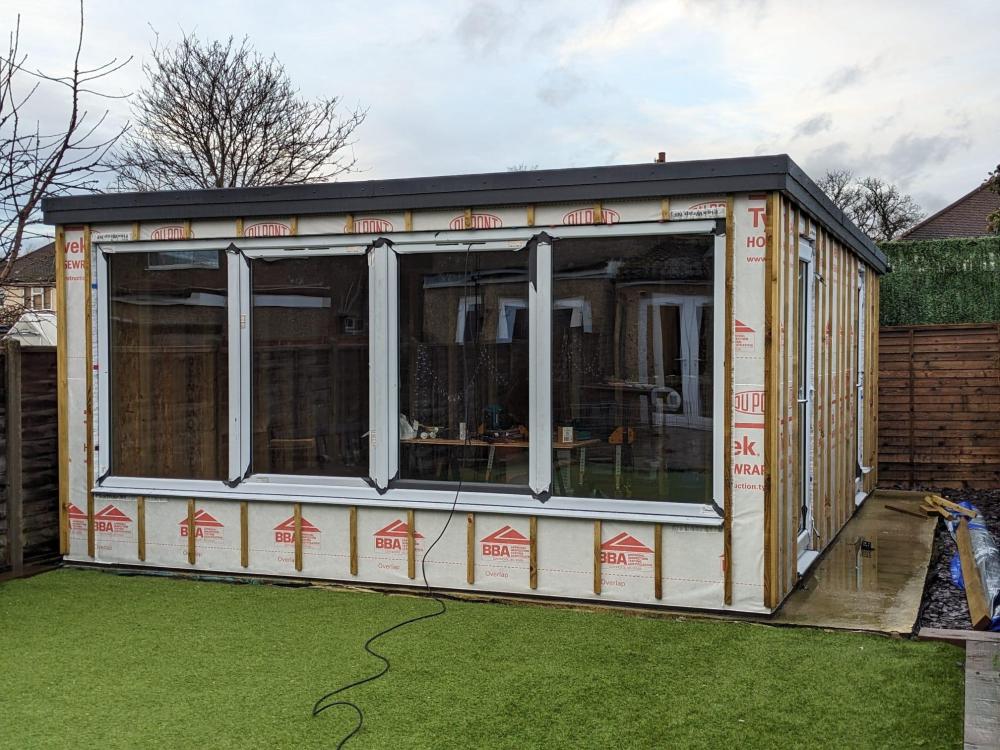
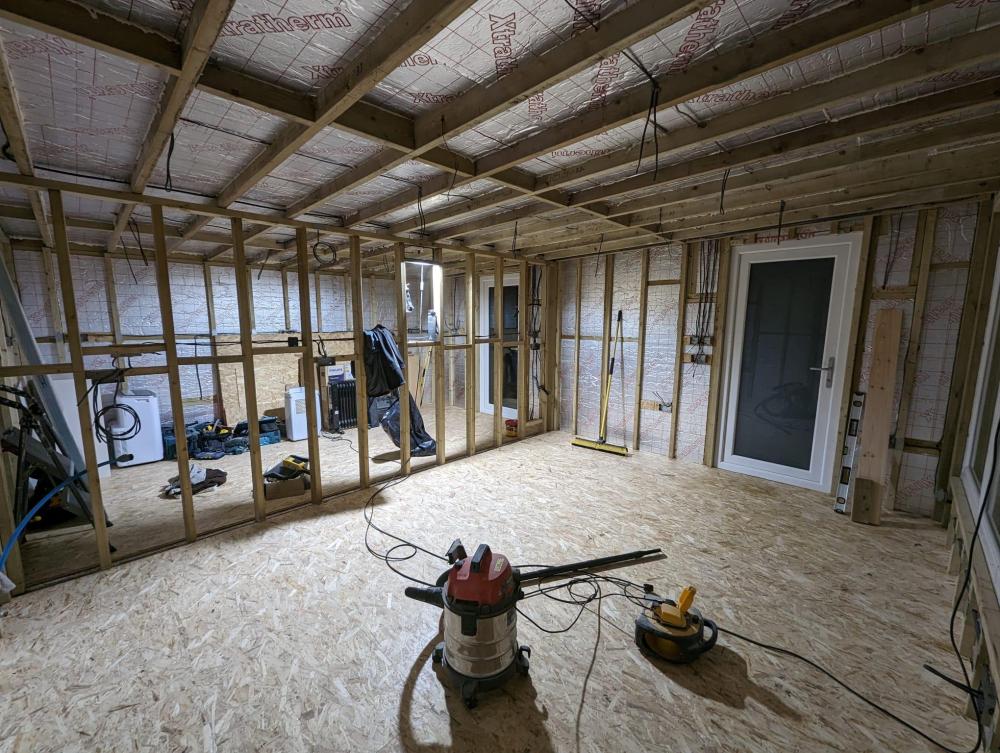
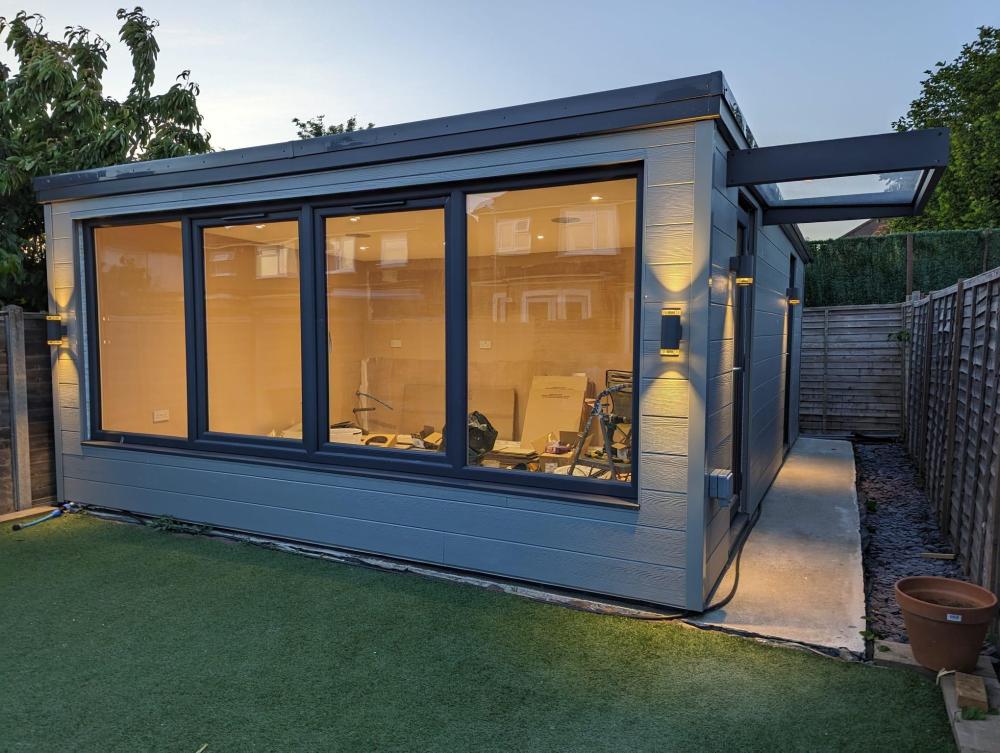
Hi all! Been lurking for a while, high time I introduced myself properly. We bought our 1930s house in Woking in 2021, it's our first place and definitely not the forever home, but we wanted to make it comfortable. It was already extended downstairs, although they did a lazy job of it, so since then we've taken an internal wall down to open up the kitchen living area, put in a new kitchen and added low pitch veluxes to get some light in. However our biggest project by far has been the garden studio. I'm a software engineer by trade, fully remote, and my wife is a massage therapist, meaning we are both home most of the time. Pretty early on we realised we needed a little more room, so I started researching timber framed garden buildings. After seeing the price of having a professional build done, I quickly committed to doing the vast majority DIY! We agreed pretty early on that it would make most sense to maximise on the permitted development size of 30m^2, and split the space into two rooms - one side for my wife's massage studio, and the other for a shed/man cave. After having a (slightly dodgy) groundwork guy put down a slab in summer 2022, I began framing in October 2023. Fast forward to now, after a fair old slog and lots of learning curves, my wife is finally able to start using the studio side! Still got a fair amount to do in the shed side, and the garden now needs a load of work, but so happy to be at this milestone. Here's a few pics of it now, and from along the way.
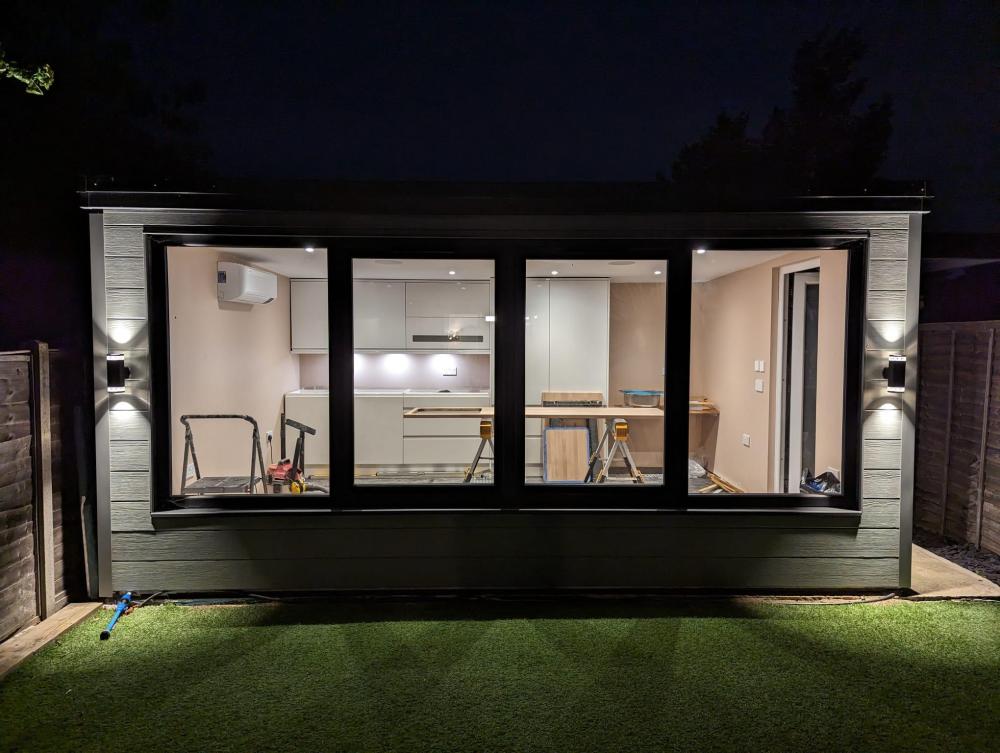
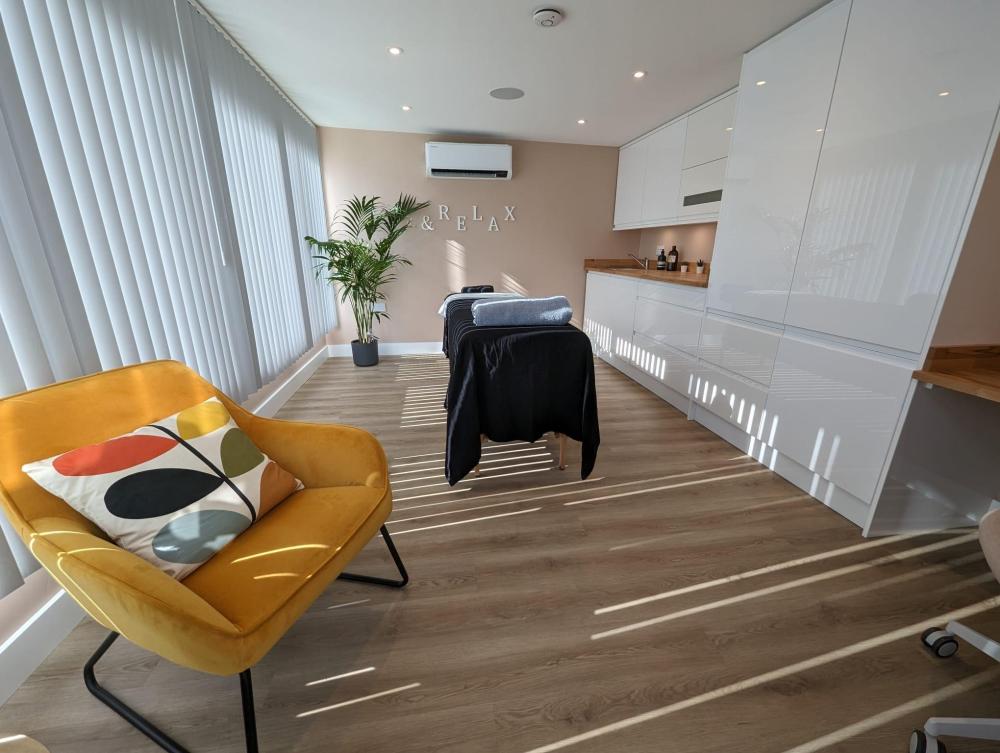
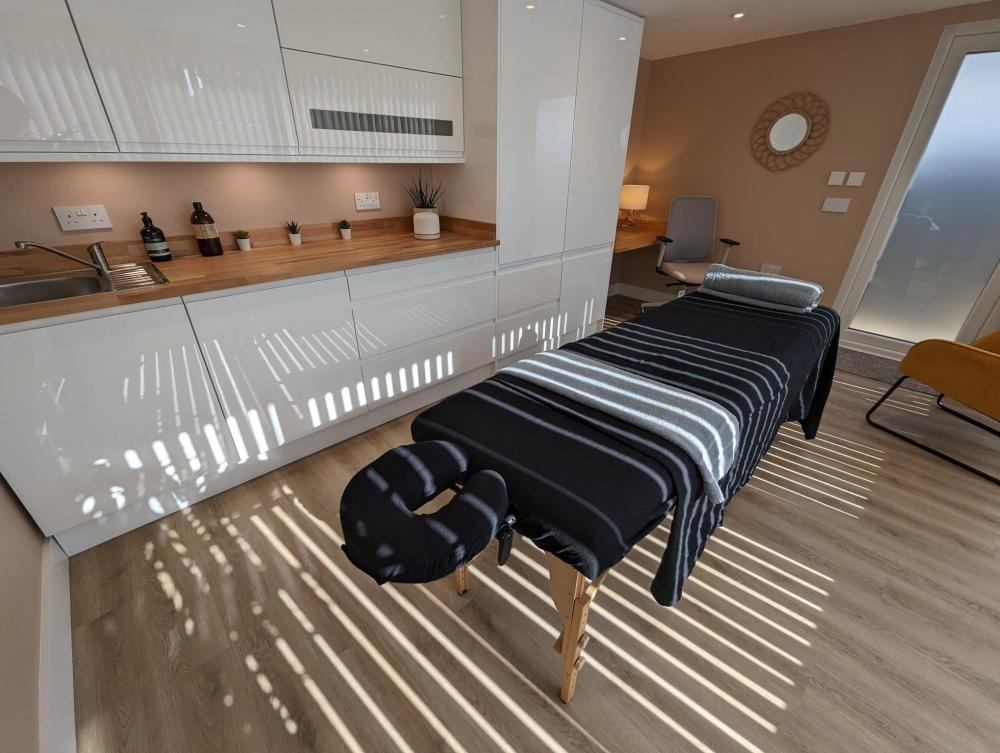
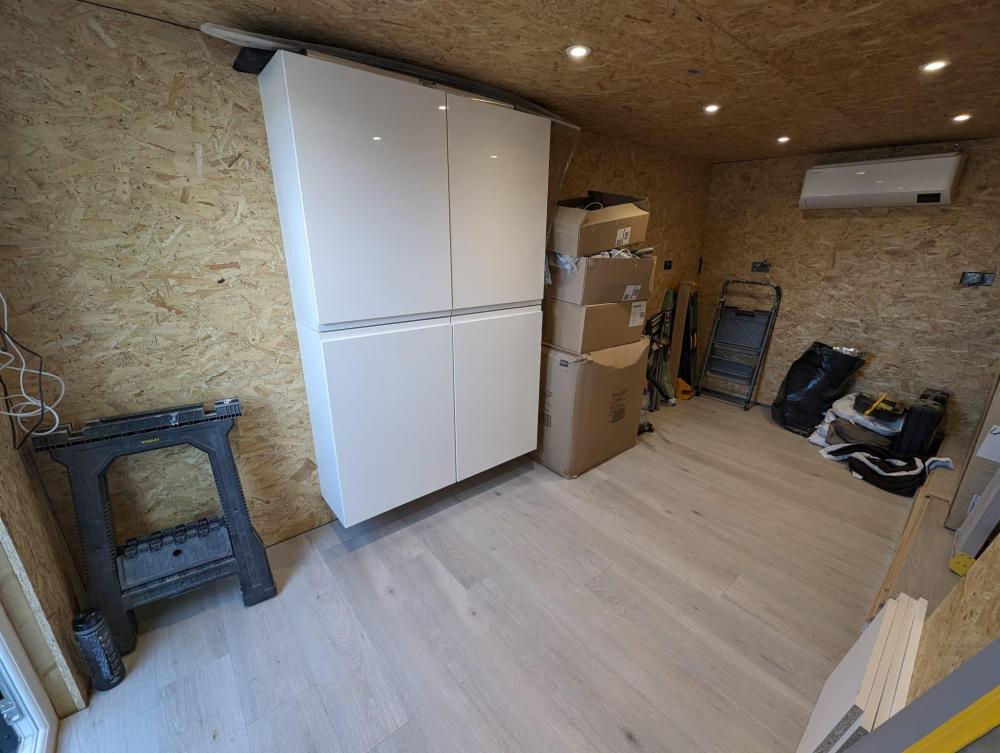
-
Screws to fix upvc windows to timber.
oliwoodings replied to saveasteading's topic in Windows & Glazing
Good point about pre-drilling @Iceverge, I had to do that in all mine. And tbh even if they aren't reinforced, you'd want to predrill the pvc to get a nice clean hole. -
Can recommend A2A in outbuildings, just had a Samsung two-room unit installed in our garden building for £1600, very pleased. Both cooling and heating are rapid.
-
Screws to fix upvc windows to timber.
oliwoodings replied to saveasteading's topic in Windows & Glazing
I put several uPVC windows and doors into my stick build garden room, just used the supplied standard screws, went in absolutely fine. -
Foundation and damp-proofing advice for timber garden office
oliwoodings replied to DanHW's topic in Timber Frame
I am in the process of doing a garden building and made some mistakes in this area. I hope you can benefit from my learnings! 1) Don't make the slab bigger than the final finish of the building. I did, and I've had real issues stopping water running under the walls back onto the slab. Had to run stixall round the perimeter, and I might also run some flashing tape from the breather membrane to the slab DPM to add some extra protection. 2) No, no fall or your floor won't be flat 3) Leave it long and bring it up the either between the breather membrane and the OSB sheathing, or the inside of the walls. The idiots who did the slab for me cut it to the ground before I could stop them, otherwise my water issues wouldn't have been so bad. 4+5) I laid dpc under my sole plates. I got stuff that was 2x the width of the plates, and just slid it underneath after positioning the timbers. I then concrete bolted the plates down. Once the walls were up, I stapled the dpc up on the outside inbetween the breather and the OSB. On the inside, I 'infilled' with more dpm on top of the concrete, taping the dpc and dpm together. 6) You can massively simplify your floor layup. Unless you plan to use this for a gym with heavy weights, or have a grand piano in there, you don't need to batten on top of the slab. Just put your celotex straight on the slab, tape it well to create a good vapour barrier, and then lay 18mm OSB T&G, gluing the joins together as you lay it with 5 minute wood glue. I would also increase from 50mm celotex to 100mm on the floor. This is what I did, it worked really well and was suuuper quick. DM me if you want a link to my Google photo album of the build, it has pics of all of this. Disclaimer: I'm amateur, it's my first time as well doing this. -
6m x 3.6m Garden Room Base Question
oliwoodings replied to Davieboy84's topic in Garages & Workshops
You can get 6m lengths of 2x4 from any reputable timber merchant, usually won't cost you more per m either. -
Garden building - separate VCL or just foil-backed PIR?
oliwoodings replied to oliwoodings's topic in Heat Insulation
Thanks, that's helpful! I should be good with taping then for the walls and floor. I'll need a separate vcl for the roof since theres a 70mm void for services so taping, would there be any practical difference between a basic polythene and something more advanced like a foil-based reflective one?