zoothorn
-
Posts
4774 -
Joined
-
Last visited
-
Days Won
3
Everything posted by zoothorn
-
J can I ask, what diameter is your pumice one, & how do you sweep it? zh
-
Aha ok thanks Peter. That sums things upin a nutshell thanks. I can't do anything about slowing the burn at the stove, unfortunately. My fault for agreeing to buy this lemon, once here & found a leg was damaged I agreed a partial refund/ bought new internal parts clearly heat- warped. Then, later I thought to zoom in on the listing.. & -just- saw the leg damage. Dodgy seller then knew it was dmgd when sold. Clearly been dropped on the leg, causing small mishapen gaps all over the shop ( I only found this out later still).. & almost impossible to determine where. Just known there must be some, as it can never be controlled/ rather runs away. A write off, but can't afford 1k min to replace it. Ok so I'll get another standard birdbarrier cowl, without the narrowed liner section in the middle. And stay with my pumice chimney, albeit 10" which seems not so easy to clean as a smaller one. I don't like this bigger aspect, but if you say it's ok.. I trust you your judgement. I need to consider how better to clean such a big/ wide diameter then. I think I'm scrimping using these drill-driver rods & nylon spinny orange ends. Although this could posdibly be the best way, & I'm doing ok.. I just don't know. Thanks chaps. Zoot
-
Hi markc, ok this is encouraging, as yes I do run it hot. Forced to to try to keep warm. Bent iron grate parts as a result. No it's the opposite perhaps: it lights fast, & gets going like a train quickly, with the back of box 'door' open the flames are pulled up (I often wonder whether too much tbh). So the signs are, I believe, that if anything the draw has always been -too much-. I sit up a bit here, end of a small valley & watch weather go sideways in rain sheets for eg, out my side windows: I get pummelled by weather here: so I'm quite sure the wind "across my chimney top" aspect is above-average. I said all this to my builder, & we put in a flue damper, twist it to close a flap thingy. This slows the burn a bit, not hugely, but no idea if it works tbh ( surely if the chimney remains the same, & gap from stove narrowed... the force of air just increaces past this narrowing, equating to a similarity as if it were open.. that's how my mind considers it, & if so, then it's fairly useless; now if foe eg I had the same damper on the -cowl- a hyperthetical sutuation, then this would be different, & the force of air up would be diminished at the stove). I can't really work things out here you see. My builder is a builder, installed lots, but I wouldn't suggest a flue/ stove expert per se. Maybe a liner diminishing the chimney diameter by 4", would result in more heat from the stove, less being pulled up. But maybe a smaller diameter might even -increace- the up draw. Very confused me. Thanks for reading, zh
-
Hi again J, it's not a thing of me over-worrying. It's this.. Like an eejet I got too excited wiv me brush rods, & popped the hat off me cowl. Then faffed about ( the rod end stuck in the hat area) panicking. So I fkd the cowl. Needs a new one. Ok, worse mistakes out there. Now, before I buy a new one (Colt birdbarrier std type) I'm wondering you see is it an opportune time to add a metal liner-? I have a strong incling, that my 10" width chimney, at the moment is pulling up & away alot of the heat. As I'm having to stuff it so full ( & generally run it pretty hot continually, to extract room heat from it.. I struggle even so with my back cold all evening on sofa you see). So could be my theory here right, or, could my struggle be entirely due to my very poor room floor mainly simply remaining perishingly cold my stove can't be expected to change). It's impossible to know. Might be 50/50. If so, & lining my chimney now, has a good chance of me getting warmer.. it's a definite must. But who can tell. Also & this I read as definite, having peace of mind that if my pumice chimney is compromised in spots anywhere, lining it is 'safer'. And I think too perhaps, this just seems reasonable to say, cleaning a liner is much easier than my drill-driver-with-rods method. It just seems more sure-footed having 6" to feel a brush cleaning, than 10" you kinda can't feel the brush is in thouragh contact al the time.
-
Hi J, that's an interesting idea.. tbh the one thing I am sure of, is my woodburner -isn't- working well, but that is, with regard to it having some small structural gaps ( impossible to fix, underneath, & @ back). Different point. It's possible the chimney is actually doing fine as you suggest tho: I do have to have it really full to get it going ( & its got a large box, without firebricks as it's designed), in order to get the thing to produce good heat. So much so some parts of the stove have warped.. I think poor quality spain mfr parts as likely as my using it. Thing is I'm just unsure. I don't like this. Can I trust my builder to have inspected the pummice condition really well as he said he did? How do I tell I'm not caking on thick crusty creosote my brush isn't decent enough to remove? Would you be able to hazzard a guess as to what sort of method this was likely built? As I say, it's 10" diameter, round, pumice. If it for eg was a series of pipe sections bonded together, with some fireproof 'chips' or insulative something around, between it & the old brick outer rectangle.. then I have more peace of mind. If it was formed by something firing pumice spiralling round & round, gradually going up, it would be onto some circular something. It was used before I moved in, it had an LPG stove here ( red big bottles left outside suggests LPG). I replaced this with my woodburner of a similar size. I'm not sure if that gas stove suggests a particular pumice chimney type. Thanks, zh
-
Hi chaps over here, I have an 8kW woodburner ( nestor Martin but a bit ropey) into a 10" pumice lined 7m chimney. I was told a pumice chimney is 'good.. if not one of the best types' by my builder, so being pleased I didn't need liner (& chips etc) extra install cost, went ahead like so. 3ft of enamel 6" diameter links stove to start of the old pumice chimney. What bothers me/ worries me, is whether a 10" pumice lined one is more prone to soot build up, to say a 6" liner affair. Sweeping mine, with a drill-driver & rods spinning etc, I'm never too convinced enough soot is removed. I get about one very big handful of black soot, sweeping twice a winter. I do only use it evenings, & only 4 nights a week too. Are there any soot build-up risks ascociated with pumice ones I wonder? Do 6" metal liner additions mean sweeping procedure is alot better perhaps? I do burn 2/3rds softwood ( extremely dry stuff, never ever fir heavy in sap) & 1/3rd well seasoned ash. Thanks for any advice, zoot
-
Your idea here, yes it's what's been suggested until the cows come home. But solutions are -nothing- to do with what I'm asking/ what I'm trying to determine. I was asking for CAUSES of this moisture, in do short a time, modern materials, up to snuff build work....... ONLY. But this is repeatedly totally lost for folks making suggestion sfter suggestion about solutions ( which does not mean the cause is either known, or can possibly anything done about it). Saying ' heat the house' is a solution, it's nothing to do with the cause IF by 18 months onward from a new build... any timberframe or block moisture... would have very likely gone by now. (Especially after 2 months of 35*C heat!!). Suggesting heat the house as a solution, is clutching at straws, suggesting there is still moisture in the actual build materials & so I cannot possibly accept this. Sorry but if this is your point, it's only an excuse-answer. Anyway no more. You just don't believe there's excessive moisture in this local area, when there simply is. Countless facts proove it, consistent with many different properties here, even if you choose to disbelieve them all. ----- Anyway enough, no more on this. The answer to the pub quiz Y.Ones question.. was.. Bummer In The Summer, by hippy 60's psychedelic band Love (Neil proclaimed in Summer Holiday episode "Summer is a bummer" clearly a reference). And coincidentally I'm listening to the album it's on right now. Over & out. Zoot
-
Thanks MJN. Finally got a properly warm place to be- & tbh the stove laughs at my house's main 8kw one. I defo stumbled on a great stove/ Devon biker chap, Bow Mill Stoves.
-
Good point, I moved my (albeit battered) Taylor indoors as temp differences are alarming. This tho: a £10 dusty gtr shop corner 'lemon', very rusty strings, tho it is a peach. Thanks chaps, very proud of this project- once I nestle down in evenings I'm transported back to solo wild camping (with car) in NZ, just my video shot that day for company in evenings. I really make the best of, & relish the solitude thing. Zoot
-
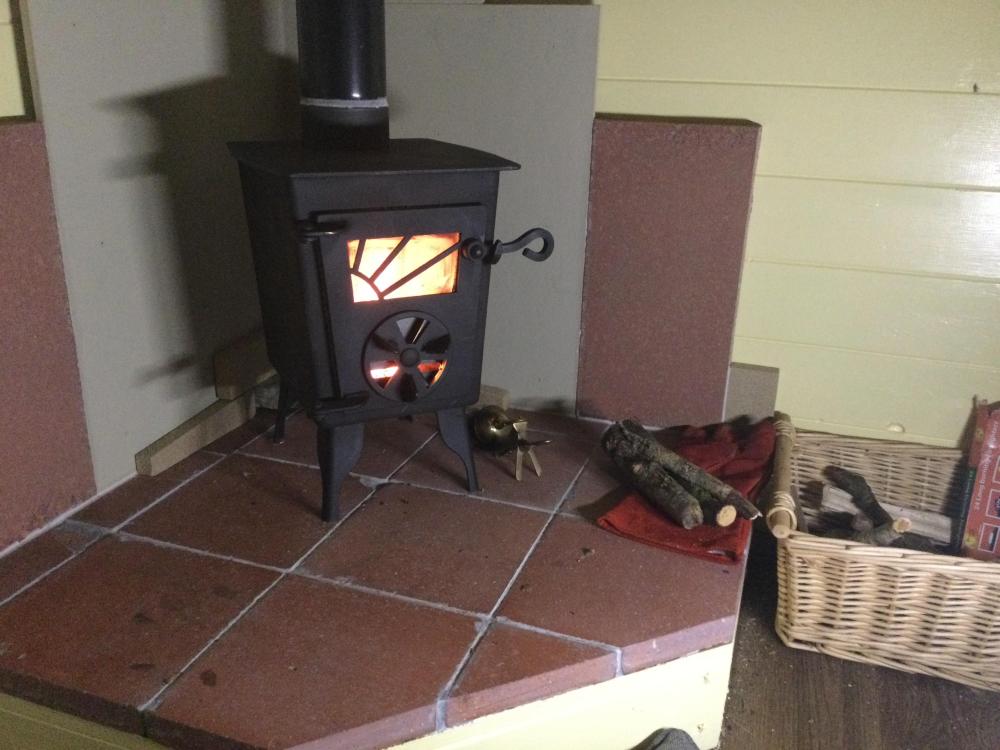
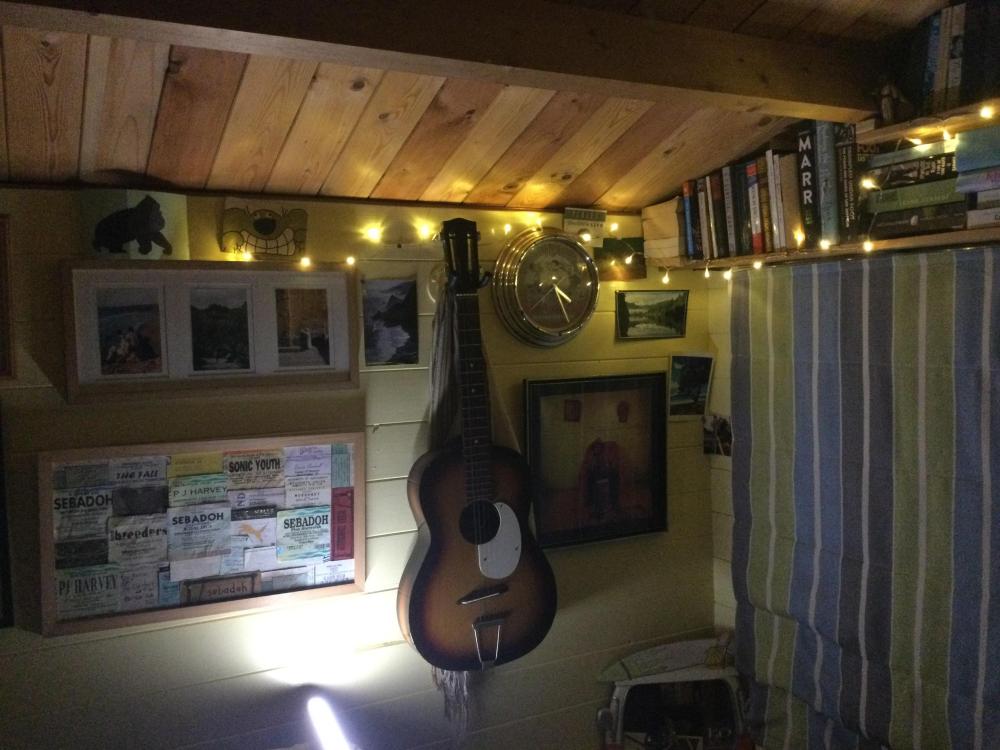
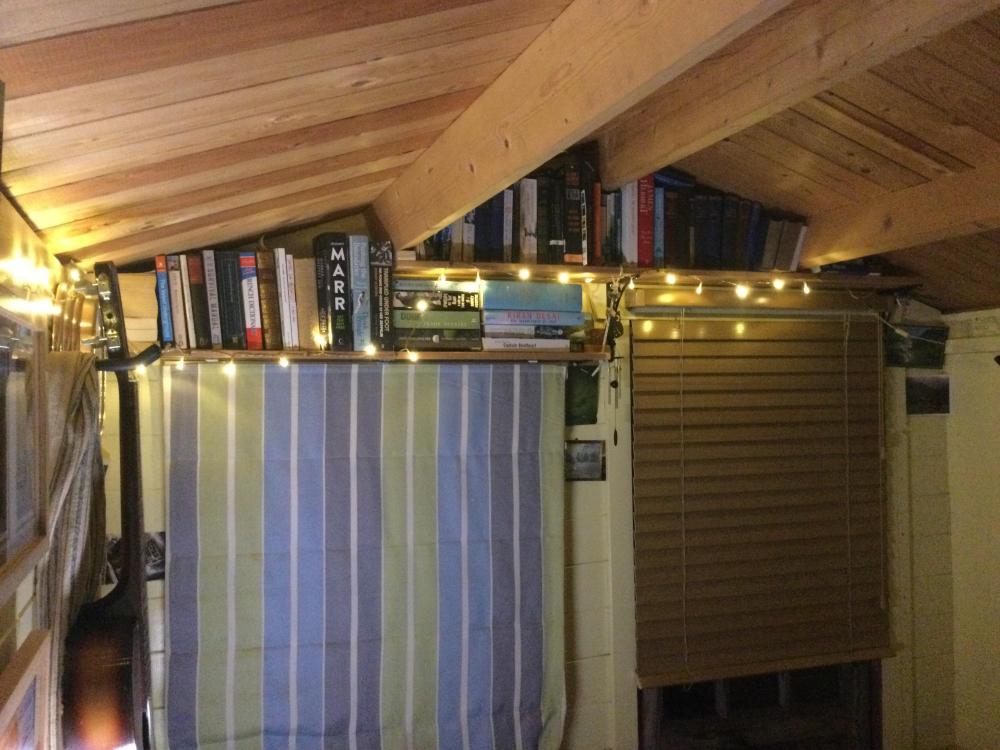
@Onoff few pics as an update. Had 3 fires so far. I lined inner stove walls & back with 30mm firebricks, even so no.1 was literally like a sauna, 34*C in cabin. no.2 I reduced wood to Max half the stove volume, 28*C still a bit hot. No.3 last night 26*C almost ideal. So, it takes a tiny ammount of logs/ super efficient, & I know in coldest winter I can ramp it up a bit & keep warm. Battery lights, ipad with a downloaded 2 progs for a few hrs: warm, offgrid & offline, & free wood too (collected on walks). Every other evening minimum I'll be in here now, as Im far warmer than in house & far cheaper too- truly fantastic results.
-
Hi chaps, many thanks for last few replies. Can't tell you what a relief it is reading this, which sort of tallies with me. This sounds most plausible. It's a very tricky one, & when I can I'll ask my builder who knows this village very well indeed.. tho a bit reluctant if he starts "you can fix it by dehumidifiers & ventilation" as I think my brain will pop/ gnash my teeth so hard. He likely will too, because fixing stuff is simply a builders' no.1 remit (as opposed to the causes of XYZ, beforehand). Very patient y'all for reading my spiel/ 6 year frustration with this, I needed to vent it out in words tbh, so affecting & all-encompassing it is to live with it 24/7, 365 days a year. I'll leave the subject now. Back onto the thread: called up BCO, ready for sign off! Which is fantastic. Huge help as ever folks, Zoot.
-
Analogy.. Drive my car & keep hitting potholes. I ask why Im having to keep putting up with punctures on my car from the potholes. The answers are "take it to X & repair it, simple". I say ' but fixing the car isn't the point I'm asking.. I'm asking why the potholes happen'. And another simple wheel fix is proposed. And another. The point of filling the potholes, to prevent the car getting damaged in the first place, getting increasingly farther & farther away with each proposed reply. Until frustration sets in " just keep putting air in! Simple!"... ."look, just use this tyre, it's thicker so prevents punctures".. "you are driving in the wrong place dummy, tried steering around the potholes?!"(Likes total:8). Farther & farther away. The point by now; lost. zh
-
Hi GW. But it's a timberframe extention, 1 up 1 down, 18months since built. Ventilated every day, front door continually open, door ( goes outside) into the 1 down room also continually open, a workshop. There's no problem at all in the new 1 down room, no mould at all, or rather it's consistently small to parry with the majority of the house's upvc DG window frames. There is nothing at all to suggest this moisture is a result of the materials within the build 'drying out'. If it had ( a timberframe?) had some wet in the timberframe, 18 months would have seen to this anyway. Something odd is happening in this 1 up new room. I can't heat this room to 23* 24/7 for half the year. It's completely out of my budget. Tbh I'm not having the CH on at all this winter, I cannot afford it. But. Even so, with a newbuild extention, regardless of what temp you have it inside, this problematic hugely excessive mould in so short a time... just should not be. Not in a normal situation. You wouldn't expect it there, if you'd built this there, up to B.Regs standard, as I & the builder have done. You just wouldn't. It shoulldn't be like this. It's just a question if -why- it's happened. What can be done about it to get rid of it once it innevitably appears is nnothing whatsoever to do with the point in question. The question is only, only, only, WHY this has happened, in so short a time. My view is the atmosphere is facilitating it ( I know this to be true but there is no way ti proove it, alas). No other theory has been put forward as to why it's happened. Only how to fix it once it appears (irrelevant/ Im not interested in this/ it's not the point). It's impossible to explain, impossible to keep it on track for the replies just keep saying how to rid it, nothing else; if I can't get through that this is not what I'm asking about... it's a useless waste of time. Mine, yours, all replies. If someone has a theory as to why it's happened, in so short a time, then this is relevant. ((But fixes of the mould once happened... are not)). I can think it only possibly that 2 factors at play (if I discount the timberframe leeching damp still after 18 months, which is simply implausible to me); the build work I did, & the air facilitating such rapid development of the mould. I've read nothing, of any logic, in the replies, to steer me away from these 2 factors. 2 factors of which i can do nothing about, bar excessively massive dehumidifier engines & de-seeding the clouds with aircraft.. IE Ican do nothing about it. I have to live with it ( tallying precisely, exactly, with us all moaning about having to live with "it" here). Therefore we agree to disagree is the conclusion I frustratedly have to concede. Zh
-
He might have been thinking of the police song.. but the police weren't around in 60's. Well I mean the real ones were. A clue. There's one word he sings, early in this clip, which is one word, of the four within the answer/ the 60's song's title. You still won't get it. It's ultra advanced Y.Ones nerditry this.
-
Nope, that was Hole in my shoe you're thinking of, a 'Neil original' that got to no.1 in 1984 (Im not looking it up, or no.3 in 85 possibly!)
-
Hi roundtuit, even if I had the cause, say if it was purely build-related, I can't do anything about it.. I mean not now. As to some possible help/ preventative try-idea.. isn't this upvc addition idea kinda like what I was thinking, & asked about, with my Freefoam trim-? IE if the cold-bridging (if it is purely this) is affecting the nearest 1cm of vertical reveal to the doorframe only, as seems the case, & if this stuff is a 'firm foam' material.. A) isn't it possibly actually designed to be a tiny extra bit of insulation, for the very issue I have-? & b) wouldn't this be in fact a better choice, than upvc cladding? Or maybe this freefoam trim, is actually what you exactly mean by upvc cladding-? Thx zh
-
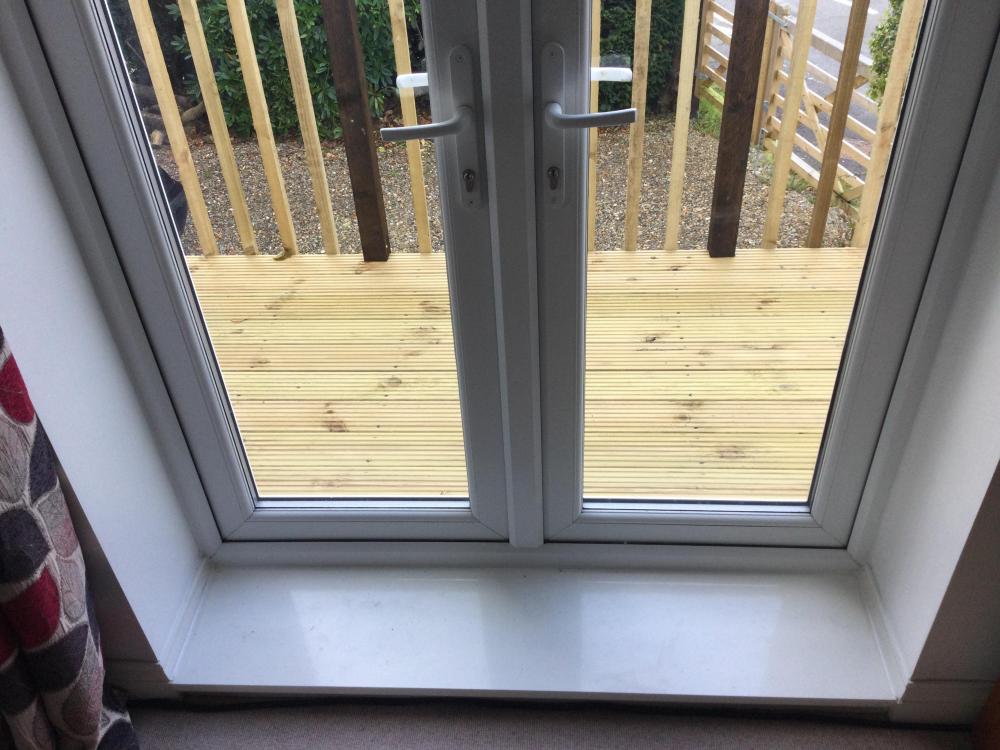
Glad we veered onto pub quizzes whilst I've been tarting up me reveals (impossible task to explain the atmosphere thing here- you can only understand if you visit, &, give it a few days for it to become perfectly apparent).. bloomin 2 days work, 4 coats of Zinsser etc. Urgh. If I can avoid having to do this flippin ballache each 1-1/2 years, great.. but I bet I'm gonna have to. Ready for BCO, at last. I have a pub quiz Question. Thus. And no looking on t'internet. Advanced level this. Ok.. Neil the hippy referenced two 60's hippy tunes in The Young Ones: one was S & Garunkel's Sound of Silence ( he sang it to himself, appalingly, in the bath). What is the other? Zoot.
-
Exactly Onoff. You cannot replace the inside air, of a house, feasably or affordably. You may be able to in a normal area (by spending hundreds on multiple dehumidifiers & running them incessantly you might be able to). But NOT here. Proven. Household after household. No-one bothers. Why not? Because they are useless, here. Perhaps & probably useful there (for you in Onoffland) but not here..... or they wouldn't be relegated unused to garage cnr after dusty garage cnr house after house. So the inside air will always be determined, by the air outside. Especially so ffs if I'm continually being told "ventilate, ventilate, ventilate" which I say I do by leaving this room's window open for most of every day. I mean for crying out loud how on earth can the idea of dehumidifiers be feasable whatsoever, if at the same time time as suggesting these (besides from the fact they do not work here) it's being suggested I ventilate ventilate?! Argh! It's nuts. It's a similar frustration as my freezing main room, which takes an locomotive like shovelling in of wood to its stove to get a semblence of warmth in (even so, having still to have a scarf & hat on, & my back still cold all evening)... but at the same time I'm told " you must have a largish vent for the stove", which, when done, introduces freezing air into the room totally negating hours of effort spent warming the bloody room up!! So in the stove situation, I can't have a vent making my room cold. Or I'd be even colder. Which leaves no option but blocking the hole, & relying on a Co alarm in case of emergency. --- All I'm saying is this is just how it is here, you have no ( feasable) option but lump it. I could, open my window plus introducing a jet-engine 300hp dehumidifier, costing £12k. Yes then my air inside will be 97% dehumidified. But this isn't a feasable option. Yes I could excavate 1 foot of my stove ( old) room floor 10x6m, put down 100mm celotex, cap it with 50mm concrete ( & redone dpm) meaning I could have a vent plus the stove on & I could just about get warm ( plus the edge damp might lessen too). But this isn't a feasable option as I cannot afford to do it. zh
-
No, the colour is not the point of putting this photo up. The point is the time this has taken, to form dpm.
-
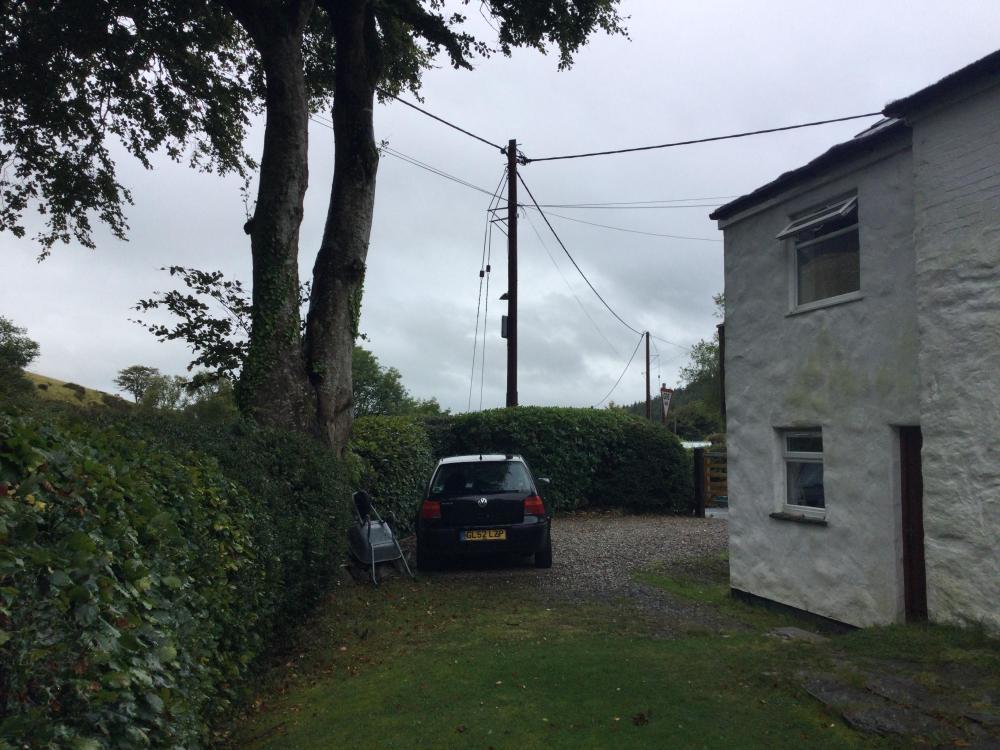
Wind comes channelling up our small valley here, up from centre of frame, S.westward towards the house, it gets continually battered by wind here ( especially so balcony side / drive area)..
-
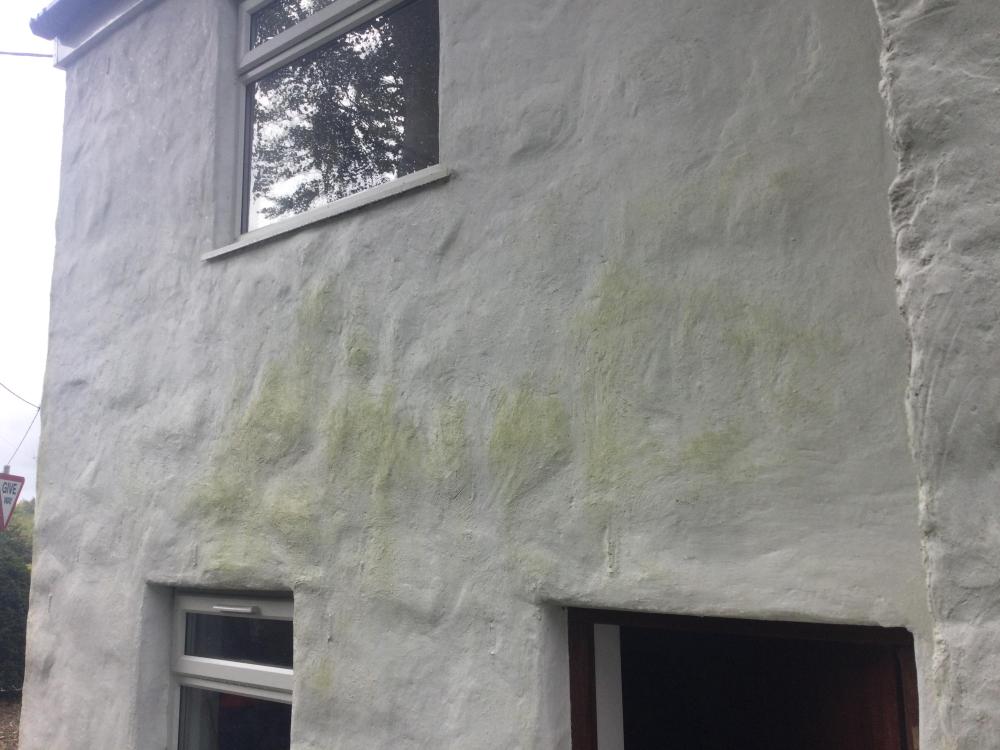
18 months since extention built, & painted (not in "Zoot's magic mould-attracting paint" ) in standard good quality masonry paint. The side faces east, get good sun all morning, & isn't sheltered away or anything at all.. in fact gets much breeze here. 18 months
-
Radian, I know all this. You don't understand my points to say this (slightly condascending) reply. Look. If I have a ( cheapo) temp & humidity meter showing 72%, & you have one showing 72%, but I have these (LOCAL AREA) mould anomalies consistant in this house just as mrs. miggins' dry modern bungalow..... but which you do not get, then just going by this humidity figure is not enough information: something else has to be at play or we all, you, me mrs.miggins, would get the same mould anomalies. We do, but you don't. Reminders of what these are, consistent with the local area ( NOT PLEASE solely consistent with my house !!): 1) severe green mould appearing equally rapidly in different houses 2) severe green mould on exterior walls appearing too 3) alot of black mould in houses, including large "breath patches" ( you have this do you?! ) 4) pain (lungs) for 3 months innitially, not solely in this house, but by frequenting everywhere around here. 5) ALL paper within houses, vinyl sleeves best eg, warp/ wibble & feel tangibly soft, never crisp. 6) stove heat feels tangibly, cloyingly wet, same in my house as in my new cabin: IDENTICAL; a sauna is an absolutely -ideal- comparison: it feels absolutely identical. Nowhere else have I felt this. Nowhere, in the world. 7) clothes always feel slightly 'damp', & take far longer than normal to (air) dry 8 ) most folks here have dehumidifiers " we all have them, you can borrow/ try if you want, but.." but all redundent: why: because they ( normal sized house units) can't possibly cope with what they're up against 9) warm up a bed with leccy blanket, shift your feet & the air feels cloyingly "humid". It just does. Every time. And lastly, as I believe it has a significant factor in (if not the very cause IMHO).. 10) this unusually high level of mould/ plasterboard damage, in a newly built extention up to all normal build standards, happening in so short a time. In simple conclusion, from 6 years living here, consistent with others identical opinion: [[[ YOU CANNOT DO ANYTHING ABOUT THE LOCAL AIR HERE ! ]]] But still you'll say 'if you have a damp house then you can do something about it!' (For goodness sake, & Im back full circle you seemingly not understanding -a word- of what I'm saying). Anyway I give up trying to explain. Its as frustrating explaining what we have to contend with here, as it is actually living with it. Right now for eg, my lungs feel heavy, & in front of my ipad area, in my dry 80's extention is a wall - covered- in 2 sq M of mild "breath mould" (Photo added before, green painted wall). Do you have this!? No. Have you ever heard of this, ever, in any house, in you're life, in any country that you've been to!? No. Zh
-
The only thing that seems to adequately describe what is possibly happening ( again this may, or may not be the cause or a contributing factor to the bizarrely early damaged state of my doors areas) is thus. Although the humidity percentage taken here may read similarly to an average area, or even very slightly above average ( as it does), something else is playing a factor that this figure is not showing. If mrs. miggins in her new bungalow gets the exact same drainboard green mould spring to life in ridiculous fashion, repeatedly, without any let up all year... as I do here. And if both our kitchens are dry. And if the tap water isn't any "different" to normal water ( the only other possible contributing factor producing this green extravaganza). Then the only thing linking me & mrs.miggins... is the air. Now, if this air has a similar moisture content to normal let's say, or nothing pinging out as higher than average, then something this percentage figure ----doesn't show---- MUST be at play. My only possible theory, is that for some reason, the air here is a particularly good CONDUIT for carrying, (or, particularly good at aiding the development of) MOULD SPORES. It must be something within the air that a " normal" figure for eg of " 72% " just doesn't explain. This is the only possible explanation for all the catalogue of mould happenings in our part of the world here, 6m east of the irish sea, in very hilly west wales, in a bowl of steep-sided fir forests, where plants grows unusually almost weirdly-well. And my hunch has been from day 1, & has never changed, that it's a "perfect storm" of factors including topography, sea air. It is known, for eg, that we have here in this locality, a UNIQUE flora mould type. I've bumped into the nerdiest nerds on planet earth here whilst hiking, excited by a patch of green on a farm gate. Come all this way, to witness this unique incredibleness. Gives my theory wings doesn't it.
-
Hi markc, again, there's a mix up in communication/ my fault obviously. I'm distinguishing absolutely/ totally/ unequivocally, between damp within a house. And damp within an area. And when I say area; not the area within the house; nor the area the house resides on ( the property area). I mean the locality. The combined area of say 200 houses, 400 perhaps. If we all share & moan about the same problems & similar strange things, & if we as a collection of different house types (some old miners cottages with modrrn additions, some 1930's, some 1960's bungalows, some new built extentions) share commonalities... then focussing on the house damp in this house, is nonsensical; it misses the point entirely; it's of no use whatsoever. I do have some 'normal' damp within the old part of the house. It manifests itself in a dry grey-black area easily wiped off, in lower areas & corners of the old room (I only have 1 old room). This is completely completely completely different to the moisture-mould in the brand new extention french doors. It is completely different to green mould in the kitchen. Completely different to external green mould appearing on a 5m square patch, mid-way-up, on my new extention, within only 18 months since new & just painted. And completely different too, to the breath-related patches of dark mould formed very quickly in areas (of the modern bone dry sections, not in the old part of the house) adjacent to where my breath is exhaled. Next to my head on the wall (dry/ no damp/ modern addition) where I lie in the bath (like the drainbosrd green mould appearing in weeks, a dense black mould patch forms on the wall in weeks again after removing). Exactly where my breath exhales. This bathroom is modern dry, no damp. So this mould right here next to my head................... has nothing to do with house-damp-air then. It must have a cause though. If there is no damp in the room, the ONLY factor left, is the locality-air breathed. SO. There is something happening with the air, in the locality. It is proven time after time. But what is impossible to establish. Distingushing between the different (4 as I count) mould types is 1st step to understanding which ( if it is related to one at all), these new doors' mould is related to. If it's cold bridging... then my count goes up 1 to 5 types here. .
-
Hi Ferdinand, ventilation is more than good as said. Which is why surely cold bridging is top of the possibles, that is to me it just seems logical, esp if I have perhaps gone too thin with PIR below cill & behind reveals (but constrained with the ammount I could fit by the prior frame size/ &/or the timber area left for me: especially so the window L&R: I could only fit 10mm of insulation here or I'd be encroaching into the frame too much). I have to live with it. Dehumidifiers have been tried here by house after house, so much so everyone has them but no-one uses them: they extract alot, but it's like a drop in the ocean.. it makes no difference at all; everyone here house after house moans about the damp air, the green & black mould. Best eg: my kitchen sink drain board is chokka with green mould, masses of it. Scrub it clean, in weeks it returns. A modern 80's extention, no damp in kitchen. Everyone has it. Old house, new build bungalow. All our drain boards are similar. Outside, you whitewash a well ventilated wall, in months its covered in green mould in huge patches. You can't do anything about these two eg's. You just learn to live with it. It IS the environment. Regardless of a % figure on any device saying "no, the air is fairly normal". It just isn't, in this neighbourhood/ locality. This is a fact, & I can verify it with countless eg's here which tally with neighbours absolutely identically. How this absolute-factual aspect is affecting my problem with these doors though, is as impossible to figure out as it is impossible to do anything about this air 'thing'. Imagine James Herbert's The Fog. It's like that, but invisible & never, ever ceases. Sounds implausible, but it is absolutely real.