Iceverge
-
Posts
4487 -
Joined
-
Last visited
-
Days Won
32
Everything posted by Iceverge
-
 I would consider some PIR, or even phenolic . As much as you can fit. Then layers of OSB staggered, glued and screwed for the floor. With your proposal and carpet especially it's unfortunately unlightly you would get any heating effect at all from the UFH in colder months. Use large radiator's for the heating instead. Alternatively cut out the block and beam with a concrete saw and put 300mm of EPS and 100mm of fiber reinforced concrete in instead with UFH. That would work well.
 -
I would be worried about accessing the vents for cleaning, cobwebs dust etc on the intake. There may be an increase in VOC's from the timber, especial in warm weather. Having MVHR terminals on differing facades of the house can make it tricky to keep balanced in windy weather.
-
What is your TOU tariff at the moment and what will the occupancy of the house be for DHW purposes?
-
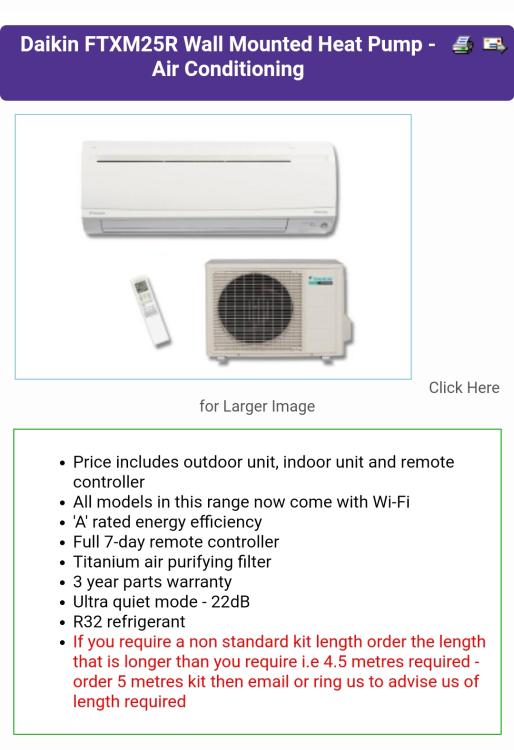
Try PVGIS for an another useful tool. It will give you more granular data. https://re.jrc.ec.europa.eu/pvg_tools/en/ Just to put the cat amongst the pigeons here's an option from Daikin that may suit you.

-
Block and Block with 180mm cavity instead of Isotex ICF
Iceverge replied to Chanmenie's topic in Brick & Block
This is really a pain for all involved. Good to hear isotex are doing something. As you're new feel free to create a post and keep us informed. We're all pretending to be helpful just to excuse our nosiness! -
Block and Block with 180mm cavity instead of Isotex ICF
Iceverge replied to Chanmenie's topic in Brick & Block
They cannot practically and cost effectively be fitted properly. The inner surface is too uneven even with really careful masons to avoid thermal bypass. It needs foaming. The cavity ties will create penetrations that need to be foamed. All joints will be need closed cell foam and be given the time to dry before being trimmed and taped. In reality this is happening outside in the rain with plenty of mortar droppings. It cannot be done easily which means it's never done right and mostly not even attempted. -
Block and Block with 180mm cavity instead of Isotex ICF
Iceverge replied to Chanmenie's topic in Brick & Block
Sorry to hear that. That's a real PITA. I hope you'll get some money back. Were they on credit card or anything? Using regular dense blocks is a better way for cavity walls IMO Vs lightweight. Get some prices and do some U value calcs and you'll see. Blockwork isn't too different but in my hands it's extremely slow for DIY. EPS beads or full fill mineral wool and a 180mm cavity will get you to a respectable 0.17W/m2K. Stainless steel cavity ties for up to 300mm cavities are easy to get here in Ireland. UK must be similar I imagine. For DIY only a stick frame would be my choice. As you've unfortunately found out there's a big plus in being able to walk into any builders merchants for materials. 220mm stud full filled with cellulose. 11mm OSB racking, 50mm cavity and 100mm block facing would fit nicely on the 380mm foundation. A/T membrane to the inside and a 50mm insulated service cavity. U value about 0.14, quick to watertight and will perform excellently. -
Block and Block with 180mm cavity instead of Isotex ICF
Iceverge replied to Chanmenie's topic in Brick & Block
Rigid boards in a cavity. DON'T DO IT!! Lightweight blocks are good for the Bricky as they're light. Bad for everything else. Expensive, they crack. They're hard to fix to and render. The benefit to u value is tiny. Like @Russell griffiths says stop and take a breath. Nothing major lost yet (I hope you haven't lost money) and you can still get an excellent building. AN alternative brand of ICF or a Stick build would be my choice. -
Rigid wall insulation attention to detail
Iceverge replied to goodbyegti's topic in General Construction Issues
Rigid boards in cavity walls are almost never done correctly unfortunately 😔. In an ideal world the internal wall leaf would be advanced first, then the boards would be stuck with foam, just like EWI, to the blocks. A continuous bead of foam around the perimeter of each to prevent thermal bypass and foam all the joints too and cavity tie penetrations. Finally the foam trimmed and all board joints taped and the external leaf completed. I have only seen one example of this ever. And that was someone's building his own house. I would forget about using them. Use a mineral wool batt instead for the remainder. Then some further internal insulation to make up the difference in U-Value. It'll be cheaper in materials and perform better. -
The main cost of topsoil comes from screening it and transport. I very much doubt the farmer is making much from this but you could always ask the question. Nothing ventured and all that..... TBH I would be slow to accept topsoil. It could be full of Japanese knotweed for all I knew.
-
ASHP Running Costs / Efficiency
Iceverge replied to Sailchick's topic in Air Source Heat Pumps (ASHP)
Do you have a time of use tariff? E7 or similar? What flow temp do you use? -
No air gap needed. Full fill rockwool batts would be good. What kind of flooring do you have upstairs? It's important to seal any holes in this as drafts will negate the effect of any insulation.
-
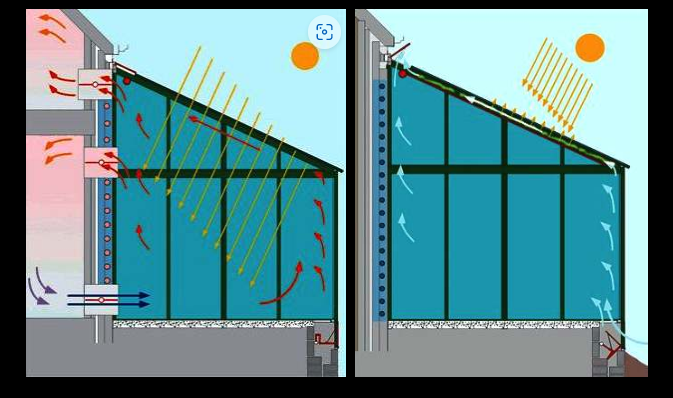
@joe90 SOLAR CONSERVATORY PASSIVE HOUSE GLENGARIFFE IRELAND VIKING (cherrymortgages.com) this one? Yes, the issue becomes cold weather I think. There will be days that you have little sunshine and low temperatures so an over glazed heated envelope will need lots of heat input. A hypothetical house with no window's in the main body, just super insulated shutters opening onto a south facing conservatory could perform very well. Try selling that idea to a human however and they'll tell you where to shove it!
-
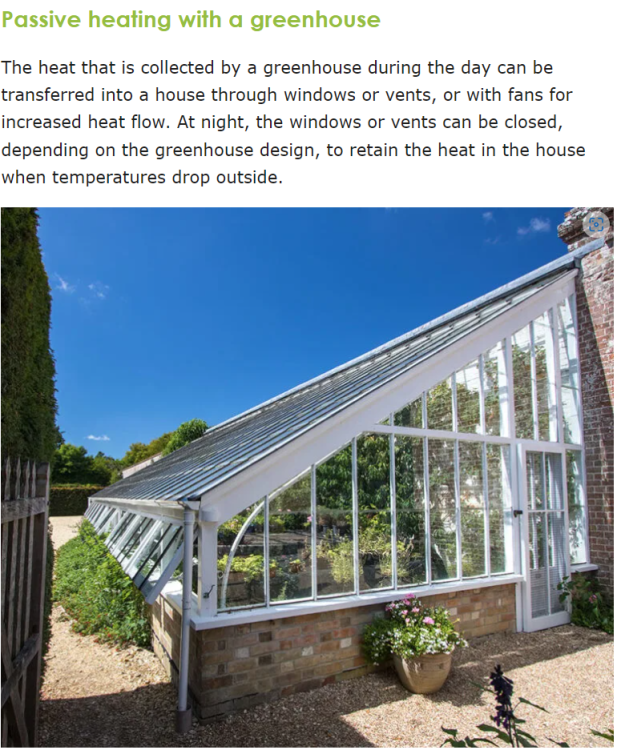
From our own PHPP Losses are indeed offset by gains but we have pretty good windows. However without the South facing glazing it would be a loss. Sadly with this it's lightly that it'll loose the simple beautiful glass boxiness of the design as there'll be too many add ons. You may end up at a place where aesthetically you'd be better off with less glazing. @Radian is your garden room above inside the heated envelope? I think there's a place for a highly glazed room outside the main body of the house to be used as a solar air heater amongst other things like below.

-
Air-conditioning = Air to Air heat pump (A2A). It's an air source heat pump (ASHP) but only heats air, not water (A2W). Some models only cool efficiently. Others heat with a very good efficiency too. This is commonly called coefficient of performance (COP) . For example if you put 1kWh of energy in at a COP of 3 you'll get 3kWh of heating. The manafactuers must produce a SCOP (Seasonal COP) figure for your climate zone. This gives a good impression of what real life performance will be over a year. I've just bought this model with a SCOP of 5.1 for heating. Not installed yet. The trouble is it's not suited for colder climates. Cooling can be overcome by simply opening all the doors and windows (security and insects allowing) and letting the wind blow through or pairing it to PV and Aircon. However at night or in winter it'll require a lot of heating to stay hot. Let's assume you have an outdoor temp of 5 Deg and want 20 deg inside. You spec really really top class windows with an installed U value of 1w/m2K. Now let's say the extension has a glass area of 50m2 and a floor of say 16m2 at a U value of 0.15 w/m2K. Heat loss floor is 16m2 X 0.1w/m2K X (20deg-5deg) = 36w Heat loss glass box is 50m2 X 1W/m2K X (20deg-5deg) = 750w. For context this about half the heat load of our entire 185m² passive house for your 16m². Ok in California or the Mediterranean with warm temps all year around. Elsewhere its costly to run.
-
Ah, a complete and total glass box . Install a high efficiency A2A mini split unit then and just pay the running costs I would say. The amount of external shading and internal insulating blinds you will need to make it work like a normal room will ruin the architectural merit. Even an excellent window is 5 times worse than an average wall these days in terms of heat loss and gain.
-
That's the one. I think there was one mentioning international installs too but that too has escaped my mind.
-
What direction is it facing? North, no problem. Anything else will get too hot. Solar glass is a bit of a half solution. It can compromise the view and then not work perfectly well either. Overhangs work well for South facing windows but not so much for East West. External blinds work well but block the view. If it is outside the thermal envelope you can simply shut the heat/cold out from the main house like @joe90 did on his house. My personal opinion is that very large glazed areas only work when you have a very large heating and cooling budget or a very scientifically skilled design.
-
Welcome welcome. A quick cross section sketch would help.
-
There's a live list of real world performing heat pumps on a website somewhere. Someone posted it a few weeks ago but I can't remember where.. Will try to dig it out unless someone else remembers.
-
Pictures please, inside and out. How are you fixed for space inside the building? Equally how about outside? Is the building listed or anything? EWI may be an option. Do you have any intermediate floors and/or many abutting walls?
-
Watched my man Matt do it. He explains it all. https://youtu.be/JYugiSwWoPk I think it's a good product and can make a good score an excellent one.
-
@greenbanana I think it would help get a satisfactory answer if you were to post the pics. Having looked at it I can understand your concerns. I assume you're looking for advice here as you're not a building expert. Just like most of us. However there are plenty of things that would seem unusual to a casual observer but perfectly legit. From a glance for instance I reckon that there may have been a lintel in place before the wall was taken down anyway for the bay window. Similarly they may be cutting corners and you have right to be worried. From just a description folk won't be able to help unfortunately.
-
Just had a look. TBH if you blank the reg plates it could be 1 of about a million places in the UK. I wouldn't worry about posting. I can do it if you like. A public post would certainly get more help.
-
Any pics? Is it a semi detached to your house?