Iceverge
-
Posts
4485 -
Joined
-
Last visited
-
Days Won
32
Everything posted by Iceverge
-
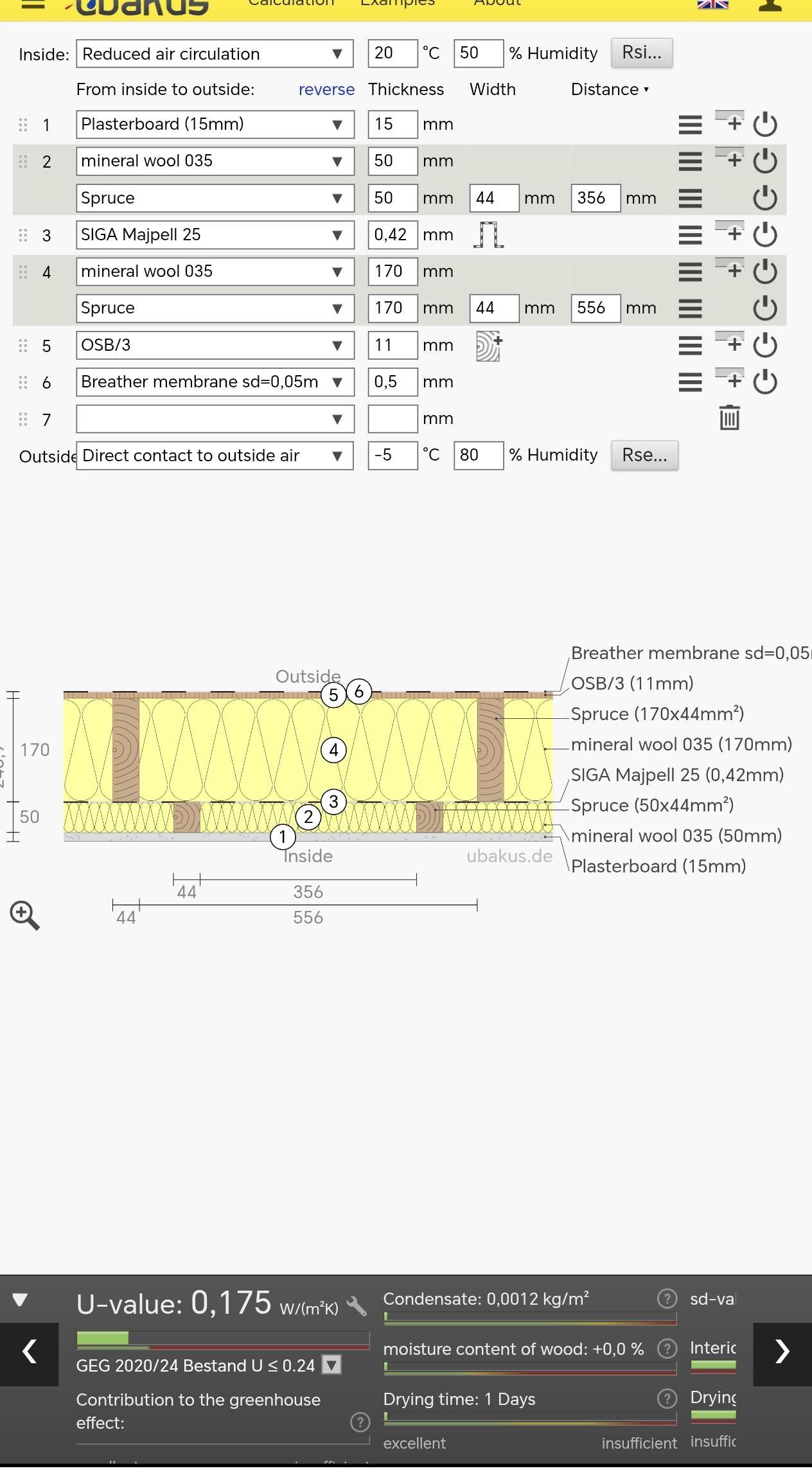
ubakus?
-
Mix up mortar 4:1 sand cement and trowel it into the chases where they're too deep. Maybe easiest done when the electrician is fitting conduit and push the conduit into the wet mortar. I know you're concerned but I wouldn't be too worried so long as everything is plumb.
-
I wouldn't worry about it. The calculator takes a snapshot of a temperature and assumes it stays -5 deg forever. Not very realistic unless you live in a valley somewhere that never gets any sun. Masonry is very tolerant of any damp. Masonry wall with mineral wool is somewhat vapour open so drying does occur both back into the house and out through the wall .
-
I could probably do any build method myself, masonry included. Unfortunately I would be long dead before I had finished. I think stick built has great advantages. 1. Speed 2. Many options to source materials locally 3. "Standard" TF constitution these days for mortgages and insurance etc. 4. No big deposit to find. 5. Easier airtightness + thermal bridging details. 6. No mega machines needed. Masonry is good but to make it work well you really need a simple box design, good masons and plasterers, a longer time scale and time for tricky airtightness and thermal bridging detailing. It's not impossible but for a high performance building (we did it) but it's more touble than it's worth. If you're will to accept something average it's fine. ICF and twin wall factory frames are excellent when done well but carry the risks of higher up front cost, waiting times, deposits, scarcity of extra materials if needed. Big cranes on site. Sometimes awkward insurance and mortgaging. Pick your poison.
-
That "mineral insulation panel" has a k value of 0.045W/mK. try it again with a "mineral wool 035" or "hk 33" for the EPS beads.
-
It depends on the U value you're after re the batts. They get a lot dearer once you get better than a k value of 0.035W/mK but I'm told they are easier to fit. We used EPS bonded beads. Works fine.
-
Correct . Thanks.
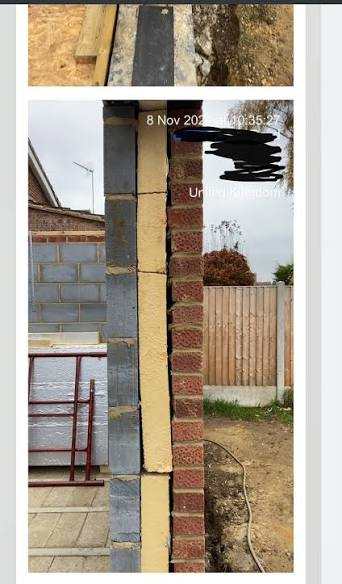
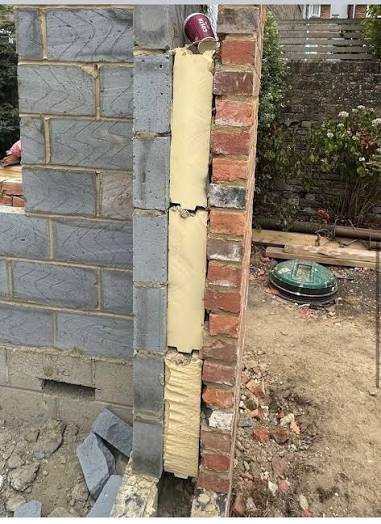
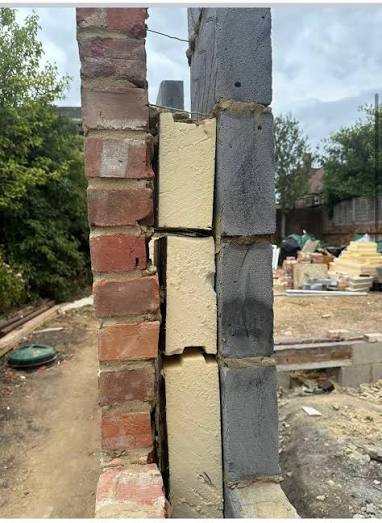
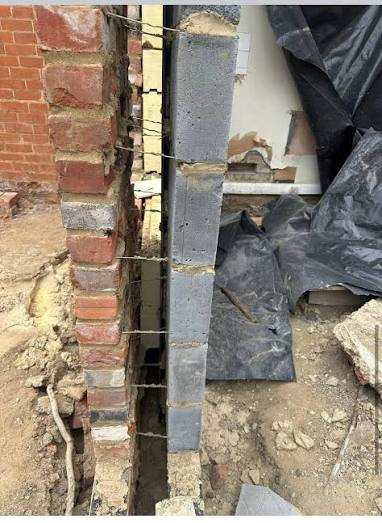
-
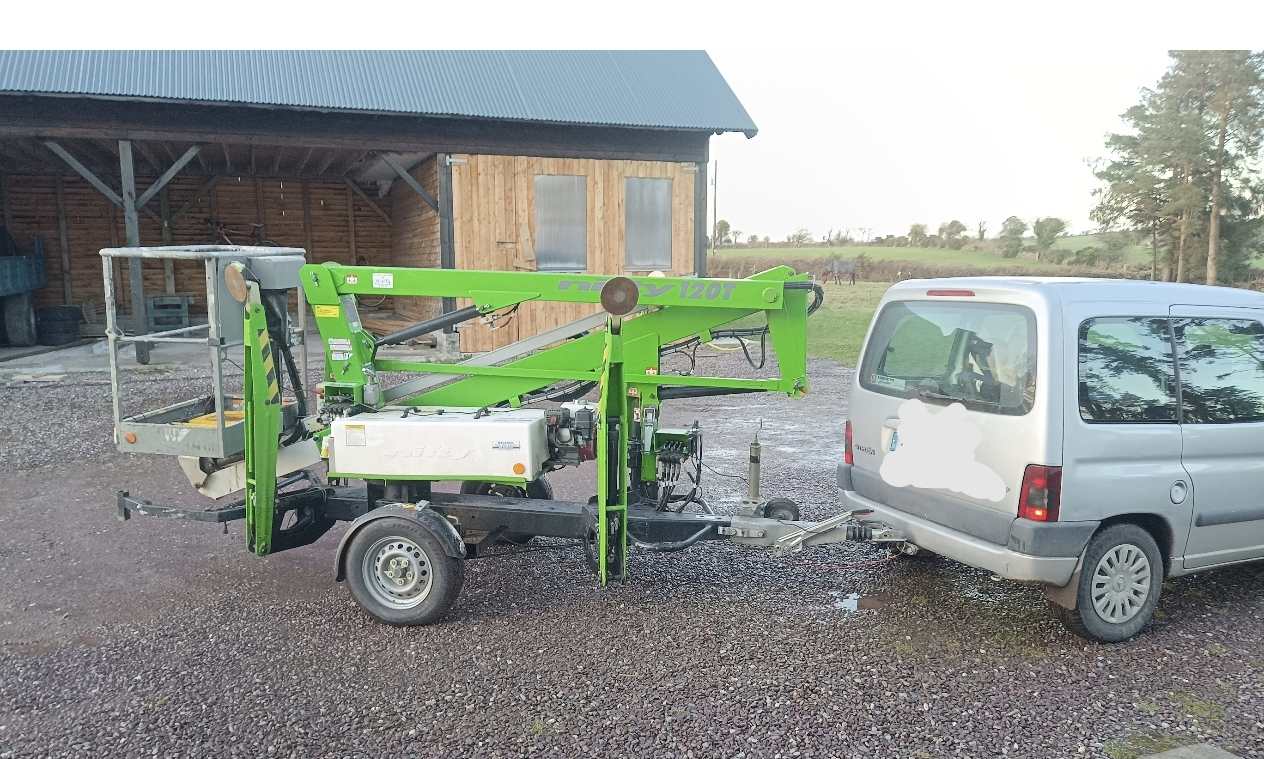
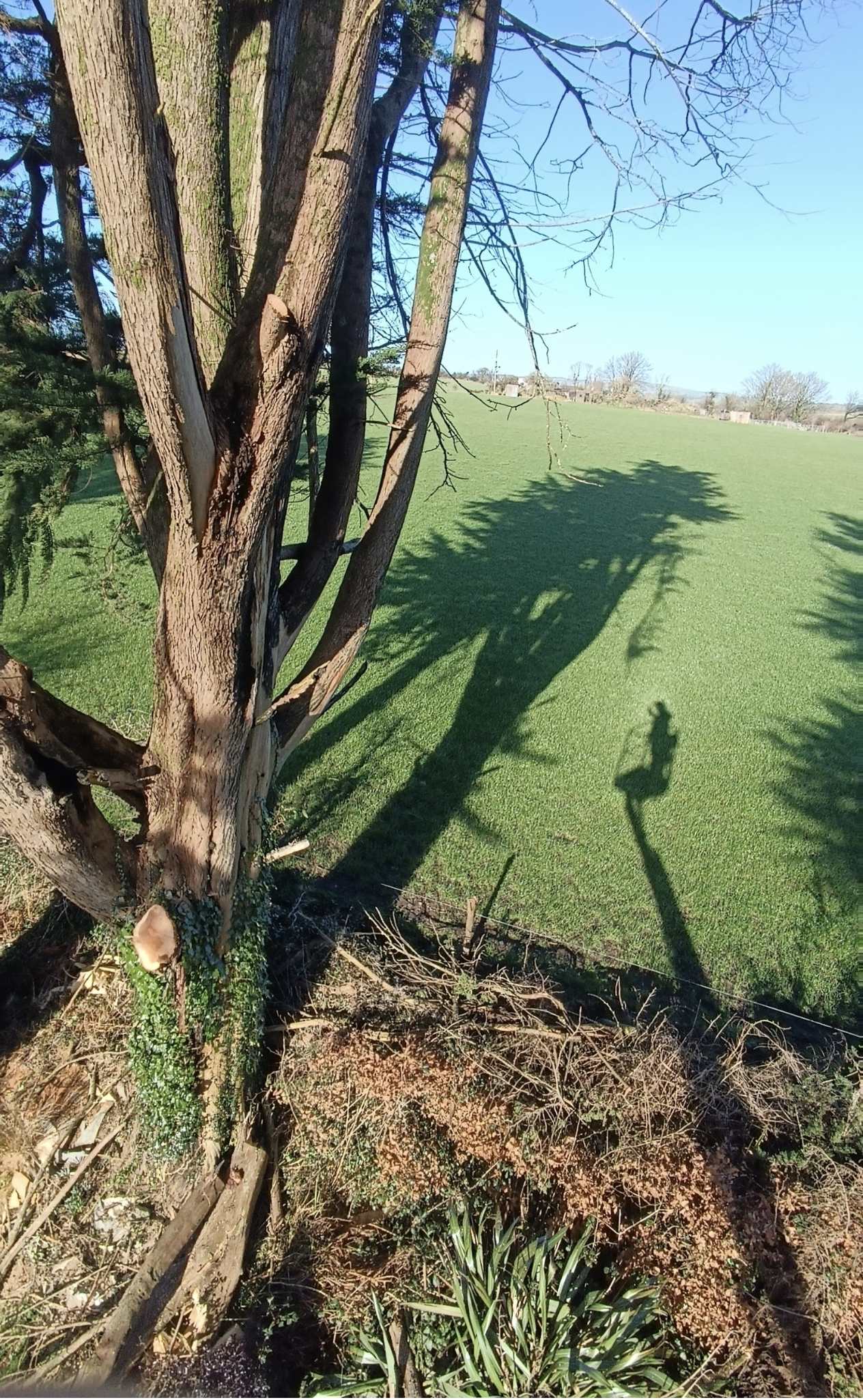
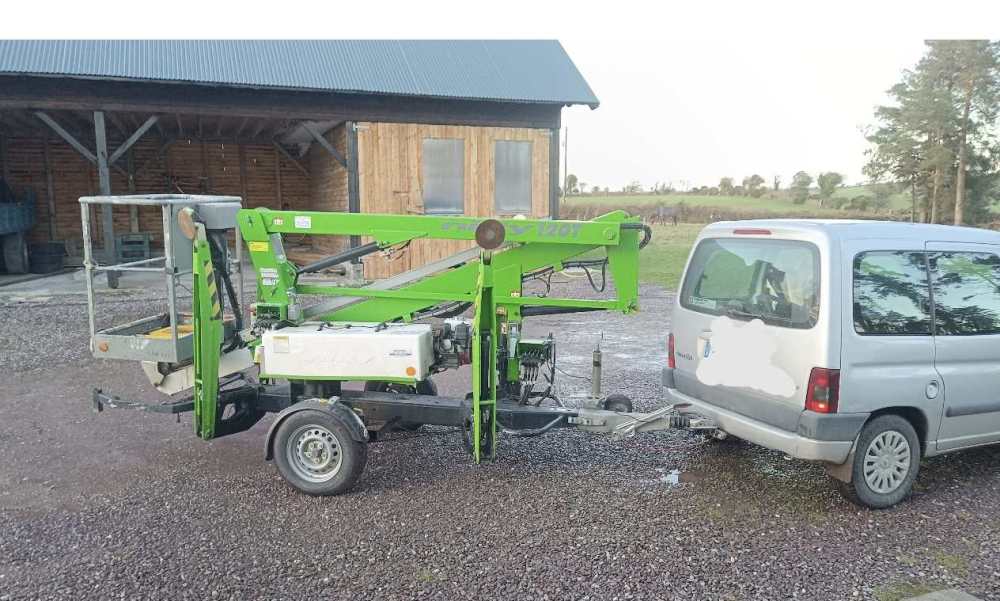
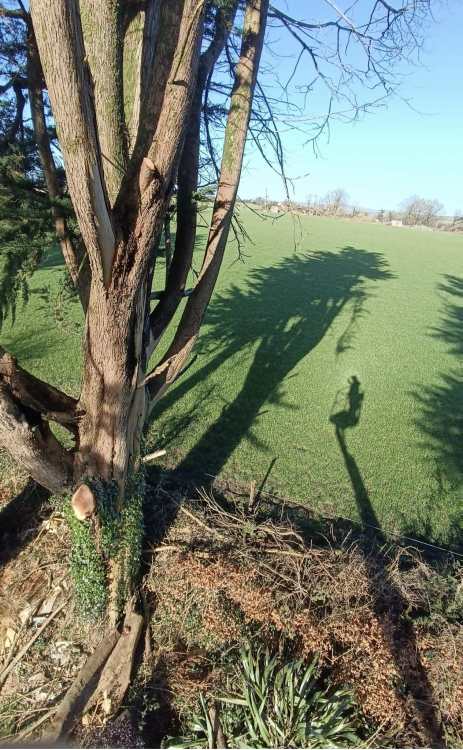
If you've got a reasonable head for heights and are willing to take your time and be careful you can do it yourself. Tree surgeons are charging around €1500/day near me for 2 men and a chipper. This was I think €175 per day. It's 12m reach but that's pretty much straight up so it's hard to chop anything higher than 9-10m without it falling near the base. For your situation an 18m machine would be ideal.. Keep the cuts reasonably small and you won't go too far wrong. Get tempted to reach out cut something big that you can't quite control and it'll bite you. Trees are dangerous, we all know that but don't be too swayed by the "can't do that mate" "need a pro mate", "Need to pay a weeks wages for a days work mate". If you're sensible and confident have a go yourself.
-
Mineral wool batts. Absolutely not put boards. They're next to impossible to install properly in the real world
-
 Sadly @Gone West it was @ProDave who had the issues. Baumit silicone render over wood fiber I think I remember. That's assuming it's vapour driven moisture that's the issue. It's largely isn't in reality but rather the gaping holes left by the building process in the wall. I would be shy of rendering onto insulation in anything but a dry and stable climate. Ireland certainly isn't. I've seen another render failure over EPS near me recently. Constructed about 5 years ago. Meanwhile I've seen plenty of westerly facing sand and cement plaster over 60 years old on our farm with zero paint or maintenance and it seems to be holding on fine. For Timber frame especially I would like a cavity. Mineral wool or wood fiber being my preference for insulation external to the studs as they won't trap moisture. In any case I think for @Jess Shannon you'll make very little difference to the performance of an old building by getting caught in this rabbit hole. My suggestion of a 170mm wall, airtight layer and 50mm service cavity stands.
 -
Yes. Didn't include it because I'm lazy.
-
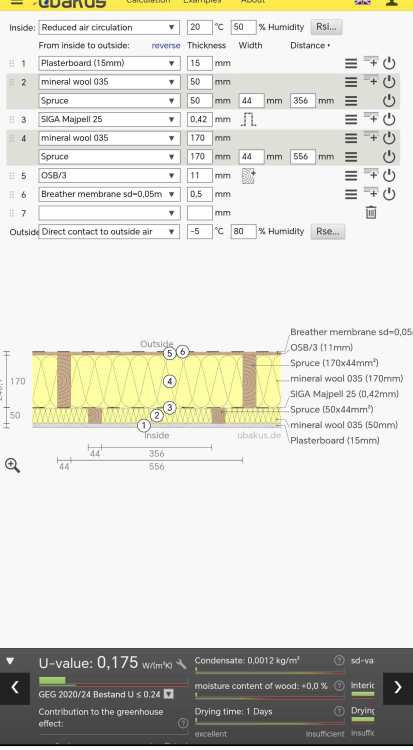
I'll attract scorn here but I like a continuous layer of external insulation. It's keeps the studs and OSB sheathing warm and away from the elements. Provided you have adequate management of air movement through the structure (airtightness) and very good control over internal humidity levels the wall will quite happily dry to the inside provided you don't add any more low permability layers like internal vapour barriors. Unfortunately airtightness is rarely done well and internal humidity control relies on the long term occupants diligence so there have been numerous building failures, hence the caution urged above. In your case the U value of the extension is lightly to be neither here nor there in the grand scheme of things. Aim for Bregs with something robust, easily buildable and cheap. What really will make it feel more comfortable is good air sealing. Make sure this is done well. I would avoid PIR internally as half of it will end up in the skip as offcuts and you'll be searching for studs to hit while screwing through it. Also it's virtually completely vapour closed so any accidental moisture in the wall will struggle to dry either in or out. Far easier to bang up a few 2*2s with a nail gun as a service cavity and mineral wool is fast and cheap to install. I really like blown cellulose for TF but it may not be worth getting the man for a small area of an extension. Importantly everything above is off the shelf at every builders merchant in the country. Robust, buildable. Cheap.
-
Assuming your outer OSB layer isn't taped diligently etc I would included a seperate airtightness membrane on the inside the purlins/studs. Otherwise the OSB will be colder behind added insulation and it'll attract condensation. Also controlling the air movement will be by far and away the biggest win regarding comfort.
-
Materials for fascia’s & soffits
Iceverge replied to newbridgewolf's topic in Roofing, Tiling & Slating
PVC. -
It's like comparing this To this


-
150mm Cavity Build Up for Extension on Old Stone Property
Iceverge replied to Lears's topic in Brick & Block
That'll be good. I wouldn't stress goinguch beyond the regulatory minimum on the walls given the setup detailed above. More important will be to get good draft proof windows+doors, be careful with the sliders here. Also the roof looks suspiciously like PIR between rafters. I would swap for mineral wool. Thicken them up if you need more U value or adds layer of insulation above or below the rafters if you're limited on space. -
I've heard of fine sand being used to fill such pipes. Even in highly airtight houses. Would the rats bother digging through?
-
And it accounts for the curvature of the earth.
-
Good airtightness is massively important here. The prettiest U value on paper compliant system doesn't matter much when gaps at joist ends or skirting boards allow damp air to simply blow into the middle of the wall. To do this properly you'll need to ensure all penetrations are sealed, joist ends etc so will need taking down ceilings and lifting floor boards etc. Even so, it is wise to assume the wall will contain some residual water and will need to dry so a more vapour permeable material, even mineral wool and plasterboard is better than foil faced sheets. Managing internal humidity, ideally through continuous mechanical ventilation is important too.
-
Cutting XPS insulation?
Iceverge replied to Alan Ambrose's topic in General Self Build & DIY Discussion
I'm wondering if this is a scenario where stepping the blocks and making up the diagonal difference with mineral wool is the massively simpler and no worse performing solution. What's it for? -
Replacement heating for an Old Farmhouse
Iceverge replied to Iceverge's topic in Boilers & Hot Water Tanks
When it boils down to it I think 300mm of EWI and 400mm of attic insulation would probably make more of a difference. Once you get a handle on the sums building a low energy demand house make so much more sense than any complicated heating system. With 9000l of milk leaving the cows daily at ~38deg a simple heat exchanger might be enough to get a similar volume of heating water to 30deg. At a guesstimate it could transfer 70kWh of heat. Plenty for a low energy house. Then again a heat pump might only cost €4/day so why bother with the hassle of reinventing the wheel . -
What sort of construction is this?
Iceverge replied to MikeSharp01's topic in General Construction Issues
Google tells me it may be blinding concrete. https://speedeck.uk/our-solutions/construction/working-platforms/ A thin layer of weak concrete in place of a thicker layer of compacted aggregate. The real foundations come later but it'll be a nice surface to work from and greatly reduces muck away and haulage etc...... Maybe @Gus Potter or @saveasteading could confirm? -
What sort of construction is this?
Iceverge replied to MikeSharp01's topic in General Construction Issues
Very interesting. What was the sub grade like before they poured? Any mesh or rebar? Keep us posted -
Fiber optic cable costs about £1/m. The telephone poles are already there. Yes somehow it's cheaper and more practical to buy rural Internet from an American multi billionaire who has gone to the expense and effort of developing a private space program and launching thousands of satellites. Conceptually it's like getting a cup of water from the bottom of the Mariana trench instead of the tap. I don't know what it says about how we do infrastructure but I don't think it's good.
-
Kingspan salesman strikes again.........