


Garald
-
Posts
1113 -
Joined
-
Last visited
Everything posted by Garald
-
Work is in progress! We've had the existing kitchen (Mobalpa, mid-range) disassembled so that we can have the wall cleaned up (Grzegorz the Foreman spoke as if something nasty and unspeakable had been going on within, and of course we also want to insulate it) - and the existing and rather questionable floor (some sort of vinyl poorly laid on damaged old tomettes) got destroyed in the process. So, what kind of floor to install? There are two or three options I can see: 1) solid oak, treated with some synthetic coating. Grzegorz knows how to get affordable solid oak. I still haven't had this option vetted by the architect. https://www.wineo.de/inspiration/wohnwelten/fussboden-in-der-kueche https://www.wineo.de/inspiration/wohnwelten/fussboden-in-der-kueche32) white or cream-colored terracotta from Spain (https://todobarro.com/suelo/paja-flameada/) The architect has grown to really like the idea (in part because the rustic finish should hide stains, or rather react well to them). My girlfriend is deeply skeptical: (a) she's heard tile in the kitchen is bad for knees, (b) she thinks the floor will not go well with the Mobalpa kitchen, which we plan to reinstall.3 3. 3. "Normal" tile (stoneware). There are plenty of plenty, inexpensive possibilities. Reasons against them: - stoneware, cooked at higher temperatures than terracotta, is apparently more fragile than terracotta. - bad for knees? 4. Soft flooring - presumably from https://www.wineo.de/inspiration/wohnwelten/fussboden-in-der-kueche Ideas? Anything I'm misnunderstanding something?https://www.wineo.de/inspiration/wohnwelten/fussboden-in-der-kueche
-
To improve the roof or let it be for now
Garald replied to Garald's topic in Roofing, Tiling & Slating
Thank you! What tool is that? -
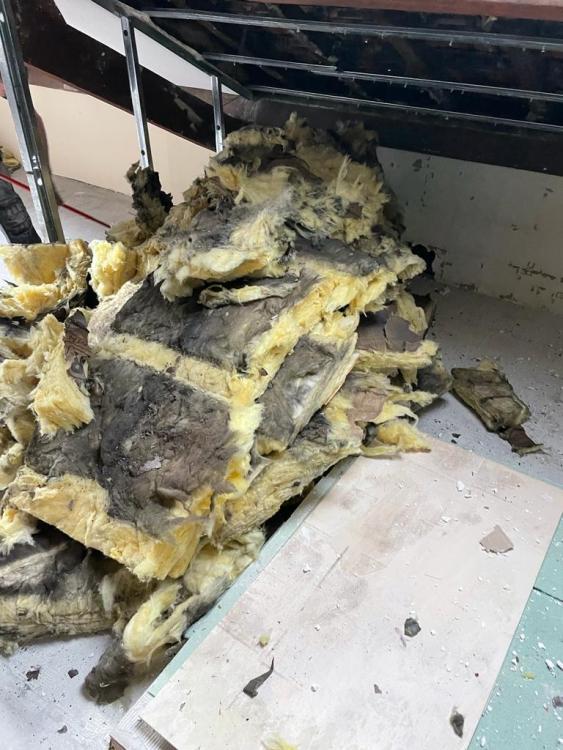
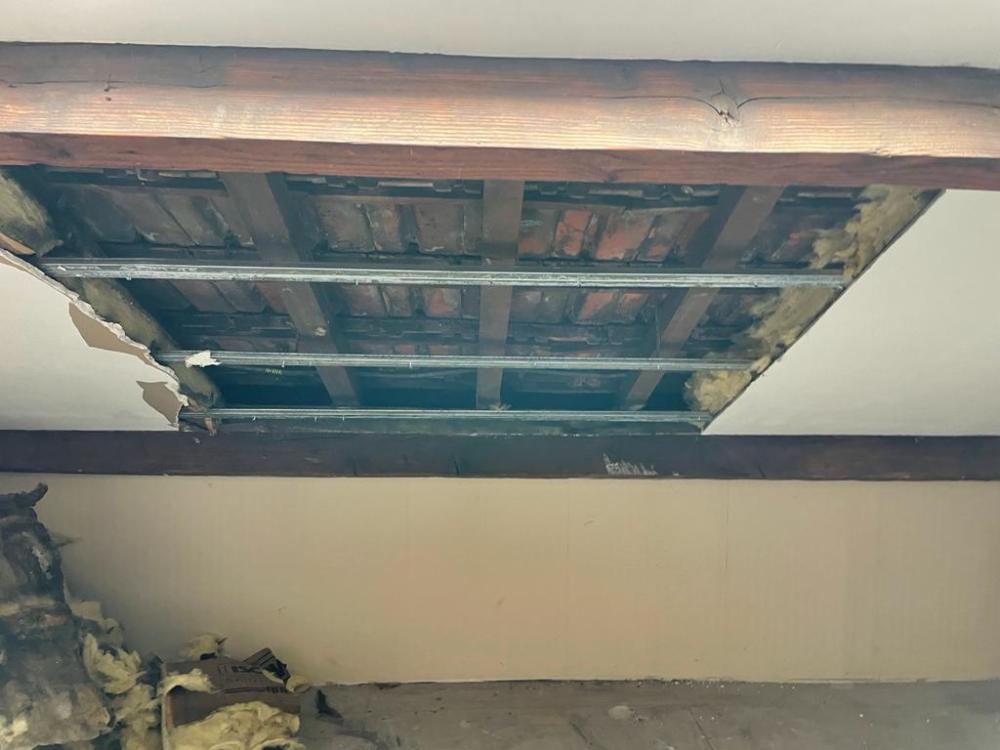
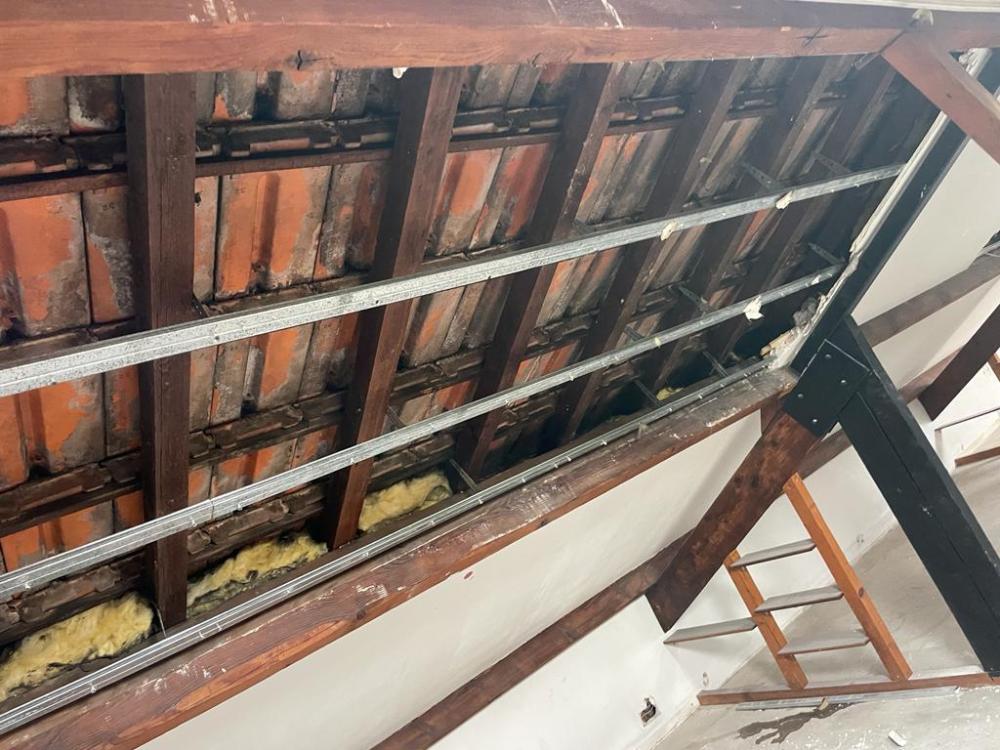
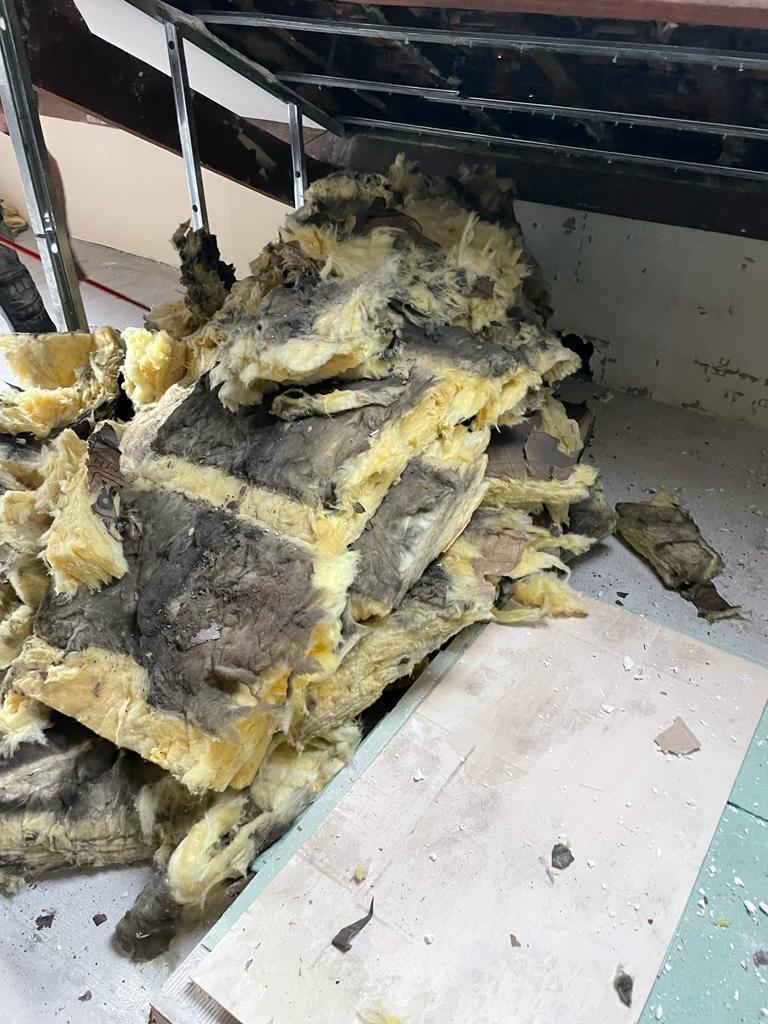
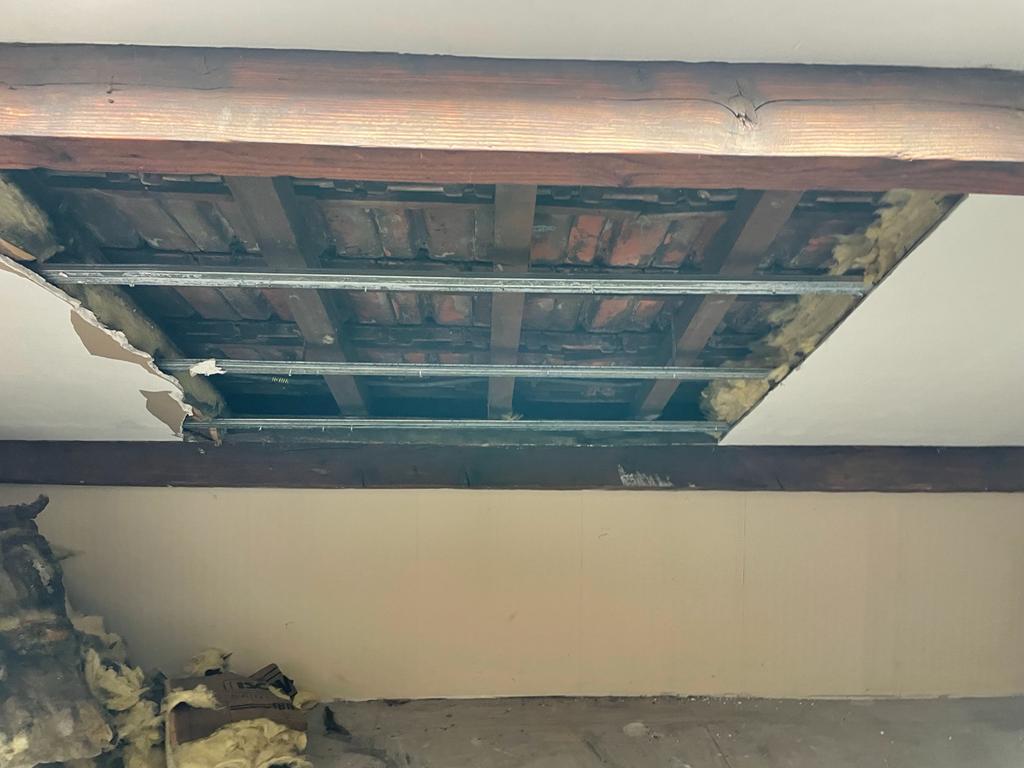
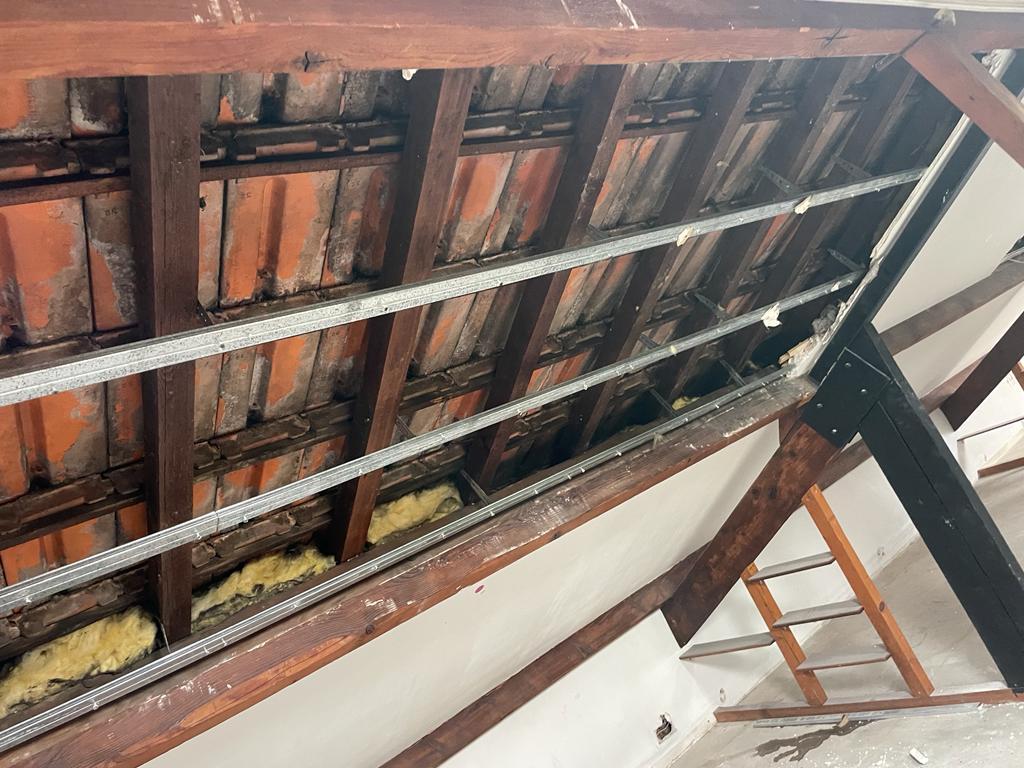
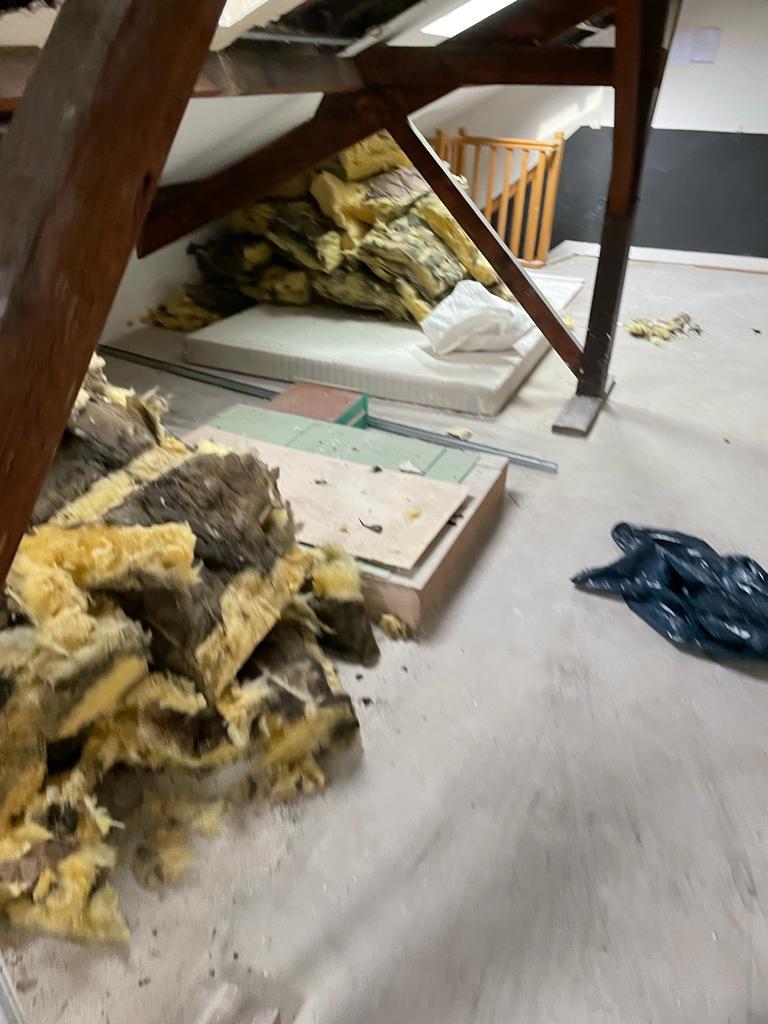
Judgement call (yes, I know it's a decision that has to be made, and I am already leaning to one side, but it's good to know what others think): As some people here are already tired of hearing, I am renovating a duplex/triplex (most of a small house) I bought recently near Paris. It's a pretty major, if not quite total, renovation, led by an architect. We are putting insulation (cellulose-based on the side of the street, thin layer of cellulose + reflective on two other sides) all over. The one place that was already insulated is the ceiling. You can see some pictures here, from when the insulation was taken apart, prior to the start of work on new skylights: As you can see there, it's just rockwool, without any sort of rain or humidity protection. Option 1: Leave it essentially as it is (or rather: put the rock wool back in), adding just a membrane to protect the insulation from humidity coming from the inside, as well as insulation in one missing spot, and some sort of airtight protection at the places where one can access the insulation, to protect us not just from inhaling any rock wool, but, perhaps more importantly, from inhaling any mold that might ever form (even if we hope it won't). (Some family members who will visit often have severe mold allergies.) The cost will probably be around 1000 eur + taxes. Option 2: Putting in new insulation (cellulose-based?) and an anti-rain protection layer, together with sound-proofing. Cost: 12000 eur + taxes. One important factor about option 1 is that it would make economic sense (if I ever have the money) to eventually raise the attic roof, or even add a full new floor to the house (should the foundations permit it). Then all the money put into improving the ceiling now will be lost, says the architect, who clearly leans towards Option 1. Opinions?
-
Tiling bathroom floor with glazed terracotta tiles
Garald replied to Garald's topic in Wall Tiles & Tiling
Here's a larger pattern (produced by some Python code I hacked up yesterday). One can pick up whatever rectangular "windows" one wants. As an example, I've selected one window of the size of my bathroom and one that is toilet-sized (70cm by 210cm). It is also possible to produced patterns that, while still aperiodic, have more symmetry. I'm attaching an example with 12-fold symmetry. example1clear.pdf example1veryclear.pdf example3clear.pdf


-
Tiling bathroom floor with glazed terracotta tiles
Garald replied to Garald's topic in Wall Tiles & Tiling
At any rate, here is a segment of the pattern that I could use for my bathroom (about 280cm by 210cm, once insulation is installed). The plan is to have the pattern even on the shower floor (there is no bathtub). I forgot to take the width of the grout (2mm to 3mm) into account, so one should probably omit the last row and the last column or so.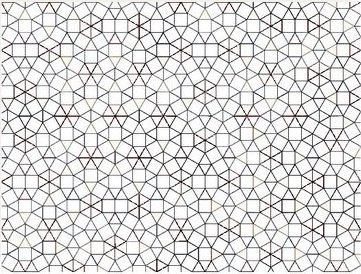
-
Tiling bathroom floor with glazed terracotta tiles
Garald replied to Garald's topic in Wall Tiles & Tiling
Optical illusion. See: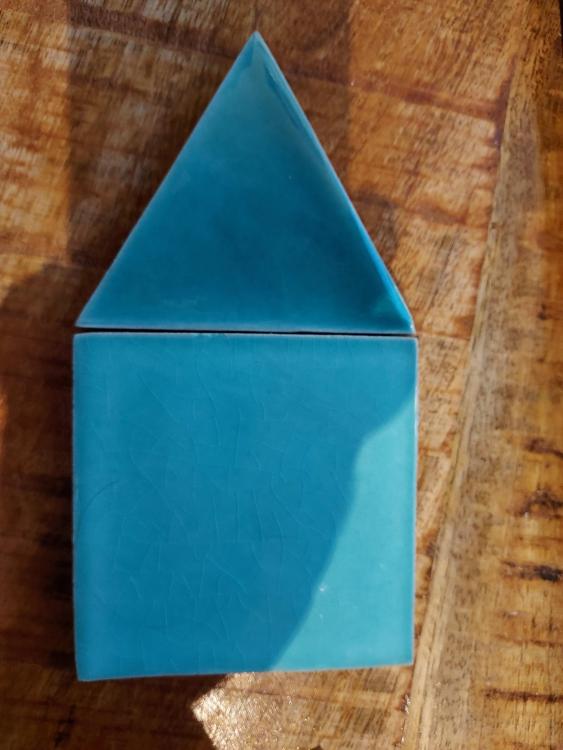
-
Tiling bathroom floor with glazed terracotta tiles
Garald replied to Garald's topic in Wall Tiles & Tiling
Oh ye of little faith! https://tilings.math.uni-bielefeld.de/substitution/square-triangle/ and of course also less complex ways.
-
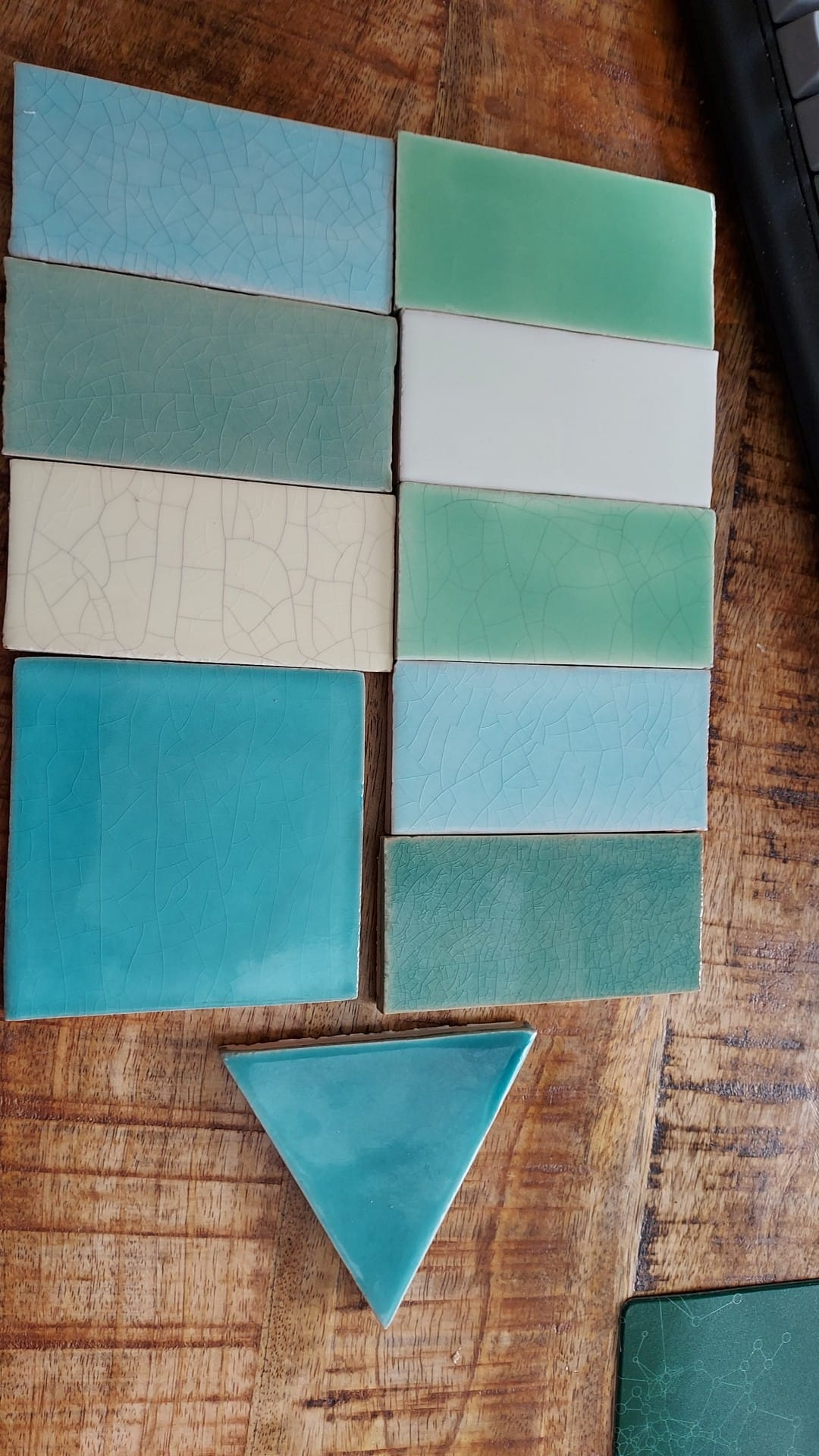
I'm minded to tile the floor in a bathroom and a toilet with Portuguese terracotta tiles, in an aperiodic tiling (like Penrose's, but using squares and equilateral triangles; see https://tilings.math.uni-bielefeld.de/substitution/square-triangle/). Before I go further: is there a reason why I should *not* do this? The tiles are not cheap (ca. 200 eur/m^2), so this would be an expensive mistake. (Well, perhaps not compared to other expensive mistakes: the total area to be tiled is between 8 and 9m^2.) https://newterracotta.com/tiles/ PS. I am looking for reasons such as "it won't last" or "you will slip and break your neck", not "I hate maths". Here are some samples. (I also got others, but these seem to be colours that fit together. I should choose two or three.)
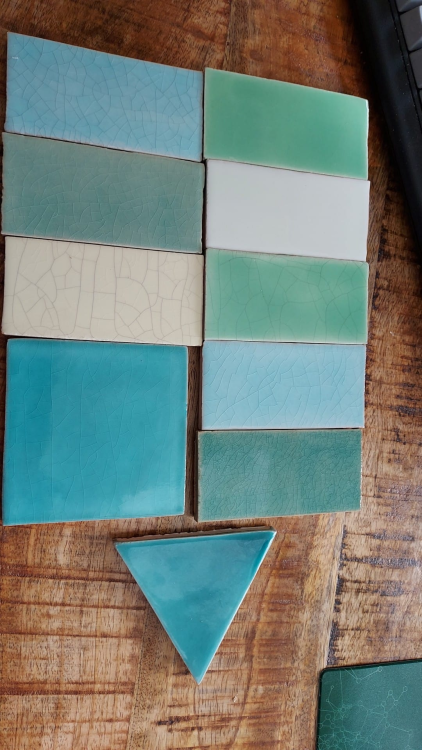
-
Clay tiles for a patio? (Not in a Mediterranean climate!)
Garald replied to Garald's topic in Landscaping, Decking & Patios
The manufacturer tells me that the clay tiles ought to be washed every 10 days. This sounds like time I don't have. At the same time, maybe every manufacturer of every patio flooring material recommends washing the floor at least once every 10 days... -
Clay tiles for a patio? (Not in a Mediterranean climate!)
Garald replied to Garald's topic in Landscaping, Decking & Patios
It's only foot traffic. However - I gather then that clay tile would not be OK for a bike garage? -
(Obligatory preface: got a place (nearly) in Paris, trying to improve it before I move in) I'd like to improve the courtyard I share with my neighbors, in part for my own enjoyment and in part to start out in good terms with them. What about these clay tiles? Look, in particular, at the Penrose tilings. https://todobarro.com/ My main worry here is how well these tiles will fare in a shared outdoors space in Paris's climate (which is only slightly drier and warmer than the south of England). I just got an email from the factory telling me that I should use a product from Monestir (presumably https://monestir.com/suelos-de-barro-exterior/ ) - but will that be enough? (I have neither the time nor the talent for things that need a great deal of upkeep.)
-
So it wouldn't raise the *ceiling* - it would just raise the roof slightly so as to fit more insulation between the tiles and the ceiling, right?
-
Excellent question - will ask the architect (who is installing a proper positive-presdure system everywhere, thinks about condensation, etc.).
-
(I guess there isn't any felt because we don't see any?)
-
Not sure we'll go that far. (Why would we do that - in case it hasn't been felted already?) Raising the roof is a major, expensive operation - we may raise the roof by a lot in about 5-10 years, once I am again in possession of something known as "money".
-
Background: doing a major renovation. The architect thought we'd just leave the roof insulation alone (the roof is pretty much the only part of the house that was already insulated...) but apparently the fact that we are poking eight new skylights into it forces the question upon us, in that the first step of the process was to remove the existing insulation (rock wool). The foreman is thinking polyurethane (I don't know yet his opinion on PUR vs PIR). That's a possibility - we want as much insulation as possible in the existing space. (The ceiling is very low as it is; we can't really make it thicker without making our backs curve permanently.) What are other possibilities? Pros and cons?
.thumb.jpg.4468a29299a3c8734c9f7063c292d2d5.jpg)

.thumb.jpg.7ace3bd88966c6d1813a9bc381c9ad69.jpg)
-
How often does it get to -25C where you are? Stiebel Eltron has a good reputation (... and a reputation for being expensive; what is the difference in price)? I recently had to decide between a Stiebel Eltron heat pump and another one (in monobloc), and chose the other one, but that's because the Stiebel Eltron was bulky - and mind you, the other one was not LG. (How long is LG's warranty?)
-
Air Source Heat Pump - general question
Garald replied to 0llie's topic in Air Source Heat Pumps (ASHP)
1. Insulation is a priority, particularly if you have a rating of G: the best thing you can do in terms of energy is needing less of it. 2. If you don't want to or can't change any of the radiators, or if you can do only a middling insulation job, you may want to consider a high-temperature ASHP. (I was considering high-temperature ASHPs for my renovation job, until I took the plunge and decided go low-temperature.) It's certainly less efficient, and also, typically, somewhat more expensive (enough that it may eliminate most of the savings coming from not needing new radiators). They are designed for (less-than-total) renovation jobs. 3. On air-air: they are actually common in houses in the US South. There have to be some ways to diminish the noise. (I would be bothered by it.) Worth considering perhaps? -
How many (low-temperature) radiators are enough?
Garald replied to Garald's topic in Central Heating (Radiators)
I think this must be it: https://www.amzair.eu/wp-content/uploads/dlm_uploads/2020/11/notice-utilisateur-tout-gamme-20210610_5.5.pdf -
How many (low-temperature) radiators are enough?
Garald replied to Garald's topic in Central Heating (Radiators)
Is this what we seek? https://www.amzair.eu/wp-content/uploads/dlm_uploads/2020/11/pac-amzair-optim-dossier-installation-et-mise-en-service-20211129_5.5_pcooem_l.pdf -
How many (low-temperature) radiators are enough?
Garald replied to Garald's topic in Central Heating (Radiators)
It seems reasonable to demand of a heat pump in the Paris area to be able to heat to 20-21C without breaking a sweat when it's -7C outside. For reference, the season-weighted performance of heat pumps there seems to be defined as 0.75*(their performance at 7C) + 0.25*(their performance at -7C). No doubt -7C weather will become rarer and rarer with time, but it's still a temperature that is reached every two years or so, and not always when you expect it. For less than -10C, yes, there's the chimney in the library, but keeping it clean isn't free (and I'm a bit too paranoid to make the chimney in the main bedroom usable, though I could). Here's the information on the heat pump I plan to get (it's the right size for the coop's outhouse, which I have bought for that purpose), but I don't even know what to look for in order to find out how easy it is to regulate. https://www.amzair.eu/wp-content/uploads/dlm_uploads/2015/04/pac-amzair-optimduo-dossier-technique-20211125.pdf -
How many (low-temperature) radiators are enough?
Garald replied to Garald's topic in Central Heating (Radiators)
Well, how far down can a heat pump modulate? (Can't one regulate the radiators themselves, as in any other system?) What is wise? Get exactly what the model instructs me would be enough (on "full") for the kind of chill that happens once every couple of years, as opposed to once a generation? (I am not minded to freeze!) How accurate is the model? -
How many (low-temperature) radiators are enough?
Garald replied to Garald's topic in Central Heating (Radiators)
Or just one of these (3252*0.41 = 1333 > 916), though I'm not sure that having just one radiator for such a long space is a good idea. https://www.radiator-outlet.nl/eca-geribbelde-verticale-radiator-200x60-cm-wit-ra.html Or even this one, if we feel like living dangerously (2710*0.41 = 1111 > 916) https://www.radiator-outlet.nl/eca-geribbelde-verticale-radiator-200x50-cm-wit-ra.html Or are two halves really best? -
How many (low-temperature) radiators are enough?
Garald replied to Garald's topic in Central Heating (Radiators)
Two like these, say? 1508*0.41*2 = 1154 > 916 https://www.leroymerlin.fr/produits/chauffage-plomberie/chauffage-gaz/radiateur-a-eau-chaude/radiateur-a-eau-chaude-acier/radiateur-eau-chaude-vertical-acova-filin-blanc-1508w-h-200-x-l-43-1-cm-82730059.html -
How many (low-temperature) radiators are enough?
Garald replied to Garald's topic in Central Heating (Radiators)
https://www.extremeweatherwatch.com/cities/paris/lowest-temperatures-by-year





.jpg.1020436d965179dbceedd6f49e8f6719.jpg)
.jpg.fd64ca9d8713a4ac0ebc5e3c823191bc.jpg)