Garald
-
Posts
1113 -
Joined
-
Last visited
Everything posted by Garald
-
Thanks! It looks like even 2cm total of this (probably all we have to play with, given that there's also 1cm of plasterboard; see the picture) would help, even though they would not bring the wall up to standards. I'll talk to my architect. Will insulating with space-gel solve that issue as well, or will it create new issues in that direction? Thanks, this is interesting. But surely I want a minimum of light to be reflected back out during the winter? (If only curtains were easily convertible from winter to summer, like duvets...)
-
Soundproofing a heat-pump's external unit
Garald replied to Garald's topic in Air Source Heat Pumps (ASHP)
I have tried. The Dalek influence is surprisingly strong on this side. -
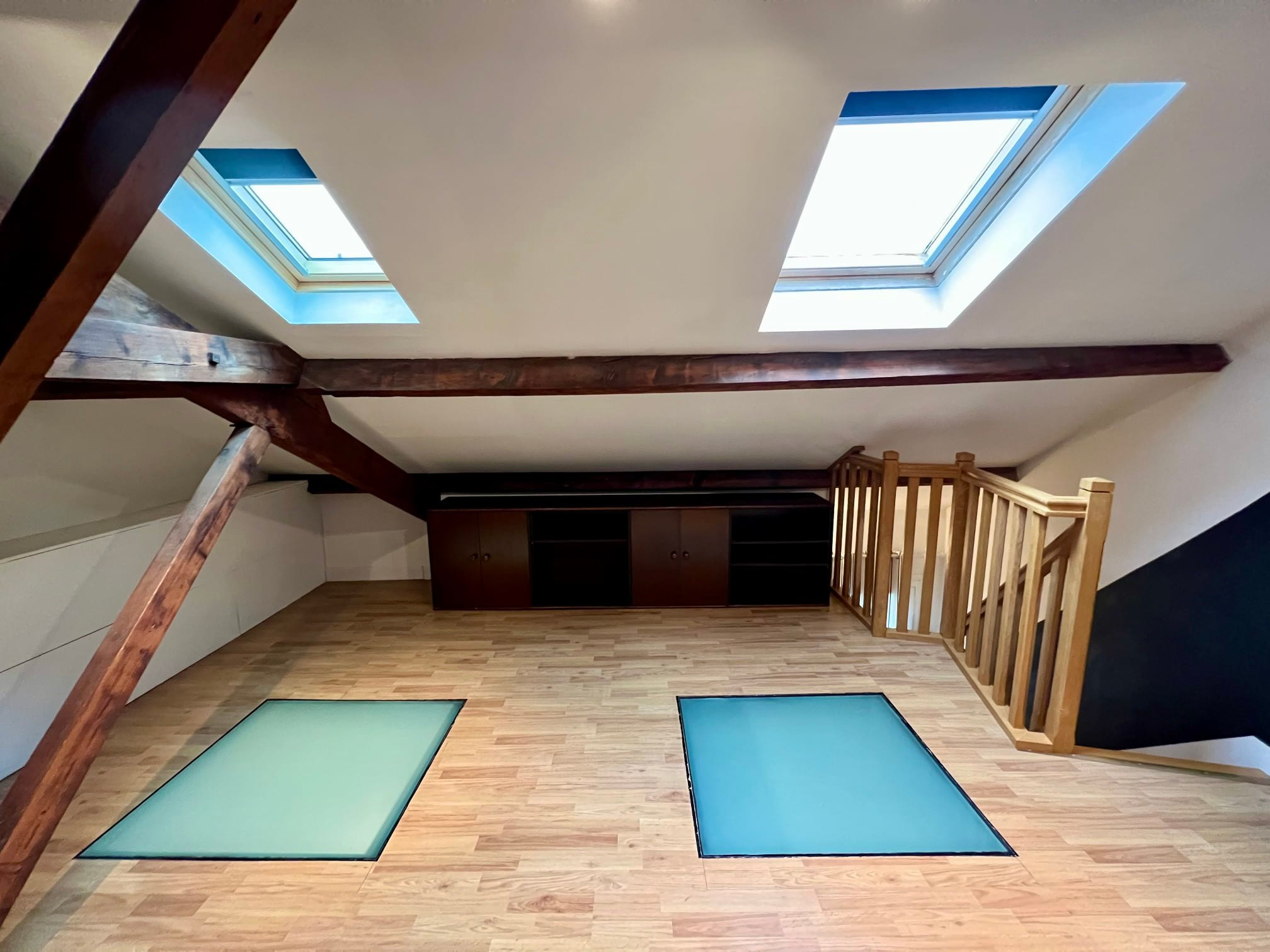
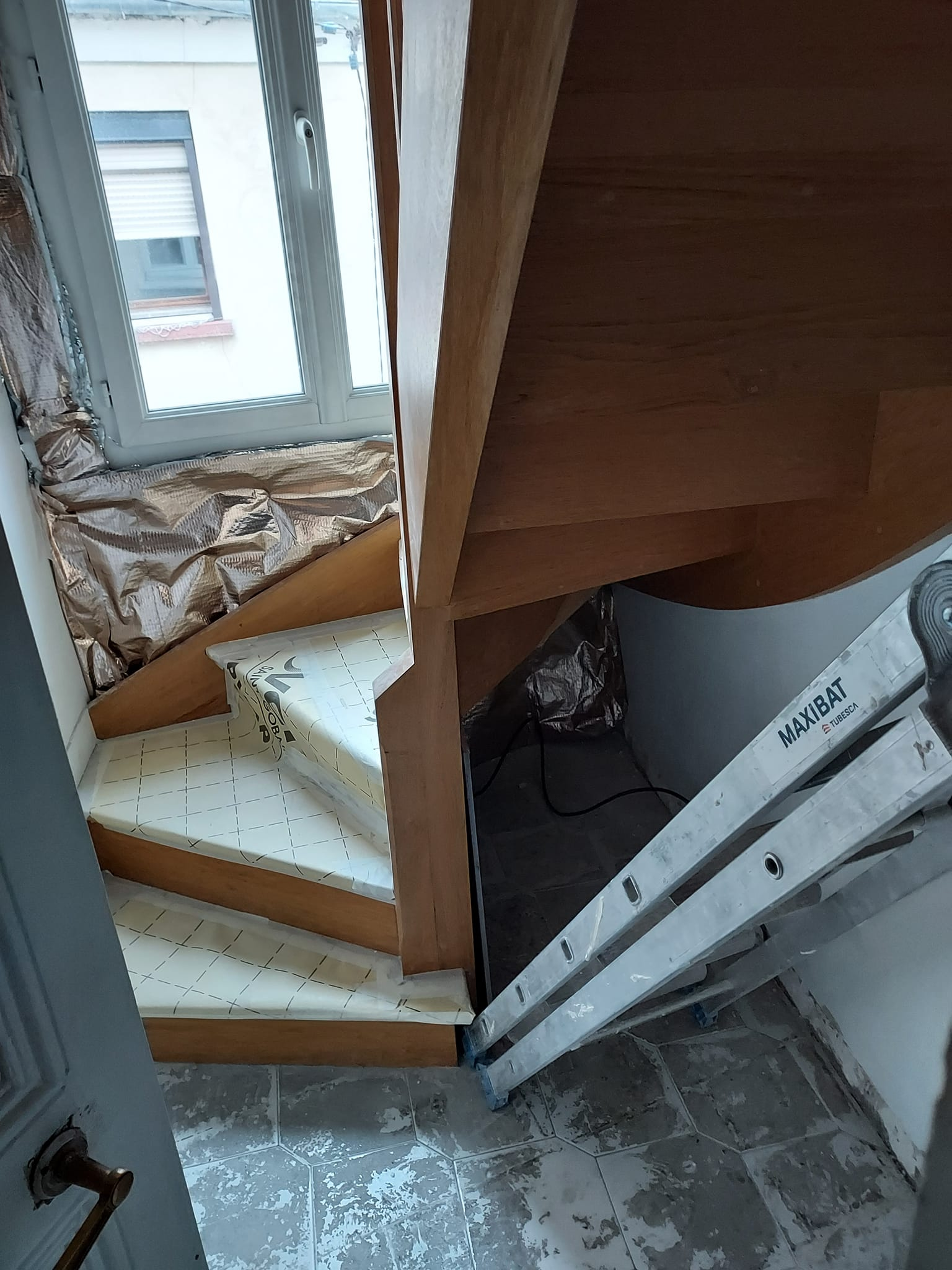
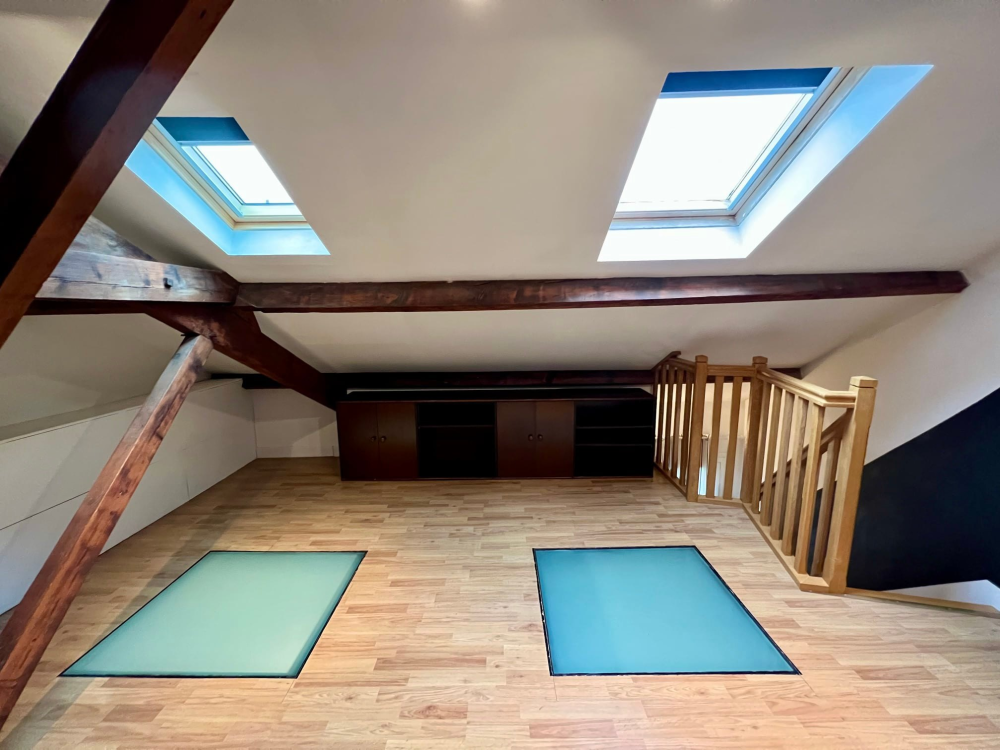
I know - it's just that my architect is a bit skeptical of things that have been proved to work in the lab but haven't been certified yet. She found a Swiss aerogel-based product - its R was a bit disappointing, but it could be very useful for outside insulation. The thing would be to get something that is certified to have a substantially higher R/cm than reflective materials (notice how the workmen managed to make reflective material fit on the short wall). We really have just 1-1.5cm (if that) to play with in the (long-wall) space above the staircase. We are talking about the diagonally ascending area painted black here (before it becomes horizontal) and the white space above it: It's not a large space - once one gets to the upper landing, there's already a bit of wall insulation installed by the previous owners (or the antepenultimate ones).
-
Soundproofing a heat-pump's external unit
Garald replied to Garald's topic in Air Source Heat Pumps (ASHP)
PS. Some sources in France or at least in the continent would be helpful (unless these deliver, but then there's also customs). -
Yes - you mean for outside insulation (that Swiss plaster) or inside insulation?
-
Since I'll have PIV, isn't there an easier solution?
-
Does the fact that the curtains would go in the inside mean I would be getting just as much solar gain in the afternoon as if they weren't there?
-
a) Would this also help with hygiene and odors if this corner does end up hosting the litter box? b) What size of dehumidifier are we talking about? They seem to vary greatly in scale and price.
-
Ah, nice. I had been looking forward to getting some William Morris curtains, or blinds, partly as to annoy my girlfriend. I suppose Roman blinds are just as good as curtains for insulation? (They are easier to keep relatively free of dust, no?) It faces NWN. But what is this about reflective liners? (I'm already getting retractable awnings, outside shutters, etc., on the south-facing windows, but one can always learn more.)
-
Do curtians really help substantially? OTOH, they might keep.one from realizing that the window is open... (Btw, that window locks, with a key.)
-
Soundproofing a heat-pump's external unit
Garald replied to Garald's topic in Air Source Heat Pumps (ASHP)
Right, if I made it myself. Does nobody (competent) make one? -
A quick review of their technical specifications, however, reveals that the Zubadan Silence 8kW and the Saunier-Duval 7kW don't really differ much in terms of power when shove comes to push. Zubadan Silence gives 8kW nominally (whatever that means) and 9.51 maximally (presumably with some supplementary electrical heating it includes) when it's 7C outside, with water flowing at 35C. In the same circumstances, Saunier-Duval gives 5.8 nominally and 9.8 maximally. Of course that's not the sort of situation where I need 6kW, so let's look at lower temperatures. At -7C (rare in Paris, but it happens once every couple of years; -2C is much more common, and it's around what I've taken as the modelling temperature), with water at 35 C, Zubadan offers 6.3kW and Saunier-Duval offers 6.7kW (how can this be, given that it promises less when it's 7C, I don't know). More relevantly, given that I'll work with 45C, Saunier-Duval offers 5.9kW for -7C/45C... and the technical specifications for Mitsubish Zubadan don't say anything. https://www.saunierduval.fr/france/download/genia-air-1/geniaset-split/saunier-duval-geniaset-split-brochure-gp-202103-2041667.pdf https://files.izi-by-edf-renov.fr/files/catalogue/produits/fiche-technique-ecodan-hydrobox-duo-silence-zubadan-mitsubishi.pdf So maximal power is not really a reason for choosing between the two.
-
Ah wait, did the workers just manage to insulate the short side with a bit of reflective material and just did not tell me? Nice!
-
Soundproofing a heat-pump's external unit
Garald replied to Garald's topic in Air Source Heat Pumps (ASHP)
Additional reason for getting an enclosure: what if someone feels like playing football in that courtyard? -
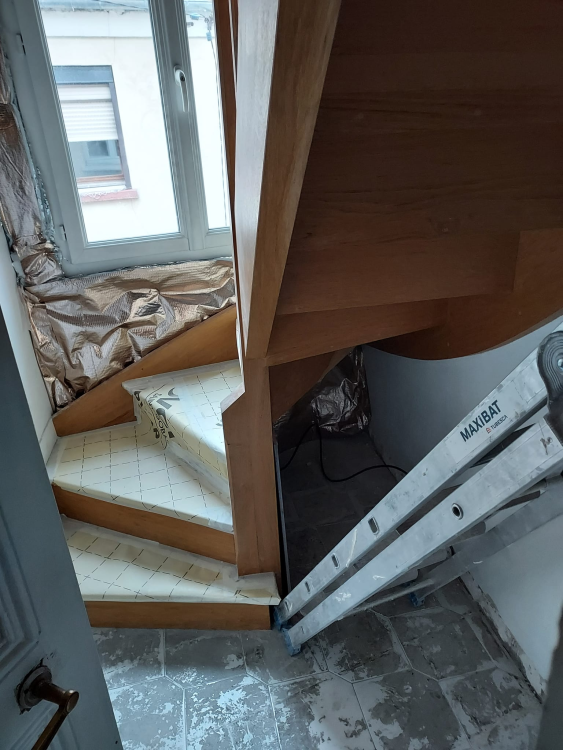
Or three or four. That's fine; the space under the stairwell will be used either for books we don't use that often, or for board games, or for the cat toilet. It won't be a space to live in. Right, there's Mitsubishi Zubadan Silence, which is considerably more expensive, though one of the installers strongly suggested that it was better quality than Saunier-Duval/Vaillant (whether that's true or motivated by salesmanship or just his honest but subjective opinion, I don't know). The external unit is also 1cm too tall for the least expensive model in the line of sound boxes I've been looking at (but then I am sure there are alternatives.) Significant cost for not that much of a difference, given that the wall is cold, no? That's more of a change that would be imperative if we eventually insulated on the outside. Here's a picture, by the way:
-
Soundproofing a heat-pump's external unit
Garald replied to Garald's topic in Air Source Heat Pumps (ASHP)
(If I can get one that looks like a handsome wooden rubbish bin, that would be ideal. There's actually rubbish bins right around where the unit will be located, and I'm thinking of providing some wooden camouflage for them as a visual favor to myself and others.) -
Soundproofing a heat-pump's external unit
Garald replied to Garald's topic in Air Source Heat Pumps (ASHP)
Can you recommend some? -
I am in France (Paris area, in fact), but, as I said, this tiny corner accounts for more than 10% of heat loss. It's not nothing, in that it's the difference between "I feel comfortable with a 7kW heat-pump (which is really 6kW in the rare occasions when it gets to -7C)" and "maybe I should think about that a bit more". (10kW would be very oversized, but that's the next step up in Saunier-Duval aka Vaillant.)
-
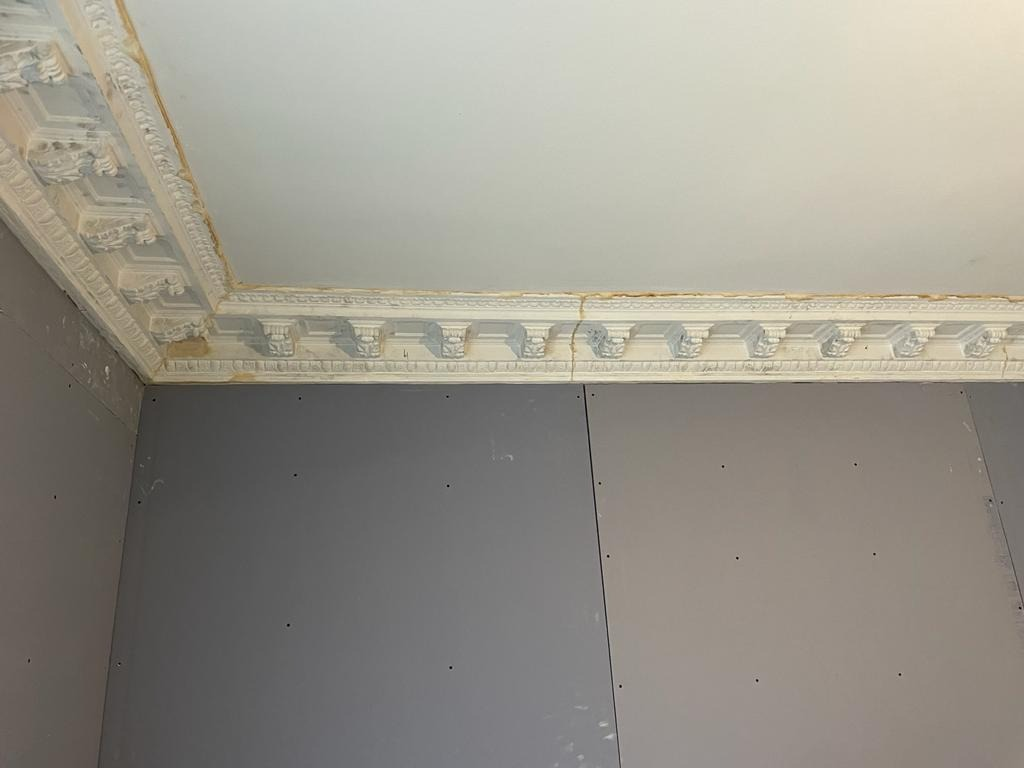
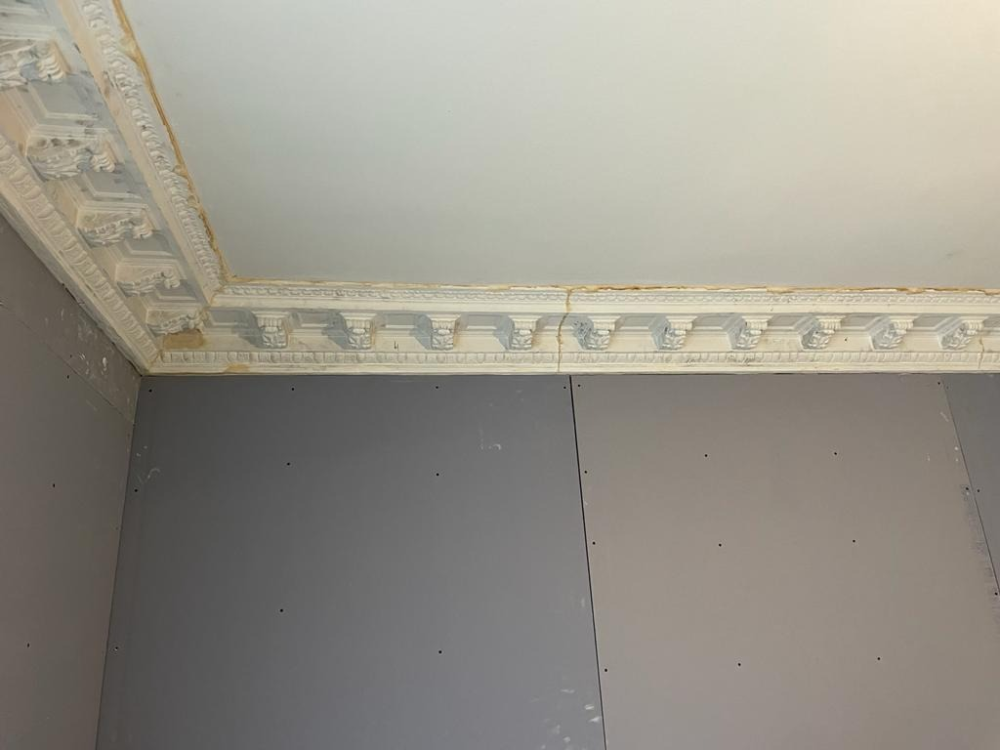
By the way, as I said in another thread, the foreman and workers took the initiative and removed the moulding before installing insulation, and then managed to reattach it, thereby avoiding a thermal bridge that the architect and I didn't have a good solution to. Nice! (The foreman says not to worry about the glue spots - he'll deal with that in a bit.)
-
I'm actually not sure whether their first story is just particularly low in that corner, or whether they have some sort of peculiar machine that cools that corner (and sends the heat off to feed reptiloids or what have you). I'd imagine it's the first one. At any rate, the thermal thermometer showed that a spot was particularly cold. My architect once talked about it, but in the end felt it would not be cost-effective for such a small bit of wall. We would need to ask permission from the owners of the neighboring building (I have no idea who they are), get the workers to install scaffolding... And of course we are already in the middle of things, and would like to be done in a couple of months. In summary, it's an option that we have kept for when and if I decide to raise the roof/add an extra story to the building (whenever that would be; certainly not in the immediate future). And of course the short wall in the stairwell would remain uninsulated (unless we were to apply insulation to my entire courtyard side on the outside; sounds a bit daft, given that we are already insulating it from the inside). Again, we could rethink the staircase if a story is ever added, but...
-
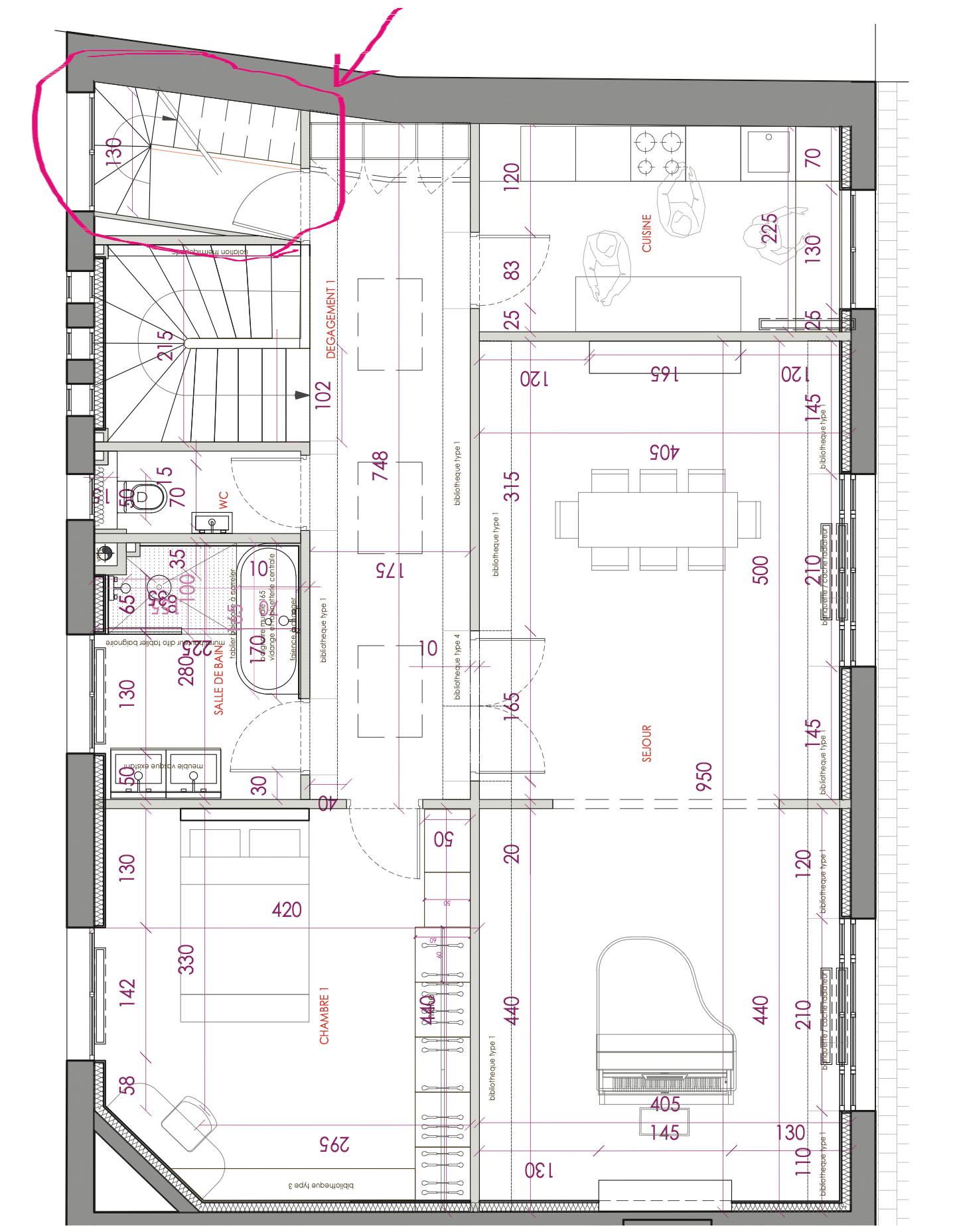
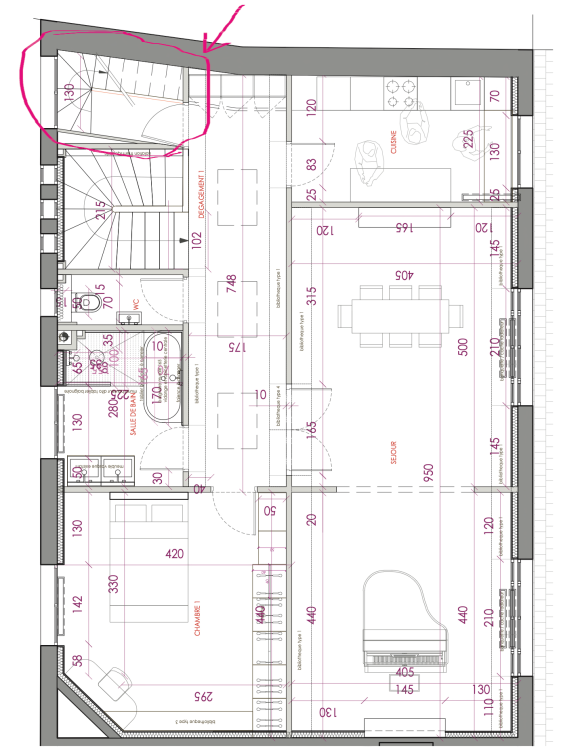
There's one weakness in our insulation plan, which is otherwise going well: a small stairwell going from the first floor to the attic. (This is an old plan; now we are also insulating the kitchen's long wall, and also filled in the gap above the pantry/closet on the top end of the corridor.) We simply do not have the space to insulate that corner without destroying the staircase, or so the architect says. Unfortunately, that means that the heat loss from that staircase alone is about 650W, that is, well over 10% of the total heat loss in the house. (It may be more like 10%: the first meter or so of the stairwell's long wall benefits from being adjacent to a building next door. (The rest doesn't, if my memories of checking it with an infrared thermometer have a year ago are accurate.) One obvious measure is to insulate the door leading to it (seen in the plan above) as well as possible. The architect says we can't really close the top off easily - hopefully convection will work its charm and just let cold air accumulate down the bottom part of the stairs. I imagine I should *not* put a radiator there. Are there other small measures we should take to reduce heat loss through that corner?
-
Good point, or rather two good points (I *should* be ok if the coop agrees with me, but if some tenant chooses to complain later, they might have some ground to stand on if I get a 7kW pump rather than a 10kW one). There's something else: the 7kW unit is 96.5cm tall, whereas the 10kW unit is 156.5cm tall. The smaller unit is thus easier to soundproof. (At 54dB, the sound production of the 7kW should be low enough that no soundproofing is legally required (though there might be reverberation...), but why not be safe?) Let's see https://solflex.eu/fr/hcschalldaemmgehaeuse10db/ : Reducing the noise of a 7kW unit by 10dB costs 1600eur, whereas reducing the noise of a 10kW unit by 10dB costs 2500eur, and, equally to the point, the soundproofing will then look like a man-sized Dalek. (Two man-sized Daleks, side, by side, really.) (If anybody knows of less unslightly and bulky (and less expensive) soundproofing that is equally effective, please let me know...)
-
At any rate, one other way in which these calculations are useful is that they show what the actual weaknesses are, while keeping things in proportion. My architect was concerned that the large library/main room (you've seen it in pictures) would be difficult to heat if we aimed at a working temperature of 45C rather than 55C, but, since we have insulated the walls to new-building standards and are replacing all the double-glazing by better double-glazing, the heat loss there is barely about 1kW (with almost half of that coming from the ventilation). We'll be fine there. The nice big stairwell with stained glass will be losing a bit over 4kW - we had only 10cm to work with when insulating there, but we are using a mixture of reflective insulation and cellulose, and insulating the stained glass from the outside, with a second pane. But that little corner staircase going to the attic? We didn't have space to insulate that at all, and so it loses 650kW. I better have the door leading to its lower landing be as well-insulated as possible (people in a different thread are advising me on what kind of kitty flap to install). The staircase is open at the top, but hopefully convention will be my friend this time. And then I can also hope that skylights and southern-facing windows will be my friends during cold winter days...
-
Sounds like a safety hazard in my hands. Perhaps I should look into the more expensive (but almost equally quiet) 8kW Mitsubishi Zubadan model, where again the nominal power is optimistic. (Don't some heat-pumps have electrical built in to help the heat-pump operation above a certain level? I think Mitsubishi Zubadan does.)
-
Sorry, I meant 6kW.