
Nickfromwales
-
Posts
30336 -
Joined
-
Last visited
-
Days Won
297
Everything posted by Nickfromwales
-
The heat exchanger gets installed into the empty cell, the molten PCM gets poured in up to the fill up line (?) and then the difficulty starts methinks. How that gets sealed / welded shut successfully these days is unknown to me, but it was simply with a hand-held BFO soldering iron looking thing ( back in the day when I was standing right there watching the process) and I found it quite interesting to watch how this was actually being ‘done’…”manually”. 🫤. Hopefully a clever robot is doing this these days 🤞or a fusion weld wire or something. Or maybe they now have more guys and more irons.
-
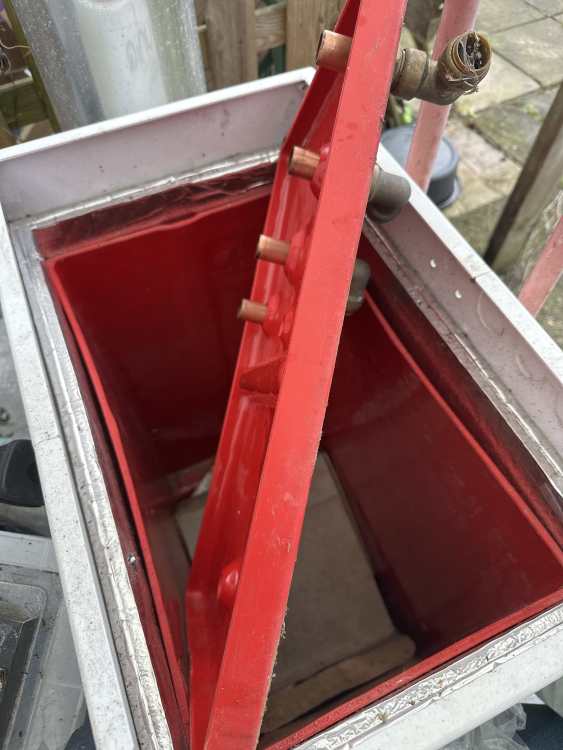
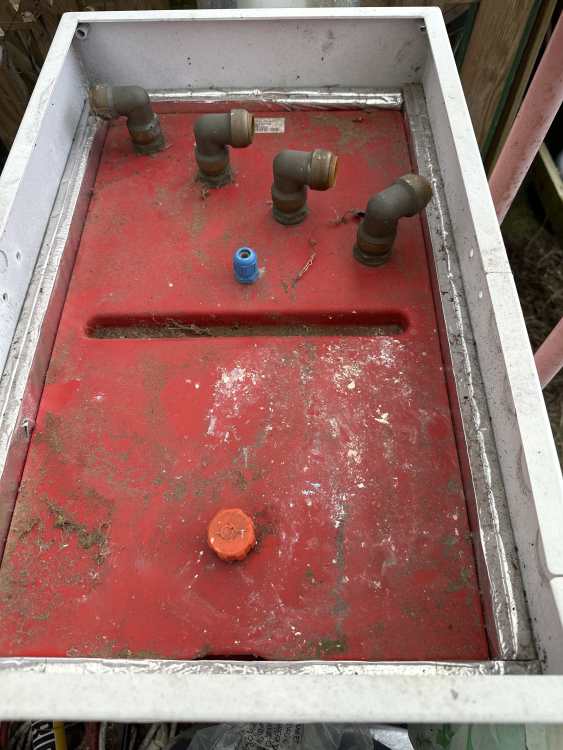
The orange do-dah is what they refer to as the 1 way breather, or that’s what it was called, item 6 in the MIs I found online. I referred to it as the PCM PRV earlier in the thread (sorry for the confusion). That’s how the goop gets evacuated if it all goes nuclear.
-
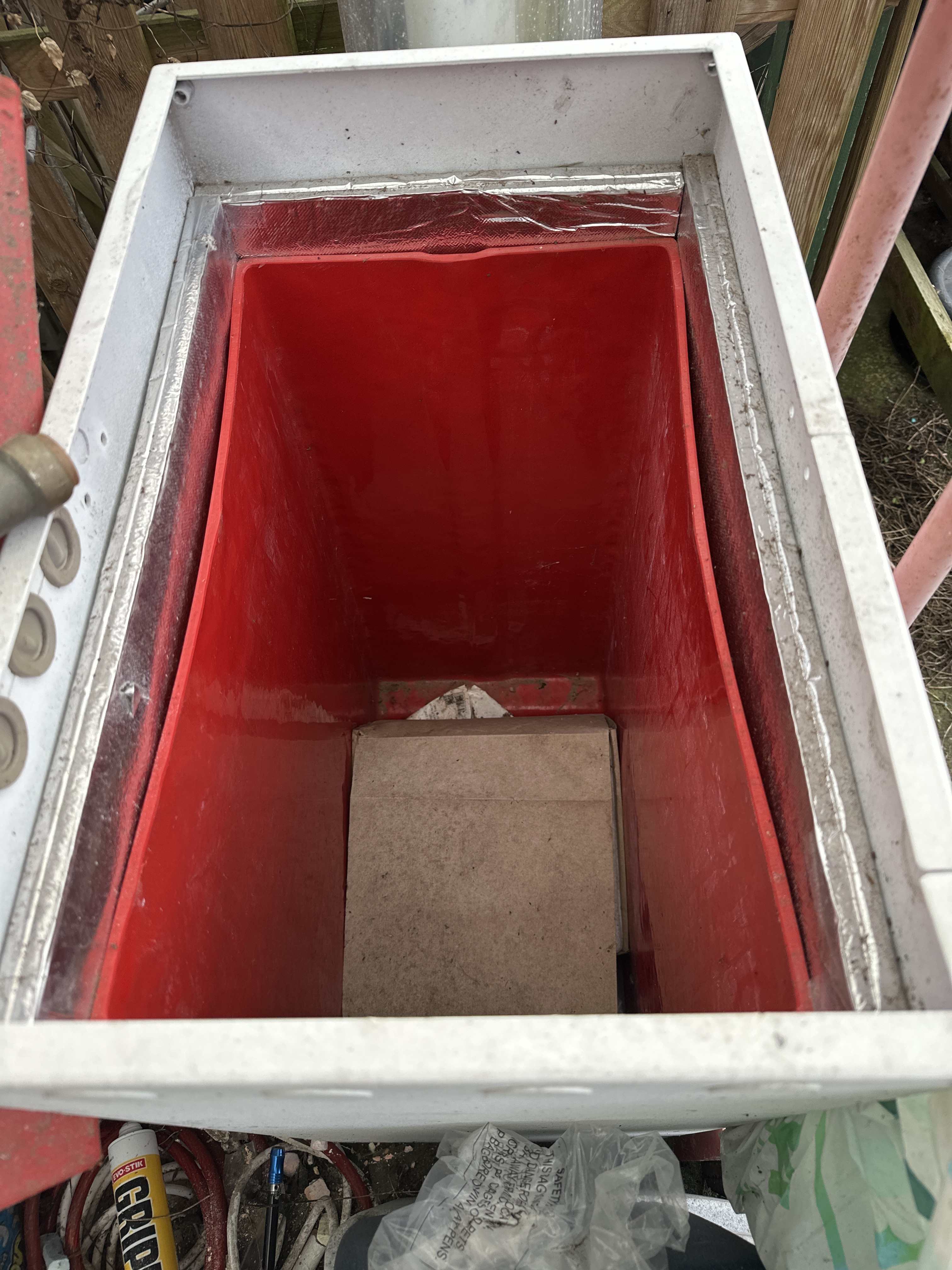
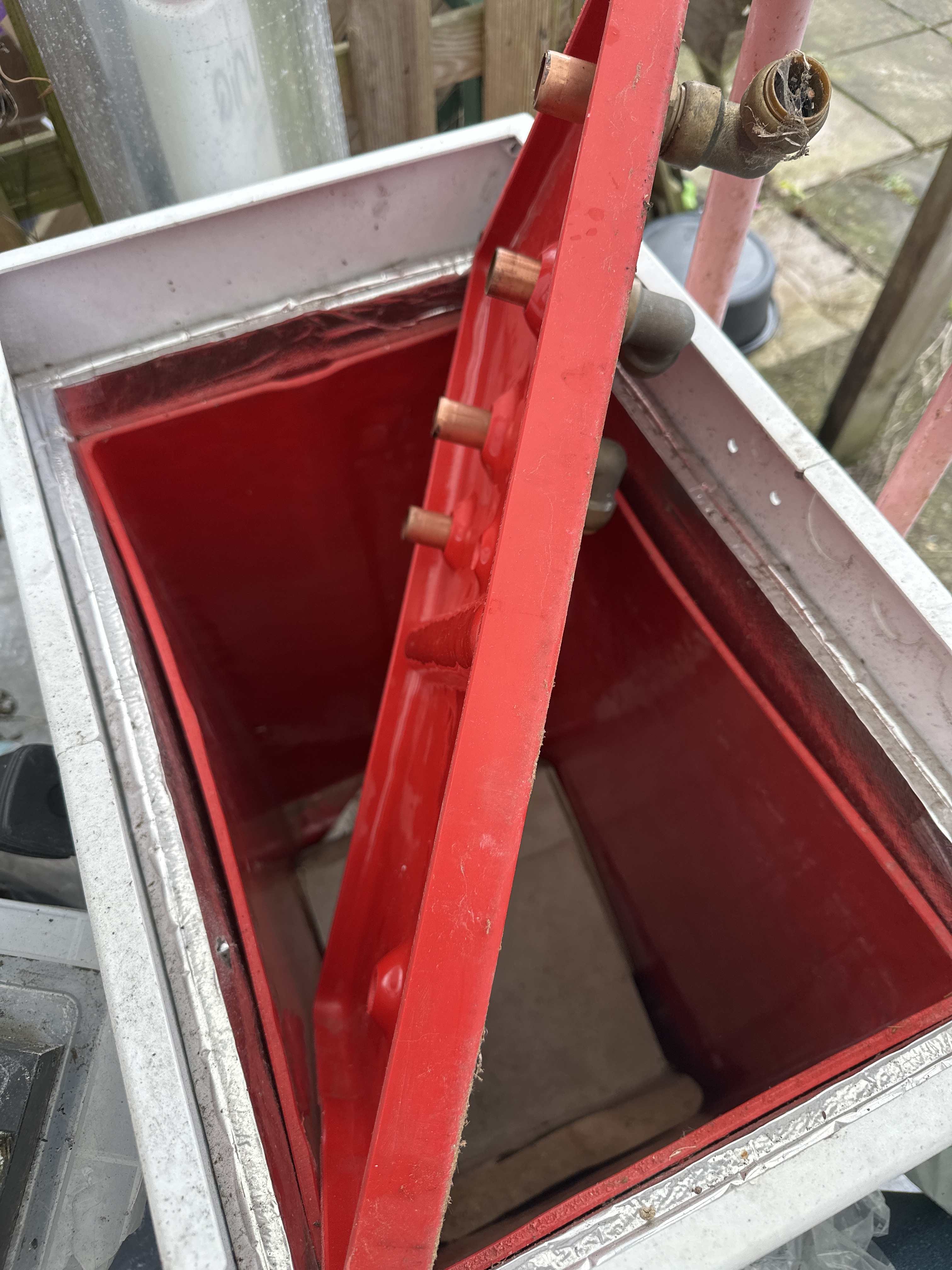
Always handy to have a few of these ‘remnants’ at the side of the shed lol. @Jeremy Harris, note the blue cable gland I mentioned for securing the thermistor string, or not as the case may be. Ignore the random cardboard box at the bottom. I’d just had a coffee and a chocolate croissant and didn’t feel much like bending over to remove it. ☕️ 🥐 😋
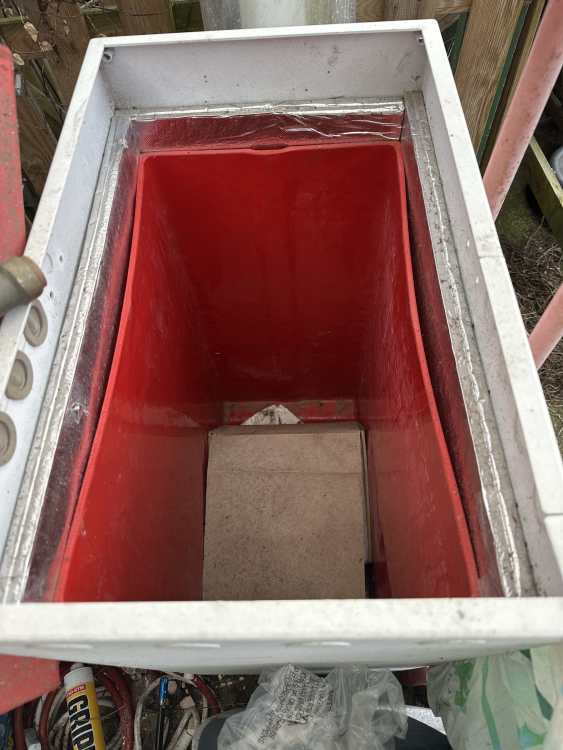

-
The main issue is (was?) that the case is manufactured as 2 parts, and the break is where they have to be plastic welded together. I’d throw a £20 on that being where these fail, as it’s about 9/10th’s of the way up the case not at the top; ergo they’re in the dynamic section where movement is continuous. These things began to look like they were 3 months pregnant after installing and cycling a few times, where they heat up, get loose, and slump into their final resting position. A bit like when you get out of work and take your tie off and loosen your top button. Just too much weight in a flexible plastic box, particularly if that’s been bean-counted too; more reasonable argument for how these early failures have occurred.
-
I was going to add, the windows can have bats fitted for sign off and then just remove them, if for safety etc. If there’s an ASHP being installed then get one that does cooling also, add that into the mix, and then the issue gets massively reduced (bringing this back to reality).
-
50 lashes seems both fair and appropriate.
-

New Garage Floor - Lower than my driveway 500mm
Nickfromwales replied to iSelfBuild's topic in Garage & Cellar Conversions
KISS then. Make it as nice as possible, practically, enjoy your time there, and move on without regret / remorse. 👊👌 Also with a significant chunk of change STILL in the bank. 🤝 -
Insulated plasterboard over existing wall or something else?
Nickfromwales replied to sb1202's topic in Heat Insulation
External walls are where the temps change, so the inside face of external walls are usually the only place the upgrades are necessary (thermally) but others (adjoining dividing / stud walls) may also be upgraded for acoustics. If cold air can be sucked in at the bottom of the new board layer (behind skirting boards) and ejected by convection via the void to the cavity wall or joist voids, then sealing 360° around the new boards is critical. @nod does this by default when dot ‘n’ dabbing, one of a rare few with these qualities / higher standards. Please ask as many questions as you need to. 👌🫡 -
Insulated plasterboard over existing wall or something else?
Nickfromwales replied to sb1202's topic in Heat Insulation
Thanks. So you can get rid of dot & dab and buy long as feck plasterboard screws, as this will then allow you to fix the insulated boards to the existing studs. Use PVA to prime all perimeters and use expanding foam to bond wherever getting a screw into studs is impossible, eg at corners / heads etc. Foam all joints, heads, and footers, with continuous beads of foam to prevent convection airflow around / between / behind the new layer of boards. Google “thermal tenting” for the ‘why’ -
A simple clamp meter wouldn’t suffice. This will be measured within a human ‘blink’. Oi!!!! Get your own job A C curve breaker is usually the more tolerant of “surge current”, caused by “shunt resistance” in motors usually, or lots of fluo lights etc. I would have thought C curve would be a ‘pikey’ solution but @ProDave and @Onoff are the books on this vs my less qualified understanding. Look at a domestic CU, where quite often or not (usually always) the total amps of each circuit massively outweighs the rating on the front of house isolator. I would suggest these were brought on by contactors which had programmable ‘delay on’ or even Shely’s perhaps, to bring them on one after the other. Depends on how they’re then used / turned on & off when room temps are achieved.
-
Exactly why this needed time and info for any kind of discernible response If tomorrow is immovable then I’d say buy the cheapest stats (£10 Honeywell rotary’s) and bin them later once an opportunity to decide on the final equipment has had a chance to evolve. “setback” thermostats will be a necessity with UFH, but a lot of (even shite) modern controls can achieve this as they don’t turn “off/on” but instead toggle between “comfort” and “economy” by you being able to select temps at chosen times; to do this you set to 18.5°C from 23:00 to 05:30, then 20.5°C from 05:31 to 07:30, and so on (assuming a working week). Ideally you’d need / want a stat that does 5+2 (mon-fri, then sat & sun), ergo this needs to be discussed properly and not with someone giving “24 hrs notice”
-
Ouch….I mean, you lucky chap to have such wonderful landlords. 🤣🤣🤣🤣🤣🤣🤣
-
You can't afford me lol. I have a wife, 4 kids, and an AMG to feed
-
If the occupants can tolerate the MVHR being boosted from the late afternoon and into the very latest part of the evening, then a slightly oversized MVHR system will suffice here, 100%. @Mr Punter is correct in that it will not be able to combat solar gain whilst the sun is shining, the contributor to the problem, but MVHR very much will give you a resolution that will allow you to not fry like an egg when it's bedtime. It is simply down to compromise, education, understanding, and effort. For my current client (a certified Passiv Haus) I proposed an opposing solution, for the dreaded Part O demon, to the PH certified architect which dissolved this 'window & doors open' purge ventilation nonsense; I say nonsense because the actuality of being perpetually self-employed as a human room(s) thermostat is completely rubbish for a regular way of life IMHO, so is not an option at all in my M&E proposals. Houses (our homes) are to be lived in for the benefit, not detriment, to living eg they should not be made with inherent flaws that impinge upon us getting on with day-to-day business.... aka "life". Don't get me started on the opposite issue of being too cold in winter and having to put heaters in rooms and monitor that also.....ffs. Your architect fails to impress me, sorry.
-
New Garage Floor - Lower than my driveway 500mm
Nickfromwales replied to iSelfBuild's topic in Garage & Cellar Conversions
Ola. How long are you staying there? If sub 10 years, ditch the madness, but if it's forever then get the wife drunk and get her to sign it all off in triplicate. This message will self-destruct in 5 seconds................. -
Elaborate as to where and how many runs of it please. Pipe size and from / where to again, please?
-
Easy tiger Anyone on here who is asked to advise at short notice will either ignore you or do the honourable thing and ask for some rudimentary information to base a reply upon. "Tomorrow" is only going to happen if you compromise and cross your fingers, so why is the deadline so immovable? You ask if the above is zero volt, and from what I see the answer is yes. With the square root of feck all info to go on, I assume these are battery powered stats? If so, you can use them in your suggested scenario above. If you get properly stuck tomorrow, PM me your mobile number and I'll talk you through some options / give tech support as best I can. Hope that helps.
-
Insulated plasterboard over existing wall or something else?
Nickfromwales replied to sb1202's topic in Heat Insulation
What is the plasterboard fixed to? -
Insulated plasterboard over existing wall or something else?
Nickfromwales replied to sb1202's topic in Heat Insulation
And here is the problem, I am afraid. I expect that convection heat loss is your biggest enemy here vs simply poor levels of insulation. The reason I am being a bit cut-throat is, if you think you can put a band-aid on this and enjoy walking around in Bermuda shorts the day after, I honestly think you'll have done a hell of a lot and not got very far in terms of cost vs return / result. Who wants this to be improved? You, or the missus, or both of you? -
Great to hear you didn't have to suffer a 13 week delay like the lady I mentioned, so that's a result considering previous track records!! SA's own chap sent me in this direction for diagnosing multiples of other failed units, and it was indeed the culprit; I think units pre/immediately post Covid were the worst ones tbh, so not sure about their current reliability, but I guess only time (or people raising their hands on somewhere as prominent as Buildhub) will tell. These things certainly grew organically, frustratingly for the client, by them falling down and then being picked back up again with various 'remedies'. I can only hope that there are not others out there who got the cold shoulder or simply completely ignored as per my own direct experiences....but as there is now a network of installers then I guess turnarounds for these warranty claims have improved somewhat. I remain curious if your standing here, and the mention on the forum of this episode, has not played a part in your resolution (given how they treated an ex-employee and at least 2 members of this forum very differently in identical circumstances). People evolve, companies improve, so this offers a glimmer of hope to some, but is a complete kick in the teeth for others. Bottom line here is, I am very happy that you, Jeremy, are back in good order with a great outcome, as you deserve it from your loyalty and honesty. You detail things very well, which will help / has already helped many people I am sure.
-
I scanned all the MI’s but no mention, and not seen that type before. A long way away from the incoming terminal though! I suppose without any mention, a-la the PRV discharge details etc, then who’s to know? Shame the original docs took time to mention / demonstrate such provision, so another example of folk left looking for their own answers, but good to see it there and good for folks to know, thanks.
-
Yup. Never had one in stall where these ‘match’ tbh. The balance is achieved via commissioning and setting of flow rates according to spaces and what-not. Relax, once installed and you’ve a year under your belt you’ll see how inconsequential these things are vs the cost of beer etc MVHR requires very little science in actuality, but one thing I can promise you is that once you’ve had a home with good air tightness & MVHR I doubt you’d ever go back to living in a home without it.
-
EPS based ICF or a TF with a decent thickness of blown-in cellulose is the No.1 choice from my experiences, mostly with MBC TF’s passiv spec offering. Just absolutely graveyard silent at night (300mm in walls and 400mm in roof). Absolute bliss.
-
My own direct experience from SIPS is that each project has been notably, sometimes adversely acoustically transparent, with a lot of noise pollution making its way inboard. Particular annoyance for me was the roof structures, hugely more so when flat, with the noise of rain hammering against the roof; literally, in some cases, it would require you to raise your voice when talking inside / upstairs when ‘torrential’. One architect stated this “connected the occupant with the outdoors”…… I then suggested we fitted an additional retro fit layer of 100mm of acoustic insulation before plaster boarding of ceilings commenced, he agreed and in it went! When I’m in bed at night, the only thing I want to be connected to is the wife.
-
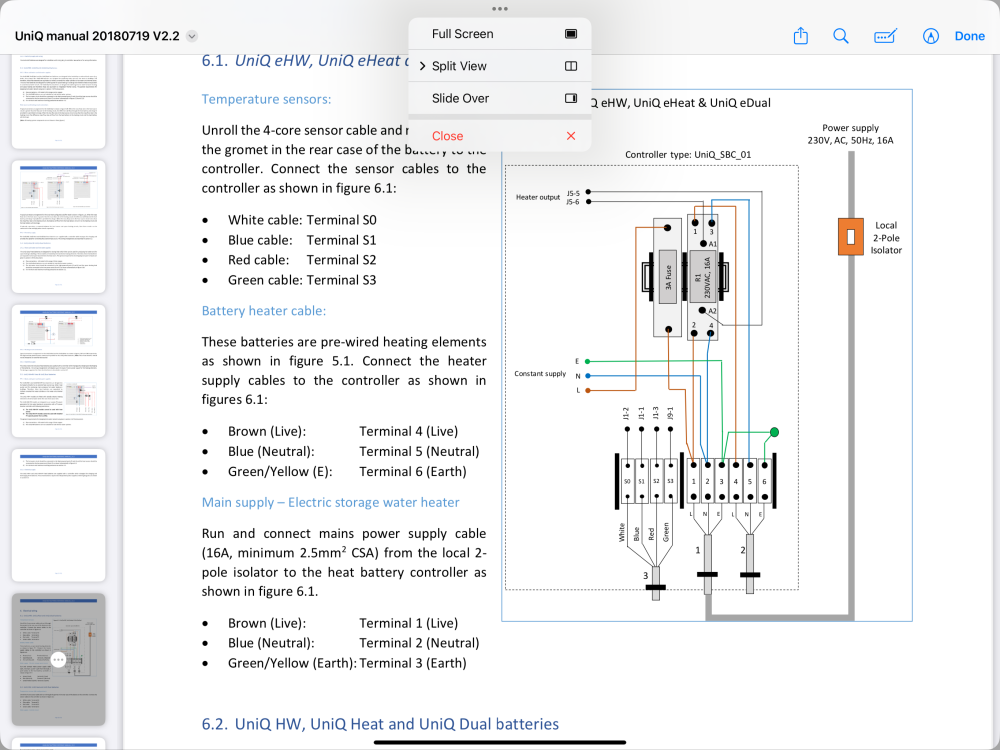
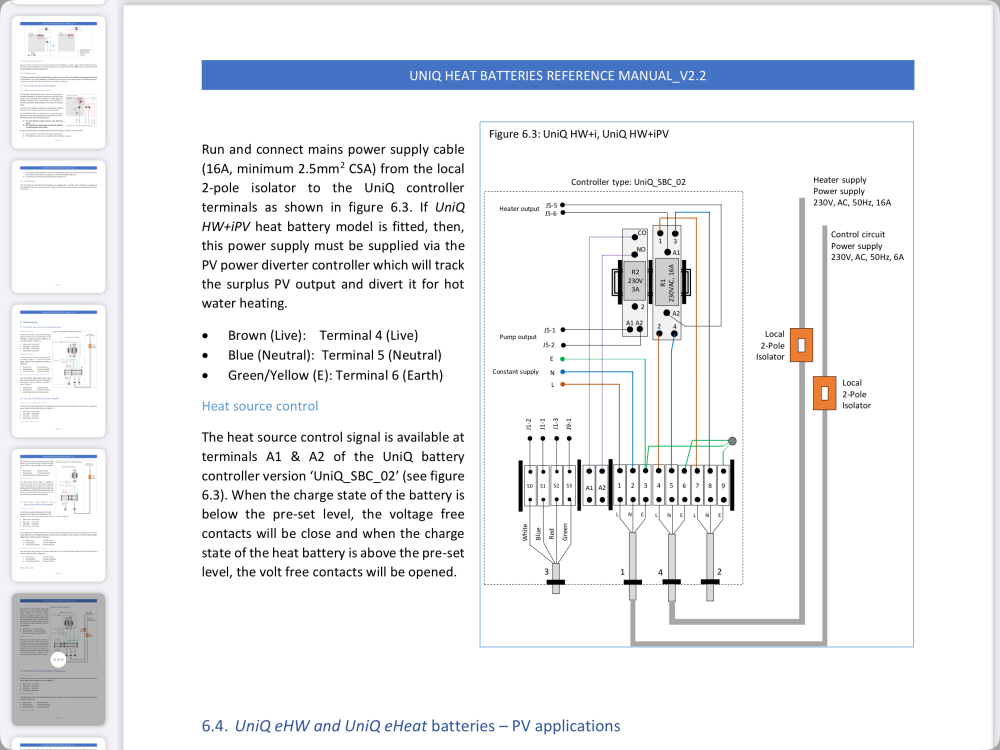
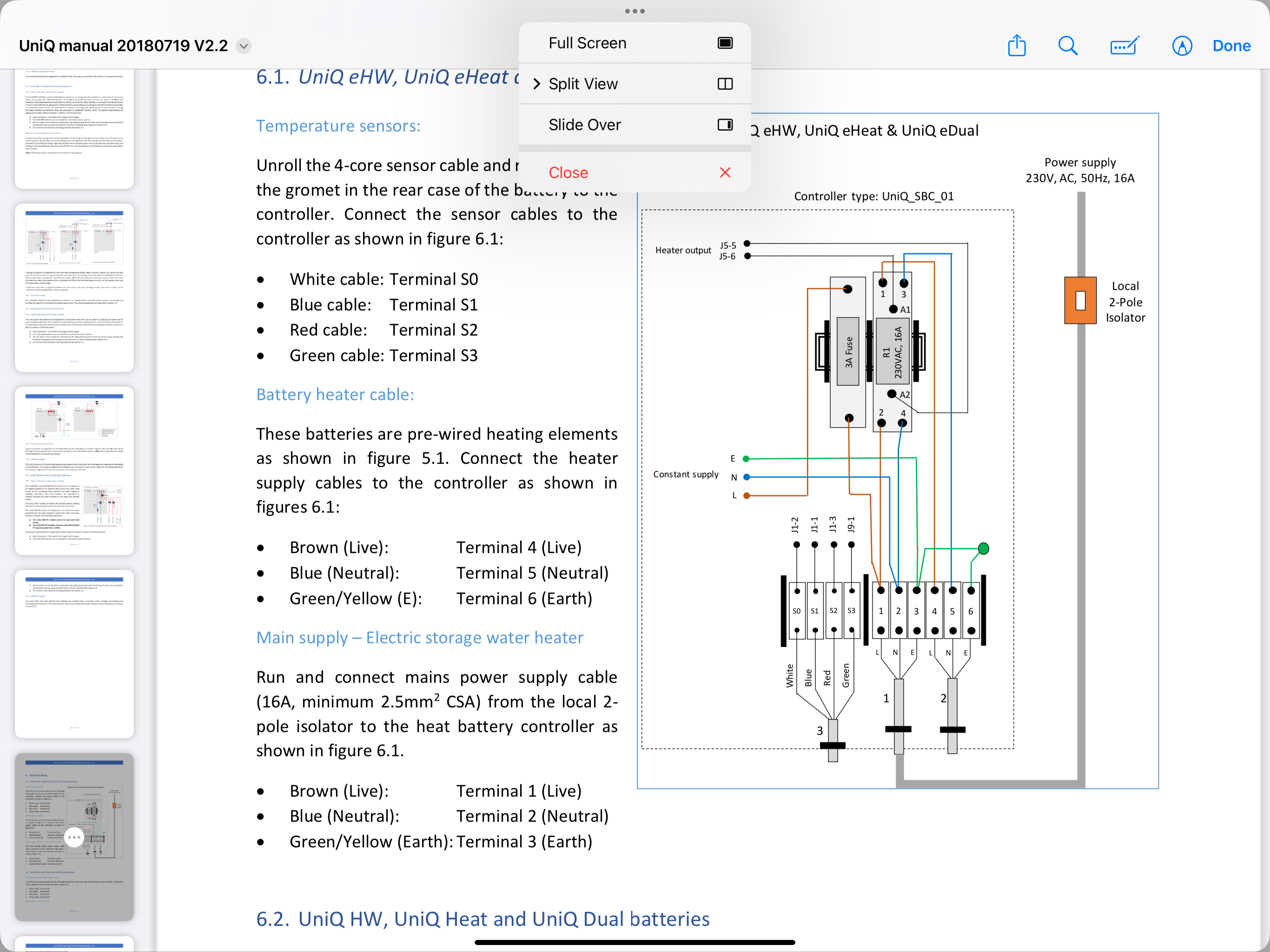
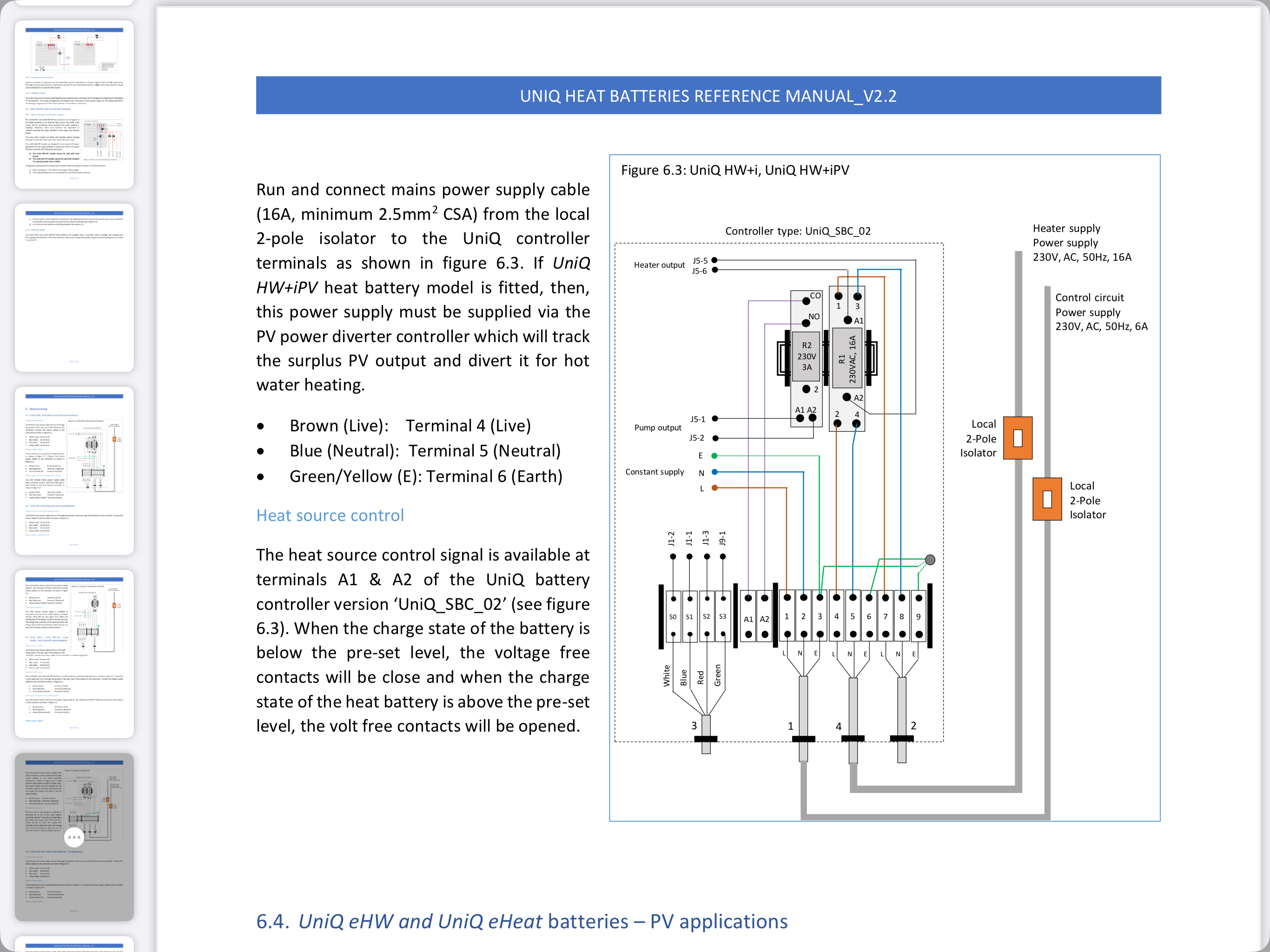
There were so many different manuals flying around back then even SA were sending the wrong MI’s out with units delivered to customers homes. I found one email with a historic manual: Top image shows the originally featured (obligatory) 3a fuse integral of the original units, titled “constant supply”, the one servicing the PCB etc, with other versions showing an external secondary supply dedicated to “control circuit power supply”, but at 6a. Here’s 2 shovels, take your pick…