SteamyTea
-
Posts
23848 -
Joined
-
Days Won
200
Everything posted by SteamyTea
-
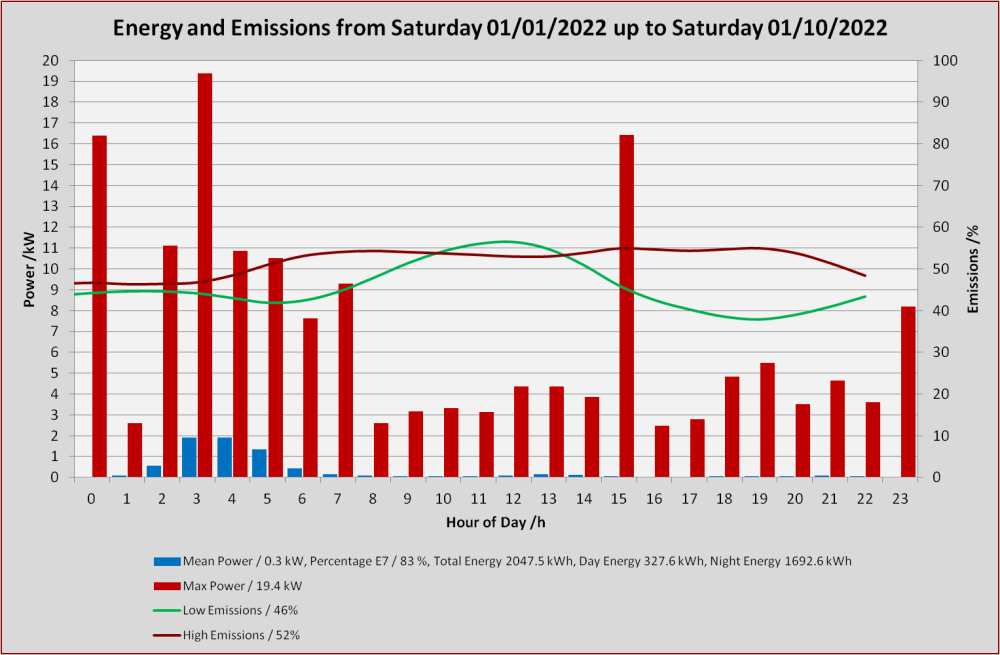
Here is what has happened so far this year, the missing 2% is due to imports, which I cannot account for. Ignore my usage, which is 0.0000011% of grid capacity, and just read the green and red lines off from the secondary y-axis on the right.
-
As you say, not until we have true excess installed capacity. It is because of this that we are also developing a new nuclear fleet. Now whether that is the best thing to do, or as an alternative, just install a lot more RE and some large scale storage (which can be distributed) is a different debate. Some made up numbers. UK night usage: Between 25 GW and 40 GW, so over a 6 hour window, 150 GWh and 240 GWh. Now we know the price of both wind power and nuclear power, £40,000/GWh and £95,000/GWh respectively. We also know the capital costs £1.25bn/GW installed capacity and ~£8.3bn/GW installed capacity respectively. We also know the capacity factor, wind is around 40% and nuclear around 90%. Once planning is consented, we know that wind can be deployed in about 18 month, and nuclear about 12 years. Taking the most simple arithmetic model, how much wind capacity can we install for the same money as nuclear. 8.4 [£bn/GWn] / 1.25 [£bn/GWw] = 6.72 GW. Multiply that by the capacity factor and you get 2.7 GW. For comparison, taking capacity factor into account, you get 0.9 GW of nuclear for the same money. You would also be generating, with wind, approximately, after 18 months, 3.5 TWh/year. That will increase every 18 months, so: 3.5 TWh/year from Jan 2024 7 TWh/year from June 2025 10.5 TWh/year from Jan 2027 14 TWh/year from June 2029 17.5 TWh/year from Jan 2031 20 TWh/year from June 2033 23.5 TWh/year from Jan 2035 This is the point where the price of wind power equals nuclear power and nuclear is almost onstream. So if we stopped investing in wind here, from every year onwards we would generate another 23.5 TWh/year. Total wind generation to date would be 110 TWh/year. Nuclear 0 TWh/year. But we will give it a chance to catch up, by projecting into the future even more. So nuclear will be generating 7.8 TWh/year, wind 23.5 TWh/year. Really no need to project into the far future is there, nuclear is not going to catch up. Yes we do need some nuclear (or other type of base load generation) so that wind power can be used for balancing, but the problem is at the moment (2022), we need new generation. Luckily the people that put up the money are not investing in nuclear, or hydro, they are investing in wind (solar is a small fraction in the UK) and battery storage, because they know they get a return on their investment much quicker.
-
The purest Number One
-

Perovskite progress - but what’s the catch?
SteamyTea replied to Adsibob's topic in Photovoltaics (PV)
Longevity the last I heard. They are generally cheaper to make, but not sure what the processes is when combined with silicon. -
Lower down it looks like a walnut.
-
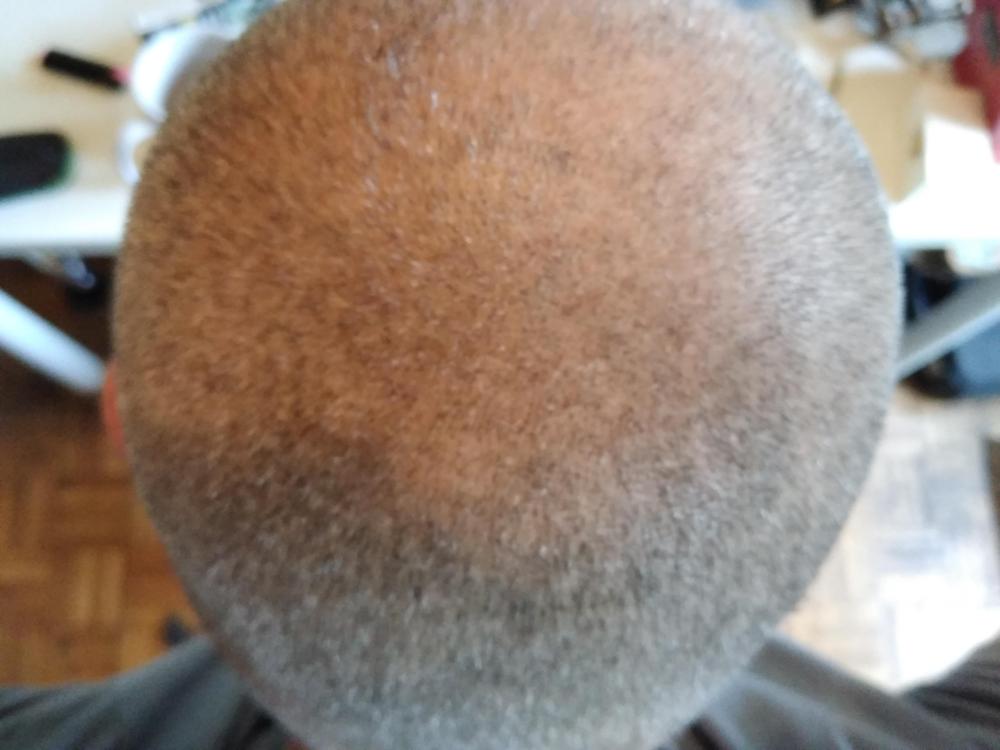
I groomed myself yesterday,
-
I find washing windows is futile, as soon as a hoolie comes in, my windows are covered in salt, and I am two miles from the sea. If it is a sunny day, I go outside and take full advantage of the light. When it is dark, I don't care what the windows are like.
- 19 replies
-
- 1
-

-
- clean windows
- hard water
- (and 2 more)
-
Perfectly possible to prepare any food in that manner. Generally cheaper to buy semi prepared food though. To make an un processed vegan mean, first buy a field, then leave alone for 3 years, then plant your choice of fruit and veg, then wait till harvest time, then harvest and throw most away as it is diseased and maggot eaten. Then boil or roast. Then throw away and get a donner kebab.
-
The thing about electricity is it is very flexible, not only for the end user, but also in the methods it can be generated. Non gas powered generation can be solar, wind, nuclear, biomass, oil, land fill gas, hydro, wave (one day, maybe), tidal (will take longer than nuclear), and the easy one, importing. Wind power now has a strike price of £37.35/MWh. For the last year, wholesale natural gas has had a day ahead price of around £65/MWh (quite hard to get an exact figure). That is up from £16/MWh back in February 2021. Now I doubt in the near future (next 3 years) we are going to see gas prices much less than £30/MWh, so going to be a similar price to new build renewables. Also, at the moment, if we really want gas, we are going to have to outbid others. Going to be much easier to reduce waste, which is not the same as improving efficiency. Hopefully the current high prices will solve this, but people can be twats and feel entitled to waste their own money. Thing is, they are also waste everyone else's money as we are all now chipping in. I am not sure how we are going to get that message across without having a similar attitude that the nation has taken to smokers (but oddly enough not drinkers who cause a lot more problems). So who is going to go around a fully lit up house and ask them to turn some of the lights off?
-
Should work really quick. May be worth looking into an enthalpy MVHR, grad some of the latent heat of condensation back, and stop the house getting too dry, not that it really a problem here.
-
Just stick some Fairy Liquid in it. And most a video of the result.
- 19 replies
-
- 1
-
-
- clean windows
- hard water
- (and 2 more)
-
Twice more that I have.
-
Yep. @Jack757 Don't worry about the bickering, post away.
-
Should that not have read "I would not have done that". You really don't help your cause do you.
-
Much better at 0.18 to 0.09 W.m-2K-1 and between 0.05 to 3 ACH. Bet then have never, ever managed 0.05 ACH, or 0.09 W.m-2K-1 for that matter.
-
Interesting concept. Probably cost more than just the maximum energy storage of 10 kWh, probably nearer 12 kWh needed overall, so £0.9. Assuming you can export the full 10 kWh back for £1.50, that is £0.60/day. So the truer value is 6p/kWh.
-
Just had a quick look at passivhaus standards, 0.8 W.m-2K-1 for walls and 0.6 ACH. Quick look at the same info on the Potton site, Ultima 1.3-1.5 W.m-2K-1 and between 1 and 3 ACH. Not in the same league. Like saying a Ford Fiesta STi is fast, then being taken out in a Zonda.
-
Says our pet architect, who thinks that everyone that designs their own home is wrong.
-
When did you get that figure 2010?
-
Carbon dioxide levels in a MVHR home
SteamyTea replied to Seeoda's topic in Mechanical Ventilation with Heat Recovery (MVHR)
Yes. It is the easy one to measure. Absolute Humidity, AH, is more useful as you can calculate the total mass of water in the air. You can convert between the two, but it is messy. Relative humidity (RH) The ratio of the actual amount of water vapor in the air to the amount it could hold when saturated is expressed as a percentage, or the ratio of the actual vapor pressure to the saturation vapor pressure is expressed as a percentage. Absolute humidity (AH) The mass of water vapor in a unit volume of air. It is a measure of the actual water vapor content of the air. Thanks to the World Meteorological Organization, we can find saturation vapor pressure given the temperature and atmospheric pressure (read more at Saturation vapor pressure) From the relative humidity and saturation vapor pressure, we can find the actual vapor pressure. Then we can use the general law of perfect gases In our case this is where R is the universal gas constant defined as 8313.6, and Rv is the specific gas constant for water vapor defined as 461.5 Thus we can express mass to volume ratio as , which is absolute humidity. So, for 25 degrees centigrade and 60% relative humidity, one cubic meter of moist air contains about 14 grams of water, which corresponds to conversion table values I've found before. -
It will be interesting to see if any mould appears with your magical local climate. Or maybe with it being warm, the problem mysteriously vanishes.
-
I often read on here how people hate fitting mineral wool insulation, don't really know why. When I went to the timber frame company in Redruth a few years back, the guys fitting the insulation rolled out the wool onto a large table, with the roll on a spindle frame, then thy had a saw that easily cut though it. Very similar to when I used to cut up chopped strand mat and some glass fibre weaves. I used to just use a Stanley knife into a thin slot on the cutting table. Had a guide at the top to make sure the cuts where at 90° to the roll. Marked off, on the cutting table, with a bit fat marker pen, the most common lengths. Took seconds to cut up and not real mess or hassle at all. If I needed a lot of thin strips, I just cut the roll up to the required width, then put it on the roll frame. I have seen people cutting stuff up on the floor, or rolling off the roll and using scissors. Never ends well. So, why are people finding it so hard to cut and fit mineral wool insulation?
-
It is a good insulation material, ticks a lot of 'sustainable' boxes as well. The two really big advantages are its sound deadening properties and thermal inertia (sometimes referred to as decrement delay, but if people call it thermal mass, they don't know what they are talking about). Thermal inertia is generally better in materials that have a carbon/hydrogen or an oxygen/hydrogen bond. Get both of those bonds in timber and a lot of organic materials. You can't trick nature.
-
Are you asking why, when it gets colder, water vapour condenses?
-
Electric radiators for holiday home?
SteamyTea replied to LancashireLad's topic in Central Heating (Radiators)
Get it designed right and it will be fit and forget, nothing for the customers to fiddle with.