SteamyTea
-
Posts
23383 -
Joined
-
Days Won
190
Everything posted by SteamyTea
-
Yes. It is a good language, much clearer rules than spoken languages.
-
It shows mate. Had a debate with @Adsibob that mathematics is not science as he claimed.
-
Reminds me of A Beautiful Mind. What you been drawing on the windows, Feynman Diagrams?
-
Do you reallt need so many devices?
-
 Top of the list for you then. Realistically, at the external temperatures you have had recently, just normal living is heating your house. Because I knew there was a cold snap coming, I pumped an extra 10 kWh or so into my night storage heaters, house is a little warmer. Tomorrow I expect to see a reduction in energy usage a some of that 10 kWh was getting the storage heaters up to a higher temperature. I have kept the heating window (4 hours) the same, so will be interesting to see when the night stores actually switched off.
 -
Chat GPT for building regulations - insane!
SteamyTea replied to GaryChaplin's topic in Building Regulations
Generally, it is the operator that carries the can, so in the case of AI, the person who asks it do to something. 'Shooting over Devon' can have many meanings. And some interesting search results. -
Let's tabulate it. @jack -0.04 °C.h-1 @SteamyTea -0.132 to -0.296 °C.h-1 can call that 0.21 °C.h-1 @haddock -0.3 °C.h-1 @MikeGrahamT21 -0.33 °C.h-1 @Nick Thomas -0.5 °C.h-1 So my old 1987 house, with some minor modifications, is petty good. I am not sure how much of that is to do with being a terrace, or small, or at a colder internal temperature, or a higher external temperature. My place is TF, so can we knock that 'thermal mass' nonsense on the head, again. Cooling is proportional to the exposed surface area, the temperature differences, the shape, and the exponent function e Worth looking up Newton's Law of Cooling as it can nicely shows all that in a single chart. https://en.wikipedia.org/wiki/Newton's_law_of_cooling
-
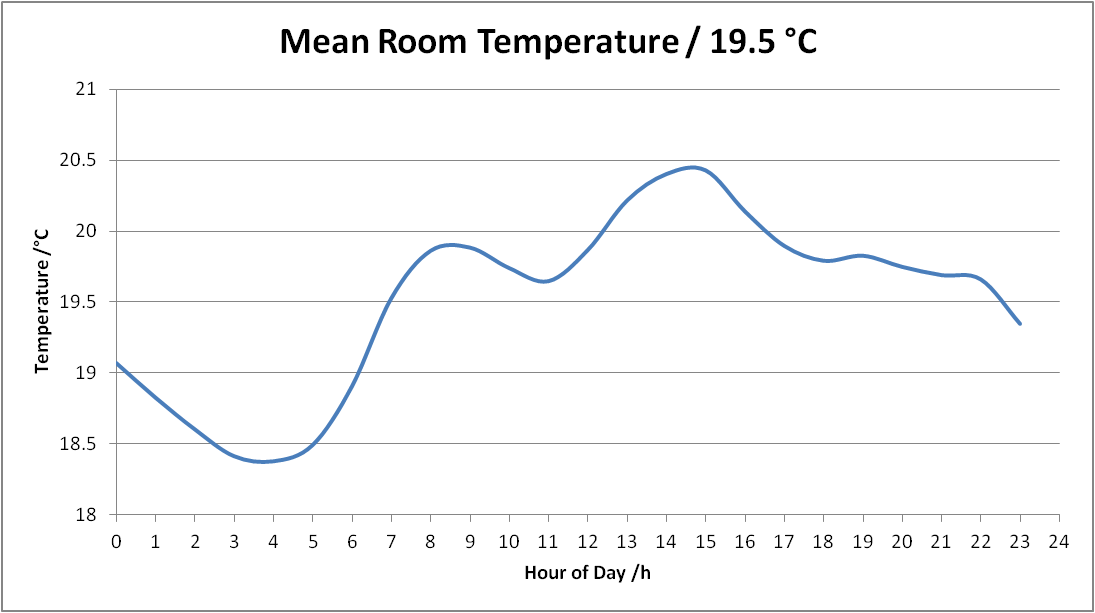
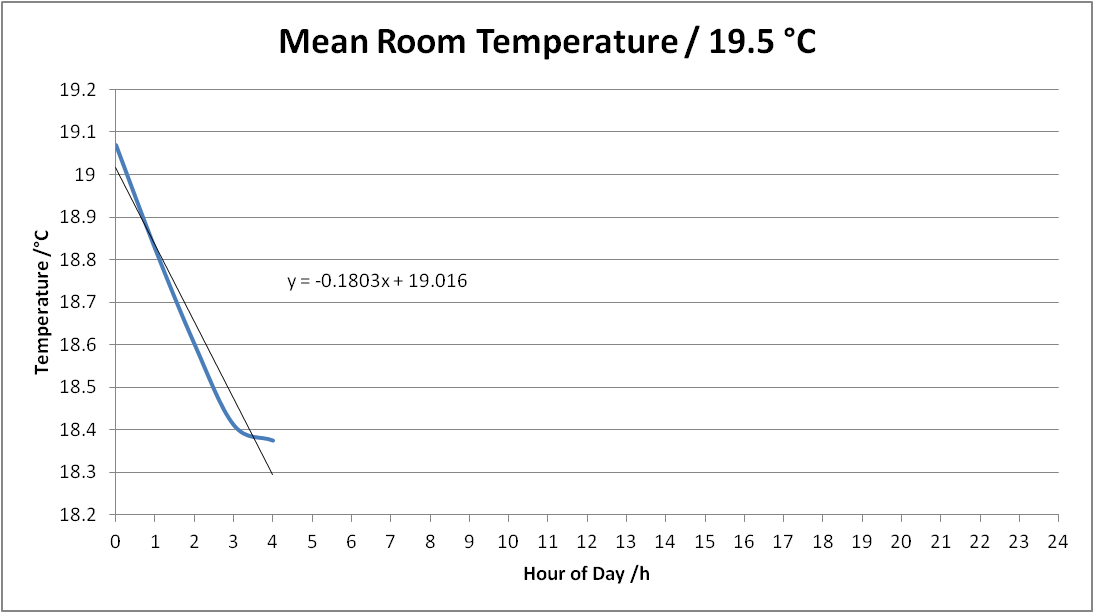
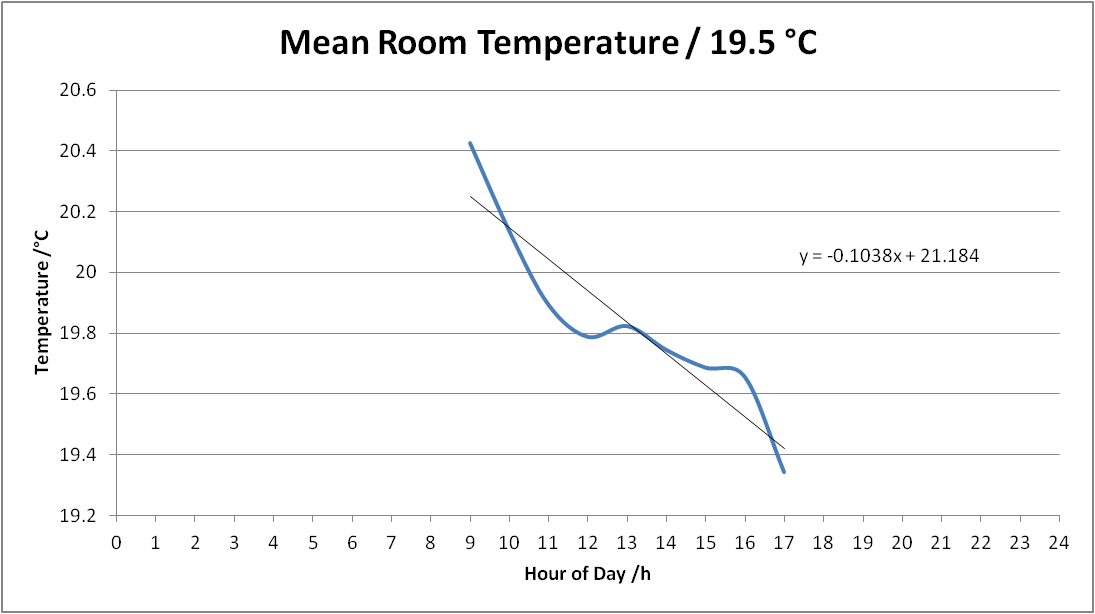
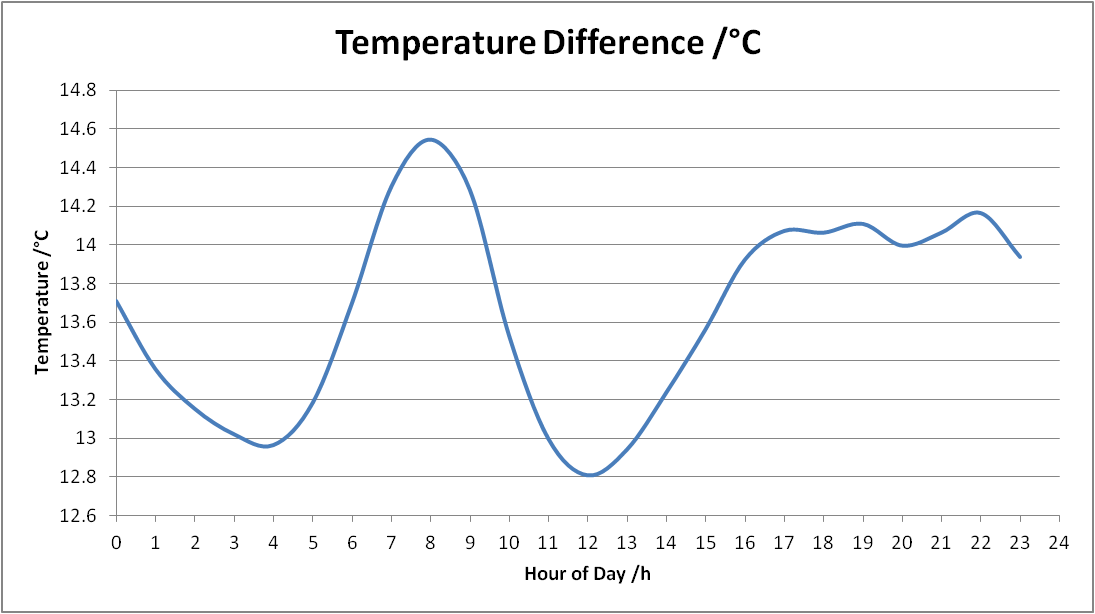
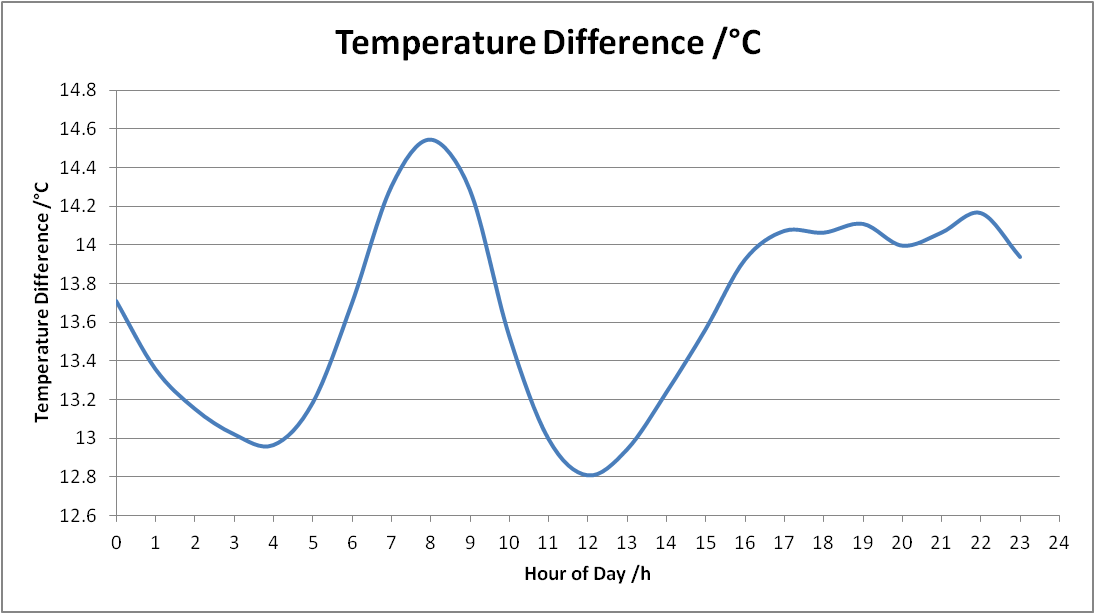
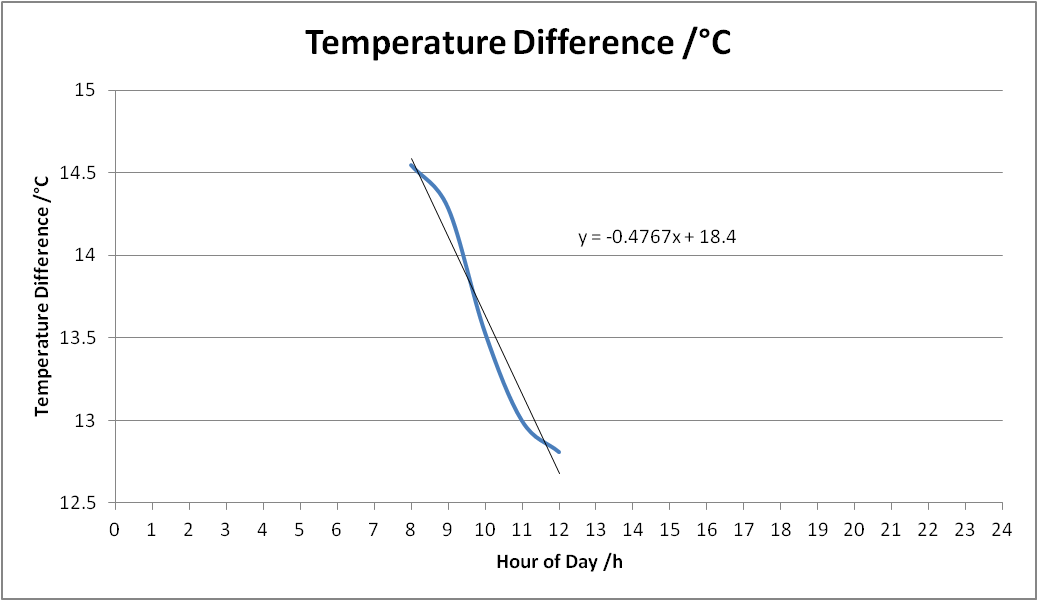
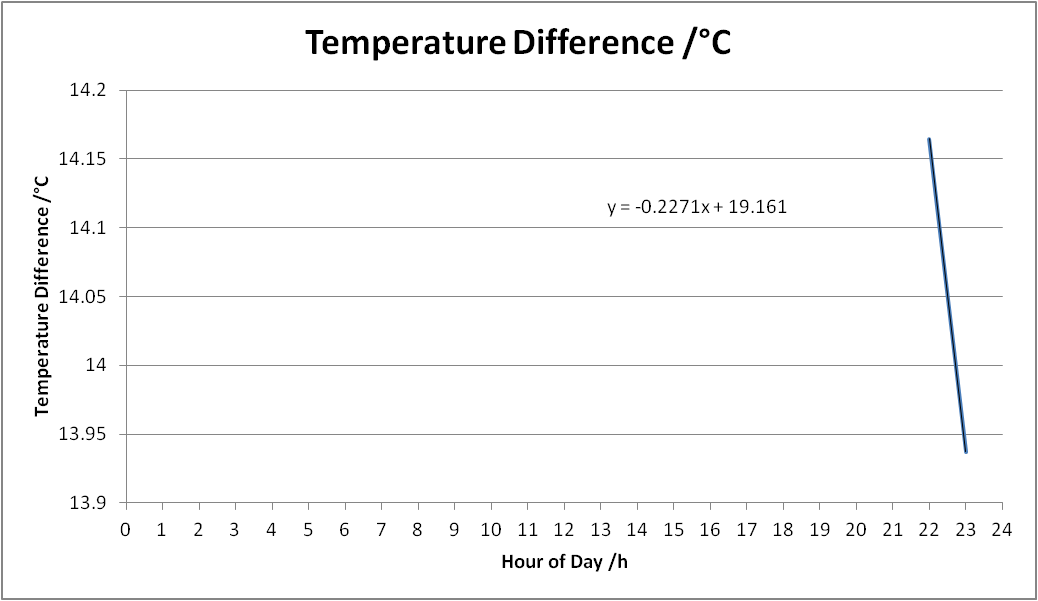
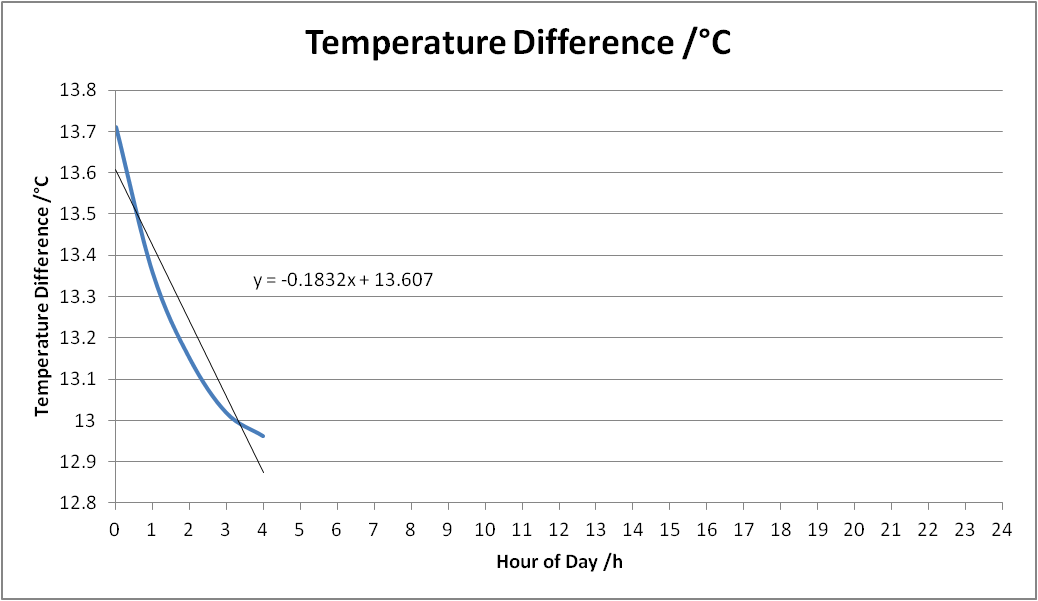
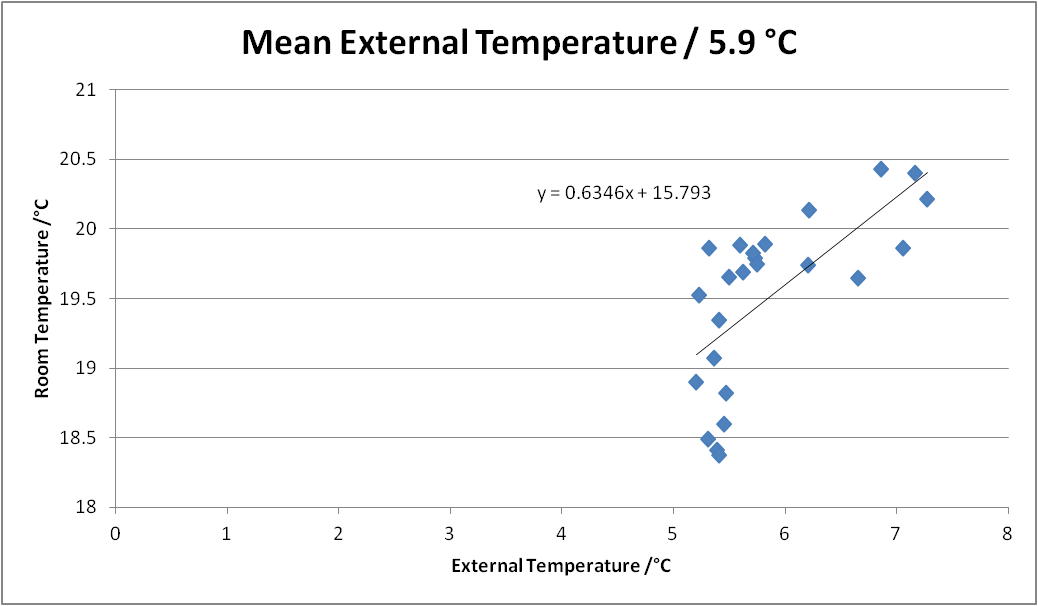
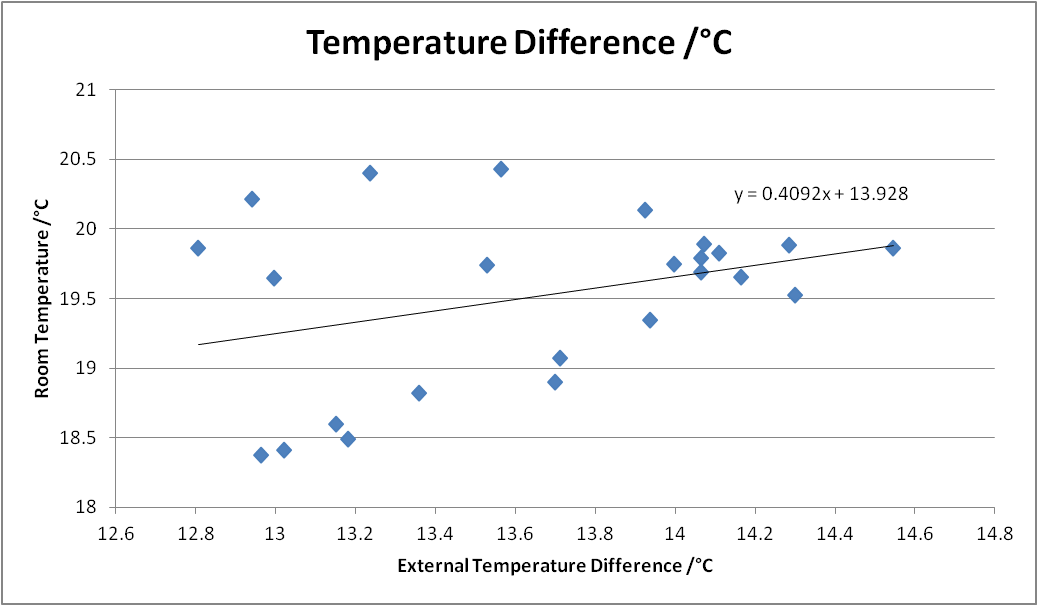
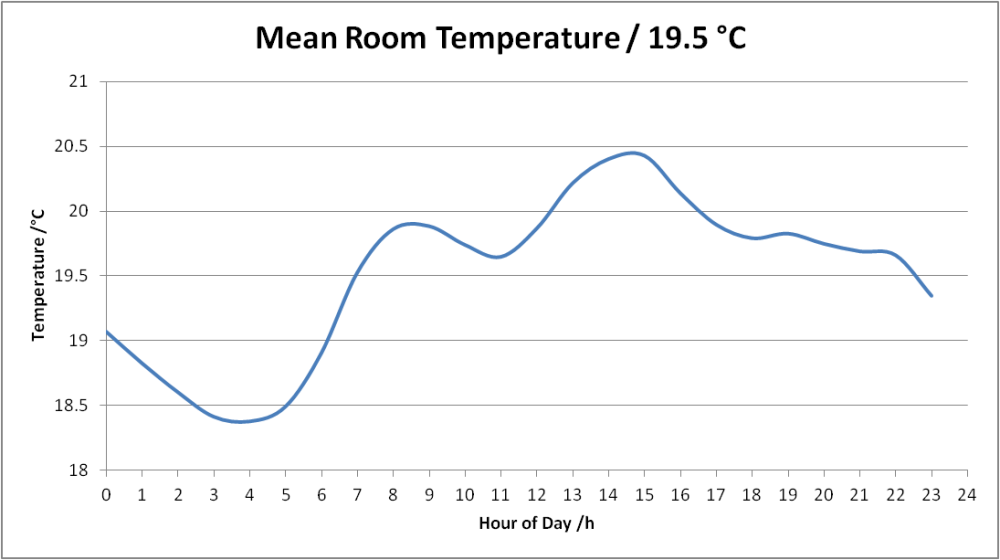
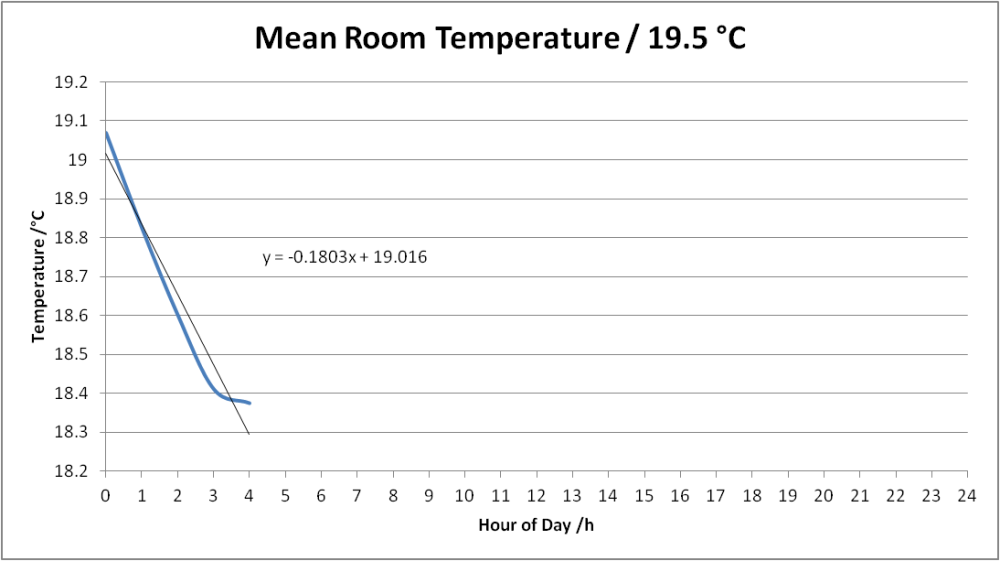
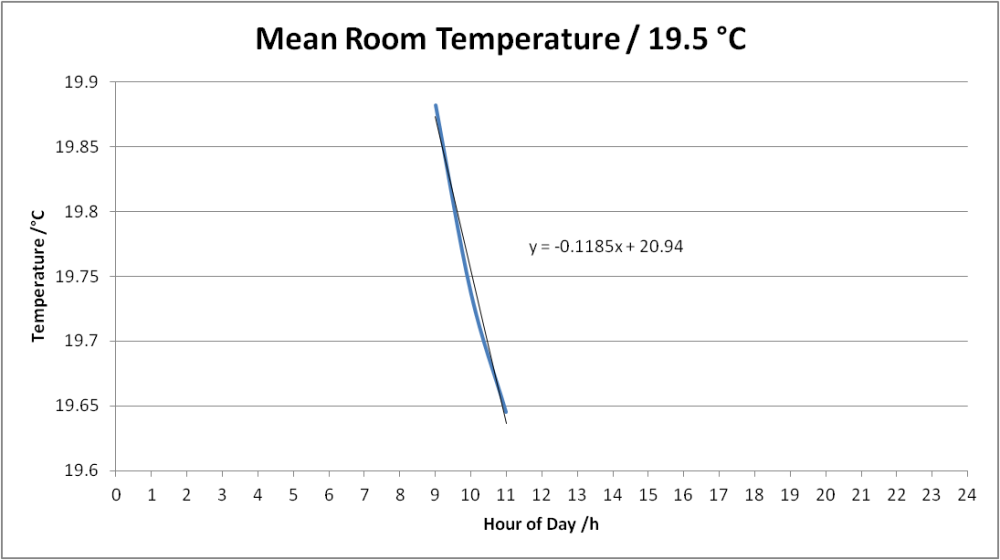
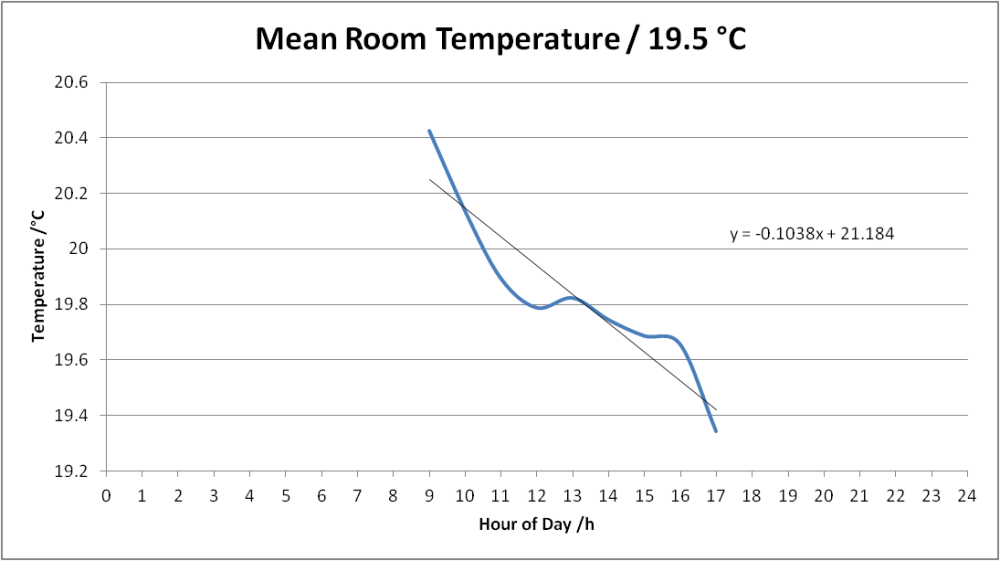
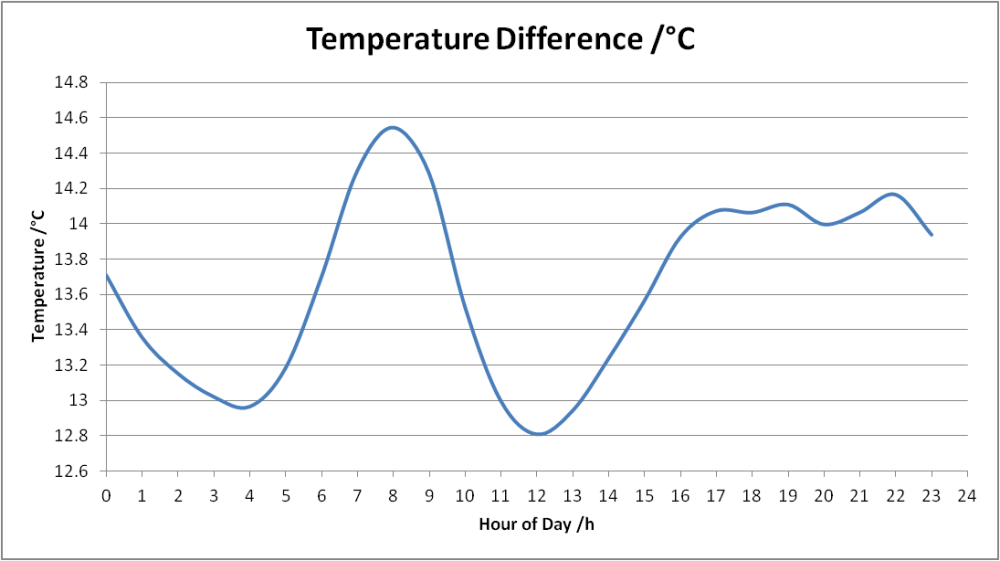
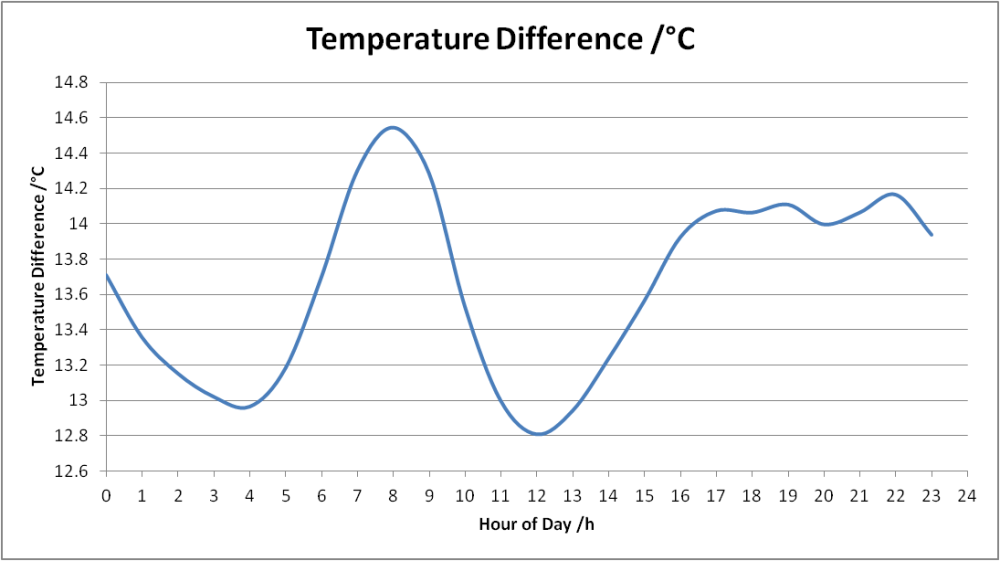
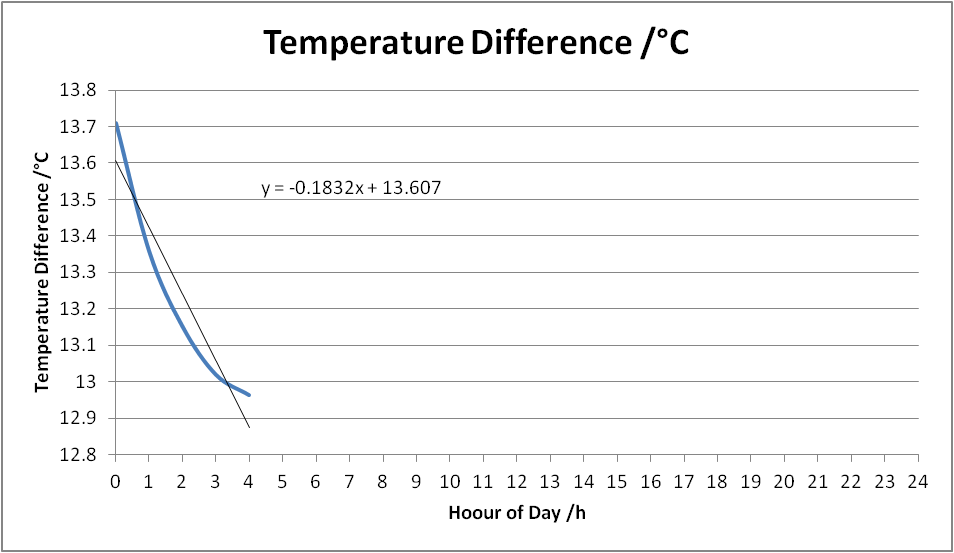
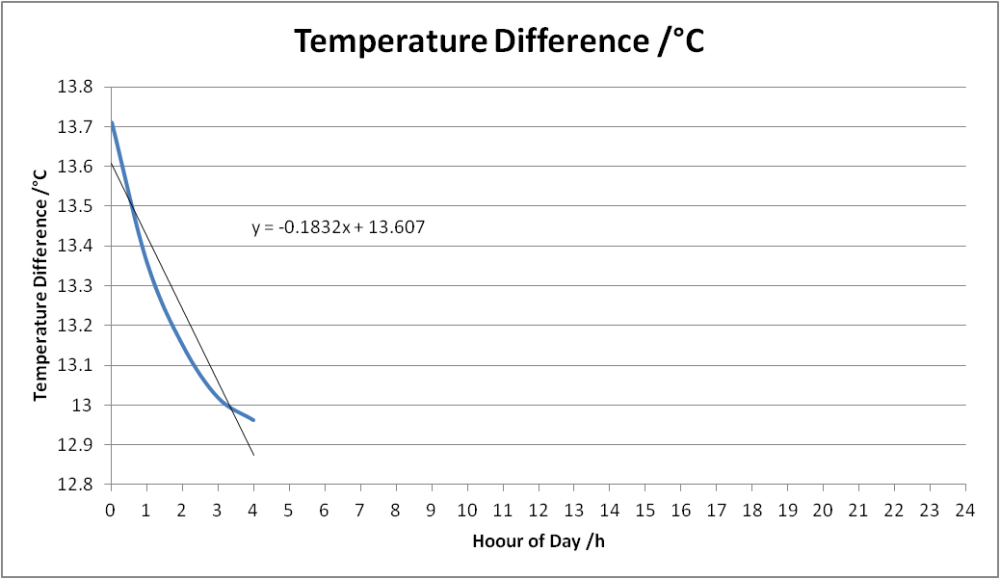
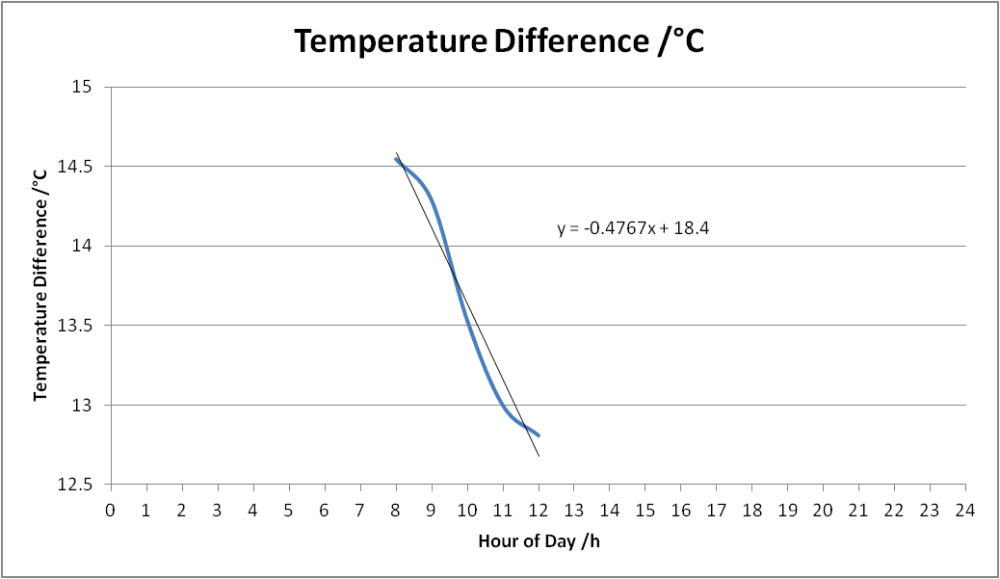
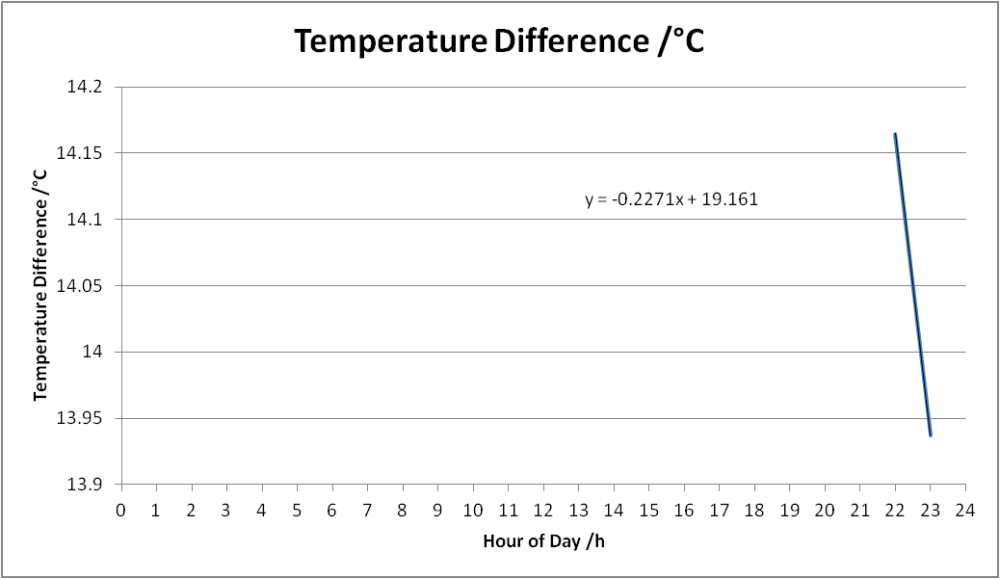
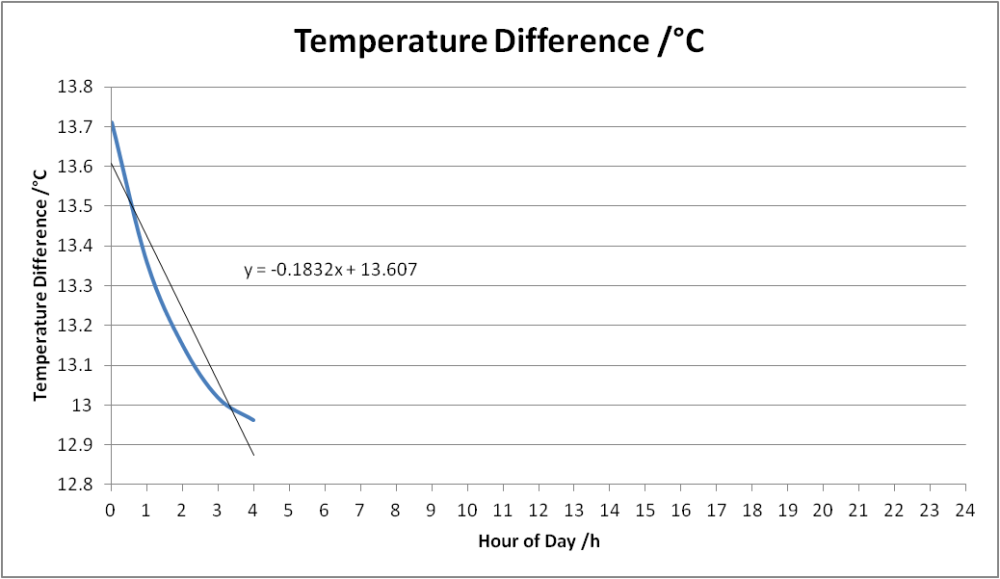
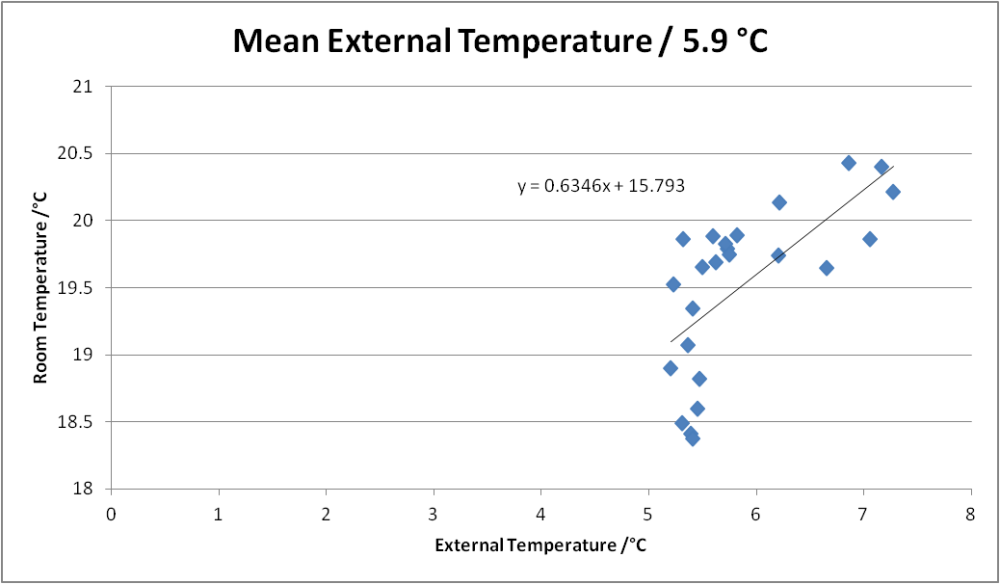
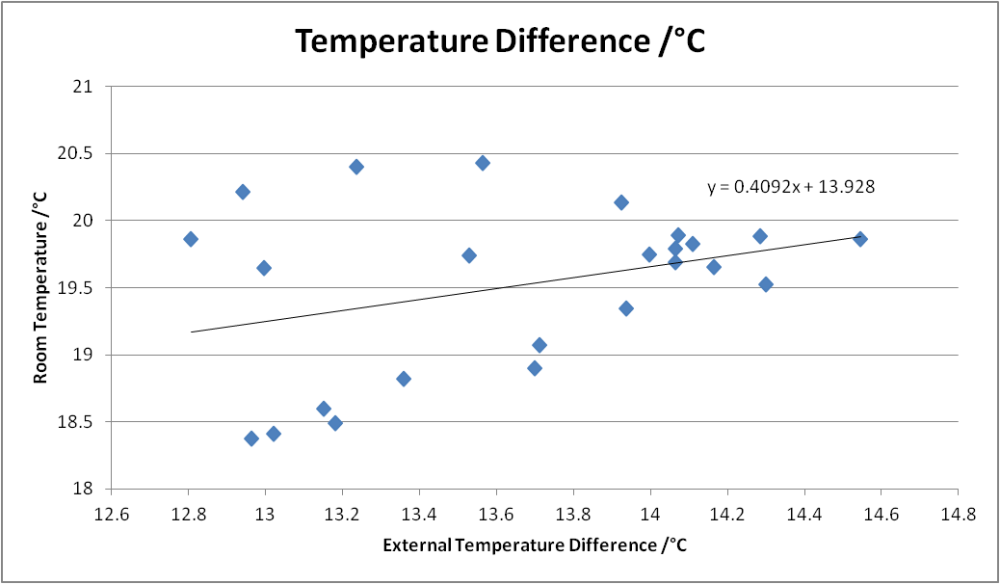
I have found that with my house, a small terraced place, that the major influence is temperature difference. Wind direction and Solar Gain have very little effect. This is not surprising really as when it is windy, it is predominately from the South West, which is warm, but with cloudy skies. Looking at my data for the cold spell last year, 27/11/2022 to 17/12/2022 and grouping the means by hour of day, this is what happens. Then looking at all the negative slopes I get this. Added a linear trend line as it makes the arithmetic easy. So Midnight to end of 4 AM the temperature drop is -0.180°C.h-1 9 AM to end of 11 AM, slope is -0.119°C.h-1 And finally 3 PM to the end of 11 PM, the slop is -0.104°C.h-1 This gives a mean temperature drop of -0.134°C.h-1 This is only part of the story though. As I know that the major influence is eternal temperature, I can plot and calculate the slopes against temperature difference by hour. This again shows three periods when the temperature slope is negative, with the final one being only two hours. Note that the y-axis has changed from temperature to temperature difference. So Midnight to end of 4 AM the temperature drop is -0.180°C.h-1 8AM to end of 12 PM the temperature drop is -0.477°C.h-1 And finally 10PM to end of 11PM, slope -0.227°C.h-1 That is a mean difference of -0.296°C.h-1 I am not sure which is the most important number -0.132 or -0.296°C.h-1 as it really depend on the internal temperature range, which has to be within the comfort range. I aim for a mean room temperature of 20°C, but during this cold snap, the mean temperature dropped half a degree to 19.51°C, with a range of 2.05° (min 18.37°C, I can live with that). The external temperature, from the local WeatherUnderground station (reports higher than the new probe I have put in by ~1.1°C) is a mean of 5.86°C, a range of 2.07°C and a min of 5.20°C. This can be plotted two ways again, x-axis as external temperature or as external temperature difference. The slope changes with a value of 0.635°C increase in room temperature for every degree rise in external temperature, or 0.409°C rise for every degree rise in external temperature, the inverse is also true, so the same drops in internal temperature for every degree drop on external temperature. Not sure if any of that helps any, just pointing out that thermodynamics is never as simple as we first think. Just noticed I did not change the times on the third chart down from the top. Is is 3PM to end of 11PM, and I also have a typo that makes it hoours, which is just me pretending to be French.
-
Chat GPT for building regulations - insane!
SteamyTea replied to GaryChaplin's topic in Building Regulations
That will be elliptical paths then. -
Welcome. Seems a bit odd. But it does depend on system sizes. Why a flat roof when you are considering PV? Have you considered energy usage at all, or just assuming that PV and an ASHP will take care of all that. The time to think about it is now, it is hard to add another 100mm of foundation insulation once the walls are up. Building Regulations are a minimum standard only.
-
Not that good, the worse of the common radiator materials. Grey Cast Iron is 460 kJ.kg-1.K-1 Mild Steel is 510 kJ.kg-1.K-1 7068 Alloy is 1050 kJ.kg-1.K-1 The material thickness is more important, in the middle. Grey Cast Iron is 53 W.m-1.K-1 Mild Steel is 50 W.m-1.K-1 7068 Alloy is 190 W.m-1.K-1 Material density comes into it, not the most dense. Grey Cast Iron is 7150 kg.m-3 Mild Steel is 7850 kg.m-3 7068 Alloy is 2850 kg.m-3 With that information, the thermal effusivity [e] can be calculated.
-
Heat, is the old word for energy. Energy [J] and power [W] are not the same thing, why they have different names and units. The reason that power may be reduced is that the airflow past the radiators may be lower, this has the same effect as reducing the surface area. You can think of a radiator (which in this context is really a convector) as a wall. It has a hot side, a cold side, a surface area and a power transfer coefficient. So as soon as there is a higher temperature on the radiator surface, it heats the colder room air. This air rises and is replaced by the colder room air. If the temperature difference stays the same, then the air will flow past at a fixed rate because of the density differences. At 16°C it is 1.22 kg.m3, at 30°C is it 1.72 kg.m3. As the temperature difference reduces, the bouncy difference reduces so the flow rate reduces. As power transfer is proportional to temperature difference, less power is imparted into the air, this reduced the airflow even more, so less power. You get to the point where the room air and the radiator surface temperature are in equilibrium and there is no power transfer. So reducing the airflow is similar to putting a thick blanket over it.
-
Chat GPT for building regulations - insane!
SteamyTea replied to GaryChaplin's topic in Building Regulations
This is going to be a problem, but as you know, it is asking the right questions that is the hard part, not the answers received. I also wonder how filtered the information that these AI units get. Are they subscribed to all the paywalled journals, and the academic networks. Had a debate with an old work colleague a while back about doing a self study Masters. His valid reply was that as a member of the great unwashed, there is lack of access to the relevant academic journals. I can see this as a problem, just still not sure if it would make any real difference to subject understanding, though it does run the risk of duplicate work. Having said that, there is a lot to be learnt from repeating existing work, especially in the sciences, where it is almost compulsory to do so. -
Chat GPT for building regulations - insane!
SteamyTea replied to GaryChaplin's topic in Building Regulations
We have had AI since 1984, not been a problem for most. -
I doubt it would impede the airflow much. You could always put a small fan behind the radiator to increase airflow. Talking of fans, not sure where you decided to place your ASHP in the end, but you could put it in that garden shed and fit a secondary fan to blow air into, or out of, the shed. That would overcome the airflow problem. May be a bit noisier, but a large fan and slow speed can still shift a lot of air.
-
Chat GPT for building regulations - insane!
SteamyTea replied to GaryChaplin's topic in Building Regulations
Good debate about this yesterday. https://www.bbc.co.uk/programmes/m001h467 -
Chat GPT for building regulations - insane!
SteamyTea replied to GaryChaplin's topic in Building Regulations
AI is being used in the bio-chemistry filed for protein folding and misfolded protein detection. It can do this without prior knowledge. So no imagination or insight is needed. It could be said that insight is holding back the bio-chemistry field. While doing my ResM I got marked down on one bit of work because I did not reference some equations. As these were very basic energy equations, that are taught at school, I pointed out that I did not consider it was really necessary to reference them for a Post Graduate audience. What had happened is that one of my supervisors had go so used to marking and checking work in a formulaic manner, he had lost the context of the essay. It should also be compulsory the disagree with your supervisor at Post Grad level, it is not moving the area of study on if you don't. What defending your thesis is all about after all. -
CurrentCost used to make a logger for most gas meters as well as electric meters. A million or so of these meters were given out free 15 years ago, most were never used. It is a shame that there is not an easy way to locally log and store Smart meter readings. Half hourly data is generally as good as you need, but knowing maximum power can be very useful. There is always this though.
-
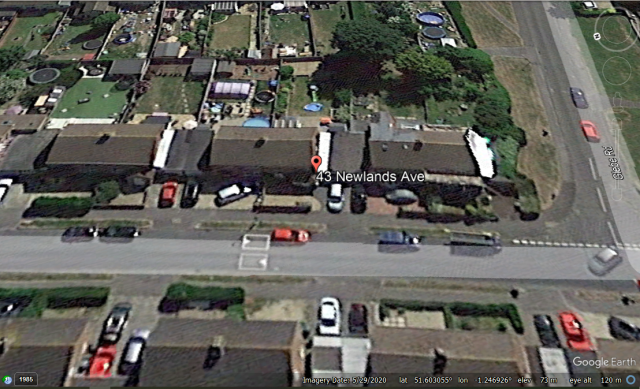
Here is the Didcot Head Office Office. They do have a unit at Southmead Industrial Park.
-
Cheaply covering a large area
SteamyTea replied to Nick Thomas's topic in Landscaping, Decking & Patios
There is a books that may help. Or movies, if food enters into it. -
I use an old CurrentCost energy monitor, connected to a Raspberry Pi, this creates a time stamped daily file every time I use a Wh, or an average over 6 seconds, for both temperature and energy usage. I think use a local WeatherUnderground weather station for external condition, though have just added a basic external temperature logger (RPi and DS18B20) that is also a secure webserver for a bit of fun (found out I am colder than the local weather station, but I am higher up). I also collect sea surface temperature and National Grid data. All that is mashed into a spreadsheet and I then average it out hourly with some minimums and maximums. That hourly data is searchable by date ranges. I know that on the Friday the 6th January, between Midnight and 1 AM, I used 0.01 kWh, Max Power was 0.1 kWh, 73% of that hour I used no power at all, the room temperature was 19.1°C, my back garden was 9.4°C, but the local weather station was 11.1°C and the sea surface temperature was 11.3°C. I used 0.00000003% of the energy generated by the National Grid, which at that time was 82% low emissions and 14% high emissions. I have no (expletive deleted)ing life, or friends.
-
Chat GPT for building regulations - insane!
SteamyTea replied to GaryChaplin's topic in Building Regulations
Encyclopaedias posses knowledge. Possess and Knowledge need to be defined in the right context. Like arseholes, everyone has an opinion on knowledge, some are right. I think they can already. All Barristers do, and many other professionals. -
Thinking is overrated. If I said/typed what I was thinking, I would be in prison, frequently.
-
Making sure it cannot get too hot. Keeping the temperature safely below the combustion temperature of all the nearby materials.
-
How are you going to deal with thermal safety. Really needs special testing and hard to make intrinsically safe.