


SteamyTea
-
Posts
23848 -
Joined
-
Days Won
200
Everything posted by SteamyTea
-
There are 4 main parameters: Thermal Conductivity, the W.m-1.K-1 The Compression Strength, the MPa The Vapour Resistance, the gm/MNs The Moisture Absorption, usually as a percentage, % There are secondary considerations, price, handleability, fire resistance, chemical reactions (polystyrene and PVC don't mix well), sound absorption/transmission. The manufacture should have al those details, even if they do not publish them on the specification data sheet.
-
Just tape it. Venturi, but that is when you want to get posh and measure pressure and flow as well.
-
Same base. PUR is shorthand for polyurethane. PIR is shorthand for polyisocyanurate. Polyurethanes often use isocyanurates as the hardening agent. There is a difference, but only really in the manufacturing process of EPS (expanded) and XPS (extruded). It is the thermal and mechanical properties that are important.
-
There are many sources of air pollution, even within the same category i.e. NOXs, PMs, SO2. The thing is, it is easier to tackle the low hanging fruit first. It also has to be done against a backdrop of reducing CO2e emissions, and all current combustion, except hydrogen/ammonia (which can cause NOX), cause. As for rural/urban. Is it ok to fly tip in a rural area? Or pollute rural rivers/water courses?
-
It is as a comparison. We need to be reducing both, it is not a binary problem.
-
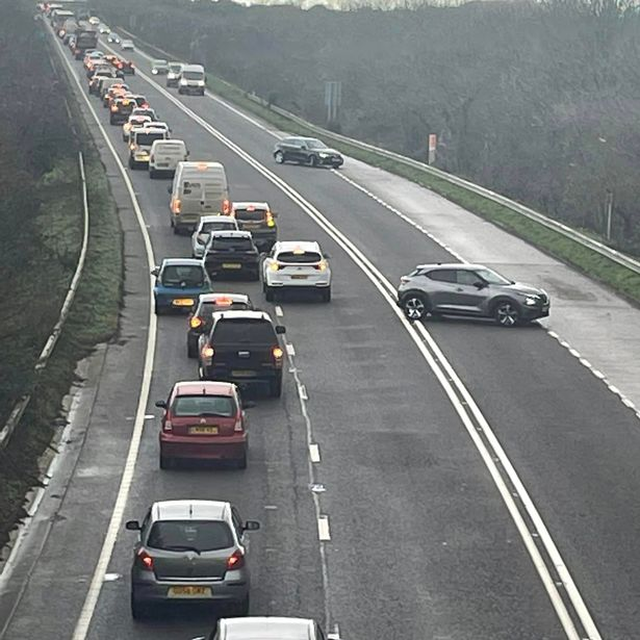
 Saw a helicopter this morning. Because of this. https://www.cornwalllive.com/news/cornwall-news/live-road-hayle-closed-after-8176680 But it did not stop the cars in front of me doing U-Turns on the A30. https://www.cornwalllive.com/news/cornwall-news/impatient-idiots-risk-lives-u-7960834
-
If he is not wearing his mask, this is what he may look like. Here
-
Same reason I was going to lend you my very old car.
-
So they can store it in a cold shed for you.
-
PVGIS allies you to add a local horizon. You will need to create a file and input that. I have never done it, but others have, so probably not so hard. Just looks to me as though the lower modules in the larger roof will be shaded a lot. Trouble with shading is that it can impact other modules if the installer does not use optimisers, which basically by pass the shaded module. Then, if the unshaded modules do not create enough voltage, nothing is generated. One way around this is micro inverters, so each module is, in effect, a stand alone system. I suspect that the lower row of modules will have very low output, and probably not worth fitting.
-
Probably isn't. Taking 1.3 kW as the most likely heat load, then 9 kWh will supply 7 hours of heating. Now assuming that your cheap rate is also 7 hours, that is 14 hours of heating at the cheap rate. If you have intermittent energy input i.e. cheap night, then to get the mean temperature you desire, there will be times when the slab is over temperature. With energy stored in water, you have more control i.e. pump when needed. There are downside to both systems, so I would look at the overall system efficient which is really down to how much the slab looses to the ground for each increase in dT.
-
Exactly. That is why the most suitable type of insulation has to be used.
-
Ideally yes. What generally happens is that the dewpoint is spatially at a suitable interface as it needs a 'nucleus' to start forming, and can be both above and below the dew point temperature, at the same time.
-
That will give you about 9 kWh of storage (4.2 [kJ/kg.K] x 200 [kg] x (75 - 35) [dT] * 0.00027778 [kJ to kWh] = 9.3. So probably useful, would do my 50 m2 house.
-
New Build - UFH Zones, Buffer and Active Cooling?
SteamyTea replied to Shaun McD's topic in Underfloor Heating
Generally the less zones the better, this is to stop the ASHP cycling. To reduce cycling a buffer/volumizer or low loss header (they all do near enough the same thing) is used. The ASHP will have a minimum volume that can be heated, part of the reason that zoning is not idea. Dew point is a function of relative humidity and temperature. Think of it as cold, single glazed, windows, in a stuffy house. They are cooling the air, but due to the relatively large temperature difference, go below the dew point temperature. If you are using the slab as a cooling element, then the temperature difference does not need to be so large, the increased area takes care of it. There is a hand wavy, never below XX°C, but that is purely guessing. A proper and thorough heat loss assessment needs to be done as this will take other elements such as MVHR, external temperature, target RH and the heating/cooling per m2 into account. -
Where is the kWh price heading in 2023?
SteamyTea replied to Marvin's topic in General Self Build & DIY Discussion
Anyone taken any notices of what the UK's Banks made last year. £39bn, or about £600 for every person in the country. -
Get one of those carbon fibre window cleaning poles. If you have a wet and dry vacuum cleaner (like a Henry), you can clean your gutters as well. I have a scaffold tower, may even use it tomorrow. Best thing is, the whole lot fits in my car.
-
I can lend you my car, you will have to come and pick it up though.
-
Did that take the shading into account, seems that the majority of the modules will be shaded for half the year.
-
Misread that as fall.
-
We used to make tooling to mould concrete. We specified a complicated, and very time consuming, release agent system. We did this in the knowledge that no construction worker would do it properly, thus invalidating the warrantees. Why they always say timber needs to acclimatise, they know it will never happen.
-
It has been on a boat that has travelled around the world, put in different warehouses, or stored outside under a bit of canvas. Stick it in the shed. Two minutes googling and it seems bamboo flooring has a SHC of between 1.6 and 2.8 kJ/kg.K. So does not take a huge amount of energy to heat it up as there are not many kg involved.
-
I have had comments cancelled for less.
-
Don't think the shade would have to be the full size of a module, half the area would probably be more than enough to establish which module is down on power.
-
Where is the kWh price heading in 2023?
SteamyTea replied to Marvin's topic in General Self Build & DIY Discussion
Headlines Total HM Revenue and Customs (HMRC) receipts for April 2022 to January 2023 are £660.0 billion, which is £65.1 billion higher than in the same period a year earlier https://www.gov.uk/government/statistics/hmrc-tax-and-nics-receipts-for-the-uk/hmrc-tax-receipts-and-national-insurance-contributions-for-the-uk-new-monthly-bulletin

