SBMS
-
Posts
1075 -
Joined
-
Last visited
Everything posted by SBMS
-
Our quoted aluminium sliding doors are 0.9 u value. Windows are 0.76 u value. That’s not rubbish?
-
SIP wall thickness: diminishing returns?
SBMS replied to joshwk's topic in Structural Insulated Panels (SIPs)
As someone who went rigid (ahem) with the association attenuators etc, couldn’t agree more. Ridiculous amount of extra kit and complexity for no real benefit in my opinion. -
SIP wall thickness: diminishing returns?
SBMS replied to joshwk's topic in Structural Insulated Panels (SIPs)
I think the internal 25mm and 75mm insulation will serve as your vapour check layer. Your initial post references this in the Kingspan notes. -
SIP wall thickness: diminishing returns?
SBMS replied to joshwk's topic in Structural Insulated Panels (SIPs)
Don’t do rigid if it’s a branch system. Was a right pain in our last build. Next build we will use a radial semi system. -
SIP wall thickness: diminishing returns?
SBMS replied to joshwk's topic in Structural Insulated Panels (SIPs)
When I modelled this it was a diminishing return past 0.15 in the walls. I decided to go 200mm cavity with EPS (traditional masonry) and increasing cavity to 250mm and 300mm made very little difference to overall energy loss per annum. Nowhere near worth the additional cost of the insulation, larger (non standard) lintels etc. Your mileage may vary if using SIPS. Interesting also the comment from Kingspan that their fabric makeup also isn’t SAP compliant which I think from memory was what I discovered. I love the ‘simple application of internal insulation’ - not particularly simple to skin the entire inside of your build with another layer of PIR.. Good wall u values but failing thermal bridging elements hence their recommendation of internal insulation over the timber bridging elements. It was a contributing reason to why I decided traditional construction. That said there are SIPS suppliers that don’t use timber connections and thus avoid that issue. -
This is actually a great point. All our floors will be counter battened in this manner by the builder for a bit of a service gap and for plaster boarding. This isn’t accounted for in deflection though, so I wonder how much of an impact regarding deflection this would have? Ie if I keep the 600mm at 10mm deflection I wonder if the counter battening brings this down to 8mm anyway?
-
Thanks Russell. Well the best is 0mm deflection - where do you stop?
-
Getting our posi joist floor design done. The initial design targeted around 13.5mm deflection in the joists. I asked the engineer to quote for a 10mm and 8mm deflection. 10mm can be done with a wider top chord and at 600mm centers. 8mm requires 480mm centres. 8mm deflection across two floors is about £1600 more plus probably some additional labour time as there are more joists (they are being hung). Our current build I never thought about this and probably ended up with 13.5mm deflection. It’s a bit bouncy in some rooms. I feel 10mm is significantly better and my gut says 8mm will be overboard and I won’t detect the difference. I think it’ll probably be over £2k more for the 8mm deflection. Can anyone comment on if they have 10mm deflection - is it enough?
-
Thanks @Mr Punter am I right in thinking they’re self supporting? No need to secure anywhere other than at the top and bottom and not through the stringers? This is for a set that goes from the first to second floor so don’t bear onto the floor and just connect to the floor trimmers.
-
I get you. How do you specify chunkier materials with Stairbox or was this just their standard 32mm pine?
-
Thanks @Mr Punter just seen this! That’s great. out of interest, what is ‘commercial spec’?
-
Our floor joist designer has asked for the point load for a set of stairs where they attach to the landing, for calculating the engineered trimmer. This landing corner floats where the stairs attach and the joists cantilever over another wall to provide the landing so I assume the flooring engineer needs the load to ensure the joists are sufficiently strapped down. We are going to use Stairbox for our stairs - who tell us that they are self supporting and only need attaching at the bottom and top (no drilling through stringers needed). I asked Stairbox if they can provide the point load but they said they don’t provide this. I asked our structural engineer who said he can calculate it but needs the self weight of the stairs - is that just the total weight of the stairs or something else? Has anyone had any experience getting any of this info from Stairbox? Currently I have a conversation with ‘sales’ and am wondering if there’s more technical Support that can give better answers to engineering or structural questions?
-
Seems expensive. We were at about 11 for similar amount of windows.
-
We had the same issue about 8 weeks ago. At the last minute the council panicked because the planners had all been on a BNG course and were not clear as to how to approach this with self builds. Our planning consultant played a blinder here. The council basically said the ‘easiest’ thing would be to prove a 10% gain on our site as we actually clearly have it. Planning consultant stood his ground and said no, that would incur additional cost for us in assessing and undue delays. He drafted this condition which satisfied the council and I believe is now standard for most self builds in the borough to protect against submitting as a self build without any intention to build as a self build and then avoiding BNG. Can you suggest the following as a condition? It’s nice and simple and I think works for both parties “The dwelling hereby approved shall be constructed as a self-build dwelling within the definition of self-build and custom build housing in the 2015 Self-Build and Custom Housebuilding Act (as amended by the 2016 Housing and planning Act): i) The first occupation of the dwelling hereby approved shall be by a person or persons who had a primary input into the design and layout of the dwelling and who intends to live in the unit for at least 3 years; ii) The Council shall be notified of the persons who intend to take up first occupation of the dwelling hereby approved at least 2 months prior to first occupation.” note that as our planning consultant pointed out its drafted in such a way that we only have to have the intention to live it in for 3 years… not actually live in it for 3 years…
-
We used these on our last build. Much cheaper than residence - probably not as good quality but I would say better value for money than residence. Outside I reckon you couldn’t tell the difference between residence. Inside you could as they are not flush. Very happy with them, they’ve been quiet, good seal and look decent quality
-
Fair enough. I think it depends on application, we are putting a green roof on so EPDM not ideal and more susceptible to tears etc.
-
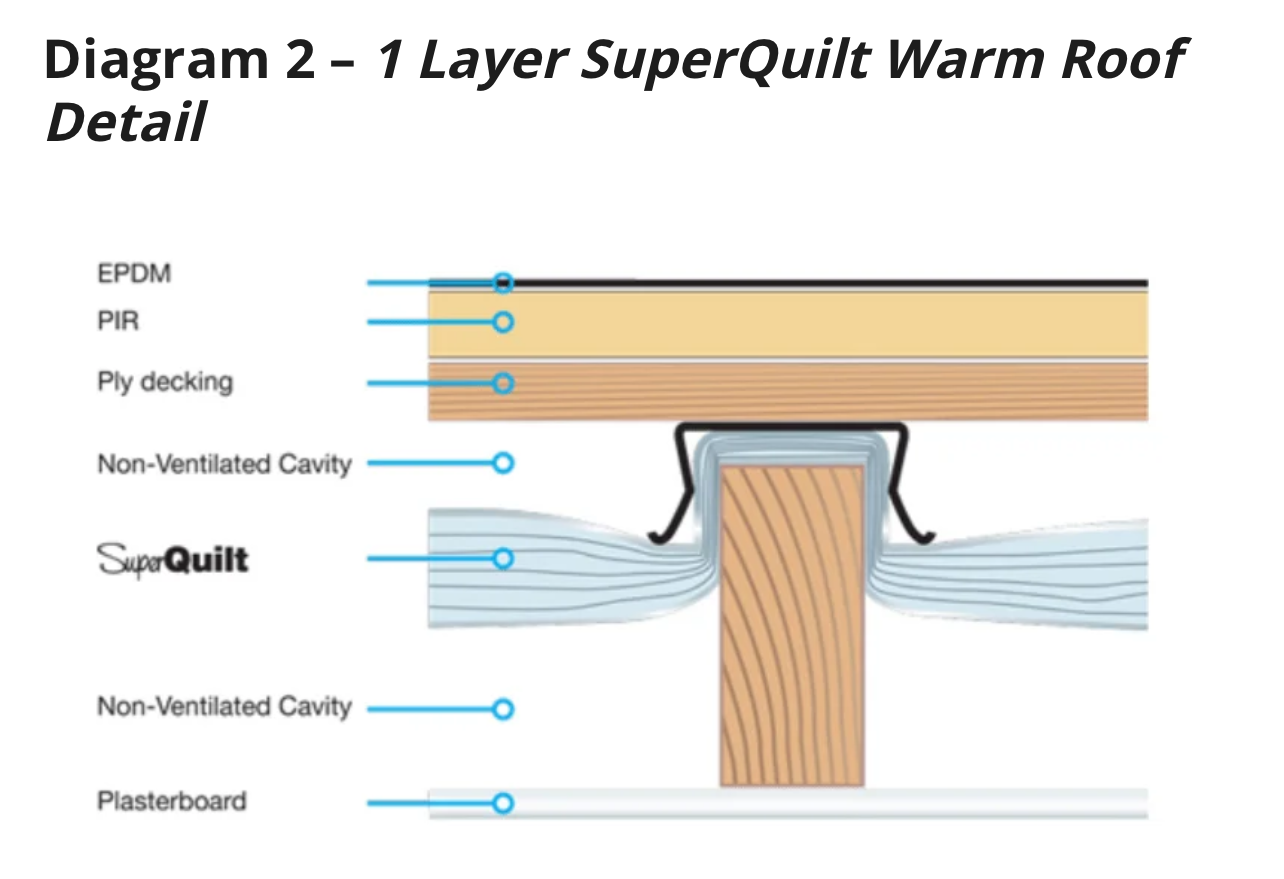
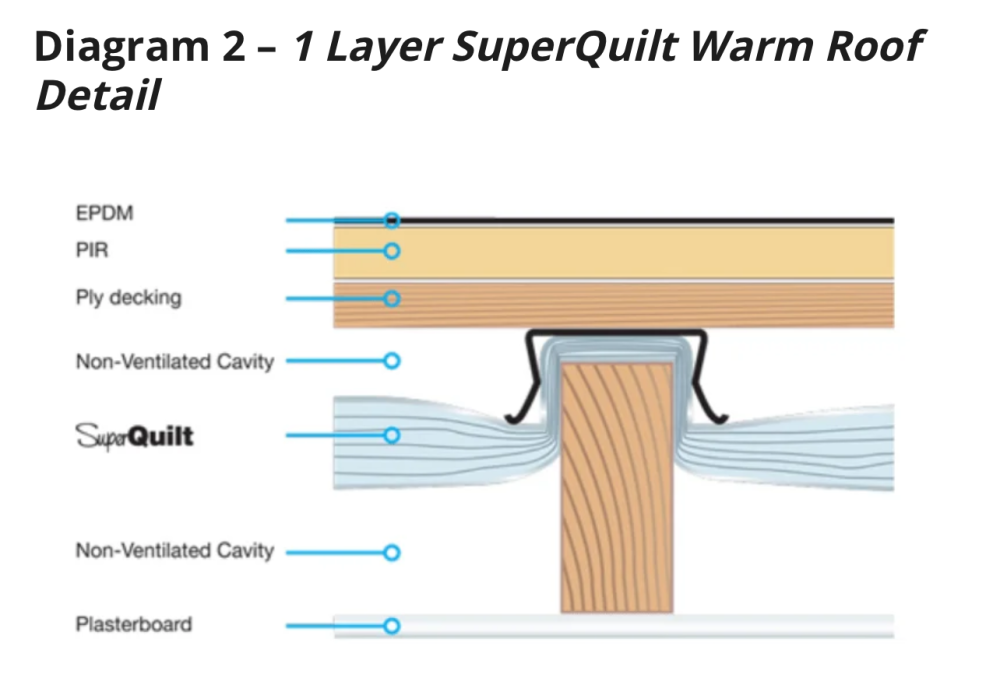
We didn’t end up using superfoil. We went with 180mm PIR because we’ve got the height. I was trying to solution something that minimally raised your roof. Given the option I would use a pure PIR warm roof on deck. But if you are restricted I don’t know why a PIR/superfoil isnt a good option? I’d also look at GRP instead of EPDM. I discounted rubber due to detailing around the roof lights; you might want to consider it.
-
Challenge here is ventilating a cold roof makeup? We found it difficult to detail with a parapet wall hence switched to warm roof. I’m not sure what you mean when you say the figures are theoretical? All figures are theoretical. Don’t think he’s planning on mineral wool in between rafters as well? I wouldn’t, Not needed to achieve u value and becomes a hybrid roof then
-
I dont think the ply sub deck needs to breathe (or rather, is susceptible to condensation and therefore needs airflow to ventilate) because it’s on the warm side of the insulation.
-
Example roof makeup, no ventilated cavity needed, similar to your makeup diagram I think From https://ybsinsulation.com/wp-content/uploads/2022/03/SuperQuilt-Data-Sheet-V3-Feb-2019.pdf there’s also a detail with 4 layers of super foil between and over which hits 0.11. It indicated that a non ventilated cavity works on that as well which would mean your roof height wouldn’t change at all? Worth a chat to confirm with YBS that no ventilation is required? also superfoil acts as a vcl when taped.
-
2 layers of superfoil on top of joists and 90mm PIR is 0.11 u value. You can reduce the PIR if you’re willing to accept a reduced u value. I think you’ll get that without having to modify your parapet wall. You might have to lift your roof light upstand a bit. That roof (like mine was) will be difficult to ventilate. I switched to a warm roof for this reason.
-
A 150mm upstand for skylight? As I understand it that’s the minimum for a rooflight. But your PIR depth isn’t governed by the height of your upstand. Your 150mm upstand is from the finished surface of the roof (ie above your insulation).
-
Thanks @gzoom was thinking something similar for the vertical columns. Don’t know if I can do the same for the horizontal beams unless the steel was drilled to allow timber to be attached before cladding…
-
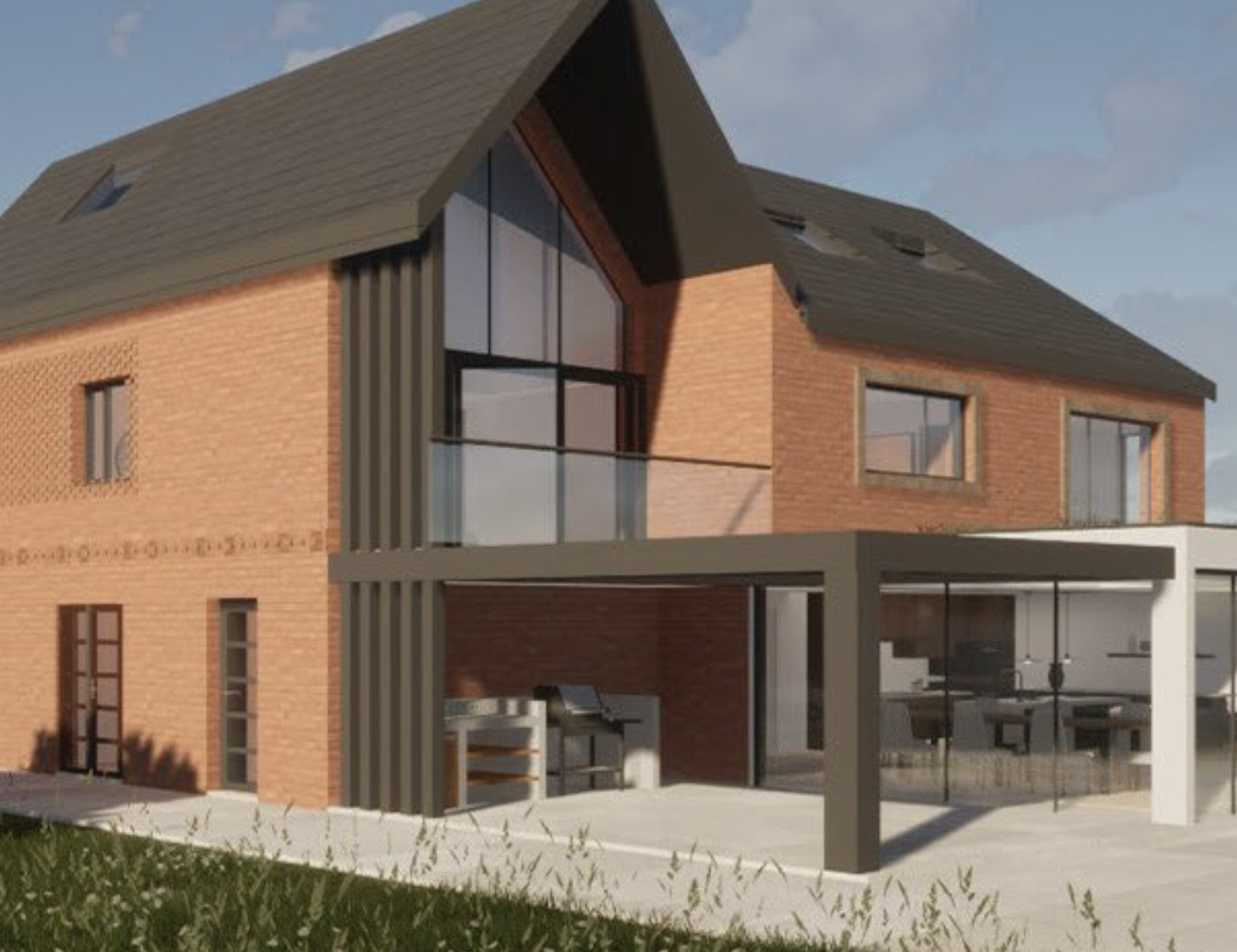
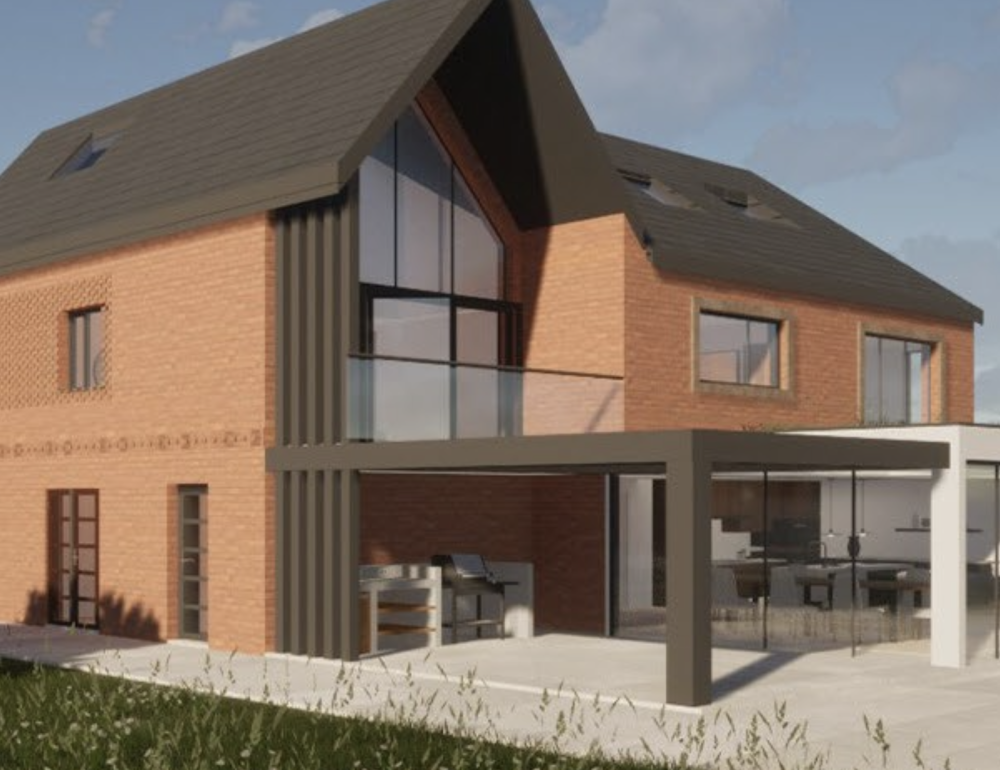
Hi all We've got some steelwork at the back of our build - a column and some, I guess you would call it 'fascia' to cover the steel frame that's making a covered terrace (see below). We've had some quotes for aluminium cladding which is pretty expensive. Has anyone had experience/suggestions of cladding the steels for the terrace in anything else? I found www.chamclad.com that looks promising, but wondered if even typical UPVC based or millboard wall cladding could be attached to the steel beams/wrap the column?' We've got another part of the rear that will be clad in burnt cedar effect millboard which might have worked well but no idea if it can attach to the steels..
-
Thanks @Dave Jones, yep undestand where they'd go. Would they make a big difference to heat loss to justify the cost? Would they negate the need for the 75mm x 210mm PIR edge insulation slab to threshold (and just bring the 75mm screen right up to the edge of the track?