SBMS
-
Posts
1075 -
Joined
-
Last visited
Everything posted by SBMS
-
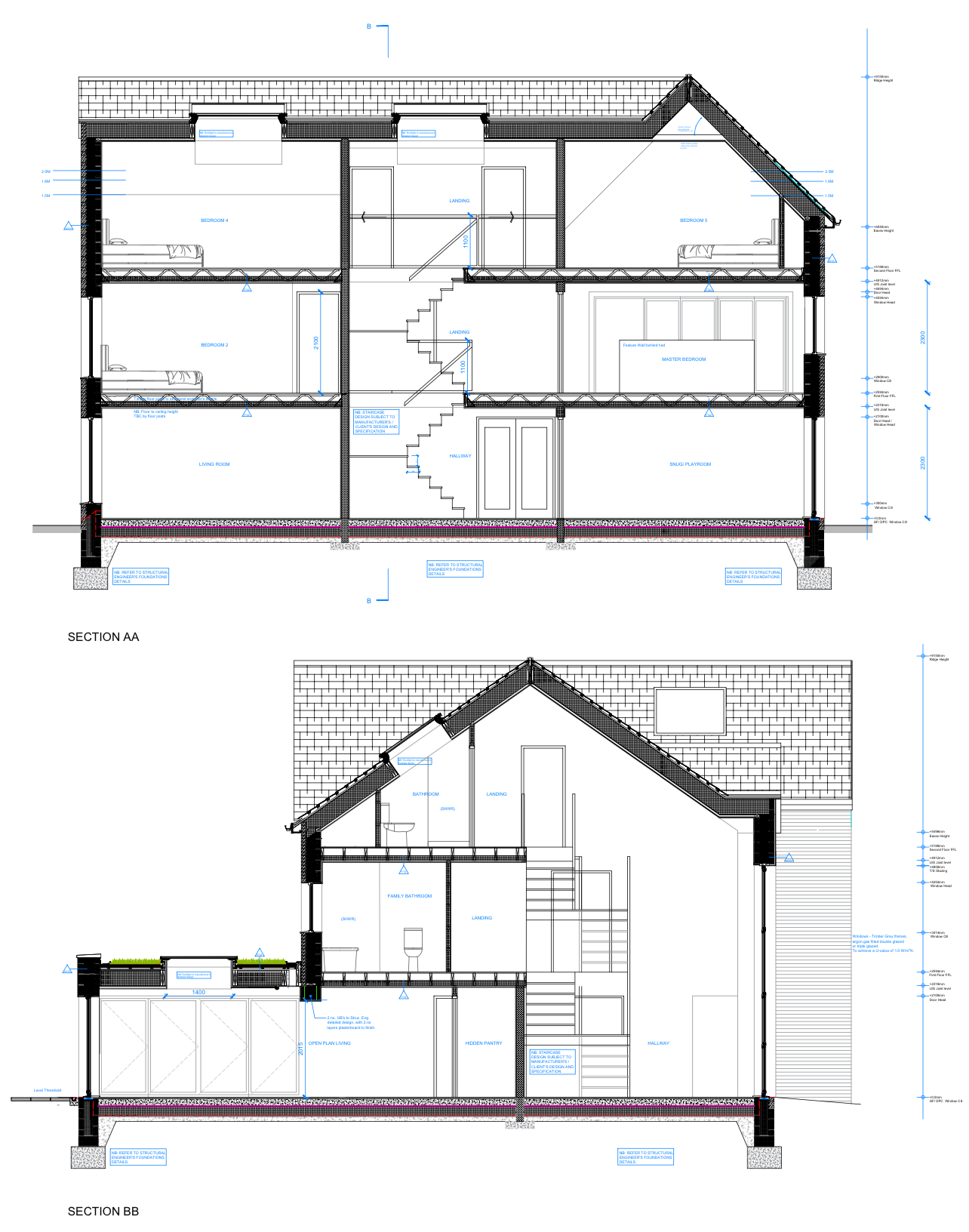
Posted a section.
-
Architects are currently doing full drawings. 200mm cavity wall with platinum eco beads. We cant really go much more than 300mm rafter depth for planning ridge height. I had planned to put wood fibre Steico board on top of the rafters which helps a bit with bridging. This makeup, with a 300mm cellulose fill based on an I beam rafter yields about 0.12 u value for the roof which I was trying to hit. I think solid rafters increase that to about 0.13 so that might be the route we go. We could also do a hybrid - loose rafters round the valleys and then post rafters for the simple sections? I was trying to avoid insulated plasterboard internal and was going to with propassiv on the internal side of the rafters with a cavity then plasterboard and skim.
-
Hi all @Iceverge as requested - posting up some section drawings here. We’ve had a number of different options in terms of engineered roof including an attic truss with quite a lot of loose rafters around the valleys and a posi rafter design but now they are having to double check if it’s possible due to the way the posi rafters connect into the valley steels. We need a 300mm rafter depth for blown cellulose and would prefer not to have to extend the rafters to get this depth. we could do it all in loose cut timbers but we don’t quite hit the u value I wanted with 45mm solid timber so an I beam or posi rafter design would have been ideal.
-
Did you blow the cellulose in yourself or get an installer to do it? Worrying there was voids that you discovered if using an installer?
-
What airtight membrane did you use? Did it withstand the pressure of the cellulose pumped in?
-
We are planning on a steico wood fibre board on exterior and passivplus interior serving as the vapour and airtightness barrier. Just wondering how we detail the junction of the board at the wall plate
-
We are looking at propassiv as the internal substrate for our vaulted roof makeup. Blown in cellulose. Has anyone got a specific detailing for where the propassiv board meets the wall plate at the eaves. If the board is tight up against the inner leaf/wall plate it seems there’s going to be a tapered gap - is it best to foam this and then tape over? Anyone got any photos if they’ve done similar?
-
Is it holding anything up? Got a drawing?
-
I think I priced up the celotex to be more than the cellulose? Granted I could have shallower rafters with celotex but then id need insulated PB to hit the same u values? maybe I’m over engineering / thinking it
-
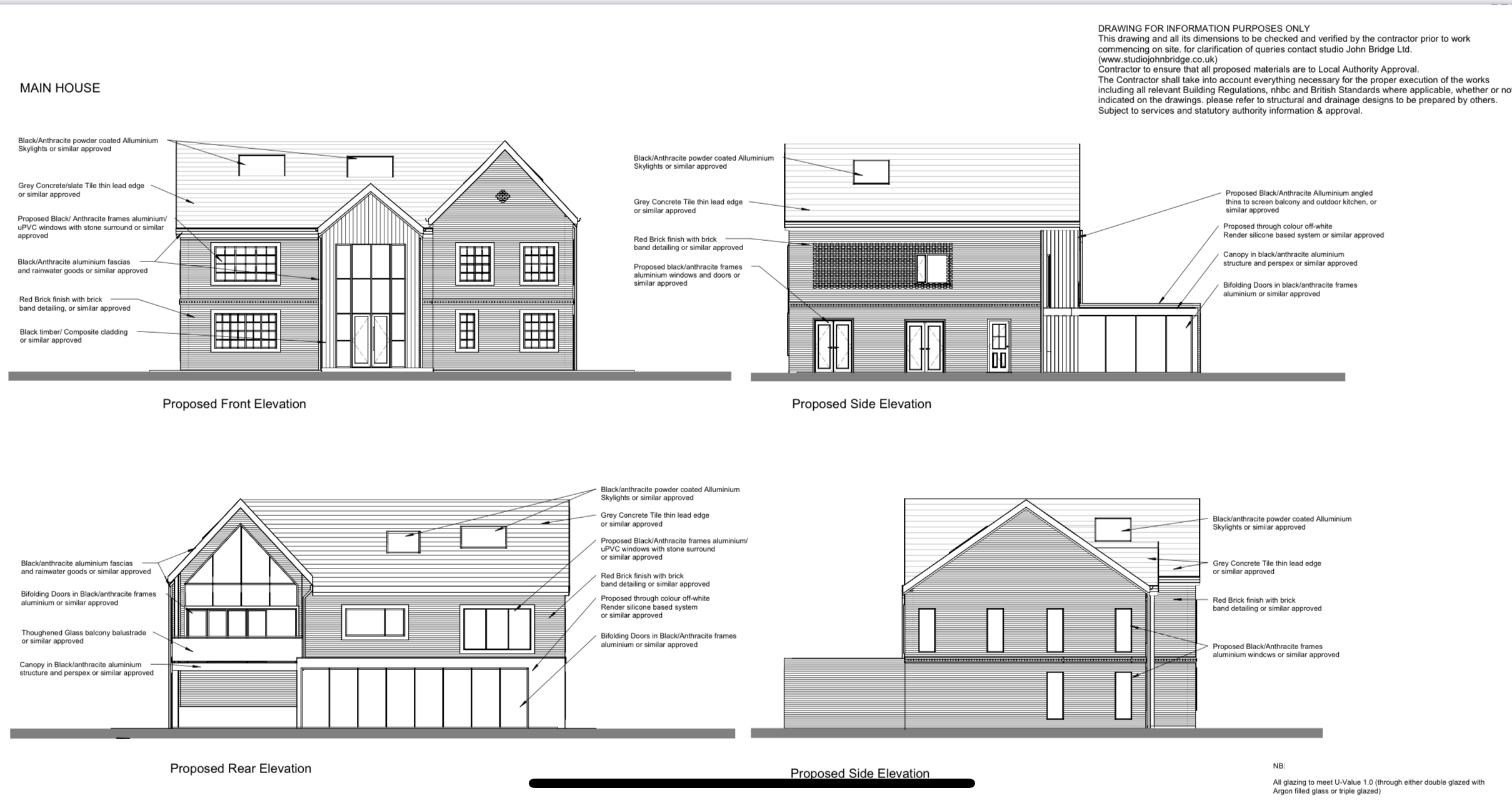
@JohnMo we were told that where the rafters hit the valley they'd need cutting at angles and not ideal for pozi rafters? We've got two 45 deg roofs connecting at 90 degrees to each other - all vaulted. You got a picture of your roof? I've heard issues with spray foam and mortgages as well?
-
Thanks @Dave Jones - have you used before and if so which would you recommend? Struggled to find any online at least for a 200mm cavity.
-
Just looking at detailing around the windows and doors and was looking at the Eurocell cavalok cavity closers (the ones where it's a single piece and tied in to the inner block during construction (see video below) More money, but I wonder whether its useful for the window fitters, and better for airtightness.. Worth the added cost?
-
Thanks @Iceverge - I'm trying to minimise installation effort so was trying to get a rafter depth that meant I could just use blown in cellulose. Whilst I could extend the depth of the rafters internally, with the additional labour and timber, I wonder if I'd be better off just going for deeper rafters or I-Joists like @joe90 mentioned - even if there's additional cost?
-
Did you full fill or manage to create a cavity somehow? What’s the performance like?
-
Thanks @ETC will do once I’ve got the section drawings back. Only got elevations and planning drawings at the moment, unless you can work it out from these and floor plan.
-
@joe90what did you insulate with?
-
The only option for a shallower rafter is PIR. We did that on our previous build which also had attic trusses/ rooms in roof. Whilst the h value is okay the top floor gets very warm in warm weather due to the lower thermal mass (or whatever you call it) of the rigid insulation. I also don’t like the fact that timber shrinks, PIR then isnt tight and thermal bridging increases and performance is affected. if there’s another solution that gives high mass and low thermal decay in a smaller rafter am all ears?
-
Has anyone any experience of a loose cut roof with 300mm deep rafters? We were looking to use posi rafters at 304mm to get the depth for blown cellulose but it doesn’t appear to be a good fit as we’ve got two roofs running into each other with rooms in the roof. It’s looking like attic trusses are out for the same reason. I believe we can get 300mm rafters which might work, or could potentially look for an engineered I-beams. Any gotchas with this approach?
-
Hello! And, err... our appeal was dismissed :-(
SBMS replied to garrymartin's topic in Planning Permission
I'd advise against judicial review and instead re-apply with a full matters application with a planning consultant assistance. Judicial review won't look at the merits of your application, but whether there was a legal mistake made by the inspector - facts in law. So you'd have to identify specifically what legal mistake was made, and even if you were successful at judicial review (£££), all that happens is that the inspector re-assesses taking that legal point from the high court. So you'd have to specifically point to a specific error in law made by the inspector. Even then they might make the same decision. -
Hello! And, err... our appeal was dismissed :-(
SBMS replied to garrymartin's topic in Planning Permission
Good Luck, your plot looks fantastic 👍 -
Hello! And, err... our appeal was dismissed :-(
SBMS replied to garrymartin's topic in Planning Permission
I feel for you. I think that where a planning consultant would have assisted is in providing objective similar schemes that had been approved and drawing comparisons to your site and those. Where travel was an issue they would have looked for similar schemes that had been passed, on evidence, that were objectively ‘worse’ than yours. They reference planning policy, high court cases that challenge and reinforce your position and your site. Fundamentally, at an appeal stage, you’re into the intricacies and minutia of planning law, planning policy and case law. At this stage it’s very hard as a lay person to produce a compelling and reasoned argument. It’d be a bit like representing yourself in court. I also think that an appeals officer or planning officer treats an application differently when you have an advocate that understands planning and case law in detail. You sound a bit like me, trying to understand the NPFF, applying reasoned logic, ‘tilted balance’ and so on. But here’s the reality - actually what you need is not to understand and interpret the NPFF and planning policy, but to understand how your planning department and an inspector understands and interprets planning policy. This is totally different to you understanding policy, because the missing piece you won’t have is experience. Experience of national prior cases, of supporting high court rulings, of the local interpretations and sites that were passed and so on. Unfortunately, it’s not an intellectual argument, and it’s not a case of you presenting your argument to a panel of other lay people or a jury - it’s their decision to make - entirely on their interpretation and their application of policy to your application. I don’t know how It works with going back in for planning after a dismissed appeal but I would 100% recommend appointing an experienced consultant and speaking to them about your chances going for a full application (not outline). A good one will 100% be able to tell you if you have a case. Waiting for your planning officer or head of planning to come back on your points is a waste of time, I think. Get back on the saddle, get a professional in your corner, and see if the game’s over or time for round 2. 👊 -
Hello! And, err... our appeal was dismissed :-(
SBMS replied to garrymartin's topic in Planning Permission
Around here, the term ‘sustainability’ in terms of the paragraph being quoted from the NPFF seems to have been interpreted as the sustainability of transportation - ie the sustainability of accessing the site. So in our council district, zero weight is given to the eco or carbon ‘sustainability’ of the build. I don’t know what the intended definition is but thought I would mention it because of the references to Passivhaus re ‘sustainability’ which isn’t the interpretation here. The weight is given to how easy it is for non car based transportation links - ie proximity to bus routes, distance from a village centre etc. I absolutely think that engaging a planning consultant is the way to go, by the way. -
Interesting. Any others out there putting a VCL on inside leaf of masonry? Will chat through this with architect, see what they think.
-
@SteamyTea is this correct - that a cavity masonry should have a VCL then?
-
That makes sense - so does the dew point move further toward the outer leaf based on the size of the cavity? Does this make denser full fill (like cavity batts) higher risk (I understand there's a problem of wicking across the cavity, but am I right in thinking interstitial condensation is moisture travelling from the inside out?