Moonshine
-
Posts
2094 -
Joined
-
Last visited
-
Days Won
6
Everything posted by Moonshine
-
Now is the time to build stocks in thermal insulation companies! I wonder if anyone has an idea of what the constructions would be to achieve these.
-
 This is probably a subject that has me and others going round in circles about the external wall construction. I have two choices really Masonary block cavity wall - 150mm fully filled Timber frame inner skin / masonry block external skin I started off going timber frame, but now am looking to go cavity block, though speaking to developers and builders they are mostly saying if build from scratch they would go timber frame inner skin. Timber frame has its advantages, in that it is a package of work that can get me pretty much water tight with one contractor and quickly, but there is a cost to that. The block may be cheaper but there would be more to manage, my logic in using block is that the house has a cavity filled (concrete) block retaining wall basement, so that trade is on site so may as well carry on. What are peoples thoughts and why they went a particular way.
 -
SVP out and back into building envelope - is this possible?
Moonshine replied to Moonshine's topic in Waste & Sewerage
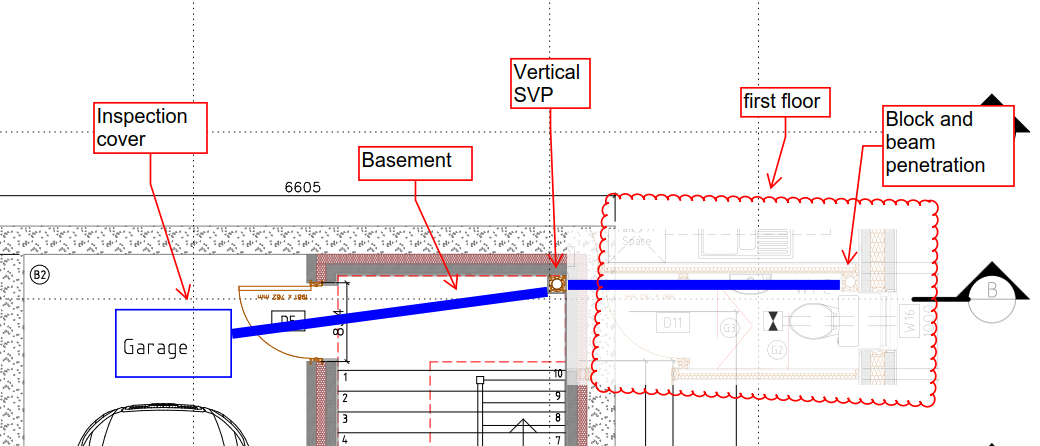
Two contrasting answers! ? Below is hopefully a bit clearer with the blue line the line of the horizontal SVP (with suitable fall) There will be free draining material below the pipe and Type A waterproofing, with a perforated drain at the bottom. If the levels and falls work it may not actually be a fully penetration of the retaining wall, but the pipe located in a notch on the top of the wall. As well as the waterproofing the insulation will have to be fitted well around the pipe, and the plan is for the pipe in the vertical in the boxed in section is enclosed in mineral wool for thermal insulation.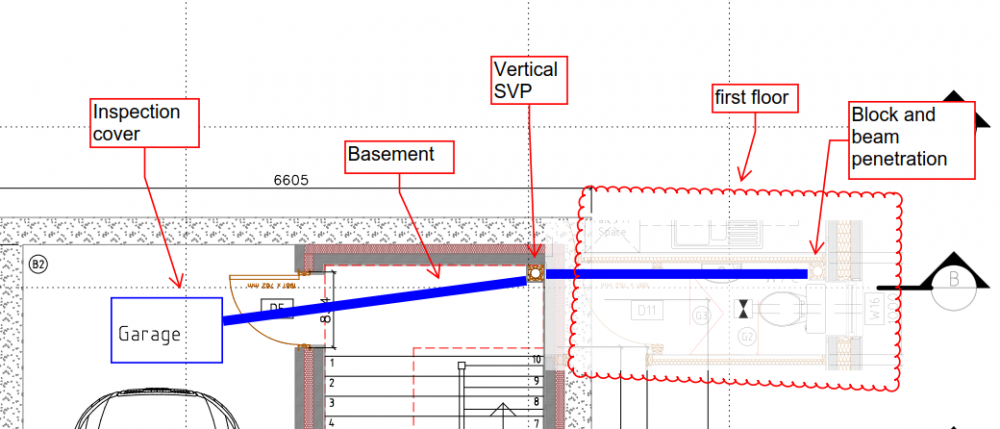
-
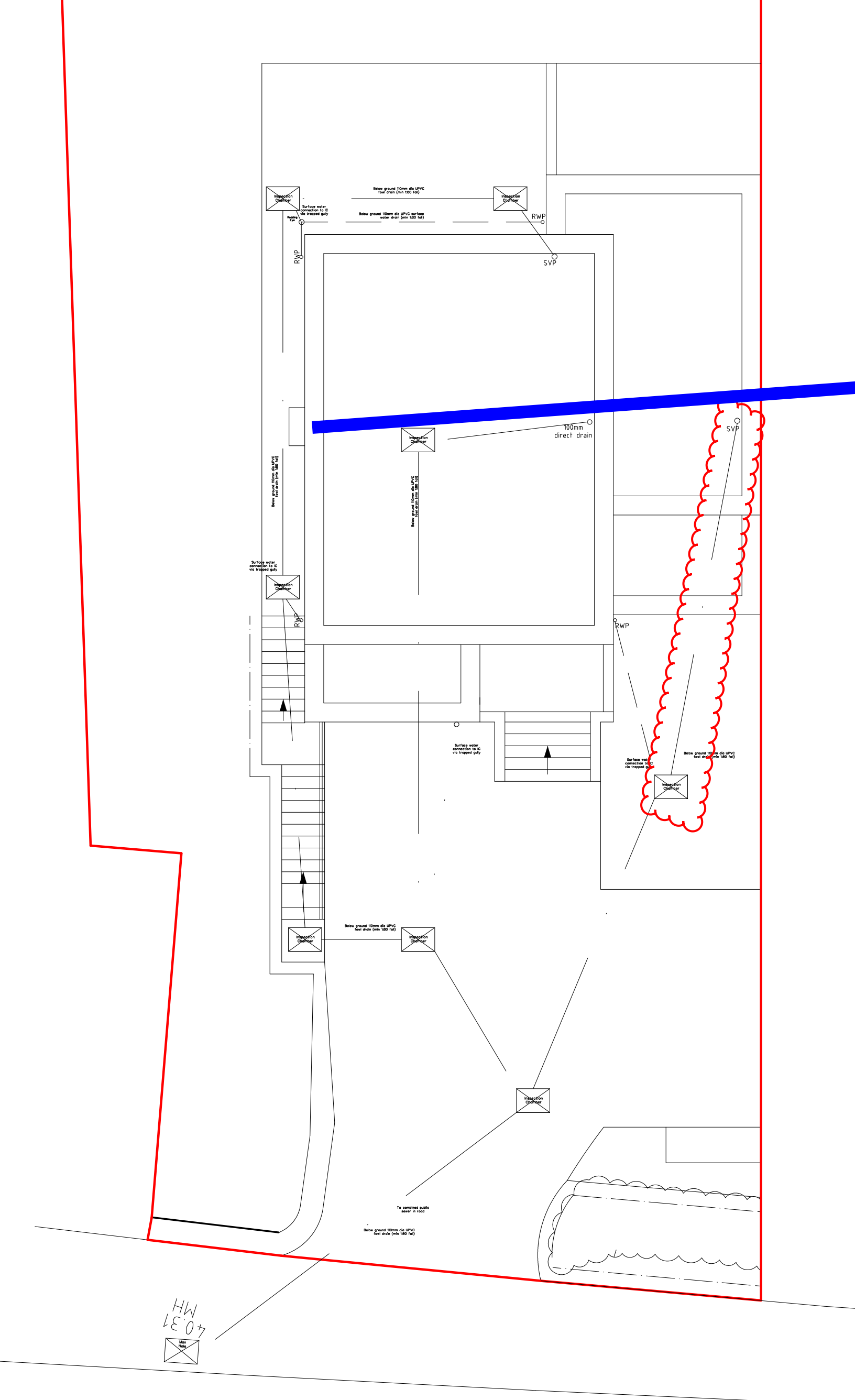
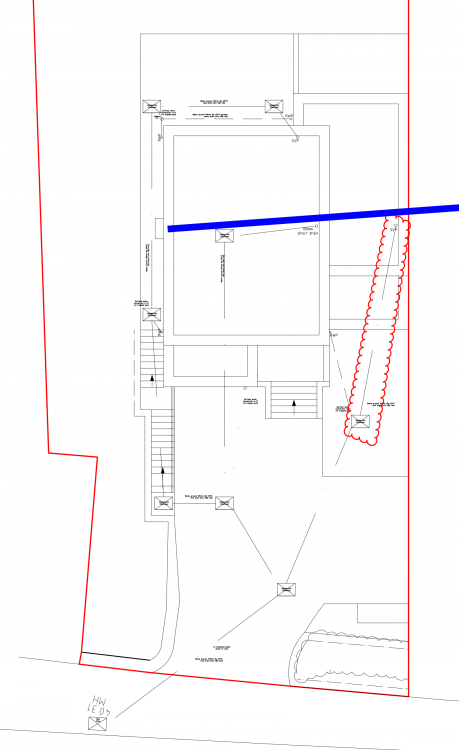
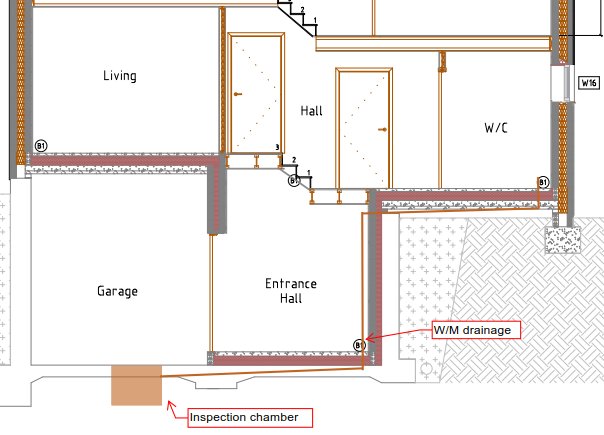
I am looking at simplify my drainage layout The WIP drainage plan is below left, with the blue line indicating the section to the right. I am seeing if i can loose the inspection chamber and pipe run in the red bubble in the plan. In the section, i have indicated the brown to show the path of the SVP to the inspection chamber in the garage, with where the washing machine will connect via a trap. To do this i will have to run the SVP below the block and beam, and back into the building envelope at the top of the retaining wall. From there the SVP will drop down in a boxed in section in the entrance hall below the slab to the inspection chamber. My concern is the two penetrations in the warm building envelope, and wonder if anyone can comment if this is actually possible or advisable.
-
Combined foul and surface water drainage system
Moonshine replied to Moonshine's topic in Waste & Sewerage
and i have just seen the fowl spelling in my post! ? -
Combined foul and surface water drainage system
Moonshine replied to Moonshine's topic in Waste & Sewerage
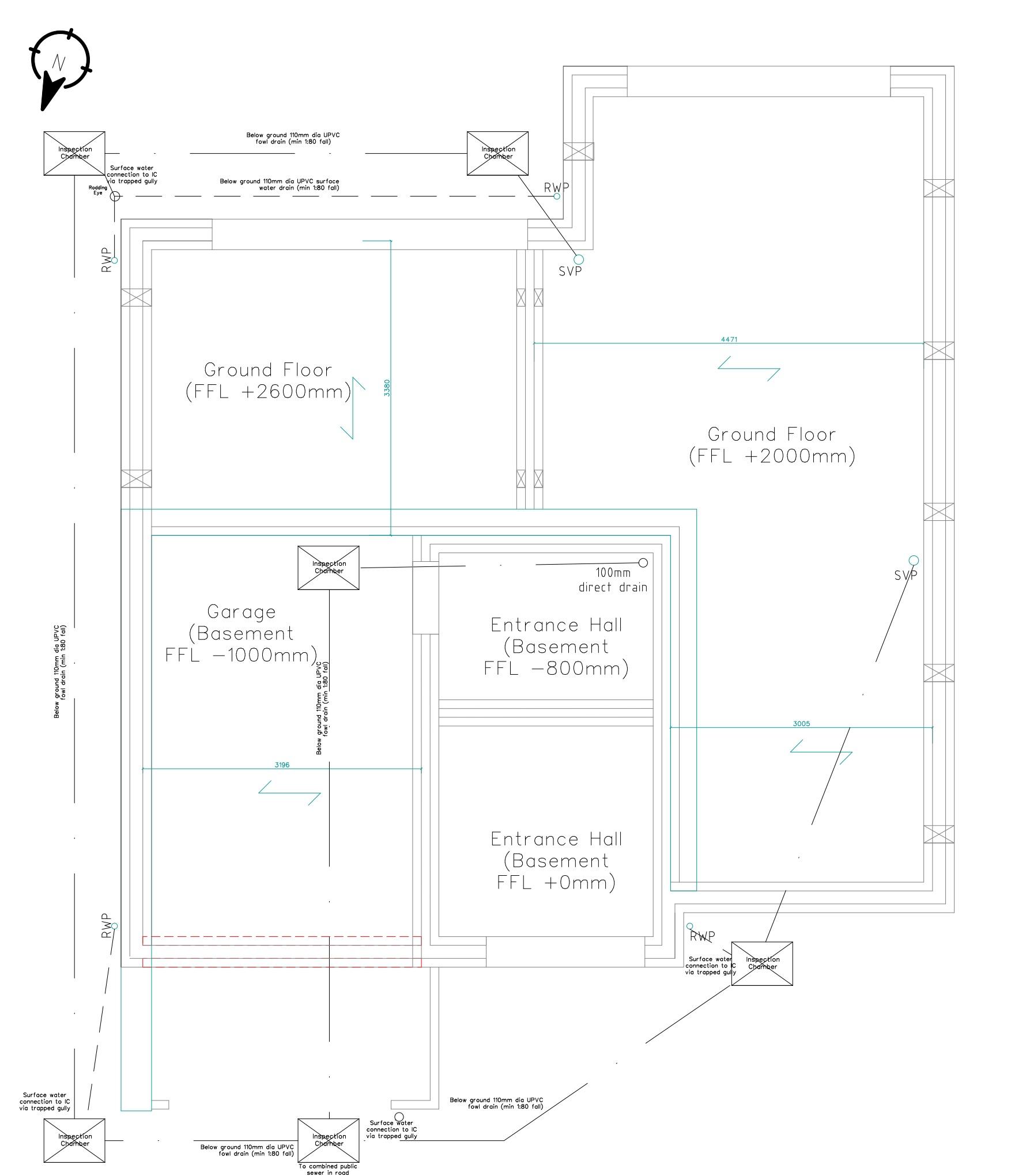
Thanks for that, there is unlikely to be any chance of separate systems in the future, and the site is a bit tight so i have planned to connect surface to IC's via trapped gullies. Below is what i am proposing in schematic though need to put it on a site plan and work out CL and IL's.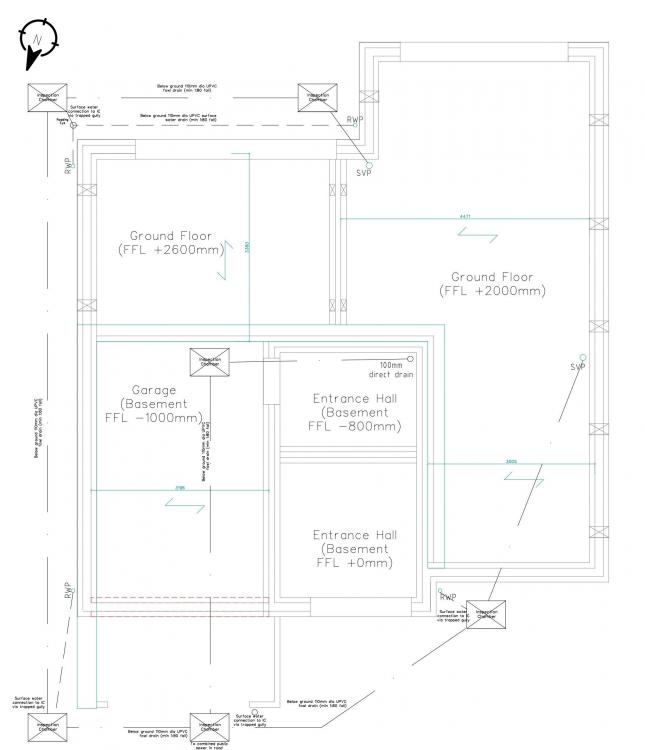
-
I have had approval from my water authority that I can discharge surface water to a combined public sewer in the road outside the front of the plot. Basically a soakaway won't work on the site as the soil infiltration rate is too slow. Is there anything tricky about a combined foul and surface water drainage system? Can you just connect the RWP pipes to a inspection chamber to the rear of the property which has a SWP going to it, or do both systems have to be kept separate to the front of the property and combined there? i.e. combine at source and along the run of a single pipe, or have two separate pipes/systems and combine at the end? I presume that the falls and sizing for the foul water will be fine for the surface water?
-
My patched plaster - things to do better next time?
Moonshine replied to Moonshine's topic in Plastering & Rendering
Did you PVA the wall you were patching first as if not the bear bricks will leach away the moisture from the plaster(?). Also how hot was it in the room when you did it, it was cold in the room i was working in. -
My patched plaster - things to do better next time?
Moonshine replied to Moonshine's topic in Plastering & Rendering
That was what I heard, but I couldn't stop fiddling with it ? -
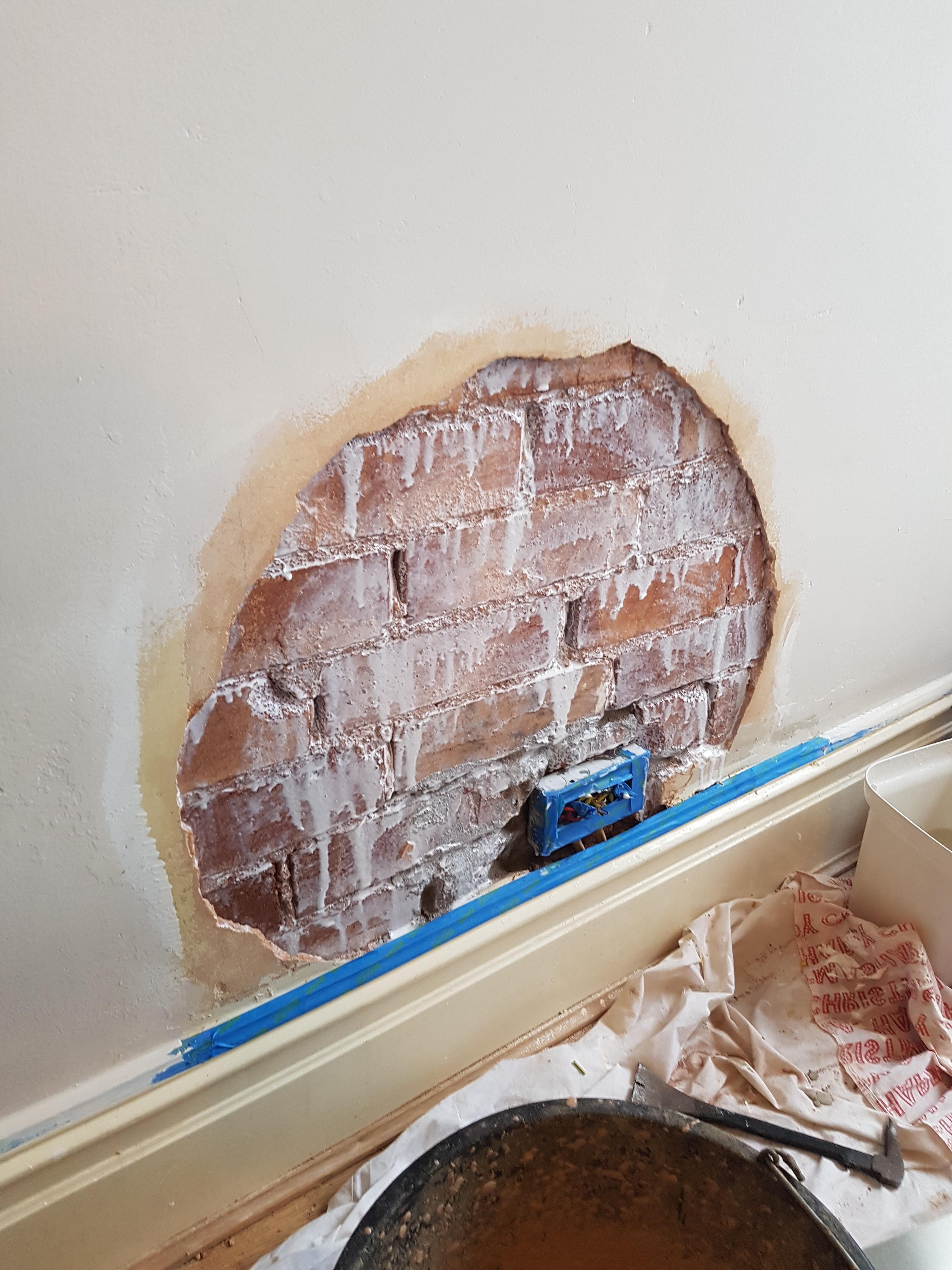
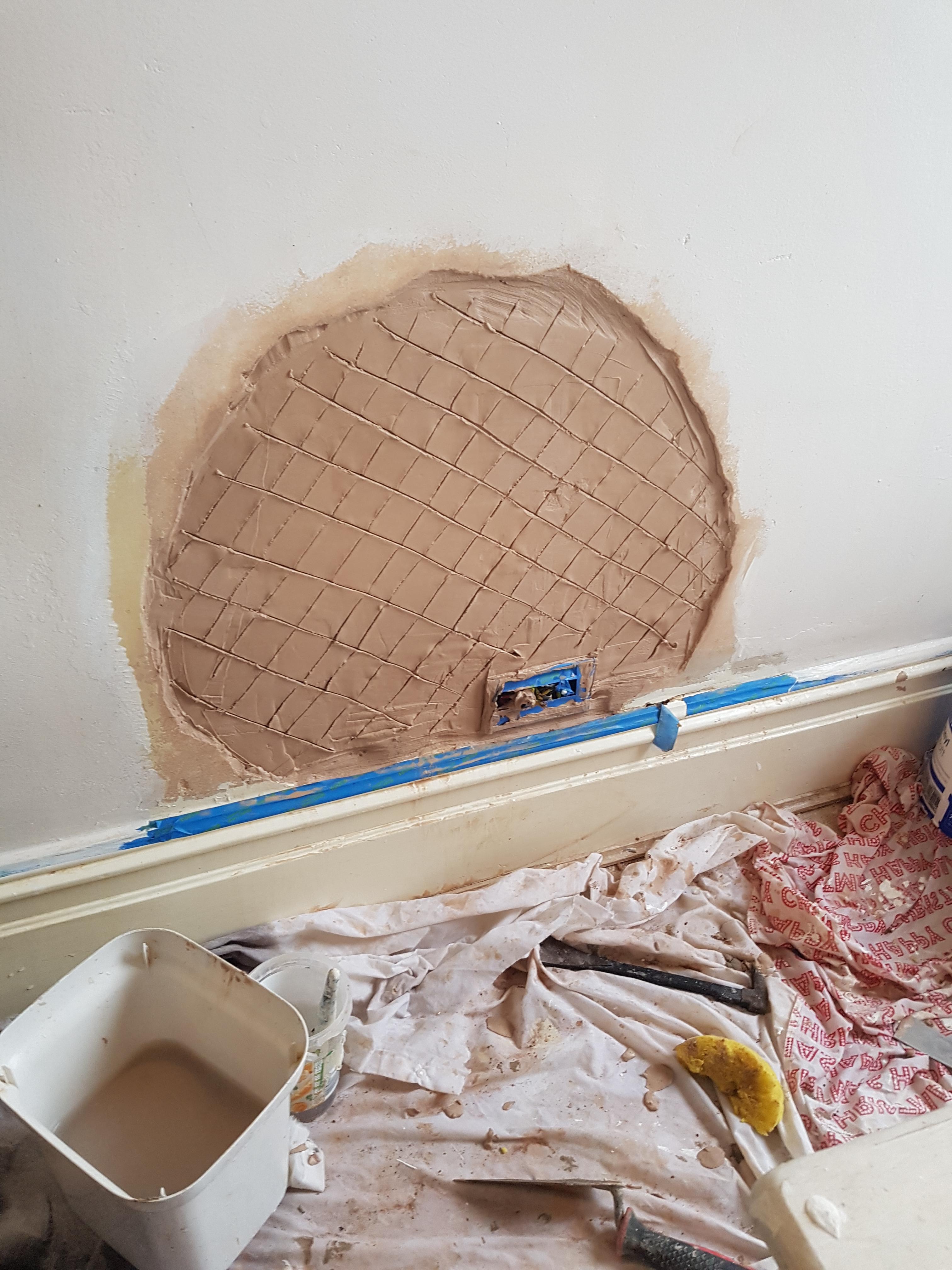
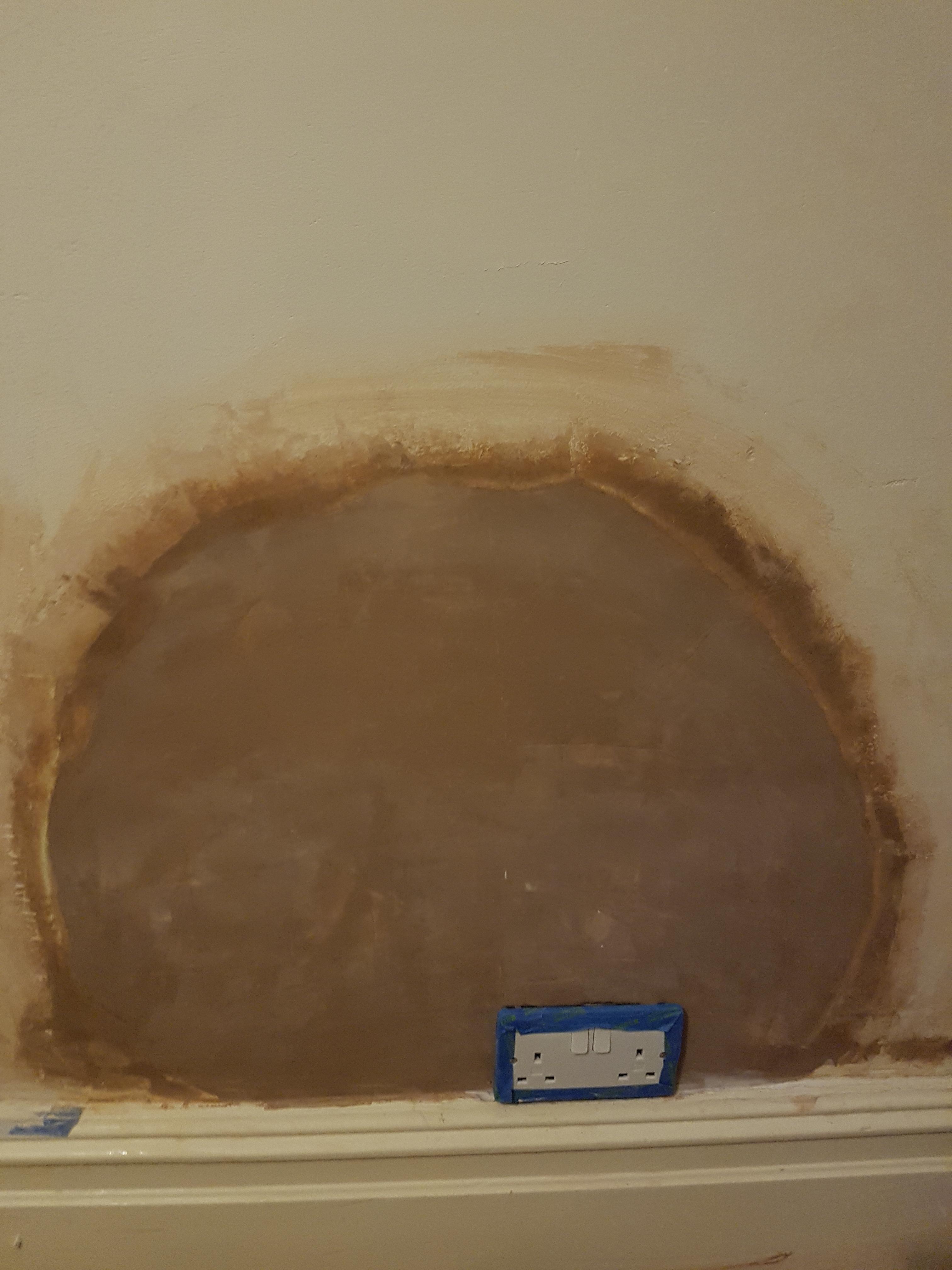
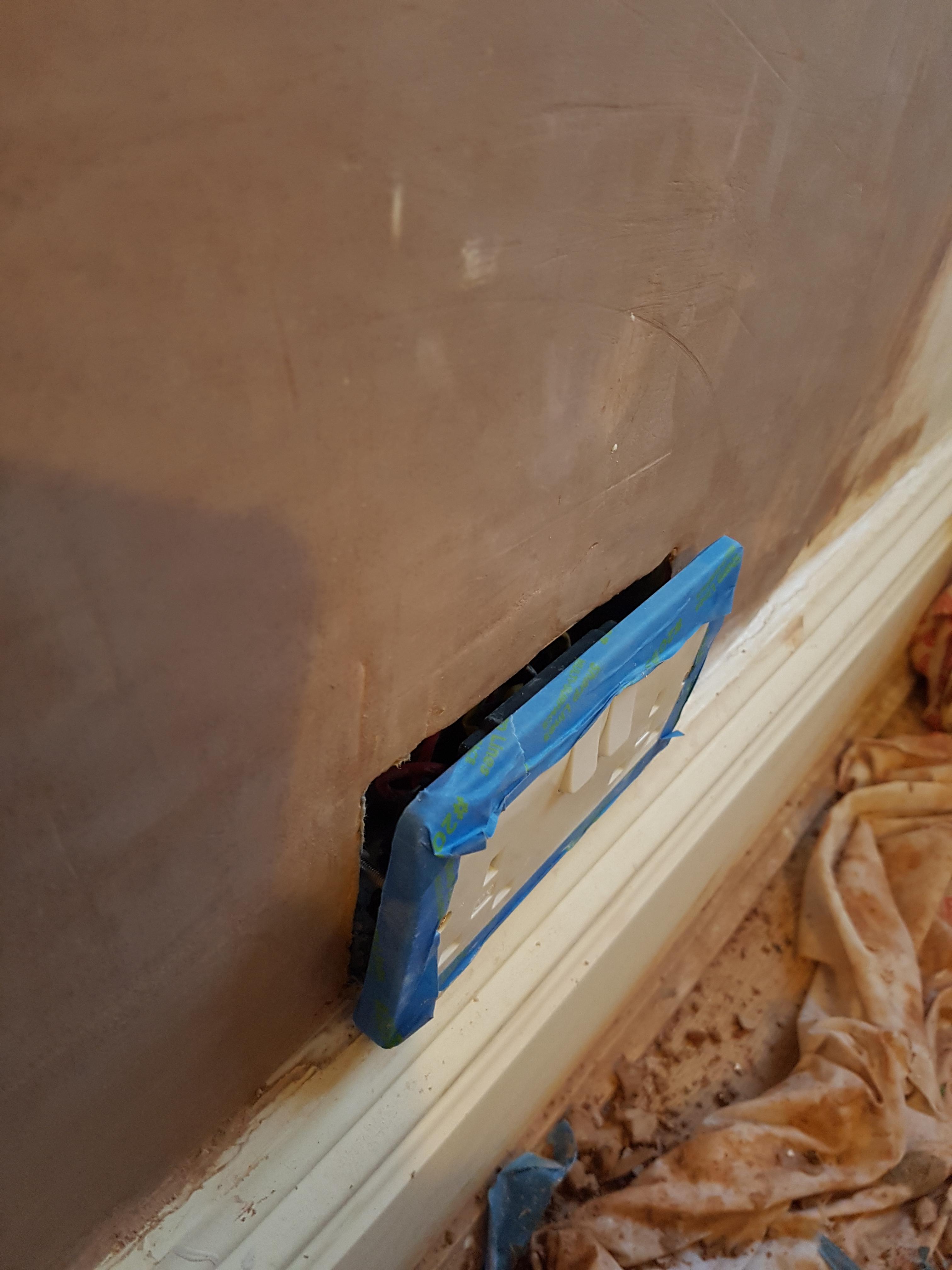
I am decorating my living room, and had to deal with an area of some blown plaster. It was about 8mm deep and 750mm diameter. Because it was a small area i couldnt be arsed to get a plasterer in and as it's going in a hidden spot behind a sofa, I figured let's have a go myself, though this was my first ever time plastering, and the location of the back box wasn't helping how easy it would be. I hold plasterers in high regard as it's a heck of a skill and a physically demanding job, that in mind I hit YouTube.... After a few videos, my plan of attack was, - weak dilution PVA on bare brick and plaster side walls, allowed to dry. - stronger dilution PVA on top, allowed to go sticky. - one coat of multi finish to 3-4mm, smoothed fairly flat and keyed, allowed to dry to firm but damp. - top coat of multi finish to 3-4mm smoothed flat. Photos of stages below Wet PVA prior to first coat First coat keyed Second coat Detail around back box It took ages to get the final coat smooth. However I think that I made the final coat too sloppy and sagged towards the skirting. It was a bit of a struggle to work with. Also I was able to see the keyed first coat through the second until it dried a bit. Overall pretty happy with how it turned out, and feel more confident to tackle larger area, but I would be interested to hear where I can improve.
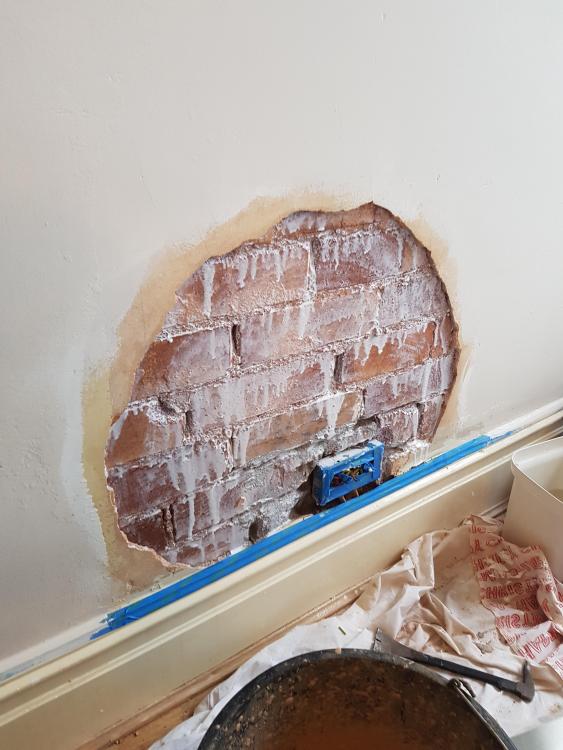
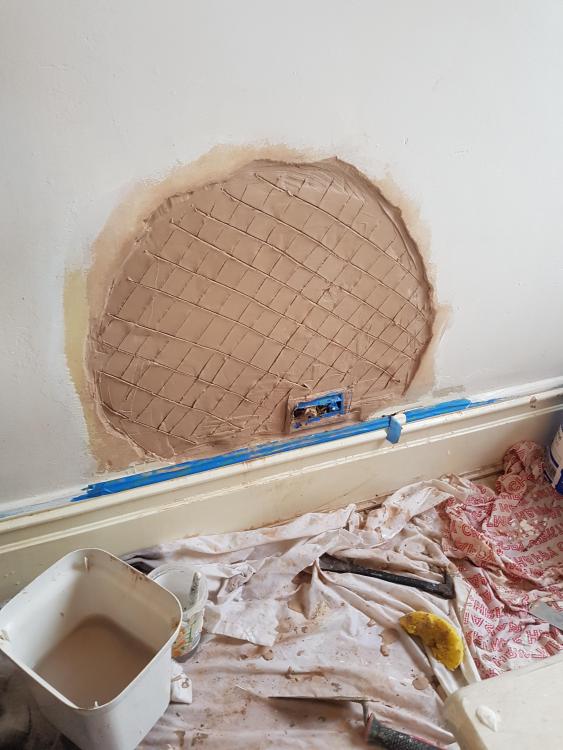
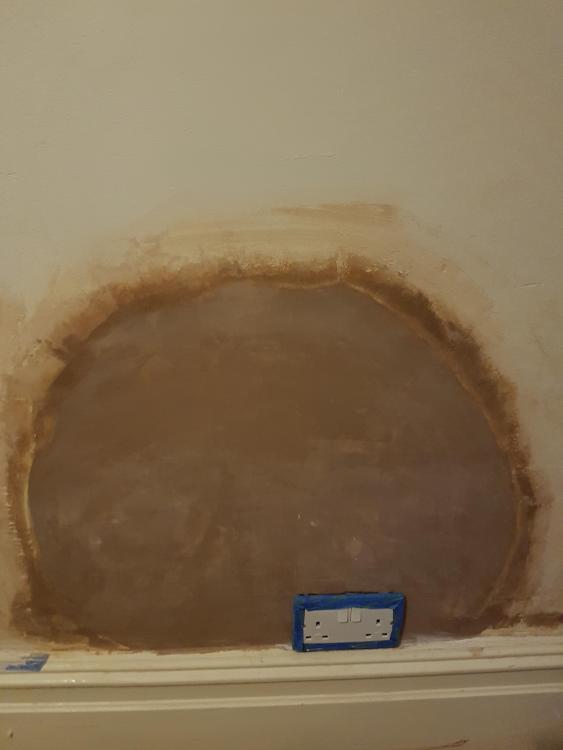
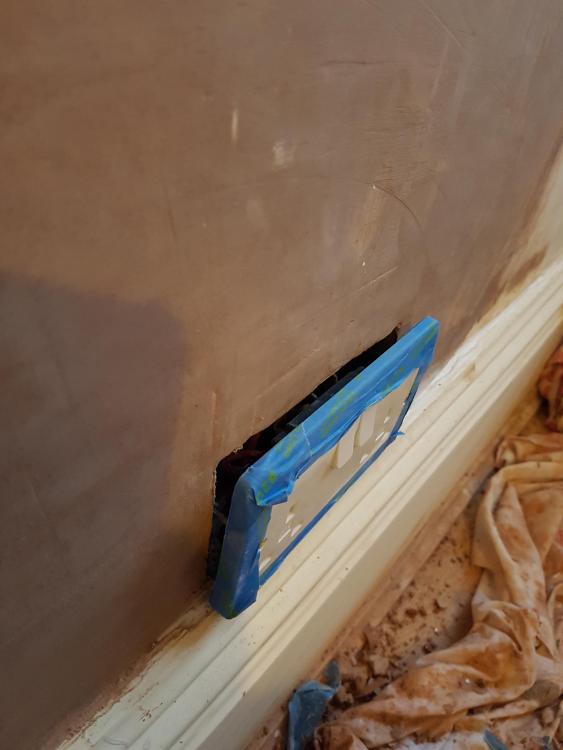
-
i haven't heard of this before, can you give any more information? All i read from my local authority is that i need a licence to create a new access, so i would be interested in who could do that via another means.
-
Interesting cost information for persimmon builds
Moonshine replied to Moonshine's topic in Costing & Estimating
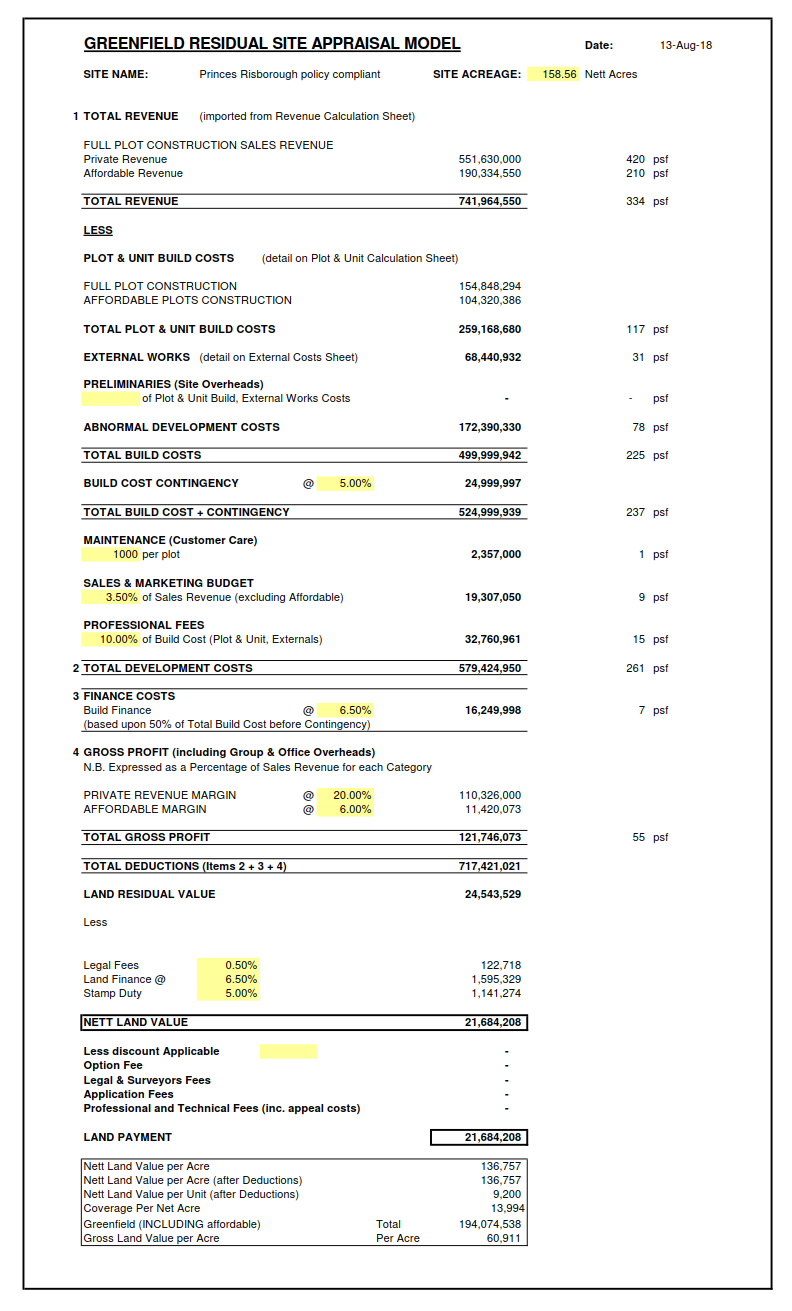
That what is what i seemed to get from the document, though may not be right. There is another document from another persimmon site, which has much more information on site appraisals (Appendix B - E), i have not seen this sort of information break down before for a big site and the calculations involved. https://www.wycombe.gov.uk/uploads/public/documents/Planning/New-local-plan/Local-plan-examination-2018/Matter-8-Woolf-Bond-for-Persimmon-Taylor-Wimpey-Wates-ID-0847-0951-1268.pdf This has 2018 data of cost per sq ft of £113 - £131 (£1130 - 1310 per m2), average is £117 per sq ft. This seems to be just the build costs, it rises to £254 per sq ft when externals and abnormal development costs, contingency and professional fees are factored in. But also the gross profit margins (20% for private / 6% for affordable), £121 million for a site with 2,357 houses (gross profit of £51k per house). So if you able to build a house including the plot value and everything for less than £2,032 (£2,540 less 20% profit) it seems you are doing better than the big developers (in 2018).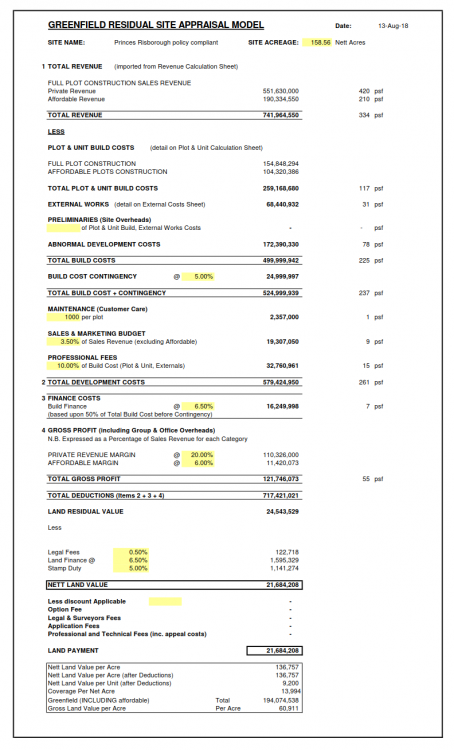
-
Just came across this document. https://democracy.hambleton.gov.uk/documents/s18762/Item 3 - 19-01530-REM North Northallerton Persimmon.pdf This has some rather interesting numbers in it relating to persimmon costings, from my reading; 2020 build costs - £99.42 per sq.ft Net sales prices (based on the actual sales at a development) - £227.57 per sq.ft The build cost seems to include land and services etc not just the build cost of the actual houses.
-
Also bear in mind increase cost of lintels, though I did the costings and in terms of materials full fill with 150mm was the cheapest for the same U value
-
They look like 70mm GAH2 hangers fixed to the joists. Edit: looks like i was wrong
-
I am doing the electrical layouts for my house design, and i am now thinking about house alarms. The alarm that i have in my current house is wired PIR sensors in each room, with magnetic switches on doors. This is obviously old tech, but in modern alarms are wired PIR sensors still used? if so it would make sense to show them on the electrical plans as wiring them at first fix would be so much more easier than retrofitting. Or has the world of house alarms moved on significantly?
-
i don't think that it is game over, you can build over it if you are careful, your local water company should have guidance much like the one below https://www.southwestwater.co.uk/siteassets/documents/build_over_guidance_notes.pdf
-
This actually could be an option, or a variation of this, two Form 7a forms, one plot self build exception being mine for the plot we are going to build one plot self build exception being my wife's which we aren't going to build My wife is not named on the planning application. The key thing is that the form 7a says that for the exception you must occupy the premises as your sole or main residence for a period of 3 years from completion of the property. What if me and the wife don't want to live together! ? If the house is not completed for a long period then no cil would be payable. If we sold the plot in the future then we would transfer over the CIL liability (self build or not) timescales don't really work for that
-
Though, the key wording below; From this, It appears that an authority doesn't have to accept it......
-
That is my take of it too, and why i have resubmitted it as a phased development, specifically mentioning this in the DA statement and including a clear phasing plan. The problem seems to be that the council won't support / allow it to be submitted as a phased development, and i want to understand if / why they make that call, especially as they are theoretically suppose to support development.
-
Nope, i want CIL exception on the house I am going to build and live in. I don't want to and very unlikely to build the second house myself. But I don't want to pay the CIL on the house I am not building when i start the house for me. No one else is building now, and the cil is a £20k hole in my budget. If someone comes along in future to build it and they aren't cil excempt then they will have to pay cil on it then. This is what I want to do (but Cornwall aren't my LPA) https://www.cornwall.gov.uk/environment-and-planning/planning/planning-policy/adopted-plans/community-infrastructure-levy-cil/phased-development-and-community-infrastructure-levy-cil/
-
Nope, i want CIL exception on the house I am going to build and live in. I don't want to and very unlikely to build the second house myself. But I don't want to pay the CIL on the house I am not building when i start the house for me. No one else is building now, and the cil is a £20k hole in my budget. If someone comes along in future to build it and they aren't cil excempt then they will have to pay cil on it then.
-
I have planning granted for two houses, and have resubmitted as a phased application for the two houses, so that building one house doesn't trigger the cil on the other. The council have come back saying they won't support a phased development application. The case officer has said verbally because they may not get any cil. Is there any valid reason why a council would not allow a phased application?
-
It's all getting a farce now!!! Planning has been submitted with revised drawings for about 4 weeks, the application is still not validated and the case officer keeps fobbing the architect of. The head of planning is now involved apologising for the delay and that the case officer will be touch next week (we have heard that before)... I am not counting my chickens. I have also chased up my drop kurb application with highways submitted months ago. They have replied that the to covid they won't be looking at applications until the new year!!!!! Feeling hacked off with it all!
-
Has anyone used a offset residential mortgage to fund their build, like a self build mortgage, releasing in stages? I am looking to release some of the equity in my existing house to help fund the build of a new house. What i am thinking is that if there is a lump of money in an offset account (e.g £100k) then i would only be charged interest on the difference from the total borrowed, and over the course of the build the offset amount would go down. What am i missing and the down sides of this plan?