


saveasteading
-
Posts
11094 -
Joined
-
Last visited
-
Days Won
98
Everything posted by saveasteading
-

Posi joist - This install feels rubbish, thoughts?
saveasteading replied to boxrick's topic in Roofing, Tiling & Slating
You must not delay this. What if he starts to cover that work up? Or the worst scenario is he does a runner. It is probably all sortable but for a few£k. Removing and replacing much more than that. Ask him politely how he is going to sort it. And instruct him to adapt the scaffolding. -
Steel framed Portal building
saveasteading replied to Kevan Marshall's topic in Plastering & Rendering
They are not as flat or planar as might be assumed. I would still fit battens horizontally. Render isn't my preference for this structure really as it is likely to crack. A steel portal frame is designed to withstand the wind but permitted to move quite a lot. OR you tell the designer and they make it stiffer at your cost. Timber cladding would move with the building. Self supported or using the columns? if the latter they have to be designed for it now. -
Posi joist - This install feels rubbish, thoughts?
saveasteading replied to boxrick's topic in Roofing, Tiling & Slating
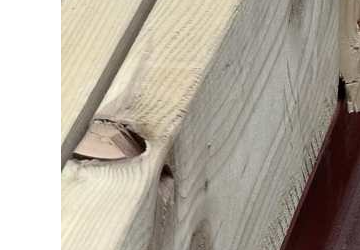
In which case it is totally unacceptable. 1. The beam's web should not be load-bearing onto the support. 2..The beam is completely compromised and is now understrength. 3. It needs a padstone. @boxrick the works must stop immediately. Remedying this is likely to be complex and costly. Who is involved professionally other than the builder? do you have a contractual position with any of them? A formal complaint must be registered with your builder, in plain English with pictures attached, or with technicalities if you have an advisor. remember that the BCO is not a quality control manager, and will have constraints on what he can say. Who engaged the BCO anyway, You or the builder? If you, then I would still have a word with them. BTW That knot is massive and compromises this timber... I'm surprised this got sold. Web on block.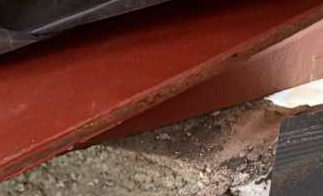
-
Can't connect the SWA cable. Practical help please.
saveasteading replied to saveasteading's topic in Power Circuits
The circuit/ fuseboard/ RCD etc were all replaced professionally when we moved in. However this cable is off an existing internal circuit. When the old cable that I am replacing used to cause cuts in wet weather, presumably a fault underground it could trip at any one of three trips. This tripped at the RCD which carries the whole house circuitry. I could take pics if that helps, and avoids me using the wrong terminology. That is not the plan. If I can get this to work as is, then I will proceed and change the old cable within 2 weeks. New cable in trunking , up into the dry and spacious attic and do a new box connection there. The existing cable I assume to be sound where it is indoors. I am now thinking that @ProDave 's point of the old cable shorting, and likely to be caused by the bend I've put on it (it was all working except in very wet weather). So for now perhaps to just replace a couple of feet with new bendy cable, and keep the old one straight. I should say that I did ask a couple of electricians to do this, but they have been 'too busy' for 6 months now. For obvious reasons they'd rather do new, clean work than this sort of thing. All decent small contractors are fully booked and turning work down in the SE. Any that are available will likely be as good as me but less interested. -
Posi joist - This install feels rubbish, thoughts?
saveasteading replied to boxrick's topic in Roofing, Tiling & Slating
Its not completely clear on the photos. It looks as if the beam isn't a beam any more, reduced to a T, almost to a plate and all the load is sitting on the web. But perhaps back where the beam remains complete, that part is sitting on a wall or plate? In which case the remaining part has become an oversail and not structural. Even then, it should probably be on a pad or plate. Is there a side picture of that?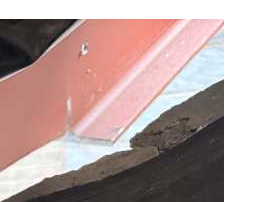
-
Can't connect the SWA cable. Practical help please.
saveasteading replied to saveasteading's topic in Power Circuits
Yes I've even got the conduit ready. The existing cable ran underground for 25m then up a pole to a 500W. That must have been pushing its capacity. floodlight. I changed that to 30W. It now supplies an electric gate which is quite low power. I'm thinking an outside socket would be a sensible addition for gardening but perhaps also car charging..... slow only. So I'm thinking the cable should be bigger than smaller. 2.5mm T&E ? -
Can't connect the SWA cable. Practical help please.
saveasteading replied to saveasteading's topic in Power Circuits
I am. I thought I'd do it in stages. For my education, why is T & E wrong in principle? -
Can't connect the SWA cable. Practical help please.
saveasteading replied to saveasteading's topic in Power Circuits
This is the old cable, coming from the attic, then was into the conduit bottom left. It did feel a bit stiff as I bent it around, but attributed that to many layers of gloss paint. BTW I am aware that the wall needs painting and the corner needs a new block. The sun is doing a good job in exposing an ancient layer that was painted over dirt, well over 30 years ago i think, so I'm letting it. The cladding was about 1930 and still has a resinous smell when cut. It's been overpainted thrice in my time here. The first by professionals who i think only prepped when being watched.. some failed in a few years. The second time by 3 steel cladders waiting for the next job... lasted well. Third by me in lockdown... and that has stayed put too. I'd like to make the corner with 2 splays out of one block of wood, rather than rectangular with 2 wedges added. But it would be a big lump of wood and I'm not sure I have the skill. Hence years of not getting round to it.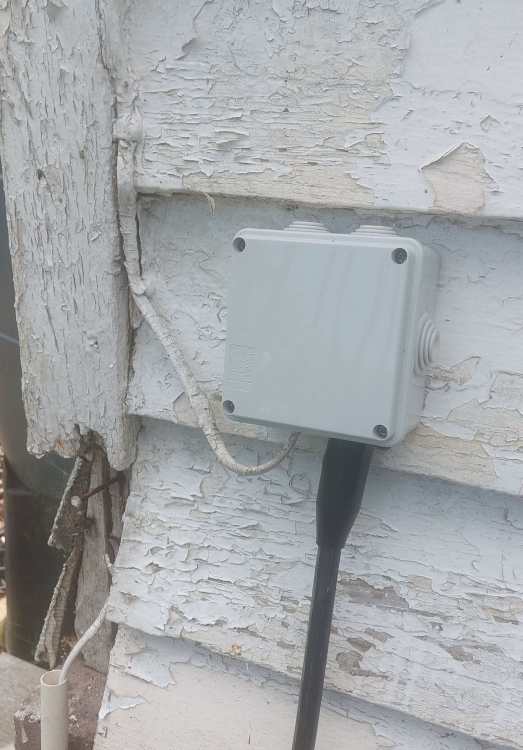
-
Steel framed Portal building
saveasteading replied to Kevan Marshall's topic in Plastering & Rendering
For me... have the steel z rails for the walls (pedants corner: it is only called a purlin if it is on the roof). Then fix 2 x 2 timbers vertically, and cement board over them. Then render. There isn't an advantage in cladding panels other than if insulated, as I wouldn't fix cement board direct to it, but would fix horizontal timber first. Ohhh, and metal cladding would provide a slightly quicker enclosure if a few days matter. -
Can't connect the SWA cable. Practical help please.
saveasteading replied to saveasteading's topic in Power Circuits
3 cores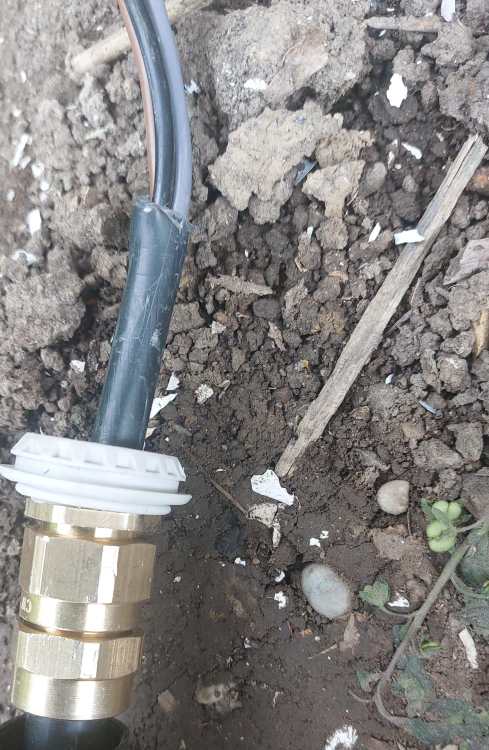
-
Can't connect the SWA cable. Practical help please.
saveasteading replied to saveasteading's topic in Power Circuits
Could it be that the old cable has failed in flexing it? It has been there for the over 30 years I've lived here. I was going to change it later but perhaps should do it now. -
No, it is is practicality. Decades ago, hilti guns were standard and almost hitched to steel erectors' belts. Since then, other options have taken over: less macho but better in safety and effectiveness. Powerful battery drills being the main change, but also screw technology. For the erector, this means a drill can be carried to awkward places with no trailing wires, and drill then screw. As the Engineer and contractor it resulted in safer working and a much more certain fixing.
-
If you go on the James Jones website there is an interactive joist span table. You have a wide span and must accept deep joists. From it you can see different joist specs at different centres. At some stage they can end up so close together with such wide flanges that it is nearly a solid floor. Or use a steel, and hang the joists in the same zone.
-
For a few mm, Tek screws from a big name are expensive and worth it. Heavies I recall is the term With a single use blade they get through 2mm easily in what, 20 seconds? It's years since I was hands-on, but from memory the best had a blade welded across the tip. There is no chance of them popping off later. For 40mm you need a few screws, or to predrill with a quality bit.
-
Can't connect the SWA cable. Practical help please.
saveasteading replied to saveasteading's topic in Power Circuits
On a site they will claim the slab is dirty and its not their job to clean the floor. If the floor is clean.... they were going to do it later... but progress is the priority. terrible. So have I picked up my clippings which are on earth or tarmac? Some. I'll have a word with myself later. I bought a box af SF. It reads as if it is unbranded but it's the same as the existing one.... pop outs not grommets. Also lever connectors. No excuses left...but what if I can't see any stray wire causing a short? -
Can't connect the SWA cable. Practical help please.
saveasteading replied to saveasteading's topic in Power Circuits
Nice idea. But that was the easiest bit. A really sharp knife helped too....must check I didn't do damage with it. For connections inside the boxes I've used old-fashioned screwed terminal strips. Would modern lever connectors be better? I see some at screwfix are a fraction of the cost of the bigger name wago. I like the idea of getting second shots at it too, ie the lever releases. The wago's I used once were push-in and perhaps fixed. I'm thinking I will buy a better and bigger box today, and lever connectors. -
Can't connect the SWA cable. Practical help please.
saveasteading replied to saveasteading's topic in Power Circuits
I did find a good one and worked to it. To your tips it adds using a hacksaw for the first sleeve cut, then the armour wires are weakened for snapping off. -
Can't connect the SWA cable. Practical help please.
saveasteading replied to saveasteading's topic in Power Circuits
Thanks all. Ill have a proper read through later. The earth tags just about work in getting a fix, but it's not tight. The existing box I now see has these fixed size pop- outs as described and the same make as the photo. ....hence the first one went well. The second one is a proper outdoors box from my stores.. def not so good. Probably from Homebase sale 10 years ago. The cable I've replaced looks like bell wire. its amazing it worked so long underground. I've cut it where it runs up the wall, and will later replace it Into the house. It's also quite brittle But I've connected it. But the power tripped when I turned it on. Grrrr I'll give it a look at tomorrow and hope to see where the short is. It shouldn't be difficult but it's all tight for space in the box. Any ideas why swa has grey wires not blue? Have I done anything silly? Brown to brown Grey to blue Earth or bare wire to black. -
Can't connect the SWA cable. Practical help please.
saveasteading replied to saveasteading's topic in Power Circuits
Excellent that was my next plan. I was disappointed to not find any big washers in my multiple tins of fixings.... they justify keeping even more. It was useful to remind myself what I do have though. -
That's superb info. It might be wetter if there was no road, because that is a lot of hillside collecting rain. Are the other storeys dry, or you can't tell because they are tanked/ covered? You need people from Edinburgh for this. There are tower blocks from the 1800s with 9 storeys above ground, facing downhill, fewre facing uphill, and into basements. Sandstone too. Google Earth: West Bow, Edinburgh That's the good news.. they lasted a long time.
-
Can't connect the SWA cable. Practical help please.
saveasteading replied to saveasteading's topic in Power Circuits
So it's the wrong box, made for multiple cable sizes and the hole is too big? I see in your pic, there is a grommet for the small cable. I've a thought. The cable entry is at the bottom and has the supplied shroud so water won't get in. A couple of washers might suffice as tightening surfaces. -
I bought a replacement flush outlet for a Roca concealed toilet. Best price about £35 on amazon. TP got it specially for £16. It helps to have a big order pending.
-
No magic chemicals I know of, and most would alter the stone. Is it a flat or sloping area? Ie where is the water coming from? Does it vary seasonally?
-
If you want to keep the sandstone for interest or heritage, then you are limited. A sump and pump, forced ventilation, and dpm the floor above. If the stone can be concealed then there are sheet products made for basements.
-
I agree re Travis P. Great for some stuff (depends on branch even) but not drainage. I've found that my old favourite JDP is no longer interested in small sales and charge a lot....they seem to depend on having lots of heavy gear in stock for emergency repairs. But try an alternative to Osma.




