saveasteading
-
Posts
11094 -
Joined
-
Last visited
-
Days Won
98
Everything posted by saveasteading
-

replacing asbestos cement soffits
saveasteading replied to Del-inquent's topic in Roofing, Tiling & Slating
Fix a triangular batten under the rafter against the fascia, and screw up into it? -
I'm all for retaining slabs. Too many are broken out needlessly. 200mm is heavy industrial thickness for forklifts and racking. You can tell how flat it is simply by looking for puddles. A few mm is of no consequence. Why do you need a new dpm on top?
-
Denso is vaseline on a bandage. I expect it will soak into the plaster as an oily stain
-
What building regs apply to a wooden garage,?
saveasteading replied to joe90's topic in Garages & Workshops
That is warehouse spec. I'd say use that as perimeter as it has the building on it, but can reduce the middle to 6". I'd also like to have the walls overhanging the slab. -
AAArrggh. Maybe it will be ok.....but expanding foam is used far too often because it is a quick bodge. Does the can say anything about heat / shrinkage /reactions against copper?
-
I've had awful problems with them. Egos exceeding their knowledge being the cause. I've always prevailed but it wasn't fun. It was worth maybe £50k. I think mostly people do what they are told, hence they weren't used to, and didn't like, me arguing. Is your builder spending your money or their own if instructed to do anything? I'd say LABC for traditional and simple house extensions, because they are cheaper. Private for anything more complex because they know more / or will discuss.
-
Heat in the pipes will be lost into the wall. Can you get some foam rubber or bubblepack or similar behind them?
-
Boundary retaining wall failure
saveasteading replied to SilverShadow's topic in Party Wall & Property Legal Issues
Yes it will. but I think we know it is moving. How much though? -
These are minor amendments, and may be approved without an application. If you write, summarising the changes as a matter of courtesy, then you will be covered. They will probably then ask for a formal resubmission of these details and £110 or so. At worst the existing permission still stands It is difficult to see them refusing a 200mm height increase when it is for better insulation, to current standards.
-
That is another positive of the heavy, solid construction. The operation of doors, especially, is very crisp because nothing is bending. With aluminium doors there ca be twisting and a less good fit. Twice the cost of a good aluminium product. A matter of taste and budget.
-
They are beautiful. expensive but lovely. our only downside was that they wouldn't do anything other than rectangular. People say this is not correct so perhaps it was only our local agent who didn't want to.
-
On the other hand, what regulations do you not want to update to? they are all sensible.
-
All projects take time, whether a month or years. so I would say that the regulations of the time will apply. But there must be some thought of what is a reasonable delay, I expect. 15 years is a long time. I recommend speaking to the building inspector, and then getting the opinion in writing.
-
Simply making a short statement to the PC does a lot in showing you are a real, local person. It gives them a chance to ask questions too. It shouldn't be the case, but councillors are influenced by applicant presence...in favour if you are pleasant and reasonable and keep it brief. 3 minutes is very little. The pc opinion is not binding on the planners at all, but can influence their decision.
-
Boundary retaining wall failure
saveasteading replied to SilverShadow's topic in Party Wall & Property Legal Issues
It looks quite serious to me. I wouldn't expect a wall to fail by vertical cracking. As suggested above, it has probably been built wrongly in several ways. I would drill drainage holes as a first step in risk reduction. They should be near the bottom. Best is to insert pipes which will act as spouts. That will stop it acting as a dam, and the load from the water will disappear. Because it may not be filled behind with gravel, but with earth, I would add some higher holes too. The holes should be fairly wide, to prevent them just blocking up again. 25mm? It isn't a high wall so any continuing failure will probably be small movements. Do the holes, patch the cracks and keep an eye on it. Otherwise it is best taken down and rebuilt with reinforcement, concrete infill and drainage. -
Structural report has brickwork terminology,
saveasteading replied to hrxv1's topic in General Structural Issues
OK that's concerning. The bricks popping out at the corner. There doesn't appear to be any mortar bed. I wonder if these are a facade and not structural. I wonder if " lack of vertical articulation" means, " not plumb". Anyway,it's not good. Is there any suggestion of what has caused the issues and if there is a remedy? Does the report state the construction of the building..eg cavity wall, timber frame etc? Perhaps someone will recognise these very rusticated bricks and know if they are not for normal Construction. If you are buying, perhaps don't. And don't pay for the report yet. -
No. This was already in, by the vendor. Their builder put in the duct and the water to here. We now take over and erect the kiosk and then UKPN heave a cable through from a nearby pole. The ducts only seem to come in 6m stiff pipes, or 50m coils of the stuff shown, or 50m coils of flexi. This explains why we see people using drainage pipe etc. I've suggested to the electrical merchant that they buy 50m and cut it for their customers. Of my order to the recommended supplier, they have not provided anything direct other than the earth cable. The main cable came from a cable distributor, another cable is on special order ( I could get it online tomorrow), and even hockey-sticks for the earth cable were cross-bought from JDP. I've been given a 1m offcut and that can be used for our cable entry. We will just thread the cable end through it, and position on the slab shutter. I'm leaving 1m sticking out of the slab into the kiosk. I would be scared cutting the cable to connect inside the kiosk...if that goes wrong, there is 50m of underground cable that can't be pulled. but it is presumably everyday for an electrician.
-
OK understood. 1 Our project also has lots of redundant concrete slab out-with the house. We are retaining it because it allows a hard surface for plant and materials during the works. Seeing how the ground is churning elsewhere this week, this was a good move. In the long term we may leave it as concrete and garden above it, using raised beds, and bonding gravel to it. We will need holes for drainage. Sheds and greenhouse can also sit straight on top. This is obviously a personal choice. What we did break up was crushed on site for use as hardcore driveway. This was with jaws on the excavator: it looks like a dinosaur. 2. We are retaining the slab under the building footprint , and laying PIR on it then screed. saves removal and then replacement in whatever form. The reason @Gus Potter and I have mentioned it is because we have seen consultants and contractors remove slabs as a matter of course. On the 'not my money' principle. There are plenty of reasons why slabs need to be removed. I don't know your circumstances .
-
Structural report has brickwork terminology,
saveasteading replied to hrxv1's topic in General Structural Issues
I don't know what this means. Engineers are supposed to use intelligible language and avoid jargon. Slip and rotation sounds like bricks are displaced outwards. Not good but maybe not serious. Lack of articulation sounds like it is "not un-solid". Ask for a translation. -
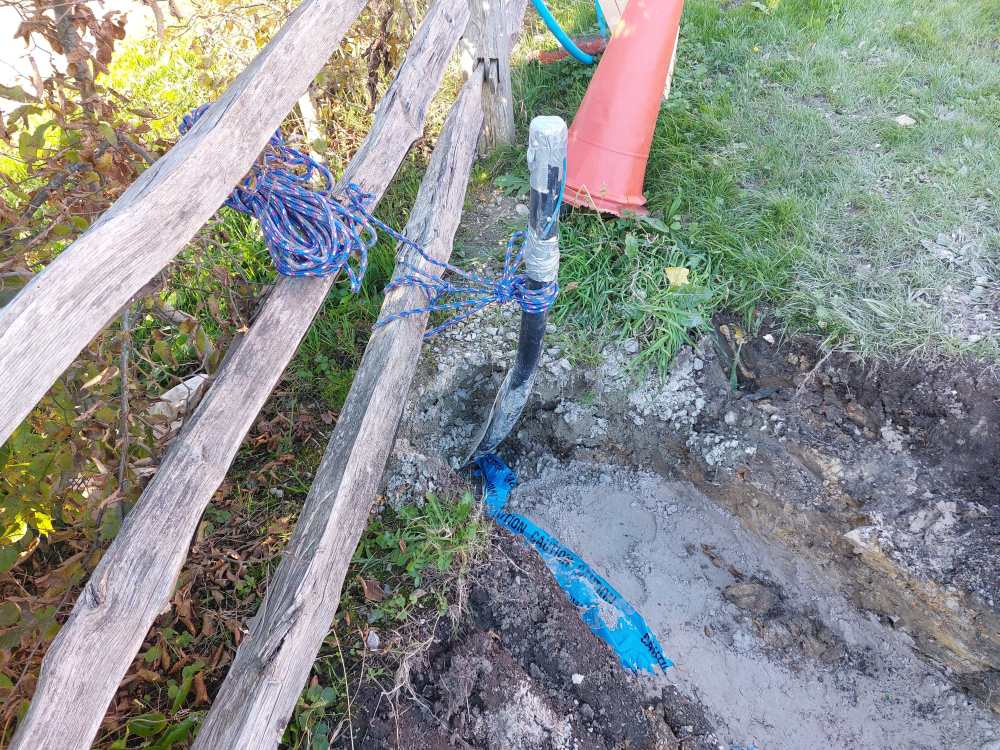
Success. The duct that wouldn't bend has given in on a warmer sunny day, with a lot of force. But this will do nicely. It could do with being another 100mm off the fence, as it is tight for kiosk space. I'll try blocking the curve out lower down, or else leave it less vertical. The outlet duct won't ever have to work as a duct: the cable could be cast in the concrete. But for appearances I will put a vertical piece of duct offcut in. I know that is too shallow but it is very local and we will raise the ground level instead.
-
I have some experience of fires. Firstly playing: put an offcut on a hot fire and observe.... polystyrene bursts into flame, melts and spreads. Pir catches fire and burns, and disappears. Wood fibre burns slowly and disappears. Mineral wool does not burn, but reverts to being sand. In the afternath of warehouse fires I've seen eps had spread the fire quickly and everywhere. Mineral wool resisted the intense heat for a time, then turned to sand on the floor.
-
@flanagaj it's OK to ignore what you don't want to hear or isn't applicable and we may not know the circumstances. But we are trying to help and save you lots of money, so it would be nice to hear back.
-
A hard surface is an asset. Why turn an asset into a cost? Other people tell us to do this but it is our money.
-
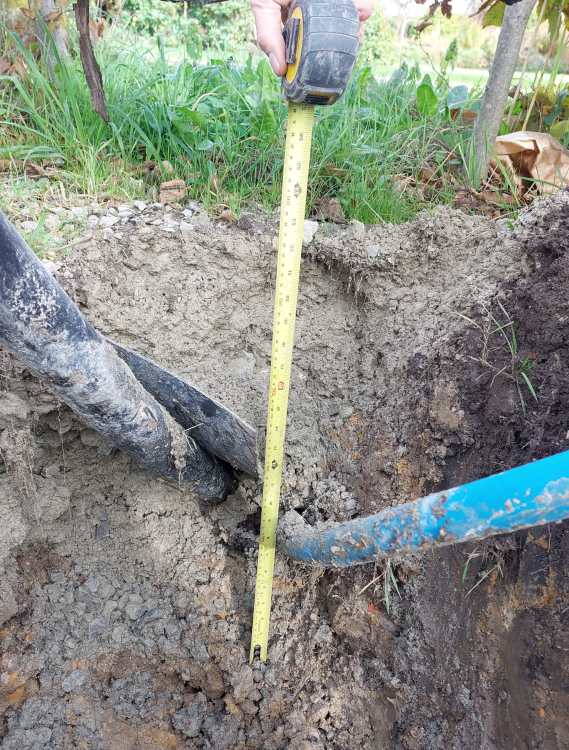
This is the neighbour's builder's idea of a service trench.
-
Stripping soil for driveway abandoned for battlefield-like reasons. The new trench just 70m away is rock hard and utterly dry.