
saveasteading
-
Posts
10102 -
Joined
-
Last visited
-
Days Won
82
Everything posted by saveasteading
-

Truly DIY SIP construction…
saveasteading replied to G and J's topic in Structural Insulated Panels (SIPs)
Booms are only one type of machine. the simpler version and much cheaper type has the concrete pump as a trailer, and the pipes go along the ground. I can't see how that is a problem, except for the reduced insulation at studs, but that is only 5% of the area and so compensation / trade off should be findable elsewhere. I suggest that you are set on sips panels and see anything else as inferior. If you have decided on a maximum wall thickness, and stick build is falling short on your target insulation, by say 5%, then it is easy to compensate for that in the roof or floor. -
Truly DIY SIP construction…
saveasteading replied to G and J's topic in Structural Insulated Panels (SIPs)
But we did. It's some stud and osb with pir in the core. Standard material, no markup or transport or craning. No waste. Why not? -
That's plenty. I must only have been noticing the heavy ones. @Kelvin what mesh did you have? Our project, ground bearing on solid ground, had 2 layers of heavy mesh specified. That was until I objected and we used 1 layer for crack control. Lazy / cautious SE spending our money. If we as the BH community can get slabs efficiently designed, then we will be making a difference. To be fair to SE's, when clients choose the very cheapest quotes, they aren't getting many hours of input.
-
That's what I am saying. Some of the decisions can be complex, and it is another matter to include feel-good and carbon saving in monetary terms. But the latter can be client over-rulings 'just because it is my decision..
-
That interests me. I've seen many projects on here where there is very heavy reinforcement. It is not usually necessary on good ground, but perhaps building on eps requires it? It is very expensive and I don't know the reason for it, other than very cautious specification by supplier or SE. I haven't ever seen a costing for a raft on its own. that would be interesting and I am open to be favourably surprised.
-
Thinking as a consultant now, and also in your best interests why not compare and cost and justify all your decision's throughout the project. I have found formalising it an interesting discipline. I did it for a competition once, making it a measurable process. It cut through any prejudices the judges may have had... eg why aren't you using hemp? why have you no wind turbines?
-
but he isn't paying. check out the relative costs.
-
Fridge in hallway / fire regs and ventilation
saveasteading replied to makingprogress's topic in Building Regulations
Politics. Stop it. Or is it an Independence day thing. -
Fridge in hallway / fire regs and ventilation
saveasteading replied to makingprogress's topic in Building Regulations
Cold air can't be drawn in unless warm air is expelled. do you think the ambient air is actively sucked in by a fan? That might work. There aren't even vents in the top of these' cabinets so I still feel i am missing something. Although in reality if a fire was to break out inside the fridge, tightly set within a box, I can't see it spreading far as there isn't a supply of oxygen. -
Fridge in hallway / fire regs and ventilation
saveasteading replied to makingprogress's topic in Building Regulations
I was hoping one of our boffins might explain if fridges in boxes work by a different means? I've got 2 self standing fridges. One in the kitchen and another in a hallway, shock horror, am I safe? The hallway one has a rear grille. The kitchen one has a plastic board backing but I can feel hot spots through it. Built-in fridges may be completely designed for purpose. -
Truly DIY SIP construction…
saveasteading replied to G and J's topic in Structural Insulated Panels (SIPs)
A joiner can make them on site. All parts can be walked in and the crane issues dispensed with. Yout point about earnings is valid, as is the effect of a career break. However, I can see total diy saving being about 60 %. And income tax free. Employing joiners, 30%. The bonuses of saving on access and hoisting will be site specific. On difficult access sites I have tended (commercially, not self build) to use beam and block flooring for the same reason. -
Fridge in hallway / fire regs and ventilation
saveasteading replied to makingprogress's topic in Building Regulations
That's a very good point. I had rather assumed that these units had a fan chucking heat out of one bottom grill, and allowing room temperature air in by another grill. If they don't the they will be rather inefficient. The instructions for a free standing fridge require it to be a distance off the wall so that the radiating grillage on the back can release heat which flows upwards and into the room. Cooler room air will enter from below and at the sides. But if it is all in a box and left to its own devices then it won't be efficient. The heat exchanger will draw heat out of the food, pump it into the radiator and it will just sit there inside the nearly sealed box. Also the compressor creates heat so that is all kept in the box too. And another thing. If the bottom grilles are releasing and drawing back air, won't it simply take the shortest route and cycle warm air through again? -
SIP wall thickness vs u value
saveasteading replied to Bournbrook 's topic in Structural Insulated Panels (SIPs)
25mm would work better as insulation but 50mm is the norm for other reasons. A smaller gap has less air circulation so will lose less heat. 25mm batten is fine. -
Fridge in hallway / fire regs and ventilation
saveasteading replied to makingprogress's topic in Building Regulations
The risk of a fridge going on fire is miniscule. I'm thinking that the bco thinks this is on a fire escape route. What happens if you are escaping from a fire and the fridge also bursts into flame? A fridge in a cupboard will not work, as it needs free air. So pragmatically, tell him you're not having that fridge because, after enquiry you realise it won't work. Scrap the cupboard. Later do what you want. Fridge in a recess with free air above it, or openly in the hall. Not in a cupboard. I'm usually reluctant to say such things, but I don't think the risk is real. -
Fridge in hallway / fire regs and ventilation
saveasteading replied to makingprogress's topic in Building Regulations
The dreaded fridge bursting into flame' danger. It seems ott but perhaps there is more to it. One thickness of normal grey plasterboard provides half hour fire resistance. -
so get it changed. If it was easy to correct and they cared to do quality control, then it would have been wiped or chipped off at source. Hence presumably it is a highish risk. How thick is it? Is this yes, its a faulty product or yes take the risk and chip it off, or yes, use it and find out too late if it leaks ?
-
PH cf closeish? perhaps about 5% loss in energy but 20% saved in build cost. ?? more if all your suppliers are accredited and charge accordingly. I'm guessing as I have not analysed it. If that means hazel sticks , mud and bracken then I would argue against it. Likewise straw bales. I have looked into the latest fashions throughout my career, and seen them being specified by some Architects for some clients. It has never worked for me either on value or performance, but I'm up for being persuaded.
-
It is worth checking this. I have found some electricians to overestimate the demand, and epecially some to over-allow for the power into an ashp. If 12 is enough for @ProDave maybe it is enough for you.
-
Remember that if you are well insulated you don't need a lot of energy to heat the space. even less if you have ashp.
-
there is a formal process for this, ie that you don't contribute to their future capacity. then you pay the cost of the transformer you need, and not the rest.
-
help me decide stud and osb spec.
saveasteading replied to saveasteading's topic in Barn Conversions
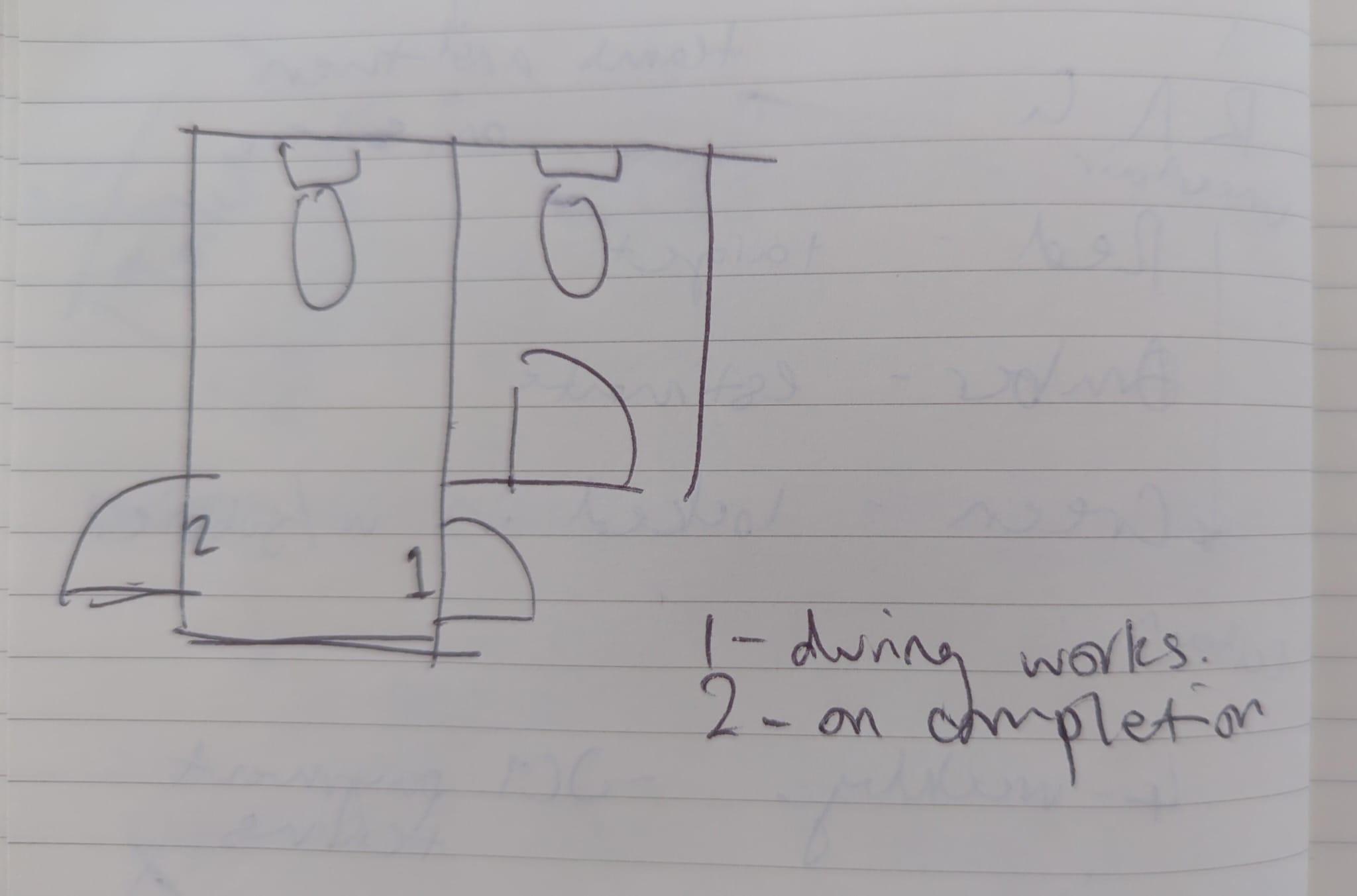
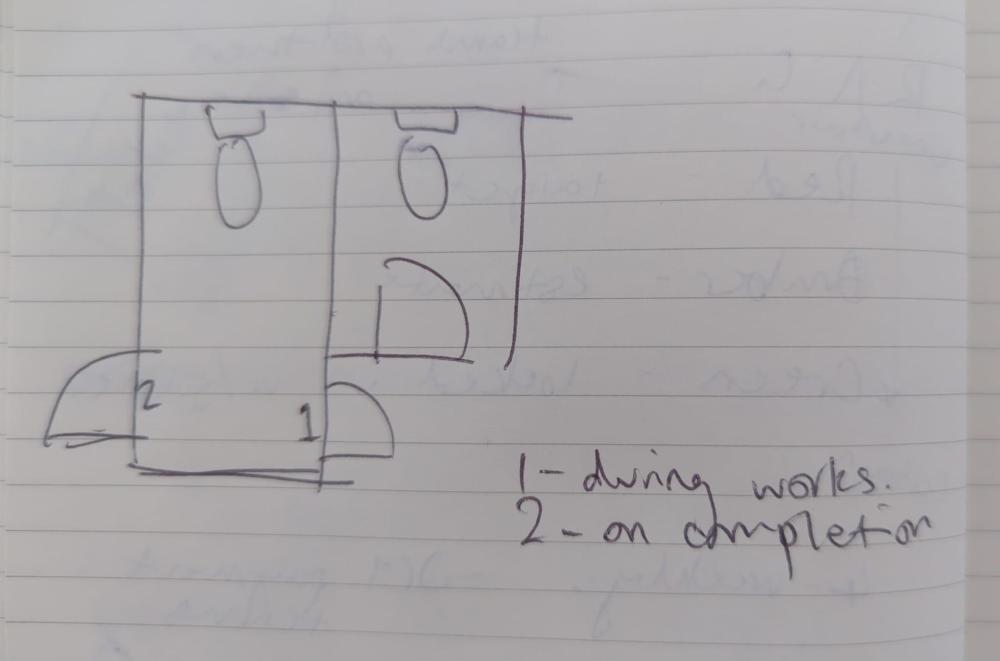
1. Scope for improvement. 2. detailed design. Actually we will carry on right across to where the trailer is. as a cubby hole.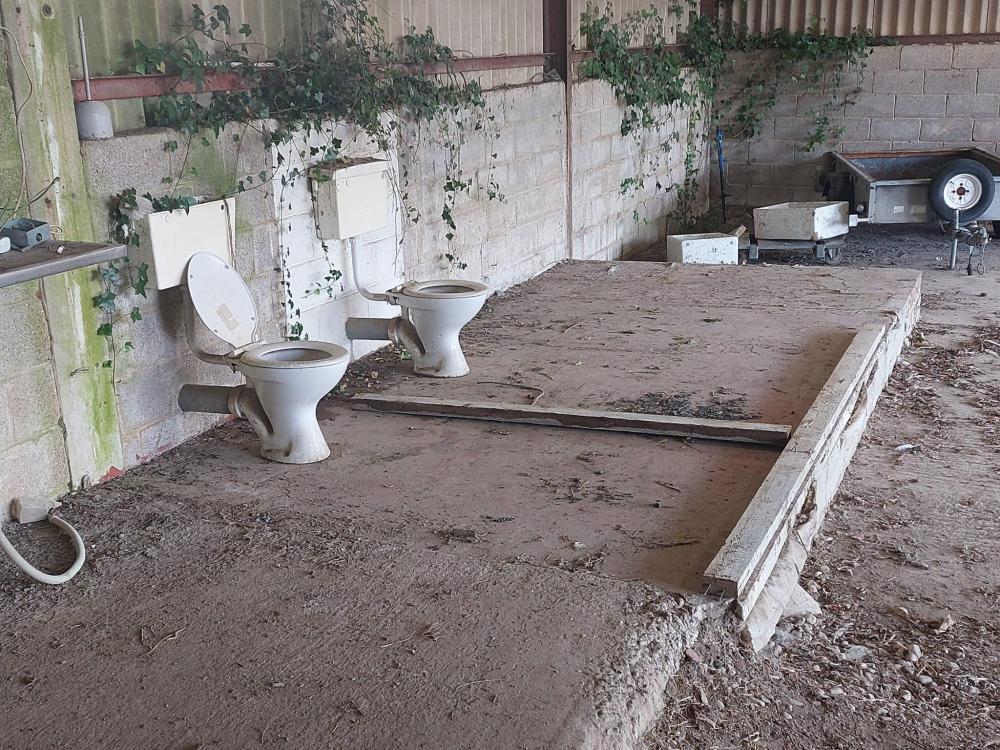
-
Truly DIY SIP construction…
saveasteading replied to G and J's topic in Structural Insulated Panels (SIPs)
At a guess this will be half the cost, even if you charge in your time. That is really easy too. This is basically it, gets more complex with very big rooms, but we are here for you: https://www.instagram.com/reel/C61eu9gKm3d/?igsh=MWZwdWthZWVpZXpvYQ== -
help me decide stud and osb spec.
saveasteading replied to saveasteading's topic in Barn Conversions
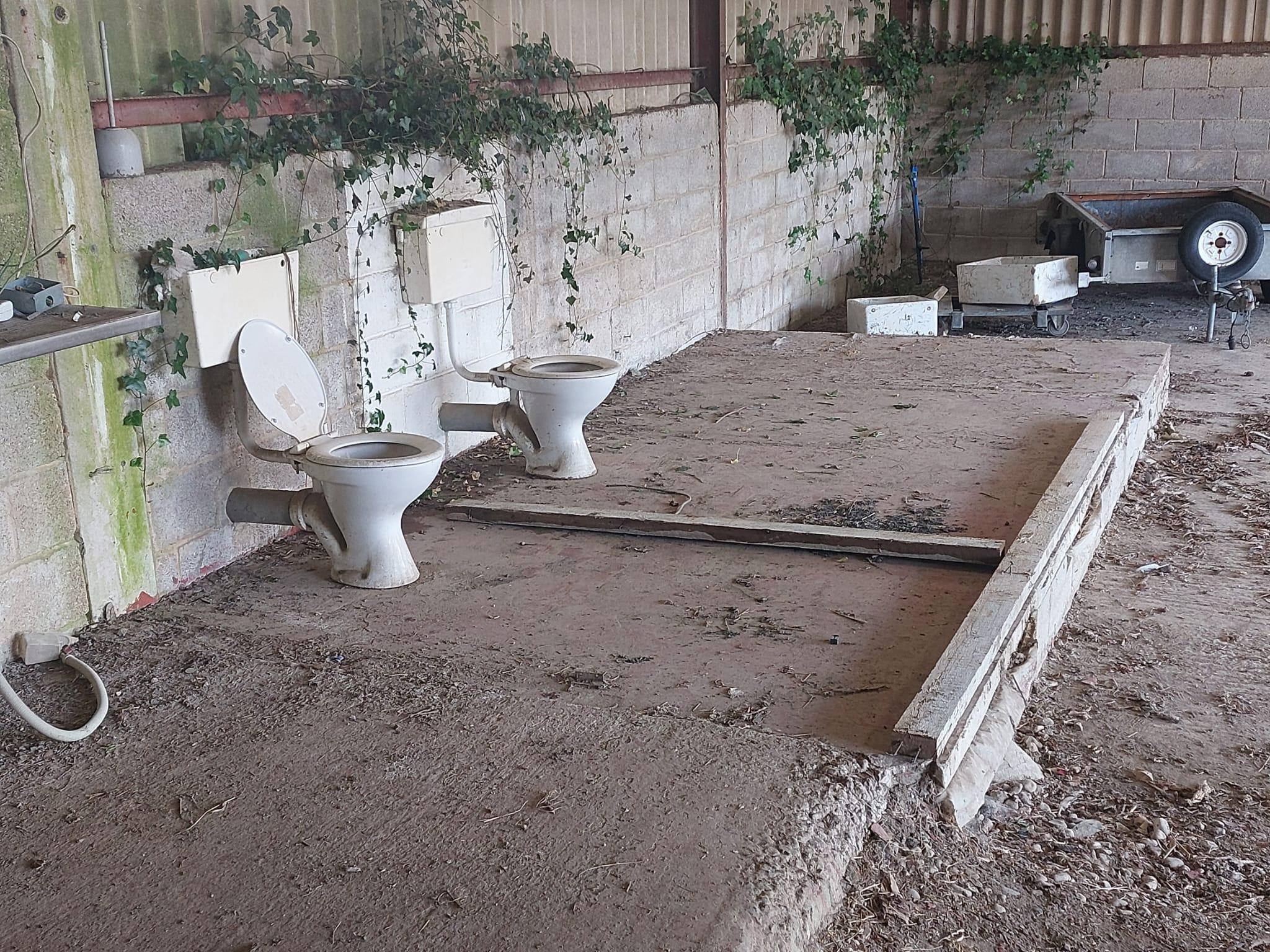
That's another £36 the right way. It just seems awfully skinny. just some dangly wires and pipes at this stage. we can add a service void next year...or whenever. 89mm seems sensible though as it is sort of semi outdoors. (old ugly barn with 2 walls.) And thinking about it: I expect I will end up flooring over it for storage of my precious stuff that might come in handy but I have to keep out of sight....or throw. So the current status is 89mm stud @ 600cc, a few joists, 9mm osb but perhaps (?) screwed rather than nailed......£340 plus vat, before the toilets etc. I have to decide whether I need a sole plate and fabricate panels on the ground, or literally stick build it. The latter saves 20m of stud, and keeps all the work light for weak old me, but involves some ups and downs for fixing the header. The former is probably technically easier and faster , but will need a hand to heave up to place. For those interested, these quotes are from Travis P. I use Wickes less 10% less VAT as the easy test and we are well below that, and free delivery. For screws etc, TP are exactly the same prices as Toolstation, which they own. -
I'm going to knock up a temporary toilet block in an outbuilding. There are already a pair of wc s with no enclosure, connecting to a 'country' septic tank , but they are scabby so I will use new wc s. It will be the site toilets and then eventually become one garage and one garden facility. Stud and osb walls, no need for ceilings, but maybe a couple of joists to stop it rattling. 2 salvaged doors. No fancy inner decoration at this stage. Stud in 38 x 63 seems flimsy so perhaps go for 38 x 89. £50 more. Am I being conservative here? OSB in 18mm or 11mm. I'm thinking 11mm is enough. £110 difference. perhaps the thinner osb should be screwed on rather than use a nail gun. I have to set an example in economy here, plus I actually want to keep the costs down, but a wobbly old thing will do the opposite.
-
Steel column and pad in wrong place
saveasteading replied to vik2001's topic in RSJs, Lintels & Steelwork
That's the theory side of it sorted. Doing it is another matter and presumably the errant builders are long gone.