willbish
-
Posts
741 -
Joined
-
Last visited
Everything posted by willbish
-
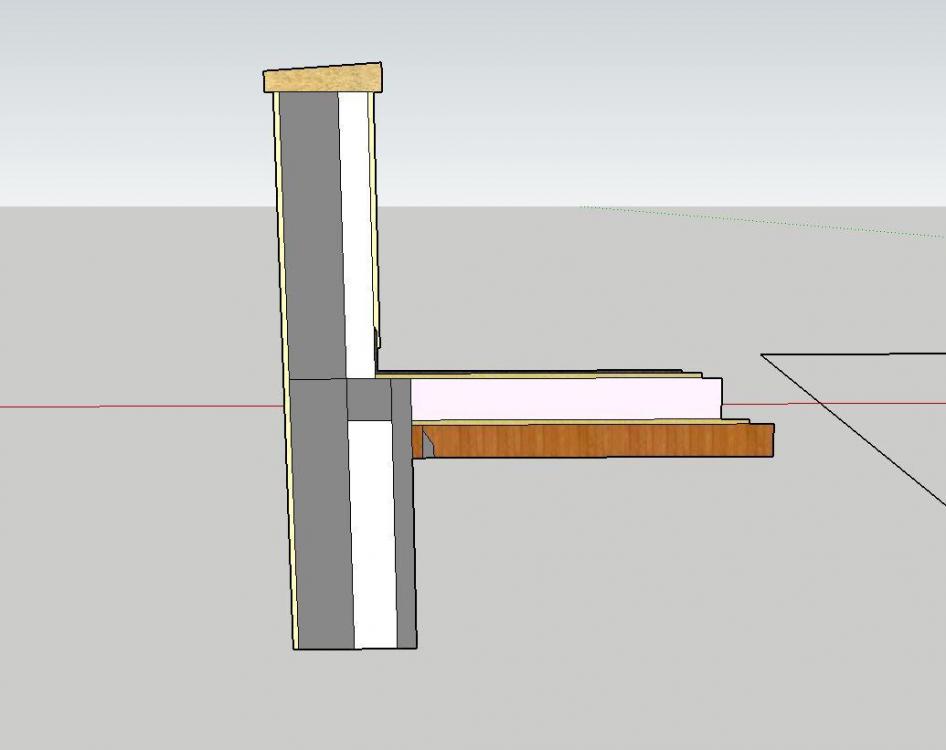
Have now found a workable solution to this fiddler. I will use a different grade of ICF and rip the inner leaf of EPS off. A fillet on top of the lower warm core will minimise thermal losses. The ICF supplier recommend every 600mm leaving a 100mm gap in this fillet to take the weight and horizontal rebar to distribute the weight Thanks to the crowd for your input.
-
The ICF will also be faff, because I'll have to match the depth of the blocks used to build the bin store wall to the ICF. Or put up with an odd return at the top of the stairs
-
How's about 140mm block set back so it's above the concrete core? (with a 200mm EPS fillet between core and block) I'd have to add additional EPS to the outside face of the block to have a flush finish for rendering with the rest of the house. A sort of pointless EWI!
-
For sure. Door threshold 150mm above pavers.
-
Definitely a word in my dictionary. Yes it would be preferable to send the rain water down that way rather than to a foul drain. So back to the wall.. I'd like to build out of 140mm concrete blocks, bearing on the outer leaf of the ICF EPS (203mm deep). The wall would be tied both ends and spans ~2.9m. 1.1m high. Is this possible? Would it be liable to drop? How about a section of RHS between the insulation and block work. There'd be nothing solid for the RHS to bear on but it could stop any sag
-
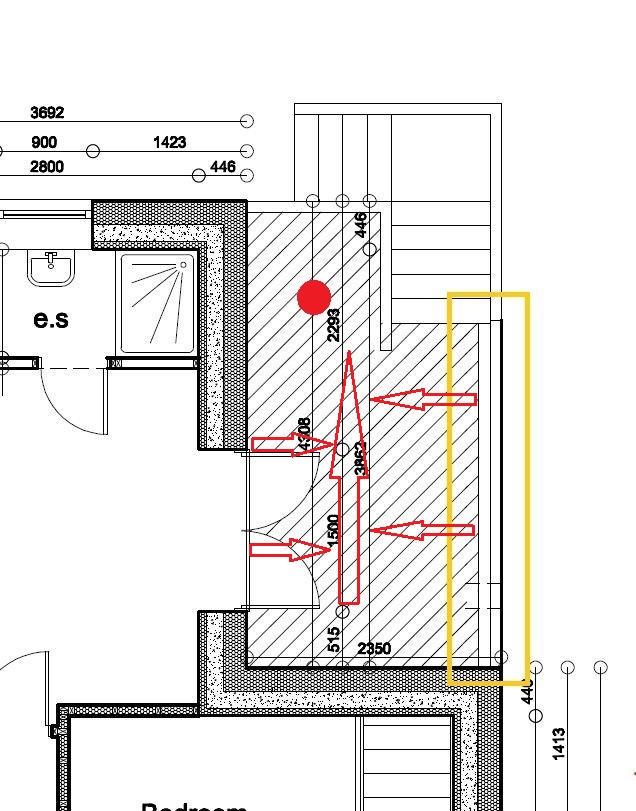
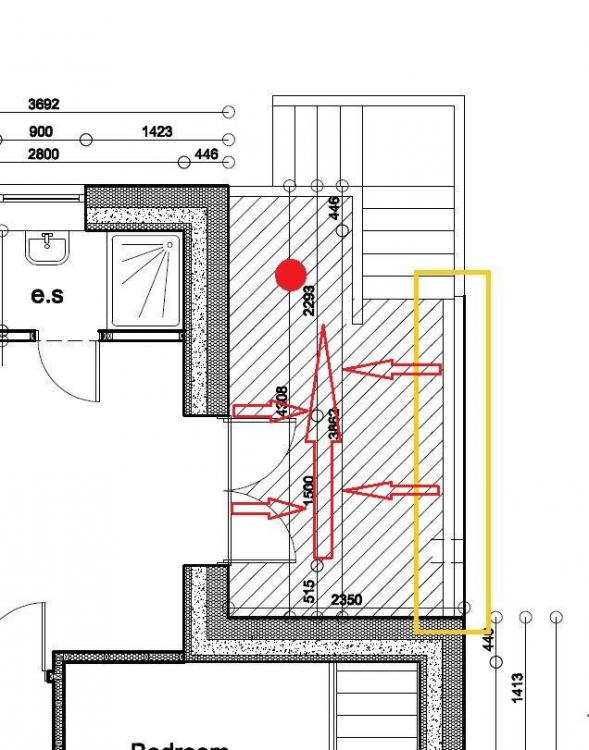
Remember the finish will be pavers on pedestals. Im hoping to have the pavers on pedestals level with the top step of the stairs. Therefore no water should be able to run off the terrace and down the stairs because there will be a GRP up-stand along the 'threshold' from terrace to stairs. So I could do a fall as pictured with drain as linked by @Barney12 Or perhaps instead of the original gully through the wall, it would be better to incorporate a drain near to the original gully. This could be sleeved through the ICF and link up to original downpipe.
-
Thanks for the feedback My intention was to find a solution where the balustrade wall could be built on top of the insulation. Either, the insulation of top of the roof terrace joists would extend on top of the concrete core and meet the outer ICF EPC or an EPC fillet placed onto the concrete core That's a consideration, the core could be reduced from 158mm to 102mm. Yeah, good point. As @Barney12 says no obvious exit for the water. What i could do is drain down into the bin store where there is a foul connection. Drain indicated in red
-
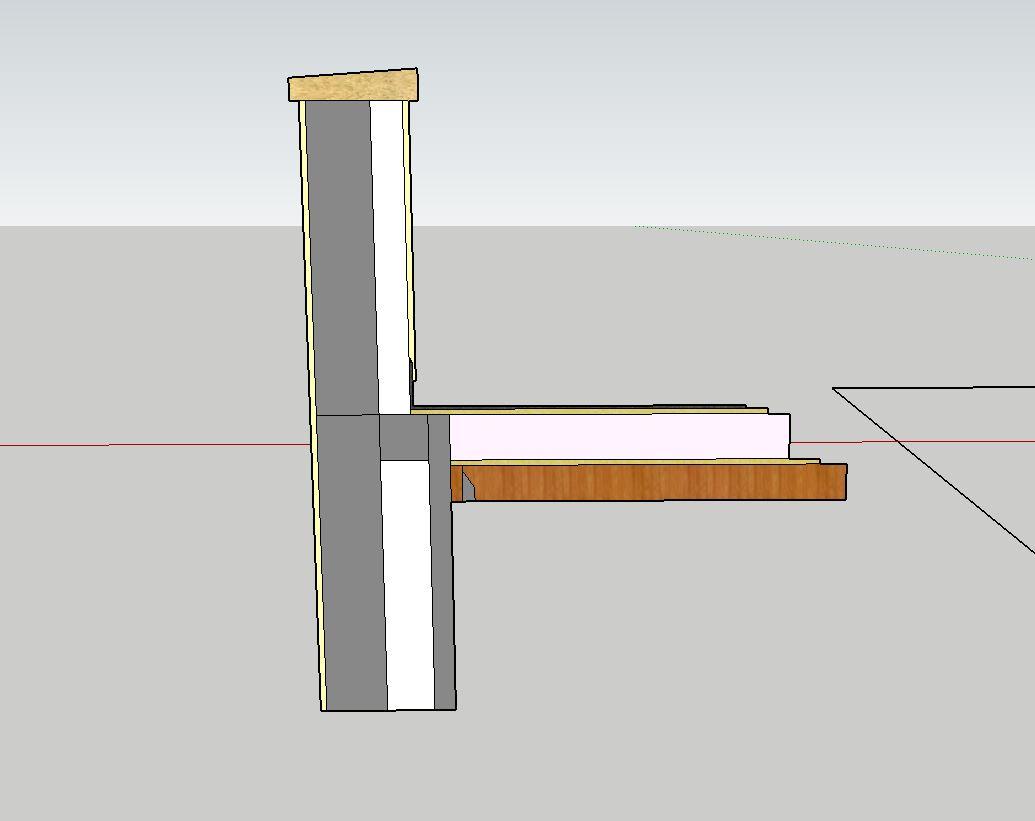
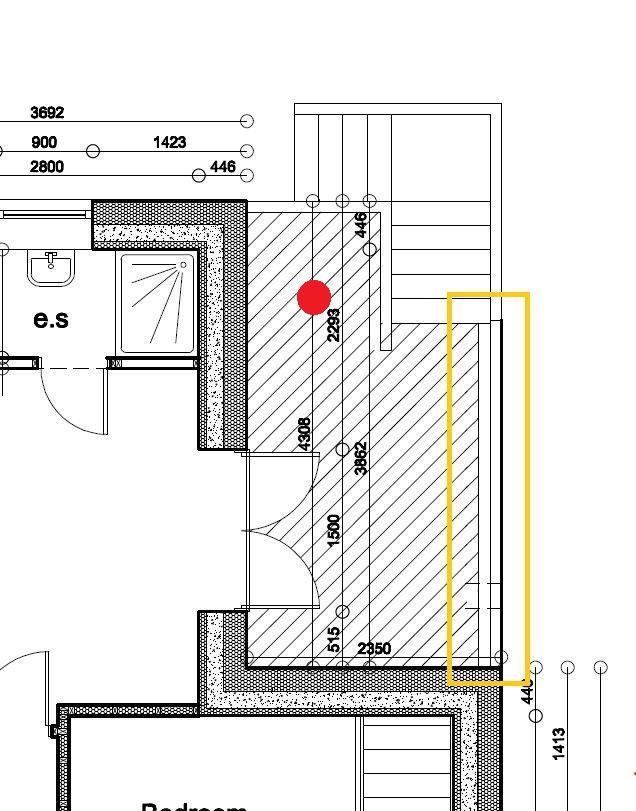
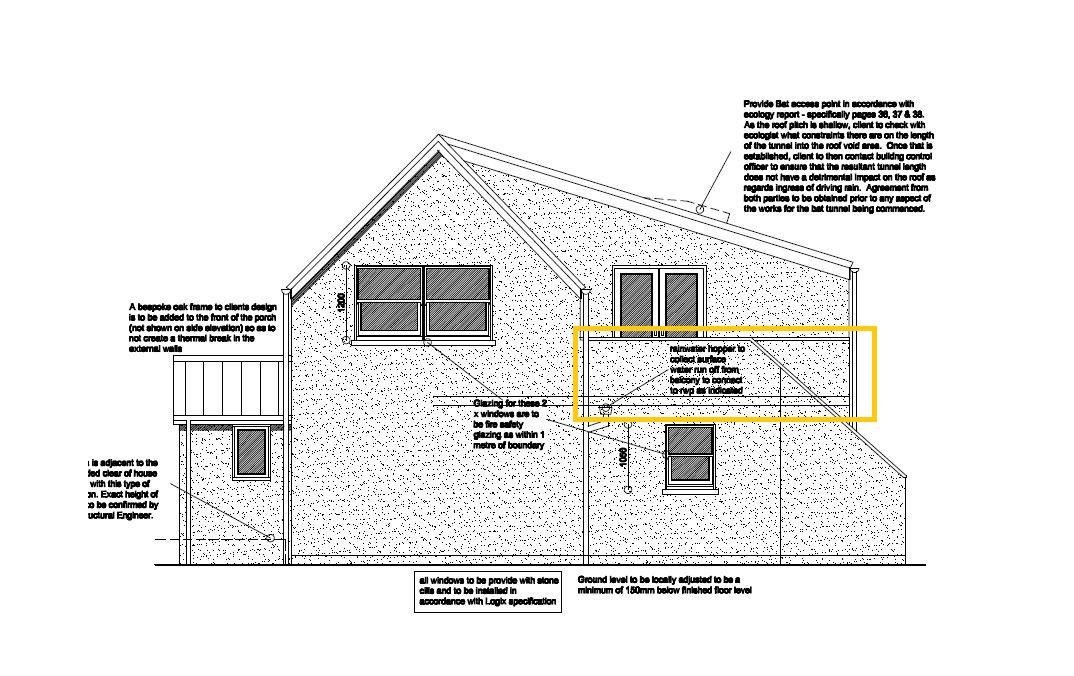
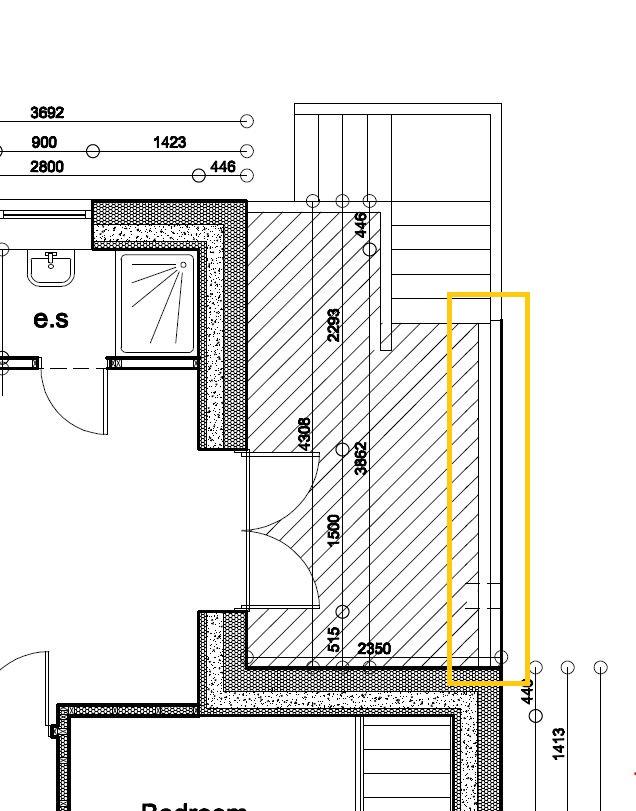
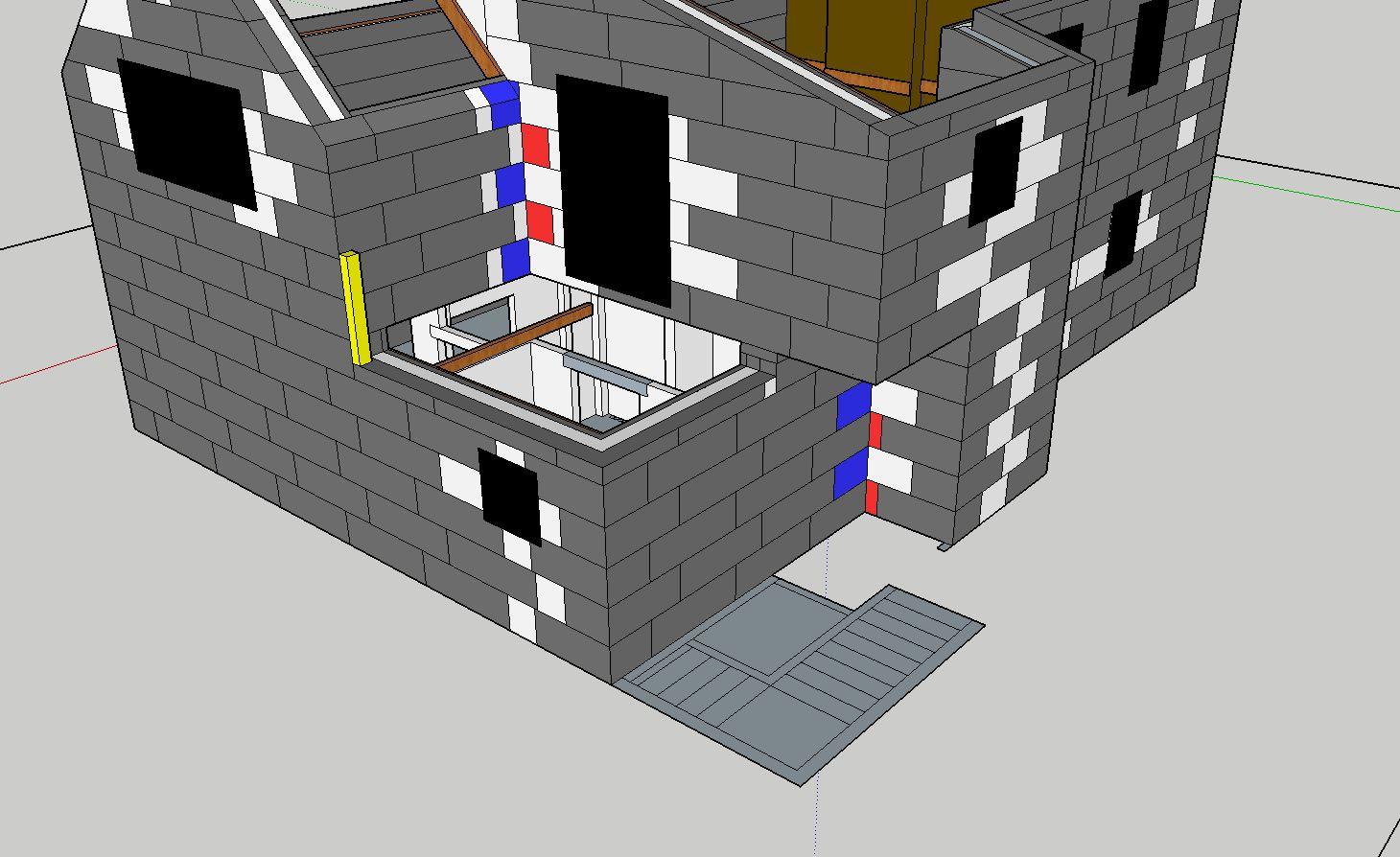
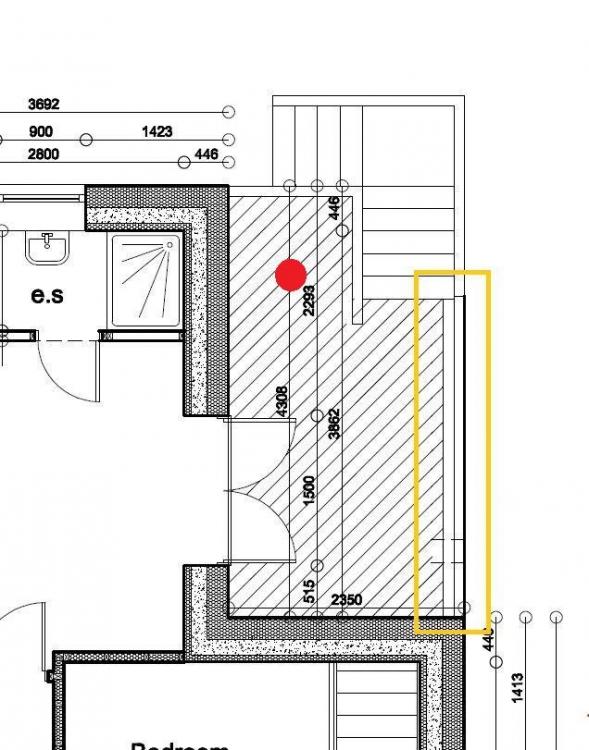
I need to work out how I am going to build the balustrade wall for my roof terrace. It needs to have a rendered finish and look like a continuation of the house wall. The easiest way would be to continue the ICF wall up and cap with a coping stone. However this would create a significant thermal bridge, the idea is to keep the concrete core of the ICF warm. Now I could add additional insulation to what would have been the internal leaf of the ICF, and use a fillet of insulation on top of the core, this would be thermally acceptable (just!) I then would have a balustrade wall approx 560mm deep and this causes issues where the external stairs/bin store meets the balustrade wall. The stairs/bin store is a separate structure outside of the thermal envelope. What I am wondering/asking, is there anyway I can build a 140mm block wall 1.1m high on top of my ICF EPS insulation? My architect proposed laying a block on its belly for the first course (to increase the area) and then continue up normally. This creates an unsightly looking step and potential trip hazard. Anyone have any alternative suggestions? Some drawings & pictures, wall in question in yellow. The terrace will be a warm roof, GRP with pavers on pedestals.
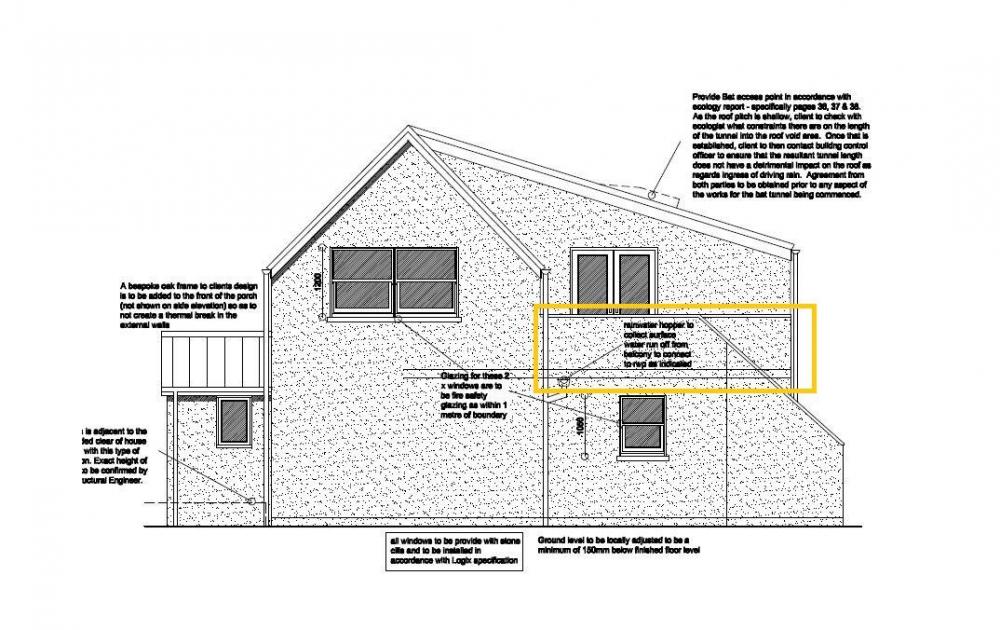
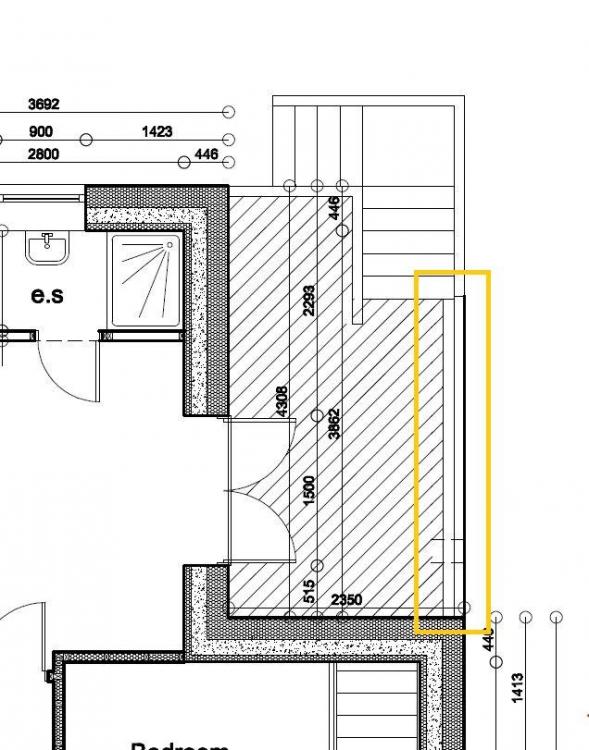
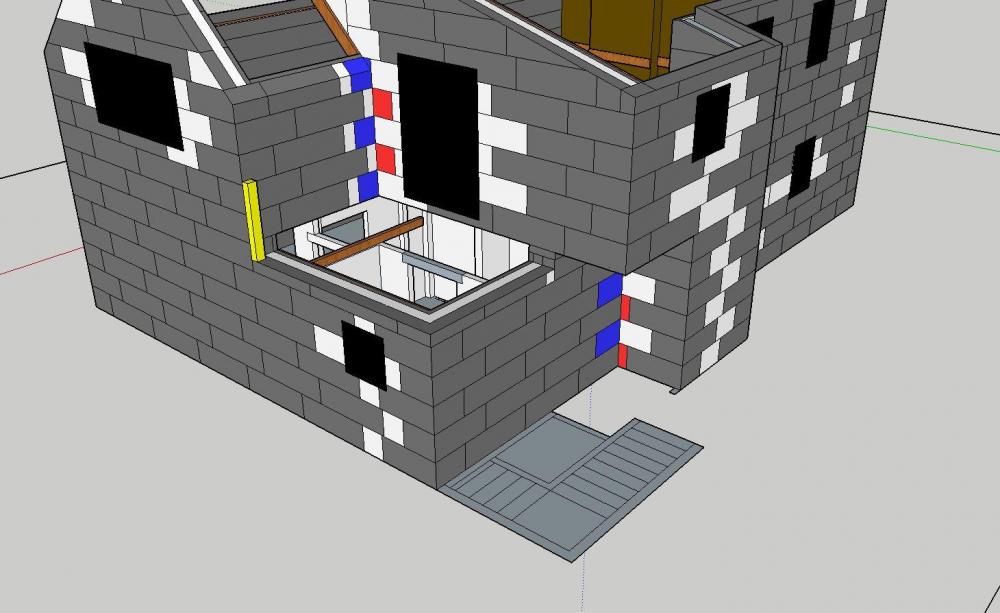
-
@Big Neil with ICF the walls will be propped, usually from the inside, to ensure alignment during concrete placement. If you are intending to cast your joist ends into the concrete core all your joists will need to be propped as well. This could get very crowded! The other issue is ensuring no concrete leaks where your joists penetrate the inner leaf of the ICF. I've only seen a handful of ICF builds, they all have fixed joists after the concrete has been poured.
-
@Big Neil There are various methods for ICF, have you had a look at the Ledger Connector from Simpson Strong tie. I will be using this method. https://www.strongtie.co.uk/products/detail/ledger-connector/346
-
@Mr Punter thanks will do Yep 2 stairs. Set to the right services bedroom with full height vaulted ceiling only. Rest of the property is under a different pitch roof that has to be a bat roost. ?
-
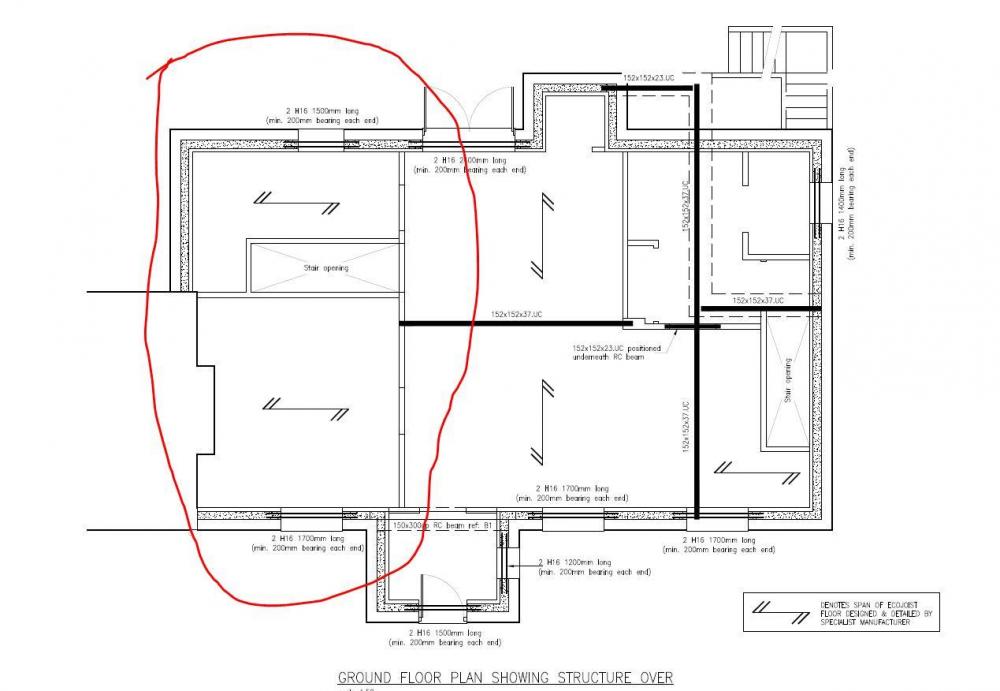
Spans of 3.8m
-
The internal block walls are not intermediary supports. They are supporting the ends of the joists
-
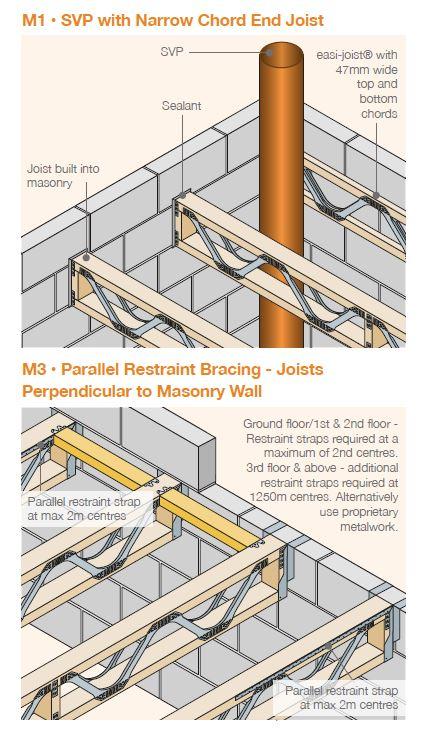
Wondering on the collective opinion, what is the better way to support posi-joists on internal blockwork walls? The two options, as far as I can see -Bear the bottom chord directly on the block work or -Use a JHM type hanger Any structural advantages to either method? Will be trying to minimise any movement/deflection Bearing directly onto the block work is easier and cheaper and length of joists less critical Using hangers feels the more superior way to do it but I'm not sure why! Just to add the block work walls will continue up another story so there will be plenty of weight bearing down
-
Exactly this That's cheaper than the NMA fee I just wasted! Great will give it a go, thanks
-
Can any amendment truly not involve a change of material? Nope, it's on the night time reading list No planning conditions mention any material type Would love to but what format would the submission take?
-
Sounds to me like they are considering it a material ammendment therefore cough up for full planning application please!
-
Decision notice: The proposed development, by reason of its materials will be out of keeping with, and will be harmful to the character and apperance of, the street scene and local area, contrary to policy CS12 of the North Somerset Core Strategy, policies DM32 and DM38 of the North Somerset Sites and Policies Plan (Part 1) and the North Somerset Residential Design Guide SPD (Section 2: Appearance and Character of house extensions and alterations).
-
I submitted a single NMA to change roof covering from pan tiles (reclaimed from now demolished property) to slate. I stated that as I will be fitting a solar PV array to both East and West elevations (mentioned in original PP) an all black, in-roof panel system would be better complimented by slates rather than contrasting clay. The front elevation will have PV panels covering the majority of the roof so that the pan tiles will only be a couple tiles wide all the way around the perimeter. In my view this draws attention to the roof and does not help the property settle/blend with the neighbourhood. In my area (greenbelt, not conservation area) clay tiles are in the majority and considered the safe bet when pleasing planners. However although my immediate neighbour is clay the church 40metres away is slate. All the listed buildings in the village are slate. I get the feeling the LPA havent considered this NMA with the specific details of this case. But with no right to appeal, what are my options? I am thinking do nothing until all the PV panels are fitted and then, if possible, get the planning officer on site and get him to agree that adding a perimeter of clay tiles would look grisly, then have another go at submitting another NMA.
-
 What detail did you go for here in the end @Alexphd1?
 -
I'm using them for my build. You're welcome to come take a look when the ICF action starts
-
Logix ICF are based in Poole, could be handy if you need a couple of extra blocks at short notice!
-
Any photos of this please @MikeSharp01? Sounds like something that could work on my build
-
? Thanks Russ.
-
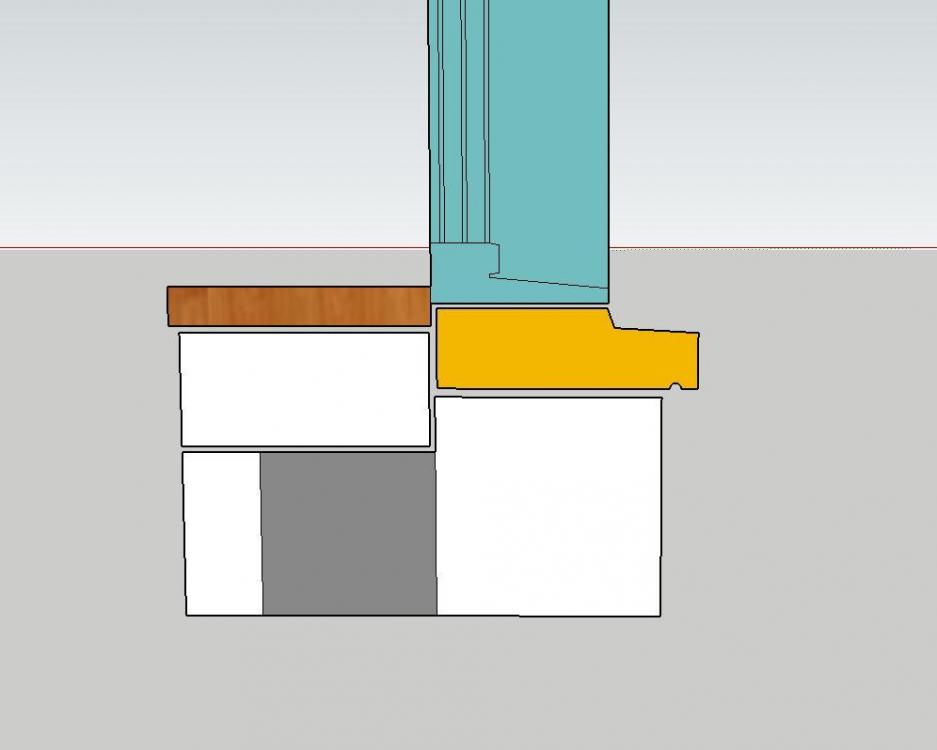
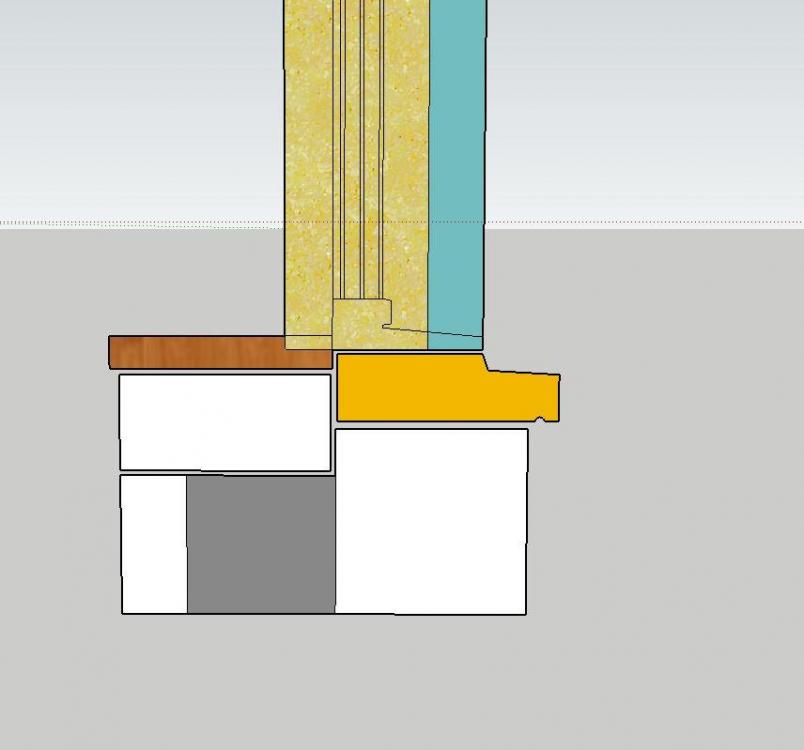
Ive been playing around with a few design details for the windows. What are your impressions of the following? First pic, section through the middle of the window Second pic, section at end, with 18mm ply three sided box, Id like to keep the cill away from the concrete (warm) core if possible The cill providers I've contacted seem happy for me to fix up through the cill into the window frame. Undecided whether to have the cills as wide as the window or extend wider. Wider is more traditional and commonplace, but I think shaping the EPS to accept the cill could be difficult