WWilts
-
Posts
782 -
Joined
-
Last visited
Everything posted by WWilts
-
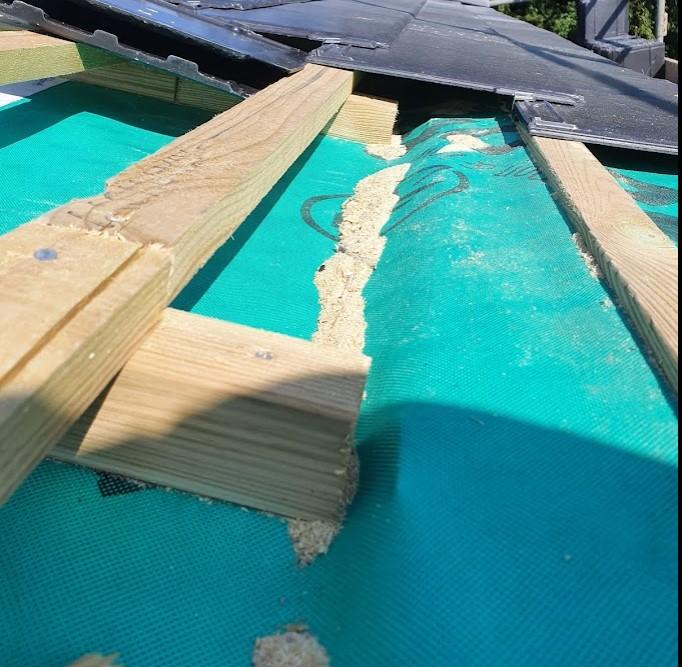
New build, roof covering in progress. Pitch ~18 to 19 degr, but somewhat less at eaves on the most exposed elevation (long story, builder made errors). Roofshield air permeable water resistant membrane. Cambrian slates. In order to achieve slate overhang of gutter, roofer has introduced short counterbattens over the membrane. Near the eaves. Unfortunately this has resulted in the membrane forming a water trough along the eaves of that elevation. (pics) Not very deep, admittedly, but still enough for water to pool there if it gets under the slates. Question: How to deal with the water trough, or eliminate it? Architect suggested water-resistant board under the membrane. Presumably from the inside, under the roof. About 100 slates nailed in on that elevation already. Membrane already nailed down to rafters.

-
That is a staircase and a half! Impressive. What wood?
-
Oops. If we succeed at 1, we might have to make some holes until it gets to 2. Then plug them up later
-
Congrats, Tony. Look forward to walkthrough. Well done achieving such high specs that people were keen to pay more for them. Any advice for what high specs seem particularly attractive to your buyers? PS Our builder seems to be willing to attempt a better airtight level than required. (4m3/m2/hr required, aiming for 1m3/m2) Cannot afford MVHR. Hoping to get by with heat exchange extractor fans instead.
-
Planning floor covering, not decided. Probably laminate click-fit, or porcelain tiles. Qu: How much depth should be allowed for floor covering, from top of screed to top of floor covering?
-
Ground floor new build Concrete slab, 100mm Celotex, polythene, UFH pipes, liquid screed 50mm Got supply & install quote for what we thought was Cemfloor liquid screed. But quote says Cemfloor/Longfloor. Are the two products equivalent? Also, accompanying blurb says recommend windows/doors installed before the fast drying liquid screed. Is that critical?
-
Sorted, thanks. B Insp preferred BS5543. But if the other ("green treated") battens had preservative & not too many knots, then the parts already done with "green treated" battens would be acceptable to Insp. Parts of roof cover yet to be done will have BS5543 stamped battens. The manufacturer stated that in terms of performance their green treated battens would do the job on a roof. It all depended on whether BS5534 was specified. They make both types. Very little price difference between the two, from quick enquiries for reasonably large quantities. The main diff I could discover between the two is that BS5543 is generally kiln dried. Makes them lighter and less liable to insect damage etc.
-
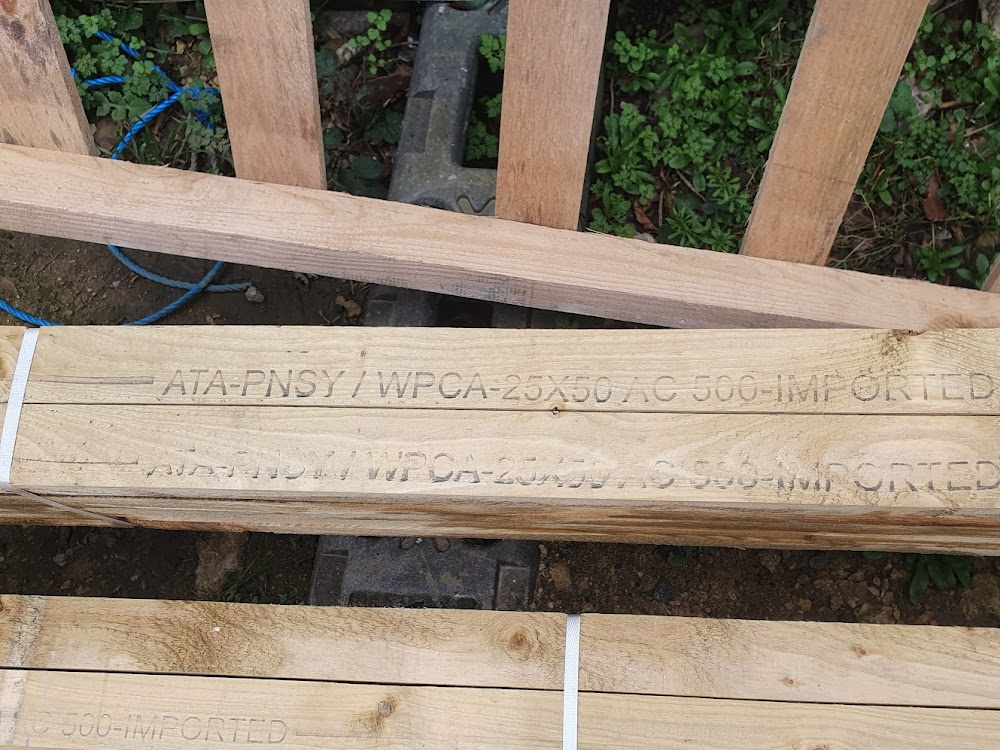
Apologies, cut and pasted from google photos. Pls see attached pic
-
Will these battens meet BS5534 standard? No BS5534 marking
-
Upon investigation, seems that untaped membranes are MORE likely to push out tiles/slates because of wind uplift
-
Concern is ballooning of membrane in storms, lifting off roof tiles. Hopefully drape no more than 15mm should reduce the risk. Wind uplift possibly less likely if membrane laps are left untaped. Or is that wrong?
-
Roofshield membrane, underlay for Cambrian interlocking recycled slate tiles. Air permeable, waterproof(ish). Manufacturer states no taping required for membrane laps. Zone 1 wind. Builder bought tape. Question: Tape or not? What is the function of the tape?
-
Membrane to membrane join, overlap. Will Tescon duplex tape give an airtight join?
-
New build in progress. Brick or stone outer. Block inner (carefully pointed, blocks themselves have independent test of very low air permeability). Plasterboard on adhesive frame & skim finish internally. Cavity closers at windows/doors pose challenge. Uneven masonry finish. Builder used some silicon between closer and masonry. (pic) Inclined to try putting a bead of Orcon F along that join. Sensible? Worth doing to assist with airtightness? How long to allow for a test bead of Orcon F to dry?
-
That was acceptable to architect. Not to SE. Outcome: Patching the holes with 1:3 cement:sand mix (builder volunteered)
-
Corner on that block, and corners or bigger chunks on other load bearing blocks
-
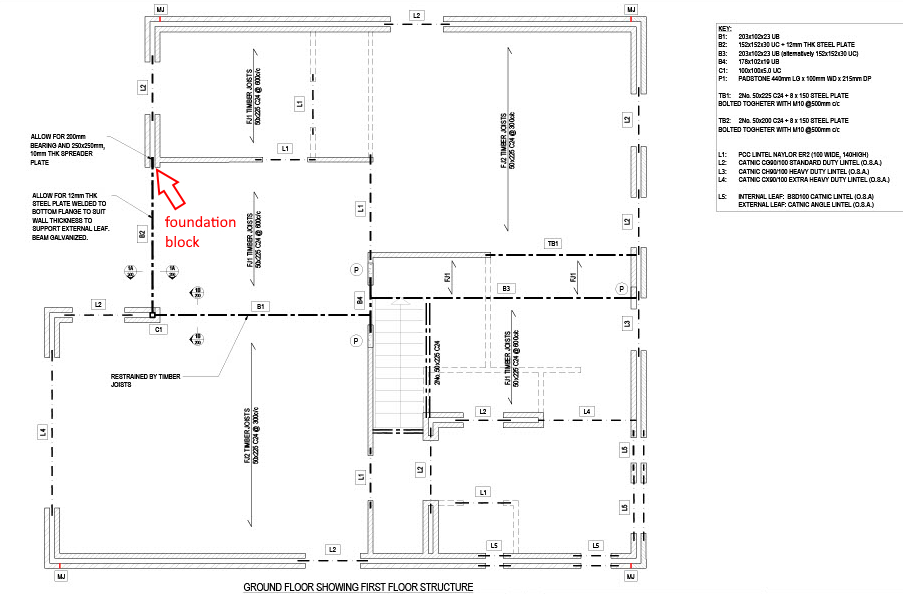
How to repair this load bearing block? Damaged when builder knocked through inner leaf foundation blocks at door. Cutting out and replacing would be structurally satisfactory. Is there any alternative?
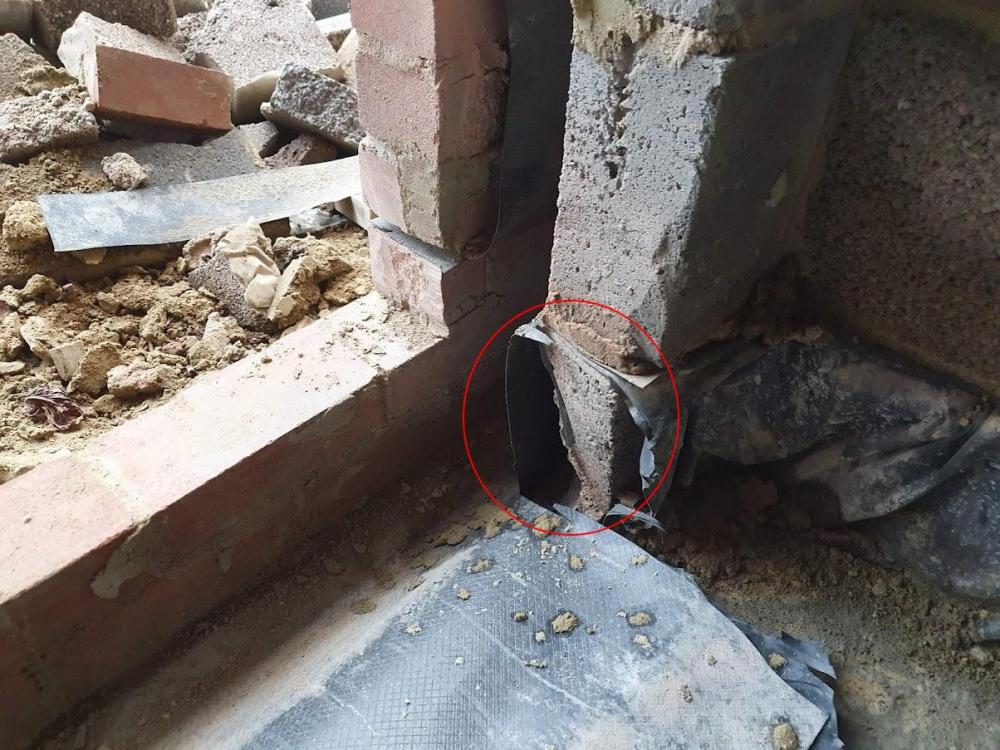
-
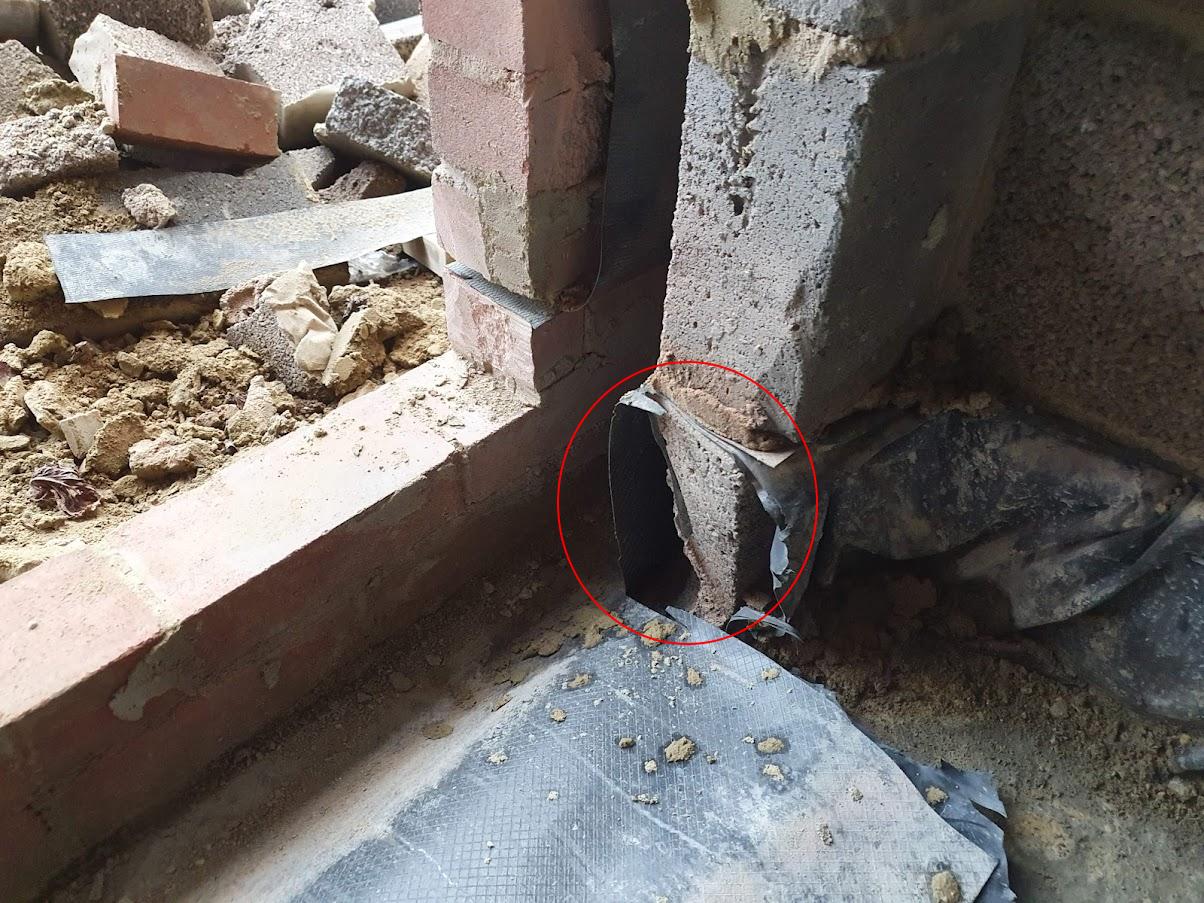
It is normal to build foundation blocks up to DPC level in internal doorways, and then knock them down? External doorways yes. But internal? I suppose the blockwork serves a shuttering purpose for the concrete slab. Still, knocking down the blocks mutilates the DPM and leaves a small void (65mm deep) at the thresholds of internal doors. Challenge now is how to restore the damp proof floor layer.
-
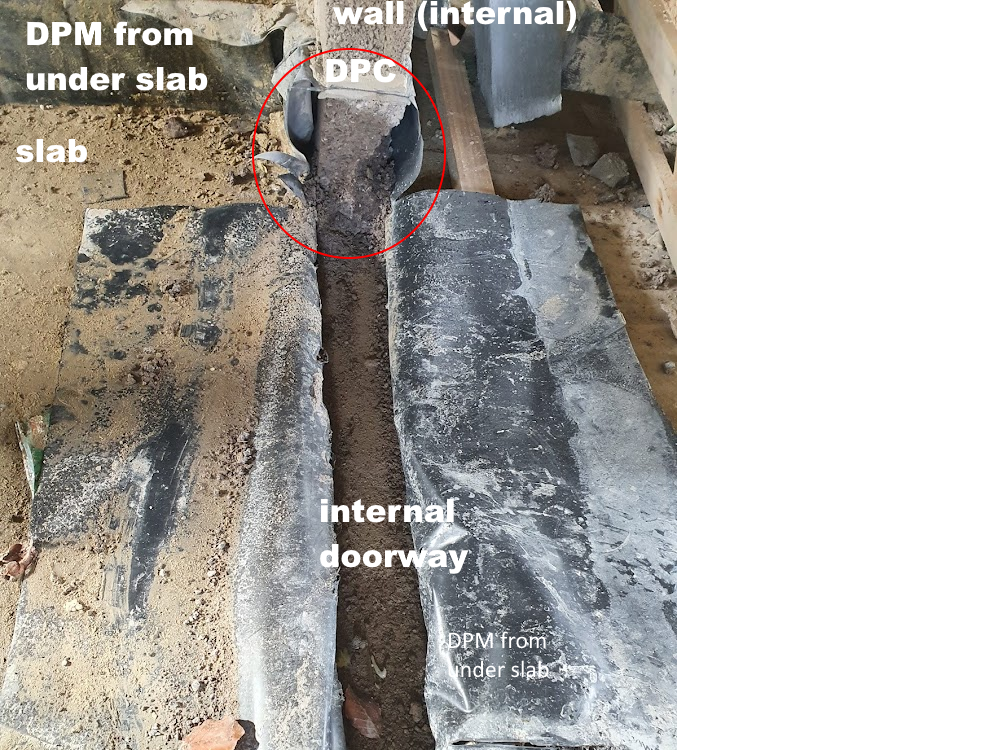
Internal block wall going down to foundations. Junction with floor. (pic). How to damp proof the internal block wall? (circled in pic). Already built: Hardcore / blinding / Polythene DPM lapped to DPC / Concrete slab To be added: DPM on top of slab / Celotex insulation / VCL / Sand cement screed (perimeter insulation)
-
New build. Traditional block and brick/stone cavity wall. Cavity closer as usual abuts inner & outer leafs. Windows/doors will project outwards beyond the cavity closer. Builder will seal the cavity closer to the inner leaf. Question: Can the outer leaf / cavity closer junction be left without sealant? Perhaps relying on the window installers (not builder's subbies) to seal the window frame to the external leaf of masonry?
-
Sorted. The vertical cavity closer will be continued down into the cavity for 50mm. No wind-driven rain penetrating the outer leaf can make its way past such a vertical cavity closer. Plus tape to seal the vertical-horizontal junction for airtightness.
-
Water percolating through outer leaf (brick or reconst stone) needs to be kept out of the interior of the house. Gap in cavity closers (joint between vertical and horizontal) is the weak spot. Trying to seal that.
-
Windows. Vertical and horizontal cavity closers have small gap between (careless cutting by builder probably). How to close the gap? Is Contega Solido tape waterproof enough and adequate?
-
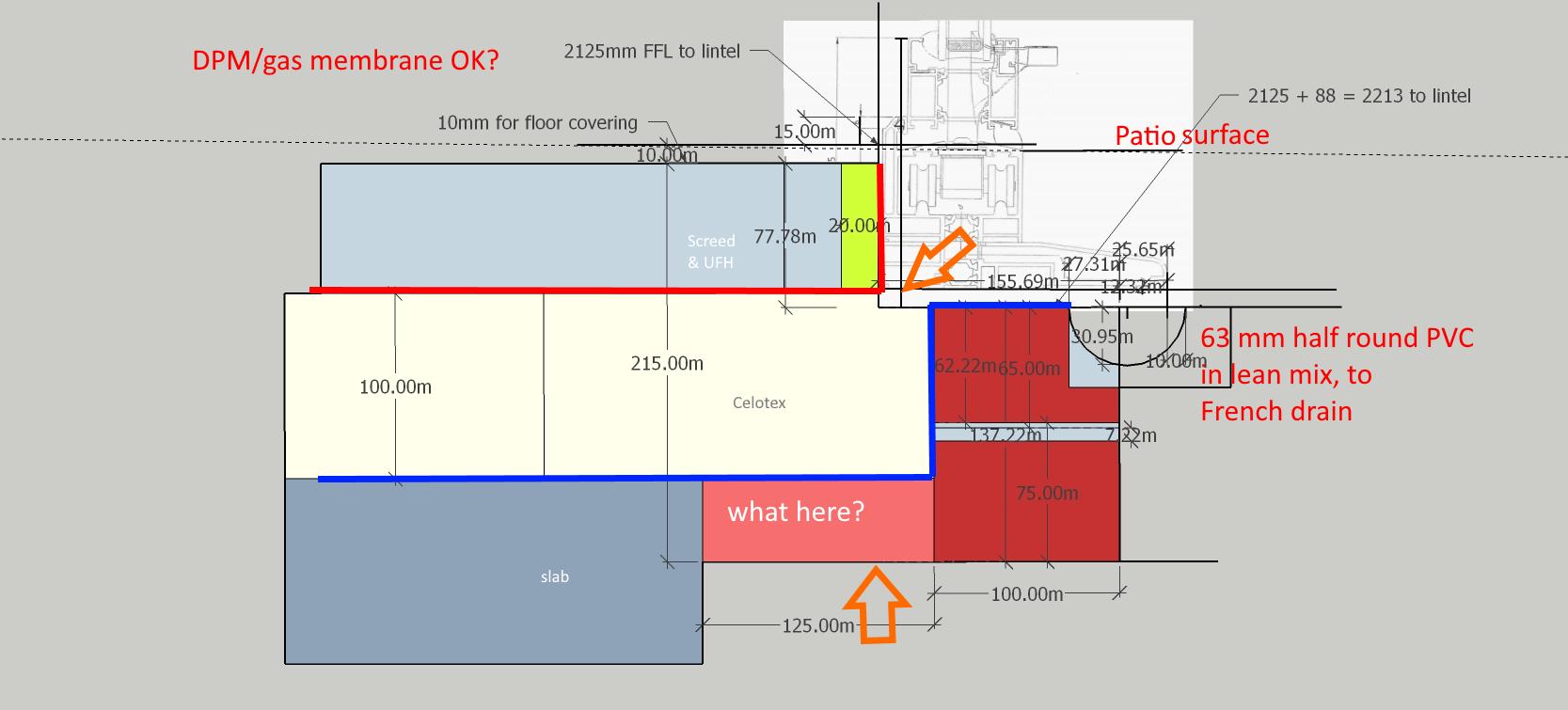
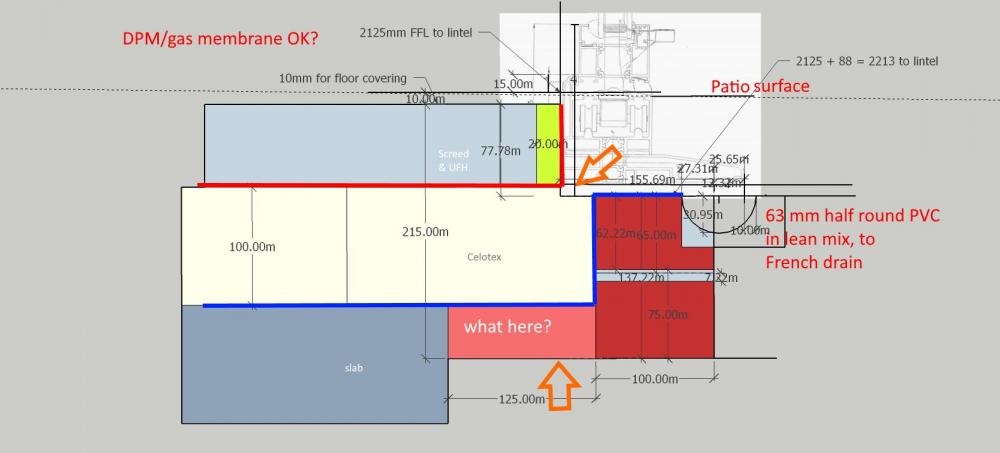
New build in progress. This threshold drawing doesn't feel completely right. Trying to get it right in preparation for door install.
-
For various reasons, 120mm cavity has been closed with a 150mm fire cavity sock at the wall plate. Soffits and fascia in place. (pictures) Cavity insulation to be injected in (bonded EPS beads). Challenge: how to keep the EPS beads from shooting out between firesocks, or between firesocks and lintels. At EPS bead installation time. Looking from below, light gets through at firesock joints. And between firesocks and lintels. Builder thinks 2 upstands of celotex mechanically fixed to the inner leaf/wall plate exterior will suffice to close the gaps and keep the EPS beads from shooting out of the cavity at the top. But he has zero experience with EPS beads. What to do? (Cost is a consideration) Some offcuts of hollow PVC soffit are lying around, if they might be useful. Could Tyvek Housewrap (airtight, vapour permeable) above the firesock be used?